
Robin S Webber
This transcript was generated by AI and may contain errors. It is provided to assist those who may not be able to listen to the message.
Well, good afternoon, everybody! Good seeing all of you. I think I've met a lot of you before, somewhere over the years. And I'm looking forward to meeting a lot of new friends. I see this whole group here on the back row. I don't know if I know all of you or not, so we're looking forward to getting acquainted. I am here to make a course correction. This is Scene 1, Take 2. It's already been a long day for this older man on the front row. He wanted to make sure that Kaylee knows that her name is Shaley.
Shaley is the name that your mother gave you. So, Mr. Seagly wanted me to make that course correction for you so that you'll come back to church. Oh, yeah. He says he gets one lap around the building. So, we'll do that. Well, it's always nice to be here in Garden Grove. I don't have an opportunity to be with all of you as much as I'd like to. As was mentioned by Mr. Seagly, I have our own circuit. And up to two years ago, I actually had five congregations in Southern California, and now we're just down to three.
So, anyway, it's good to be with all of you. And all of those titles that Mr. Seagly just mentioned, I like to rather than be regional pastor, I'm just a regional friend. That's how I like to start out with people. We had a wonderful morning with all of our ladies. Always a little bit different when you have an audience made up of ladies, and just the ability to connect, and they're leaning forward and listening.
It's always a beautiful thing, and it's going well. And for some of you that may not know, actually, some that I haven't met here, I was actually first in Garden Grove back 28 years ago. I was a little bit younger back then, and long story short, in those years of 1994, 1995, which were challenging years for many people, and I'm glad that Susie and I could be here during that time of challenge, along with the Lukas, and then went on to pastor the church for another six years after Mr.
Luker left, and then we kept on looking for pastors. They kept on giving me names, and names, and names, and names, because I think all of us as pastors tend to be jealous for our people to a rightful degree and protective. I batted more than five or six away, and then finally, Mario's name came up, and he was wanting to move to the States. I'd known Mario since he was in Ambassador College. I was a young elder at the time in Pasadena, and I said that I think we have some music here, and I think Mario and this congregation can dance together.
Always good to be able to be with Mario and Cottie. Appreciate their labor of love towards all of you, and also towards all of our Latin-speaking, our Spanish-speaking brethren around the world. I want to build upon the message that Tim just gave us, and a little bit different as far as just a matter of counting. I think so often we focus on the counting of 50, which is important. We do want to be sure that we're observing the Holy Days as best as possible, as best as we can understand, 2000-3000 years down the line. But I'm not going to be dealing with numbers this afternoon. I'm going to be dealing with another kind of counting of how God is counting on you, and the attitude, the approach that you will bring as this holy festival comes up, called the Feast of Weeks, the Feast of First Fruits, and the Day of Pentecost.
But before that, let's talk a little bit about 50. Let's talk about that stretch of time between when ancient Israel left Egypt, to that, as we traditionally believe, the giving of the law on Mount Sinai, on what we would go back in the Old Testament as the Feast of Weeks, and also, then, how we have an overlapping period of that time when Jesus ascended to the time of Pentecost.
And so, I want to build on both, not only our...we're going to tie this all in together about the Israel of old, and to recognize that God calls us the Israel of God. If you want to look at that, you can look at Galatians 6, 16. That's an important verse to recognize the continuity of what God is doing. There are some powerful similarities between what ancient Israel went through, between leaving Egypt, going to Sinai, and then to think of the early disciples, that when Jesus left and ascended, that he told them to wait for the coming of the Spirit.
And so, there are some great similarities, and they are both there. I'd like to speak about some of the similarities between ancient Israel and what was occurring in the New Testament Church. And to recognize there was this wilderness period of somewhat of the unknown, and what is going to happen, and what is going to happen. But, to recognize in the wilderness, whether it was in the Sinai or whether it was in Jerusalem, because you can be in the wilderness when you're looking all around wondering where the Romans are, or wondering where the temple guards are, especially after they crucified your leader, there are some powerful similarities.
Let's talk about what the similarities are. When you think of Israel of old, and you think of the Israel of God back in the first century AD that he was developing, we recognize that there was divine intervention. Number one, divine intervention. Let's never take that for granted. Both now and then, this intervention was because both peoples at that time were in a sense enslaved. Yes, one physically in ancient Egypt, but to recognize that as John the Baptist came, then later on Jesus Christ, between the baptism of water and the baptism of repentance in water and the baptism of the Spirit, we were apart from God.
We were in a sense enslaved to our own human nature and our own human being. And we were both liberated by a divine one. And this divine one also promised miraculous intervention to guarantee the divine promises of being set free. There's a difference between being set free and remaining free. And then there were divine promises that granted a new existence, offering full and total relationship. I'd like you to join me just for a moment, spot-check a scripture here.
Exodus 6. Join me if you would there, please. Let's open up our Bibles here on the Sabbath day. And in Exodus 6 and in verse 7, something totally different from anything in antiquity, unique of the divine, of the one true God. In Exodus 6 and verse 7, God simply says this, I will take you as my people, and I will be your God. And then you shall know that I am, interesting word there, I am the Lord your God, who brings you out from under the burdens of the Egyptians. And I will bring you into the land which I swore to give to Abraham and Isaac and Jacob, and I will give it to you as a heritage.
I am. I am the Lord. What we're talking about here is a relationship of a familial sense of God taking on children and children, looking to God as a father, as his leader. This was not known in the world of antiquity.
Religion was based upon fear, not upon love, not upon sharing, not upon relationships. And so we see this relationship drawing to the fore.
As ancient Israel went into that wilderness, we notice that they faced some things. Same things that you and I face today as we're counting along with Tim, between that 50-day sojourn, between the Sabbath, between the high days, and Pentecost. The children of Israel faced sand. They faced scorpions. They faced bitter waters. And most importantly, because so often we'll center on the wilderness, and the sand, and the scorpions, and the lack of water, most importantly, they faced themselves. They faced themselves. And today, as the Pilgrim People of God, and we are a Pilgrim People, we too face the obstacle course of existing in a wilderness world around us, of ungodliness, and with constant irritants, beginning with ourselves at times, unchecked, and tied up in the knots of our own human nature. So let's go back for a moment and understand a few thoughts here. The one revealed to Moses when Moses was on Mount Sinai, and he says, By the way, you want me to go back to Egypt, and what is your name? Kind of what's your name? And God told him what? He said, I am. Go back and tell Pharaoh, I am who I am. And that this I am would be the one that would, number one, deliver them from slavery. He would be the one that would guide them through the wilderness. And when they were prepared and when they were ready, he would offer to them the Promised Land that he had mentioned from the time of Abraham forward. With all of that stated, wouldn't you like to sign up for that trip, to have the divine one leading us, and to pave a path, and to go to the Promised Land, the land of milk and honey? It's noteworthy, though, that in that trip, that in Numbers 14, just jot that down, I'm going to paraphrase it, Numbers 14, 20 through 23, there were ten times that God mentions that Israel tried his patience. We can think about from the banks of the Red Sea. Moses, look where you got this. Look where we are. You don't know what you're doing. This one called the I Am that you said were to follow, he doesn't know what he's doing. And they complained and they bickered and they murmured. There was also the water at Mara that they were thirsty. After the Red Sea, it opened up. And they had walked through. Within days, they were beating their gums and complaining and vexing God to the giving of the manna.
Either they didn't like it or they didn't like the time ratios of when they could pick up or how much or this or that. There is also ultimately that story of that, that they thought that the men of Canaan were bigger than their God. I want you to think about that for a moment. They thought that the men of Canaan were bigger than their own God. And they rejected the advice of the two spies of Joshua and Caleb. And for that, and for that, disobedience came decades of being in the desert.
You know, what God planned, I want you to think about this. God planned that he was going to take them from Egypt and he was going to move them forward up to the Promised Land. Now, he took a southern exit for a reason because if they go into the north, if they go into the north, the Egyptians probably could have gotten to them earlier and they might have become afraid and just turned back and given up. So he took them south and he took them south for two reasons. Number one, to avoid the Egyptians at first and number two, that he was going to do something incredible that had never been done before.
And that was to open up the ocean that they might be able to go through. With all that, they would need an additional 40 years. God didn't initially plan 40 years. Now, we've come to know 40 years is the time of trial. He was moving them to the Promised Land, but 10 times they vexed him. And God had to go to the next step to be able to sandblast Egypt out of them for 40 years. I have a question for you then to engage you as you come into this message is simply this.
We can talk about ancient Israel for all day long and they're dead and they're buried and a gracious God is one day going to work with them once again. My question to all of you this afternoon is simply this. My question to you on May 21st is this. How long is our march through the wilderness?
How long do we have to go? I don't know and you don't know. Our days are numbered, but only God has our number. What I want to share with you the rest of this message is a combination of a thought of faith and obedience.
How important, as Mario was bringing out in the message this morning, of going down into our spiritual roots, how important is faith and obedience when it comes to worshipping the I AM in God Almighty? Faith and obedience go hand in hand. I want to show you something here. I don't know how to do all this fancy. I am the PowerPoint, so you have to follow me. You just have to watch. We can say, and we know this, God says that in Romans it says that we are saved by faith and not by works.
So we know that by God's grace that we are saved by faith and not by works. That's pretty plain in Paul's writings. But here's what I want you to understand. Faith and obedience, you cannot separate them. Have you ever tried to separate yourself from your shadow? Now, I see some of you are about my age, and I'm 39 now, have an age in Iota. But, you know, all my life, and I've lived in sunny country like Southern California, I've never been able to separate.
You see, like, say, shadows stay still. I'm going to go over here for a while. So I'm going to go this way, right? My shadow is going to stay over there, especially if the sun's over here. Allowing a shadow to be... Just stay, you know, like a pet. Stay. Down, boy. Stay there. And I keep on walking this way. No. That's not how it works. You show me a person of faith, I'll show you a person that is obedient.
You show me obedience first, and I know that person has faith. Faith and obedience go hand in hand and heart in heart. And that's what we're going to be talking about a little bit this afternoon. I'd like to show you some promises that another one that called himself the I Am promised his disciples then and you and me. Now, show me if you would in John 14.
In John 14... Let's just look at this for a second, and then we'll build on it. In John 14, it says, because Jesus knew what his beloved disciples and friends are going to be going through. And the first thing he said, and this is the night before what he was going to be going through the next day. Let not your heart be troubled. You believe in God. Believe also in me. Now, why did he say that? And why does God say 350 times in the book?
Do not be afraid, because humanly we get the shakes. It's that simple. He says, do not be troubled. In my father's house are many mansions. If it were not so, I would have told you. Now, notice this, another problem. I go to prepare a place for you. And if I go and prepare a place for you, I will come again and receive you to myself that where I am, there you may be also.
And where I go, you know, and the way you know. And Thomas said, Lord, we don't know where we're going, and how can we know the way? Then notice what Jesus said. Very important. I am the way, the truth, and the life. Notice he says, I am. What's that all about? Well, that's exactly how the I Am introduced himself to Moses on Sinai. This is the same being. Before it was the Word, and the Word said, I Am. And now you see the Word manifested incarnate in the flesh. And he says, I'm still going to be leading you. It's going to be a different Israel. It's not going to be ancient Israel as before.
This is going to be the new Israel, especially when the Gentiles are grafted in. This is going to be a new nation, a new people, people that were not a people, but are now a people under the Lord.
And he said, I am the way, I am the truth, and I am the life. I want to have you join me for a moment just on the next page. More promises in John 14, 16. He says, and I will pray the Father, and He will give you another helper, that it may abide with you forever.
And the Spirit of truth, whom the world cannot receive because it neither sees nor knows it, but you know it. For He dwells with you, and I will be in you. And notice verse 18. And I will not leave you orphans, and I will come to you. Now, here's what I want to share with you. I know we've all read it sometimes through John 14 and 1 through 8. And then again, when we look at other verses in John 14, these are promises.
And because they are promises, and we have faith in the one that made those promises, then we obey. That we obey what He asked us to do. And we're going to find that, especially as we now look into what was leading up to the original Pentecost. And to recognize the message that I want to give you is simply this.
Four key steps towards meeting the promises of God. Doesn't that sound like a walk worth taking? Four key steps towards meeting the promises of God. Well, what are those promises? I'm just going to go back for a second. He says simply this. He knows the journey will be rough, but I'm going to be with you. Don't be afraid. I'm going to go ahead of you. I'm going to prepare a place for you. I'm going to come, hey, I'm coming back to you. And I'm going to receive you.
I'm going to be the welcoming committee before the Father. He sent me out to be the welcoming committee. I'm going to be there to receive you. Has that stuck in your heart or in your mind recently? The promises that are given in John 14, 15, and 16?
The same one that was the one that led Israel, that one that was the rock and it was in the wilderness leading? So we're going to look at these four key steps, and we're going to all turn to Acts 1 if you'll join me there for a second. In Acts 1. Now, I know with Pentecost we normally like to go to right to the fireworks chapter. The fireworks chapter is Acts 2. That seems to be where all the excitement is. That's where the big four miracles are. The wind, the fire, the diverse languages.
Of course, I think 3,000 people converted in one day is like a big-time miracle. Are you with me? But we're going to go to there. And what I want to do is have you join me. We're going to peer into that upper room. We're going to be looking through a window. Maybe we should knock so we're not obtrusive. But we're going to go there and see what God saw. Let's see what God saw. And because God saw this, that He was willing to pour out His Spirit and to bless that beginning of the ecclesia of the church.
Of the saints. Those that would be a part of the body of Christ. Those that would be the Israel of God. As the Exodus came their way and as they were drawn out of the world, as the flow of God's purpose came upon them, they said, not my will, but your will be done. We will obey you and we will move forward with the motion and the energy. If but in our time to allow God's story to become our story by doing what God asked. And He gives us some of these people here in the book of Acts and we say sometimes, why can't we be like them?
This is like superheroes on a weekend morning watching, you know. Peter, John, Andrew, Mary, the women there in the upper room, too. And He said, why are we kind of like, no, no, no. Nothing changes. Are these people special to a degree? Yeah, they're wonderful people. But it's not the people, it's the recipe and these four steps towards the promises of God that Jesus had done that. And just as I mentioned this morning, and Mario was there, so I'm not going to repeat too much of the sermon this morning, which was a different message altogether, but that here's what I'm going to ask.
As we're coming up to Pentecost, and now that we know that we're observing Pentecost on the right date, Tim got us through it. I'm really glad, Tim. I told him, I said, I'm really glad there's people like you. You know, you've got it laid out and we know what we need to do. But now what we want to do is, as we show up on the right date, is to recognize that we show up with the right faith and obedience towards God.
And that's what we're going to be looking at. Here's what we're looking at then. Because we go to Acts 1, and we're basically going to stay in Acts 1. Acts 1 is not quiet at all. It's very loud. It's very loud of what's going on. So number one, I'm going to give you four key steps. I'm going to pop it out of there. You ready? God is looking for an obedient people.
I'm going to use the O word. Okay? Number one, an obedient people. In Acts 1 and verse 4, let's notice, and being assembled together, this is on the Mount of Olives just before he's going to ascend, and being assembled together with him, he commanded them not to depart from Jerusalem. Jerusalem? What? They're after us. We've got the Romans, we've got the temple guard, we've got the snitches that are looking for us down the alleys and down the streets and in the marketplace.
But again he says, he commanded them not to depart from Jerusalem, but to wait for the promise of the Father, which he said, you have heard from me. Let's notice verse 12.
Interesting.
That's not the only place where he'd mention to stay in Jerusalem. You can jot down Luke 24-29 as well to stay there. Now look at what's happening, though, here in verse 13. Amazing to look at this list.
As we look into this room, we're peering through the window. Are you with me? As we look into this room and peer into the window, let's understand these are people that didn't necessarily always like one another, if you read the Gospels. And here they were now selected and motivated by the Master to be in the very same room. Now, I know this is a very converted audience, but to recognize that sometimes we probably had a time where we're about to walk into a room and we see somebody in that room. And we choose not to walk into that room, at least. I'm seeing some smiles. And we choose not to walk into that room at that time. Why? As they say in Hebrew, because they're there. These people had a lot of issues between them. Men, women here, like Mario was talking about. Jesus was very favorable to women. And then, guess what? The family shows up. Now, some of you have worked for family organizations, corporations, and you think everything's going well until the family comes into the boardroom. Oh, it's the family. But where was the family when Jesus needed them the most, but now they're in the room. So, I mean, you've got a real mixed salad going on in this upper room. And yet, what I want to share with you is this. They had faith in the Father, and they had faith in Jesus. And with that faith, and with that confidence, they obeyed. No matter where they were asked to be in Jerusalem, and with who. I'd say that's a pretty big quality right there. And to understand that, they showed up. And, you know, sometimes, just like all of you, sometimes coming to Sabbath services, see some of you that I saw 27 years ago. I'm not any younger. You're not younger. But you know what? A part of life is just showing up. Just showing up. Sometimes, still, and in quiet ways. You know, I remember the story of Elijah when he was up in the cave. You know, he thought God wanted, you know, he was done in. Little, as we say today, little depressed. And he's in the cave. You know what? Normally, he's in caves, mushrooms, and bats. And prophets that are depressed.
And God said, Elijah, you come out here. Please. And Elijah came out, and we know the story that we find in 1 Kings. And, you know, the wind came up. The earth came a-shaking. The fire came a-shaking.
But God was not in the wind. He was not in the fire. He was not in the earthquake.
God doesn't always have a megaphone. Garden Grove, Orange County Church, marching orders, march! No.
A still, small voice.
Basically telling him, what are you doing here? Get up. Get out. Get going. There's still 7,000 that have not bent the knee to bail.
God's word is not always thunder through the canyons to us. But to recognize that in faith and in quiet, humble obedience, we do what our Father says, and we do what Jesus says in the Gospels to do. And follow their example. Join me, if you would, for a moment, in Psalms 46 and verse 10. We actually had a special music piece around the Scripture this morning in the women's gathering. Psalm 46. Be still, and know that I am God, and I will be exalted among the nations, and I will be exalted in the earth. Remember what Jesus said? Don't be afraid.
And whatever is happening in your life right now, between the days of 11 Bread and Pentecost, as we move towards that Holy Day, that day of promise, the message goes out. Don't be afraid. The Lord of Host is with us, and the God of Jacob is our refuge. How important is obedience? Acts 5 and verse 32. Join me, if you would, there, for a moment, a little bit further into the book of Acts. Acts 5, 32. Peter, John, speaking to the Sanhedrin, and we are his witnesses to these things, and so also is the Holy Spirit, whom God has given to those who obey him. Many people today want to claim the name of Jesus, claim that they are people of the book. And I'm not just speaking about those that are around the world. I like to talk to the home audience. I like to talk to the people of God. We can say that we're something. We can say that we know God. We can say, Lord, Lord. But as he himself said to the audience of that day, those that call me Lord, Lord, and do not the things that I say to do. A simple question that only you can answer. Please don't raise your hand. How obedient are you to the Word of God?
Or is it like going to a Sizzler restaurant where they used to have salad bars? I think all the lettuce has dried up. They're back. I'm the kind of person that goes into a salad bar like when soup plantation was around. I'll have a little bit of this. I'll skip about three different vegetables that are probably good for me, but I skipped them. Then a little bit here and a little bit there. This is what I like on my plate. This is what I like in my tummy. This is what I like to smell. This is what I like to do. Here a little there, a little, you know, kind of like Hobson. No, no. God says that man shall not live by bread alone, but by every word that proceeds from the mouth of God, the scripture. You can't pick and choose with God. When you and I stated that we had repented and that we were desires of baptism and of receiving the Spirit of promise, we said the minister, and I'm sure Mr. Seacley has baptized some of you, and Mr. Seacley said this, Have you accepted Jesus Christ? Number one was, have you repented of your sins?
And have you accepted Jesus Christ as your Lord and your Savior? Yes. Because you have accepted, because you have repented of your sins, which is the breaking of God's holy and righteous law, and because you have accepted Jesus Christ as your Lord and your personal Savior, I therefore am going to baptize you, not in any church, sect, creed, or denomination of this world, but I am going to baptize you in the name of the Father and the Son and the Holy Spirit for the remission of all of your sins. And he said, yes. When you did that, you declared that the Lord Jesus Christ is your Savior and your King and your Lord. When you take the words, Lord Jesus Christ, and we heard that sometimes. What does that mean? Lord comes from Kyrios, also from Soder. That means King. He is the Lord. He is the one that God the Father has placed as the Lord of our life. He is enthroned in our heart. We are to obey Him. Number two, He is Jesus. He is Yeshua. In Hebrew, that means Savior. And He is Christ. He is God's anointed. The Father's anointed. He is the answer. He is the way, the truth, the life. He is the one that leads us through the wilderness of human nature and this world around us. And that God the Father has commissioned to bring us to a land far much greater than a land of milk and honey. But to the ultimate promise of sharing eternity with God Almighty and His Son. Obedience is so very important. And to understand that obedience, obedience is so very important for us to understand. I am just taking a very, very small step here. But it wasn't small when you recognized what these men were going through at the time. Number two, they devoted themselves to prayer. They devoted themselves to prayer. Again, back into this chapter one because it's all there. It's the foundation. And once the foundation is laid, it's amazing what God can do. As I repeat it already, these all continued with one accord in prayer and supplication. Supplication is breaking down your prayers towards specific needs. And boy, were they needy and are we needful of our God today. With the women and Mary, the mother of Jesus, and with His brothers. Now, what I want to share with you for a moment, I'm going to go back for a second. Who wrote the book of Acts? It was Luke, right? And Luke thought of things in a very systematic way. Luke as a doctor would look and say, how is the body working? And how does it work? A doctor would look at the health of an organism and of a body. So what we're really seeing here are symptoms of Luke, this one that was a Gentile, this one that came later and wanted to write down everything. What's going on here? I'm writing this down. What makes this group of people tick? Number one was obedience. Number two is that they were a praying church. Prayer today is almost as unfashionable as obedience. But the early church made it a top priority. And again, if I can make a comment, it was prayer amongst people that had not necessarily gotten along well together for the previous three and a half years. Here are the same people that on the evening of that Passover that Jesus kept, they were vying for dividing up the kingdom. Who's going to be in charge? There were women that were there in a very male-oriented society. And then, of course, again, there was the late arriving family of Jesus.
I'll share something with you. Prayer is the glue that keeps us not only connected with God, but keeps us connected as a church family.
We are either praying for people, and if we're not praying for people, we will be praying on people.
Prayer is essential. Just remember something about this is that the connection has got to be with God. And if it's big enough to care about, it's big enough to pray about. Luke was fascinated again and again when you go to verse 24. Here they prayed in verse 14. Speaking of the disciples, especially when they needed to choose one to replace Judas. They prayed and said, You, O Lord, who knows the hearts of all, show which of these two you have chosen. Again, we look at chapter 4 for a moment. Join me if you would in chapter 4. That's not the one I want. We'll go to chapter 3, verse 1. Oh, you know what? Verse 42, I bet. One second. Yeah, let's go to verse 42 of chapter 2. And they continued steadfastly in the apostles' doctrine and fellowship in the breaking of bread and in prayers. I think it's very interesting when we look at this. It says they continued steadfastly in the apostles' doctrine and fellowship in the breaking of bread and in prayers. What is this telling you? If I can ask for a moment, you don't have to. But what is this telling me? It's not enough to know God. It's not enough to know God's ways. Sometimes churches, our church, any church, can pride itself on what it knows, on its list of doctrines that they feel are more correct than any other people's doctrines. But that's not our sole role. Our sole role is not based upon merely who we know or what we know. And those are all very important. Don't mistake me. But who are we talking to? In the course of the day, if we're not talking to God and we're talking to everybody else, we don't have our source of life plugged into the power of the universe. And they found everything that they were going through in their lifetime important enough that they bent their knee, bowed their heart, and at times they would raise their hands. Which was a Jewish way of doing it at that time. We're not advocating that, but that's just how they did. They lifted up their hands to God. We need help. We need help down here. Anybody up there? We need help. And you promised, your son promised, that if we stayed in Jerusalem, that he would come to us. And of course he came to them through the Spirit. And the Holy Spirit is the Spirit of the Father. It is the Spirit of the Son. Go to Romans 8, 10-12-13, and it defines what the Holy Spirit is. It is that Spirit of the Father. It's the Spirit of the Son. They are enthroned in and on our hearts. They live there. It is the temple.
Why would we not speak to that Father and pray to Him for His mercy? Pray to Him for His guidance. This early church, as it was beginning, was praying together in all sorts of manners. That was so very, very important. 1st, Succionians 5.
And verse 16. Rejoice always! You can kind of, you know, when they weren't praying, you can imagine they're like this at the window. Where are they now? What's that? Oh, I see a Roman. I see a temple guard. Oh! Oh! Notice what it says. Rejoice. You know what the word rejoice is all about? Rejoice is based upon the same Greek as the word joy. Think that through. I'll tell you what rejoicing is. Rejoicing is joy on steroids. I want you to think that through for a moment. Rejoicing is joy on steroids. And if we're not talking to God in prayer, what does that mean? Who are we talking to? I sometimes, unfortunately, and I don't mean to mimic it, but that we run into people that are on street corners. Have you ever noticed? There's people talking to themselves. There's like nobody around. They're beginning the conversation. They're enjoying the conversation. And they're ending the conversation because they are the conversation.
Hmm. Have you ever met Christians like that? They expect all of God's blessings. They expect God's all of His attention, but they never talk to Him. They never seek the greatest source of love and strength and joy. And they're down here alone, like Elijah in the cave with the bats and the mushrooms. God's called us to be a praying people. God's told us to look up. If we look around, we're going to shrink. When we look up and we pray to God, as Jesus taught us how to pray, our Father, which art in heaven, hallowed be thy name. Thy kingdom come. Thy will be done. And then at the very end, and to you is the glory for ever and ever the praise and the honor for the one that has unshackled us from spiritual slavery. Bringing us towards that promised land of eternity with one that is greater than Moses. The one that Moses said that there will come a prophet unto you, likened unto me. A deliverer. A lawgiver. A shepherd just as much as Moses shepherded ancient Israel through the wilderness. But of course, who was his shepherd? Other than the I am. It says this then, verse 17, pray without ceasing. And when you pray, it's not enough just to pray, in everything give thanks. For this is the will of God in Christ Jesus for you. In everything God, you really don't mean that to you. You don't know what I'm going through down here today. You do not know what I am going through. But when we pray, and we pray earnestly like this early church did, we conclude our prayers within Jesus name. He is the one that ushers our prayers to the Father. I'm going to tell you something. He knows what we're going through. If you are lonely today, if you are feeling like really lonely, abandoned, misunderstood, spat upon as it was in a sense.
That was our Savior on the cross. He knows all about you because, well, that's why He came down here.
As we say in bad English, He is one. And that's why He came. That our prayers could be ushered up to our Heavenly Father by Jesus Christ, who is that ultimate Heavenly High Priest. And the priest would receive what was needed from the people, and he would take it into the Holy of Holies.
We have somebody that is willing to hear us. We just simply need to acknowledge that.
We as a church, we as an assembly need to be a household of prayer. Isaiah 56 and verse 7, a house of prayer. This morning in the ladies' meeting, we found out that our sister in Christ, Diane, is in a very challenging situation. And we all love Diane and Roland. They are integral in this church community for the last 50 to 55 years.
So we prayed for them. Mario and I and all the ladies prayed for them. If it's big enough to care about, if it's big enough to be concerned about, it's big enough to pray about. Number three. Number three. They were united. They were united. They were united. In Acts 1.14. In Acts 1.14. Let's go back here again. Here's Dr. Luke, and he's looking in. He's saying, What is making this body of people tick? How is it? I know how salvation came. That's what the Gospel of Luke is about. How salvation came. But he's sharing with us in the book of Acts, then, how salvation would be spread by a people that were attuned to their master. And we find here in verse 14 of Acts 1. Acts 1.14. You're there, and I'm not. Pardon me. Acts 1.14. They all continued with one accord in prayer and supplication. One accord.
Almost like two peas in a pod. We also notice Acts 2 and verse 1. When the day of Pentecost had fully come, they were with all with one accord.
They were united. That's one of the reasons back for those of you that were here in 1995. One of the reasons why. We, by God's grace and by His guidance, we selected a name for this assembly that was developing. That needed to bond together because they did have faith in God, because they did obey the Word of God. Even if nobody else in the world was going to obey it, we were going to obey it. Not because of what we know, but because of God's grace in us and the revelation. And we said, we need to be called the United Church of God.
What a worthy goal. We're never ever, ever, ever in this lifetime going to be completely united. What a wonderful goal. We're not always going to think alike on every given issue that comes before us. But we're united in quest. We're united in our faith with our Father. The Apostle Paul himself, a citizen of the world, with a background both in the Greek world, the Roman world, and of course the Jewish world, recognized that the church might go south very quickly if we did not major in the majors. Join me if you would in Ephesians 4, verse 1. Ephesians 4, and notice this. Maybe you never noticed this before in Ephesians 4, verse 1.
Paul was not naive. He knew that people had certain things that were not necessarily in common, based upon background or based upon perception. But if the church were going to be united and declare a God who is united with his people, and united with his word, and united with his promises, this is where the church would need to be. It says here, therefore, verse 1, I, the prisoner of the Lord, beseech you to walk worthy of the calling with which you were called. We didn't join. You know, you say, well, we're going to join up in the army. No, we didn't join. We don't join the church.
God opens our minds and opens our hearts. Beyond that, we don't go to church. Yes, we do, and yes, we don't. One of the things I remember just a few miles from here, Ray was there at the time. Ray's probably the oldest person. No, I've known him older. No, no. Anyway, Ray's older than I am. He and his brother were the first teenagers I met back in 1963. And the one thing that I was drilled into that we don't go to church. Now, we are to assemble, Mr. Meeceek, we are to assemble on the Sabbath day. But church is the ecclesia. The church are those that are separated and called before God.
So we are this fleshly, walking, living, on two legs, people that walk before God, try to walk like Christ, try to emulate his manner. So we don't shuffle responsibility off to somebody else. We are each responsible for this. That there is a lowliness and a gentleness with long suffering and bearing with one another in love, endeavoring to keep the unity of the Spirit in the bond of peace. Therefore, there is one body, one Spirit, just as you were called in one hope of your calling, one Lord, one faith, one baptism, one God and Father of all who is above all and through all and in you all.
That's where the unity moves towards. When you start at the top, the way God inspired the Apostle Paul, then the rest will unfold. But if we're not united up the big ones, we're not going to be united down here. And I find sometimes in the churches, the congregations that I meet, reports that I get from people from our region, sometimes people are down in the weeds. Down in the weeds. What's this mean? What's that mean? Oh, you don't know? Then, no. Stay big. Stay wide, stay big, and let God fill in the pieces. The same God that says He is in all, through all, by all, for all. Stay high. Stay big. Let it flow from above down. Don't be a little God. There is only one God. Be united with Him. Sharing something I'll share here, and we're almost done. My last point will be real short. I find sometimes that what happens in churches, organizations, congregations, sometimes an emergency comes up. And what happens is everybody gets under one umbrella. Everybody gets under one umbrella. Because they don't like the storm that is coming. Just like the storm that occurred in 1995. So everybody gets under one umbrella. And then what happens? You think peace reigns because you were against what somebody else was doing, but it's not enough to be against something. You also have to, are you with me? You have to be for something. Together. United. And everything is great until, and everybody's happy. They're all like little happy people, kind of like little hobbits, you know, and Lord of the Rings. Everybody's happy. We're all in the holy shire until you recognize who's holding the umbrella. And then it starts all over again. Who appointed that individual to hold the umbrella? Rather than you nigh-nitely supporting somebody that is standing up for God and standing up for His truth. And somebody has a better idea of how to hold the umbrella. Maybe we'll just toss the umbrella.
A question I ask for you, and all sincerity, but those people that you surround yourself, are you with them? Are you learning from them? Are you thriving spiritually with them because they are for something and speaking highly about something? Or is it simply because they are against something and you find yourself in the same manner, about the same mode, about the same issue? If you're always just surrounding yourself with the people that disagree and are against something. When they're talking about somebody else when you're present, I'm going to share something. This is like 1 plus 1 equals 2. If they're talking about somebody else when they're in your presence, then guess what? They're talking about you when you are not in their presence. You can't separate those two. Are you with me? God has called you as a pilgrim, as a saint, as a child of the Father, as a member of the body of Christ, as an honored member of the spiritual Israel of God today to be united at all costs. Point number four. This will go real quickly. Point number four. If I can find it on my notes.
Number four. They were expectant. They were ready for the surprise of their life. Some of you have been in this way of life for 50, some of you 60 years, maybe some of you just for five or six years, maybe for five or six months. But I have a question for you. How expectant are you of God delivering on His promises to you as an individual, to the body of Christ as a whole, to humanity as a whole? You know, we can talk about the festivals, which I appreciate, and we're looking forward to going to Porta Viato or we're going to be up in St. George. But how expectant are you? How leaning forward are you towards the promises of God? God gave ancient Israel promises, didn't He? Wonderful promises! He says, I will go before you in that pillar of the cloud during the day and that pillar of fire at night. And I will go into the land for you, and I will be your champion. And I, by the way, I'm going to be feeding you for these 40 years. I got really good news. Remember when I told you back in Egypt that to have a staff in your hand, to have your belt girded, to have those shoes, those sandals on your feet? They're not going to wear out for 40 years. Don't tell Walmart or Target that. They'll go out of business. How expectant are you every day that when you wake up that you worship and have given yourself to a good God that loves you, that cares for us, you, me, so much that He gave us His Son who didn't need to come down here, who didn't grab onto God? I'm not going. No, no, no, no, no, no. No, He didn't do that. He let go of being God. And He gave His life in a day that we might be able to live with God forever.
When Jesus said to that crowd on that night of Passover and gave all those promises, don't be afraid, they were expectant. They didn't quite know what was going on because the Spirit of God and the Old Testament tended to be transitory. It came. It went. It tended to have a certain impersonal manner, more power than some sort of being. It was something that they didn't fully understand, but they knew and they trusted Christ so much that if He said it's good and that it's going to be a gift, who's going to turn down a gift? And so they waited. They stayed obedient. They prayed, didn't they? And here they were eager in a manner of unity that shook up the world. This same group of people here are the same people that turned the world of their day upside down. Now, maybe your calling and my calling today is not to turn the entire world upside down individually. But when we are obedient, when we are prayerful, when we are united with God, because if we're not united with God, we can't work out the problems down here with one another. And when we are eager for His intervention and His interruptions in our life to help us, just like this book of how salvation was spread starting in Acts 1, the world will be turned upside down and most of all, their lives will be turned upside down. I am so eager to find out when and where God's next interruption is in my life to turn me upside down. To become more obedient, to become more prayerful, to become more united, to become more eager for His presence in my life. As we're counting the days and knowing how to count towards Pentecost, how is God counting what is within you? Which key are you missing of meeting the promises of God? Talking about numbers. Is it one? Is it two? Is it three? Or is it four? Maybe we'll talk about it as we're having coffee together.
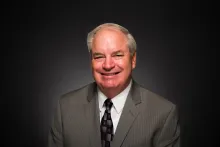
Robin Webber was born in Chicago, Illinois, in 1951, but has lived most of his life in California. He has been a part of the Church of God community since 1963. He attended Ambassador College in Pasadena from 1969-1973. He majored in theology and history.
Mr. Webber's interest remains in the study of history, socio-economics and literature. Over the years, he has offered his services to museums as a docent to share his enthusiasm and passions regarding these areas of expertise.
When time permits, he loves to go mountain biking on nearby ranch land and meet his wife as she hikes toward him.
