
Robin S Webber
This transcript was generated by AI and may contain errors. It is provided to assist those who may not be able to listen to the message.
Well, thank you very much. Appreciate that from the male chorus. Certainly very beautiful. Always nice to be able to have special Sabbath music. Well, this really is a very special Sabbath, isn't it? One of the more special Sabbaths of the year, because here we are coming up against Pentecost. Very unique in that we are able to experience 48 hours of back-to-back holy time. Totally unique in the normal course of the year. And here we are waiting for Pentecost. What is it about Pentecost that there always seems to be a wait? And there also seems to be certain instructions that are given to the people of God, whether under the Old Covenant or in the New Covenant, as we approach this day. When we think about Pentecost, the very term Pentecost, which is used in the Greek language in the New Testament, almost demands anticipation, because what's happening? There is a countdown that is occurring, and it's just not 10, 9, 8, 7. No, we start with 50. We go all the way back into the midst of the days of Unleavened Bread. And here we are with Pentecost, to count 50. And there's just a built-in spiritual anticipation of understanding that God is going to bring something. There's always down through the ages been a waiting period for this time. When we go back to the Old Testament, we understand that by tradition that the pin commandments were given on this day or tomorrow, the Feast of Weeks, the Feast of First Fruits, or what we call Pentecost from the Greek tongue. We know that in days of yore, back in Sinai, that ancient Israel was given specific instructions. As God was supposed, was just about to deliver something wonderful to them. They had been rescued, but now beyond the rescue, God wanted to offer these people, who had not been a people, a relationship. And so he said, Moses, you go out and you tell the people to prepare, that they will come up against the mountain, and that I will have something for them. So tell them to do something. You go and tell them to get themselves in order. Go and clean themselves up. Go and wash their clothes. They are about to come upon something wonderful. They are about to approach the Holy. Now that time came and that time went, and God did give them an incredible gift. He gave him his mind, encapsulated in the loving Ten Commandments. But all that washing that they did basically just went skin deep, dried up in the wilderness. And we understand that that waiting period and even what God offered them, ultimately, the people of God of yesteryear went their own way. And they didn't fully appreciate what God gave them. As we come to the New Testament, we recognize that the disciples were also given a responsibility.
Jesus, before he departed, said, by the way, boys, I want you to stay in Jerusalem.
I want you to use the old King James English to tarry. That just simply means to wait. And I want you to wait in Jerusalem so that you might be imbued by the power that comes from on high. You see, just like ancient Israel, they were also given a responsibility.
They were responsible to wait in Jerusalem. Now, if I'd been one of the apostles, I would rather have waited in Tierra del Fuego. I'd rather be out in Palm Springs, the last place that I would have wanted to have been after Christ had been crucified by the Roman soldiers and put up by the populace to the Roman soldiers and killed and all of that tumult that occurred, the last place that you would have wanted to have been would have been Jerusalem. X marks the spot, and that's the place you don't want to be. But that's where God told them to be. Here we are, like ancient Israel of old, like the disciples of old, and we too are given a responsibility. And I'd like to talk about that today with all of you as we approach Pentecost, which comes tonight at sunset. Today, what I'd like to share with you, the title of my message is simply this. Four spiritual keys to approaching Pentecost. Four spiritual keys to approaching Pentecost. So often, when we think of Pentecost, we at times think of those men and those women of old that were at the start of the church. Oh my, my, my! They were so courageous. They were so brave. They were so dynamic. They utilized all the points that Mr. Schimmet just gave in that opening message. And sometimes you and I, in a bout of spiritual inadequacy, can say, well, why can't we be like them?
Why did it all happen in the first century AD? What about us now in the 21st century? Did God play favorites? Does God have a selected group that He gives more of His Spirit to than others? We look at these people and they are like on the spiritual rushmore and we see their faces. We see Peter. We see James. We see the Apostle John. They are men of stature and they are men of girth and they are men that are renowned within our spiritual community. And we quake and we shake below, far below them, and we say, why can't we as men and women be like them? Why can't we be like a a Tabitha? Why can't we be like a Mary Magdalene? Why can't we be like a Mary the Mother of Jesus? Why? Why? And why? Well, we're going to talk about it and we're going to go beyond why and we're going to discuss how. So often what we do, especially as we come up to Pentecost, we go right into what I call the fireworks chapter of the book of Acts. Acts 2, and we get right into it. And you know, the mighty rushing wind, the tongues of fire, the speaking in different languages, the hearing in different languages, and most importantly, the greatest miracle of that day, which was the conversion of human beings, giving their sole allegiance to God and to His Christ.
But today what I want to discuss with you is not the fireworks chapter, but I want to discuss what we might call the quiet chapter of the book of Acts. We're going to talk and go through Acts 1, because that's where the four keys to spiritual success in approaching Pentecost is all about. We're going to talk about these individuals for a little bit, and we're going to mix ourselves into it a little bit and understand what made them what they were and why God blessed them on that Pentecost in 31 AD. As we turn to the book of Acts, the book of Acts is written by Luke, friend and cohort, companion of the Apostle Paul. He was a man that came late on the scene in one of Paul's missionary journeys, but he shadowed Paul and chronicled so much of what happened in the early church. And Luke was a man that was in awe of these early disciples of Jesus Christ. He looked at them. He saw lives that had been changed, people that were different, people that were totally unique compared to those that were around them. Something had happened. They were interestingly people that actually practiced what they preached. They were unlike any other religion that was at that time extant in the Mediterranean basin. Luke then wrote the Gospel of Luke, which speaks of how salvation came through Jesus Christ. But then he wrote the book of Acts, which speaks of how salvation was spread. And it's called in your Bible, if you look down for a moment, it's called the Acts of the Apostles. But really, it could be better phrased the Acts of the Holy Spirit, because it was not men or women that performed this, but it was God in them, the Holy Spirit in them, that made that change that they were so unlike anybody else in that darkened world of Roman antiquity. They stood out. They were different. They were dynamic. They were light. They were salt, simply because they practiced what they preached. I'd like to read for a moment from a gentleman whose name is Michael Green. It's called Acts for today, Acts for the 21st century. And I'd like to just read this for a moment about what was the aim of the early disciples of Jesus Christ. Without clarity of aim, one achieves nothing. These men and women had great clarity of aim. They wanted to see people from every background in antiquity, one to the exclusive allegiance of Jesus Christ. By exclusive, I do not, of course, mean the elimination of all the normal functions of life, rather the elimination of any other object of worship than the God who had revealed Himself in the coming and the dying and the rising of Jesus. And that was quite without parallel. The notion of conversion was strange to the ancient world. We use the word either to mean that someone has left one religion or none for exclusive attachment to another, or else we would use it of someone who has hitherto been a merely normal adherent of some faith, but has then awoken to its significance with enthusiasm and insight. And that simply did not happen in the Greco-Roman world. That world was polytheistic. It recognized all manners of God's. If you like to take on the worship of a few more, that was your business. The others got rearranged. They didn't get wiped off. Some of the philosophers, it is true, spoke of awakening to stoicism, to cynicism, in terms reminiscent of Christian conversion. But the parallel is more apparent than real.
Speaking of those philosophers, these noble pagans like Cicero, Seneca, and Marcus Aurelius have left us detailed reflections on their life and beliefs, their struggles, entertainments, and all of them end up in agnosticism, confessing that they have no compelling reason for believing that the gods even exist. Moreover, for all of their claims, to a transformation of life, through adherence to the new philosophy, the gap between precept and practice in these men was enormous. Marcus Aurelius came out with some of the most Christ-like talk, but was the most bitter persecutor of Christians during the first two centuries. Seneca claimed he was not only being improved, but being transformed, but his life showed no signs of it. He claimed to be totally uninterested in whether he was rich or poor, yet hung on assiduously to his vast wealth after acquiring much of it by questionable means. His ruthlessness, speaking of Seneca, to his creditors was one of the main economic reasons behind the Boedasian revolt in Britain, which cost the empire one of its best legions. He proclaimed noble truths about the equality of slaves and freemen as human beings, but did nothing to set any of his own slaves free. Last but most important, and I don't like to read more than need be, but this sets up this part. Men came to philosophers like these for advice, not for example. The separation between belief and behavior was one of the fundamental differences between the best of philosophical religion and Christian behavior. The separation between belief and practice. Now, when you go back to ancient Israel, on the shady side of Sinai, they knew that there was a god. They knew god.
They had his law. They were offered a relationship. But at the end of the day, it was about what they were and what they are or were not in relationship that either god could bless them or move his blessings away from them. Take that forward now to Jerusalem, 31 A.D. Jesus Christ comes to not only be the savior for the world, but to establish his church. And he is now in the midst of making the Israel of God as defined by Paul. And there's a few people in the book of Acts that follow what Greene says here, that it's not only what they know or who they know, but what they are. And I want to share this with you for just a few minutes, friends, because sometimes I realize that some of us can be frustrated. We can say, why am I not being used by God? I want to be used. I want to be a disciple of Jesus Christ. I want to be a godly individual. I want to experience the kingdom of God now. The kingdom of God is at hand in my life. I feel that I have surrendered my life to God the Father. I've given myself to Jesus Christ, and yet things still are not working out.
Why? Well, let's go back and go to chapter one here and notice the fundamental steps of why God blessed the early church on that Pentecost day when they were of one accord in one place. The first point that I want to give to you so that you on this Pentecost and hence forward every day, not just a Sabbath, not just a festival, but can be blessed by God, can magnify the Holy Spirit in us and glorify God. What can we do? Point number one, what is identified in chapter one is that they were an obedient people. They were an obedient people. Let's look at Acts 1 in verse 4. And being assembled together with them, He commanded them not to depart from Jerusalem, but to wait for the promise of the Father, which He said, You have heard from Me. For John truly baptized with water, but you shall be baptized with the Holy Spirit not many days from now. God, through Christ, commanded them to remain in Jerusalem, to be still, to wait, and to listen for God. Now, let's understand something, friends. Let's appreciate that these men were the same guys that were a bundle of nerves, stressed out individuals. They wanted everything, including the kingdom of God now. When is it coming? It was one of their last questions. They not only wanted the kingdom now, but they wanted to basically be in charge of the kingdom under Christ. They wanted to grab. They wanted everything now. And Jesus Christ said, Wait!
One of the great echoes that comes out of the Old Testament is from the Psalmist in Psalm 46 and verse 10, Be still and know that I am God. Now, I know and I realize that some of us in this room right now are going through great and dynamic challenges in our life. Perhaps in our families, perhaps in our marriages, perhaps in our parent and child relationships, perhaps because of the economy that is around us, that is challenging us. And the bad news just doesn't simply go away. We're in a recession right now. But you know what? When you're out of a job, it's not a recession. It's a depression.
And we're being challenged. And we're getting frustrated. We want to take matters into our own hands. We do our lip service to God. We do our knee bend to God, but then we go out and we just do our own thing and recognize that God has something in store for us. If only we will learn a lesson from chapter 1 of the book of Acts. And that is that God will bless in His perfection and in His will and in His time, He will indeed bless His people. The psalmist again says, David himself says in Psalm 37 and verse 25, I have never seen the sons of God go without bread, that God knows what we need in our time and our way.
God was testing their obedience.
Obedience is so important when it comes to receiving the blessing of God. Why is that? We see so often when you go back into the Gospels what rascals these individuals were at time. They did everything but what Jesus wanted them to do. We know that, you know, Peter was one that would grab for a sword. We know that Judas would grab for the purse. They wanted everything their way and in their time because they felt they were right and they wanted to take care of themselves. Now they had to wait. They had to be obedient. Why is it so important, just looking at Acts 1 and verse 4, Jesus Christ commanded them. He didn't just say, oh, believe on me and you'll be saved. No, there was a responsibility. They had to obey. They had to, by their behavior and by their surrender, obey God. Why is that so important? Let me share why. We need to come to appreciate that disobedience in human nature is not marginal to our lives. It is central. It is central to human nature. We recognize that out in the world a lot of people say, well, you know, human nature is basically good. It's okay. In fact, I'm okay. You're okay. No, disobedience is not marginal, but it's central to human nature. But here, obedience is so important because we come to God in faith. We've given our life to God and said that Father knows best. I want to show you a verse in Acts 5 and verse 32, speaking of the Holy Spirit. Acts 5 and verse 32.
And we are His witnesses to these things, and so also is the Holy Spirit whom God has given to those who obey Him. God gives His Holy Spirit to those who obey Him.
Faith and obedience are not diametric opposites. They are not poles apart. Obedience is the shadow of faith. Wherever there is faith, the shadow of obedience will follow. Let's understand this. I can't make a PowerPoint out of this, but I know you have what I have, and that's a shadow. When I go this way, my shadow doesn't go that way. Maybe you're does. My shadow follows me. The body of faith brings the shadow along. When you have faith in God, and that faith is demonstrated even in dark moments of your life, that faith is demonstrated by obedience, not by what you believe, not by precept, but by what you do and by practice. And as we do that, God is going to bless us.
Sometimes you say, well, that's it, Weber. Acts 1.4, obey. I mean, they just waited and they got the Spirit just for staying in Jerusalem. Well, I just set up what being in Jerusalem was like. Sometimes we're waiting for something really big, like Naaman, the Syrian general who comes down in the times of Elijah and Elisha. And, you know, he's down there and he comes to the prophet, okay, well, what big thing do you have me to do? What you want me to do, boss?
The prophet says, you go down and you dip in the mud hole of the Jordan, and you go down seven times. He says, you got to be kidding me. Don't you know where I'm from? I'm up from those big mountains up in Syria. I mean, we got gushers of rivers that come out of those mountains. If I needed to be clean, I could have done it up there. And you want me to go to... look at that mud hole seven times? Give me something big to do, something great, something magnificent.
Sometimes you and I are waiting for the magnificent when God has simply asked us to perform before Him in a heart-filled obedience of the little things in life.
We're waiting for something big, something dynamic, something that is complex, something that is universal scope. When God just says, obey me in the little things.
Are some of you waiting for something really big in your life to happen when God has already told you to obey me in the simple, to obey me in the little, to practice what you preach, and it may just be the little things? This is so very important to understand.
Isaiah 66.
In verse one, So, thus says the Lord, Heaven is my throne, earth is my footstool, Where is the house that you will build me? And where is the place of my rest? For all of those things my hand has made, and all of those things exist, says the Lord, but on this one will I look on Him who is poor and of a contrite spirit, and trimbles at my word.
Whatever that word is. And God, when He asked us to approach Him in faith, He gives us details at time. He gave Noah details as to how to build the ark. I'm glad it was Noah and not me. But He gave him a lot of details. He gave Moses and Aaron details as to how to build the tabernacle in the wilderness. And it was not as complex with those early apostles, but He just gave them one detail. You wait in Jerusalem. You wait there. You have an appointment with Me, and it is coming. And God bless them. Let's go to Philippians 4 and verse 4, and then we'll go to the next point I want to bring you. Philippians 4 and verse 4. Rejoice in the Lord always again, and I will say rejoice, and let your gentleness be known to all men. The Lord is at hand, and be anxious for nothing, but in everything by prayer and supplication, and with thanksgiving. Let your request be known to God. And it says, the peace of God, which surpasses all understanding, will stand sentinel, or guard your hearts and minds through Jesus Christ.
The reason why these men and women in that quiet chapter of the book of Acts would become blessed with the Holy Spirit. Spirit is number one. They were obedient. Number two, second point, they devoted themselves to prayer. They devoted themselves to prayer. Let's again go to Acts 1.
Pick up the story.
And let's take a look at verse 14. Here they are, they are waiting. Number one, they are waiting, and they are being obedient. Now we pick up the second point. These all continued with one accord in prayer and supplication. Supplication is breaking down your prayers in smaller, finer detail and going back to God again and again about a certain situation with the women. Excuse me. And they saw accord with one prayer and supplication with the women and married the mother of Jesus and with his brothers. Now why do we center on Acts 1 and verse 14 in the quiet chapter of the book of Acts? Well, simply this. Prayer is nearly as unfashionable as obedience. Prayer is almost as unfashionable as obedience. But they made it a top priority in Acts 1. And did you notice here it was prayer amongst people that to this point didn't really like one another. Notice verse 13. And when they had entered, they went up into the upper room where they were staying. Peter, James, John, Andrew, Philip, Thomas, Bartholomew, Matthew, James, the son of Alphaeus, Simon the Zealot, and Judas, the son of James. Now let's just take with this crowd for a moment what had formerly been what we might call the dirty dozen in the book of the Gospels. These were men that had vied for power. They were probably by this point, perhaps, until they started praying, looking at one another. Well, which one ran out of the garden of Gethsemane first? I was only following you. These were people that didn't really like one another. They didn't respect one another. But that's just the 12. Notice verse 14. And here were women and married the mother of Jesus. And notice also, and with the brothers, oh yeah, the family.
Where were they for the last three and a half years? Where were they? And these women? You know, we don't do this. We're Jews, and we're praying with women. It's usually women over here, men over here. The bottom line is simply this, friends, to set this up.
Prayer brings people together. And God blesses prayer. Don't worry about who's praying around you. Worry about praying up and seeking God's answers. A lot of us in this room right now need God's answers. We need the full supply of the Holy Spirit that Mr. Shimmitt talked about. And prayer is powerful. And more than ever as the people of God, we need to pray together. We talk too much, too long, about our problems, and not enough about how God can solve our problems and talk to God. A woman called me up this morning. She had a problem. She couldn't breathe. There was something stuck in her throat.
I said, let's pray about it. Let's just do it right now.
We prayed about it. I asked for God's miracle to be upon her. You have to know the individual. You know it's really scary when you can't breathe. You ever been there? Scary. And I asked God to dissolve that which was in her tract.
Within minutes, she could breathe. And she's okay. A couple weeks ago, I talked to an individual who had a challenge. There was an individual that was just making his life miserable on the job. He wanted to talk about it with me. I said, well, we can talk about it or we can pray about it. I said, come with me. So if you ever see me behind a corner over here praying with somebody, you know what we're doing. I said, come with me. We're going to pray about it. And I prayed that prayer twofold. I said, God, you either soften the heart of this individual that is hurting one of your saints. You just soften it. You make it like melted M&M's. I didn't quite say that in the prayer, but I did say soften this individual's heart. Or I said, smite the individual with a challenge that he's going to understand. Sometimes you have to ask for the soft approach. Sometimes you have to ask for God's approach in something. Just as much as the Apostle Paul, when he saw Elamis, the sorcerer said, what are you doing to the servant of God? I'm about God's business.
And things changed for that individual.
When we pray to God in the 21st century, friends, we need to expect results that when we get off our knees as a person with the Spirit of God in us, as the body of Christ moving, when we get off our knees, we need to go out and make those prayers happen and give God the credit. These people were indeed a praying people, and they needed to pray about it. Let's go look at Acts 1 verse 24 for a second. Acts 1 verse 24. They were constantly in prayer. Notice what it says. And they prayed and said, you, O Lord, who know the hearts of all, show which of these you have chosen. They needed to choose one of the new disciples to replace Judas. We go to, again, we go to another verse in Acts 4 and verse 2. No, no, Acts 4 and verse 2. Let's go to Acts 4 and verse 31. And it says here, And when they had prayed, the place where they were assembled together was shaken, and they were all filled with the Holy Spirit, and they spoke the word of God with boldness. You find that all the way through Acts 5 and then Acts 12 and verse 5. Notice again, continually praying. Peter was therefore kept in prison, but constant prayer was offered to God for him by the church. Brethren, if we are going to be like that model that is set before us in the pages of the Bible of being a church that is filled with the Holy Spirit, we need to talk less, pray more, individually and collectively. Now, when I say pray together, I'm not talking about a universal priesthood of believers. I'm not discussing that at all. But when you're with somebody that you love, that you're close to, and you can talk and talk and talk, pray about it. If it's big enough to talk about, if it's big enough to care, it's big enough to pray about. And God honors our prayers. God listens to our prayers. What made that early church happen is not rocket science. Number one, they were obedient. And number two, they recognized the answers were not around them. They were upstairs, and they needed to go to God. We need to pray before God. We need to pray together as a church. At times when at church, when we give announcements and there's somebody amongst us that is really going through something, I'm not talking about going through about a flu. Flu will come and flu will go. But where there is a life-changing illness that's impacting the individual, impacting the family, impacting our church, impacting maybe the servants of God and not allowing them to go out and preach the gospel, if it's big enough to talk about, it's big enough to pray about. And the church pray together and know that an answer is going to come. I know several years ago when I offered up prayer before the Feast of Tabernacles in Escondido, we had a servant of God that had a real dilemma. He had a dynamic and incredible injury. And as that prayer was being offered up, that individual was hundreds of miles away. And at that time, he became better. Don't ever discount prayer, the power of prayer, and people that bend themselves on the knees of their heart together and seek God. Seek God with all of their heart and all of their soul to be obedient, to be a prayerful church. That takes us to point number three. They were united. Acts 1 and verse 14. They were a united church. Notice what it says here in Acts 1 and 14. They all continued with one accord in prayer and in supplication. Acts 2 and verse 1. Notice, when the day of Pentecost had fully come, they were all with one accord. And notice, one place.
The book of Acts chapter 1 stresses and defines the warm center of togetherness that received the Holy Spirit that came in Acts 2. Why is that so important to understand? Why is it important that in the body of Christ, I'm not just talking about the LA congregation, I'm not just talking about the United Church of God, but the body of Christ around the world, that when you look at it, that we pray for unity of the Spirit. That doesn't mean that there's not other fellowships. That doesn't mean that there's not other organizations, other Bible study groups, or this or that. And they may be there for a reason. We may be here for a reason. I believe that we are here for a reason. But there is more that binds us. There's more that bonds us, than separates us. Perhaps that's why in Ephesians 4, that the Apostle Paul said, center on these things, that there is one Father, there is one Lord, there is one baptism, there is one faith, there is one hope of your calling. These are the things that bond us, bind us together.
And there's much more that bonds us together and binds us together, and unity of the Spirit, than separates us. It's only ourselves. It's only our human nature that separates us. As we come up to this day of Pentecost, brethren, I want to ask you to pray for all of the body of Christ around the world, whoever they are, wherever they are, that God would bless them, that God will direct them, that God will pour out upon them all of what He desires to give them as a person or as a people. Oh, they may have a practice different than the United Church of God, they may understand something a little bit differently than the United Church of God.
You put two people together, I'll show you three opinions.
But we have more in common. As we come up to this day of Pentecost, brethren, it's very important that I remind you that in the United Church of God, that we believe in a big God that works with many people, that works with other people, other organizations, other groups, and we give them to Him. They are in His purpose. We don't have to worry about them. We just need to pray for them. We need to love them. We need to mutually esteem what God is doing with other people. As we do, hear me, we then become a bigger people. We then have greater hearts. We then worship a greater God.
Do you want your God to be bigger, greater than you have ever imagined? Just let Him do His work. Let Him choose whom He will, and you will find your understanding of the Bible and the understanding of our God and the understanding of our Savior more incredible than ever. Let's pray for the body of Christ during this time. Psalm 133 in verse 1. Psalm 133 in verse 1 reminds me of the first and the second chapter of the book of Acts. That's why we put it in the bulletin, why we put it in updates and reminders. This was one of Mr. Herbert Armstrong's favorite verses within his family. And we always want it before us, especially on this, the Feast of Firstfruits that's coming up.
Behold how good and how pleasant it is for brethren to dwell together in unity. It is like the precious oil upon the head running down on the beard, the beard of Aaron, running down on the edge of his garments. It is like the dew of Herman, descending upon the mountain of Zion. For there the Lord commanded the blessing life forevermore. Unity of the Spirit brings life, brings blessings. It comes when God's story is bigger than our story. Why is unity so very important?
Because you and I look forward to a world that is one day going to be united under the King of the wonderful world tomorrow, Jesus Christ. We speak and go to the Feast of Tabernacles. We talk about one Savior, one kingdom, one language, one way of life. We preach this. This is our witness. This is what we're to be about.
But when we are disunited, when we are at odds with one another, not obedient, not prayerful, and not united, our witness, our witness has none effect. It joins the rest of the darkness that is around us. God cannot bless disunity. Hear me? God cannot bless disunity no matter how great it is, or how extent it has become. But God can bless unity no matter how small it is.
One person, one family, two families, one congregation at a time, one fellowship at a time. He can take that unity no matter how small, just like the little boy who had the brown paper sack of fish and loaves and came up to Christ. And he said, this is what I've got. This is it. And Jesus took his little, and he took that little, and he made it a lot.
So much so that the disciples had to go back out and collect the leftover lunch. But I have a question for you. I wonder if the little boy had not given the little that he had. There had been nothing. You see, if we give God nothing and we do not even provide him our little, he has nothing to use. But when we give him what we are, and as we come to him with who we are and what we are, an obedient people, a prayer-filled people, a united individual, a united person, God takes that. And guess what? The rest is the book of Acts. Let's go to point number four. Point number four.
These people in the book of Acts, chapter one, were an expectant people. They were expectant. They knew something was coming, but they just didn't know quite what it was. They knew that they had come into contact with an individual that, in their mind and by their witness and by what they saw for three and a half years, must indeed have that great spirit of God in him. And he had told them something very specifically in John 14 and verse one.
Join me there. In John 14, in picking up the thought in verse one, he had said simply this, let your hearts not be troubled. You believe in God and believe also in me. In my father's house are many mansions. If it were not so, I would have told you I go to prepare a place for you. Verse 15, if you love me, keep my commandments.
And I will pray the Father and He will give you another helper that He may abide with you forever. The spirit of truth from the world cannot receive because it neither sees Him nor knows Him, but you know Him for He dwells with you and will be in you. And that will be further discussed tomorrow. Verse 18, I will not leave you, orphans. I will come to you. Now, they didn't understand that all at once, but there was an expectancy that God had through Christ given a promise.
And Christ's promise was as good as done. So thus they waited for those days, counting down, waiting for Pentecost to come. They did not know fully what was going to come. They did not fully understand it. It would only come later, which you'll hear about tomorrow. But they knew that God had promised them something and they were obedient. They waited. They prayed together. They remain united. And you know the rest of the story that is going to be fulfilled tomorrow in Acts 2. They received the gift of the Holy Spirit. Where does that leave you and me as we come up, not to Sinai, but to the mountain of the kingdom of God as we rehearse it tomorrow in the face of Pentecost?
How can you and I demonstrably move down the path of expectancy? Allow me to share just three key words for you. Number one, we need to be open. We heard that from Mr. Schimmet today. I share this with you as a fellow Christian and as your pastor. I'm not going to be able to be with you tomorrow as much as I would like to, but we're not quite in that spirit world yet.
I just can't quite make it from here to Temecula, all in the same second. So I want to share this with you and allow this to be a goal for all of you, my dear friends. Number one, as we come up to the shady side of Pentecost, number one, ask yourself, here I am, a child of God. Father above, allow me to be, allow me to be open, allow me to be open to the prompting of your Holy Spirit. I need guidance. I live in 2011.
I live in a world that is increasingly godless, humanistic, fraught with problems. I open the news, there's no good news. Have you noticed? Yeah, I won't go there. Allow me to be open. God can use an individual that is open to his spirit.
Number two, once you are open, number two, be available. Be available as the prompting of God's Spirit comes to guide you to either convict you of sin or to convict you of righteousness. Be available. All you have to do is go back to Luke 9 and everybody wanted to follow Jesus Christ. Remember that? I'll follow you.
I'll follow you, but first I've got to go back. What? I've got to be with my friends. Oh, I've got to go back and I've got to bury my father. When my dad dies in about 20 years from now, which is really the context of that verse, then I'll come back. Then I'll volunteer. Then I'll follow your call to follow me.
No, no, no, no. It doesn't work that way. This coming week, I can guarantee you something will come into your life that, number one, you are going to have to be open, yielding, contrite. Number two, you're going to have to be available. You're not going to be able to push it off.
There's going to be no more convenient moment than the moment to surrender yourself to the will of God the Father and Jesus Christ. And number three, then be open and be available. Number three, be willing. Be willing.
Isaiah 6 and verse 8, and the word of the Lord came to mean, they said, whom shall I send before me? And the voice comes back, send me. This will come to you in your life this week.
Practice makes perfect as we are obedient, as we are prayerful, as we are united, and as we are expecting that God is still molding and shaping and grooming us into the completeness of Jesus Christ. We will look forward to God's Holy Spirit working with us this week, as much as those men of old, those women of old, anticipated the fullness of what would come on that Pentecost. This is so exciting, brethren. This is the call of God to each and every one of us as Christians under the New Covenant. We don't have to look back to Acts 1 and Acts 2. We look forward to this evening. We look forward to tomorrow. We continue to look at the hand of God and the life of Christ in each and every one of us to glorify Him. That's why God gives us these festivals to bring us into remembrance that it's not about us. It's all about Him, and yet He's called us into relationship. Let's go forward into this evening. Let's really pray that God will bless Pentecost 2011 more than ever as it comes upon all the men and the women of the body of Christ around the world.
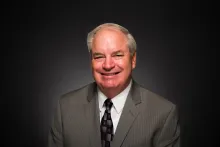
Robin Webber was born in Chicago, Illinois, in 1951, but has lived most of his life in California. He has been a part of the Church of God community since 1963. He attended Ambassador College in Pasadena from 1969-1973. He majored in theology and history.
Mr. Webber's interest remains in the study of history, socio-economics and literature. Over the years, he has offered his services to museums as a docent to share his enthusiasm and passions regarding these areas of expertise.
When time permits, he loves to go mountain biking on nearby ranch land and meet his wife as she hikes toward him.
