
Robin S Webber
This transcript was generated by AI and may contain errors. It is provided to assist those who may not be able to listen to the message.
Today, we find ourselves in a very unique setting. Here we are gathering together as the Los Angeles congregation, right on the doorstep of the Festival of Pentecost. That's going to occur next weekend, just a few days away. Less than ten days away. When you think about it, if you put it all together, we are really in that unique time frame or that parallel, you and me, now, as to when the early disciples were waiting in Jerusalem. There they were. Jesus Christ had told them that that spot, we might say a hot spot, a challenging spot, a dangerous spot, was exactly where He asked them to stay until something came along.
The question I have for all of us is, what were they doing? What were they doing? And what were they about during that time leading up to Pentecost? Perhaps an even better question to ask and better still is simply this. What was God doing? And what was God about during those days leading up to Pentecost?
You see, their lives and the world was about to change forever. That God's purpose, God's pleasure, was about to be manifested. The bottom line is simply this. It's going to be the foundation of what I want to expand upon in the rest of this message, friends. Jesus Christ had given a promise. That's why they were there. Christ had given them a promise before He left. He said that something special was on its way.
And these simple folk, and they were simple folk, they were men of Galilee. They took Him at His Word. Now, as we begin to develop this message with a Pentecost framework, the question that we've got to address today and that you've got to answer for yourself is simply this. Do you believe in God's promises? And do you take God at His Word? Now, with that said, what are we anticipating today as to how God will fulfill promises in our lives and what He has in store for us?
Let's talk about Pentecost for a moment. Pentecost is a neat festival. It's a neat festival. I don't know what the Hebrew or Greek word is for neat, but it's a neat festival. I've had the pleasure of keeping Pentecost for nearly 50 years, and there is an excitement. There is a buildup. There is an enthusiasm. It's almost like a bubble is going to burst that when we approach Pentecost, it is exciting because we anticipate.
We're counting the Feast of Weeks, the Feast of First Fruits, as it's called in the Old Testament. And then, to consider what is called in the New Testament, Pentecost. That means to count 50. There is a natural countdown. There's a natural anticipation and, hopefully, spiritual anticipation as to what this day brings forward. When we were kids, and all of us were kids at one time, late 50s, early 60s, I remember we'd have plastic models and rocket ships that we would hope would go up at least 10 feet in the air after all the work that we put on them.
We didn't have drones back in those days, just little plastic rocket ships. It was simple. But we remember because we'd watch the science fiction movies or the takeoffs of the Gemini astronauts, we'd all go 10, 9, 8, and down to the countdown. Well, that's what Pentecost is like. It's about a countdown to receiving a promise from God, to obtaining a gift given graciously from God the Father through Jesus Christ.
You see, before he left, he says, I'm going to send something. I'm going to come to you. Get ready. Be prepared. And, by the way, stay in Jerusalem. Pentecost is about anticipation. It's always been about anticipation. Even if you go back to the book of Exodus, you might want to look at it later, Exodus 19, that when another people that were going to be a covenant people were coming before God, there was a sense of expectation as they came up against Sinai.
And God told Moses, He said, tell the people to prepare themselves. Get ready to put it and cut to the quick. Take a bath. Clean up before you come up against the mountain, because something special is going to occur. And so we see this anticipation. God wants us to anticipate the Feast of Pentecost, but He also has expectations of you and me. The Feast of Pentecost, if you want to put it this way, is when anticipations run into God's expectations and come together to make us a more complete package for God to be able to use.
To understand all of this, I'd like to turn to our spiritual family scrapbook called the Bible, and let's go to the book of Acts. Join me over in Acts if you would, because that's basically where we're going to be for the remainder of this message. We're going to go to the book of Acts.
Now, I really appreciate Mr. Garnett starting out this morning with Luke 1. Again, Luke is about how salvation came about. Luke was astonished. He was amazed. See, he is one that came late to the party. And not only that, he was not even invited to the party because he was a Gentile. So that once this Gentile doctor came into the midst of the Ecclesia, into the midst of the church, he was fascinated. He marveled. But, as a doctor, and you know what doctors do, they examine.
They go into detail. They know how your body works. And Luke began to think, what makes this body of people work? How did salvation come? The book of Acts is about how salvation was spread by these men and these women. For every man was, there's a woman.
And for where there's a minister, there are members. This was not just done in a corner. This was not just done by one individual. This was not done by 12 men. This was done because people had this gift in them that Christ had said would come along. So let's take a look at this. We're going to, in a sense, we're going to peek into that upper room as to where the disciples were. We're going to peek in. We're going to look at them.
We're going to examine them. And we're going to understand what we can get from them. Why is that so important for all of us today? Can we talk? How often do we look at these incredible gentlemen of the first century A.D.? And we stand in awe as if we are before Mount Rushmore. We have a Peter. We have a John. We have an Andrew. We have a Matthew. We have men that we know that God used mightily. And in a sense, we feel inferior. We have a heart. Or maybe it's just me at times. And that's why I have to plug my heart and my eyes into this book and to recognize something.
And that is simply this. The same forces, the same gift, the same promise that was promised to them has been given to us today. Okay? Are you with me? We're not operating off of two gifts. We're not operating off of two promises. We are not operating off of two spirits. God doesn't have an A spirit and a B spirit.
God does not have grandchildren. God has children. He's direct. And when He gave the apostles, He's giving us, which is that gift, that promise, and that spirit, which we'll be talking about a little bit more. So it isn't that the recipe is lacking as God shows no partiality. So the answer lies in something else. And I says to myself, when I talk to myself, what is that which is missing at times in my own life? And it simply goes back to three things. Number one, as a Christian with the Spirit of God in me, as a new creation, as one called out of this world, number one, I need to be available for God's Spirit to work in me.
I just simply need to be available. Number two, I need to be open. I need to be open to what God wants me to do today and tomorrow rather than simply what He asked me to do yesterday or in your midst 25, 35, 40 years ago. I've got to be open and willing for God to surprise me as to what He's going to do next and where He's leading me. Though sometimes God wants to lead us and we say, we've never done that before. Nobody's given me permission to do that. We need to remain open. And then number three, number three, we go from being available, just as it says in the book of Isaiah, whom then shall I send?
And Isaiah came back and said, because he was available, send me. Then we need to be open to what God gives us. And then number three, we need to be willing, willing to move to that which we are perhaps afeard of and to recognize that the blessings of God, the companionship of God, as it moves us through that hoop of fear, that the recovery is on the other side of that which we fear the most.
And to recognize that God has a purpose and a pleasure for each and every one of us. And so we see all of this. We have to more than ever, brethren, in 2015 and 2015, as in a sense Christianity is under attack even in our country, that the squeeze is on, that we have to be willing to again stand up and keep on standing up and allow God and His righteousness to perform His work in each and every one of us. Now, as we peer through this window, we're about to look in. Get ready. There's going to be four key qualities that we're going to find out.
Four key qualities. Four steps to approaching Pentecost. They're very loud. You cannot miss them. So let's get ready. Let's take a breath. We're going to peek into that window and see what was going on a few days before Pentecost. We're going to be in Acts 1. Acts 1 is sometimes called the quiet chapter of the Book of Acts because seemingly all the fireworks happen in Acts 2. But if we don't have the foundation, then we're not going to have those spiritual fireworks that God wants to work with us on.
So we go to Acts 1. And number one, let's go to Acts 1 and verse 4. Pick up the thought. Acts 1 and verse 4. And being assembled together with them, He commanded them not to depart from Jerusalem, but to wait for the promise of the Father. So He commanded them. Now it's a strong word in this day and age when it says, notice again, that He commanded them. He used that C word, command. He did not suggest. He did not give them multiple choice. He commanded them to remain in Jerusalem. Now, with that stated, now let's drop down to verse 12 and then we'll put it together for point one.
Then notice what it says. Verse 12. Then they returned to Jerusalem from the mount called Olivet, which is near Jerusalem, a Sabbath day's journey. They not only heard it, they did it. It's not what you know, it's what you do. And you do it because we are God's children. Point number one. What made these men and women of the first century such soldiers of the Gospel is simply this.
They were number one, an obedient people. They were an obedient people. They listened. They stood still. They waited and waited and listened to what God would do. Now, let's understand as we look deeper into that window, we see who's in that room and we go, really? Really? Let's understand that others, such as yourself and myself, might have started the church out with a different group of people.
That we would have never selected this bunch of men. Maybe women, yes, but the men, forget it. We've got four different books in the Bible about them and, frankly, they're shenanigans at times. But that is who God the Father, through Jesus Christ, selected were these twelve.
And let's appreciate that these men, Peter and Matthew and John and Andrew and Nathaniel, they all lived up to everybody's unexpected about them. They were a bunch of guys that had a bundle of nerves. They got stressed out. They wanted everything. They wanted everything, including a kingdom and positions in that kingdom. That is, Jesus Christ was about to, what? Die the next day. Be beaten that night. Die the next day. They're at that table of the New Testament Passover. And what are they thinking about? What's in it for me?
But like everything with those that God is working with, stay tuned. Always give people another chapter. Wait and see what God will do. And here's where we're at. These were men that, so much like others, had mistaken, in a sense, motion and action for godliness.
Isn't that kind of the lesson that God tried to point out to Elijah when Elijah was in that cave on the Mount of Horeb, where the wind came by, where the fire came by, but God was not in the fire. God was not in the wind. God was not in the light show. He was not in the fireworks. God was in that still, small voice. You have to wait. You have to tarry, as is the word in the Old King James English.
You have to abide and you have to dwell where God puts you. And sometimes you just simply have to wait on God. That's what they had to do. They had to go against the grain of human nature where Adam and where Eve had grabbed an apple, where Uzzah had grabbed an ark, where Peter had grabbed a sword and Judas, well, you know, Judas, he grabbed the money. Motion, activity, does not necessarily equate to godliness. Sometimes God just says, Stand still. I promised you something. You rely on me and see what happens. Now, the question that we have to ask ourselves as we move through point one is simply this.
God was testing their obedience. And to be very frank, I don't know how I would do on this one. Again, wonder, you think about this for a moment? Wonder if you had a bounty on your head. Wonder if your ringleader had been the one that had just been crucified.
Wonder if they kind of knew you by accent, by clothing, being a Galilean, and you were just out of city and out of town, and you stood out like a sore thumb. Why didn't Jesus ask us to wait somewhere else other than Jerusalem? If they had waited somewhere else and waited it out, it would have been by their works. But Christianity is not about simply works. It's about God opening doors and moving in. It's about what God will do when we stop and wait and listen for Him.
There they were in Jerusalem. They could have been picked up at any time. They did wait in Jerusalem. And to be frank, thank God they did. Why was this so important? These were the men that were going to be those that were going to be sent out to spread the good news, that the one come from God had lived and died, was resurrected, and they were going to go around the world.
God had to put a test on them, and He did. These were the same names that were going to be enshrined later on in the New Jerusalem. God did not call them and is not calling us to a picnic. He's calling us to His kingdom. And to recognize the weight of them, being in Jerusalem of all places, but God was testing them. Why was He testing them on obedience? Let's be plain. Let's be simple. We must understand that disobedience, the opposite of obedience, disobedience is not marginal to the human experience.
It's central. Apart from God, it dominates us. Paul said in Romans 8, verse 7, that the carnal mind is enmity against God. We would like to believe, but our human nature gets in the way. More than ever in 2015, brethren, we need to recognize that we need to be a people that follow God's commands. We need to be a people that are comfortable with the O Word, that we desire, not only out of duty, but under the New Covenant, with God's laws written in our hearts and our minds, yes, there is a command, and yes, we yield to that book, but yes, we do it out of desire.
We do it because we love God, we love Christ, we want to be a part of their family and to do their bidding. Today there are some people that don't like to use the O Word, don't like the word commandment, because somehow they think it's opposed to what God is doing. Not at all. Obedience is not contrary to grace. Faith and obedience also go arm in arm. Grace, that gift of God, not only unmerited pardon, but that environment of grace that we remain in as He loves us and keeps us by His Spirit hedges us about with His blessings, continues.
And it is ours under the New Covenant, and He blesses us and keeps us. And thus, because we understand of His great love and because we accept His sovereignty in our lives, therefore we take this book that we believe is infallible word, and if He is the sovereign of our life, and Jesus Christ is the King of our life, and this is their Constitution, we emulate it. We do it. We don't do it perfectly because we're in this human frame. And there's no amount, no amount of commandment-keeping, no amount of our own works that in any way justifies our entrance into eternity.
It is by God's grace. It's His unmerited pardon and His ongoing grace and His love that as He sees our hearts and He sees our minds being molded by Him and His Spirit, that He sees what we're doing and He says, Come, you can be a part of this. Grace, commandment-keeping, obedience? No. They're all a part of what this book is about. And because I'm a commandment-keeper and because I strive to obey God in no way towards grace, it is God's reasonable expectation as the Lord of my life that I will yield to His word and what the words say, and that I will not add and I will not diminish from these words.
Is it comfortable at times in this world? No, it's not. Have you noticed that, or am I the only one? It's not. It's not as comfortable just as Jerusalem was not comfortable. But God is molding and creating, as we think of Pentecost, the Feast of First Fruits, He's developing a new creation. They're called First Fruits. Just go to James 1, First Fruits. And these men had to obey. Join me in Acts 5.32 for a moment. Acts 5.32, and let's nail down a verse here. Acts 5.32, And we are His witnesses to these things, and so also is the Holy Spirit, whom God has given to those who obey Him.
God gives His Spirit to those that yield their kingdom, their personal kingdom, to Him, and hand it over. And we say, Hear God, it's yours. I am nothing. I've come to see who I am and where I am, and that you want to rescue me. God says, I will be your God, and you will be my people. Let's go to point number 2, Acts 1, verse 14. Acts 1 and verse 14. Again, these all continued with one accord in prayer and supplication, and with the women and Mary the mother of Jesus, and with His brothers.
The key thing that we notice here, simply in verse 14, is this, that they devoted themselves to prayer. When you notice the number of prayers that are mentioned in the book of Acts, it's fascinating. Remember, Dr.
Luke, I don't know if John used that phrase this morning, Dr. Luke, Dr. Lucas, he's diagnosing what makes this body of people spiritually healthy. Think of it that way. What makes this body so healthy and vibrant? What made them vibrant was they devoted themselves to prayer. Now, prayer is just as unfashionable, humanly speaking, as, are you with me, obedience. Yes, it is.
It's not always our natural reaction. But they, these men, these women, they made it a priority. And when we look at Acts 1.14, it was done amongst people that did not necessarily like one another up to that moment. The disciples were not really buds. They were all from Galilee. They all followed Christ. But we know all of the challenges that were between them. And then, well, have any of you ever worked for a family business? The family.
Then the family comes in. These latecomers, these, where were they the last three and a half years? Now, all of a sudden, they're in the room. And then, there are men in the room. You think of Judaic culture, there are men in that room, but then here are the women.
So you have twelve guys that had not gotten along too well together. You have the family. And then you have the women. And what do we find them all doing together? They are praying. They are beseeching God. They know they don't have the answers by themselves. And they devoted themselves to prayer. Now, why did they do that? Because when you pray, it offers hope and it gives perspective.
And boy, did they need perspective in those days leading up to Pentecost. You see, Jesus had promised them a gift. He said it's coming. Their heart was willing. But let's face it, humanly, their knees were shaken a little bit. What are we doing here? And it gave them perspective. That's what prayer does. Prayer gives you perspective. It doesn't always give you the answer that you want, but it will give you perspective. Remember Abraham? Remember the countdown over Sodom? God, Lord, paraventure!
Paraventure, there will be fifty men. Would you save Sodom? Tells you about Sodom. Then went down to forty. Another countdown, right? Then went down to thirty. Why did God allow Abraham to have that conversation with him in prayer? Because prayer gives you perspective. It begins to condition and to mold your mind, to get your mind off yourself and how you think. Because, again, God's ways are not our ways.
His thoughts are not our thoughts. And it begins to make us to understand the will of God. They needed to understand that. You and I need to understand that. I think I shared with you recently where Susan and I were in a moment where we needed to get on our knees in prayer for one of our family members. That was facing a challenge. And it was our first reaction.
The news came in. We knew that we had to hit the dirt, hit the floors that were like a marine. Get on our knees as a father and as a mother and to pray that God's will might be done. We also put in our three sins that we would like to see that this might happen because of the love that we have for that family member. But at the end, at the end, we said, this is our prayer and this is our hope for our family member. But your will be done and you allow us to accept your answer one way or the other.
Thirty minutes later. Phone call. Not from heaven. But in our house. And there was good news. Good news from God and good news for us for the moment. Now, God's not always going to answer that way. God's not always going to choose to answer our prayer the way that we want at the moment. But our role as a Christian, as a person of covenant with God, that he might be our God and that we might be his people, that we will humble ourselves and pray to him. That's so very important. First Thessalonians 5, 16. Let's put one verse to this. First Thessalonians 5.
And let's pick up the thought in verse 16. First Thessalonians 5, verse 16. Notice what it says here, please, friends.
Rejoice always. Pray without ceasing. In everything give thanks. In everything give thanks. For this is the will of God in Christ Jesus for you. We're to pray without ceasing. It is to be a language that we know and a position that we take, whether we kneel in our hearts or we kneel on our knees, to ask God to deliver us, to guide us, to keep us. Why wouldn't we do that? Why wouldn't we ask God to direct our steps? So often during the week, our steps are directed, or at least our cars are, by a voice that comes off our dashboard with a funny accent. It says turn left, turn right, go forward, go back, you missed it, alternate route. And we rely on it to come over. The way they have these techno gizmos these days, it can be a Bulgarian accent. It can kind of sound like, for the older folks, kind of like Bela Lugosi, kind of a little Transylvania twist. It can have the Cosmopolitan English, you know, you name it, it comes across that way. And we trust our lives and trust our vehicles and our insurance policies on that voice, and we respond to it. And we turn it on and we tune it on because we need that connection. How much more do we, now that Pentecost has come and has passed, at least 31 A.D., that more than ever we need to be listening to God as He responds to us in prayer? Brethren, I say this with great joy in my heart. This is not rocket science as to how to galvanize and utilize the Spirit of God, that gift that comes from above, that other comforter. We have not been given an inferior product in the 21st century. If so, if so, that's not the God I worship. Because God is not a respecter of persons. We just simply have to know how to use it and have the framework to build upon it and to do it. Let's go to point number three. Point number three. This early group of people, as they waited in that upper room, waiting for this promise that Jesus had given them, their friend, said, I'm going to do something for you. And they didn't even know exactly what it was. But He'd given them a promise. They were united. Acts 1, verse 14. Again, let's go back there, please, to that seemingly quiet chapter in the book of Acts. These all continued notice with one accord. And then notice chapter 2, verse 1, And when the day of Pentecost had fully come, they were all with one accord in one place.
What Dr. Luke noticed as he analyzed this healthy spiritual body is simply this, that there was a warm center of togetherness. Even with all of their diversity and all of their unique backgrounds, and even with all of their own past that conflicted with one another, they were together. They were united to receive this gift that Jesus said was coming their way. Hear me, please. They were together in anticipation and in preparation and in agreement for being for something, not simply against something. Let's talk about that for a moment. Looking at that church that would be the New Covenant Church versus those that would come and be a part of the Old Covenant Church. Let's talk about ancient Israel and then let's look at the Israel of God as it says in Galatians 6, 16 today. Galatians 6, 16 speaks of the church that Jesus Christ founded as the Israel of God. Let's go back for a moment and ask why they were united. In olden times, the Israelites were united, and we have to ask ourselves, why were they united? They were united in their grievance against slavery. They were united in their grievance against their past masters, their overseers, and throwing Pharaoh himself. But they would not, and the book of Numbers testifies to this, they were not united in God's leadership or in the freedom that He granted them. They came together because they were against something.
They could not remain together because they were not for something. They never moved from being against something to being proactive for something. They were running away from Egypt, but they weren't moving towards God's promises, that land of milk and honey. I know over the years, being in this area for 50 years, almost now, I know over the years, compatriots, companions, fellow workers, there are times when we have come together, not necessarily because we're for something, but because we were afraid of something. We came together not because we wanted to do something, but because we were trying to run away from something. Those bonds, those friendships, those human alliances that we create, simply based upon fear and what we are against, do not stand the test of time. They're unhealthy because love cannot be perfected in fear. Are you with me? Do we understand? Love cannot be perfected in fear.
Over the years, I've had to discover a different kind of GPS, and not on the dashboard of my car, but from above. These people were united. How important is unity? Extremely important. Join me if you would in Ephesians 4. In Ephesians 4, let's take a look at this. Here's Paul. Paul was a man of the world. Cosmopolitan was able to move in and out between the Roman, the Greek, and the Judean world. He was a stranger to none and an acquaintance of all. And what we find over here in Ephesians is the key to unity, then and now.
What unites us is what we are for and the foundation that God sets, not what we're against in the foundation or the interest that we have. Let's understand something very important in Ephesians 4 and verse 1. Paul, who had been through Bethany and Cappadocia, had been through Asia, had been through Syria, had been through Thrace, had been through Macedonia, had been through Achaia. He saw the Christian community at that time as a mosaic made up of many colors, peoples, and languages. And he recognized that there was such a difference and there was such a diversity that it could pull them apart rather than keep them together. So he laid down this manifesto of unity. Did you notice that Paul never called himself the prisoner of Rome. He never called himself the slave of Rome. He didn't think that he'd had a bad turn and his luck had run out and that God had gone to sleep. Everything in his life, and brethren, everything in our life, those that are committed to the Father and to the Son and to utilize that Spirit is not accidental. It's for a purpose. It's God's purpose in God's time that we might honor and glorify Him. And sometimes we have to wait. We don't understand why, just like those men that were in that upper room. You have to wait. You have to be still. You have to know, as it says in the Psalms, that I am God. It says here, worthy of all lowliness and humility and gentleness with long suffering and bearing with one another in love. Endeavoring to keep the unity of the Spirit and in the bond of peace. Sometimes people say, well, all they talk about is unity. No, not unity for unity's sake. This is different. This is unity of the Spirit. God's Spirit recognizes God's Spirit in another individual. And it comes together. It comes together. And that coming together is glorifying God. If we are divided, if we are at odds, where is our witness? Where is our light? To our fellow family members, to our mates, to our children, to our grown children, to our employees. If we are divided, when God the Father says that it's through Jesus Christ that all become one. If we are divided, we are not witnessing the oneness of God.
Is that important? It's the only road that we can travel down, brethren, in the Church of God community in the 21st century. If we look at what we have different, if we want to look at where odds are, you don't want to go down that path. God is not in the process of creating eternal spiritual yellow pencils or yellow pencils. Oftentimes we mistake unity for external conformity. God is not in the business of external conformity. God is molding and shaping and, as Paul's words say in Colossians, circumcising without hands that which is divine, a spiritual maturity and unity in each and every one of us that bonds us together beyond our differences, beyond our likes and dislikes.
And then focuses on this, where it says there is one body and one spirit just as you are called in one hope of your calling, one Lord, one faith, one baptism, one God and Father of all who is above all and through all and notice in you all. Can I tell you something? As a Christian, it does not get any better. That's incredible. God permeates His creation and wants us to be permeated with these major thoughts to build upon.
The trunk of the tree, not the branches, not the twigs, not the things that we will never know. So often people come up to me, I had this question last week, what did you think about this? I won't deal with the subject. But they said, what do you think? I said, I don't know. I wasn't there. Next. About an issue in the Bible. They want to know if that individual is going to be in the kingdom. Sounds like an old spokesman's club question. Why would I, as a mortal, judge another person? There's only one judge. There's only one that has the holes in his hands. He that judges the quick and the dead.
It's not my realm. Sometimes we trespass into things that God doesn't want us involved in, that are so quiet that we will never know. Brethren, the Los Angeles congregation, as we move forward, needs to mirror and to mimic what we look at as we peer through that upper room window.
These were people that were obedient. They were prayerful. And they were also united. Let me conclude with this. Point number four. They were expectant. They were expectant. What does that mean? It doesn't mean they were all pregnant. They were expectant.
They were at the edge of their seat. Have you ever been at the edge of your seat? Is that not a cool experience to be at the edge of your seat waiting? Let me share a story about a little boy.
He was five years old. And every so often his uncle would come to town. And his uncle was just the most neatest, wonderful, fantastic guy. That little guy just loved his uncle so much. And he was so excited when he was in town that he would actually go two blocks away from his house and sit on a curb waiting for that uncle to arrive because it meant so much to him. Maybe you're like that. I know that boy.
That was me when I lived in Sacramento as a little boy. And when my mom told me that Uncle Tom was going to be coming by for a visit, I was expectant.
I was leaning forward, looking forward to the experience. Well, this is more than Uncle Tom. You see, Jesus had promised something. Join me if you wouldn't, John 14 and verse 1. In John 14 and verse 1, let's notice. And if we could pick up the thought here. In John 14 and verse 15, if you love me, keep my commandments, and I will pray the Father, and He will give you another helper, that He may abide and or dwell with you forever.
The Spirit of truth whom the world cannot receive, because it neither sees Him nor knows Him, but you know Him. For He dwells with you, and notice, will be in you. Another promise, I will not leave you orphans. I will come to you. Verse 25. These things I have spoken to you while being present with you, but the Helper, the Holy Spirit, whom the Father will send in my name, He will teach you all things and bring your remembrance in all things that I said to you.
So we notice these things, promises, and they were expectant of it.
Simple point, friends, because as you hear this message, I pray to God that it doesn't go in one ear and out the other. Because all of us have looked at the book of Acts at times and we've said, wow, what a group of men. This is the Mount Rushmore. These are the apostles. These are men that turn the world upside down. And we look at them as if it will never be again. Or it can't be in our lives. Yes, it can, brethren. And I want to motivate you. I want to challenge you. I'd like to encourage you that as we move towards Pentecost and we have that countdown, that we too can be an obedient people more than ever. That we too can also be a prayerful people more than ever. That we can be a united people standing on the foundation that God sets, not the one that we think ought to be. And we can be expectant. As we go out this week and recognize that God has given us a gift that gives us love, that gives us power, that gives us a sound mind, that gives us, and I'll be discussing this next week with all of you, the wisdom of God. The wisdom of God. How much do we need that? And that the words of God, the scriptures that we read, will crop up in our life when we need them. That's another promise of God that comes by His Spirit. Brethren, this is right in the midst of us. We are, in that sense, in that upper room if we see ourselves there. God sees something wonderful in us. We are not grasshoppers spiritually. We have been called to be giants, not for ourselves, but giant in the image of Jesus Christ and move to that stature and move to that element that we might glorify God, that we might create a witness to this world, our families, and honor God and honor the sacrifice that Jesus Christ gave us lest it be in vain. Brethren, let us take a great hope. Let us move forward in anticipation as we move towards Pentecost, not to necessarily receive the Spirit because we already have it. Many of you received it right back here by the laying on of hands and that baptismal found. Pentecost, in one sense, has already come. That's not to make void the annual festival. I think you understand. We have experienced, in that sense, the giving of the Holy Spirit. That indwelling is there. Let's move forward in our Mondays and Tuesdays and Thursdays and Fridays upcoming with that confidence that if God is for us, who can be against us? To take Him at His word and to remember the words of Jesus Christ as He loves us. He left this earth. He said, Lo, Lo, I shall be with you even until the end of the age. And the end of that book says, Amen. Now let's go out and live it like we believe it.
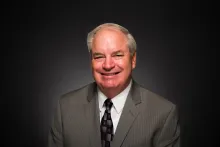
Robin Webber was born in Chicago, Illinois, in 1951, but has lived most of his life in California. He has been a part of the Church of God community since 1963. He attended Ambassador College in Pasadena from 1969-1973. He majored in theology and history.
Mr. Webber's interest remains in the study of history, socio-economics and literature. Over the years, he has offered his services to museums as a docent to share his enthusiasm and passions regarding these areas of expertise.
When time permits, he loves to go mountain biking on nearby ranch land and meet his wife as she hikes toward him.
