
Don Ward
This transcript was generated by AI and may contain errors. It is provided to assist those who may not be able to listen to the message.
The title of the sermon today is The Four Passovers of Christ's Ministry. The Gospel of John is a most remarkable book. These four passovers that we're going to discuss today are recorded and recorded in the book of John. The vocabulary of the book of John is on an eighth grade level, but the structure and the syntax is unsurpassed in literature.
Scholars marvel when they examine the Gospel of John. How could this, what they would term a poor, uneducated fisherman, write such moving and beautiful words? In the beginning was the Word. The Word was with God, and the Word was God. Simple but so profound. The beauty, the power, the simplicity of these words are unparalleled in literature. The book of John presents Jesus Christ as the Son of God, the one who has existed in eternity with God the Father, presents Him as the Lamb of God, who takes away the sins of the world, the one in whom is light in life, who dies for the sins of the world, and yet lives victoriously in resurrection. The Gospel of John reveals the very nature of God in Christ. God is Spirit, and those who worship Him must worship Him in Spirit and truth. You'll read in John 4.24. The Gospel of John tells us that the Word existed in eternity. The Word was with God, showing relationship, and the Word was God, showing identity. John is inspired to tell us that God will send us the Comforter, which is the Holy Spirit, and through the Holy Spirit the Father and the Son will abide in us.
The book of John shows us that we are to eat the bread of life every day of the year. In the book of John, Christ is revealed as the Word, as we've already mentioned.
He's also revealed as the truth. John 17, 17, thy Word is truth. Sanctify them through your Word. Your Word is truth, and Christ is the living Word. As we have noted, He's revealed as the light. He's revealed as life, as the only begotten Son, also revealed as the bridegroom, revealed as the true bread, the bread of God, the bread of life, the living bread.
That's in John 6. He's revealed as the Son of Man and the door of the sheepfold. He's revealed as the Good Shepherd, the resurrection and life, the truth and life. He's revealed as the true vine. All those things. I would encourage you before you take the Passover Sunday evening, a week from now, to read the Gospel of John and consider some of the things we're saying here today.
Nearly all the events recorded in the book of John focuses on the four Passovers of Christ's earthly ministry. In fact, the last 10 chapters, chapters 12 through 21 of the book of John records the events that transpired between the eighth day of Nisan to Him washing the disciples' feet and installing the New Covenant Passover. It also records, of course, His crucifixion and resurrection and His appearances and instructions to disciples after His resurrection.
It's really the book to read, and of course it's the book we read after we wash feet and take the bread and the wine. We read selected passages from John 13 through John 17. So now let's notice the first Passover in Christ's ministry in John 2 and verse 13. In John 2 and verse 13, and the Jews passed over was at hand and Jesus went up to Jerusalem.
This is on the heels of His first public miracle there at the wedding feast in Cana. You notice in verse 11, this beginning of miracles did Jesus in Cana of Galilee and manifested forth His glory and His disciples believed on Him. Then after that He went up to Capernaum. He and His mother and His brethren and His disciples and they continued there not many days and the Jews Passover was at hand and Jesus went up to Jerusalem. This is the beginning of His public ministry. He's about 30 years old and He found in the temple those that sold oxen and sheep and doves and the changers of money sitting and when He had made a scourge of small cords He drove them out of the temple and the sheep and the oxen and poured out the changers money and overthrew the tables and said unto them that sold doves take these things from here make not my father's house and house of merchandise and His disciples remembered that it was written the zeal of your house has eaten me up.
So the first act that He did after He got to Jerusalem was to cleanse the temple. His first public act in His earthly ministry after He got to Jerusalem at this first Passover after He began His official earthly ministry was to cleanse the temple and one of the principal purposes of Passover in the Feast of Unleavened Bread is to be prepared for Pentecost for the receiving of God's Spirit.
Notice in John 20 and verse 19, John 20 and verse 19, the question that He posed to His disciples, actually more accurately the apostles after His resurrection, in John 20 and verse 19, then the same day at evening, being the first day of the week when the doors were shut where the disciples were assembled for fear of the Jews, came Jesus, stood in the midst of them and said unto them, peace be unto you. And when He had said so, He showed them His hands, His side.
Then were the disciples glad when they saw the Lord. Then Jesus said to them, again, peace be unto you as my Father has sent me, even so I send you. And when He had said this, He breathed on them and said unto them. And of course, a lot of commentators then with this next phrase say that this was when He gave the disciples the Holy Spirit. It is not when He gave the disciples the Holy Spirit. The Holy Spirit was sent on the day of Pentecost, 10 days after Christ's ascension.
This should be as far as punctuation, punctuated at the end with a question mark. He's saying, receive you the Holy Spirit. In other words, are you ready to receive the Holy Spirit? Has your temple been cleansed? Are you ready to take of the Lord's Passover?
Are you ready to repent of sin and come out of sin and be ready for the receipt of the Holy Spirit on Pentecost? Our temples should be cleansed in every aspect of our lives. Human beings are a composite of physical beings, social beings, mental beings, psychological, emotional beings, and spiritually begotten of the Spirit of God and spiritually led. A composite total package. You have to put all of these dimensions of life together and in cleansing the temple in preparation for Passover, you need to look at all of these dimensions. So we're going to, first of all, briefly look at these various dimensions. We are physical beings. So how are we treating our body? Remember 1 Corinthians 3, 16, which says that you are the temple of God. You are the temple of God. Let's turn there to 1 Corinthians 3 and verse 16 and also read that next verse that shows how important it is that we keep that temple in a way that is pleasing to God that we do not defile that temple. There are many ways, of course, to defile that temple. It can be through physical action. It can be through mental action, your thoughts. Oh yes, we can sin through our thoughts and our mind. It can also be through our emotions where we lose it, as we say, fly off the handle and throw a temper tantrum or whatever it might be. 1 Corinthians 3, 16, know you not that you are the temple of God and that the Spirit of God dwells in you. If any man defile the temple of God, him shall God destroy for the temple of God is holy which temple you are. So how important it is to examine how we're treating our body. What about diet? What about rest? What about exercise? All of the dimensions that make up for a healthy body. I would venture to say that so many of us, and I know that I'm one included in it, that like the old saying goes, if I'd have known I was going to live this long, I've taken better care of myself. Those kind of things that many of us violate certain rules of health and we do harm to the spiritual temple. Are we lying to ourselves just saying that it is a physical matter? There is a connection between all of these dimensions, and some people try to isolate. So while the physical doesn't matter, the social doesn't matter, the mental doesn't matter, the psychological, emotional doesn't matter. It's just the spiritual. I'm all spirit. I'm just sort of pulsating a hunk of spirit here and let everything else go by the wayside.
No, it does matter. We can ask ourselves, are we overeating? Are we drinking too much? Are we ingesting things into our bodies that are harmful? So examine the physical. Next, we are social beings. You become as the people are that you interact with. The old saying, birds of a feather flock together, or iron sharpens iron. What crowd do you run with? Who do you associate with? What is the content of your social interaction? Let's look at a few verses here in Proverbs that admonishes us along these lines in Proverbs 13. Proverbs 13. Proverbs is another great place to read in preparation for Passover. So much wisdom, so many different things that are brought up that you might not even think of, but to bring it to your mind with regard to examining yourselves for Passover. In Proverbs 13 verse 20, He that walks with wise men shall be wise, but a companion of fools shall be destroyed.
Evil pursues sinners, but to the righteous good shall be repaid. So birds of a feather flock together. You, to a large degree, take on the attitudes and the sort of disposition and worldview of the people that you associate with. Continuing with this in Proverbs 22 and verse 24, Proverbs 22 and verse 24.
Proverbs 22 verse 24. Make no friendship with an angry man, and with a furious man you shall not go, lest you learn his ways and get a snare to your soul, your very life essence.
So we see in the book of Proverbs, we'll read one more scripture from Proverbs. In Proverbs 27 and verse 17, in Proverbs 27 and verse 17, iron sharpens iron, so a man sharpens the countenance of his friend. Now we'll turn to 1 Corinthians chapter 5, and it's a little more serious there with regard to relationships and who you associate with, and it gets down to what they say, the nitty-gritty, with regard to this, and it's in the period of time in which we live, and we have lived in this period of time, basically, since the death of Mr. Armstrong, with regard to various splendor groups and various people going different ways, and all that kind of thing, and yet we are, have known people for decades, and all of the things that go with that, and the book of Corinthians, the first epistle to the Corinthians, has a Feast of Unleavened Bread theme to it, and Paul is urging the Corinthians to put out the spiritual leaven along with the physical leaven and to keep the Feast with the Unleavened Bread of Sincerity and Truth. The problem there in Corinth was that they had among them, in the first six verses, an incestuous fornicator, evidently a man who was having relationships with his father's wife, and instead of grieving over that and taking action, verse 2, you are puffed up and have not rather mourned that he that had done this deed might be taken away from you.
For I verily, as absent in body, but present in spirit of judge, already as though I were present concerning them and have so done this deed, in the name of our Lord Jesus Christ, when you are gathered together in my spirit with the power of the Lord Jesus Christ, to deliver such a one unto Satan for the destruction of the flesh, that the spirit might be saved in the day of the Lord.
So Paul says you've got to bring this to this person's attention so powerfully that you even put him away and avoid social contact with him so that he might learn his lesson so that he will be saved. It is more important to be saved in the eternal sense than it is to have this kind of situation going on in the church where you know that there is evil and you do nothing about it because you say, well, that's their business, or I don't want to upset him. I don't want to make him mad. We've been friends for many years. I don't know how he'll take it.
And so it puts us oftentimes in a very difficult situation, and I realize that.
I know of the situations in my life, 40-something years in the church, and even going back before that, basically, of the people who don't think very highly of you or the people that at times you had to confront, and they didn't take it very well. Of course, there are many proverbs about it is better to receive correction than it is praise from a fool. That's a loose paraphrase. But there are many aspects to this. Now, the good thing here in 2 Corinthians, Paul is urging the Corinthians to receive him back. He's forgiven. He's repented, and all of that. You're glorying, verse 6, you're glorying is not good. Know you not that a little lemons the whole lump. In verse 9, I wrote to you in an epistle not to company with fornicators, yet not altogether with the fornicators of this world or with the covetous or extortioners, or with the dollaters, for then must we needs go out of the world. But now I've written unto you not to keep company if any man that is called a brother be a fornicator or covetous, or an idolater or a railer or a drunkard or an extortioner with such a one, know not to eat. Or what have we do to judge them also that are without? Do not you judge them that are within.
But them that are without God judges, therefore put away from among yourselves that wicked person. Now, I didn't write this.
The apostle Paul, under the inspiration of the Holy Spirit, wrote it down. I know this is a very difficult line to tread. I was talking, we have one of our members there in Houston. I was talking to him last Sabbath. He has a son who is a minister in another Church of God group, and that son will not even talk to him. They have no interaction. And I don't think that's right. And as I said, you have to use great wisdom and discernment in dealing with these kind of situations that we face now in the Church of God.
Hopefully we are all brothers and sisters and that we can come to the point where we don't know what it will take and I don't know if it will come to pass.
But my goal and my plea and prayers have been all along for let's be reconciled unto God. We are ministers of reconciliation. But this social interaction is very important, as we have just read right here. Next, there's a dimension in our life that we have to do with our minds or our mental state. We are mental beings, if we can use that term. We can think, we can reason.
We go back now to Proverbs. Proverbs 23, verse 7. Proverbs 23, verse 7 is one of the most powerful verses in the Bible. For as a man thinks in his heart, so is he. Eat and drink says he to you.
As a man thinks in his heart, we are mental beings.
Thought is a precursor to action, and action is a precursor to habits.
And your habits basically is what you become.
Or we could say habits are a precursor to your character, to your very being. So the progression of thoughts, actions, and then what it produces.
And patterns of successful behavior are repeated over and over again. Back in Proverbs 4, verse 23, another powerful admonition with regard to our minds and keeping our minds. In Proverbs 4, and verse 23, keep your heart. And in the Old Testament, the talk about the heart has to do with the very center of your being, the very essence of who you are and what you are with how you think and act. Keep your heart with all diligence, for out of it are the issues of life. Just like we said about thought. Thought, action, habit, character, and a sequence.
You know the old saying about the garbage in, garbage out, the various things that you put into your mind. All of those things. The conscious stream of awareness is recorded in your mind.
Now some of that is below the conscious level, but at certain times it's admitted into the conscious level, and especially the things that have to do with music. And music is a powerful way to connect ideas and thoughts together. Then you may be sitting there and suddenly this song comes into your mind or tune that you haven't heard in years, but it's there.
And psychologists, well actually this was a medical doctor, physiologist, Dr. Penfield in Toronto, Canada, way back in the, I believe it was way back in the 60s, began to probe certain areas of the brain and people would relive in vivid color with sort of the sights and sounds and sensations that they experienced when they had that, that is that experience, several years ago.
So that conscious stream of awareness is recorded. Now look at Matthew chapter 12. So once again in the examination for Passover, we're talking about examining every facet of our being and to see if our temple is cleansed. Jesus Christ, the first act, his public ministry, that first Passover of his public ministry, first thing he did was to cleanse the temple in Jerusalem.
In Matthew chapter 12 verse 34, whole generation of vipers, how can you being evil, speak good things?
Or out of the abundance of the heart, the mouth speaks.
A good man out of the good treasure of the heart brings forth good things, and an evil man out of the evil treasure brings forth evil things. But I say unto you that every idle word that men shall speak, they shall give account thereof in the day of judgment. For by your words you shall be justified, and by your words you shall be condemned. Now to Philippians.
I would imagine most of you are way ahead. You'd already see. He's going to Philippians next. To Philippians chapter 4. Philippians chapter 4, we have the instructions of what to think, what to put in our minds, so that they will be, so that mine will be prepared and clean and acceptable. Philippians 4 and verse 8, Finally, brethren, whatsoever things are true, whatsoever things are honest, whatsoever things are just, whatsoever things are pure, whatsoever things are of lovely, whatsoever things are of good report. If there be any virtue, if there be any praise, think on these things. Your mind, your thoughts are so very important. You know, it's amazing the work that people will do to keep from using their minds.
They'll go out and clean out the barn, the garage, and whatever else.
But keep your mind to study, to meditate, and keeping that mind. Psychological, emotional beings. We are psychological, slash, emotional beings.
We all need love. We need affection. We need approval. We need recognition. We need a sense of achievement, a sense of worth. We count for something in the world and with others.
This dimension of the psychological, emotional would be, in the spiritual domain, what we might call attitude or mood.
One of the things that the Bible brings out about Daniel was that he was of an excellent spirit. It seemed that whatever the Chaldeans could put before him, he was able to handle it and go on.
Daniel went to graduate school in Babylon. He and Shadrach, Meshach, and Bendigo, and when it came graduation time, he and the three friends excelled them all. The importance of controlling your mind and your spirit and your attitude is a great price in the sight of God. Once again, we go back to Proverbs in Proverbs 16 and verse 32.
Proverbs 16 and verse 32. Once again, a very powerful admonition in Scripture. Proverbs 16 and verse 32. He that is slow to anger is better than the mighty.
And he that rules his spirit than he that takes the city.
You might have dreamed of being Alexander the Great, who took many cities in many countries, or some other great general or warrior or whatever you want to talk about in the field of leadership, being out front. But what is God value? He values one who can control his spirit, who is of a meek and quiet spirit, one who humbles himself before the mighty hand of God, as you heard in the sermon recently here, and one that God can use and work with. All of these dimensions have a relationship to our spiritual well-being. And this brings us to the most important aspect of our lives. We are created to become spirit beings in the family of God. So God intended that there be a spiritual dimension to our lives. So now we go back to John 2, where we were reading about Christ's first action when His public ministry of cleansing the temple went to the Passover, went into the temple, found it filled with the money changers. So we go back to John 2, and verse 23. John 2, verse 23.
Now when He was in Jerusalem at the Passover in the feast days, many believed in His name when they saw the miracles which He did. But Jesus did not commit Himself unto them because He knew all men. And He did not that they should testify of men, for He knew what was in man. Now evidently, and you can't prove this, but evidently the events that are recorded here in John 3 probably happened during that Passover. And John 3, of course, contains some of the most powerful words in the whole Bible. The part about being born again, what born again means.
The part about John 3 16, God so loved the world. All the various things that are contained in John 3 16, not our purpose here today. I want to give a sermon sometime in the near future about the born-again-begotten question which we need to be founded in from time to time.
Then the next Passover of Christ's ministry and in John chapter 5. In John chapter 4, just as you're turning to John 5, I'll make a few comments about John chapter 4. Jesus, it shows Jesus leaving Judea and going into Samaria and showing that he is the Savior of all mankind, not sent to just the Jews but to everyone.
Then in John chapter 5, we see once again about the Passover.
In John chapter 5, after this, there was a feast of the Jews, and Jesus went up to Jerusalem. Now there is a Jerusalem by the sheep market, a pool, which is called the Hebrew tongue, Bethsaida, having five porches. And these lay a great multitude of impotent folk of blind, halt, withered, waiting for the moving of the water. For an angel went down at a certain season in the pool and troubled the water. And whosoever then first, after the troubling of the water, stepped in, was made whole of whatsoever disease he had. Of course, you know that water can symbolize the Holy Spirit, as in John 7, where it says, out of my belly shall flow rivers of living water.
Now it doesn't specifically say here in the scripture that it was Passover, but most of the commentators and the context seem to indicate that it was his second Passover during his earthly ministry. And there is the the account here, verse 5, a certain man there which had an infirmity for 38 years. You know, so many people have infirmities that have lasted years and years.
Some people have headaches that last for years and years. I don't see how they stand it. Some people have other pain and other infirmities that last for years and years, and they cry out long and loud to God.
And oftentimes they're not healed. Sometimes they are. So here's such a man, 38 years, who had hoped to get into that pool after the waters were troubled, but he was too crippled to do it. When Jesus saw him lie and knew that he had been now a long time in that case, he said unto him, Will you be made whole? Of course, the many physical healings that Jesus did in his ministry, the more important aspect of that is it symbolized what he would do spiritually, that we could be made whole in every sense of the word. Yet there are those who want to just focus on the physical, and one of the reasons why they just want to focus on the physical is that they think that somehow that if they have a list of healings behind their ministry, that that would indicate they are more righteous than someone else, which is not necessarily the case. You know the case of the Apostle Paul, who had a thorn in the flesh. He said he besought the Lord three times that it be removed. And it wasn't. And God said to him that my grace is sufficient for you. That in Paul came to the conclusion that in his infirmity, he was strong. And somehow it made him more effective, which it might be hard to understand in the physical sense, but in the spiritual sense, many of us and many of you have been there, and you know what it's like.
When Jesus saw him lying there, he asked, Will you be made whole? The impotent man answered him, Sir, I have no man when the water is troubled to put me in the pool, but while I am coming, somebody steps in before me. And Jesus said unto him, Rise, take up your bed and walk. And immediately the man was made whole, he took up his bed and walked, and on the same day was the Sabbath. The Jews therefore said unto him that was cured, it is the Sabbath day. It is not lawful for you to carry your bed. I mean, can you rejoice with a man who's been crippled for 38 years? When one lost sinner repents and turns to God, there's rejoicing in heaven.
God talks about, at least the scripture, the Holy Spirit inspires from God, to write about angels rejoicing when one turns to God. Talks about the one out of the 99 and 9, leaving the 99 and 9 and going seeking the one. Verse 13, And he that was healed was not who it was, for Jesus had conveyed himself away.
He didn't even know it was Jesus, a multitude, being in that place. After Jesus found him, and the temple and said unto him, Behold, you are made whole. Sin no more, lest a worse thing come upon you. The man departed and told the Jews that it was Jesus who made him whole. And therefore did the Jews persecute Jesus and sought to kill him, because he had done such things on the Sabbath. You see, this is the kind of attitude that people can get into. I have seen people and even ministers in the Church of God who get into this kind of frame of mind, that it is more important to have some kind of outward show of righteousness than it is to be cleansed from the inside out, to have your heart and mind where it should be, and to be humble before the great God and creator of heaven and earth, and to come to realize who we are and what we are in the sight of God. The Pharisees, it seemed, never could get it. They are always ready there to accuse. It never was quite good enough. And one of the things that we need in the Church, I believe, is to come to appreciate each other for who they are and what they are with regard to their talents and abilities. You know, if we were judging who would be made an apostle, I doubt that Peter would have ever been chosen. And for sure, not Paul who was killing Christians. Brethren, we have a lot of growing to do. It would seem that after I know many of you have labored for five decades in the Church, I have for over four. Some of you over five. Maybe some of you over six. But yet, you know, and I know, that we yet have a ways to go.
But we can get there. But one of the things that would require that is for us to humble ourselves in the sense of coming to realize that we don't know it all. We don't know it all.
Now notice verse 22.
Well, it's 21. For as the Father raises up the dead and makes them alive, even so the Son of man makes alive whom he will. For the Father judges no man but has committed all judgment under the Son, that all men should honor the Son, even as the Father, as they honor the Father. He that honors not the Son honors not the Father which has sent him. Verily, verily, I say unto you, he that hears my word and believes on him that sent me has everlasting life and shall not come into condemnation but is passed from death unto life. Verse 26. For as the Father has life in himself, so is he given to the Son to have life in himself.
And he has given him authority to execute judgment also because he is the Son of man. Marvel not at this, for the hours come in which all that are in the grave shall hear his voice. Not some, all, and shall come forth. They that have done good unto the resurrection of life, they that have done evil unto the resurrection of creases or judgment. So Jesus Christ shows that he has the power over life and death. And when we come to take the Passover, we must be totally surrendered to God and Christ and realize that apart from God and Christ, we're going to die.
Now, the third Passover in John 6. In John chapter 6, after these things, Jesus went over the Sea of Galilee, which is the Sea of Tiberius, and a great multitude followed him because they saw his miracles, which he did on them that were diseased. And Jesus went up into a mountain, and there he sat with his disciples, and the Passover, a feast of the Jews, was near. And when Jesus then lifted up his eyes and saw a great company come unto him, he said unto Philip, Where shall we buy bread that these made? Now, how would you have responded to that question? Where are we going to buy the bread, feed all these people? And Philip immediately thought in the physical sense.
But Jesus Christ was really asking a question to test Philip. And then this whole chapter here in John 6 is called the Bread of Life chapter, which shows that the bread that is most important is the spiritual bread, and that what Jesus talks about with regard to eating his body and drinking his blood, symbolized by eating the bread and drinking the wine, that that is the key to eternal life. So I would ask you, the next week before Passover, look at John 6, and every place that it says, life, L-I-F-E, or live, L-I-V-E, to look at that, and to see what the focus is on John 6. The focus in John 6 is not about physical life, though we know that physical life is important. And we do want to be whole in every sense of the word. But the greatest focus and emphasis is on eternal life. So we ask this question.
He asked Philip, were we going to buy bread that all these people can eat? And this he said to prove him, for he knew himself what he would do. Philip answered, well, we have 200 penny worth of breads not sufficient for them that every one of them take a little. One of the disciples, Andrew Simon, Peter's brother, said unto him, there's a boy here who has five barley loaves and two small fishes, but what are they among so many? And Jesus said, make the men sit down.
And so they sat down, and there were 5,000 people. And Jesus took the loaves and the fishes and he blessed it, and they were able to feed the multitude. And they gathered up extra.
Verse 14, when those men had seen the miracle that Jesus did, said, this is a truth that a prophet should come into the world. When Jesus therefore perceived that they would come and take him by force to make him king, he departed again into a mountain himself alone. Now, the rest of the story there talks about he then got into a ship, verse 17, and went toward Capernaum. And then eventually the multitude caught up with him again. Verse 22, the day following when the people which stood on the other side of the sea saw that there was none other boat there, save that one whereon to the disciples were injured, that Jesus went not with his disciples into the boat, but that his disciples were gone away alone. Howbeit there came other boats from Tiberius and I into the place where they did eat bread after the Lord had given things. And when the people therefore saw that Jesus was not there, neither his disciples, they also took shipping and came to Capernaum seeking for Jesus. Why were they seeking him? They weren't seeking him for eternal life. They were seeking him for more bread and fish. And so what about us?
And what about the world? See, people will seek after the physical. The great lesson here in John 6, of course, is to seek after eternal life. Jesus, look at Jesus' response. They say, verse 25, when did you come here? Jesus answered them and said, Verily I say unto you, you seek me not because you saw the miracles, but because you did eat the loaves and were filled.
Labor not for the meat which perishes, but that meat which endures unto everlasting life, which the Son of man shall give unto you. For him hath God the Father sealed. Then said they unto him, What shall we do, that we might work the works of God? And Jesus answered and said unto them, This is the work of God, that you believe on him whom he have sent. Then he began this exchange with them about the manna and the true bread. Of course, Jesus Christ reveals that he is the true bread that was sent from heaven, that if any man eat this bread, he will live forever. So let's pick this up now again, verse 30.
They said therefore unto him, What sign do you show that we may see and believe? What work do you do? Our fathers did eat manna in the desert, as is written, He gave them bread from heaven to eat. Then Jesus said unto them, Verily, verily, I say unto you, Moses gave you not that bread from heaven, but my Father gives you the true bread from heaven. Of course, even that bread that they received in the wilderness was sent from God in the Word, the one who became Christ.
For the bread of God is he which comes down from heaven and gives life unto the world. So I ask you to study this chapter and focus on life, L-I-F-E, and live, L-I-V-E, and everlasting.
Then they said unto him, Evermore give us this bread. But they were still thinking in physical terms. I mean, we don't have to work for bread, just give us this bread, and we don't have to work. And Jesus said unto them, I am the bread of life. He that comes to me shall never hunger, and he that believes on me shall never thirst. Again, picking it up in 47, verily, verily, I say unto you, he that believes on me has everlasting life. I am the bread of life. Your Father is to eat manna in the wilderness and are dead. This is the bread which comes down from heaven that a man may eat thereof and not die. I am the living bread which came down from heaven. If any man eat of this bread, he shall live forever. And the bread that I will give is my flesh, which I will give for the life of the world. Now, I'm going to... In fact, the sermon I had initially planned to give today, before I found out so many people were absent, I was going to talk about the fact that the sacrifice of Christ is not divided. There's one sacrifice, body and blood, given for our eternal life. Included in that, of course, is healing. God does heal.
We have experienced it a few times in the Houston church in recent times.
And, of course, we hope that there will be more physical healings. There are so many people that are suffering that are in pain. I mean, night after night, I know I cry out on my bed, that the pain might be relieved in the peoples of the world. And sometimes you think, oh, if I were God, what would I do? But God, in His infinite wisdom and mercy, knows what is best for everyone. You know, one of the great questions of life is, why does God do things the way He does things? Believe it or not, the Bible answers that question. Now, why He has to do it that way? I don't know. But if you'll hold your place here, we'll look at that answer quickly.
It's in Romans 11. Romans 11.
Romans 11, where Paul talks about the Gentiles being grafted into the natural olive tree and that God calls us at a time that is apparently best for us.
Look at verse 25. Romans 11.25. For I would not, brethren, that you should be ignorant of this mystery, that you should be wise in your own conceits, that blindness in part has happened to Israel until the fullness of the Gentiles come in. You know, Paul talks about a veil being upon the eyes of Israel. Now, in the early church, most of the early converts, of course, on the Day of Pentecost were Jews. There were some proselytes there. And when Peter was summoned to go to the house of Cornelius, it became evident that God was also pouring out His Spirit on the nations not just Israel and the Jews. The Jews were astounded.
Paul, of course, was made the apostle to the uncircumcision to the Gentiles. And he talks about here how the Gentiles are grafted into the natural olive tree. And blindness in part has happened to Israel. Why did Israel have to be blinded to some degree and to do it this way? Well, we're getting here to the answer. In so many things, why does God do things the way He does?
Let's read on. Verse 25 again, I would not, brethren, that you should be ignorant of this mystery, lest you should be wise in your own conceits, that blindness in part has happened to Israel until the fullness of the Gentiles be come in. And so all Israel shall be saved, as it is written, there shall come out of Zion the deliverer, and shall turn away ungodliness from Jacob. For this is my covenant unto them, when I shall take away their sins. As concerning the gospel, there are enemies for your sakes. Of course, the Jews were great enemies, and Paul talks about the great harm that his countrymen did to him. But as touching the election there, beloved, for the Father's sake, for the gifts and calling of God are without repentance. He doesn't have to be sorry for or change his mind with regard to why he calls some now and others later, or why he heals some now and some he does not. Even so have these also now not believed. That is the Jews he's talking about, that through your mercy they also may obtain mercy, for God hath concluded them all in belief that he might have mercy upon all. Why does God do things the way he does things? He does because he wants to have mercy upon all. All the depth of the riches, both of the wisdom and the knowledge of God. How unsearchable are his judgments, his ways past finding out. For who hath known the mind of the Lord, or who hath been his counselor, or who hath first given to him, and it shall be recompense unto him again. For of him, through him, and to him are all things to whom be glory forever. Amen. That's why God does things the way he does things, that he might have mercy upon all. God is not a respecter of persons, and no matter how much you or I have to suffer in this life at any given time, are the trials that we go through. He has promised he will never leave us, nor forsake us, and if God be for us, who can be against us? Now let's go back to John chapter 6. In John chapter 6, verse 51 again, I am the living bread which came down. If any man eat of this bread, he shall live forever. And the bread that I will give is my flesh, which I will give for the life of the world. Why does he give his flesh? For the life of the world.
He's talking about eternal life. The Jews, therefore, strove among themselves, saying, How can this man give us his flesh to eat?
Then Jesus said unto them, Verily, verily, I say unto you, except you eat the flesh of the Son of Man, and drink his blood, you have no life in you.
Why does the Bible emphasize the blood a great deal with regard to the remission of sin? Because in the Bible, blood symbolizes life. That if you give your blood in biblical terms, you give your life. But in order to give your life, you have to give your body also.
So it's body and blood. I say unto you, except you eat the flesh of the Son of Man, and drink his blood, you have no life in you. He's talking about eternal life. Whoso eats my flesh and drinks my blood hath eternal life, and I will raise him up at the last day, where my flesh is meat indeed, and my blood is drink indeed.
Of course, the Jews were familiar to some degree with figures of speech, and even in the Pentateuch, you find man shall not live by bread alone, but by every word that proceeds out of the mouth of God. They knew about figures of speech, and that Jesus was speaking figuratively here, and symbolically. Now, some of them took it literally and said, you know, what is he abdicating here? Cannibalism. And some of even the disciples, after they heard this, murmured and were offended.
Verse 60, many therefore the disciples, when they had heard this, this is a hard saying, who can hear it. When Jesus knew in himself that his disciples murmured at it, he said unto them, does this offend you? What and if you shall see the Son of Man a sin where he was before?
It is the Spirit that makes alive. The flesh profits nothing. The words that I speak unto you, they are spirit and they are life. So here, Jesus Christ equates his spirit with his words.
And so, if you want to talk about blaspheming the Spirit, well, you can blaspheme the Spirit by blaspheming the Word of God, which really gets down to, if you willfully disobey, then you're blaspheming. Now the fourth Passover in John 13.
We might make it a little less stop in John 12. John 12. You know, the Protestants make much over what they call Palm Sunday. But actually, Palm Sunday was a Palm Sabbath. It was on a Sabbath day and it was on the 10th day of Nisan, in which Jesus Christ triumphantly rode into Jerusalem on the docking. They laid the palm branches out. And John 12, and from John 12 to the end of the Gospel, is taken up with the last days of Christ's life. John 12, verse 1, Lazarus was one of them that sat at the table with them. And the account here about the ointment anointing his body for the burial and her service and all that. And then, in verse 12, on the next day, much people that were come to the feast, when they heard that Jesus was coming to Jerusalem, took branches of palm trees and went forth to meet him, and cried, Hosanna, blessed is the king of Israel that comes in the name of the Lord. And Jesus, when he had found a young colt, sat thereupon as it is written, Fear not, daughter of Zion, behold your king comes, sitting on a colt. So here we have the fourth Passover of Jesus Christ's ministry.
And this event, and I've got a handout, of course I've got a sermon on this palm Sabbath, and that's not our main focus today, but something that you can think about and consider, you can count it back. That on this particular Passover, Jesus Christ crucified on Wednesday evening about three o'clock when he died on Passover, Nisan 14. You count back to this event here in John 12. You can see how it can very easily be on the Sabbath.
Then the fourth Passover in John 13, the fourth Passover, now before the feast of the Passover, when Jesus knew that his hour was come, that he should depart out of the world unto the Father, having loved his own, which were in the world, he loved them unto the end.
And supper being ended, the devil, having now put into the heart of Judas' carat, Simon's son, to betray him, Jesus, knowing that the Father had given all things in his hand, and that he was come from God and going to God, he rose from supper, laid aside his garments, took a towel, girded himself, poured water into a basin, and began to wash the disciples' feet.
You've heard the story many times of one of the greatest kinds of servant service that you could perform, because it was basically the lowest of the servants or a slave who would do this for the man of the house and the guest and that kind of thing. And Jesus shows what this foot washing shows is that we would be willing to humble ourselves, even unto death, for the life of our brothers and sisters. In other words, that we would be willing to lay down our lives, because this foot washing symbolizes the most humiliating, in a sense, thing or service-oriented thing that you can possibly perform. And I can show you clearly from the Scripture. Let's go over 1 John chapter 3 verse 14. Remember, I said it symbolized laying down your life. Does the Bible teach that we should have the same love, care, and concern for one another, that we would actually lay down our lives for one another? Brethren, have we come that far? Have I come that far? Sometimes I ask myself, have I? Would I?
In 1 John 3 and verse 14, we know that we have passed from death unto life, because we love the brethren. He that loves not his brother abides in death. Whosoever hates his brother is a murderer. See, here's mental. Whosoever hates. This is a mental activity. Remember, we talked about cleansing the total being, physical, social, mental, psychological, emotional. Whosoever hates his brother is a murderer. And we know that no murderer hath eternal life abiding in him. Hereby perceive we the love of God, because he laid down his life for us, and we ought to lay down our lives for the brethren. It's right out of the Bible. And when you wash feet, you are in essence saying, I would be willing to lay down my life for the brethren.
Back in John 15, the Gospel thereof, John 15, as we said many of these verses, John, out of chapters 13, 14, 15, 16, 17, will be read at the Passover ceremony.
In John 15, verse 12, this is my commandment that you love one another as I have loved you. Greater love hath no man than this, that a man lay down his life for his friends.
You are my friends if you do whatsoever I command you. Henceforth I call you not servants, for the servant knows not what his Lord does, but I have called you friends for all things that I have heard of my father I have made known unto you.
You have not chosen me, but I have chosen you, ordained you, that you should go and bring forth fruit, and that your fruit should remain, that whatsoever you shall ask of the Father in my name he may give it to you. These things I command you that you love one another.
So verse 13, greater love had no man than this, that a man lay down his life for his friends. Christ set us an example that we should follow in his steps. He washed the disciples' feet. We will kneel and wash one another's feet. It is not just a routine kind of thing that you get out of the way before you take the bread and the wine. It has deep symbolism and deep meaning of what it actually portends and what it represents in our lives. So, as we have about eight days now left, what about our temples? Have we examined the physical, the social, the mental, the psychological, emotional, and what about our spiritual state of being?
Have we cleansed our temples? Are we ready to eat and drink at once?
We have now about eight days to be washed in the water of the word, so we'll be ready to wash one another's feet and eat and drink the Lord's Passover.
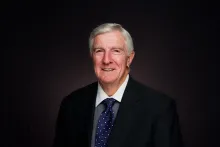
Before his retirement in 2021, Dr. Donald Ward pastored churches in Texas and Louisiana, and taught at Ambassador Bible College in Cincinnati, Ohio. He has also served as chairman of the Council of Elders of the United Church of God. He holds a BS degree; a BA in theology; a MS degree; a doctor’s degree in education from East Texas State University; and has completed 18 hours of graduate theology from SMU.
