
Don Ward
This transcript was generated by AI and may contain errors. It is provided to assist those who may not be able to listen to the message.
I ask you to read the Gospel of John, focus on the Gospel of John, especially the last 12 chapters, and also 1 Corinthians and Psalm 119 in preparation for Passover. Today we're going to focus on the Gospel of John. The Gospel of John is a most remarkable book. Scholars and literary critics are befuddled and amazed, I guess you would say, at the same time, of how one writing at that period of time and who was supposedly a fisherman and unlearned and all that could write such a beautiful piece of literature. The vocabulary in the Gospel of John is on an eighth grade level, but the structure and syntax is unsurpassed in any kind of literature. One reason is its great simplicity and plainness, and on the other hand, its great complexity and depth. For example, in the beginning was the Word, and the Word was with God, and the Word was God. How are you going to improve on that? How can you say so much in so few words? Very few people can say so much in so few words. That's John 1-1. The beauty, the power, the simplicity of these words are unparalleled in literature. The book of John presents Jesus Christ as the Son of God, the Lamb of God, the one in whom is light in life who dies for the sins of the world, yet lives victoriously in resurrection. The Gospel of John reveals the very nature of God and Christ. It is without the Gospel of John, the nature of God and Christ would be far more obscure than it really is. The Gospel of John tells us that the Word existed in eternity. In the beginning was the Word. The Greek word for was means to exist, the existing one. It says, and the Word was with God, which shows identity, and the Word was God, I'm sorry, the Word was with God shows relationship, and the Word was God shows identity. So you have existence, relationship, and identity, all in those key words. In the beginning was the Word, the Word was with God, and the Word was God. We have John 4.24, which says, God is spirit, and those who worship Him must worship Him in spirit and in truth. John is inspired to tell us that God will send us the Comforter, the Holy Spirit, and through the Holy Spirit the Father and the Son will abide in us. That's John 14.23. That we both shall make our abode in you.
The book of John shows us that we're to eat the bread of life every day of the year. In the book of John, Christ is revealed as the Word, which we've already talked about here. I guess we could all turn, if you would, to the Gospel of John.
The first three Gospels are called the Synoptic Gospels, Matthew, Mark, and Luke. The reason they're called the Synoptic Gospels, sin, optic, sin for same, and optic for seeing. Synoptic means seeing through the same eye. Matthew, Mark, and Luke basically cover many of the same events, with each one adding their different details. But the Gospel of John stands out. It is different from the rest. It is not one of the Synoptic Gospels. Let's look at this. We will go as quickly as we can here. So in verses 1 and 2, the Word is Jesus Christ is revealed as the Word.
Verse 17, For the law was given by Moses, but grace and truth came by Jesus Christ. Divine favor and truth, your Word is truth. Jesus Christ is the living Word. Remember Hebrews 1 and 1 says that in former times, different ways, different manners, God spoke to us through the prophets, but hath in these last days spoken unto us by a Son. In chapter 3, He is revealed as the only begotten Son. In John 3.16, I'm thumbing we'll go through this rather quickly, hopefully, but not because hopefully we want to just get through with it.
For God so loved the world that He gave His only begotten Son. So monogacy is the word here for only begotten. It is unique, the only one unique in this manner. It was begotten of the Holy Spirit, where the Holy Spirit of God overshadowed Mary, and this pregnancy occurred, and that which had existed in eternity, the word is now enfleshed, as you might say, conceived in the womb of Mary. The only begotten Son that whosoever believes in Him should not perish, but have eternal life. In verse 29, what is He revealed in verse 29? He that hath a bride is the bridegroom, but the friend of the bridegroom, which stands and hears Him, rejoices greatly because of the bridegroom's voice, that my joy therefore is fulfilled.
So He's revealed as the bridegroom to whom the church is the spouse. In chapter 6, we're just hitting highlights here. Sort of get a flavor, a feel for the richness of this gospel message. In John 6, He is revealed as the true bread. John 6 and verse 32. Then Jesus said unto them, Verily, verily, I say unto you, Moses gave you not that bread from heaven, but my Father gives you the true bread, which is from heaven.
And Jesus Christ is that true bread. You look at verse 33. For the bread of God is He which comes down from heaven, no doubt that is Jesus Christ, and gives life unto the world. Then in verse 35, Jesus said unto them, I am the bread of life. He that comes to me shall never hunger, and he that believes in me shall never thirst.
Now look at verse 51. I am the living bread which came down from heaven. If any man eat of this bread, he shall live forever. And the bread that I will give is my flesh, which I will give for the life of the world. Now the official position of the United Church of God, and I've given, I started giving sermons on this way back in the 90s, that the sacrifice of Christ is not divided into two parts. It is a whole sacrifice that He gave His body and His blood for our life.
I'll read this again. I will give, and the bread that I will give is my flesh, which I will give for the life of the world. And of course, you can't have blood unless you have body. The Jews therefore strove among themselves, saying, How can this man give us his flesh to eat? Then Jesus said unto them, Verily, verily, I say unto you, Except you eat the flesh of the Son of Man, and eat the flesh, symbolized by the unleavened bread, that you realize that Jesus Christ died for the sins of the world, and drink of His blood, you have no life in you.
It's amazing when you really look at the Scripture in this way, line upon line, precept upon precept, and read it, and things come to your mind, and you are impressed by certain things that perhaps just sort of went over your head in times past. We'll be coming back to this verse, which I quote so often in verse 63. It is the spirit that quickens that makes a lie, or it's the great gulf between our physiochemical existence and eternal life, is the Holy Spirit.
It is the spirit that quickens or makes a lie, the flesh profits nothing, it is subject to sin and decay, the words that I speak unto you, and so we have the word of God equated with they are spirit and their life. So the words that I speak, they are spirit and they are life. Now you look at chapter 8. Chapter 8, there's a long discourse going back in 2 between Jesus Christ and the detractors of the day, the scribes, the Pharisees, the various sects, S-E-C-T-S of the Jews, in John 8 and verse 12.
Then spoke Jesus again unto them, saying, I am the light of the world. He that follows me shall not walk in darkness, but shall have the light of life. So what were the verses that we're reading now are, these verses are revealing various aspects of Jesus Christ, the light of the world. Chapter 9, chapter 9 and verse 35. Chapter 9 and verse 35. Jesus heard that they had cast him out, and when he had found him, he said unto him, Do you believe on the Son of God?
And here it just flatly says that he is the Son of God. Now in chapter 10, in chapter 10 and verse 9, I am the door. The door is how you enter into the room. You came through one of these doors to get in here today, to get into the kingdom of God, to be able to enter into life. You have to come through the door, and that door is Jesus Christ. I am the door.
By me, if any man enter in, he shall be saved, and shall go in and out and find pasture. Also in verse 11, I am the Good Shepherd. The Good Shepherd gives his life for the sheep. Now in chapter 11 and verse 35, chapter 11 and verse 35, in chapter 11 and verse 35, Jesus wept, showing his emotions, then said the Jews, Behold, how he loved him.
And some of them said, Could not this man, which opened the eyes of the blind, have caused that? Even this man should not have died. And Jesus therefore, again, groaning in himself, comes to the grave. It was a cave and a stone lay upon it. Jesus said, Take you away the stone. Martha, the sister of him that was dead, said unto him, Lord, by this time he stinks, for he hath been dead four days.
And Jesus said unto her, Said I not unto you, that if you would believe, you should see the glory of God. Then they took away the stone from the place where the dead was laid. And Jesus lifted up his eyes and said, Father, I thank you that you have heard me. And so Lazarus came forth from the grave. Then in chapter 14 and verse 6, we're just hitting some highlights of all the things that Jesus is, and this by no means is complete.
In John 14.6, Jesus said unto him, I am the way, the truth, and the life. No man comes unto the Father but by me. You can't go around Jesus Christ and be in the kingdom. No matter what John Hagy might teach, a cornerstone in San Antonio, that the Jews have one avenue to eternal life, or what the Pope might teach, that all religions have a way to eternal life. The Pope today met with several refugees and brought 12 of them back to the Vatican, all are Muslims. He also met with Bernie Sanders today for five minutes. They were saying at first he would not meet with him, but he did.
In John 15 verse 1, I am the vine, I am the true vine, and my Father is the husbandman. And of course it talks about how you have to be connected to the vine. And then in 1717, which ties in with John 6, 63, sanctify them through your truth. Your word is truth. Now most of the events that are recorded in the book of John focus on the four Passovers of Christ's earthly ministry. And we will look at those four Passovers and also draw lessons from those Passovers for us today.
In one sense, the Gospel of John could be called the Passover Gospel. In fact, the last ten of the 21 chapters in the book of John record events that transpired between the tenth day of Nysen to him washing the disciples' feet and then installing the New Covenant Passover. His betrayal, his passion, the crucifixion, resurrection, and his appearance and instructions to his disciples. So the last ten chapters for sure covers that from the time he came to Bethany, not ten days, but on the tenth day of Nysen to the time he was crucified and then resurrected and appeared to the disciples.
The first Passover of his ministry is recorded in John chapter 2. So let's go there to John chapter 2 and verse 13. John 2.13. And the Jews Passover was at hand. Of course, in Leviticus 23, we had one of the speeches in the Speech Club today by Mr. Moody was on the feast of the Eternal. The word feast in the Old Testament is Moed, M-O-E-D. Moed, it means divine appointment and appointed time. So the feasts are appointed by the Eternal, and through the years they had migrated from it being the feast of the Eternal to being referred to as the feast of the Jews.
But God is the one who appoints the times and the seasons and the feast days, and they stand eternally. How do I know that? Because you can read from Zechariah 14 that after the millennium begins, if the nations don't come up to keep the Feast of Tabernacles, then they'll get no rain or read the last couple of verses of Isaiah, where it says that from one new moon to another and one Sabbath to another, that all flesh shall appear before him, showing that the Sabbath is not done away with, that in the millennium all nations will keep the Holy Days and the Feast. It's as plain as day as they say.
So the Jews' Passover was at hand. Jesus went up to Jerusalem and found in the temple those that sold oxen and sheep and doves and the changers of money sitting. So people would bring money to the temple, to the money changers. Of course, they would travel by foot for several miles and they would have cash in their hands and then they would buy the animals that they were going to sacrifice during that time. And when he had made a scourge of small cords, he drove them out of the temple and the sheep and the oxen and poured out the changers' money and overthrew the tables.
Now, you just picture in your mind that scene of, here's this one coming through with this cord and saying, get out of here and turning over tables and that kind of thing. It's in some ways hard to imagine, but that's what it says that happened.
And he said unto them that, soul doves, take these things from here. Make not my father's house a house of merchandise. And his disciples remembered that it was written, the zeal of your house has eaten me up. Then answered the Jews and said unto him, what sign show you unto us, seeing that you do these things? And Jesus answered and said unto him, destroy this temple and in three days I will raise it up.
And they said, well, the temple was 46 years in building. Of course, this temple was initially built by, in the days of Zachariah and also Haggai, with Jerubabel and Joshua being on the scene. It was very small in comparison to Solomon's temple. So when Herod the Great became the governor over that area, he enhanced the temple, made it far more larger, bigger, so on, trying to curry the favor of the Jews, hoping that they would not revolt and so on.
So that's why it says 46 years in building. But he spoke of the temple of his body. When therefore he was risen from the dead, his disciples remembered that he had said unto them, and they believed the scripture and the word which Jesus had said. So the first lesson here, I guess you would say, this first Passover of Jesus in his ministry, that he came to the temple and he cleansed the temple. And we need to cleanse the temple to receive the Holy Spirit and to be renewed.
In fact, one of the principal purposes of the Passover in Feast of Unleavened Bread is to be prepared for Pentecost. So look at John 20. Look at John 20. The Holy Spirit was not sent to them. That is the Holy Spirit of Begettle.
Obviously, the Holy Spirit was working with them. And I remember a sermon I gave a few months ago that talked about one verse where it says that Christ turned to Peter and said, Peter, Satan has desired to sift you, but I prayed for you. And then he went on to say, when you are converted, strengthen the brethren. And so here is an account of Jesus appearing to them after he was resurrected. And in essence, the punctuation and the intent here is, are you ready to receive my spirit? In John 20, verse 19, Then the same day at evening, being the first day of the week, of course they had rushed to the tomb early in the morning on the first day of the week, and the tomb was empty.
When the doors were shut, where the disciples were assembled for fear of the Jews, came Jesus and stood in the midst and said unto them, Peace be unto you. And when he had so said, he showed unto them his hands and his side, then were the disciples glad when they saw the Lord. Then said Jesus unto them, Peace be unto you, as my Father has sent me, even so, send I you. And when he had said this, he breathed on them, and said unto them, Receive you the Holy Spirit.
In other words, are you ready to receive? Receive you the Holy Spirit? In a questioning, the disciples did not receive the Holy Spirit until the day of Pentecost. And how do I know that? You look at Acts chapter 2, just before Jesus, I mean Acts chapter 1, just before that Jesus was crucified, just before Jesus Christ ascended.
In Acts chapter 1 verse 4, And being assembled together with them, commanded them, that they should not depart from Jerusalem, but wait for the promise of the Father, which says, He, you have heard of me, for John truly baptized with water, but you shall be baptized with the Holy Spirit, not many days hence. When they therefore will come together, they ask of Him, saying, Lord, will you at this time restore again the kingdom of Israel? And they will send unto them, it is not for you to know the times of the seasons which the Father put in His own power, but you shall receive power after the Holy Spirit has come upon you.
And you shall be witnesses unto Him, both in Jerusalem and in all Judea, Samaria, to the othermost parts of the earth. So when the Holy Spirit was sent, that account is given in Acts 2, which of course is covered in detail on Pentecost. But during Passover, Unleavened Bread, you're getting this temple of God prepared to receive the Holy Spirit.
So the temple, your body, and you are the temple of God, your body, the temple should be cleansed in every aspect of your being. You are a physical, social, mental, emotional, psychological, spiritual being, the various facets and components of your being. So when we talk about cleansing the temple, your body is the temple of God, 1 Corinthians 3, 16.
For you are the temple of God. And God's Spirit dwells in you. So when we're talking about your temple, we're talking about every facet of your being, not just one, the physical, the social, the mental, the emotional, the psychological, the spiritual. And of course, some people, maybe psychologists, physiologists, theologians, whomever might lump some of these things together. But what this means is that in every facet of your being, that needs to be examined.
What you do in one facet of your being affects all the other facets of your being. Say that again. What you do in one facet, what you do physically, can affect you spiritually. What you do socially can affect you spiritually. What you do emotionally can affect you spiritually. What you do mentally, your thought processes, can affect you spiritually. So let's look at each one of these briefly here and see where we stand in cleansing the temple, your body, which is where the Holy Spirit dwells, the physical being.
So how are you treating your body? I would say that I'm not doing all that well in treating my body. I had an annual, I don't know if it's annual, semi-annual physical checkup, and as the doctor went over the various points, are you doing this or the other? In honesty, I would have to say, well, do you have a regular exercise routine?
And I said, no. And I said, I'm without excuse. I've taught physiology of exercise. I was an athlete growing up, blah, blah, blah. On and on it goes. I'm without excuse. And so if you neglect your body, there's a price to be paid in many facets of your being. So how are you treating your body? Exercise? Diet? Are you getting the proper rest? These things, oh, you say, oh, that's just physical. Once again, look at yourself as in the total sense of all the facets of your being.
How are you treating your temple? Are you lying to yourself, just saying, oh, it's just a physical matter? Excusing yourself as saying, you are the exception through your actions. See, I'm so devoted to whatever else it is that I'm doing that I don't have time for that. Are you overeating? Are you drinking too much? Do you smoke? People, some people say, well, we can go ahead and baptize people even though they're smoking.
If I know a person that's smoking, I do not baptize them because the literature is replete, the research is replete with regard to what smoking does to the human body. It is among the top two or three that is lung cancer is one of the top two or three killers of the male population, and more women now are getting lung cancer as well.
So how important is it? So let's read what I've referred to. Let's go to 1 Corinthians 3.16. How important is it to take care of this body, to make sure that it is cleaned and it is prepared, and that you're not neglecting where the Holy Spirit abides? 1 Corinthians 3.16. Know you not that you are the temple of God, and that the Spirit of God dwells in you. Now this verse 17 is one. If a man defile the temple of God, can you defile it by overeating? Can you defile it by smoking, alcohol abuse, drug abuse? Can you defile it by just letting yourself, as they say, go to pot?
Not marijuana in this case, but just not doing anything, being a couch potato. If any man defile the temple of God, him shall God destroy? For the temple of God is holy, which temple you are? So, as they say, word to the wise should be sufficient. A social being, you become, to a large degree, what the people you interact with are. What are they? Birds of a feather flock together. We've heard it all of our life. On the other hand, we've heard, iron sharpens iron. If you hang out with a certain group, you begin to take on their, from body language, to their way of thinking, to their way of speaking, to their actions, and the way that they relate to others, and so on.
Let's look at a few of the Proverbs in conjunction with this, with regard to us being social beings, in Proverbs 13 and verse 20. In Proverbs 13 and verse 20, In Proverbs 13 and verse 20, he that walked with wise men shall be wise. Well, some say, well, I'd rather walk with a fool. Why would you rather walk with a fool?
Do you want to be a fool? But a companion of fools shall be destroyed. I mean, that's what it leads to. Look at Proverbs 22 and verse 24. Now, we're talking about what are you socially? Who do you relate to? Who do you want to be with? In Proverbs 22 and verse 24, Then in Proverbs 27 and verse 17, we're hitting some of the highlights here that obviously reflect the, to a large degree, you become very much like the people you associate with.
Do you want to associate with what some may call the narrative wells, those who hang out at the talks that you see around glade water, long view? Or do you want to be with those who are trying to do the right thing? In 27 verse 17, Iron sharpens iron, so a man sharpens the countenance of his friend. And one of the things that we're all supposed to do is to edify, to build up the body of Christ. You are a mental being, and you become to a large degree what you put into your mind.
The old computer jargon, an acronym GIGO, garbage in, garbage out. From the television, the movies you watch, the music you listen to, what you put in your mind, from electronic media, print media, provide substance for thoughts.
And once some of those things have been put into your mind, they can be emitted into the conscious mind, and you have to deal with them. And those old tapes can play over and over again, and you cannot expunge them from your mind. But, of course, you can repent and you can rule over those things. Look at Matthew 12, 34, for verification from the Scripture, which I don't think really would be necessary. It's common sense, but it's like people don't believe it. I mean, how much literature is there on what smoking will do? How much literature is there on what drugs will do? How much literature is there on what pornography will do?
How much literature is there on what abuse will do? And we could go on and on with the various addictions that are extant in our society. But alcoholics beguet alcoholics abusers, beguet abusers. Drug addicts beguet drug addicts, and the cycle just continues, continues. And then the rich get richer, those who control the substance, or whatever it is.
They get richer, and the rest get poorer, and they get trapped, and they become slaves. In Matthew 12, verse 34, O generation of vipers, how can you, being evil, speak good things? For out of the abundance of the heart, the mouth speaks. So whatever you put into your conscious being, your conscious being, the level of awareness, to a large degree, then that becomes your conscience. There's a lot of difference between conscious, the level of awareness.
Then conscience is the knowing within yourself of what is right and what is wrong. And then you look at Philippians 4.8, which tells you how your mind should be, and if you use the computer jargon, how your mind should be programmed.
Instead of it being gego of garbage in, garbage out, it will be something else. In Philippians chapter 4, verse 8. Philippians 4, verse 8, we see what should be put into our minds. Philippians 4.8, finally, brethren, whatsoever things are true, whatsoever things are honest, whatsoever things are just, whatsoever things are pure, whatsoever things are lovely, whatsoever things are of good report. If there be any virtue and if there be any praise, think on these things.
These are the things that should occupy the mind. And if these are the things that occupy your mind, then out of the abundance the heart speaks, and it will not be that which causes others to go awry. Then you are a psychological and emotional being. You need, we all need to be loved and to have affection shown to us. And you say, well, isn't love and affection the same thing? To some degree it is. There is some kind of a generally speaking, and if it has not been perverted, a what you would call a natural love, a natural affinity between parents and child.
And even if the parents abuse the child, generally speaking, that child will still have some kind of love and say, well, I love my parents, but, or it could be the reverse. Parents can have a child that goes astray and does everything they can do to destroy them and themselves, and yet the parents say, well, I love my child in spite of what they have done. And so there is a love connection, but then there's not. When I think of affection, I think of there's actual relationship, contact, and that kind of thing.
In one of the research studies, it says the number one way whereby a person perceives love from another person is three words, I love you. Then another in the top ten lists, there were ten things listed, would be just physical contact, a hug, a tap on the back, a pat on the back, handshake, any number of things. And we all have the need for to be loved, and we have the need to have affection shown to us. We have a need for approval, for acceptance.
The way the world has gone, and it continues, is that there is nothing that's not acceptable. So there's no distinction made between good and evil. You have Isaiah 5, which speaks to that, which says one of those called good, evil, and evil good. And also the Ezekiel 22, beginning of verse 23 and down several, well not many verses, it says, they have made no difference between the secular and the profane. There's no difference made between it. So in today's world, this thing of need for approval, no matter what you do, okay, that's real good.
And it permeates the school systems and just so many levels of society. But of course, in the right way, we need approval, we need recognition, and we need a sense of achievement that we've actually done something, that we've gone somewhere, and we've done something.
In some ways, these needs, psychological, emotional needs, may never be adequately met in our minds in this life, and maybe they won't be. And I remember, I use very often in funerals, especially some of the women that have gone before us here in this congregation, and other congregations for that matter, where you say, and she labored quietly in the shadows, never receiving accolades in this life. But, of course, God is well aware. And so in conjunction with that, look at 1 Corinthians chapter 4.
Sometimes the life in the church, as they say, can be very lonely, and having these psychological, emotional needs met, sometimes falls short. We live in such a different world, where most people, in a lot of families, it's the male and the female, the husband and the wife, father and the mother, are tied down with so many different responsibilities that it's unbelievable. Look at 1 Corinthians 4 and verse 4. Of course, Paul received great criticism from the Corinthians. The Corinthians should have loved Paul, should have shown him great affection, but he was continually having to defend himself with the Corinthians.
So in verse 4, 1 Corinthians 4, 4, For I know nothing by myself, yet am I not hereby justified, but he that judges me is the Lord. Therefore judge nothing before the time until the Lord come. Now, some people will quote that out of context. Paul is saying, look, you are judging me on various things that really you have no business in judging me. They were judging his public appearance. They were judging the way he spoke.
They were judging whether or not he would come visit them. They were saying that he was, well, I wonder if Paul is really an apostle. Did he really see the Lord? That was one of the great tests. Supposedly to be an apostle, you had to have seen the Lord. So Paul is saying, look, just hold off on your judgment of me. God is judging me. But this last part, Who both will bring to light the hidden things of darkness, and will manifest the counsels of the heart. And then shall every man have praise of God.
You know, if you're not getting the praise that you deserve in this life, there is a day coming if you remain faithful that those kind of needs will be met. So we can look to God for the ultimate fulfillment and reward for doing the right thing. Perhaps the most difficult of all mindsets is to give up self.
Virtually every marital problem that I've ever dealt with, when it's reduced to the final core, has to do with one or both parties, usually both parties, not willing to give up self.
Not willing to give up their total being. Look at Matthew 19, the example of the rich young ruler, who came to Jesus saying that, Good Master, what good thing must I do to enter into life? And Jesus Christ enumerated some things. And then the young man said, Well, I've done these for my youth. I've been really a good guy. And then the real test, I guess you would say, Jesus presents to them, to him, verse 21, Jesus said unto him, If you will be perfect, go and sell that you have, and give to the poor, and you shall have treasure in heaven, and come and follow me. But when the young man heard that saying, he went away sorrowful, for he had great possessions.
So he was not willing to rend his physical goods, much less his total being. Then said Jesus unto his disciples, Verily I say unto you, that a rich man shall hardly enter into the kingdom of heaven. And again I say unto you, it is easier for a camel to go through the eye of a needle, than for a rich man to enter into the kingdom of God.
And when his disciples heard it, they were exceedingly amazed, saying, Who then can be saved? But Jesus beheld them, and said unto them, With men this is impossible, but with God all things are possible. Now in conjunction with this, giving up self. You look at Romans 8.36, and to come to this frame of mind, and this is the frame of mind that Jesus Christ came to before he was crucified, that he was counted as sheep for the slaughter.
He was the Lamb that God would provide, just as we heard in the special music. But to come to this point, there is always something that I want to hold on to me. I don't want to give up this aspect of me. In Romans 8.36, As it is written, for your sake we are killed all the day long. We are counted as sheep for the slaughter. To come to that point, where we, in essence, are saying that anything that I get above death is a gift. And then the last aspect we'll deal with here, with cleansing the temple, that Jesus emphasized in his first Passover when he came to Jerusalem and cleaned out the temple.
How do we cleanse the temple spiritually so we will be completely cleansed? In Hebrews 10.22, as we were turning there, we read John 15.1, I am the vine, the father is the husbandman. Then it goes on to say that the father, he's the husbandman, he's the one that prunes the vine so that we'll bring forth more fruit. And one of the things that I think we lose track of is, no matter how well we're doing, we may have trials and difficulties, and the father may prune the vine so that it'll bring forth more fruit.
In Hebrews 10.22, let us draw near with a true heart, in full assurance of faith having our hearts sprinkle from an evil conscience, and our bodies wash with pure water. So here the Word of God is analogous to pure water. Now how do I know that? Look at Ephesians 5. In Ephesians 5, once again it's God's perfect spiritual mirror, Hebrews 4.12, dividing us under the thoughts and intents of the heart of man.
So in Ephesians 5, verse 26, well we want to read 25 too. Hebrews 5, not Hebrews, Ephesians 5.25, husbands love your wives even as Christ also loved the church and gave himself for it, that he might sanctify and cleanse it with a washing of water by the Word. Jesus says in John 13 that you're clean, but not all, but you're clean through the words which I have spoken.
So we have emphasized examining yourself through the Word of God. We have emphasized already in sermon, in Passover preparation and sermons, of being reconciled to God in each member of the body of Christ. And the two scriptures of the day, what we are affirming, the two scriptures in the bulletin, what we are affirming when we take the Passover. Now let's look at the second Passover in Christ's ministry in John 5, John 5, verse 1. In John 5, verse 1, the second Passover of Christ's ministry, John 5, verse 1.
After this time there was a feast of the Jews, and Jesus went up to Jerusalem. Now there he is at Jerusalem by the sheep market, a pool, which is called the Hebrew tongue Bethsaida, having five porches. And these lay a great multitude of impotent folk of blind halt, withered, waiting for the moving of the waters. For an angel went down at a certain season into the pool and troubled the waters, and whosoever, then first, after the troubling of the waters, stepped in, was made whole of whatever disease he had.
So while the angel was troubling this water, if you could get your foot or hand or whatever in there, then you would be healed. And a certain man that was there had an infirmity 38 years. And when Jesus saw him lie, knew that he had been now a long time there waiting, he said unto him, Do you want to be made whole?
And the impotent man answered, Sir, I have no man with the waters troubled to put me into the pool, but while I am coming, another steps stand before me. I shall all rush and take care of ourselves first. And Jesus said unto him, Rise, take up your bed, and walk. And immediately the man was made whole, and took up his bed, and walked. And on the same day was the Sabbath. Of course, he was then criticized for healing on the Sabbath. And you look at verse 14. After Jesus found the man in the temple and said unto him, Behold, you are made whole.
Sin no more, lest the worst thing come upon you. And so one of the causes of infirmity can be sin, but it's not always the case. So in this second pass over here, we see in this account that Jesus Christ has a power over life and over death. You look here at the last part of the chapter, verse 28. John 5, 28. Marvel not at this, for the hour is coming, and the witch, that all that are in the grave shall hear his voice, and shall come forth, they that have done good and the resurrection of life, and they that have done evil and the resurrection of judgment.
So Christ has this power over life and death. So when we take the pass over, we need to be in a totally surrendered frame of mind, as we read from Romans 8, 36, counted as sheep for the slaughter.
This was the frame of mind that Jesus was in when he faced the crucifixion. And we have to realize that apart from God and Christ, we are going to die, and we must have his life abiding in us. The third pass over of Christ's ministry in chapter 6.
In chapter 6, after these things, Jesus went over the Sea of Galilee, which is the Sea of Tiberias, and a great multitude followed him because they saw his miracles, which he did, on them that were diseased. And Jesus went up into a mountain, and there he sat with his disciples. And the pass over, a feast of the Jews, was nigh.
And when Jesus then lifted up his eyes and saw a great company come unto him, he said unto Philip, Where shall we buy bread that these may eat? Now, once again, when Christ asked these questions to the apostles, generally speaking, he wanted them to think in spiritual terms first. But they nearly always, I would say probably always, thought in physical terms first. And this he said to test him, for he himself knew what he would do. And Philip answered him, Two hundred penny-worth of bread is not sufficient for them, that every one of them may have a little. And one of his disciples, Andrew Simon Peter's brother, said unto him, I'm glad here with five barley loaves and two small fishes, but what are they among so many? And then Jesus told them what to do. And of course he blessed it, and they were able to feed the multitude. And then they gathered up twelve baskets with the fragments from the barley loaves and the two fishes. And I would pick it up in fourteen, then those men, when they had seen the miracle that Jesus did, said, This is of a truth, that prophet that should come into the world. When Jesus therefore perceived that they would come and take him by force, to make him king, he departed again into a mountain himself alone. And when evening was come, his disciples went down into the sea and entered into a ship, and went over the sea toward Capernaum. Then we have the account of them being out on the water, and they were afraid. We look at verse 19. So when they had rode about twenty-five, thirty furlongs, they saw Jesus walking on the sea and drawing nigh unto the ship. And they were afraid. But he said unto them, At his eye be not afraid. Then they willingly received him into the ship, and immediately the ship was at land where they went. The day following, when the people which stood on the other side of the sea saw that there was none, other boat there, save that one where to his disciples were entered, and that Jesus went not with his disciples into the boat, but that his disciples were gone away alone. In other words, they were wondering, How in the world did he get to the other side? Because he wasn't in that boat.
So verse 23, How be it there came other boats from Tiberias, nigh unto the place, where they did eat bread after the Lord had given things. When the people therefore saw that Jesus was not there and neither the disciples, they also took shipping and came to Capernaum, seeking for Jesus. And when they had found him on the other side of the sea, they said unto him, Rabbi, when did you come here? Jesus answered and said, Verily, verily, I say unto you, you seek me not because you saw the miracles, but because you did eat of the loaves and were filled. Labor not for the meat which perishes, but for that meat, in other words, the spiritual food which endures unto everlasting life, which the Son of Man shall give unto you. For him hath the Father sealed.
Now, in this chapter here, chapter 6, the verses that we have already read about the bread of life, Jesus emphasizes here and shows that in addition to the flesh and blood of Jesus Christ, that he says you must eat, that you must also eat and drink of his word. So we review this again. We look at verses 51 through 53 especially, and then others.
In John 6, 51, I am the living bread which came down from heaven. If any man eat of this bread, he shall live forever. And that bread that I will give is my flesh, which I will give for the life of the world. The Jews therefore, struggle among themselves, saying, How can this man give us his flesh to eat?
Of course, that's what the John 6, 63 shows, that we symbolically eat of Jesus Christ when we eat of the Word of God. Then Jesus said unto them, Verily, verily, I say, and you, except you eat the flesh of the Son of Man, and drink his blood, you have no life in you. Whosoever eats my flesh and drinks my blood has eternal life, and I will raise him up at the last day.
For my flesh is food indeed, and my blood is drink indeed. He that eats my flesh and drinks my blood dwells in me, and I in him. As the living Father has sent me, and I live by the Father, so that he that eats me, even he, shall live by me. This is the bread which came down from heaven, not as your fathers did eat manna, and are dead. He that eats of this bread shall live forever. He spoke these things in the synagogue, as he taught in Capernaum.
And many of his disciples, when they heard this, said this is a hard saying. They were offended, and they began to go away. Then he asked the disciples, are you going to go away too? And they responded saying, well, we have no other place to go. And then the verse 63 explains that the bread that he was talking about not only represents his body and his blood that was given for us, but it is the bread of life. Verse 63 again, it is the spirit that quickens, makes alive. The flesh profits nothing, words I speak. They are spirit, and they are life.
So the bread not only represents his physical body, it also represents the Word of God. Now you look at 1 Corinthians 5. Remember we covered 1 Corinthians 2 weeks ago. Christ is not divided. In 1 Corinthians 5, what is the watchword here that he gives with regard? How do you keep the Feast of Unleavened Bread?
Chapter 5, verse 7, Purge out therefore the old leaven, that you may be a new love for you as you are unleavened. So unleaven your being, not just your house, for even Christ our Passover sacrificed for us. Therefore let us keep the Feast, not with the old leaven, neither with the leaven of malice and wickedness, but with the unleavened bread of sincerity and truth. What is truth? Your Word is truth. Man shall not live by bread alone, but by every word that proceeds out of the mouth of God. Now we come to the fourth Passover in John chapter 13.
And from John chapter 13 to the end of the chapter, of course we will be reading most of chapters 13 through 17 on Passover evening. In John 13 and verse 1, Now before the Feast of the Passover, here is the fourth Passover of Christ's ministry, and Jesus knew that His hour was come, that He should depart out of this world unto the Father, having loved His own which were in the world, He loved them unto the end.
And so then the foot-washing ceremony, and of course then the institution of the symbols of the new covenant Passover of the bread and the wine. The new covenant Passover, we say that we will become living sacrifices, that we will be willing to lay down our lives for the brethren, and that we will live the resurrected life from henceforth and forevermore. And we're going to have a baptism here after services today. One will go under the watery grave of baptism, symbolizing that they are surrendering, submitting, and going to serve God for the rest of their lives and come up as new beings to live the resurrected life.
Jesus Christ was crucified and gave His life that our sins might be forgiven, might be passed over. And then after baptism, receive the spirit of the gattle, the laying on of hands, whereby we can offer up spiritual sacrifices that Peter talks about in 1 Peter 2. One of the main spiritual sacrifices, of course, is that we give up self, we surrender ourselves, and we submit, we surrender, and we serve, and we offer up prayers unto God. The spiritual strength and insight in the nature of God and Christ is contained in the Gospel of John. It can never be exhausting everything there is to say about what is contained in this Gospel.
And one of the things that's in this Gospel that I hope that we'll be able to say, Be of good cheer. I have overcome the evil one.
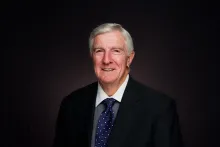
Before his retirement in 2021, Dr. Donald Ward pastored churches in Texas and Louisiana, and taught at Ambassador Bible College in Cincinnati, Ohio. He has also served as chairman of the Council of Elders of the United Church of God. He holds a BS degree; a BA in theology; a MS degree; a doctor’s degree in education from East Texas State University; and has completed 18 hours of graduate theology from SMU.
