
Robin S Webber
This transcript was generated by AI and may contain errors. It is provided to assist those who may not be able to listen to the message.
I talked to a few people that lived down here in San Diego, and if it's anything like up where we live, up in the plains of Menifee, last night I thought Pentecost had already come. There was such a mighty rushing wind. I woke up about 2 in the morning, and it must have been blowing at 50 or 60 mph just at a constant gust. I had to kind of smile whenever a wind starts blowing around this time of year. It brings us into thought of that first Pentecost. Today on this Sabbath, we do find ourselves in a very unique setting. We're gathering together on the doorstep of the Feast of Pentecost. For some of you, it will be the very first Pentecost that you observe, and we want to welcome you. It begins this evening, but it is in this time setting that I wish to bring us all together today to consider and to think about. Because it's during this same time period that the early followers of Jesus were waiting in Jerusalem as instructed by Him. Imagine that. They were waiting, and they were in Jerusalem. And in the course of this message, we're going to be talking about that. I have a question for you, friends, and that is simply this. What were they doing as they were in Jerusalem and as they were waiting? What were they about? But more than that, what was God doing? And what was God about performing in their lives? You see, their world and their lives were about to be turned upside down forever. God's purpose, and wherever God's purpose is, His pleasure follows, was about to be manifested dynamically the very next day. Why is that? Jesus had made a promise to His disciples before He left. He said something very, very special was on its way. And these simple folk simply took Him at His word.
Considering where those folks were and where we are today, a question. What are you anticipating as we come up to Pentecost? As to how God will fulfill His promises in your life? And what He has in store for us? Pentecost, by its very nature, speaks of anticipation.
Pentecost, Greek language, simply means to count fifty. Just like a countdown. Just like when many of us were growing up and we used to see the blast-off from Cape Canaveral, Cape Kennedy. Ten, nine, eight, seven, and you know the rest of the numbers. Blast-off! Pentecost is somewhat like that. Fifty, forty-nine, forty-eight. Coming down. Within the nature of Pentecost is this word. And I'd like you to jot it down because I'm going to hone in on it for the remainder of this message.
And that is simply anticipation. Anticipation of what God has in store for us. But what is unique about Pentecost, this specific time, is that our anticipation and God's expectations come together. It's not only we that are anticipating something wonderful, but because God is offering and granting us by His grace something wonderful, God has expectations. How do those come together? How do we understand it? God gives us a spiritual family scrapbook. It's called the Book of Acts. To show how our anticipation and God's expectations come together.
What I would like to do today, and I'd like you to picture this in your mind, is we're going to climb up a ladder. You see, my knees don't work. Well, you don't have to get out of your chair, Kevin. We're going to climb up a ladder. And that ladder is supplied by Dr. Luke. And that ladder is going to go up against a building in Jerusalem. And we're going to climb up that ladder step by step through the verses of Acts.
And you and I are going to peek into the window of that upper room to where the disciples were. And what we want to do is see what God saw. What was going on in that room? What can we learn about it so that our anticipation and God's expectations can melt together today in our lives, as in yesteryear? We're going to peek into that window, and we're going to see those individuals in there. We're going to see our spiritual ancestors, and we're going to understand a few things about them. Sometimes we say, oh, if only we could be like them.
If only we could be like those spiritual heroes that were there in the book of Acts. They seemed so grand. They seemed so great. They seemed so different. They did so much. But what I want to share with you and encourage you today as a congregation and as individuals is simply this. Those forces are still at play today. They can be ours. How do I know that? Because I can read the scripture. It says that God is not a respecter of persons. He shows no partiality. But the answer will lie in our availability, in our openness, and in our willingness to apply these four qualities that will invoke God's blessings.
There are only four that we're going to spotlight today. There could be more. And they're discovered in Acts 1, that quiet chapter of the book of Acts that precedes the fireworks of Acts 2. But what you're going to find, and what I'm going to find is that chapter is not really that quiet. There are very loud and dynamic points that you and I can learn from.
And we need to learn from it. We need to learn from it, whether we're from La Mesa, or Bonita, or San Ysidro, or Fallbrook, or Oceanside. Because we have these very same challenges today that those spiritual pioneers had yesterday. Let's start with the first one. Before I give you that point, just join me in the scripture for a moment.
Come with me if you will. Let's open up our Bibles. And let's turn to Acts. And let's pick up the story in Acts 1. And picking it up in verse 4. Acts 1 and verse 4. We're going to conjoin some scriptures together and understand what's happening here. And being assembled together, Acts 1 and verse 4, with them, He commanded them not to depart from Jerusalem, but to wait for the promise of the Father. Let's understand what's happening. Jerusalem had been a center of incredible activity.
In fact, that is where Jesus Christ had been dragged before a mob, tried, and crucified. It was during that time of the Passover season, there were hundreds of thousands of pilgrims there. It was a beehive of activity. And the Word was still out on the street. And now we notice where does Jesus tell them to go? To go right back into Jerusalem and notice, and to wait for the promise of the Father.
Just imagine that. The last place that perhaps if you'd been one of Jesus' followers, that you would want to go back to. If you had a multiple-choice test before you, A, B, or C, and if Jerusalem was A, you probably would have skipped that. And it's not that it was just a matter of going back. Let's take this through a second. It was not just a matter of going back, but you had to stay there. It's a little bit like, have you ever come up against either frigid, frigid water, or very, very, very hot water?
And you stick your little finger in there? It's one thing to stick it in there. It's another one to keep it in there because it might do, what? Physical harm. It might injure you. Jesus was saying, you are going to go back to where it's very hot. And by the way, you need to wait there and stay there.
Did they obey Him? Notice what it says in Acts 1 and verse 12. Then they returned Jerusalem from the mount called Olavat, which is near Jerusalem, a Sabbath day journey. God commanded them to remain in Jerusalem. He even said that back in Luke 1.49.
If you want to put that down. Let's go to Luke 1.49. Let's go to Luke 1.49. Just again to pick this thought up for a second. Luke 1.49. Can I say Luke 1.49? That may not be what I...maybe it's Luke 21. One second. Let me see...
No, Luke 24.49. Pardon me.
What does this all bring out? I want to give you one phrase out of this. A virtue that we find in Acts 1 that we need to emulate. If we are going to be blessed by God, it's simply this. Those early disciples were an obedient people. An obedient people.
Now, when we're peering through that window, and we're seeing who's in there, and a part of the crowd that was in that upper room were the twelve disciples. Let's understand that these would probably be the last twelve people that you would decide to start any movement with based upon who they were and based upon past performance. I'd like to share something with you, and I don't have it here with you. That's why I'm glad that I've got a microphone on, and we're going to make this a virtual room for a moment. I'm going to go back here a second and find it, if I can find it.
And I cannot find it. Oh, here it is. Good. I want to read this to you. It's a little humorous, but it makes a point, and I think a point that is well taken. And it's a letter. And it's a letter written to Jesus, son of Joseph, Woodcrafter Carpentershop, Nazareth 25822. And it's from the Jordan Management Consultants. Dear Sir, speaking to Jesus, thank you for submitting the resume of the twelve men you have picked for management positions in your new organization. All of them have now taken our battery of tests.
We have not only run the results of these tests through our computer, but also arranged personal interviews for each of them with our psychologist and vocational aptitude consultant. The profiles of all tests are included, and you will want to study each of them carefully.
As part of our service and for your guidance, we make some general comments, much as an auditor will include some general statements. This is given as a result of staff consultation and comes without any additional fees. It is the staff opinion that most of your nominees are lacking in background, education, and vocational aptitude for the type of enterprise you are taking. They do not have the team concept. Remember what we were talking about in the Bible study today?
We would recommend that you continue your search for persons of experience and managerial ability and proving capability. Simon Peter is emotionally unstable and given to fits of temper. Andrew has absolutely no qualities of leadership. The two brothers, James and John, the sons of Zebedee, place personal interests above company loyalty. Thomas demonstrates a questioning attitude that would tend to undermine morale. We folded our duty to tell you that Matthew has been blacklisted by the Greater Jerusalem Business Bureau, because he was a tax collector. James, son of Alphaeus and Thaddeus definitely have radical leanings and both registered a high score on the manic depressive scale.
One of the candidates, however, shows great potential. He is a man of ability and resourcefulness. He meets people well, has a keen business mind and contacts in high places. He is highly motivated, ambitious and responsible. We recommend Judas Iscariot. As your controller and right-hand man, all of the other profiles are self-explanatory. We wish you every success in your new venture, Jordan Management Consultants. Jordan Management Consultants would not have seen those twelve men if they climbed up the ladder.
They would be the last twelve men that they would have thought would have been in there. And let's appreciate, frankly, that these men to this point had lived up to everybody's expectations. These were the same guys that were a bundle of nerves, stressed out, wanted everything, including the kingdom and position, which we just actually covered in the Bible study that many of you were in.
But now, God was testing their obedience. And something very simple, and what I want to share with you, dear friends, here in San Diego, is that at times we are looking for some grand test with whole paragraphs behind it. Something majestic that might fit our idea of romanticism, of the calling of God, that I'm going to have this and this and this and I'm going to be assigned this and this and this. And it came down to something very simple. And here it goes. You are to go to Jerusalem and you're going to wait.
How many instructions in that? Two. Go to Jerusalem. And number two, wait. So often we are thinking that somehow God's ways are complicated and are beyond us. When God gives us something so very simple to do, and it's not complicated, and it is in that that He wants to see whether or not we are obeying Him. Allow me to ask you a question, if I may. What is happening in our life right now that maybe we are frustrated about? Something that just isn't happening for us. Might be on the job.
Might be in the community. Might be in our marriage. Might be something that's happening in our interpersonal relationship that we only know about that's frustrating us. Where have we gone into the Word and looked at the simple Word of God and just taken God at His Word without overcomplicating it and simply obeying Him? Obeying Him as we did when we first came into this way of life. And many of you completely altered your lifestyle. You completely changed your direction as was brought out last week in the message on repentance where you turned around and you went a different way and you took God at His Word and you just did it!
Because you opened up the Bible and the Bible said to do it. You said, I'm going to do it. Not by my strength, but God will help me.
Why is this so important? Why is obedience important, especially as we're coming up to the Day of Pentecost? Let's appreciate the importance of obedience and understand that disobedience is not marginal to our humanity, but it's central. It's central. And so God was testing them. God can do wonders through an obedient person, no matter how limited their capacities, just as we just jokingly talked about what the twelve apostles had been like before God's Spirit came upon them. But He cannot work through a disobedient person.
He cannot bless a disobedient person, no matter the multitude of their gifts. Join me if you would in Psalm 46 and verse 10. In Psalm 46 and verse 10, one of my favorite verses in the Scripture, it's simple. Sometimes simple is better. Notice what it says. Be still and know that I am God. I will be exalted among the nations and I will be exalted in all of the earth.
I want you to look at the top of that verse for a second. Let's dissect it. Two thoughts. Be still and know that I am God. Before you can know God and have relationship with Him and experience Him, there's a demand clause. Did you notice?
Just two words. You've got to be still. I have a question for you as we're coming up to Pentecost and we are anticipating Pentecost and we are looking forward to it. God's expectation that in our life, what He gives us to be a part of, we must first be still. If you have some challenges that are going on right now and you're in an area that seemingly humanly is too hot to handle, just like the disciples being in Jerusalem, just a simple question.
Be honest with yourself. How still are you? How still are you entrusting that God is going to take care of you? Now, this is very important when you think about the history of the Bible, when you think of the different people that were not still in the course of biblical history. You think of Eve. Eve grabbed an apple. She was not still. She thought that somehow she was being left out of the loop of opportunity.
Uzzah. Remember the guy that touched the ark, broke the rules, thought God was taking a nap? He was not still. Eve grabbed an apple. Uzzah grabbed the ark. Peter in the Garden of Gethsemane grabbed a sword. And we know about Judas. We know more about him than the Jordanian Better Business Bureau or the Jerusalem Better Business Bureau.
He grabbed the money. And all the other disciples knew that. What are we grabbing? Or where are we involved in our life today when God has said, you need to be in Jerusalem and you need to be waiting on me? Waiting is very important. Join me if you would in John 8, verse 31. John 8, 31. Now, the disciples had to abide in Jerusalem, but let's notice these words of Jesus Christ in John 8 and verse 31. Then Jesus said to the Jews who believed him, If you abide in my word, you are my disciples indeed, and you shall know the truth, and the truth shall make you free.
Now, you know, when we say that two-syllable word, abide, abide, we think of that Old Hymn, Lord, abide with me. And we think of it as a soft term. We think of it as being passive. Spiritually speaking, there is no more powerful verb in the Bible than to abide. To stay in the parameters that God Almighty has given us, even when we don't understand. To abide as the disciples did in Jerusalem, when the leader of their group had just been crucified a few weeks.
And Jesus said, You go back and you not only go into that city, but you stay in that city, don't only stay in that city, but you wait, you wait until the Holy Spirit comes. What about us as we come up to Pentecost? Just simply a question for us to consider. Are we an obedient people to the words of God and the words of Jesus Christ? And when the word of God says something, do we abide in it?
Are we in that room? Think of the Bible, think of the Word of God and the words of Jesus Christ in the New Testament as that upper room in Jerusalem where God has said to go and to stay until you receive the answers. That's a challenge, isn't it? That's a challenge. But that is what God's expectations are. We have all sorts of anticipations towards Pentecost. But then that's just about us. And the Bible is not about – are you with me?
– it's not about us. It's about God and what He expects and what He is going to do. Now, many of us today have challenges, just like those early disciples had challenges. But the challenges are there and placed upon us so that we will develop obedience that is pleasing to God.
I want to give you four very quick points on this, and we're going to move to point number two. That room that you and I are in right now in our life that hopefully we are waiting for God's answers. Why does God make us wait? Number one, to trust God to do what is best for us.
To trust God to do what is best for us. To just have that faith and confidence that those early disciples had that God's Spirit will never lead us to where His grace cannot sustain us.
To trust God. Number two, that even when we are in that proverbial upper room and awaiting, to look for ways to honor God even in our present situation. Well, I don't like this situation. I didn't ask for this situation. No? Some of you just stumbled in this situation. And some of you got allowed to get in that situation. And some of you can't figure out how to get out of that situation. Join the crowd. I'm right there with you in some of this.
In that situation, abiding in God and being in that upper room, look for ways to honor God even when the answer is not complete yet in your life. At all times, give God glory. Give God honor. And recognizing in faith that He will never place you to where His grace cannot care for you. Number three, remember that God will not abandon us. God will not abandon us. The disciples had this anticipation. Jesus had promised something wonderful. He talked about He was going to send this comforter, something that was incredible. Now, they didn't understand it all. They couldn't wrap their mind or their heart around it. But they knew that Jesus had promised them something and they took Him at His word. Remember that God will not abandon us. The greater the need, the greater the grace. That's a spiritual equation that more and more of us have got to understand as the days approach. The greater the need, the greater the grace. Number four, to watch for God's plan for us to come about. We're going to cover this more in the fourth part, but to watch for God's plan for us. For that, I will come to you that moment to have that expectation, the same anticipation and the hope that our forefathers had in that upper room. Obeying God and leaving the consequences to Him is the first step of true peace in our life. Did you hear me? Obeying God and leaving the consequences.
But that's what I want to get my hands on are those consequences. I want to get in there ahead of God. I want to grab the apple. I want to grab the sword. I want to grab the ark. I want to grab the money and take off like Judas because I don't quite understand what Jesus is doing. Obeying God. Obeying God. Obeying the Word. Abide in the Word.
And even when you don't see all the answers, you leave the consequences to Him. God gives us a promise. Join me in Isaiah 40. Isaiah 40. Verse 31. If we will be obedient and if we will abide where He tells us to be and abide in His Word, God says He's going to do something for us just like He did for those early disciples.
And notice what it says. But those who wait on the Lord, they had to wait 10 long days in Jerusalem. I bet they were long.
I'm sure Peter hung his head out the door, the window a couple times. Is anybody down there? Are they coming?
Those days were long. But those who wait on the Lord shall renew their strength, and they shall mount up with wings like eagles. They shall run and not be weary. They shall walk and not faint. And those men, because they obeyed God and took God at His Word, in something as simple as simply this. Be in Jerusalem and you wait.
What is God telling us today that is so simple that we're looking for some convoluted, complicated solution in our life? When so often God's Word comes at us very simply, in English, thank God. And it says to do this, or it says to do that, according to some psalm or some proverb or some commandment.
It's not complicated. It's not mystical. God did not give the early disciples something that He did not give us today. But we must walk through the doors of availability, of openness to God's Word and willingness. Point number two. Acts 1, verse 14. When Dr. Luke examined the early church and made it what it was, he saw this and he made this diagnosis and he put it down in writing. As we step up that ladder and peer into that window and we see what they were doing, we see what God saw that they were doing, that He might bless them. And it says in Acts 1, 14. Then they all continued with one accord in prayer and supplication with the women and Mary the mother of Jesus and with His brothers. Brother. Number one, they were an obedient church. Number two, they devoted themselves to prayer. Now, I mentioned earlier that disobedience is not marginal to the human experience. It's central. Prayer is nearly as humanly unfashionable as obedience. But this early group of people were looking into that window. It's that window that goes into the upper room and we're looking in there and you're seeing men and you're seeing women and what are they doing? They're praying. And it was prayer among people that hadn't liked one another much over the last three and a half years. You think about it. Let's look at who's in that room. It says in verse 13, and when they entered, they went up into the upper room where they were staying. There's Peter, James, John, Andrew, Philip, Thomas, Bartholomew, Matthew, James, the son of Alphaeus, Simon the Zealot, and Judas, the son of James. As we were just going through the Bible study with Mr. Miller, these guys did not like went on, not there at all. They had, as we say today in the 21st century, they had issues with one another. They didn't like one another.
And they certainly didn't like the family of Jesus. Where were they?
These Johnnies come late least. And then in Jewish society, here are men and women together in this upper room. These are people that naturally should not have been together. What kept them together, and this is the power of the Bible that I want to share with you today, is simply this.
They prayed together. They were a praying church. This is what fascinated Dr. Luke as he made a diagnosis of this body of Christ in the 1st century. And he said, what makes them work? What is allowing salvation to spread around the world of antiquity? Who are these people? Who are these people that no longer have a temple, no longer have a building, no longer have a priesthood that is genetic in origin?
They should dry up. They should go away. They should blow away with the wind. But they were praying to their heavenly Father. What I'm sharing with you as we come up on the shady side of Pentecost is simply this. You and I, as New Covenant Christians, cannot underestimate the power of prayer to keep the body of Christ together.
They would pray again and again. Let's look at verse 24, chapter 1. And they prayed and said, You, O Lord, who know the hearts of all, show which of these two men you have chosen as they went to replace. Judas Iscariot, they didn't have the answers of and by themselves.
We notice in verse 42, again, let's notice verse 42. And they continued steadfastly in the apostles' doctrine and fellowship in the breaking of bread and in prayers. Acts 12 and verse 5. We're going to skip about 10 chapters. Acts 12 and verse 5. Let's notice what it says. Peter was therefore kept in prison, but constant prayer was offered to God for him before the people after Passover. Constant prayer offered up. Why were they praying, friends, here in San Diego? Why? They were talking to God to give them hope, to give them perspective, to take a human time out.
Rather than looking around what was going around them, they stopped, they looked, they looked above, and they listened. And they needed to. Little did they realize what was about to happen. They were about to go out into a world that confronted them outside of that upper room. And in that world be a world that was complicated. It was corrupt. It was morally polluted, just like our world is today. Teaming cities steeped with multiculturalism, multi-faith challenges with Roman tyranny.
Always at the door, they needed to be a praying people. As we approach Pentecost, brethren, are we praying individuals? Are we a praying people? Just think of this. If we are not a praying people, Satan will be praying on us. Just change one letter. If we are not a praying people, Satan will be praying on us. I am firmly convinced that Satan desires the destruction of the body of Christ. He would like to create division. He would like to create turmoil. He would like to create issues.
We need to be praying. If it's big enough to worry about, it's big enough to pray about. I want to share a thought with you here. Join me, if you would, in Isaiah 56 and verse 7. It's a verse that Jesus quoted later on in the Gospels, but we're going to go to the original source. Isaiah 56 verse 7. Even them I will bring to my holy mountain, and make them joyful in my house of prayer. Jesus would quote this later when he was overturning those tables in the plaza outside the temple when he said, you robbers and you thieves and you're making merchandise.
Do you not know that my father's house is a house of prayer? Now, again, this is very important for you and I to understand. And that is today, there is not a physical temple. Are you with me? There is not a physical temple. But God is developing a spiritual temple. It's called the body of Christ. Again, let's consider this for a moment. Unlike Israel of old, the Israel of God today does not have a genetic priesthood.
We do not have a house of Aaron. We do not have to go through a physical high priest. But we can go through a spiritual high priest to the Father. We don't have to be on this side of the veil. When we say in Jesus' name, our prayers go through that veil, which has been ripped asunder by his sacrifice. And you and I can pray directly to God our Father.
So thus we understand that we are the walking, talking, living, fleshly temple of God that is on the move. Now, when we're on the move, something can happen. If we're not praying, we can bump into one another. And I want to ask you a question. I can just put it out to you today. Who are you having issues with? There's that word again that we use up in the San Fernando Valley. Issues.
Who are we having issues with that we have not been praying for? When Jesus came along, he was so radical and so out there that he said, by the way, pray for your enemies. Who do you and I have issues with today? Who do you and I have adversarial feelings towards that we stay on that cloud of feelings rather than on our knees, praying for that individual? Gaining God's perspective. Asking God to give us a love that is not natural. Remember, agape or achape is so unnatural that the Greeks did not even have a word for it. They had to go invent a word because they understood all the other loves. But this love, this outflowing, outgoing concern away from self was so unnatural to the human kind that a new word had to be coined to describe it. That was not self-love but sacrificial love. A house of prayer. Today we are the household of God. The household of God. That's why we need to be praying without ceasing. A church that is praying. And I know many of you that are in this San Diego congregation, you love being here because you love God, you love opening the word of God, and you love one another. And you are a testament to God's grace. But don't rest on your walls. We need to be a household of prayer. We need to be praying without ceasing. When you go through the book of Acts, Acts 1, Acts 2, Acts 4, Acts 5, Acts 12, later on in Acts 26 and 27, you see them praying. They pray individually and they pray together. And it's just like the hammer of the blacksmith coming down on an anvil and a barn. There is a rhythm, there is a steadiness. It never lets up. They don't go to one another, they go to God.
A praying church can be an expectant church. Number 3. Number 3.
Acts 1, 14. Acts 1, 14.
Then they all continued with one accord in prayer and supplication. One accord. They were tied together. They were united. Again, Acts 2, verse 1.
Now, they were in Jerusalem. They were in that upper room. And location is pivotal to this discussion that we're having. But location is nothing if we are not united. Of one accord. You know, you can take a cat and you can take a dog and you can tie them, their tails, together. They're in the same location, but I can guarantee you they are not of one accord. Right? They were of one spirit and they were of one accord. They were ready to receive God's Holy Spirit.
What I want to share with you this afternoon is we consider Pentecost. God's Spirit is emboldened and empowered by our unity in Christ.
If we are looking forward and anticipating as to what God yet has to pour out on the body of Christ, let's just simply realize it cannot work with those who have not handed over their lives to God Almighty. Those that are bedeviled by individualism or disunity. God cannot bless disunity. He will not. If God... Think this through. We're almost done here, but think this through. If God blessed disunity, then He will not. If He did, He'd be working against Himself. The Church would be proclaiming a lie, saying that we are one with Christ, but not one with another.
It's only when we are united that people will stop and take notice of our message. I think this is the great lesson that the Church of God has been going through over this score of years. That it's not just simply what we know, but what we are. That it's not simply having the truth, but having the spirit of unity being connected with God the Father and Jesus Christ.
How important is unity? How important is unity? Again, what is fascinating about this early Church is it moved from Jerusalem, it moved to Antioch, it moved to Ephesus. It had no earthly priesthood. I want you to think about this. It had no earthly priesthood. It had no earthly temple, as it were, but they remained united because they remained humble. Join me if you would in Ephesians for just a second. I know we went over this a couple of weeks ago, but it's just fundamental to contemplate as we're coming up to Pentecost.
This unity, what does it involve? It's not a mystery.
Ephesians 4 and 1, they were to walk this walk that we've been called by with humility and gentleness, with long suffering. Bearing with one another in love, verse 2, and endeavoring to keep the unity of the Spirit and the bond of peace. There is one body, one Spirit, just as you were called in one hope of your calling, one Lord, one faith, one baptism, one God, Father of all, who is above all, through all, and in you all. Unity.
So often people become disunited because they move below what God, through the Apostle Paul, set as a standard for unity.
They want to get down into what our differences are rather than our commonalities of and by the Spirit. These high marks, as we are coming up to Pentecost, this would be a wonderful section of the Bible to consider. So very, very important. I'd like to go to point four for just a moment and we'll conclude. And that is simply this, that this early church was expectant. They were expecting something. Let's just simply put it this way. They were on the edge of their seats. They had heard of the help that God said was on the way. They didn't know exactly what it was, exactly what it might be, but they remained in vigilant expectation. And because of that, they remained open and receptive, willing, and expectant, remembering Jesus' promise in John 14, verse 1. Let's just go over there for a moment. John 14. Let not your heart be troubled. You believe in God. Believe also in me. Verse 15. If you love me, keep my commandments, and I will pray the Father, and He will give you another helper, that He may abide with you forever, the Spirit of truth, whom the world cannot receive, because it neither sees Him nor knows Him, but you know Him, for He dwells with you and will be in you. I will not leave you alone. You will not be an orphan. I will come to you. This was not a guessing game. God, through the Christ, had promised that He would deliver. And therefore, they were available in that upper room. They were open to whatever God was going to give them. The Spirit of old had been impersonal. It had been transitory. It had come. Gone, come, gone. But now, Christ was saying there was going to be something that was going to come and to stay with them. They didn't quite know what it was, but they were expecting it.
Hebrews 11, verse 6. Hebrews 11, verse 6.
But without faith, it is impossible to please Him, for He who comes to God must believe that He is, and that He is a rewarder of those who notice diligently, diligently seek Him.
We might just simply say that are expectant.
I think of that beautiful story of that Latin man in the streets of Jerusalem, who loved his servants so much that he wanted this Jewish rabbi to heal him. And you know the words, and I know the words, the man that said, well, I'm a man under authority. And he said this, and I think about this in line of expectancy. Speak only the Word. That's how much respect he had for Jesus of Nazareth. You just simply speak the Word, and my servant is healed. He was expectant. He took God at His Word. He gave what He had, His servant, and committed Him to Jesus Christ.
And he was ready for the answer. As we come up to Pentecost, after we've now looked through that window on the side of that upper room, and seen what those early people were like, we see that the issues that were before them are the issues that were before us. We see that it's not mystical, it's not mysterious. The words are out there for us to contemplate. Not long sentences, but just simply this as we come to Pentecost, that God will bless us individually and bless us collectively to spread, to preach, and to live out the Gospel of Jesus Christ in the Kingdom of God. I just simply leave you with this thought, number one, Are you obedient? Are you obedient to the Word of God? That's God's expectation that His disciples will be, and He will be ready to bless you. Are you a people and a person of prayer? A prayer. That early church in that upper room was praying up a storm because they needed answers. Do some of you need answers today in your life? Or am I the only one? If it's big enough to worry about, it's big enough to pray about to the greatest source of all. Number three, they were united. They were abiding on one another. Then they needed one another, and they needed God. And they didn't make issues out of the miners, but understood the major things that God had in store for them. And number four, they were expectant. Let me share something with you, just to conclude with, on a personal note. I've had a marvelous life. I didn't say perfect life. You know that already. You know me.
Somebody asked me the other day, did you ever in your life expect to have all of the opportunities, responsibilities, blessings, challenges that you've had over your adulthood? I said, no, not at all. Because I never wanted to be a minister to begin with.
I didn't want to be one of them. I just like being Robin. I started out very, very small. I just started out by the gentleman that I went to. I said, what can I do for you? I've got some time in my hand. He said, I'll tell you what, you can go to the back there and you can sort out all of my paperwork that I haven't sorted out for ten years. Great. It's like going to Jerusalem. And then he said, and by the way, what I'd like you to do is I'd like you to take some tapes. Remember when they used to have tapes, not CD? Why don't you just take tapes to all, not some, all of the widows that are in Pasadena? I said, yes, sir. Everything that has transpired in my adult life from the time I was 22 started out with something very, very simple. Just like going to Jerusalem and waiting. Go sort out some 3x5 cards on a Rolodex and you take these tapes to widows. And I was obedient to what I was asked to do. I was a busy guy even at that age. I had a full-time job. But I had some time on my hands as well, and that's where I started. Wherever you today are today as we come up to Pentecost, you have something to give to our Maker and our God. You might say, well, what do I have to give? You might have just something very, very small. Or God might just be asking you to do something very, very small.
You obey that small thing that He asks you to obey. And or if you have something small to give Him, just give Him that small. For if you give Him nothing small, then He has nothing to use. But if you give Him that which is what you consider humanly small, God can take that small and make it very, very large. Be expectant that God is ready to bless you as we come up to Pentecost this evening. I hope some of these words and some of these concepts have been of a blessing to you on this Sabbath day. We do have two handouts there for all of you, and I do look forward to seeing you after church.
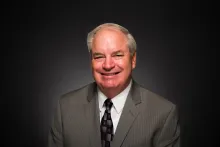
Robin Webber was born in Chicago, Illinois, in 1951, but has lived most of his life in California. He has been a part of the Church of God community since 1963. He attended Ambassador College in Pasadena from 1969-1973. He majored in theology and history.
Mr. Webber's interest remains in the study of history, socio-economics and literature. Over the years, he has offered his services to museums as a docent to share his enthusiasm and passions regarding these areas of expertise.
When time permits, he loves to go mountain biking on nearby ranch land and meet his wife as she hikes toward him.
