

Jorge de Campos
This transcript was generated by AI and may contain errors. It is provided to assist those who may not be able to listen to the message.
We have to not be wary. And brethren, as we heard in the sermon, sometimes we've got to start climbing a mountain by climbing a little mountain, and then big mountains, until one day we climb the big mountain. And in life, everything is like that. Look at little children. Little children have to start crawling before they can walk and run. Little children have to start learning the basic sounds before they learn how to speak.
Even plants and trees start from a little seed. And we always, therefore, need to start from the beginning. And therefore, we have a hope. And sometimes we live in this world, and it's like going to a film or to a movie, and sitting and arriving late, and not yearning the beginning. And life today, to a lot of people, is like that. You kind of listen to a little bit of the story, but you haven't heard the beginning. And therefore, everything kind of is confused, and you don't understand what's going on. Therefore, we need to start at the beginning to understand God's plan. Because a lot of us have come into the world, don't understand the beginning, and not understand the beginning, don't understand God's plan. And not understanding God's plan, they can't understand the basic fundamental doctrines that God has given us, and how they fit into that plan.
Therefore, today, brethren, I wish to start from the beginning as an introduction to the fundamental doctrines, which are described in Hebrews 6. And so, if you turn with me first to Zechariah 4, verse 10. Zechariah 4, verse 10.
Zechariah 4, verse 10. It reads, For who has despised the day of small beginnings?
You know, all beginnings start small, like little children start small. The little seed starts small. But don't despise it, because it grows bigger and bigger. Any construction project, for instance, that you decide you want to build a house, start small. First, just an idea, just a thought. Then, you put together all the plans, and then you actually get involved, and start digging, and buying the materials, and get the right training and the right tools, and you go ahead and do it. So, don't despise the day of small beginnings.
The beginning of our purpose and our goal is described in Revelation chapter 1. Revelation chapter 1, verse 7 and 8. Revelation chapter 1, verse 7 and 8. Behold, He is coming with clouds, and every eye will see Him. Obviously, every eye that is living at that time will see Him. Even they who pierced Him, so even they who pierced Him, obviously, ultimately they will see Him when they resurrected. So, every eye will see Him, and all the tribes of the earth will mourn because of Him. Even so, Amen. So, we know it's talking about Jesus Christ. I am the Alpha and the Omega, the beginning and the end, says the Eternal. Who He is, says the Lord. Who He is and who was and who is to come, the Almighty. Jesus Christ is the beginning. As you can see, it's written in red in your Bible. It's crushed on the words. And you can see a little bit further what it talks. For instance, in verse 11, and it says, I saw the Alpha and the Omega, the first and the last. And it's talking about Christ. We know that it's talking about Christ.
Verse 18, for instance, says, I am He who lives and who was dead, and behold, I am alive, forevermore, Amen. And I have the keys of Hades and of death. And the verse before, verse 17, says, I am the first and the last, be not afraid. So Jesus Christ is the beginning and the ending. In other words, He is the one that began the creation and ends it.
But we know, obviously, that the Father is greater than Christ. So how does that gel? Therefore, what we know and will prove it is that the Father has delegated that job responsibility, that mission, to Jesus Christ to execute that plan.
In other words, under the Father's command, Jesus Christ has the mission and the responsibility to create members of God's family. That is job description. And as we'll see, therefore God the Father planned with Jesus Christ the Word to, one, create spirit beings, whom we call angels, to help in that process. Two, then, after that, He created physical things, the universe, the environment for growth. And three, later, He created human beings, some 6,000 years ago, nearly 6,000 years ago, in which the ultimate purpose of that great mission, commanded by the Father, is to create more members in God's family. That is a big purpose. That is, the plan is, create beings which will ultimately be begotten as sons and daughters of God the Father. Therefore, God the Father is God of whom all things and for whom we exist. And Jesus Christ is the Lord by whom God the Father made all things. Let's read that in 1 Corinthians 8, verse 6. 1 Corinthians 8, verse 6. 1 Corinthians 8, verse 6. Yet for us there is one God the Father. He is the Father. He is the Supreme, the highest being, of whom are all things and we for Him. And one Lord Jesus Christ through whom are all things and through whom we live. So God the Father is of whom are all things and for whom we exist. And Jesus Christ is by whom God the Father made all things. In other words, all executive work was delegated to the Word. Jesus Christ, the Amen, the I AM. And that is supported also in John chapter 1, verse 1. John chapter 1, verse 1. In John chapter 1, verse 1, we read, In the beginning was the Word. And Yah shows that the Word, who became flesh, which is Jesus Christ, existed eternally. In the beginning was the Word. And the Word was with God.
With God, the highest, now the Father. In other words, they had a relationship. Some people say, oh well, was something inside God like a word that came out? No, it was with, not inside. With. It is a relationship. There's two beings here. They had a relationship. And the Word was God. In other words, He's an identity. He was of the God Kingdom. He was of the God Kind, which is now the God Family, the Kingdom of God. He was of that Family Name, God. Just like you and I, we have a Family Name, and all members in your family carry the same Name. The Family Name, God. Continue then in verse 2, He, the Word, was in the beginning with God. The Word was in the beginning, or Jesus Christ was in the beginning with the highest, that is, the Father. So, that's what we want to see, that, the beginning. Because we come into this life, and we don't know all these things. So, it's got to be revealed to us. For us to understand, so we can see from this, that Christ, which was then the Word, was co-eternal and co-existing with the Father. And then in verse 3, we see, all things were made through Him, or by Him, through Him, through Him. He was the agent, the representative of that Kingdom that did the actual creating. It's like in a company, you have a representative that represents a company. In this case, He was the representative, the agent, that did all things. And without Him, that is, without Christ, which was then the Word, nothing, I mean, nothing means nothing. Was made, there was made. Nothing was made, there was made. Therefore, everything that was made was made, as it says, through Him.
Which means, Christ was not created, because He is eternal. Because everything that was made was made through Him. So is ever living. By the Word, therefore, we can see that everything was created by Him. That is supported again in 1st, I beg your pardon, Colossians chapter 1, Colossians chapter 1, verse 15 and 16.
Colossians chapter 1, verse 15 and 16. He, that is Christ, is the image of the invisible God. In other words, He is the very image of God the Father. He is the firstborn over all creation. The word firstborn is protocos. Proto means first, like prototype. Proto means first, the first protocos, the first born. Now, by the way, that's not genal, which means begotten. It's the firstborn. It was the firstborn of the Father from mankind to Godkind. So He was of the Godkind. He was God of the Godkind. He emptied Himself, as we'll see a little later. He became a human being. He died. He then got resurrected. He was the firstborn from mankind to Godkind, the protocos, the firstborn. And then continue, verse 16, for by Him, that's by Christ, which then was the word, all things were created that are in heaven and are on earth. You know, it's even things that are in heaven, what things are in heaven, the angels.
Visible and invisible. You know, things that are invisible, like spirit beings, where the thrones or the minions or principalities of power, spiritual powers and spiritual authorities were created by Jesus Christ. All things were created through Him and for Him. By the word, now Jesus Christ, all things were created, not just the physical creation, but the spiritual creation. You know, it was the angelic domain or angelic kind of beings. But more, not only angels, but you and I, ultimately, as spirit beings in the God family, are created through Christ, because it says, in Christ we are a new creation. But, you and I know that you and I are human beings. And as human beings, we do what? So, like it or not, each one of us, sooner or later, is going to do something wrong. And so, for us to be forgiven and be reconciled with the Father, to be part of His family, the very being that was appointed by the Father, as the agent, or the one through which everything was created, had to open the way for us to be saved. He had to be the pioneer, the captain, the author of salvation. Look at Philippians 2. Philippians 2, verse 5-8. Let this mind, let this attitude, let this spirit be in you, which was also in Christ, which is a spirit of humility and submission to whatever the Father tells Him to do, or tells us to do, let us have the same attitude. Because now it's talking about Christ. Who? Verse 6. Being in the form of God. In other words, being of that God-kind, being of that God-kingdom, being in the form of God, do not consider it robbery to be equal with God. So it was not any identity theft for Him to be equal with God. There was nothing wrong to say that. He was equal with God. Now we know equal in kind, not in authority, because the Father is supreme. But He is equal of that God-kind. But, verse 7, made Himself of no reputation, made Himself as a being coming to earth that nobody knew who He was, and that's why they killed Him. Made Himself of no reputation, taking the form. So He was of the form of God, He now took the form of the human being. So He was of the God-kind, and now He came of the humankind.
Taking the form of a bond-servant and coming in the likeness of man. In other words, He became a human being. And being found in appearance as a man, He then humbled Himself even more. And He became obedient to the point of death, even the death of the cross.
So we can see that He was God of the God-kind, of the God-kingdom. He was the agent that the Father used to do and create everything. And He willingly of His unfree will, willingly of His unfree will, because He says He emptied Himself. And He was not forced. Willingly He did.
He not only did it creating, but He found Himself to die for us. And this, brethren, is what Paul describes in Hebrews. Let's look at that in Hebrews 1. Hebrews 1. Hebrews 1, and we start reading in verse 1. God, that's the Father, who at various times, in various ways, spoke in time, passed to the prophets, to the fathers, by prophets, by human beings, being prophets. So God, through Jesus Christ the Word, spoke to human beings by the prophets, through human beings, but these days, spoken to us by a human being, by flesh, which was the Son, which was the Word that became flesh, spoke to by His Son, whom He has appointed here, of all things, through whom also He made the worlds.
God the Father made everything. In other words, the universe, the sun, the moon, all the stars, all the galaxies, billions of them. He made them through Jesus Christ, through whom He made the worlds. Who being the brightness of His glory, that's Christ being the brightness of the Father's glory, and the express image of His person, you know, the express image of the Father, and upholding, Christ upholding all things by the order of His power. Christ keeps the world ticking. You know, it's like, for instance, if you have a wheel spinning, you've got to now and again keep it, giving a little, to keep spinning in the right place.
Well, by, it says here, by the word of His power, Christ keeps the world ticking everything in its place. Even though we try and mess it, He keeps it there. When He, that's Jesus Christ, had by Himself purged our spirits. How? Because He came a new being and died for us. He sat down at the right hand of the Father, the Majesty, on high. Have He become so much better than the angels, as He has by inheritance obtained a more excellent name than they?
Do we see how great Christ is? Far greater than any angel. He was not created. He was co-eternal. Everything was made through Him, and He died for us. Look at how the Father calls Christ in verse 8. Look at verse 8, how the Father calls Christ in verse 8, Hebrews chapter 1 verse 8. But to the Son, obviously it's the Father talking to the Son, which is Christ, God, the Father says, Your throne, O God.
The Father called His Son, O God. In other words, of the same family name, God, all members of your family bear the same family name. So all members of God's family bear the family name of the God family. God. So, back to our situation. You and I sin. And you know what happens when you and I sin? We call suffering. Now, maybe we call suffering upon ourselves. But maybe we call suffering to an innocent bystander. For instance, if you drive under the influence of alcohol, and you go and cross the red light when you shoot, and you hit another car, and somebody suffers the rest of their life, innocently because they were driving through a green light, but you cause that accident.
So, sin causes suffering. But Christ was the Creator. And you know what atheists say. Well, how can we believe in God? Because He doesn't suffer. So, He does not know what suffering is all about. What He does. Because the very being that did the creating, Jesus the Christ, became a new being, and suffered the most excruciating death without doing anything wrong. So, God knows what suffering is all about. And that's why we're reading Hebrews 2, verse 10. It says, For it was fitting for Him, which we understand you, so great, was fitting for Him, for whom are all things and by whom are all things, in bringing many sons to glory, to make the Captain of their salvation perfect through suffering.
The warrior-Captain is Arheros, which means the Prince, the Chief Leader of salvation. So, Christ is not just the Creator of everything, but even more, He had to learn and feel first-hand what suffering is all about. So that no one can criticize God, our Creator, which created everything through Christ. So, Christ was our Creator. Obviously, the Father is our Creator because He commanded the creation.
So, nobody is denying the Father by any means. But nobody can criticize God for allowing us to suffer while He does not understand what suffering is all about. Because some people say, Oh, well, God, you don't understand what pain is. Well, God understands. God understands. Because He, the agent of the God-Kingdom that created us, had to go through excruciating pain on the cross, and even before the cross being beaten on that night that it was betrayed.
So, it looks a little bit more, yeah? Because what do we have? Christ is our Passover, is our Lamb. God, in a sense, has done by allowing His Son, the Father, allowing His Son, and His Son, who the Father uses the agent to create us, has done, in a way, the most difficult part.
Think about it, which is life for us. That's kind of the most difficult part of the whole planning process and the whole creation process. I mean, creating things, etc. Yeah, it's fantastic. It's amazing. It shows God. But the very fact that He died for us and went through that pain was the most difficult part. Now, He's opened the door, the way for us to do our part, and obviously His help. So, look with me at Hebrews 5. Hebrews 5, we'll start reading from verse 7. And it says that He's a priest after the autumn of His attack, and then it goes on. Who, in the days of His flesh, that's Christ, when He had offered up prayers and supplications with the hymnant Christ and tears to Him, it was He that suffered the most excruciating pain, who was able to save Him from death and was heard because of His godly fear.
Though He was a son, yet He learned obedience by the things which He suffered. He learned a lot about obeying under difficult, stressful situations. And, verse 9, And having been perfected with that, I mean, God is perfect, but the eye is an additional element that God had not experienced, suffering even death. Having been therefore perfected, He became the author of eternal salvation to all who obey Him. The word author, Yah, is atheist. It's not the same as earlier on we read in Hebrews 2, verse 10, where it says He's the captain or the author of our salvation. Yah is a different word.
In other words, atheist means He is the author, the author, the cause of our salvation, of eternal salvation. And then continuing in verse 11, verse 10, Called by God, as high priest, according to the water and milk, is a deck of whom we have much to stay and hard to explain since you have become dull of hearing. Paul, Yah, was talking to the Jewish community, the Jewish brethren in God's church. That's why it's written to the Hebrews. And he was writing to them and says, You, Christians, repentant Christians in God's church, that have the standard from the Jewish community, you have been raised according to the articles of God, you should know better.
Because really, verse 10, For though, by the start, you ought to be teachers. Because why? Because you were raised with all the basic teachings from the Old Testament. You need someone to teach you again the first principles of the articles of God, and you have come to need milk and not solid food. You have come to need the basic principles again, instead of solid food.
Verse 13, For every one who practices or partakes only of milk is unskilled in word of righteousness, for he is a babe. In other words, he is immature. Spiritually speaking, he is immature. But verse 14, he says, But solid food belongs to those who are of full age.
You know what I'm saying? I'm mature. Mature Christians. That is, for those who by reason of use have their senses exercised to discern both good and evil. So what is solid food? Oh, I've heard people say, well, solid food is prophecy. No! What it's saying is, solid food is having, by practice, your faculties exercise to discern, to identify, to recognize what is just, what is good, and what is evil.
And as Christ said, the weighty matters of the Lord is justice, and then applying it with mercy and walking in faith. So my question is, how is our practice, are we practicing, by practicing, are we practicing, as it says, by exercising our faculties to discern good from evil? How is our practice, how are we living, practicing, to discern what is right and what is wrong? Because in the end, that is the seventh fundamental doctrine, which is growing immaturity, exercising maturity. But then, it continues in chapter 6 verse 1, therefore, leaving the discussion of the elementary principles of Christ, let us go to perfection.
Let's go to number 7. Not lay again. This place is 6. And now you list 6. Six fundamental doctrines. We list them here. The first one being the foundation of repentance from dead works. Then, faith towards God. Number 2, three, doctrine of baptisms, plural. Four, laying on our vans. Five, resurrection of the dead. And six, eternal judgment. Those are the six fundamental doctrines, which I intend to cover.
And today, I'm covering just the first one, and starting from the beginning, so we have the big picture. Interesting, yeah? That we have to have our senses exercised by doing what is right to go towards maturity. So we and I, you and I, we don't have to redo the foundation. We don't have to reconstruct it, because those are our basic steps that we have to go through. Because our ultimate goal is to be children of God in the kingdom of God. And that is to have our senses exercised to discern of good and evil.
Think about it. God knows what's good and evil, and it can spot it. What? You and I, as we become mature, we need to spot it. What is good and evil, just like that. That's what we need to do. That is how we grow in maturity. And that, in a sense, is the seventh, the ultimate basic or fundamental doctrine here. So today we're going to start reviewing these six basic doctrines. So today is the first of a series of six sermons. But notice something that you may have not noticed. They are in pairs.
Have you noticed that? They are in pairs. Look at it. Not letting again the foundation of repentance from dead works and of faith towards God. That's the first pair. Of the doctrine of baptisms and of laying of hands. That's the second pair. And then the third pair of resurrection of the dead and of eternal judgment. They are actually brethren connected with the three seasons of God's Holy Dice. They are connected with the three seasons of God's Holy Dice. The first pair, repentance and faith, are the preconditions of baptism. And they tie in very well to the first season of God's Holy Dice.
So the first season of God's Holy Dice is the days of the living bread. And so, think about it. These are lights. Had to leave Egypt. Had to change their life. And they had to walk in faith. And you and I know they failed miserably. Brethren, when you look now at ourselves, you and I know that we have sinned. We all have sinned. Look at Romans chapter 3 verse 23. Romans chapter 3 verse 23.
We all have sinned. It says, for all have sinned and fall short of the glory of God. We all have sinned. We're all the works of the flesh. We all fall under the poles and the desires and lusts of our minds and bodies. The end result of this is death. Romans 6 verse 21. Romans 6 verse 21. It says, What fruit do you have damned in the things which you are now ashamed? For the end of those things is death.
The fruit of what we've done in the past is death. And you and I, we all are condemned to death. Without Christ, basically, we're condemned to eternal death. In other words, we're on the death row. Eternal death. Verse 23 of Romans 6 says, For the wages of sin is death. The wages of sin, the final end result of sin is death, and death is eternal death.
But for Christ, we'll be both back from the first death. But the wages of sin is death. But the gift of God is eternal life. The mere fact that it's a gift of God, it means you and I do not have it. You and I do not have an immortal soul, because it says it's a gift of God. It's eternal life in Christ Jesus, our Lord. Look at Ephesians chapter 2 verse 1. Ephesians chapter 2 verse 1. It says, And you, he might alive. He has made us alive, who we're dead.
Now, we will be made alive at a resurrection, but spiritually, unless we repent and come to know Christ, we are basically dead. That's why somewhere else it says, for instance, the baptism of the dead. What do you mean by that? It's because we are dead! It says, you, who, we're dead, and you, who, we're dead. Now, I wasn't dead, literally, physically, but I was on death row. So, basically, I was dead.
Ultimately, I'll be dead. That's what it's meant. So, we were dead. You know, as we're in a spiritual death row. But, that's verse 2 says, In which you once walked according to the course of the sword, according to the prince of the power of the air, the spirit who now works in the stance of disobedience, among whom also we all once conducted ourselves in the lust of our flesh, fulfilling the desires of the flesh and of the mind, and where, by nature, the children of wrath, in other words, condemned to death, just as the others.
Interesting says, amongst those whom also we all once conducted ourselves. So, it's talking to Christians that have repented, that are not conducting themselves according to the sway.
So, we all did works that lead to death. But you see, part of God's plan, He wants to make sons and daughters in His kingdom. We saw that, that was the plan, Christ, and therefore Christ came and died for us. When He died for us, He then, it's part of that plan to have a redemption clause. Let's think about that. A way of redemption. And that redemption is because God so much loves us that He wants us to be His sons and daughters. And we know, we all have read John 3, 16. God so loved us that gave us His only begotten Son. John 3, verse 16.
He says, For God so loved the world that He gave His only begotten Son, that whoever believes in Him should not perish, but have ever lost in life. And what is belief? What is belief? Let me give you a simple analogy. Say, for instance, you're standing in a pool. There is a pool full of water. You're standing in a pool. Water. And the edge of the pool is your three-year-old daughter, which does not know how to swim. And you say, jump and I'll catch you. And the daughter is thinking about, do I jump or don't I jump?
If the daughter believes you, that you're going to catch her, she'll jump. If the daughter does not believe you, she'll not jump, because of her fear and doubts. Keep her from exercising faith. You see that? A fear and a doubt, if she has fears and doubts, will keep her from exercising faith. But if she overcomes those fears and doubts, she'll exercise the faith, the trust in death, and will jump.
And that's believing. That's believing. So, believe is not just saying, oh well, I believe and stay the way I am. Believe means you trust God and change. That's what believe is. So, if whoever believes in Him and therefore does what He says, then we must do. Would not bet, but have everlasting life.
So, this plan included a redemption plan. Brethren, Yah is one great deception of this world. One great deception of this world is that Satan came into Adam and Eve, and by Satan coming into Adam and Eve, there was the fall of man of Adam and Eve. Brethren, it's all part of the plan.
Satan did not act against God. That was part of the plan.
God's plan is for us not to be destroyed, but to be in His family.
But part of His family to be beings like He is, that can discern good and evil, just like that, mature as we saw. We have to go through a training ground. Like we already know in the sermon that you prove a little thing, Yah, and prove a little thing there. You climb a small mountain, and you climb a bigger mountain before you climb Mount Everest. Or you climb, do a small run and do a bigger run before you go to a big, half marathon, and then maybe a full marathon. But you go through step by step. Part of God's plan for us to be His children is that we have to be free moral agents. And therefore, we have to prove by test and trials to overcome, so that then we have the free will and desire to have the same mind, mind-fit as God has in Christ as, a mind of humility and a love towards others. Therefore, part of God's plan required that you and I be given the opportunity to choose between right and wrong.
And therefore, it had to allow the capability that you and I could do something wrong. Like you and I allow our children sometimes to do things that we wish they didn't do.
But sometimes they have to do that to learn that lesson.
We have to come to a point when we see the folly of our mistakes, of our way, and then we completely repent, change, sincerely, from inside, and that we don't want to go back again and be forgiven. That is true repentance. And that's what God is looking for. So that then, that being that has reached that point can be son and daughter, can have the power and the glory of God, because you'll exercise that in a just and merciful way. And therefore, because God wants all to be saved, turn with me to 1 Timothy 2 verse 4. 1 Timothy 2 verse 4.
1 Timothy 2 verse 4. He says, God, our Savior, who desires all men to be saved and to come to the knowledge of the truth. God wants all to be saved. You know, it was all to be His children in the kingdom of God, as sons and daughters in that royal family, which is God's kingdom. And therefore, to know the truth, that there is only one way, which is a way of love. There's only one way. And therefore, He's patient with you now. 2 Peter chapter 3. 2 Peter chapter 3.
Verse 9. 2 Peter chapter 3 verse 9. He says, The Lord is not slack concerning His promise, as some count slackness. Yeah, some people think, oh well, you know, these things will go on and on, and there will be no judgment. There will be judgment. But God is long suffering. Suffers long, patient, long suffering towards us. For Paimonians, we're in the sermon, that's the long suffering towards us. Not willing that any should perish, but that all should come to that challenge, to become, to have a mind state, like God's mind state.
That is the goal for you and I to be children of God. So that you and I can avoid the death row, God provided a plan to pay for that forgiveness. And that's why Jesus Christ paid His life for us, on our behalf. He died on our behalf. Jesus Christ paid the sacrifice for us, since in yours and my behalf.
Because you and I can't pay for it. Now think about it. That's what we read in Leviticus 23.11. That is what? The wave shield. Did you ever think about that? Leviticus 23.11? Leviticus 23.11?
It says, For he shall wave the sheep before the Lord. So where was he to wave the sheep before the Lord? The wave sheep was offered on the first day of the week, probably during the time of the morning sacrifices. Say about nine o'clock in the morning. And that wave sheep was offered. Quite often sometimes we say, well, it was offered this way. It was of movement up and down. It was offered this way. Christ had resurrected at sunset or about sunset at the end of the Sabbath, at the beginning of the first day of the week.
Early, during the day part of the first day of the week, which we call Sunday today, they did the wave offering. Wave offering, as we read there in verse 11. The priest would wave the sheaf, that's the sheaf of Bali, before the Eternal, before God, to be accepted on your behalf. Jesus Christ was accepted. That represented Jesus Christ being resurrected and having paid your sins and my sins, and officially, ceremonially, in an official ceremony before the Father, being accepted officially on our behalf.
On the day after the Sabbath, in other words, the first day of the week, which we call Sunday, during the days of the 11th bread, the priest shall wave it. Jesus Christ's sacrifice was accepted on our behalf by the Father.
So, what is our role there for? Our role is to accept His sacrifice. But the word accept is not a good one. The way I see it. Because it's God that accepted it. We have to accept that sacrifice and demonstrate that acceptance by a change in a way that we love. So, it's not just acceptance, take where we are. We demonstrate that acceptance that we do not want to go the wrong way again. We demonstrate that we do not want to continue to love the way that brought us to the death row. We demonstrate our acceptance by changing our way of living. And that is repentance. That is a change of direction. From what? It to what? Repentance from dead works, as we read in Hebrews 6. Repentance from dead works. Works that lead to death. In other words, works that lead to sin. 1 John 3 verse 4. Sin is a breaking of God's law. And so we repent from breaking God's law to living works. Works that are living. In other words, we repent from self-indulgence to the way of give. We repent from lust and desires of our flesh to serve others. We repent from selfishness to selflessness. In other words, it's the spirit of sacrifice. Now, when you and I demonstrate our willingness to change by showing fruits of repentance, God then applies the sacrifice of Jesus Christ on how it be of. In other words, the wave shift towards us. And our consciences are cleansed.
Look at Hebrews 9 verse 14. Hebrews 9 verse 14.
How much more shall the blood of Christ, who through the eternal Spirit offered himself without spot to God, cleanse your conscience from dead works to serve the living God? The blood of Christ cleanses, washes, purges our conscience, purges, wipes it out.
You know, like a big purging agent, you know, just takes it all out.
Cleanses our conscience from dead works to serve the living God. In other words, with living works. How beautiful and our simple verses.
No manner of our own works can forgive us. No manner of our own works can forgive us. In fact, not even the Old Testament sacrifices could forgive us. Because look at Hebrews 9 verse 9. Look at Hebrews 9 verse 9. It says, this Tabernacle and the temple, it says, it was symbolic, Hebrews 9 verse 9. For the present time, in which both gifts and sacrifices are offered, which cannot make Him, who perform the service, perfect in regard to conscience. Those physical sacrifices that they did in the temple, cannot make people perfect in regard to conscience. These sacrifices are dead. Dead in effectiveness. Because they can't forgive ourselves. They can't erase the record. They can't purge the conscience of the guilty sin. They can't produce eternal life. But they pictured or portrayed Christ's sacrifice, the Lamb of God. And therefore, it was a method of education. No longer a need to purify now, because we have Christ. And particularly now, with the destruction of the temple, and the temple does not exist anymore, therefore, the sacrifices cannot be executed. But the lesson is, no amount of physical works, even by the sacrifices in the temple, all of my own physical works, can pay the penalty of sin. Only a repentant spirit will bring God's mercy. Look at how David put it in Psalm 51, after he sinned with Bathsheba and healing. You're right. Psalm 51. Psalm 51.
Verse 16 and 17.
For you do not desire sacrifice. Oh, else I would give it. In a Catholic church, where they say they have pens, God does not desire that.
You do not delight in burnt offerings. The sacrifices of God are a broken spirit, a broken and contrite heart. These, oh God, you do not despise. God wants a change of heart.
Look at Micah, Chapter 6. Micah. Amos, Jonah, Amos of Adiah, Jonah and Micah. Chapter 6, Verse 6 through 8. With what shall I come before the Eternal, and bow myself before the High God? Shall I come before him with burnt offerings, with calves of a year old? Will the Lord be pleased with thousands of rams and ten thousand rivers of oil? Shall I give my firstborn child for my transgression? Shall I give the fruit of my body for the sin of my soul? Look at Verse 8. He has shown you, oh man, what is good, and what does the God, the Lord, require of you? But to do just, to love mercy, and to walk humbly with your God. Basically, a photocopy of Matthew 23, 23. Justice, mercy and faith. To walk humbly in faith. That's what God wants. That's the sacrifice that God wants. Look how Paul put a team in Romans 12. Romans 12. I beseech you therefore, brethren, by the mercies of God, that you present your body's living sacrifice, holy, acceptable to God, which is your reasonable service. It was the least thing you can do.
So the real sacrifice that God wants is repentance.
Not lambs and goats. That was pointed to Christ. God wants fruits of repentance.
And repentance, brethren, it's actually a gift from God. God needs to convict your mind and your heart to repent. Look at 2 Timothy 2. 2 Timothy 2. 2 Timothy 2, verse 25 and 26. It says, In humility, correcting those who are in opposition. Those who oppose things that let's do it, correct them in humility. But if God, perhaps, will grant them repentance, that they may know the truth, that they may come to their senses and escape the snare of the devil, having been taken captive by him to do his work. Now we see sometimes people continuously get themselves into the mud. And we need to humility correct them, because they are in opposition to themselves and they are hurting themselves. Perhaps God will grant them repentance so that they may know the truth and live the right way. God's goodness leads us to repentance, as we read in Romans 2, verse 4. And brethren, we know that this is a way, because you remember the case of the early apostles when they saw that these were open to the Gentiles. They said, oh, we see that God has granted Gentiles repentance that leads to life. It's not just to the Jews. It's to everybody. It's to all mankind. So, brethren, God's got to get a big plan. We need to understand the big picture from the beginning. The plan is that God wants to have more children in his family. He wants to have more beings like he is with the same glory. That's our hope, the hope of glory. As we heard in the sermon, we need the hope to persevere. So, he's giving us this hope, the hope of glory, the hope of being his children in his kingdom. But for that, we sometimes have to get our noses a little bit in the mud to recognize that we better change. That he's provided a way to help you through that, through the redeeming sacrifice of Jesus Christ. But you and I need to seek that permanent change of direction from dead works. We need to have a commitment to a new direction without turning back. A point of no return. No U-turn. No U-turn. That's it! One way! And that, brethren, is our first step in God's plan of salvation. Because the Father and Jesus Christ had planned us all the way from the beginning and delegated the execution of this plan to the world, which is now Christ. And he's done the difficult part, which is the Passover, which is the Lamb of God. Now he's asking us to take the first step, which is basically symbolized by the days of 11 bread, for seven days, which is completely, which is endurance till the end, regardless of trouble, and difficulties, and persecution, and problems. Our first major step to eternity, brethren, in the family of God, is repentance from networks. Because he has a plan to bring many sons and daughters to glory.
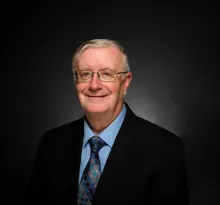
Jorge and his wife Kathy serve the Dallas (TX) and Lawton (OK) congregations. Jorge was born in Portuguese East Africa, now Mozambique, and also lived and served the Church in South Africa. He is also responsible for God’s Work in the Portuguese language, and has been visiting Portugal, Brazil and Angola at least once a year. Kathy was born in Pennsylvania and also served for a number of years in South Africa. They are the proud parents of five children, with 12 grandchildren and live in Allen, north of Dallas (TX).
