
Robin S Webber
This transcript was generated by AI and may contain errors. It is provided to assist those who may not be able to listen to the message.
I am your minister for here and for now, and I am looking forward to bringing this message to you. I think it's a very important message, and I hope it will be a blessing to you as I bring it to you, as I brought to the Redlands congregation this morning. About four or five years ago, we were having a meeting in the Council of Elders, and as we are wont to do, we continually examine the efforts of the United Church of God as an instrument within the body of Christ and continue to evaluate how to best preach the Gospel of Jesus Christ and the Kingdom of God.
There were a lot of ideas and a lot of thoughts, and I shared a thought. My thought was not the thought of thoughts, it was just a thought, but it's a thought that I still cling to, and I think it's very, very important.
I mentioned in that meeting that I felt that in preaching the Gospel that it needed to be relevant. It needed to speak to the very, very real needs of people. In fact, I mentioned that I felt that what we really needed to do was to answer the questions that people ask when they're dying, not when they're living. Because it's very interesting that when people die, they are not bothered and they don't have heavy on their shoulders or their hearts. Half the questions or half the matters that we get into that we think are so important in life.
They have some very, very basic questions when they're about to die. Some of you have been with people that have died in your arms. You've been with people that have died in a hospital or a home bed in front of you and or were there hours, if not days, before. And it's amazing there's an old expression. I forget who the general was.
He said that death, speaking of soldiers, death places the mind in a wondrous focus. And it really does. Over the 35-40 years that I've ministered in dealing with people that are either dying or about to die, I find that their questions are very, very simple. They want to know, and they do know, but they just want to be reassured as they're about to move into a different phase in a different chapter of existence called death that everything that they have believed and everything that they have striven for, that God and that Christ that they've given their life to truly is, and to reaffirm and give them confidence that indeed they surrendered to God Almighty.
They often are concerned and think back for a moment about what they've done and perhaps what they have not repented of. They want to know that they worship a good God and that they've given their life to a good God and a wonderful God.
And they want to know that while we're saved by grace, that they've done everything that they can on their own to live a life worthy of the calling placed upon them. I know, too, as the shadows get darker, that they want to know that there's a new world that's coming, a better world, a better day, a better kingdom. And we reassure them that. Some of you that are out there, whether you be ministry members, adult children, all of us, one degree or another, have been there to encourage people forward in a chapter that lies before each and every one of us, but nobody's ever too ready to get to.
And so we have an opportunity to encourage people. That's really what people think about. They really begin to focus on what I call the things that we should be focusing on every day. And yet, how much of our lives and life's energy, even our spiritual energy, even our spiritual quest for, do I dare say, knowledge, focuses on everything at times other than those very basics.
That you yourself will be going through at one time or another as to that good God, as to whether you are redeemed and whether you are honored by His salvation and about that better kingdom and about experiencing eternity with Him. It reminds me of a scripture out of the epistles.
Interesting that the lady talked about Paul. And sometimes we feel that Paul is very complicated with all of the epistles, and even the Apostle Peter said, what does Paul mean? But I'm always mindful you might want to jot it down. We're not going to turn to it. But in 2 Corinthians 11 and 3, it says that there is a simplicity, a simplicity which is in Christ. And I do believe, because we get our lives cluttered either from this world or things that even we think that are perhaps important, as we are in this spiritual quest, that we move off of that which is that simplicity which is in Jesus Christ.
And I think to myself, time is precious. The Apostle James says that life, this life that we live, whether it's 70 years, 80 years, or 21 years, no matter how long, it's but a breath. It's like a vapor. One moment it is here, and the next it's gone, and indeed, what have we done with it? I have a question for you with what I've stated, and that's just the foundation. Are you with me? We're going to go to the next step. And that is simply this.
We often watch television, and there is news that comes on, and all of a sudden there is a notoriety, or there is a fame that comes to somebody all at once. And we have a famous phrase that has developed over the last 20 or 30 years, talking about your 15 minutes of fame.
I have a question for you. May I? What would you do if the television camera was on you, and what would you do if the microphone was in front of you? What would you share, and what would you say, and what would be your story, and how would you convey the very essence of what you believe in regarding God Almighty, Jesus Christ, and the kingdom of God? That's what I want to talk about this afternoon.
We have seen this week an incredible challenge to our national American fabric, and the fabric has been challenged for some time. We are challenged abroad. We have been challenged internally. This past week we had a tragic incident in Charleston, South Carolina, where one man dashed the hopes of nine families. These were good people. These were people that wanted to praise God and study His Word in the middle of the week in a prayer meeting, in a Bible study. Most often, if there's a prayer meeting, they're probably praying for others, and not only themselves. They welcomed somebody into their midst in the middle of the week and in the night, and welcomed them into their facility, a very old and known facility in Charleston, South Carolina, with so much history that we'd go on for a couple of hours just talking about that facility. And their lives, they changed forever because of the monstrosity that was within that man, the hatred and the misunderstanding that was in that man. And he took nine lives, nine precious lives, and now he's being held on a million-dollar bond. That's what I want to talk about today, in relationship to the gospel and in the relationship of what we're about. There's no expression in politics that says, never waste a crisis.
I think that's also in the religious world, too. We never want to waste a crisis. We want to understand it. We want to be better people in moving on the other side of it than when we entered. And understand some very, very important things. I'd like you to join me, if you would, as a congregation. Let's turn to 1 Corinthians 3. Remember how I asked you what you would do when your 15 minutes of fame, your 15 minutes of notoriety, would come when the squeeze is upon you in a moment and in a time that you think not. And all of a sudden, though, you have to be, as so many of you who went through the spokesman's club of many years ago, remember, always be ready to speak of the hope that lies therein with, let's bring along the rest of the verse, with meekness and with fear. What will we do? Some of us feel that we're going to avoid that part of life. You know, life, excuse me, death and taxes happens to everybody else but us, right? Well, so far the taxes have been happening to me but I suspect that the rest is going to be on its way one day. Now that happens to everybody else. Everybody else has the squeeze play. Everybody has the terrible family tragedy. Somebody else comes down with cancer. Somebody else comes down with diabetes. Somebody else has a tragic auto accident. Another person loses a mate. But what about me? I want you to share 1 Corinthians 3, verse 15. Let's read it together. Now, actually, I want to go up to verse 11. Pardon me for those that are no-takers. For no other foundation can anyone lay than that which is laid, which is Christ Jesus. Now, if anyone builds on this foundation with gold, silver, precious stones, wood, hay, and straw, each one's work will become clear.
It will become, I'll throw in the word, transparent. For the day will declare it, because it will be revealed by fire. And the fire will test each one's work of what sort it is.
And if anyone's work which he has built on it endures, he will receive a reward.
I would like to share some of the works that I have noted over the last couple of days. Coming from Charleston, South Carolina.
These are marvelous people down there. They are resilient. All the people of Charleston, South Carolina. All the people of the Carolinas. I have been moved as an individual, watching their testimony and watching their words and watching their actions in the midst of something that they did not plan for. And it is an encouragement to me, as much as I would suggest that it was an encouragement to Jesus Christ, when in confronting and dealing with the centurion who said, you just say the word and my servant is healed. That Jesus said, I have not found such great faith in all of Israel. This afternoon, I want to share some wonderful tidings that come out of tragedy from Charleston, South Carolina. So often, we tend to want to go back to the Bible. We have to go back 2,000 years, 3,000 years, whatever, and think that we have to grab things from history to inspire and encourage us. We don't. And the purpose of this message is to not only share what others have done, but to encourage you to move forward and recognize that you, too, can be a light in the darkness. The message today, the title thereof, is simply this, glorifying God in the 21st century. Glorifying God in the 21st century. And there's been much witness to that over the last several days. In that, I'm going to share four different factors with you of what Susan and I have viewed over the last couple of days. And one thing I'm going to leave out, and that is the names of these individuals. Because so often we're looking for other names on the marquee of life. We're thinking that somebody else is going to be plastered up on the marquee. We think that the big news and the relationship and the story must flow out of somebody like myself or an evangelist and or an apostle of old, rather than recognizing how the gospel was spread throughout the ages. Person to person, man to man, woman to woman, family to family, not by fancy, glowing words, but by sharing no less, no more than what they are. Those essentials of that deathbed talk that I shared with. So what we're going to do for the remainder of this message, we're going to talk about four different groups of persons and or people and how they affected me, how they stunned me and Susie as we watched them. And we said we want to be just like them and to recognize that we can be. I think most of us by now know the story then. I've shared a part of the story. This is a story that unfolds in a spring and a winter of unrest in our nation.
And one more story that we need to come to understand and how folks deal with it and to understand it. I'm going to deal with four people. You probably already know some of these people, but you know it's like a goldfish bowl. We all look at a little bit different angle and a little bit different focus and we take away different things. The killer, the alleged killer, how's that for legalese? The alleged killer, after he had killed those nine people, left and he was on the he was out on the loose for, I believe, a day or two. Nobody knew where he was. And then a time came for an individual to stand up and to be tall. And I'd like to share that with you for a moment. An individual just like you and me and Susie was watching something yesterday and got me into it and I began to watch it because I really had a different message planned for you today than the one that I'm giving. But I recognize also, as I've shared with you, when God's Spirit is prompting you, move with the prompt and move away from your notes and let God speak to you about something that's very relevant. There was a woman, a lady, a florist, who was the one that actually spotted the criminal and notified the police and the rest is history. And she would have her 15 minutes of fame and her notoriety and the television camera would be on her and the microphone would be in front of her and she was going to be able to tell her story. I'd like to share that with you for a moment. Literally what's going on just like you and me here in San Diego. I guess it's getting crowded, more crowded down south because she was running late for work and she was moving down to thorough fare byway, highway, whatever it was. And actually she had kind of glanced over to the car and kind of seemed to be a little hmm and but kind of had already gone by that vehicle that had the alleged killer in it. And she'd gone by but then she kind of went back a little bit to get another glance. And she recognized, have you seen the picture, there was kind of a a bull haircut, just kind of like an old page boy and she kind of she kind of began to put two and two together. Well, she pulled off the road. She pulled off the road. She called her boss and she said, what'll I do? And the boss said, get back on the road and follow that car. And so she did that and it's interesting. And she was going to work. I'm just looking at my notes here from her and she was asked by the news reporter, why was I paying attention? First words that came out of her was divine intervention.
God had a plan. Now, even though it was divine intervention and God had a plan, she says I was a little nervous as you and I would be. And she said, I'm not a hero. I'm not a hero.
And I was nervous, so I started talking to the Lord about it. You can hear her southern accent. She said, so I sound like Jackie. No, so anyway, that's I started talking to the Lord about it.
And she did. The newscaster came back and she's the newscaster came back as you know, newscasters will be and said, you don't want to admit it, but she said you are a hero.
Newscaster went on. Did you ask? Why me, God? Why me? Why here?
And she came back again and she said, oh, no, you you've got it wrong. God is the hero. God used me. She went on to say in this 15 minutes of fame, if we are a willing vessel, he will use us. But we've got to open up our hearts and we've got to open up our minds. And then she went on to say, he has to be glorified and will be in everything. And he is going to get the glory one way or the other. And I hope he does.
And she concluded with this, I want him to be pleased with me more than anything else.
The newscaster came back. It looks like you would say God placed you in the right place at the right time. She came back and said, that's how it is. That's the kind of God I serve. She raised her hands and said, that's my God. And he puts us wherever we need to be and wherever and whenever we need to be. That was her 15 minutes of fame. That's what was important to her.
1 Peter 3.15 says, always be ready to speak of the hope that lies therein.
In this world of self and in this world of tragedy today, from the banks of the Tigris to Charleston, we hear so many people talking about their victimhood and or we hear so many people talking about their self. White, black, brown, and everything in between.
People are constantly taking selfies even if they don't have anything in their hand. Did you notice something that was in this story? What strikes you with her response?
She never claimed anything for herself. God's story, Christ's story, was bigger than she was.
I have a question for you. How big is your story in relationship to God's? Is it all about you or is it all about Him? I'd like to share another story about one that we think is a hero many, many years ago. Join me if you would in 1 Samuel. In 1 Samuel 17, because I'm sure this lady had probably seen this story before, but in 1 Samuel 17.
And let's pick up the thought in verse 45. The story of David and Goliath.
David could have passed that valley by or never gone to it, just like this lady could have passed by this alleged killer on the highway and not gone back. Because certainly somebody else will show up, somebody else will do it, somebody else will get it right, and I'm too busy to get involved. It says here in 1 Samuel 17, verse 4, Then David said to the Philistine, You come to me with a sword and with a spear and with a javelin, but I come to you in the name of the Lord of Ost, the God of the armies of Israel whom you have defied.
It wasn't Mir Mir on the wall who's the greatest slingshot artist of them all.
And that David felt that was him that took down Goliath. Let's continue the story here. This day the Lord will deliver you into my hand, and I will strike you and take your head from you. And this day I will give the carcass of the camp of the Philistines to the birds of the air and the wild beasts of the earth that all the earth may know that there is a God, notice in Israel. And then all this assembly shall know that the Lord does not save the sword and spear, for the battle is the Lord's and he will give you into our hands.
God's story was bigger than David's story.
This woman gave an incredible witness in a dark world of a life filled with light.
She gave full credit to God. And in her 15 minutes of fame, she did not point to herself, but she pointed to God. Now, we may not be on television, but our life is continually reeling out in front of us. And the question I have for you as we walk into our Mondays and Tuesdays and Wednesdays and Thursdays is simply this. Do you live a life by design or do we think we just simply live a life by accident? This lady from South Carolina, she may not know what we might not know, but we can be encouraged by her example. She does not live an accidental life.
Things do not happen by accident in her life, but it's for a purpose. It's for design. It's not an accident. It's an incident for her to give God glory. Join me if you wouldn't 1 Samuel 17. Psalm 86. Psalm 86. Psalm 86. And let's pick up the thought if we could in verse 6. It says, Give here, O Lord, to my prayer and attend to the voice of my supplications. This was written long ago by David, but this past week in South Carolina, somebody also pulled off the road and said, Give here, O Lord, to my prayer and attend to the voice of my supplications. And in the day of my trouble, I will call upon you. For you will answer me. There is a definiteness to this. Among the gods, there is none like you, O Lord.
Nor are there any works like your works. All nations whom you have made shall come and worship before you, O Lord, and notice and shall glorify your name. For you are great and do wondrous things, and you alone are God. Rather, in our whole purpose in life, for those that have been called of God the Father and surrendered themselves to Jesus Christ and have their Holy Spirit abiding in us, is to do two things. It is to worship God and to give Him glory. In that, we said that at baptism that His story was going to be greater than our story. That God's name would be magnified over our name. That His ways and His thoughts that were not our ways and our thoughts in the carnal being would now become His ways and thoughts. And that our life served a purpose. I'd like to share with you for a moment what does the word glory mean or glorify? What does it mean? It comes from the word doxa. And that's where you get the term doxology at the end where the scriptures wind up and the scriptures wind up and the book of Jude where all of a sudden all honor, all glory to you, eternal, forever. There is praise and there is glory. It derives itself. It means to magnify, to extol, to praise, to ascribe honor that is only His to Him and acknowledging Him to His being, His attributes, and His acts. Interesting. Join me if you would in Romans 15. Let's get a verse in the New Testament. Romans 15 and verse 6 to get this point across.
In Romans 15 and verse 6, notice what it says here. Let's go up to verse 5. Now may the God of patience and comfort grant you to be like-minded towards one another. Notice, according to Christ Jesus, that you may notice with one mind and with one mouth glorify the God and the Father of our Lord Jesus Christ.
That's what we need to do, brethren. That is our role and that is our goal as Christians. That God's story is bigger than our story. That it's not by our works, not by our might, not by our power, not by our good looks. That leaves me out. There's no cure for ugly. Okay? It's not by our might, our power, but it's by His Spirit. That only gives us any worth. One way of looking at this is to understand that as we go through a week on our Mondays and Tuesdays and Wednesdays, how much are we talking about ourselves? How much are we pulling the glory to ourselves? How much of the attention are we pouring to ourselves, rather than pointing up and saying, God is my hero?
Let's remember that didn't just happen. I'll tell you why. Thanks for asking. Simply this. You don't find your values going into a trial. You take them with you. You don't find them in the valley. It's not Brigadoon, where they appear in a mist. You take your values with you. You cannot be any more than you are. And out of the abundance of the heart, that heart which is being molded and circumcised without hands by the divine, will reveal in that day of fire as to who is the boss of your life and the king of your life, and whose throne rules your heart, either the throne of Christ or the throne of self. There's no third option. What a marvelous example that this lady set for all of us. And as Christ, I can say, I am stunned. And to see the faith and the attitude at times that we do not see in all of Israel. Let me share another story with you. Go to point number two. I'd like to talk for a moment about the story of the family of the murder victims at the court bond setting. Some of you have probably seen that in the news last night. I'm going to share it with you again. If you haven't, find the YouTubes of all of this. They're actually showing the YouTube this afternoon up in Redlands, after we left. I was moved and Susie and I were stunned at the light that came into the darkness. Just as much as a forest fire that when it blows out a forest that's 150 or 200 years old. You say what possibly can be done and yet you begin to see that there is light that comes even within that inferno. And to recognize that there's going to be a growth, that something good is going to happen out of it. Again, life is what's happening that we haven't planned for. It's just what life is. And for some of the younger members that are here, apart from God Almighty, who is our hero. Life is unfair. Just get used to it. Get ready for it. But to recognize that God is our hero and our rescuer. None of these people asked for what occurred in Charleston, South Carolina. And it happened in a good setting. They come to worship God. They had Bibles open. They were praying. And knowing if it's a black church in South Carolina and Charleston, they were probably singing and a little moving at the same time. That's just the way it is.
They had every hope. And they welcomed somebody into their midst to worship and to read the Bible with them and to pray. And He betrayed. He betrayed their trust. He betrayed their welcome, just as people will betray us in our life, even when we're trying to do the right thing. And nine people died from age 24-25 up to age 87.
And you see something like that happen, and you want to be just like Mrs. Job. You know what Mrs. Job's first name was? Mrs. Because nothing else. But remember what Mrs. Job said. Job!
Curse God and die.
Just get it over with! We've lost our kids. We've lost our property. We've even lost the camels.
We've lost everything. You're full of boils running all over you. Curse them!
He's abandoned you. He's left you.
Yesterday.
The judge that's been appointed to this, there's a story behind him too which I'll share next.
And he does this with every case that he tries. When they're doing bail, he will actually have the aggrieved parties come forward to make a comment that helps him determine what the bail will be or something like that.
And one by one, he would ask the name, is there anybody here to represent the family of this victim? He would invite them and give them the opportunity to come up and to make a statement. I have a question for you. If you just had your granny blown out, if you just had your adult child massacred, what would you have said in your 15 minutes of fame? Knowing what you know and being what you are, and stating that you are a follower of Jesus Christ.
It was stunning. It was rewarding. In this world that is where we have challenges in America, where we have challenges on the banks of the Tigris, where there are challenges in Crimea and the eastern Ukraine, and to recognize these individuals come up in this 15 minutes and speak of what is in their heart. Not all nine families came up. I think there were about six that came up. But every individual that came up, as they spoke to the judge, and the judge says, just speak to me, just speak to me. And of course, you can speak to him too. But the judge is there trying to create an environment of openness and transparency. Each and every one of these family members came up, one by one, stepping forward, and they forgave the accused killer.
They said, I forgive you, and, or speaking for the family, we forgive you, even while sharing their deepest sense of loss and pain.
One of them actually said, you need to repent. You need to repent. Others would say, God, have mercy on your soul. They confronted him, honestly, truly, squarely, with who he is and what he had done.
And even as they forgave him, they did not obeyed the judgment that most likely will be his.
It was more important that they did what they did for themselves and for their families, and what they did for that gentleman.
What does that mean to you? Does that grab a hold of you? And to encourage you when the day comes, when the moment comes, of our 15 minutes. And it may not be before a camera. It may not be before a national reporter. But God and the heavenly hosts will be watching and viewing how we will do with what God has given us and the knowledge that he has. Join me if you would in Matthew 6 and verse 12.
In Matthew 6 and verse 12. Let's notice what it says here. We've all read this. It reads well at night.
But how does it play out in real life? Notice what it says here in Matthew 6 and 12. And forgive us our debts as we forgive our debtors. Further down in verse 14, for if you forgive men their trespasses, your heavenly Father will also forgive you. But if you do not forgive men their trespasses, neither will your Father forgive your trespasses.
We look at this. We pray this. But to be realistic, friends, sometimes it's just a theory.
It's a recipe until it's put into the oven of life.
But God has every expectation and has given us every spiritual gift. From above. To be able to follow that example that Jesus Christ set. When Jesus Christ set from the cross, as He looked down upon the mob that was in front of Him, Father, forgive them. For if they really knew what they were doing, they would not do this.
Here was the Son of God, God in the flesh. Just a few years later, there would be another man. He was not God in the flesh, but He was a godly man. His name was Stephen. He was dragged into a courtroom, tried unjustly, and then was stoned. And as he was being stoned, modeling the example of his hero, He said, Father, do not put this charge against them. I have a question for you. Can we talk? How is that even made possible?
How is that even made possible that you can do that when you have just had your child, or your grandmother, or your parent robbed from you because of the derangement of a hateful man?
I would suggest that there was a foundation, that there was an understanding, an understanding that comes from Romans 3 and verse 23. If you want to jot it down, I'll just paraphrase it. All have come short of the glory of God. All have come short of the glory of God. And from that comes that marvelous understanding from the book of Romans, in which the world was darkened down through the ages, that it says in Romans 3 that the glorious light of the gospel came, and that we could be rescued. We could be rescued. That God would give us a gift, His Son, to redeem us and to allow us to come back into His presence. But unfortunately, friends, can we talk? Because we're all spiritual folk and people of the book here. At times we suffer from spiritual amnesia. And that's a very, very bad thing for a Christian to experience. You know what spiritual amnesia is? You forget where God picked you up along the road. You forget where God picked you up along the road, that you were dirty, that you were not clean, that you were going nowhere. You were like that proverbial hamster wheel that I know you all love me to talk about. You know, the one that all expends the energy? You know, have you ever seen a lazy hamster? You've never seen a lazy hamster? No. No, the hamster. It keeps going in and out like this, you know, a little furry ball, little cheeks swinging out. And boy, I tell you, hamsters are zealous, but they're not going anywhere. They're expending all that time, they're expending all that energy, they're moving all those steps, but you know what? They're going nowhere. And that's where we were before we surrendered our life to God Almighty through Jesus Christ and accepted that glorious life, that death of humility, and understood that as He has rex the resurrected, so we shall be, and that He's bringing back that kingdom. And He's going to replace this evil world with a gentler and kinder world that is going to come. But we forget that at times as people. There's something sometimes about religious people, do I dare say it, that somehow feel like they're above it all, that our nose can go up looking down on others. There is nothing that infuriated Jesus Christ more in His earthly ministry than people that He came into contact with, even people of the book, that felt they had it all together, and thus what are those people doing here around the rabbi? It drove Christ nuts. And you know what He did? He would tell stories. At times, dear friends here in San Diego, we forget that we were all in that same pool of blood beneath the body of Christ on that piece of wood. And it was a lot of blood, and all of us have been in that blood. Some of us have been pulled out of that blood because we've accepted it. And yet, sometimes, sometimes we look down on others and forget that we have been forgiven.
15 minutes of fame. What would you do if the microphone was in front of you?
One of the most beautiful stories is found over in the book of Acts. Join me if you would for a moment. The book of Acts. Let's go there for a second. Acts 2. And Acts 2. And the story is picked up here in verse 37. 36. Pardon me. We're in Jerusalem Square. Peter is up there.
Therefore, let all the house of Israel know assuredly that God has made this Jesus, whom you crucified, both Lord and Christ. Now, when they heard this, they were cut in the heart and said to Peter and the rest of the apostles, men and brethren, what shall we do?
He said, oh no, I can't believe it. We've killed Messiah.
And then Peter said to them, repent and let every one of you be baptized in the name of Jesus Christ for the remission of sins and you shall receive the gift of the Holy Spirit. I have a question for you. Can we talk? What allowed Peter's message to resonate in those darkened hearts that had crucified our Lord and our Savior? I suggest it's this. Peter never forgot where Christ picked him up and where he found him.
Peter knew what he had done to Christ. Peter knew that he had turned his back on Christ, that when his Savior and his friend needed him the most, he sinned and turned his back and he ran and he fled. And he knew that he was dead in his sins, dead in his sins, apart from God's mercy, God's forgiveness.
The bottom line is simply this.
Peter spoke as one dying man to other dying men. He got it. He knew he had no goodness in him. If there was anything, it was the righteousness of God that he tapped into. It was one of humility. 3,000 people, 3,000 people were baptized on that day.
Interesting. Because in the midst of despair, God gave them a gift. One woman, Susan asked me to be reminded of this. I just remembered, honey.
One woman got up there, and you can imagine having your 15 minutes of fame, or two minutes, and she forgave the man. And then she said, kind of, I'm a work in progress.
I'm still working on this one. I'm a work in progress. See, all the people that I'm talking about today, whether it be the woman florist or whether it be these people, they're people. They're people. They're people like you and me. They're flesh and blood, but they have a hope. They have a hero. And his story and his demands upon us, because we have been forgiven, we need to forgive, even as hard as that is. God and his Spirit through us and Christ living in us will give us the strength and the wherewithal to do it. I'd like to go to the third chapter of this story. The last one will be short. I'd like to talk about the Presiding Judge. I'm not going to give you his name because this is not about names. It's nobody on the marquee, but God. God is the hero. He's the Presiding Judge, and he's a human being, too. He's reading up about him today and challenges in the past. But that's what God does. He uses human beings that no flesh should glory. That only God gets the glory. He said this in this opening veil hearing. I set the tone of my courtroom. I take control over it, and I conduct business within the scope of the laws.
I am a Charlestonian, and our community is hurting. People are hurting. People have to learn to reach out. I have to tell them that it's good to grieve. Yes, they're hurt, but they will learn to forgive, and that's difficult. But it wasn't just all about forgiveness. And like throwing this aside, there is a judicial process that will take place. So he set this tone of relationship. Speaking about forgiveness, the question I have for all of you is, why is it so difficult to forgive? And why do the judge say that? It's basically because the person who is hurt, that is the Affinity Party, does the forgiving, and not the person being forgiven. I'm not sure if this young 21-year-old man even begins to understand the ramifications or cares. I'm not his judge. I've given it multiple choices. But at times it's not the person that's being forgiven. God will deal with that person in his time and his way. It's what we that have been forgiven and we that have God as our hero, and we that have been given the microphone of life for a moment, not on national television, but maybe in our living room, maybe in the kitchen, maybe at the office, maybe right here at church as to what God will do and say. David Augsburgher put it this way, and this comes out of LaHaye's book, Anger is a Choice, quoting Augsburgher in his book, The Freedom of Forgiveness, when writing, the man who forgives pays a tremendous price, the price of the evil, the evil he forgives. And friends, there is evil in this world, and there is evil that is in people. Today we live in a world because they do not look at the spiritual world, and they think everything has a cause rooted in genetics or this or that or this or that and this and that. Evil is cast aside. There is evil.
Indeed, there is.
LaHaye goes on to say, forgiveness means that justice will not always be fulfilled.
Forgiveness does not rebuild the house that's been burnt down by someone carelessly playing with matches. Forgiveness does not put necessarily a broken marriage back together. Forgiveness does not restore virginity to the rape victim. But forgiveness is letting go. It's the relaxation of your death grip on the pain you feel. And I can't even begin to imagine the pain that these individuals feel today. No, it's not easy to forgive, but consider the alternatives. If you do not forgive, you are a prisoner to the past, you are a hostage in the present, and you cannot walk into the future. An unforgiving spirit is an energy crisis, and that judge understood that.
It's hard to forgive. I've had to forgive people. You've had to forgive people as Christians. I think I'm talking to the right group. We're Christians. We were born to forgive, and it comes our way with people that aren't necessarily too forgivable. But that's when we have to forgive the most.
Sometimes you don't want to do it. You don't feel like it. In this world of feeling, everybody's kind of feeling something inside of them these days of what they are or aren't. So we don't feel like it. Love is not a feeling. Love is not a feeling. It's an action. Susan and I were talking about this morning, so she gave me this idea. But we talked about it. And sometimes you just have to go on motion, auto-motion with God's Spirit with Christ in us, and just say, I'm going to put one foot in front of the other. I just have to start moving that direction. Even though I want to go into Death Valley somewhere, I'm going to start climbing up that hill, that mountain of forgiveness. And sometimes God will not be your full guide until you put your foot in the water. Remember the story? Remember the story of the priest carrying the ark across the Jordan? Freedom lay on the other side. But God said, you are to go into the Jordan River. Well, they got up the Jordan River, and guess what? The river was running. They had rivers that ran over there. We don't. Anyway, the Jordan was running, and those priests had to put their feet into the water. And they had to keep step by step. And it is only when they began to get into the water that God did the rest of the story. See, in forgiveness, sometimes we just have to take God at His promise that He will never leave us nor forsake us, and that it's not by our might or by our power, but by His Spirit. But He wants to see our faith. He wants to see that we understand, as Jesus said, that, lo, I shall be with you to the end of the age. And thus we have to, like those priests of old, stick our feet in the water, even when it's cold, even when we don't want to.
And it's only then, as we do our part, that God will begin to heal our hearts.
He wants to see a surrendered life, and He wants to see a step out on faith, even in this matter of forgiveness, just like these incredible families did in South Carolina in the days that have just gone by. I'd like to go to, I'd like to talk about one other individual. Have time.
This is a wonderful story.
Another man had his 15 minutes of notoriety. You know, they don't put state senators on television too often. You all know who your state senator is down here? Maybe some of you do. Probably most of you don't. They don't often have their 15 minutes of fame, but they're working for us. At least that's what they tell us. But they had a state senator on. Let's understand that in that church in South Carolina that the pastor was an ordained pastor, but at the same time he was a state senator. A state senator. Seems to be an amazing man.
And again, of course, the church there in Charleston goes back, I think, almost 150 years. There's just such an incredible, even beyond that, just incredible stories, had incredible pastors, and this gentleman was an incredible man. But they interviewed a very close associate of his in the South Carolina Senate, and you talk about, quote-unquote, the odd couple. Here's one gentleman, an African American, black American, and a Democrat. And the man that was being interviewed was a white man and a Republican.
And we realized the challenges that we have in this day and age of bridging anything in the middle in our politics. And yet you would have just loved hearing this man talk about the gentleman that was killed. He said that there couldn't be two people more unalike, and yet we wanted to work together. We wanted to work together. We wanted to create bridges in a nation that more and more, white, black, brown, whatever, whatever party, it seems as if we're going two different directions. We no longer have that ability to communicate in the middle.
But these two gentlemen, one a Democrat, one black, the other a Republican, one white, talked about the man that had died. This is on national television, and he talked about his brother in Christ. You don't hear that too much on California television, do you?
He spoke of the man that had been martyred and died as his brother in Christ.
Where does this lead you and me as we glorify God?
I feel more than ever, whether it be in our church, whether it be in our congregation, whether it be in our nation, we have to look and learn a new way of navigating hearts. We allow too many of our differences to get in the way, too many of the little things that we don't talk about on our deathbed to get in the way that keep us apart as Christians, that keep us apart, all being Americans.
And if we had it over to do it over again, we often say, why is education wasted on the young, but it's the old. And you say, oh, I wish I had my life over again. But life, like James says, you know what, it really is like a vapor and it's passing. And when we recognize in our congregation and or in our church or with others that have faith in God and Christ, and that we share a hero, even while we have differences of doctrine, even while we have differences of thought to validate one another, to build bridges, to esteem one another, and to allow the future for that person or that group to be in God's hands and not our own. But we live in a very judgmental society, and we live in a society that judges and judges and judges, and then on their deathbed. Hear me! On their deathbed, they want to be judged differently than how they judged others all their life.
Interesting. What have you been learning this Wednesday, Thursday, and Friday?
Are we just going through life accidentally or do we go by design?
Are we laying our eyes on other people and other people's hearts and saying, oh my, there is an example. There is where Christ was speaking about in the book of Matthew. Join me in the Sermon on the Mount. In Matthew, join me there, please, the first book of the Gospels. In Matthew, in verse 5, Jesus is talking about those that would follow Him and what their role would be in glorifying Him. It says in verse 14, you are the light of the world. A city that is set on a hill cannot be hidden, nor do they light a lamp and put it under a basket.
But on a lampstand and give light to all that are in the house. This past week, the florist, the family of the victims, the state senator, the judge, did they shrink? Did they put that bit of light that God has given them under a bushel? You can't say that anymore in America. People might think I'm religious. People might think I'm a Jesus freak. I can't say that. Maybe somebody will sue me. Maybe somebody will think I'm funny. Maybe somebody will think, well, I'm from the South. This is how we are down here.
They did not shrink back. Do you know why? Because they can't be more than they are. You do not find your values in the trial, but you take your values in with you. You say, Mr. Weber, I really wish that I could be that kind of an individual. I wish that was me. I wish that this was this congregation. I wish this was this organization that I'm a part of. I wish I could stand up just as much as these parties did. Let me give you three questions as we conclude. You will take out on your Mondays, Tuesdays, Wednesdays, and Thursdays and put on Friday. Number one. Number one. Remember, there is a simplicity which is in Christ. You do not have to go to the book of Daniel and figure out the days. You do not have to open up nay-hum and read something that maybe you've never read. It's really quite simple. Number one. Number one. Have I given God all the honor? Have I given God all the honor and all the glory that is only His? Or have I robbed God of that glory and that honor by my words? By my thoughts? By my deeds? And perhaps not by what I did, but by what I didn't do. That I was silent. I was silent. And I hid that which God has granted me. And I put it under a bushel. Have I given God all the glory? That's why we've been called that no flesh should glory, but that all glory and honor should go to God. No, friends, this is kind of Christianity 101. And this is what people think about when they're dying. And this is what we need to be thinking before we hit that deathbed. And be thinking every day in our beds. Every day at work. Every day at school. Young Christians. Every day at work. Every time that you come into this hallway. That as people go away, do they know more about God or do they know more about you by how you express yourself? Is it just that tune of human nature? You know, me, me, me, me. Do the eyes have it? Or like that lady, that florist, without the name that I'm going to give you? God is my hero. Point number two. Have I forgiven like Christ forgave? Have I forgiven like Christ forgave? And left judgment in his hands? Number three. Number three. Have I brought people together? Have I brought people together? Or have I further divided the family of man? The family of faith? The family of my church? The family that I have been born into? I believe that that state senator understood something that each and every one of us need to understand, talking about his brother in Christ, the white man speaking of the black man. That just as it is inscribed in the Declaration of Independence, all men are created equal. Beyond that, I believe that man most likely knows what is spoken in Genesis 1. Let us make man after our image and after our likeness. And if that be so, and if we do believe that as a people of covenant and a people of the book, that means then that what is ascribed on us by the hand of God, written in our hearts, is that we will show respect, love, and mutual esteem to every human being. That doesn't mean we will agree with them. That doesn't mean that we keep on turning cheeks, because we only have two cheeks. So just think that one through. But that we will honor God's creation, whoever that person is, to recognize that one day you and I, by God's grace, have the opportunity to share eternity with them in the presence of God.
That's what I learned this week. I was so excited to be able to share it with you. You want a church like that? Do you want a church like that? Or am I just spending my time up here, going through my notes? Time to go have donuts? Time to have another cup of coffee that's not good for you, even though I drink a lot of coffee. What will you do with this? Is your life going to be changed this week with what's gone on? Are we just casual observers of the human drama? Or to recognize that this time and this place, as this powerful play goes on, that you and I might add a verse. Be different. Be a light. Be a Christian. Be a child of God. You are the church. The church is not a building. It's not an organization. It's the ecclesia. It's persons. It's people. They've been brought together for an incredible purpose that moves beyond accidents, but it is by design. I hope this better serves you in being able to go out and meet Mondays, Tuesdays, and Wednesdays. And remember that life is what's happening that you haven't planned for. So therefore, have these values in play, because you have to take your values into life. You will not find them there. And God has given us marvelous values to honor Him, to glorify Him. And may this congregation's hero always be that of whom is above. Because after all, that's why we were given breath and life to worship Him and to glorify Him.
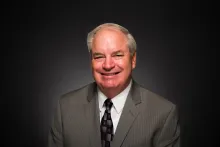
Robin Webber was born in Chicago, Illinois, in 1951, but has lived most of his life in California. He has been a part of the Church of God community since 1963. He attended Ambassador College in Pasadena from 1969-1973. He majored in theology and history.
Mr. Webber's interest remains in the study of history, socio-economics and literature. Over the years, he has offered his services to museums as a docent to share his enthusiasm and passions regarding these areas of expertise.
When time permits, he loves to go mountain biking on nearby ranch land and meet his wife as she hikes toward him.
