
Robin S Webber
This transcript was generated by AI and may contain errors. It is provided to assist those who may not be able to listen to the message.
Several years ago, we were in the midst of board discussions for the United Church of God. And in those discussions, as we do as a board, we always talk about and discuss how can we more effectively preach the gospel of Jesus Christ in the kingdom of God.
We're always looking for, shall we say, better ways, new ways, what we might consider more effective ways. I remember the discussion and I remembered my comment. Not that my comment in any way was the end-all comment or even a perfect comment, but I think it's a comment that we can build upon in the course of this message today. And I basically stated that we need to deal with issues that are relevant to people.
We need to deal with issues that people are thinking about at the end of their life. Not even in the middle of their life or the beginning of their life, but what people are talking about when they're when they're dying. All of us, to one degree or another, especially we that are older, have been around people that have died. We've been there bedside with them or we've been there hours before, days before, weeks before, and it's kind of interesting.
There's an old expression that was mentioned by a general once talking about sending men into battle. That death trains the mind with a wondrous focus. And when somebody is dying, it's very interesting what is on their mind. If you've been bedside with me, as many of you have, you recognize that their mind is not on what most of our minds are on most of the day, most of the time, and what we talk about, and what we share, and what seems so important.
Normally when I'm talking to somebody, God uses me and has used many of us as a bridge of encouragement to share God's promises. People normally want to know that their life served a purpose, that there was a reason why they drew life and breath, and that God that they have faith in, as we heard in the first message, truly is. And they look to you for a nod of affirmation and agreement. They want to know that their sins are forgiven. They want to know that there is a path forward, that the redemption that has been mentioned is truly theirs.
They also want to know that there is indeed that better day and that better kingdom that is coming. That, indeed, God is a rewarder of those that love and keep His commandments. I would basically say those are the three big things that come up to me as I've sat bedside, hospital side, wherever it might be, as people are talking about what they're thinking about when they're about to take their last breath of life.
I have a question for you this morning. What do you think about now? You that are living? Some of you that are in the spring of life or just the autumn of life? And are you that think that death and taxes happen to everybody else? Save you. What do you think about? What do you meditate upon? Where is your heart? Where is your mind? Are you focused and are you using your life's energies simply to write the story about yourself?
Or are we here to glorify God? The message that I have for you this morning is simply entitled, Glorifying God in the 21st Century. Glorifying God in the 21st Century. Many years ago I stumbled upon a very simple phrase in a very simple verse in a wonderful chapter of the Bible, 2nd Corinthians 11. It's found in 2nd Corinthians 11 in verse 3 that it says that there is a simplicity, a simplicity which is in Christ. And I do dare say, and I speak for myself at times that any and all of us have missed it.
At times, while the challenge of life is great, the answers are really quite simple. It's as whether or not we will do it or not and lean upon God rather than lean upon ourselves. And time is very, very precious. Time is very, very precious as the book of James says that it's like a vapor.
One moment is here, the next moment is gone, and of course life is what is happening that we haven't planned for. I think of Charleston, South Carolina, and what has occurred down there has certainly moved Susan and me. And just in the last couple of days, we've learned many lessons, and we've had many incredible examples set before us to learn from.
And as we move through this message, I'm going to share those lessons of those people that I have learned from. There have been people that have been thrown into something that nobody would want to. For all of us, I think our nation has been stunned once again with a mass murder where nine people died.
Nine people died in a church setting just as we are sitting here today with one depraved individual that came in their midst, shared their space as they were praying and as they were studying the Word of God. They didn't know what was going to happen next, but there was a man full of hate, a man full of rage, and he took nine lives that each and every one of us would want back today, if ever we could.
Much less their own families. And people have been cast in a spotlight. Yes, the nine that we will come to know better as the articles come out and the stories come out. And, of course, the alleged murderer, a young man who had his whole life ahead of him and has destroyed his life and has destroyed the life of others. Many people have been cast in a public spotlight that they never thought would be.
Cameras have come upon them. They never thought that they would be interviewed by a reporter. They didn't think that they would ever be on television. And it came to me, as I've watched, as you perhaps have watched over the last couple of days, what would you do with your 15 minutes of notoriety? What would you do with your 15 minutes of notoriety if people asked you where you were, what you were about, what you were doing?
What would you do? Wonder if you just had five minutes in a once-in-a-life opportunity to express God's way of life. Have you ever done that before? You know, remember that verse it says where it says, always be ready to speak of the hope that lies therein, right? 1 Peter 3 15. And, of course, it says with meekness and fear, she said, well boy, it's coming, so I better be ready.
And, you know what, I've never read Nahum yet. I better get that one down. And Habakkuk, and, you know, I've never really focused on 3 John, and I haven't figured out all of those days in Daniel yet. Perhaps I haven't either. And so, you know, boy, I better get ready. I really, I need to really bone up for this, because Mr.
Weber just told me that no man knows the day or the hour, and that I need to be ready for my 15 minutes of fame. What would you do if you had that? Well, that's what I want to talk about today, because I think it's very important that, as often been said, we never want to waste a crisis. We never want to waste a crisis. We want to learn from it. Just as much as I talked about those forests that are burning up in Barton Flats right now, that light will come through it.
That growth will come through it. And so, where can you and I learn? I want to share a verse with you. We'll open up to this one, 1 Corinthians 3. Join me if you would, please. In 1 Corinthians 3, and let's put a focus, if we could, on verse 15. Notice what it says. Let's actually go up to verse 12. Now, if anyone builds on this foundation, speaking of Christ, with gold, silver, precious stones, wood, and straw, each one's work will become clear, for the day will declare it, because it will be revealed by fire.
It doesn't say by water. It doesn't say by a gentle breeze. But it says it will be revealed by fire, and the fire will test each one's work of what sort it is. Let's remember that God has given us a precious covenant. He's given us a precious Redeemer. He's given us a wonderful understanding of His Word. But with that comes expectations.
And God is very clear, very blunt, very honest. He says that the day will declare it, and the fire will do it. People have been under fire in Charleston, South Carolina. Many of them, though, were prepared for it. And I'd like to share some of my thoughts about that today. So often we feel as if we have to go back to the Bible. Some have to go back to even an Enoch, as wonderful as Enoch was before the Flood, to draw examples of encouragement when they are right here today.
Right here today. And in the news. If only we will watch. If only we will discern. This morning as I was preparing this message, because I was planning to bring you something different yesterday, but I felt this is what God was prompting me to give, I felt like I was standing by Christ. And when the centurion said, you know, you just say the Word and I'll go and I'll know that my servant is healed.
And he said, I have not found such faith in all of Israel. He was positively, wonderfully stunned by this example of this Gentile, centurion, a man of Rome that was able to set an example for all times. I want to talk about three individuals today. Life is good when you get down to three points in a message, just ask Mr. Sharp. So I'm going to draw upon three people, or three three groups of people. I realize what I say today may be premature. I realize that, let's just be honest with what has been occurring in the nation of this past year in dealing with the issues of black and white and brown.
Has either or will bring us together or further divide us as to what we do and how we navigate hearts and how we understand our responsibilities. And yet what I found in this home of the old Confederacy, Charleston, were amazing spiritual examples of all races and people that I want to bring to the fore that are taking something that was tragic and by their example have at least inspired one Christian, two Christians, Robin Weber and Susan Weber. And I hope it will inspire you today as fellow Christians as to their example.
I want to share some thoughts with you. I just jotted these down about five this morning, so if it doesn't quite come out right, hopefully it will by the time I get to San Diego. But we did ask a blessing on this. I want to share number one, the story about a woman that never thought that she would be on television. You watch and you recognize that you're dealing with a Southern personality, by the way she talks and the way that she expresses herself.
And what a wonderful example she was. It's the story of the florist. We're not going to take stories out of the Bible. We're going to add the Bible, but I'm going to take stories out of today.
I want to talk to you about, and maybe you saw her on the news the last couple of days, the story of the florist from nearby Charleston. Well, you say, well, what did she do? She was the individual who followed the killer's car and identified it and sent in the information to the police to where this evil individual could be taken and put away into prison. Let me tell you a little bit about the story as far as I understand it. She was just driving. She was late for work. Sound familiar for all of us? And she noticed something, because she'd been listening to the news and some of the things.
She got a little suspicious because actually what she did at first is she was behind the car with the man in it, and then she started to drive by him. But she looked in and she said, actually what surprised her and kind of caught her attention was the haircut. If you've seen the individual, a kind of a bowl-shaped haircut looks like somebody literally put a bowl on him. I hope you're not looking at my haircut right now. I wish I had that much hair to put a bowl over, because pretty soon my head's gonna look like a bowling ball.
Nonetheless, all of it he aside. She passed him, but she kind of looked over and then she began to be prompted. And she recognized him. And what she did is she pulled over to her boss. And she was a little shaky and she said, well, what should I do?
And the boss said, you go back, you get on the road, and you follow him. Well, she got back on the road and actually drove behind him for a couple of miles and got his tag, the old tag that's on the license plate, and called it in. The rest is history, but there's a couple things I'd like to share about this lady with you.
Again, she was going to work. She was running late. And she was asked by the reporter yesterday, why why did all of this happen? And why was she paying attention? And the words that came out of her, remember your five minutes of celebrity, your five minutes of sharing what's happening, of what you're about.
She said it was divine intervention. She said that God had a plan. She also admitted that she was really nervous. She said, I'm not a hero. She said, so I started talking to the Lord about it when she's in the car and pulling off and talking to her boss. Because, you know, sometimes all of our knees will be shaky, but you've got to get your heart firmed up, and you've got to go upstairs rather than look around downstairs here and figure out what your next move is going to be.
Well, it's interesting, the newscaster came back and said, you, well, I know what you're saying, but you're a hero. And did you ask, why me, God? Why me? And why here? The lady florist answered back, oh no, God is the hero. God used me. If we are a willing vessel, He will use us, but we got to have our hearts open and our minds open.
He has to be glorified and will be in everything, and He is going to get that glory one way or the other. And I hope He does, and I want Him to be pleased with me more than anything else. No nahum, no habakuk, not trying to figure out future dates, planning God's business for Him, just simply attending to God's business moment by moment, need by need, and deed by deed, as it came upon her.
The newscaster came back and said, it looks like you would say God placed you in the right place and at the right time. She came back and said, that's how it is. That's the kind of God I serve. And then if you could watch, and I wish you could, and then she said, that's my God. And He puts us wherever we need to be when we need to be.
No booklet, no list. Out of the abundance of the heart, the mouth speaks. Interesting. She was basically saying what is quoted in Isaiah 6.8, where it says, whom then shall I send before me? And of course the words of Isaiah were, send me. Some thoughts about all of this. For those of you that were in Spokesman's Club and years gone by, again, 1 Peter 3 15, we would always say, always be ready to speak of the hope that lies therein. With what? With meekness, with humility, with fear, with trembling, because we're God's vessel and we're God's servant. What startled me was the humility and the pointing to God up above. How often have you been around people where, you know, they are the star, they are the co-star, they are the producer, they are the designer of everything of the story that you're hearing for five hours, and it's all about them.
Nothing was about this individual. She gave God total glory and total honor. She understood in her mind that this was not an accident, but that this was an incident. I have a question for you. May I ask you, do you live life accidentally, or do you believe that incidents come in your life that God might be glorified, and you might point to Him rather than yourself? You know, in Matthew 6 and verse 15, let's turn over there for a second. Matthew 6 and verse 15, notice what it says here. This is in commonly what we call the Lord's Prayer. In Matthew 6, actually I'm going to go down. Yeah, in Matthew 6 verse 13, pardon me, where it says, for Yours is the kingdom and the power and notice and the glory forever.
Easy to read if you can read. Easy to find if you're a Christian and you're a person of the book. But how do we put that into practice on Monday and Tuesday and Wednesday and Thursday and Friday in our life that God might be glorified? I like to share a thought with you for a moment, the very word to glorify, that glory and glorify. The word glorify, what does that mean? It comes from the word doxa, the word doxa, from which we derive the word doxology, praise and glory. You will often find it in the epistles. At the end of the epistles, it's like a fourth movement of Beethoven where it really winds up in all glory and all honor and all majesty be ascribed to you above. You get to raise your voice because it's kind of exciting and you're honoring God. But you can read it. But out of the abundance of the heart, the mouth speaks. And to recognize that God doesn't only want us to read it, he wants us to believe it, and he wants us to share it.
I'd like to have you join me, if you would, in Psalms 86 for a moment. In Psalms 86. And let's again, we're focusing on this subject for the moment, dealing with the woman florist of being able as an individual, as a man, as a woman, as a teenager, to give due to where due is owned. We notice here in Psalms 86 in verse 6, if you're there and I'm joining you, notice what it says here. I couldn't help but think of the florist lady down there in South Carolina. Give ear, O Lord, to my prayer and attend to the voice of my supplication. In the day of my trouble, I will call upon you. Wonder if you'd been on that freeway or that road down in South Carolina, and you looked over and you go, oh, I can't believe this. It's not believable. Trouble. And it says, give ear to my prayer in the day of my trouble. My knees are knocking and it would just be easier for me to step on the pedal and keep on moving and nobody else will know except you, God. For you will answer me. Among the gods, there is none like you, O Lord. Nor are there any works like your works. All nations whom you have made shall come and worship before you, O Lord, and notice and shall glorify your name. Glorifying God, brethren, here in Redlands, dear spiritual family members, is not what you know, but it's what you do. It's not where you've been, it's where you're headed. It's not what you have been, it's what you're striving to be and to look up and to move anything away from ourselves and give God glory. We need to think about that for a moment. How's it work? 1 Samuel 17. Story of David and Goliath. 1 Samuel 17. Let's picture the story. Anybody could have gone down into that valley. Anybody? Anybody? Everybody? Somebody? Nobody? Could have gone down? No, but David went down into that valley to face Goliath. And I want to show something to you here. In 1 Samuel 17. And let's pick up the thought in verse 46.
Okay. We know the stage. David's down there. Now notice what it says. He's about to face this man. Now, what we need to understand is David could have gone away and said, you know, mirror, mirror on the wall. Who hurls the coolest slingshot of all and seen himself in that mirror. Boy, I went out fishing today. That big. Nine feet. Fell forward. Hook, line, and sinker. Notice David. Then David said in verse 45 to the Philistine, You come to me with a sword, with a spear, and with a little javelin. But I come to you in the name of the Lord of Hosts, the God of the armies of Israel, whom you have defied. The day, this day, the Lord, not me, not my works, will deliver you into my hand, and I will strike you, and I will take your head from you. And this day I will give the carcasses of the camp of the Philistines to the birds of the air and the wild beasts of the earth, that all the earth may know that there is a God in Israel. That's what David did with his first 15 minutes of fame and notoriety. He kept it completely off himself, and God's name was magnified, and God's glory was extolled.
1 Corinthians 1. In the New Testament, our calling is New Covenant Christians. 1 Corinthians 1. Speaking to the church at Corinth, that they were getting kind of excited with their gifts. Look, Ma, look what I can do. I can speak in tongues. Look, Ma, look what I can do. I can heal. Look, God, what I can heal. It went on that way. Notice again what it says here. But of him in verse 30, you are in Christ Jesus, who became for us the wisdom from God and righteousness and sanctification and redemption. That as it is written, he who glories, let him glory in the Lord.
The bottom line of what I learned yesterday was magnified. And to recognize that there are people that are glorifying God in the 21st century. It's on YouTube now. You will find it. You don't have to just simply go back to Enoch. You don't even have to go back to David. And the point in all of this is we walk into our Mondays, Tuesdays, Wednesdays, and Thursdays. When things happen, a simple point. Whose story is bigger and whose name is bigger in the story that you will share. Is it you? Is it you? Is it that constant rhythm of the melody of human nature? Me, me, me, me. Is it I? Or do you give all praise? Do you give all glory? And do you give all honor to God for what he's doing in your life? And to recognize that you were born for a purpose. That we are not, as Christians, living an accidental life. But God puts incidents in our lives that in this darkened world, a light can emerge. With all that this nation is going through right now. Abroad over in the Middle East. With the horrible stuff that's happening over there. And with the challenges that we're having at home amongst Americans. All. A bright light. A glorious light. A beautiful light. A selfless light. And what are you looking for? And what will you find inside of yourself to give God glory? Let's go to point number two. I'd like to talk about the story of the family of the murder victims at the court bond setting. Again, life is what's happening that you haven't planned for. These were people that are a part of a very old, old congregation in Charleston. I believe it's called the African Methodist Church. Very steeped in tradition. Very steeped in culture. And here their family members were gathered for a prayer meeting or a Bible study meeting. You know, the place that you think you would be safest. And mowed down by a hateful man. Life is what's happening that you haven't planned for. Apart from God, life is unfair. And this judge who's going to be interesting to watch him as this develops is quite a judge. And he allows the parties or the aggrieved parties to address the people at a bail bond hearing. And so he went down, remember there were nine victims, and he went down one by one asking the victims families if they had something to say. So that in his mind he might come up with what is a bond figure. You can only imagine that there were cousins, there were parents, there were children, because the people that died were everywhere from their early 20s up to their late 80s. And you could only imagine what they might have said.
Not everybody went up, not all nine different families went up, but probably about six of them went up. And he called them one by one, each in one, one by one, and each and every one of those that came up. The family members in court all stepped forward, and each of them forgave the killer. Each of them forgave the killer, even while they shared their deepest sense of loss and pain and suffering. They asked that God's mercy might be upon that individual, even as one of them said, you need to repent. You need to repent. Thus confronting him with who he is and what he had done, but not disallowing the judgment that he would have in this lifetime, at least much less the next, unless he repents.
This Mrs. Job was not invited to this trial. I think all of us have met Mrs. Job. I don't know what her first name is. I think it's Mrs. Remember Mrs. Job? With everything that had happened to Job? And what did she tell her, hubby? Curse God! Curse God and die! Humanly, she had every reason, didn't she, to say that. A family that was wiped out, all prosperity gone, her husband covered with boils, and on and on and on. And by in the moment, you would say, God, like the Beatles said 60 years ago, where God is dead, or John Lennon said that famous phrase, and or just curse them and get it over with.
None of these in one by one. One by two. They came up, and each of them said, I forgive you. Brethren, can I share something with you? This is to encourage you. This is to amplify God's Spirit in you as Christians. To recognize that we cannot be more than we are. You cannot be more than you are, and out of the abundance of the heart, the mouth speaks. You do not find your values in the trial.
Are you with me? You don't find your values in the trial. You take your values into that trial with you. Matthew 6 and verse 12. We have all read this, but reading is the only first part. In Matthew 6 and verse 12, and forgive us our deaths as we forgive our debtors. Verse 14, for if you forgive men their trespasses, your Heavenly Father will also forgive you. But if you do not forgive men and their trespasses, neither will your Father forgive your trespasses. So easy to read. Marvelous set of prose. So hard humanly to do. Unless we're close to God. Unless we're majoring in the majors. Unless we recognize that there is a simplicity which is in Christ.
That we are to, number one, give God glory. And number two, we are to forgive as we have been forgiven. We are to follow the example of Jesus, who from the cross said, Father, forgive them, for they know not what they do. We are to follow the example of Stephen, that even as he was being stoned, he said, Father, do not lay this charge up against them. How is this made possible? How do you do something like that when you are agonized? You've lost a mother, you've lost a brother, you've lost a cousin, you've lost a child.
How do you prepare for that? Nobody does it perfectly. These are not perfect people. Nobody is perfect. We are not talking about perfect people. We are talking about lights in a dark world to encourage us to be even more than we were when we walked into this room today. How is that made possible? Allow me to suggest something. Romans 3 and verse 23. All have fallen short of the glory of God. Each and every one of us have had to be rescued. Each and every one of us had to have a force from outside of ourself to visit us, to redeem us, to sanctify us, to move us forward.
All of us in that proverbial sense stood in that pool of blood under the cross. Plenty of room for everybody. All of us were tainted with that red, covered by that sacrifice, needful of that intervention by God the Father through His Son Jesus Christ. None of us were pure. None of us were worthy. Unfortunately, friends, may I be blunt, sometimes as Christians, sometimes as people of the book.
We forget that. Somehow there's something in our human ego that makes us begin to think that we have a corner on God's market. That somehow that what relates to everybody else didn't really relate to us. If that's your case, maybe you need to be anointed. But that anointing can only come from above because what we're dealing with is spiritual amnesia. You're forgetful that everyone has fallen short of the glory of God. And that one sin is just like another sin. All sin brings death. All sin brings judgment. But God gave us a marvelous gift through His Son Christ.
How were they able to do this? I think they recognized that they had understood that they were in that pool of blood. Just as much as Peter. How is it that Peter is so effective with his 15 minutes of fame in Jerusalem Square? Have you ever asked that? How was it that 3,000 individuals came to God through Christ on that day?
I would have to say this, of course God calls and of course it's God's miracle. But just like that woman, the florist, she was God's vessel for that moment. And I believe that what made the message of Peter so magnificent was because it was so simple. He spoke as one dying man to dying men. He understood what he was and what he had been. He understood that he had been forgiven and he understood that this marvelous God up above had given a gift. But he had to repent. He had to believe. And the rest could be history.
In a new history. And light in a darkened heart. And that he could be a vessel. He didn't shove it off on Andrew for the moment. He didn't shove it off on Nathaniel. He didn't give over to John. He didn't keep on cruising down the highway in Jerusalem Square.
He got up and he did what he needed to do for that moment. Can I share something with you, friends? There is a simplicity which comes in Christ. To glorify God. To make his story greater than your story. And number two, to understand that we all need to be forgiven. Allow me to go to the third point. May I? And that is the presiding judge. The presiding judge, it's going to be interesting to see what he is. And again, I was reading an article about him today.
And you know what? He's not been a perfect judge. Oh my my! He's a human being. He's not been a perfect judge. But what I watched in his initial 15 minutes of fame and notoriety made me take note. He said, I set the tone of my courtroom. Because people are saying, who is this guy? He's letting people get up and talk to the defendant. What is going on? We don't see that too often. They said he does that all the time.
Whether you've pickpocketed somebody or not. So he's writing rhythm. Okay? That's what he does. He said, I set the tone of my courtroom. I take control over it. And I conduct business within the scope of the law. He said, I'm a Charlestonian. And our community is hurting. People are hurting. People have to learn to reach out. I have to tell them it's good to grieve.
Yes, they're hurt. But they will learn to forgive. And that's difficult. And this is a judicial process. And it will take place. He was speaking about forgiveness and the need to come to terms with other individuals. And at the same time, he did not move the law or the case out of it. Justice will be served. In all of this, we have to ask ourselves, and I think this is what the judge was speaking to, that it's hard to forgive. Have you ever wondered why it is so hard to forgive? Why is it so difficult?
It's basically because the person who is hurt, that is the offended party, does the forgiving and not the person being forgiven. From the book, Anger is a Choice by LaHaye. He quotes David Augsburgher in a thought out of his excellent book, The Freedom of Forgiveness, when writing, the man who forgives pays a tremendous price. The price of the evil he forgives. Yes, forgiveness is costly.
It costs you, not the person that's being forgiven. LaHaye goes on to say, forgiveness means that justice will not always be fulfilled. Forgiveness does not rebuild the burnt house in which somebody was carelessly playing with matches. Forgiveness does not always put a broken marriage back together.
Forgiveness does not restore virginity to a rape victim. Forgiveness is letting go. It's the relaxation of your death grip on the pain that you feel. No, it's not easy to forgive. But before we choose not to forgive, we have to consider the alternatives.
I think that's what the judge understood. I think that's what these incredible people down in Charleston once again taught me. And I am a conveyor of the gospel that we must all forgive. Because if we do not forgive, we are prisoners of the past. We're stuck in the present, and we simply don't have a future to move to. It's hard to forgive. Susan and I were talking about this this morning. She was actually the one that got me to sit down and watch all of this yesterday afternoon as it unfolded.
It's just plain hard to forgive. Sometimes it's just plain hard to do the things that the Bible tells us to do, isn't it, folks? Or am I the only one on the bench? And yet sometimes what we have to do, we have to act on it in a rote, putting one foot in front of the other, even when we don't want to do it. And instead of walking, you know, the one thing is we want to go this way.
We want to get out of Dodge, and God is saying, you're going to stay on the Main Street. And so we have to start taking one foot after another. It is not fun.
You might maybe even be mad at God. You might be mad at yourself. You might be mad at your mate. You might be mad at your employer. Do I dare say some of you are mad at me? I'm not sure. Now, if you walk towards me, I know it's really bad, okay? We've got to do the right thing because love is not a feeling. Love is an action. And we've got to put one foot in front of one another just as much as remember the priest as they went over into the Promised Land, and they were carrying the Ark.
And God said, you will go into the River Jordan. And what happened? The River Jordan wasn't open. It wasn't open. They had to walk into the water first. They had to get wet, probably up to the hip. I'm not sure. And then the water opened. Sometimes God asked us to step forward in belief and confidence. And then as we do our part and what we can do, God will open up the rest of that river of fear for us to cross over to His better promises on a better shore because we've chosen a better way.
That we've given our life to God. That His story is greater than our story. The life of Christ in us is greater than the pull of what is happening in us for the moment. That's how it works. I want to share one more story with you. We're not here too often, so I'm going to take you about 10 minutes over.
So just take a deep breath. Okay, here we go. Because this is incredible. Brethren, we don't want to miss the incredible. When it's happening for us, there are people that are glorifying God in the 21st century. There's another gentleman. I just watched him a little, but I was just like Christ with the centurion said, oh, has there been such faith? Has there been such words spoken?
They interviewed the man that died, the African-American preacher, was also a very renowned state senator in Southern California, in South Carolina. And they were interviewing a man, another Southerner. Sometimes I think it's interesting. I'll make as much as the South has been challenged. Sometimes I think that the blacks and the whites in the South understand one another in a way that we don't. They share a common culture more than we do in the North. Sometimes they talk the same way, they eat the same food, and they love the South. They all have Southern hospitality. Sometimes they understand one another. I think what is amazing today in this secular world and this what they call post-Christian society that, down there in the Bible Belt, sometimes they haven't lost as much as we've lost up here. Just haven't. This man was being interviewed about a man that he worked with, this African-American preacher state senator, and here was the white state senator. What do you think he said in his five minutes of further notoriety? State senators don't get a lot of notoriety. What did he say? He said, we had a unique relationship. We had a unique relationship, even though we were poles apart on so many because you had the the white Republican state senator and you had the black Democrat state senator. He said there were so many things that we we had going against us if you just looked at it. We had, in a sense, different philosophies, but we are always trying to create a bridge of understanding between us. And he said that he was my brother in Christ. Can you imagine that being stated on California on television? He said he was my brother in Christ.
Now I'm looking at this audience, and you see, well, they don't know about this in the Bible and they don't know about this in the Bible. They don't know about this in the Bible, and they don't know about this in the Bible. They don't know about this in the Bible.scitance of reconciliation And all of that is in the Bible. Let's not make a mistake about it. But they're acting upon what they know in a beautiful way. And there is a simplicity which is in Christ. One that glorifies God. One that chooses to forgive rather than revenge. One that takes control of their life, just like that judge said, this is my courtroom and this is how it's going to be.
And rather than being a victim in life, taking control of your life and saying, my life is for a purpose. How was that state senator, the white guy, able to speak about that regarding his black friend? And what does that speak to you and me as Christians in the 21st century as to how we glorify God?
I believe that man understands that all men are created equal. I believe that he believes and understands that every individual, short, small, tall, round, three-legged, three-eyed, somehow we're all made in the image of God. And because we understand that, because he understood that, and because we understand that as we go out unto our Mondays and Tuesdays and Wednesdays and Thursdays, we will challenge ourselves and we will look at ourselves to learn to navigate through hearts and minds and souls in a better way than before this incident occurred and before you heard this message today.
That is the call and that is the role of a Christian, is not to be building walls but to be building bridges. It is not to look down upon people but to understand that we have an opportunity now to give God glory as it says in the Psalms that the world one day will give glory. But we can't wait for that world. God is invested in you and me here in Redlands to be his vessels here and now. For if we are not that light and we do not reflect that greater light then there is no light at all for those that understand the book.
So my question is simply this. What will you do and what are you doing when it comes to you? For life will come to us in every form, in every fashion. And whose story will be greater? God's or yours? Join me if you would in conclusion to Matthew, the Sermon on the Mount. And let's remember that the Sermon on the Mount, when you look at it, can seem astonishing because you say, I can't do that.
And no, you can't do that on your own. That's the whole purpose of the Sermon on the Mount is to recognize that God has called us, that God gives us the Spirit. The only way that the Sermon on the Mount can be manifested in physical flesh is by the power and the love and the wisdom of God's Spirit in us, Christ living in us, and that story being bigger than our own story.
Let's conclude here by looking here in verse 14 of chapter 5. You and all of those that believe in God and in Christ. You are the light of the world. A city that is set on a hill cannot be hidden. Nor do they light a lamp and put it under a basket, but on a lampstand. And it gives light to all who are in the house. Let your light so shine before men that they may see your good works and glorify.
There's that word, glorify your Father, which is in heaven. Yesterday I had the great honor and I had the great privilege of seeing men and women. I saw their works. I saw them glorifying God beyond a very tragic moment. What a wonderful opportunity we have to not only look into the past of old, but look into today in our service here, our congregation, and in our circuit, but also to look outside and take note of the examples as much as Jesus did of old when he said, I have not seen such great faith in all of Israel other than what is demonstrated.
Let me conclude with this thought. He said, I wish I could be those individuals. I wish I could be that judge. I wish I could be those family members of the victims. I wish I could be that florist, even though I don't know how to put flowers together. I wish I could be this. I wish I could be that. I wish that could be my congregation. I wish that could be my church. The church is the people. The church is the hearts that are in the people.
The church is not a building. The church is not an organization. The church is the Ecclesia. It's the called-out ones. It is those that believe in God the Father's calling and have followed. It is those that have accepted Jesus Christ as their Lord and Savior. It is those that keep the commandments. It is those that follow the prompting of the Spirit when it comes. You are that church. You can be that people.
You can be that light. Why do I know that? Because I know my God. I know your God. You have been created to worship Him and to glorify Him in every, not every other, but every thought, word, and deed. May all glory and all honor be His. May His name be above all names, and may we consider it an incredible privilege, not of our works, but by His grace, that you and I have opportunity to give Him glory, even in the toughest moments of life. Look forward to seeing you after services.
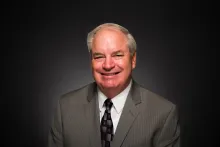
Robin Webber was born in Chicago, Illinois, in 1951, but has lived most of his life in California. He has been a part of the Church of God community since 1963. He attended Ambassador College in Pasadena from 1969-1973. He majored in theology and history.
Mr. Webber's interest remains in the study of history, socio-economics and literature. Over the years, he has offered his services to museums as a docent to share his enthusiasm and passions regarding these areas of expertise.
When time permits, he loves to go mountain biking on nearby ranch land and meet his wife as she hikes toward him.
