

Don Ward
This transcript was generated by AI and may contain errors. It is provided to assist those who may not be able to listen to the message.
The title today, go ahead and make my day. I've seen what people might call all sides of human nature, up close and from afar. I've seen the good, the bad, the ugly. I've dealt with the givers and the takers, the generous and the selfish, the envious and the exhorters. I grew up on a farm, so I know a lot about hard work and what it takes to put food on the table.
From the time I was 10 years old till I graduated from high school, I followed the mule every summer. As we grew, the money crops were spinach and turnips in the winter and corn and cotton and a few other what would call truck farm produce in the summertime. So do I know what it takes to put food on the table. I saw what my parents did through hard work and thrift, starting from sharecroppers. My mother was valedictorian of her high school class. My father could hardly read and write, but he could read and write some, perhaps a third grade education.
So I saw them starting from sharecroppers, that is, you're able to farm somebody else's land and they provide the land and the fertilizer and the seed and you get half of the profit. Sometimes you look up, you might get three fourths, but mainland's half and half, as they call it. So I saw them in seven years become home and landowners, sharecropping. And that on the heels of the greatest depression this country has ever known. Of course, the stock market crashed in 1929, and that affected the people who had stocks and then eventually other people, city workers.
Then there was another depression, really, that hit in the mid to late 30s, and that's when Roosevelt came along in the 30s and he developed the WPA, the Workers Progress Association, or something of that sort. A lot of the facilities that you see throughout the South, gymnasium, school buildings, that kind of thing, were built in the 30s through that Works Progress Administration. I saw them hand over the cash to my great uncle to purchase the place. In the early years of my life, I was often in the company with grandparents and great-grandparents who were born, great-grandparents born in the 1870s. So I've associated with people who cover a span of about 150 years.
I lived next door to two great-grandparents that died of cancer, about 100 yards away from each one. I have seen and heard the cries of the suffering that some people go through on the way to the grave. My dad and I were the first to see two grandparents who were killed by a terrible tornado that passed within a fourth of a mile of our house.
As a church pastor, I've conducted dozens of funerals. I've seen the stark reality of the wonderful thing we call life from many perspectives. I've worked at a newspaper, Waterwell Drilling Company, the oil field, plumbing, teaching, coaching, ministry, college administration. I've played college football, baseball. I've coached college football, baseball. Played a little pro baseball. I've been a college professor, coach, academic dean, and president. I've been from the barnyard to the boardroom, from the churchyard to the graveyard. And I've been greatly blessed to have had all these opportunities that I've had.
I am blessed to have known agony and ecstasy, victory and defeat. I would like to read now the man in the arena by Theodore Roosevelt. Roosevelt gave this speech. In the name of the speech, this is an excerpt from that speech. The name of the speech was, Citizenship in a Republic. He gave this speech at the Sorbonne in Patres, France, in April of 1910. The man in the arena. It is not the critic who counts, not the man who points out how the strong man stumbles, or where the doer or deeds could have done them better.
The credit belongs to the man who is actually in the arena, whose face is marred by dust and sweat and blood, who strives valiantly, who errs, who come short again and again, because there is no effort without error and shortcoming. But who does actually arrive to do the deeds? Who knows great enthusiasms, the great devotions, who spends himself in a worthy cause, who at the best knows in the end the triumph of high achievement, and who at the worst, if he fails, at least fails while daring greatly, so that his place shall never be with those cold and timid souls who neither know victory nor defeat.
I have been lauded. I have been betrayed. I have four college degrees and eighteen semester hours of postdoctoral courses in theology. I have taught many courses in the curriculum, on some level, from general science to seventh and eighth graders, to theology and many other courses in between. And yet I am as excited as I have ever been since the first time I held that first little primer in my hands on a cold Sunday afternoon in South Mississippi.
My first cousin, who was a year older than I, had started school, and she had brought home her little primer, and I saw it. See, dick, run, see, spot, run, that kind of thing. And when it came time to go home, I was determined to take that book with me. But they insisted that it belonged to the school district, and I could not take it.
Of course, we had two books at home, The Bible Inside the House and Sears and Robot Catalog Outside the House. That was pretty much the extent of it. In short, I've seen and lived a lot of life, and I'd say I've been greatly blessed. That's just sort of the tip of the iceberg. The race goes on. The battle is not won until we are given a crown of life in the kingdom of God. At this stage of life, my deepest desire is to see you succeed, to see you fulfill your life goals.
How would you define leadership? I would define leadership in this way. Leadership is the art of helping people reach their God-given potential. This involves motivating them to wake up and set goals and develop plans and strategies that will enable them to reach their goals. If you do not enter into the kingdom of God, you and I shall have failed. 1 Corinthians 3 makes it plain that the office of the ministry is a heavy responsibility to a large degree.
There, making it into the kingdom depends to a large degree on how well those that they minister to succeed. Each one of us can do more and much more than we have ever dreamed we could do. Personalize it. You can do much more than you ever dreamed that you could do, spiritually and physically. We reach our physiological limits way before we reach our spiritual limits. Some of us have seen each other come and go for an eye on to 50 years. Yet, in so many cases, we don't really know each other that is way down deep.
We have somewhat of a surface knowledge. In some cases, there are deeper relationships. I'm a keen observer of human behavior, and I have been virtually all my life. How many people have I seen come and go? Come and go. The almost, the could-have-beens. The saddest words of poet or pen are those of could-have-been. They could-have-been, but we don't know what happened. To them, they're gone. So I say today, regardless of the background of who your parents were, regardless of their socio-economic status, regardless of their educational level, regardless of work experience, regardless of offices held, and I could go on with regardless-of statements, those who keep on keeping on are those who have their eyes on God, on Christ, and their goal, and the joy that is set before Him.
Those who are dedicated to using their lives, their gifts, to comfort, to edify and exhort. These are the ones who succeed in the vocation of what we've been called to. I want to reiterate that.
Regardless of the background of who your parents were, my mother had a pretty good education. She's valedictorian of a high school class. Her parents didn't have very much. She went to junior college on some kind of little scholarship, and the second week there they stole her books, didn't have money to buy any more, so she went home, winds up marrying the hired hand that works on my grandfather's place, who has a third-grade education. They get married, and they're sharecroppers. So regardless of the parents, regardless of educational level, regardless of work experience, regardless of office as held, regardless of income level, and I could go on with the regardless statements, those who keep on keeping on are those who have their eyes on God Christ, and the goal, the joy that is set before them, those who are dedicated to using their lives, their gifts, their talents to comfort, to edify, and exhort, are the ones who succeed in the vocation that we have been called to. Let's look at Ephesians 4, Ephesians 4, where the Apostle Paul uses this way of life as uses the English word vocation, in Ephesians 4 and verse 1. In Ephesians 4, verse 1, I therefore, the prisoner of the Lord, so this is one of the prison epistles, the prisoner of the Lord beseech you that you walk worthy of the vocation. See, this vocation, what we're called to, should supersede all other duties, or however we may want to express it, in life. This is it. This is life or death. You walk worthy of vocation, wherewith you are called, with lowliness and meekness, with long suffering, forbearing one another in love, endeavoring to keep the unity of the Spirit in the bond of peace. There is one body, one Spirit, even as you're called, and one hope of your calling, one Lord, one faith, one baptism. And in parentheses, I put into the body of Christ. It is God the Father who gives you the Holy Spirit, who begets you. Man can baptize you in water, but only God the Father can beget you with His life, essence, His Spirit. One God and Father of all who is above all and through all and in you all.
Also, let's look at Hebrews 12. So, see, keep your eyes on the goal. Keep your eyes on God. Now, look at the example of Jesus Christ with regard to Keep your eyes on God. Keep your eyes on the goal. Keep in mind what His promise before you.
In Hebrews 12, verse 1. Wherefore seeing we also are compass about was so great a cloud of witnesses. That's those that are mentioned in chapter 11. The cataloging thereof the men and women that have gone before who died in the faith. Let us lay aside every weight and the sin which does so easily beset us. Let us run with patience the race that is set before us. Looking unto Jesus, the author and finisher of our faith, who for the joy, who for the joy. See, there's great joy to come in the kingdom of God. You could put there 1 Corinthians 12, verse 9. Eye is not seen, ear and not heard, neither has it entered in the heart of man what God has prepared for those who love Him. Who for the joy that was set before Him endured the cross, despising the shame. See, He understood that soon, and of course about 2,000 years have passed since these words were written. But in the sight of God, a day is a thousand years, and a thousand years is a day. It's just a snap of the fingers or less. Eternity is like infinity. It has no beginning and it has no end. He could see in His mind's eye those who would be in the kingdom of God as spirit beings. Brothers and sisters, see where heirs and joint heirs with Jesus Christ, who endured the cross, despising the shame, is set down at the right hand of the throne of God. For consider Him that endured such contradiction of sinners against Himself, lest ye be wearied and faint in your minds, you have not yet resisted unto blood, striving against sin. So I have not seen ear and not heard, neither has it entered in the heart of man what God has prepared for those who love Him. Seek you first. The kingdom of God and all these things will be added unto you. Look at Romans 8. You would turn to Romans 8, verse 18. See, I read a long list there of prayer requests, and if the truth were known, probably everybody in here needs prayer requests. One sort or the other. Because we are living in the most treble-less times of our lifetimes, for sure. We're like on a teeter-totter, we're the slightest thing. We're like sitting on a powder keg, where the fuse is in the hand, and all you have to do is light it, and it goes up in smoke. In Romans 8, verse 18, For I reckon that the sufferings of this present time are not worthy to be compared with the glory which shall be revealed in us. See, if you read in the verse above, that glory we shall share in the glory, the very essence and being of God Himself. We'll be separate entities. We'll be some kind of spiritual blob or anything like merging into nirvana as in Eastern mysticism. And if children then heirs, heirs of God, and join heirs with Christ, heirs of God, and join heirs with Christ, if so be that we suffer with Him, that we may be also glorified together.
The sufferings of this present world are not to be compared with that which is before. And Jesus Christ, for the joy that was set before Him endured all the things that He endured so that we might be there as well. What would God have us do with what He has given us? With that vision of what life is all about, very few people in this world even begin to understand the purpose of human existence, how they came to be. And they would rather choose to believe somehow that through some kind of evolutionary process that the material world and the spirit world and human beings came to be. They say it takes more faith to be an evolutionist than it does a believer in God. I mean, I don't think any faith is involved in it, to believe in evolution. I think is what the Bible says. What does the Bible say? Well, Psalm 14.1, the fool has said in his heart, there is no God. The fool has said in his heart, there is no God. In 1 Corinthians 12, spiritual gifts are listed. There are nine spiritual gifts listed in chapter 12. Then chapter 13 is an inset chapter in which Paul says, look, this is the most exceeding way. It's far above everything else. That is to become love as God is love, as stated in the first three verses of 1 Corinthians 13. Then he comes back to the main narrative in chapter 14 of spiritual gifts, which he began in chapter 12. So in chapter 14, verse 1, follow after charity, agape, spiritual love, and desire spiritual gifts, but rather that you may prophesy. Now he puts prophesy, that is, speaking the truth of God as perhaps the greatest gift. For he that speaks in an unknown tongue, unknown language, speaks not unto men but unto God. For no man understands him, how be it, in the spirit, he speaks mysteries. But he that prophesies that you really are speaking and teaching the truth speaks unto men too. Now here are the three main purposes for what God has given you, whether it's your innate talents that you're born with, or whether it's spiritual gifts that God has added to your natural ability. These three things, edification, exhortation, and comfort.
What does edify mean? Edify means to build up the act of one who promotes another's growth in Christian service, wisdom, piety. Piety means being able to comfort and help, happiness, holiness, just to build up, to strengthen, to promote growth. What does exhortation mean? It means to call near, to summons. It means supplication. It means to entreat, to beseech. Please listen.
It means encouragement. It means admonition. I admonish you. I encourage you. It means consolation, solace, that which affords comfort or refinement.
Then, comfort. Any address, whether made for the purpose of persuading or of arousing and stimulating or of calming and consoling. See, this is what we're supposed to use our lives for. To edify, to exhort, to comfort. Now, what are the two main ways whereby people can come to understand whether or not they love you?
Whether or not they really have love, care, and concern for you. The answer is very simple. It is through words and actions over an extended period of time. There is what is called the milk of human kindness, whatever that means altogether. But if you see just anybody on the street in great danger, you may go up and rescue them or attempt to. There are stories about that around the world every day of the hero that steps in and does a one-time rescue.
But true love is something that endures, that goes on and on. It is a choice.
So what are the two main ways whereby people come to understand whether or not they love you? Whether or not they really have care and concern for you? The answer is very simple. Through words and actions over an extended period of time. I added an extended period of time. Look at 1 John 3.14. Please look at 1 John 3.14. In 1 John 3 and verse 14, We know that we have passed from death unto life, because we love the brethren. He that loves not his brother abides in death.
Whosoever hates his brother is a murderer. Now, if you go back to Leviticus, it will tell you that if you don't serve as your brother's keeper, then you are hating your brother. So, hate here is equated with murder. Whosoever hates his brother is a murderer. I just read it straight out of the book. And you know that no murderer hath eternal life abiding in him. Hereby perceive we the love of God, because he laid down his life for us, and we ought to lay down our lives for the brethren. But whoso has this world's good, and sees his brother have need, and shuts up his bowels of compassion from him, how dwells the love of God in him. My little children, let us not love in word, neither in tongue, but in deed and in truth. Don't just say the words, though the words are important. Don't just say the words, but in deed and in truth. And hereby we know. How do you know? Hereby we know that we are of the truth, and shall assure our hearts before him. For if our heart condemn us, God is greater than our heart. Well, those feelings, what do you mean by the heart, condemn to you those feelings of guilt that may swell up, that this gnawing aching I ought to do, X, Y, or Z?
That's the heart condemning. That's guilt. The heart and knows all things. God is greater than our heart and knows all things. Beloved, if our heart condemn us not, then how we confidence toward God. Now, note back a few pages in James, chapter 2. So what are we answering here? How do we know?
Whether people really have love, care, and concern for you. It is through words and actions over an extended period of time. It could be a one-time thing, but if you are obviously husband and wife, family members, and then the members of the body of Christ. You remember about Jesus Christ, and they said, you know, your family is out here, they're asking about you, and so on. And Jesus said, you know, who is my brother, my sister, my mother? I'm loosely paraphrasing. And the answer is those who do the will of God. In James, chapter 2, verse 14, What does it profit, my brother, and though we may say we have faith and have not works, can faith save him? Can you just say, I believe, I believe, that is basically the whole message, just confess that you believe and you can be saved, and that's all there is. You don't have to repent, you don't have to do anything else. Can faith save him? Can just mouthing those words, or even say, well, I believe that God exists. If you believe that God exists, then what? I mean, you're probably worse off. The first place, but if you say, I believe God exists, you can't really believe that God exists unless you are willing to obey him. If a brother or sister be naked in destitute of daily food, and one of you say unto him, Depart in peace, be you warmed and filled, notwithstanding you give them, not those things which are needful to the body, what is a prophet? What good is it? You say, well, I know you need it.
Even so, faith, if it has not works, is dead, being alone. Yes, a man may say, you have faith and I have works, show me your faith without your works, and I will show you my faith by my works. So the faith without works is dead.
To a large degree, the Protestant Reformation, which began in Germany when Luther posted his 95 theses on the church at Wittenberg, and later Luther's main mantra became, by faith alone. And so he came to speak very negatively of the book of James, just rip it out of the Bible. It's by faith alone. No, it's much more. It's much more. Verse 19, you believe that there is one God, you do well. The devils also believe and tremble. Oh, yeah, the devil knows that God exists. The demons knew Jesus Christ. The people there may not have known him, but the demons knew him. Have you come to torment us before the time? They said. But will you know, vain man, that faith without works is dead, was not Abraham our father justified by works when he had offered Isaac his son upon the altar, seeing you how faith wrought with, put together with his works, and by works was faith made perfect. You can't say that you really believe something unless you're willing to act on it.
Ask yourself, am I focusing on the three main purposes of spiritual gifts? Ettify, exhort, and comfort. So now let's notice the Scripture of the day. Let's turn to Proverbs 25.11. Turn, please, to Proverbs 25 and verse 11, what we have in the bulletin as the Scripture of the day.
Proverbs 25 and verse 11.
A word fitly spoken. A word fitly spoken. How important is it? I think we'll see from the Scripture. A word fitly spoken is like apples of gold in pictures of silver.
Remember the Clint Eastwood line from the movie, Sudden Impact? Go ahead, make my day. Hence the title. Go ahead, make my day. He meant it in a threatening and twisted way. But you can make the day of almost any person on earth by words fitly spoken. Look at Proverbs 18 and verse 21. Proverbs 18 and verse 21.
Proverbs 18 and 21. Death and life are in the power of the tongue, and they that love it shall eat the fruit thereof. Death and life are in the power of the tongue. But you can make the day of almost any person on earth by words fitly spoken.
So go ahead, make my day. Not in the way that Clint Eastwood meant it in the movie. Note the words of James chapter 3. So life and death are in the power of the tongue. So we go to James, where James enlarges, takes up on this theme about the power of the tongue. James 3 and verse 5. Even so the tongue is a little member, and both great things behold how great a matter a little fire kindles.
And the tongue is a fire, a world of iniquity, so is the tongue among our members, that it defiles the whole body and sets on fire the course of nature, and it is set on fire of hell.
For every kind of beast and of birds and of serpents and of things in the sea is tamed and hath been tamed of mankind, but the tongue can no man tame. It is an unruly evil, full of deadly poison. Therewith bless we God, even the Father, and therewith curse we men, which are made in the similitude of God. Now this thing about being made in the similitude of God is very important. If you'll remember back in Matthew 5, where it says that if you call your brother a fool, that you are in danger of a council, and it goes on farther with the admonition there, you can also be in danger of hell fire. Because each human being, it says, is made in the image of God.
And potential sins of God are very precious in the sight of God. They are to be treated with great respect, giving honor to whom honor is due. Yes, you can make a person's day by what you say, or you can destroy them with one of the most powerful weapons ever created within human beings. That I've just read here from James chapter 3. The tongue can be a wellspring of life, or it can be that which cuts to the very quick.
It can cut a person to the quick and send him or her into a state of depression. On the other hand, a word, if it's spoken, pictures of apples and bowls of silver. Let's go back to Proverbs. Proverbs chapter 12. In Proverbs chapter 12, verse 18, there is that speaks like the piercing of a sword, but the tongue of the wise is held. There is that speaks like the piercing of a sword. And we'll read in a moment Hebrews 4.12.
But the tongue of the wise is held. It is a life spring bubbling up, energizing unto life. Then look at chapter 15, verse 4. Chapter 15 and verse 4. A wholesome tongue is a tree of life, a tree of life.
But perverseness therein is a breach in the Spirit. You know, having had the experience and background that I've had, I started off on graduating from college the first time, coaching and teaching, basically teaching junior high youngsters 7th and 8th grade, coaching varsity football, baseball. And seeing these youngsters and their potential, especially junior high boys and girls, the great enthusiasm, the zest they have, and you just want to, with all your being, try to get them to see what they can be, what they can be, what they can achieve. And of course, things have changed so drastically. This was the early 60s, to what our youngsters face today. But a word at the right time, you can help chart the course of a person's life by encouraging them to be all they can be, to help them see what they can be.
Let's look now at Hebrews 12. See, this book here is filled with admonitions along the way of what you can do, what we can do. You know, I started off with my life experience. You might think, oh, well, he's just boasting. Well, if you want to take it that way, you know, that's where I've been. That's what I've done.
And we can be so much more than we ever thought possible. In Hebrews 4 and verse 12, the Word of God—of course, our words are not as powerful as the Word of God, but they do, as we have read from several verses. They have great power. In Hebrews 4 and 12, for the Word of God is quick and powerful and sharper than any two-edged sword, piercing even to the dividing asunder of soul and spirit in the joints and marrow, and is a discerner of the thoughts and intents of the heart. The words of the psalmist in Psalm 14 needs to be our prayer.
Let's turn there to Psalm 14. On the way, I want to paraphrase a couple of scriptures. Keep your heart with all diligence, for out of it flows the issues of life.
And as a man thinketh in his heart, so is he.
So David realized those things in his life, and these words that are here—I may have gotten the wrong verse. I did. I think I want 19-14.
In Psalm 19, verse 14, Let the words of my mouth and the meditation of my heart be acceptable in your sight, O Lord, my strength and my redeemer. When that comes to pass in our lives, then a great change can take place. Can we say with the psalmist, with every fiber of our being, the words of Psalm 119? Just like in Psalm 119. 105, I've encouraged you and everybody I've spoken to over the years, time after time, read, study Psalm 119. In Psalm 119, verse 103, How sweet are your words unto my taste, Yea, than sweeter than honey to my mouth. Of course, the words of God, they range from great ecstasy to great correction, everything in between, and we need to take heed. The words of your mouth are counted as a sacrifice before God. Look at verse 108 here, Psalm 119, verse 108. Accept, I beseech you, the free will offerings of my mouth, O Lord, the free will offerings of my mouth, and teach me your judgments. See, our mouth is to express to our fellow man our love, care, and concern for them, and to praise God, to glorify His name, to give Him honor and credit for everything. Now look at Hebrews 13. In Hebrews 13, we see this continuing theme here of the words of our mouth, the communication there, as a sacrifice. Now the Scripture says, We must not, with whole, not good, when it is in your power to do so. So go ahead, make my day. Words fiddly spoken are like pictures of apples and bowls of silver.
A wellspring of life can make all the difference. In Hebrews 13, start in verse 15, Hebrews 13 verse 15, By Him therefore let us offer the sacrifice of praise to God continually, that is, the fruit of our lips, giving thanks to His name. But to do good and to communicate, forget not, for with such sacrifices, God is well pleased. We have in this congregation those that are assembled here today, East Texas, Texarkana, we call it. We have those assembled here today, brethren who have dedicated themselves to edification, exhortation, and comfort. I want to thank all of you for your contributions in edifying, exhorting, and comforting the body of Christ. I want you to encourage you to exhort you to continue to keep on keeping on. Let's look at, in Galatians 6, Paul's exhortation along those lines, to keep on keeping on.
Because many of us, we know where we are in life. We know that we don't have many more years. So what if God gives five more years, ten more years? What is that in eternity? It is nothing. It is nothing. But those of you who are younger, who are coming on, you need to begin to master the words of life. And those of us who are at the point of life that I'm in, we need to do everything we can to prepare you to stand in the gap. In Galatians 6, beginning verse 7, Be not deceived, God is not mocked, for whatsoever man sows, that shall he also reap. It's a law. It's going to happen. For he that sows to the flesh shall of the flesh reap corruption, but he that sows to the spirit shall of the spirit reap life everlasting. What do you want? Seventy-five years of turmoil in this life, the ups and downs, the agony, the ecstasy, the victories along the way of you, the defeats. And then that's it. Or do you want to live in glory and eternity? Life everlasting. He that sows to the spirit shall of the spirit reap life everlasting. And let us not be weary in well-doing, for in due season we shall reap if we faint not. And as we have therefore opportunity, let us do good unto all men, especially unto them who are of the household of faith. Now I want to encourage those of you who are hiding your talents, those who are hiding their talents and gifts under a bushel, and not actively participating in edifying, exhorting, and comforting the brethren through the talents and gifts that God has so generously given you, that you dedicate yourself to edifying, exhorting, and comforting the brethren through the talents and gifts that God has so generously given you, that you dedicate yourself to edifying, exhorting, and comforting the brethren with the gifts that God has so generously given you.
How do you glorify God? By letting your light shine. Look at Matthew 5. Matthew 5, verse 14. The word glory and glorify has a wide range of meanings. When it says, the glory of God filled the tabernacle, the very presence of God filled the tabernacle. We glorify God when we give honor and praise to Him. So we're looking now at Matthew 5, verse 14. You are the light of the world. A city that is set on a hill cannot be hid. Neither do men light a candle, put it under a bushel, but on a candlestick, and it gives light unto all that are in the house. Let your light so shine before men that they may see your good works and glorify your Father who is in heaven. How do you glorify God? By letting your light shine. You praise and honor God by using what He has so generously given you. We learn from this that if conversion exists, it cannot be concealed. That where it is not manifest in this life, it doesn't exist.
That those who profess to be Christians and yet live like everybody else, they've never been truly converted. That to attempt to conceal, to hide our faith and talents, is to render our lives useless. The feeblest light in the darkest hour is of use. The feeblest light in the darkest hour is of use. How far away can a light be detected? The Earth's surface curves out of sight at a distance of 3.1 miles or 5 kilometers. But our visual acuity extends far beyond the horizon. If the Earth were flat, our view were standing atop of a mountain surveying a larger than usual part of the planet. You could perceive bright lights hundreds of miles distance. On a dark night, you could see a candle flame flickering up to 30 miles away, 48 kilometers.
How far the human eye can see depends on how many particles of light or photons a distant object emits. The farthest object visible with the naked eye is the Andromeda galaxy, located an astonishing 2.6 million light years from Earth. The galaxy's one trillion stars collectively emit enough light for a few thousand photons to hit each square centimeter of Earth every second. On a dark night, that's plenty to excite our retinas. The little bit of light.
You know, you've heard that old song, This Little Light of Mine, I'm going to let it shine. Look at 2 Peter 1. So those of you who have the talents, who have the gifts, what are you going to do with them? You can't just edify yourself, because a person who refuses to use their talents and gifts begin to wither away, they begin to die. Use it or lose it.
In 2 Peter 1.19, we have also a more sure word of prophecy, whereunto you do well, that you take heed, as unto a light that shines in a dark place, until the day dawn and the day star arise in your hearts.
You know the parable of the talents. Enough said. There's one thing that never stops, and that is the hands of the clock. The hands of the clock of life. The hands of the clock of life never stop. Your precious life seconds, minutes, hours, are wearing away every day. Will we heed the words of God? In Ephesians 5.14, look at Ephesians 5 beginning in verse 14.
Once again, a great exhortation. Ephesians 5.14, Wherefore, he said, awake, awake, you that sleep and arise from the dead, and Christ shall give you light.
See then that you walk circumspectly, means cautiously, looking, watching, not as fools, but as wise, redeeming the time, which means buying it back, making the best use of it.
The hands of the clock of life are ticking, because the days are evil. Wherefore be you not unwise, but understanding what is the will of the Lord. Be not drunk with wine wherein is excess, but be filled with the Spirit, speaking to yourselves in psalms and hymns and spiritual songs, singing and making melody in your heart to the Lord. There's something about music.
Psychologists divide the human brain into two levels, the conscious level, the subconscious level. The storehouse of memories of your conscious awareness is stored in your subconscious or storehouse of memories. At any time, that which is stored in the subconscious or storehouse of memories can be emitted into the conscious mind. There is something about music that is more quickly emitted, more often and more likely than just verbiage. So when you sing hymns and songs, once again, my wife and I, on Friday evenings, our routine is a couple of hours of spiritually oriented music. And those spiritually oriented words will come back to you through the week, and you'll find yourself humming, singing in various parts. This is just one small example, but see, that's what he says. Speaking to yourself in psalms and hymns and spiritual songs, singing and making melody in your heart to the Lord. Giving thanks always for all things unto God and the Father in the name of our Lord Jesus Christ. Today, if you would hear his voice, harden not your heart. And yes, make my day.
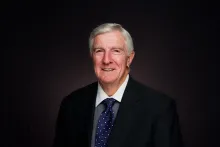
Before his retirement in 2021, Dr. Donald Ward pastored churches in Texas and Louisiana, and taught at Ambassador Bible College in Cincinnati, Ohio. He has also served as chairman of the Council of Elders of the United Church of God. He holds a BS degree; a BA in theology; a MS degree; a doctor’s degree in education from East Texas State University; and has completed 18 hours of graduate theology from SMU.
