

Robin S Webber
This transcript was generated by AI and may contain errors. It is provided to assist those who may not be able to listen to the message.
Beautiful music. I wanted to mention that I wanted to play that song today because there were young voices that were in it. And also, I purposefully had Will speak today because young people are our future in our new home. And we have a home, and what a blessing that is. And that's why today I'd like to give you a very special message in this time of transition and in this first Sabbath. Because we're developing a foundation here today in our new home here in San Diego.
So today on this day, a day of new things, new places, and a new church home, it's important to establish a foundation of why you and I are even here so that we can step into the future together. And whatever we do, and in all the things that we do, that we do together, are going to honor God and serve His purposes. And I think that's very important for all of us to realize because we're not just here to gain for self. We're not just here to get religion.
But we're first and foremost here called to worship God. Not only by assembling, but by every day how we live before our God and to glorify Him by what we do. Now, when we think back, and maybe some of you can help me like the Smiths or the Millers, how long were we in our last facility?
15 years. And 15 years, just imagine where you were 15 years ago. Some of you were in that facility. Some of you were not born. Some of us had not come into this way of life. Now, that former facility served us well, and we were there for many a year, as hopefully now in this facility, that by God's grace that our fellowship will remain here for some time.
But, as Will mentioned, we need to consider changes and transitions and what moves are like from one location to another. And I know that we've had the blessing of not having to move too often in our life. We've lived in one home now for about 10 years. The last one, we liked it so much, we lived there for nearly 27 years. Never thinking that we were going to live there that long.
But, you know, when you live someplace there that long, as it were, you know what it's like when you move. You have to figure out, you have to deal with what we call the stuff. You know what the stuff is? Are we the only ones that have stuff? If you don't deal with stuff, you're gonna get stiff.
But, because we all have a lot of stuff. So, you have to kind of determine, oh, what's going to stay? Oh, what's going to be left behind? What are you going to get rid of? And what are you going to bring forward? And that's a little bit what we have to do now on this day as we move from one location to another. And that is to consider those matters, whether they be physical, whether they be emotional, whether they be intellectual. What are we going to leave behind that we have been collecting over the last 15 years?
What we might call the stuff. And what are we spiritually, spiritually going to move forward into this new location and into the rest of our lives? Some things change. Some things are stuff. And not just that which is in your closet or that which is up in your attic. We actually have three attics and we still have stuff. So, what are we collecting and what do we need to dispose of? I think it's good to stop and look and pause and consider what we leave behind and what we do move forward.
Some things need to go. The other things that we bring now to this facility and remain in our life, there are some matters which are ageless. And those are the matters that I'd like to bring to the fore this afternoon to take a look. And it's good sometimes just simply to move. I don't know how many of you saw the movie Dead Poet Society about 20 years ago? Might have been even 25 years ago where... what's his name? The comedian. Robin... see you saw it. Robin Williams was the teacher that went into this stayed-old prep school and what he did was he had everybody stand up on their chair.
And why did he have everybody stand up on their chair? Because they were in the same room but it gave them a different view. Everything could look different now. There was a new way of looking at things. I remember at times when I've had the opportunity with my wife to go over to the Grand Canyon that it's amazing as you go along that south rim of the Grand Canyon.
Some of you have had the rare privilege of being on the north rim but on that south rim you know you move every 300 feet and it's like a completely different view. You think, boy, I'm looking at a different canyon. No, it's the same ditch. It's the same hole. But you have a different viewpoint. You're looking at it with a different shade, with a with a different view and things come alive and things that you have never seen before.
So today we want to focus on some things that are ageless so that we can best serve God as this Christian community called the United Church of God San Diego. We're going to focus on some essentials that I think are important. So just like that song, so that we being many may be one. I'd like to develop this by going to Psalm 127. Join me if you would.
Psalm 127, and let's take a look at verse 1. In Psalm 127, verse 1, this will give you the theme of the message and the title of this message. It says, unless the Lord builds the house, they labor in vain who build it. Unless the Lord guards the city, the watchman stays awake in vain. Thus the title of this message, unless the Lord shall build the house. Now to be fair to Scripture, this is in a sense to a degree talking about a relationship of God to the family and the parents to the children.
But there's an abiding principle here because I think we understand that the church also is a family and the church is to develop a relationship. And God wants to build something in here and He wants you and me to be a part of that. So the question is simply this, and it's a very simple one. How does that occur? How does God build this house? This church community called the United Church of God.
Now let's ask ourselves some questions. Think about it. Do we sit back and passively observe and leave all the building to Him? Because after all it says, unless the Lord shall build the house, the weary builder toils in vain. So I'll just step back because God is the head of my life, Jesus is the Lord of my life, and they're supposed to build a house. I honor that.
I understand that. So I'm just going to step over here and let them do all the building. And or do we simply allow a few people in the church, quote-unquote, to do all of the building, all of the establishing. What then do we understand from this? And or do you and I understand that we are privileged to be active co-workers. Because after all, if Christ is the head of the body and it is His heart that we are to emulate, then we are His legs to do His walking, His arms to do His reaching, and His tongue to do His speaking, one to another.
This is basically to encourage all of us, all of us today, to recognize that all of you are important and all of you are going to have a role in the United Church of God San Diego, to allow God to build His house through you. Now, lest you worry for a moment, I am not talking about a building and activity schedule. I as a pastor believe first and foremost that the church is designed to be a spiritual facility for people. It is about relationships.
It is not just simply activity for activity's sake and thus fill up every day of the month or every weekend of the year with activities for activity's sake. I have been there and I have done that. And that, which I did for people for 35 or 40 years, a lot of those people are not here anymore. So we have to have the right focus. We have to understand that the church is designed to be a spiritual household.
It is designed to develop a relationship with God Almighty and with one another. And you and I have a part. So I want to deal with this today by just simply asking two questions. Not five, not seven, but just simply two questions and try to answer them so that we can see how God needs to build this house through you and through me.
The first question I want to ask you is this. Let's get the first one over and right into it. Number one, just what is the church? Unless the Lord shall build the house, the weary builders toil in vain. They're just like hamsters in a cage on a wheel. A lot of energy, a lot of action, a lot of motion.
But unless they understand what God is doing, they're going to wear themselves out on that hamster wheel. So let's understand this. Today we have a paradox. Simply put, we now meet in this lovely new church facility. But we must ask ourselves an absolutely fundamental question. This is absolutely fundamental.
Is this the church? This building? This concrete slab building that's probably 25 to 30 years old with all of these nice rooms and all of these nice facilities? Is this the church? Is the church a building? How often do you wake up on Saturday morning? You're getting around? What do you say? What's the first thing you say? We've got to get ready to do what? Go to church. So it's kind of hard to understand back and forth what is the church when you say you've got to go to church.
But does the Bible tell us that we in that sense have to go to a church? We need to understand what that word means. The Anglicized term church that's used in the scripture comes from a Greek root most often utilized as ecclesia. That's where the term ecclesiastical comes from. In other words, about church things, which denotes simply that which is called out. We can even put that a little bit tighter together and say the ecclesia or the church are the called out ones. It's very interesting how that was used in history in times of old amongst the Greek community.
The Greeks used it in reference to a gathering of citizens. A gathering of citizens to discuss affairs of a state. So it's utterly important to understand that the church is not a building but the people. This defines a biblical reality that simply put in something that I learned at age 11 that I've never forgotten.
The church is not a building. The church is not a building. The church is the people. How many of you have heard that before? But how often do sometimes we bump into that fact again and again and we have to remind ourselves to get our moorings straight of what God is desiring to do with us?
That we either think that the church of and by itself is a corporation or an organization and or it is a building that we go to and so we go to church diligently and with our Sabbath smiles of course and we're at church and then we say well we've been to church and then we leave the church and we do what? We go home. Which is opposite of what the intent of the Bible is, is that the church is not concrete slab, it's not stained glass window, it's not a beautiful tile roof, it's you and me.
We are the walking, talking temple of God on two feet and we are the church. Think about this for a moment. When Jesus said, I will build my church, he wasn't talking about laying bricks even though he was a carpenter. He wasn't talking about establishing a social service provider of womb-to-tomb services. He was talking about developing a cadre of followers who would follow his example. And what is that example underlined with?
That would follow his example that they would say, as he said, Father above, not my will, but your will be done. Now, when we understand that then, when the church, as people come together, there is that assembly, there is that gathering.
And just like the Greeks of old, we are discussing affairs of a state, just like Will brought out, talking about the kingdom of God. And that's what the church does. I want to share a verse with you, which is interesting. Join me, if you would, in 1 Peter in discussing this point of what is the church. 1 Peter 2 verse 9. Notice what it says here. Speaking of those that God calls, the church, the ecclesia, the called-out ones.
But you are a chosen generation, a royal priesthood, a holy nation, his own special people, that you may proclaim the praises of him who called you out of darkness into his marvelous light, who were not a people, but are now the people of God, who had not obtained mercy, but now have obtained mercy.
Verse 11. Now, Beloved, I beg you, as sojourners and pilgrims, abstain from fleshly lust, which war against the soul, having your conduct honorable amongst the Gentiles. Now, you notice verse 11, it says, one of the descriptions of the church, the ecclesia, is pilgrims. Christians are pilgrims. Some of you that are younger might think, well, I thought pilgrims just happened in November, or pilgrims happened long ago in 1620. No, pilgrims are part and parcel of what the Christian calling is about. I'd like to define to you for a moment what a pilgrim is, and this is important.
A pilgrim is one who is headed towards a destination. A pilgrim is one who is headed towards the destination. When he is no longer on the move, when he is no longer headed for the destination and puts down rips and settles for a spot over the destination, he is no longer a pilgrim. Now, how does this play with what I've talked about here and what we're discussing? What is the church? The church is a people that are on the move. Always have been, always will be.
God uses various methods, means, and facilities to move them, but they never settle for the spot. God has used many different items, many different facilities, many different implements to guide and to motivate His people, both the church and the wilderness and the church of today. It could be an ark. It could be an altar of stones. It could be a portable tabernacle. It could be the one, two, three temples. You say three temples. I'm thinking of the one that occurred after Ezra as well.
It could be no building at all. It could be by a riverside in Philippi that the church, the ecclesia, met there. It could be a home like Mary's in Jerusalem. And, or it could be a rented hall today, just like we're going through. The reason why I bring this out is simply this. The Covenant people of Jesus Day and the Apostles Day, the Jewish people, got stuck on the spot rather than the destination. And Stephen had to remind them of something very important. Join me if you would in Acts 7. Because we're going to go from the interior of buildings in a moment into the interior of your heart and of your mind.
So please stay with me. In Isaiah, Isaiah, pardon me, Acts 7. Just notice what it says. And let's pick up the thought in verse 44. Our fathers had the tabernacle in the wilderness as the appointed instructing Moses to make it according to the pattern that he had seen, which our fathers having received it in turn also brought with Joshua into the land possessed by the Gentiles whom God drove out before the face of our fathers until the days of David. Who found favor before God and asked to find a dwelling for the God of Jacob? Now notice verse 47. But Solomon built him a house.
And he was allowed to. And for that moment and for that time. But God wanted the church in the time of the Apostles and Stephen to understand something. Verse 48. And he calls from the book of Isaiah, heaven is my throne and earth is my footstool. What house will you build for me, says the Lord? Or what is the place of my rest? Has not my hand made all of these things? What's being said here? God's people were always on the move and God didn't want them to settle in just simply one spot, but to learn from the spot and then to move on.
And in this, what Stephen is talking about here is that you cannot box up God. You can't box him up. God who is uncreated, God who is eternal, God who is everything, all-knowing, all-loving, all-powerful, and all-wise, and all, and I AM, cannot be put in a shoebox. Whether it's here on Mercury Avenue, whether it's on Trina Street, whether it was on 300 West Green Street in Pasadena, you don't box up God.
And you have to understand that then to recognize you can't box yourself up thinking, oh, I am going to church because that's where God is. I'll meet God at church. God met us long ago when He called us, led us by His Spirit. We accepted Jesus Christ. We said we can no longer do this on our own. We will yield our lives to you, and we will honor and praise you with your Spirit helping us as best as we can.
We will not only just do that on Mercury Avenue, but we will do that in the school place. We will do that in the workplace. We will do that in the home place, and we will do that even on the freeway, when things aren't quite going our way. In fact, we're not going anywhere. That we will honor God and everything that we do because we are the church.
We are the called-out ones, and we don't put God on a dime. We don't put God on a spot, and God doesn't want us to remain on a spot, but always look at the calling, look at the destination, look at the movement, looking forward. Now, why is this important to you and to me? Let's understand something here. How we view God, how we view God, and if we box God up conveniently, tightly, thinking we're doing Him a favor, we also box ourselves up. How we view God affects our theology, affects our religious practices, and affects how we walk in this way of life.
If we think that God is limited to a space, if we think that God thinks small, if we think that we're going to meet God somewhere rather than God's love and God's angels all around us at all times and in all ways, you will live that life. You will live a life of limitations. You will limit what God can teach you from His holy Word. You will limit how you can grow in the grace and the knowledge of our Lord and Savior Jesus Christ.
You will limit how you can impact other people, how you can love other people. Because when you box up God, you begin to diminish His love. You begin to diminish His extension and His ability to reach you. And because you feel that way, then you feel limited in reaching others. You see, it's important this matter of what the church is and what we're doing about it. God just simply refuses to be boxed in. I want to share something with you, may I?
The early followers of Christ understood this. I like to quote from Michael Green's book, Acts for Today, from pages 34 through 35. Speaking of this first-century church that sometimes we stand in awe of, and why did God use them the way that they did, and why were they doing the things that they were doing? Green says, speaking of the church, they had no backing, they had no power base. Indeed, most of them did not even live in Jerusalem. Their first headquarters. They had no organization. They had no backup. They had no secretaries. They had no phones. They had no TV. None of these things that we regard as today indispensable for outreach. There were no buildings.
No buildings. But Green surmises this. It kept them mobile, and it meant that they did not see their identity in buildings. And they did not see their identity in a role of being curators of ancient monuments, of recognizing that God moves the Pilgrim people down through the ages and brings them to a spot. You learn from the spot, but you don't get stuck in the spot, and you move on to understand God more.
You see, you know, and I know, what happened with the Jews of the first century as they went, in a sense, crazy as it were, when they thought that Jesus had said that he was immediately going to destroy the temple. And then later on, when they heard Stephen the Hellenistic Jew mentioned that, they thought, oh no, what does this mean? Because they confused what God is doing with the spot. And that's one thing that we can never do, brethren, here in San Diego. Don't get stuck on the spot of where you are right now in your life. You'll learn from it. You move on. You grow in grace and knowledge.
You learn that there's stuff that you need to put away, that it was well and good for that time. And now it's time to move on. My question for all of you under this sub-point of what is the church is simply this, the lay down of foundation. How do you view your identity? How do you view your identity as the church, as the ecclesia? How do we being many become one? Let's talk about that for a moment.
Because if we don't understand this, we can become fossilized. And God wants us to be fluid so that His works can occur in us, to be the kind of church that we need to be before Him, before one another, before the community, and for our families.
A few basics. What draws us together? Number one, we all have one Father, one Father that has invited us into His family. John 6 and verse 44. Join me if you would there. John 6 and verse 44. Let's notice what it says. John 6 and verse 44. No one can come to me unless the Father who sent me draws Him and I will raise Him up at the last day.
We all, in that sense, if I can use the vernacular, we all have the same Daddy. We have different mothers, but we do have the same spiritual Father. And through the Holy Spirit, we have His DNA in our system. Ephesians 1 and verse 3. Ephesians 1 and verse 3. And there's a point that I'm going to be leading up to in all of this, so let's turn to these scriptures to understand when I come to point.
Ephesians 1 and verse 3. Notice what again says about God the Father. Blessed be the God and the Father of our Lord Jesus Christ, who has blessed us with every spiritual blessing the heavenly places in Christ, just as He chose us in Him before the foundation of the world, that we should be holy and without blame before Him in love, and has predestined us to adoption as sons by Jesus Christ Himself according to the good pleasure of His will.
We understand that as we understand the Bible and this has been revealed to us, that we do have a Father. Interesting as we are here on Father's Day weekend, we have a Father. We have one that has been so gracious that he did not have to, but out of His desire that each and every one of us has become the apple of His eye. We created gleam in His eye and He wants us to be a part of His family.
We have a Father. We need to extol that Father. We need to talk about that Father in our church services. We need to identify and understand that, and that's a beautiful revelation that we have in this way of life, that God the Father is indeed above all. And we need to give Him always due honor, due honor, in that regards. Next, in this verse in Ephesians, it talks about His beloved Son.
And that's very important to understand as we come into a new building. Join me if you would in 1 Corinthians 3. A new facility, what we might call a new spot. Notice what it says here in 1 Corinthians 3, verse 9.
For we are God's fellow workers. Unless you are God's field, you are God's building. We are the church. Not a concrete slab, not something made out of wood. We are that temple of God. We are that building. And notice what it says, we are God's fellow workers. Remember what I said earlier on? Unless the Lord shall build the house. So do we sit back and watch Him do it all? No, He does it through us. It does not just happen. According to the grace of God, which was given to me as a wise master builder. Unless the Lord shall build the house. Notice it says, as a wise master builder, I have laid the foundation and another builds on it. But each one take heed how He build it. Notice verse 11. For no other foundation can anyone lay that which is laid, which is Jesus Christ. Jesus Christ is that sure foundation. He is that sure foundation. You know, it's interesting, as was mentioned, if I grain that early on, there was not a total hierarchy in the early church. And there's a reason. Join me if you would in Hebrews 3 and verse 1.
In Hebrews 3 and verse 1, this church grew, was fluid. It grew in grace and knowledge for a specific reason. It looked up and not around. And it understood God the Father's gift to the church, Jesus Christ. Hebrews 3 and verse 1, therefore, holy brethren, partakers of the heavenly calling, consider the Apostle and high priest of our confession, Christ Jesus, who was faithful to Him, who appointed Him as Moses, also was faithful also in His house.
So we recognize that. We notice that the foundations that need to be laid in this new home of where we assemble as the ecclesia is God the Father. And it is Jesus Christ who is indeed that sure foundation. We also recognize something very important that in Philippians 2 and verse 12, and a reason why so many of us are gathered here together today, and it's important to understand this, in Philippians 2, we are given a specific charge as we are called into this church, this ecclesia.
In Philippians 2 and verse 12, notice what it says here, therefore, my beloved, as you have always obeyed not as in my presence only, but now much more in my absence, work out your own salvation with fear and trembling. Now the reason why I bring you to that verse is to understand something. It sounds like, oh, it sounds like we're lone Rangers. It sounds like we're all on our own. No, we do have a responsibility. We can, in a sense, grab on to somebody else's skirt tail and enter into God's kingdom.
God gives us all that we need, but He also then does something else. He calls us individually. Let's understand this is specific and something that you and I need to understand today, especially as sometimes the Church of God gets more and more and more spread out and people out there think that they can kind of do it just simply on their own. One thing that you'll find in up in Riverside County, we have a lot of sheep.
I tell you about our sheep. The sheep are still in the field. And one thing that you very rarely find is simply this. You do not find a sheep by itself. If a sheep is by itself, it is either hurt or it is lost. Sheep stay together. Oh, man. I wish Weber wouldn't say that. Why can't he call me a tiger? Why can't I be a cougar? Why can't I even be a brontosaurus?
Why can't I be... God calls us sheep because there's a reason we flock. Now, I know if you don't have a converted mind, you can think, yeah, look who I'm flocking with, by the way, looking down the aisle. They're a part of the flock. Yeah, they're a part of the flock. And you know what? They're looking right back at you and wondering what you're doing here. The reason why we are here is because of God, the Father's calling, and because Jesus Christ desired so much to be our sacrifice, even while we were yet in sin, that he called us and said, I will be your brother.
I will be your guide. I've been on the top of the mountain. I've come down to the valley. I'm going back and I'm going to wait for you. And by the way, while I'm waiting, I'm going to provide you a comforter, just like the other guy down the road from you. And that's why I want to bring you to 1 Corinthians 12 about what is the church.
Let's notice 1 Corinthians 12. 1 Corinthians 12. Notice what it says here. 1 Corinthians 12, and let's pick up the thought in verse 12. 1 Corinthians 12, verse 12. For as the body is one, and has many members, but all the members of that one body, being many, are one body, so also is Christ. For by one Spirit we were baptized into one body, whether Jew or Greek, whether slave or free, and have been made to drink into one Spirit. For in fact, the body is not one member, but many.
Many! Now, we do have individual responsibility, but God calls us into this body to be this new creation, moving beyond the book of Genesis to the fulfillment of the rest of Scripture, that there was a creation that was physical in origin. And this creation of the church is spiritual in origin. Verse 27. Now you are the body of Christ, and yet members individually. So there is a seamlessness of being called individually, and yet then God grafts us into this body to learn the love of Christ, one for another, and to build the house.
Now, why do I bring all this up? It's not easy stuff. This body does not live on oxygen. This body, called the body of Christ, lives on love. It lives on love. And because we've been loved, we love and return. Now, that's challenging because Christianity is a contact sport, and conversion is more than recipes. You know, we can just read the Bible to ourselves and be like the Dalai Lama up at the highest plateau of Tibet and feel good. I feel the vibes. They're coming in. But those good vibrations have got to go out and meet life, have got to go out and meet people that are not always nice to us, are not always pleasant to us, because we have to...are you with me?
We have to learn to love as Jesus Christ loved. And He loved us while we were yet in our spiritual dirty diapers and loved us enough to die for us. Why do I bring us to this point of understanding with the churches? In this new house of pilgrimage, this spot, let us always dedicate ourselves to the destination of God's promise of eternal life in the kingdom of God, and not simply the momentary spot of learning. And may God the Father and I want you to hear this those especially when I am not here to communicate this message and how you speak in the words that you use.
May God the Father first and foremost always be in our thoughts and our words as it was to Jesus Christ. And as speakers, may we always speak more about Jesus Christ and God the Father and what they are doing and their work rather than ourselves. That is paramount, and I'll tell you why. When we have that sure foundation of knowing that we all have a common Father and we know what Jesus Christ is doing and we talk about them and we talk about Him who has given to be the head of the church more than ourselves or even a church organization as good as that church organization is before God.
This is essential. This is how you lay the foundation of this new spot that we are on to focus on the Word of God rather than our thoughts and rather than our good conjecturing. Stay with the trunk of the tree. And then we as a congregation of saints will be able to stay together.
Allow me to go to the second point. What kind of a church do we want to be? What kind of a church do we want to be? As we pause today in this new spot, and it's just a spot, because remember you're the church. The church comes to the spot. As we come to this spot, it's important to ask ourselves what will be the atmosphere and the identity of the United Church of God, San Diego.
So often people think of a church as a roster of people rather than a consecrated assembly of people set aside for a purpose. Here's what I would like to think of, and I do believe this. Please understand, in no way you know when I speak, I do tend to get excited.
I am not speaking to talk down to you because if you would only know how often I use San Diego congregation as an example of what I think the Church of God ought to be like. Your love, your warmth, your hospitality, your vitality for learning about the Word of God not only on the Sabbath day but in your in-home Bible studies and your Bible chats. This is good, good, good, good, good, good, good stuff. Just consider what I'm doing is to lift us up just a tad higher. Join me if you wouldn't Psalm 100. Psalm 100. I pray that this will be what we will be able to accomplish and learn on this spot for the time that God gives us to be here on Mercury Street.
In Psalms 100, make a joyful shout to the Lord all you land, serve the Lord with gladness, come before His presence with singing, know that the Lord He is God. It is He who made us and not we ourselves.
We are His people. And there's that word again. The sheep of His pasture. Enter into His gates with thanksgiving and into His courts with praise. Be thankful to Him. Bless His name for the Lord is good, His mercy is everlasting, and His truth endures to all generations. Beyond all the spots that we will hit and miss along the way on this journey towards the kingdom of God. Notice the different mentions of words and how they come across. We are to have joy.
Joy is looking beyond the moment and recognizing that God's called us for a purpose and that He will give us everything that we need to be able to sustain towards that purpose. It's coming before His presence. When we assemble here together, it's not coming so that you can hear Mr. Weber or Mr. Smith or Mr. Miller or Mr. Gardenhire or hear some beautiful music.
When we come to this spot, we come before His presence. But also remembering when we talk about what the church is, we're always in His presence. We're in His presence in Alpine. We're in His presence in La Mesa. We're in His presence in San Ysidro. He is everywhere.
And thus we must abide in this concept because so much always says, oh, I've got to go. I'm going to church today. No, we are the church. And this is how the church is to be ordained or adorned. Notice again what it says, that no, He is God. No, He is God. When we assemble together and hear the Word of God, we need to filter our thoughts and filter our words, especially our communicators, that it's not about us.
Our stories are pale in comparison to the stories that God the Father has laid out in the life of Jesus Christ, in the life of the saints of God that are here before us. We are to think about God. We are in safekeeping. We are to be a thankful people. We are to be a praiseworthy people, praising God, considering His mercies.
This needs to filter from this room into the kitchen room, into the teen classroom, into the parking lot, that we make God our focus. You know, people desire a safe place. Join me, if you would, in Hebrews 10.23. In Hebrews 10.23, which again is an overall principle that can affect coming before God together as people, it says, Let us draw near with the true heart and full assurance of faith, having our hearts sprinkled from an evil conscience, and our bodies washed with pure water. And let us hold fast the confession of our hope without wavering, for He promised who is faithful.
And let us consider one another in order to stir up love and good works, not forsaking the assembling of ourselves together, as is the manner of some, but exhorting one another, and so much the more as you see the day approaching. This is not a safe world out there.
This is not a safe world. And we need to invigorate one another when we do come together. It's so important. And the United Church of God San Diego can be a lifeboat in these stormy seas that are all around us, and sometimes the stormy seas that you and I are on. I'll just share a thought with you and conclude. I have one or two more verses out there, but I want to share a story with you. What kind of church do you want to be?
Unless the Lord shall build the house, the weary builders toil and vain. Fifty years ago, I attended my first Church of God service right here in San Diego. Some of you have been there, the Carpenters Union Hall. You have to understand the impact that had on me as an 11-year-old boy. So some of the kids, if they're counting, yes, Mr. Weber is 61. No, 61. I'll be 62 in a couple days.
You have to understand what my world was like then. I lived out in La Mesa. La Mesa was even more rural back then. It was white. That was like this, white. It was very Republican. It was a very white collar. And it was remote from everything that was downtown. I grew up in a world of politics, even at age 11. I used to get in trouble for passing out political balloons in class.
And I had, shall we say, ill feelings towards the other half of America that didn't quite believe like my parents believed. And then my mom began hearing the World Tomorrow telecast. And I would be right there with her at the house in La Mesa. And we didn't even know there was a Church of God at the time. We thought it was just Mr.
Armstrong, the radio, and us. We talked about the Trinity. That it was Mr. Armstrong, the radio, and us. And we thought that was it. And that was probably a lot of your experiences wondering, is there a church? This is wonderful, but what's the rest of it? And then finally, Mr. Scriber and Mr. Billingsley came out to, as you know how it used to be, pay us a visit. And we had the visit. And then we were invited to church. And I remember going into, you have to understand, with the background that I came out of to enter a union hall was not what I was planning on at age 11, based upon the background and the culture that I came out of.
My whole world changed when my mother, like Abraham, responded, as your parents did, some of you, and or as you did, responded that call. I went into places that I thought that I would never go into. Talked to people that I would never think I would talk to. And my experience was simply this. As we walked up those steps, and you've been on at the Carpenters Union Hall, there was this old black fellow. And he had the biggest smile. And he had the longest, longest arm.
And he had the firmest, firmest handshake. And he welcomed my dad. For those of you that know my dad, you can only imagine how that went. And then he welcomed my mom. And then he welcomed me as an 11-year-old boy, coming into, we did not know what. And then as I came into that church, I sat down in an old, not as comfortable as this, but a metal chair, which I'm glad is temporary and was just a spot. Better things have come along the way. And I remember looking around.
And everybody brought a Bible. Didn't do that in fundamental churches back then. You didn't bring a Bible. And if the Bible was in front of you, you didn't even reach for it. And everybody had a Bible. And they were big Bibles, and lots of families, and lots of children. And something that I had never seen in the Lutheran Church that I came from, and that was everybody had a notebook. And they were taking notes. And they were dead serious in taking notes. I thought they were legal secretaries taking shorthand. And in my mind came this concept as an 11-year-old boy. This must be the pearl of great price.
This must be that treasured field. These people are living it. They are serious. Never underestimate what our young people are observing, and seeing, and taking in with the environment and the atmosphere that each and every one of us convey as we build the house, as God works through us unless the Lord shall build the house. Here's the point I want to make. I do not remember who gave the sermon that day. You know who I remember.
I remember the atmosphere, and I remember the general environment of the people of God. And I remember that old black fella. That was the front door. You know what? That was the first black gentleman's hand that I had ever shook, just because of society the way it was so segregated back then. That changed my life. I came out of the box of safe, lily-white, conservative La Mesa. Is it any wonder that when we're drafted into the body of Christ, that Paul says we are neither slave or free, Jew or Gentile, man or woman, things begin to come out of the box. That is, if we will allow God to use us.
That's just one personal experience of mine. I'm sure you could share your experiences, but I know the clock is ticking and we have a cake that is out there for us to celebrate the moment and being on the spot.
I'm just going to take you to one verse to conclude with, and I hope you'll remember the story that I shared with you today, but I do want to turn to this verse in conclusion. Join me, if you would, in 2nd Chronicles 6. 2nd Chronicles 6. See, brethren, you are an extension of that gentleman that was on the stairs 50 years ago in San Diego, and there are the people of God that are still in San Diego.
And recognize that people will come and go and they will hear Weber or they will hear Smith. Never underestimate God and how He can use you and work through you to affect the future. You think of my role, my development, and how God has blessed me to be able to be utilized in the church around the world today and here in Southern California.
I go back to entering into His gates and hearing praise and seeing a thankful people and taking notes. That doesn't mean that don't everybody get out of notebook right now. Please understand. But, unless you want to. And to understand that I entered with Jack and Tommy Weber 50 years ago, I entered those gates and that environment and that atmosphere was so contagious. I bit into it and I began to own it and now I can share that 50 years down the line.
I don't even know the man's name. But I recognize the Spirit of God in Him. And people will come and they will hear me for a bed or they'll host somebody else. But it is your impact in this room, in the parking lot, in the kitchen, at the door as a greeter that can have profound effects as we build the house of God. Second Chronicles 6, you are there.
I am not and I am there now. I want to read the dedication of Solomon concerning the temple. Concerning what others later on considered to be permanent, but in God's plan and God's purpose was but a spot in time in history. Verse 17, and now O Lord God of Israel, let your word come true which you have spoken to your servant David. But will God indeed dwell with men on the earth?
Behold heaven and the heaven of heavens cannot contain you. How much less this temple which I have built, yet regard the prayer of your servant and his supplication O Lord my God, and listen to the cry and the prayer which your servant is praying before you. And I consider this to be a prayer and a blessing that will be upon the United Church of God San Diego as we now inhabit this spot.
And it's but a spot recognizing that we are that living and breathing and growing temple of God that visits the spot. That your eyes may be open towards this temple day and night toward the place where you said you would put your name. That you may hear the prayer which your servant makes towards this place. And may you hear the supplications of your servant, of your people Israel, when they pray towards this place.
Hear from heaven your dwelling place and when you hear, forgive. The words of Solomon, the words of Holy Scripture, to remind us that we worship a God that is beyond this room, a God that is beyond San Diego County, and a God who ultimately the tabernacle is in heaven. And recognize that he is all loving, he's all-powerful, all-knowing, and all-wise. And that you and I have been given the privilege to be called individually but grafted together collectively as the body of Christ to honor and to praise him, not only in this spot, this facility, but on Monday, Tuesday, Wednesday, Thursday, and Friday.
Because after all, we, the people of God, are the church.
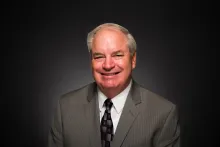
Robin Webber was born in Chicago, Illinois, in 1951, but has lived most of his life in California. He has been a part of the Church of God community since 1963. He attended Ambassador College in Pasadena from 1969-1973. He majored in theology and history.
Mr. Webber's interest remains in the study of history, socio-economics and literature. Over the years, he has offered his services to museums as a docent to share his enthusiasm and passions regarding these areas of expertise.
When time permits, he loves to go mountain biking on nearby ranch land and meet his wife as she hikes toward him.
