
Robin S Webber
This transcript was generated by AI and may contain errors. It is provided to assist those who may not be able to listen to the message.
I want to say thank you very much, Karen. Certainly appreciated that. You know, when you play Mozart, even the flowers grow. It is so melodic, so beautiful, so peaceful, and beautiful rhythms. It even gets the greenies kind of getting a little bit bigger. So that lifts our spirits as well. I want to say welcome to everybody that's here today. I noticed that we have several people that are here from the recent seminar series, and I kind of want to explain what we've been doing so that we can move into this message. And that is simply that we are going through a series entitled, God's Will for the Body of Christ. And we're, as a congregation, simply going through the book of Ephesians, verse by verse, line by line, precept by precept, and understanding by understanding, to one great understanding that I think is so important for all of us to appreciate. And that is simply to recognize is that we do not worship a cosmic, absentee God, a landlord that started up the earth, spun the top, then moved away, and is now distant. For you and me to come to fully appreciate that we come before and we worship and we pattern our lives after a God who is active, a God who is dynamic, a God who is hands-on, a God who is hearts-on, and is calling a people from all corners of the earth, from all different backgrounds, in Christ, before Him, for a very specific purpose, that He might be glorified. And for those members of the body of Christ that are here, we have profound lessons to learn. We're calling again this series, The Will of God for the Body of Christ. It doesn't take verses and verses and verses and papers and papers and papers to understand what that will is. It's firmly laid out in the book of Ephesians. Join me if you would for a moment. Let's all focus on Ephesians 1, and then we'll move forward. In Ephesians 1, it tells us right here what the will is. It kind of gives us a preamble that we will continue to develop in this message today.
In Ephesians 1 and 9, it says, having made known to us the mystery of His will.
All of us have seen some of those old black and white 1930, 1940 movies where they drag out the will. And everybody's sitting in the living room, and they all want to know not only who is in the will, but what they will receive from Aunt Tilly or Uncle Horace or their grandfather as they all set intrepidation, wondering what is about to transpire as the lawyer reads the will. We don't have to do that. It says right here, having made known to us the mystery of His will, according to His good pleasure, which He purposed in Himself. The one thing that we find in this verse is that we not only find a will, sometimes wills are made in reticence, or simply because they have to be done. Here we find a different dimension, a different approach, a different attitude. It says that this mystery of this will is according to His good pleasure. God is desirous of sharing this, of what He came to and purposed in Himself. And here then is the fine line of the will that in the dispensation of the fullness of the times, He might gather together in one all things in Christ, both which are in heaven and which are on earth in Him. Easily stated, the will of the Father is that all things might have possibility to come together through that door of the one that He sent, Jesus Christ. And this was Paul's message. This was his mission for all of his life, from the time that he got up from that dust on the road to Damascus, and that he wanted to share it. It's interesting that as we move forward, Paul and his spiritual enthusiasm prayed, prayed and praised God about what he had offered, and then prayed for the Church that they might even begin to really, really understand it. Sometimes when you and I talk with other people, we will talk to our wives, we'll talk to our children, we'll talk to our co-workers and say, well, do you get it? Do you really get it? What this is about? And Paul's prayer was that God help them get it as to what you are striving to accomplish here below.
As people got it, as God gave us call and as they responded, whether it be Paul, a Jew, or whether it be the Gentiles that he was speaking about as they got it, moved away from their ancient communities that had always been there, going through the rhythms and the patterns of life from from the Father to the Grandfather to the Great Grandfather. And as people moved out of that, Paul reminded them that, listen, this is the will of God. The will of God in Jesus Christ and through Jesus Christ is that the Father has something in store for you. Number one, you can now begin to have a kingdom experience that will not just be tribal, that will not just be national, but that your citizenship can now begin to occur in this kingdom.
You will have citizenship in this kingdom. Number two, that not only a citizen, but you're going to have a family, that God is a family and he's calling a family and that you're going to be looked upon as a family member. And then, lo and behold, at the end when we go to Ephesians 2, if you'll come with me there, please, as Paul wraps up through verses 19 through 22, notice in what he says here in verse 20, and you have been built on the foundation of the apostles and the prophets of Jesus Christ himself being the chief cornerstone in whom the whole building being fitted together grows into a holy temple in the Lord, in whom you also are being built together for a dwelling place of God in the Spirit. Now, let's notice what is said before we move towards today's message regarding our knees bowing before the Father. This is profound.
That God is adding members to what he defines in this metaphor called the body of Christ.
But they're not members chosen by human beings, but members that are chosen by God, because this is the whole thing that Paul is trying to state that the walls are coming down.
The walls that mankind, humanity, has built up between one another. Even religious people, like Israel and the Jews, that built up towards other people are coming down. And to recognize that the message of Ephesians 1 and Ephesians 2 is that something new, something incredible is being developed. No longer just a Jew, no longer just a Gentile, but what is spoken of as a new creation. And when Paul uses that, it's not in the sense of new and improved, but new as like has never been before. Now that's going to be very important for you and I and I to pick up today, because you might want to jot that down if you're taking notes to stay with me and circle it, because we're going to build upon that as we go along of what that new means. And that you and I, as members of the body of Christ, have incredible privilege. And that's what I want to bring out today that maybe you have never noticed before. And if you have, that's good. No scriptures of private interpretation. I think that's mentioned in the book. But I'm going to share with you something today that maybe you have never noticed before of how important your response is to the Gospel. How important your example is in relevance to the Gospel. And who is actually watching and witnessing you? Dr. Hoover talked about the people that he comes into contact with in the academic community, in the different musical programs he's in. May I say something? We're going to, just to give you a hint, we're going to stretch beyond Cal State today. We're going to stretch beyond the basin and show how incredible and how important it is what God is accomplishing in you. Now, before we go into chapter 3 verse 1, again, let's remember what Paul just left us with. God is calling people of all races, all backgrounds, all nationalities, those that are apart from the covenant people of Israel. God is now expanding. God is doing something new. And he brings them together. He says, you can be a part of a kingdom. You can be a part of a family. And I'm no longer just going to take stones like Solomon did. I'm not going to take blocks of rock like Herod did, but I'm going to take flesh and I'm going to take blood and I'm going to take heart and I'm going to take a righteous development that is happening in people. And I'm going to create a new temple. And I'm going to literally dwell within this temple, not made of rock, not made of stone, not set up on a mountain, but established in the lives of people and together reflective then of what I'm doing, that I have always wanted to be in the midst of humanity, a relationship of walking and talking and being in the middle. Just as much as year eons ago in the midst of the garden, this is what I desire. We now pick up the thought in Ephesians 3 and verse 1 if you'll join me there. For this reason I, Paul, the prisoner of Jesus Christ, for you Gentiles, for this reason, this is why I am a prisoner because of this that I have been preaching.
Because of this I have given my life. The underlying Greek term here actually moves beyond reason, but in favor of. Sometimes reason is just simply one plus one equals two.
The one plus the one is reason to make two. But the genesis of thought in the Greek word here is that this is beyond logical. This is in favor of what has been revealed to me by none other than Jesus Christ. It is for this reason. It is for this cause that I am a prisoner of Jesus Christ for you Gentiles. We come to understand that here's Paul writing this out or scribing it out by some scribe. He is in prison, but again this allows us to understand something. The mind of Christ, the Spirit of Christ in us, does not know walls. Here's a man that is either confined to a house imprisonment or perhaps in a cell, but he is not stymied.
What God has revealed to him is not blocked. His example is sent forth in this letter and he says, I am here for you Gentiles. Again, let's understand what's happening here is that before Paul came and before God's message came to Paul, we recognize that there was a hostility and there was a division in the ancient world that can be explained none other than just simply acidic. It was horrible. There was an incredible divide between the Jew and the Gentile. Both were at fault. Both said horrible, horrible things about one another. There seemed to be no way of putting it all together. This is what Paul is talking about and of course you can say, well that was 2000 years, the Jew and the Gentile.
I don't think society has improved that much. But you see the whole book of Ephesians is about coming together, of lowering the walls. And that's why we're doing this backdrop right now because later on as we get into Ephesians 5 and Ephesians 6, we're going to be dealing with relationships like husbands and wives, like parents and children, like employers and employees. Where perhaps that there can be a division until you really recognize, going back to Ephesians 1, forward to recognize what God is doing.
That in Christ there are to be no walls, there is to be no division, and that there is to be coming together. We're going to get there. That's going to be a couple sermons off as we get into the marriage stuff. For this reason, this cause, I'm the prisoner of Christ Jesus for you, you Gentiles. He's here because of one thing that he did.
Join me if you would in Acts 26 for just a second. Acts 26. Because here he was and he was sharing his story, and so far so good. And the story was going well until he got to this point as he was before a grip. And I think Mr. Garnett was just going through this with all of you, weren't you, John?
With the class about Apologia. And here we have this aspect where he's sharing his background and where he'd been and what he was doing and how he had heard this this voice out of nowhere on the road to Damascus. And so far so good. The crowd wasn't excited until he came to this point and when he all fallen to the ground, I heard a voice speaking to me and saying in the Hebrew language, Saul, Saul, why are you persecuting me? It is hard for you to kick against the goat. So I said, Who are you, Lord?
And he said, I am Jesus, whom you are persecuting. But rise and stand on your feet, for I've appeared to you for this purpose to make you a minister and a witness both of the things which you have seen and of the things which I will yet reveal to you. The revelation was not over. The chapters were just beginning. And I will deliver you from the Jewish people as well as from the Gentiles to whom I now send you to open their eyes in order to turn them from darkness to light and from the power of Satan to God that they may receive forgiveness of sins and an inheritance among those whom are sanctified by faith in me.
Therefore, King Agrippa, I was not disobedient to the heavenly vision.
And it goes on. This was Paul's life to share that message. And here he was now, and he spoke of himself as a prisoner of Christ. What I want to share with you in just this first verse is simply to ask you a very personal question with whatever room you are in right now in your life as a Christian as to how you view yourself. Not how others view you, how others view you as secondary to how you view yourself. Remember the Israelites? They spoke about grasshoppers. It wasn't that the Canaanites looked at them as grasshoppers. They considered themselves grasshoppers in their own eyes. My question is within your circumstances right now, in the cell of your life, how do you view yourself? Paul did not look upon himself as a victim. He was there as a champion for the cause, for the cause of what God was doing in him. Now, our role from Paul is different. I'm well aware of that. But each and every one of us are a part of this cause that Paul is speaking about to one degree or another. Paul never lost the point that God is sovereign over all things. And God was in control even in what seemed to be an uncontrollable situation, in that he was behind prison walls. But he viewed himself as the prisoner of Christ. In other verses in Ephesians he says, I'm the prisoner of the Lord. He never lost that rhythm. He never lost that cadence. See, he never forgot that he'd given his all to Christ at the road to Damascus. His past, his present, his future. He'd handed over the keys, given them to him.
And it's very interesting that Paul in his writing speaks of himself being a prisoner of Christ, not of Rome, not of what can be seen, but what God was striving to accomplish in him. He was not only the prisoner of Christ, but in other writings he says, I am a slave of Christ. Fascinating that Paul looked at his external circumstances as well as his internal circumstances of what was inside of him as one seamless whole, that he belonged to Jesus Christ. My question to you here on this Sabbath day, February 11th, how are your externals and how are your internals and how seamless are they in the cause that God has brought before you and placed in you to be a member of the body of Christ, to be a part of this kingdom experience now, to be a part of the family of God now, to be a part of that temple that is being groomed and wedged and honed and molded now? Are we just simply stuck by what's right in front of us, the wall that's in front of us right now? Maybe the wall that we have built, maybe it's the wall that somebody else has built, but we are only looking at a wall rather than the sovereignty of God Almighty who's called us to give him glory. What's going to happen now is that as Paul opens up about this cause, the next 13 to 14 verses are one parenthetical thought. We might just say it's going to be a breathless statement. He's going to go for it and we're going to join him in what he's going to tell us. If indeed you have heard of the dispensation of the grace of God, which was given to me for you, how that by revelation he made known to me the mystery as I have briefly written already, by which when you read you may understand my knowledge in the mystery of Christ, which in other ages was not made known to the sons of men, as it has now been revealed by the Spirit to his holy apostles and prophets, that the Gentiles... Let me use a word that might be more common to you and me today. To the others.
Those not like us, or those that we would never consider that God might be desiring to use because in our eyes and in our ears and in our realm... What? You've got to be kidding! How could God use that? The others.
That the Gentiles should be fellow heirs of the same body and partakers of his promise in Christ through the gospel, of which I became a minister according to the gift of the grace of God given to me by the effect of working of his power. Let's stop right there and let's go back for a moment to recognize that all of this is going to lead to the title of this message as we bow our knees to the Father to understand what is going on here.
Let's appreciate... You might want to put this down as a word so that you and I can stay together. Speaker here, all of you out there, Paul considered this a privilege.
Just the mere knowledge, this revelation, this mystery, and it was given to him.
When it says it was given to me, you know, sometimes... And you and I have run into people like this before. You know what I know because I know it. I got it. And it's all about self.
It's all about like a puffed up peacock of what I've come to, of what I've studied and studied.
And you just see it. It just pours out of the individual. It's not about God Almighty above. It's about them. It's sad, but it's true. And they can even be talking about the things of God, but their attitude is not godly because they don't give him glory and they do not give him credit. This is not where Paul is coming from. If you'll join me here for a second, when you see his speaks about my knowledge, he is always giving credit about this revelation. The term revelation is a Latin term that comes from the Greek. That'll really confuse you. And the Greek is the term apocalypse. Revelation or a revealing. The apocalypse means an uncovering and or an opening up. So he speaks about this revelation of the mystery. The revelation, this opening up or this uncovering of this mystery. Now, when you and I hear the word mystery, we think of an old Agatha Christie book where you have to kind of wait till the end and you still don't know who done it. And you know, it's nine times out of ten the bottler. But just in case, sometimes it can be changed. But this isn't the kind of mystery that is being spoken about. This is speaking about, yes, something that is still privileged but is now open. The wrappers are coming off. It's a secret no longer. And it is, in a sense, still guarded because this revelation, this apocalypse, this mysterion, which is the Greek word for mystery, it is still that which is given to those that are initiated. Not because of who you are or who I was before we came to understand the mystery, but because of who God is. And because of His grace, as Paul says, that He opened our eyes, He opened our hearts to begin to understand what He is doing. Now, it's very interesting here, says, and here's what I want to share with you, which in other ages was not made known to the sons of men. Now, whoa, wait a minute.
The Old Testament is there. What do you mean it wasn't made known to the sons of men?
You can go back to the story of Abraham. You can go back to Genesis 12, where it says, Abraham, I will make of you a great nation, and of your seed the nations of the earth will be blessed, nations plural. You can go to other verses. I'll just pick one first. Isaiah 49. Let's just go there for a moment to open our Bibles. Isaiah 49 verse 6, 700 years before Paul.
Isaiah 49 verse 6. Indeed, he says, it is too small a thing that you should be my servant to raise up the tribes of Jacob and to restore the preserved ones of Israel. I will also give you as a light to the Gentiles that you should be my salvation to the ends of the earth. So we notice this mix back in Isaiah, where Israel and the Gentiles are mentioned, and the Gentiles are mentioned because therein is the focus of Paul that this mystery is now showing the extent of God's plan. Well, what does this mean that it has not been made known to the sons of men? And how is this new? And the key word is now because God always operates in the now.
Yes, in a sense, God had shared it with his prophets of old. But here's what I want to share with you. No one of old imagined how radical God's will was to be. How radical that the theocracy of Israel, later the theocracy of Judah, would be superseded by an international multicultural community, a new community called the temple of God, called the body of Christ, called the church. Nobody could imagine that. Oh, sure, it'll be nice if the Gentiles get around to knowing God, but not like us because we've always known God. We've always had the law, as it were, in that sense. Notice what it says here in verse 6 that the Gentiles should be fellow heirs, not second has-bends, of the same body, not separate drinking fountains, not separate restrooms, not at the back of the bus, but equal before the Father in Christ, and partakers of His promise in Christ through the Gospel, through the Good News. Three separate components towards one end. Full partnership. Now, stay with me. Are you with me? Full partnership. Here's how it works. Vertically, fellowship with God through Jesus Christ. Acceptance before that throne through Jesus Christ. But that's not enough. That does not define Christianity. Thought it did. No. Christianity is cheap if it's only vertical. Are you with me? Jesus said, by this shall all men know, if you're truly fully my disciples, if you have love, one for another. So what Paul is saying here, it's not enough just for Israel or the Jews to love God and to keep the commandments, and it's not even enough for the Gentiles now coming in, to simply love God and keep the commandments and believe that Christ was the anointed.
But you have to love one another. Have you ever noticed that sometimes it's easier to love God than your neighbor? Or am I the only one?
But that is the totality of the equation that Paul is speaking about, because I think you can see where I'm taking you. We can move the word Gentile out, and who then is your neighbor? What cell seat do you sit in, thinking that somehow God has lost you and forgotten where you are?
Or who and why has God brought this individual into my life that I can't get along with right now, just as the Jews and the Gentiles did not get along with in antiquity?
See, that's why we're going to move through Ephesians 4 and Ephesians 5 later and come to find that.
Join me if you would in Galatians 3 for a moment. Galatians 3.
Verse 26, For you are all sons of God through faith in Christ Jesus. For as many of you as were baptized into Christ have put on Christ.
There is neither Jew nor Greek. There is neither slave nor free. There is neither male nor female. For you are all one in Christ Jesus.
And if you are Christ, then you are Abraham's seed and heirs according to the promise. See, Israel and the Jews later on kind of had it figured out. This is where it gets personal with you and me, okay? So stay tuned. They had God all figured out.
They'd already made up the jigsaw puzzle before it happened.
They put in the picture just like they wanted to. Oh, okay, God, you know, you'll bring in the Gentiles, but that's nice. That's big of you. And they've been there for a long time. That's nice. That's big of you. And they've been a pain in the antiquity.
You were worried, weren't you? A pain in the antiquity. But we can see where you'll have room on them. We'll have the earth and they'll have the moon. It'll work out, you know, because after all, they are also really made in your image.
No. This is what happens too often when people read the book apart from God, is that they get ahead of God. Here's what I want to share with you today.
Very important. Come to expect the unexpected when it comes to God's will.
God's will and God's purpose will always trump your best guess as to what he is doing and what he is accomplishing in your life. So often we get ahead of God, just like the Jews did. I always remember that famous line by Abrams in the Chariot of Fire, where he's a Jewish guy that's attending the British university and the rampant anti-Semitic mode that was Britain in the 1920s. And he said, you know, they allow me to come to the drinking fountain, but they do not allow me to drink. Isn't that sometimes what we do with our fellow human beings, that for one reason or another, we allow them to get up, nestle up next to the drinking fountain, but we don't let them drink. Because for some reason or another, we think that we have God in our back pocket and they do not. And we forget that every human being, man and woman, teen and child, is made after the image of God to bring God glory. Even that person that you're not getting along with real well right now, that person that has you fuming, that person that has you miffed, that person that you wonder, why did God bring this individual into my life? Come on, God, enough already!
Join Paul. Pull up a seat in the cell. Take up a chair in the prison. And like Paul, give God glory and say that even in uncontrollable situations, God is sovereign. He is in control. I am his slave. I am his servant. I have been called not simply to have the easy life, but to give God glory and to see his will occur. In all of this, what I want to leave with you, and it's something that I picked up from Mr. John Garnett years ago, an old Jewish idiom. Jewish wisdom is simply this. Leave something for God. And even the Jews forgot this in their attitude towards the Gentiles. They had them all figured out, okay, well, we're going to be here, and they're going to kind of be there, and they're going to be there, and they had all the pigeonholes all filled in. Other than one thing, they forgot to ask one person, who do you think that was? God. And if we have done that in our lives, if we have done that as a person or as a people, we need to repent of that and allow God to guide our actions just as much as he led Israel in the wilderness and went before them. And wherever he went, Israel went. Let's continue to pick up the thought here, because he speaks of this privilege. I have had the privilege of revelation. God came to me, and he told me this mystery. It says in the book, I was taken up into heaven in a vision, whether this man or this man speaking of Paul, and God revealed something to him. And the first privilege was that he came to understand that all humanity had the opportunity to come together. That was the first privilege. The second privilege then given to Paul was that he could share that with the Gentiles and with the world. Of which, verse 7, I became according to the gift of the grace of God given to me by the working of his power to me who am less than the least of all the saints. This grace, this favor was given, wasn't me, it was given that I should preach among the Gentiles the unsearchable riches of Christ and to make all see what is the fellowship of the mystery, which from the beginning of the ages has been hidden in God who created all things through Jesus Christ. Now understand how God could ultimately use this incredibly humanly gifted individual called Saul of Tarsus, who then now is referred to as Paul. But it's interesting that the term Paul here, to me, verse 8, who am less than the least. Can I ask you a question for those of you just waking up now? Here's the point. Paul is speaking about his zeroness. Have you ever seen that before? Notice, look at your Bible second if you want, it's really in there. He says, I am less than the least. You know where zero is? I'm below zero. That's what he's saying. He's using a usage of words. He is less than the least. God cannot use pride no matter how big, but he can indeed use humility no matter how small. That I should preach the unsearchable riches of Christ. Unsearchable. When he uses that term, unsearchable, that means basically with the color of the Greek language that he ran out of trail. He's tracked out. He could go no further. The trail ends because, frankly, with our human minds, even with our human hearts given to God, we simply still cannot fully fathom what our Father above is granting us and giving to us. It's beyond comprehension. Different commentaries use terms such as unsearchable, inexplorable, untraceable, unfathomable, inexhaustible, incalculable. What was that old science fiction? It does not compute what God has in store for us. These unsearchable riches of Christ.
We've already covered them as we went through Ephesians 1 at length, where we talked about the blessings that come from heaven to us that are down below. Spiritual blessings, spiritual riches that we are in a sense resurrected and typed from the death penalty of sin, and thereby can have reconciliation with God, that we have acceptance before God and the Father, as it says in Ephesians in the heavenlies, in type as our prayers go up, with Jesus Christ as our Savior there, that as we say in Jesus' name, that we have that acceptance and we have that presence before God Almighty with our supplications wherever we are on earth, whoever we are, whenever we're scared, whenever we don't know what is happening. Today I picked up my mother and took her out for for lunch, and my mother is challenged at this point at age 87, and she doesn't have much of a memory, doesn't have much of a mind, but she has a beautiful spirit, and I went to take her to where she's staying now, and I knocked on the door, and I knocked on the door, and about 10 or 12 minutes went by, and the nurse hadn't come to the door, and I looked out back to my mother, and there she was praying in the car, and she was telling one of the most I'll always remember that she was praying to God, and talking, and sharing, and just giving her a little bit of concern that we couldn't get in, and she knew that I had to come all the way to Los Angeles for church, and she was asking for God's intervention, and at the end I remember her clearly saying in Jesus' name, amen. That's how I remember my mother when I was age 12. It's never stopped, and even as she is diminishing humanly, that spirit of God is still working in her, that her prayers are accepted, that in that sense she comes in presence before God Almighty, and can be heard. And by the way, the door then opened, and I'm glad I got to Los Angeles on time. But my mother knew that there was a need. In a sense, she was in a cell, and because of her emotional and mental condition, she is in a cell of type. But you know what?
God is still hearing her prayers. What is your cell today? Where do you feel imprisoned? Where do you feel your lacks are? That God says, I give you riches, I give you blessings. You are in that sense resurrected in type from your sins. They no longer have claim on you, and you can come before me in acceptance. You can come to those heavenlies. You can say in Jesus' name, and by that Savior's name, and by that high priest forever acting as a high priest, bringing our petitions, bringing our supplications, having been down on this earth, knowing what it's like to be a human being, knowing what it's like to be lonely, knowing what it's like to be in a room all by yourself, having been beaten up, whether physically or emotionally or abandoned. We can go to that same person above in heaven. And then when God the Father looks over and remembers what His Son did for us, He said, bring on those prayers. Bring on that life. Bring on that heart, Jew or Gentile. There are one who may, that they might give me glory, and to make all see what is the fellowship of the mystery, which from the beginning of the ages was hidden in God who created all things through Jesus Christ. This is important because what we come by this verse to understand is that from the very beginning of time, God planned to bring humanity together, both Jew and Gentile, both male and female. The Gentiles were not given the gospel because of default. Yes, because of the plan of God, Israel was first. They are first fruit people. They were a covenant people. But God always intended, always intended. See, God gets ahead of us. He's in the future. We just have to kind of catch up with Him sometimes and let Him plan it out rather than us plan out our future.
I'm still learning that lesson. The Gentiles became a part of the body of Christ, not by default, because the Jews rejected Christ, but because God in His timing and in His way knew exactly when the time was fulfilled to bring them in to be a part of His family, to the intent that now the manifold wisdom of God might be made known by the Church to the principalities and the powers in the heavenly places.
According to the eternal purpose which He accomplished in Christ Jesus our Lord, in whom we have boldness and access with confidence through faith in Him, therefore I ask that you do not lose heart at my tribulation for you, which is your glory.
Now I want to share something that's very, very important to you.
I remember many, many years ago as a boy growing up in Pasadena, an elderly gentleman on stage mentioning, brethren, don't you get it? You have not simply been called to personal salvation. Now I have a question for you. Have we been called individually? Yes.
Not a whole lot of other people went down to the baptismal pool with me. We are, yes, indeed called individually, but here's something that we need to understand the construct of the Church, the construct of the body of Christ, and that is to recognize that it has purpose. Sometimes people believe it's just, you know, me and Jesus, or I've got mine, or I can develop all this in a cave somewhere, but that's not Christianity. Christianity is spelled out here. Notice again, allow me to repeat it, now to Him who is able to do exceedingly abundantly above all... no, that's not what I want. Excuse me. Back to verse 10, to the intent that now the manifold wisdom of God might be made known by the Church, not just simply by individuals. Individuals have a role, absolutely, but by the Church, by this woven body of Jew and Gentile and male and female and people that maybe you even wondered at one time, what are they doing in church? This term manifold, it speaks in a sense of a multi-color form of tapestry. That's like a rainbow that God is bringing together, and it is made known by the Church, even to the principalities and the powers in the heavenly places. I have news for you. Did you realize that the angels are not omnipotent? Join me if you would for a moment in 1 Peter. 1 Peter. Let's pick up the thought in verse 1. 1 Peter 1, verse 10. Of this salvation the prophets have inquired and searched carefully, who prophesied of the grace that would come to you, searching what or what manner of time the Spirit of Christ who was in them was indicating when He testified beforehand the sufferings of Christ and the glories that would follow. To them it was revealed that not to themselves but to us that they were ministering the things which now have been reported to you through those who have preached the gospel to you by the Holy Spirit sent from heaven things which angels desire. They're curious. Curiosity did not just simply get the cat, it got the angels. They are fascinated with what God is doing and performing down here below. Now some got angry and just pulled their house out like Lucifer.
Probably for some reason or another he saw where God was going that He was going to take dust.
And it would only take that dust via humanity and ultimately enter it into eternity.
Lucifer couldn't handle that. The rest of the angels, though, they're fascinated. They don't have the entire answer. They're looking down and when they see, I want to share a thought with you because when you look at this verse, we not only witness to one another in the church, God's ways, we not only witness as a light or a voice as Dr. Hoover brought out to the community at large, but when we accept the life, the death, the resurrection of Jesus Christ and the call of His Father and begin to have that Spirit of Christ in us and when we begin to think bigger than a cell, bigger than ourselves, bigger than people that talk like us or look like us or simply think like us and when we get bigger than relegating people where we think they ought to be and when that love of God, that agape is shown in us, this scripture that Paul is focusing on tells us that the angels above begin to understand fully what God purposed from eternity. Have you ever thought of that weight of responsibility on yourself, that the angels above are looking down on us and beginning to understand what God had in store for eternity?
They are fascinated with the development of His plan and they see it coming into the fore in your heart and in your life as you lower the moats, as you lower the walls, as you reach out in God's love and when we give our lives to God, even when we don't see all of the answers, but we obey Him and leave the consequences to Him that the angels look down and they are in awe and they say, I gots it. I now understand. We remember what God said from the beginning, but now we see the fruit in the body of Christ, this new people, this new nation, the old order, the old creation, the universe around us was given to humanity to reveal God. This new creation, called the body of Christ, made of living timber, living hearts, flesh and blood skin, with the Spirit of Christ, with the Holy Spirit, with the love of God in them, is revealing God's will to the angels.
That's awesome! Have you ever thought of your role of giving God glory because of what He sees in your life down below, even when it's not hard to do humanly? Even when you, God, not this one. I just passed the last test. That was just yesterday. And now I've got it. Yes.
Because you are a member of the body of Christ. Because you are a member of the family of God. Because you are a part of a temple that is in the making. Because you are in Christ. That's exactly where the Father wants us to embed ourselves in that life, in that death, in that resurrection. And even, even when it seems like there is no way out, and there's no light at the end of the tunnel, we remember that resurrection. And that there is always light at the tunnel when we perform ourselves in God's will. Let me finish with this thought. I'm going to jet ahead here real quickly because I'd like to finish this up so we can get to Ephesians 4 next time. It is for this reason I bow my knees notice to the Father of our Lord Jesus Christ, from whom the whole family in heaven and earth is named. When a Jew prayed, a Jew normally did not get down on their knees to pray. A Jew prayed standing, and a Jew put holy hands, you know how the scriptures go, upward, and his palms were up like this. This is how a Jew prayed. If you saw the story of the Pharisee and the publican, that is how they would have been in the temple, or that's where they would have been. They would have been like this. The sense of this, Paul being a Jew, and with that background, the bounding of the knees is even more than simply the bending of the knee. The sense is that he lies prostrate before God. He goes down and praises God, and worships God because of what he has seen, and understood that God wants us all to come together through Jesus Christ, from whom the whole family in heaven and earth is named. The sense of the term here is not simply about paternity. It is about intimacy, that we have a Father, that we can come before Him, the Father of our Lord Jesus Christ, for whom the whole family in heaven and earth is named. Nobody has a claim on God. God has a claim on everybody, both in heaven and on earth, both in the angelic realm and what God is doing with the body of Christ down here below. And you see this is named. When you and I this week tonight go out, where will we go? How will we respond? How will we interact with other people?
When we go home with our mate, when we go home with our spouse, when we honor our adult parents, or when we raise our teenagers, when we're dealing with our preteens, when we're dealing with our neighbor, when Monday and Tuesday and Wednesday and Thursday we're dealing with the boss from the house. And we don't quite know what does. And you don't know quite how to, hopefully you're not that boss. No, anyway, how are we going to deal with that? Are we going to remember what God is doing? That we are named with the Father's name. And that that name is more than a signature, but all that the Father is in holiness and to honor Him by all that we did and by all that we do.
Paul ends up this way then with this thought.
Again, he moves into prayer, intercessory, that he would grant you according to the riches of his glory, that he strengthens with might through his spirit and the inner man. Religion is about externals. Godliness is about internals. It's about handing over our heart and our mind to God. That Christ might dwell in your hearts through faith that you being rooted and grounded in love may be able to comprehend with all of the saints what is the width and the length and the depth and the height and to know the love of Christ which passes knowledge that you may be filled with all the fullness of God. Here Paul is in prison and he is praying for the body of Christ. You want to know how to pray for the body of Christ today as we are in the onslaught of this secular humanistic world that needs the return of Jesus Christ and the saints at time are wearing out. We need to ask the prayer of Paul here that the people of God will be fortified. They'll be convicted that they'll have the strength of God in them and to ask that their hearts be full of faith and full of belief. That we need to pray that they are grounded in love, grounded in love, and that they develop an awareness of what it is truly all about. Did you notice what it says here? It says right here, to know the love of Christ which passes knowledge that you may be filled with all the fullness of God. Let me share something with you as we conclude.
Can I tell you something? The facts on the ground are not always great, are they? Am I the only one that's noticed that? Some of you right now are moving through some spooky circumstances. Some of you are going through your own cell-like experience. Some of you are in a prison of your own making and or perhaps a prison of somebody else's making. But you do not need to be your own prisoner and you do not need to be the prisoner of anybody else. You are the prisoner of the Lord. You are the prisoner of Christ. And as a Christian, embedded in that life and that death and that resurrection, you understand and you know and you hand all the keys in your rear pocket and you give them over to God and you say, I know that you are in control. And that your love, you say, what love? Yeah, the love because you gave your son for me is better than the facts on the ground. As a Christian, one plus one does not always equal two. God has a better number. Sometimes it takes a while to get there. But that's where faith comes in, doesn't it? Now to him, speaking of the Father, is able to do exceedingly abundantly above all that we ask or think according to the power that now works in us.
To him be glory in the church. Christianity is not just simply about the individual.
It is about the body of Christ, this church, woven together like a tapestry, multi-dimensional, multinational, multicultural, multilinguistic, multi-problems brought together before the Father in Christ. To him be glory in the church by Jesus Christ to all generations forever and ever. Amen.
We can never, brethren, I want to share this with you, we can never take it for granted. The Father's central activity regarding Jesus Christ. And we take it one step further. And we can never take it for granted with Paul's words, which are God's words in print, the central activity of the church. I'm not talking about this room or just simply those people that are in this room. I think you know well what I mean by the church, the body of Christ. The body of Christ. It is central. The church, the ecclesia brought together in Christ, has been designed twofold, to be a light to this world and to give glory to God.
And in that process, to remember, henceforth, that the angels are looking in as well as we bow our knees before the Father of lights above because of having revealed that mystery to us. We'll pick it up in two weeks. We're going to be moving into Ephesians 4. Hope you'll read ahead. We're going to be getting there.
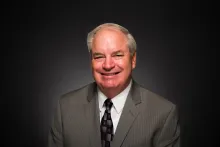
Robin Webber was born in Chicago, Illinois, in 1951, but has lived most of his life in California. He has been a part of the Church of God community since 1963. He attended Ambassador College in Pasadena from 1969-1973. He majored in theology and history.
Mr. Webber's interest remains in the study of history, socio-economics and literature. Over the years, he has offered his services to museums as a docent to share his enthusiasm and passions regarding these areas of expertise.
When time permits, he loves to go mountain biking on nearby ranch land and meet his wife as she hikes toward him.
