
Don Ward
This transcript was generated by AI and may contain errors. It is provided to assist those who may not be able to listen to the message.
During Gladys Allward's harrowing journey out of war-torn Yangchen during the Communist takeover, she faced one morning, she was faced one morning, with no apparent hope of reaching safety. The 13-year-old girl tried to comfort her by saying, don't forget you told us about Moses in the wilderness, to which Gladys Allward replied, yes, my dear, but I'm not Moses. The young girl replied, yes, but God is still God. This woman, and how to pronounce her name, I looked at sources on the internet and found it still difficult. It's spelled A-Y-L-W-A-R-D. Allward, because the British drop off consonants at times. One time I was in, one and I were in Massachusetts for the feast, we went out to Cape Cod and we got lost, and it's easy to get lost on Cape Cod, all kind of winding little roads and heavily forested, and sort of our benchmark road was spelled B-A-R-N, which to me is barn, and then S-T-A-B-L-E, which to me is stable. So, Faowio's driving around, sort of trying to find her way, and this old gentleman was there by the side of the road doing something, and I stopped and I said, can you tell us how to get back on Barnstable? He said, what's that, Sonny? I said, can you tell us how to get back on to Barnstable? You mean Bostable! Well, to get back on Bostable, you go down and you take a left and you take a right and then you do this and that and the other.
So, the British sometimes leave out a lot of consonants, but this lady, Gladys Alwood, was born in Edmonton, North London in 1902. She always wanted to do something to help other people. She worked as a domestic that's a house made at an early age, but always had an ambition to go overseas as a missionary and studied with great determination to be fitted for the role only to be turned down because of her academic background. They said, well, she just, it was inadequate.
And so, the China mission to which she applied was convinced that it was not possible for her to learn the language at such an early age. But in 1932, having worked for Sir Francis Young husband, she spent her life savings on a train passage to Yangqian, Xianqi Province in China. The perilous trip took her across Siberia with a Trans-Siberian Railway where she was forced to get off the train and walk to her destination.
On her arrival in Yangqian, she worked with an older missionary, Jenny Lawson, to found the N-I-N-N, the N, of the eight happinesses. For a time, she served as an assistant to the Chinese government as a foot inspector. Guess what a foot inspector is? By touring the countryside to enforce the law, the new law, against foot binding of young Chinese girls. So there was a law in China up until in the 1930s. Finally, the law was passed that forbade the binding of the feet of girls.
She met with much success in a field that had produced much resistance, including sometimes violence, against the inspectors. She became a Chinese citizen in 1936, was a revered figure among the people taking in orphans and adopting several herself, intervening in a volatile prison riot, advocating prison reform, risking her life many times to help those in need. In 1938, the region was invaded by Japanese forces, and she led over 100 orphans to safety over the mountains.
Despite being wounded herself, she never married. She returned to Britain in 48, where after 10 years she sought to return to China. However, she was denied reentry by the Communist government and instead settled in Taiwan in 58. There she founded the Gladys Award Orphanage, where she worked until her death in 1970. Now here's an interesting thing. This story was so dramatic and so reflective of heroin acts that a movie was made about her life in 1958.
And this is just a reflection of how Hollywood changes the facts in presenting, based on a true story, movies. A film based on her life, titled The End of the Sixth Happiness. So you probably find this movie in the video store on Amazon, some of those places that sell videos. The End of the Sixth Happiness was released in 1958. It drew from the book, titled The Small Woman, by Alan Burgess. Although she found herself a figure of international interest, thanks to the popularity of the film and television and media interviews, she was mortified by her depiction in the film.
In The Many Liberties, it took the tall Swedish actress Ingrid Bergman was inconsistent with her small stature dark hair and cockney accent. So you have a tall Swedish blonde playing the role of a small and stature dark-haired woman. The struggles of her life and family, in effect, the struggles of her family to effect her initial trip to China were disregarded in favor of a movie plot of an employer condescending to write to his old friend Jeannie Lawson.
Also, her dangerous complicated travels across Russia and China were reduced to a few rude soldiers, after which Hollywood's train delivered her neatly to her destination. Many characters and places were changed, even when these names had significant meanings, such as those of her adopted children and the name of the inn instead of for the Chinese belief in the number of eight as being auspicious.
So they changed eight to six. For example, in a real life she was given the name, a Chinese name, that meant virtuous one. However, the name given in the film was one that meant true or real love. Colonel Lennon was portrayed as half European, a change which she found insulting to his real Chinese lineage. She felt her reputation was damaged by the Hollywood embellishment love scenes in the film. Not only had she never kissed a man, but the film's ending portrayed her character leaving the orphans to rejoin the colonel elsewhere, even though in reality she did not retire from working with orphans until she was 60 years old.
She died on her 68th just before she turned 68 years old. There are several books and articles and so on on the life of Gladys Elwood. It's an inspiring story for someone who might want to read her biography or whatever. But once again, back to this journey of trying to get these orphans over the mountain to safety and where she was ready to give up. And the 13-year-old girl trying to comfort her and saying, do you remember the story of Moses and what you told about there?
And her saying, but I'm not Moses, but the girl saying, but God is still God. So that is our title today, God is still God. Does Scripture verify the young girl's assertion? Well, let's look at Malachi chapter 3 and verse 6. In Malachi chapter 3 and verse 6, we're going to see here that God is still God. In Malachi 3 and verse 6, For I am the Eternal, all caps, L-O-R-D, Lord, meaning the Eternal, the ever-existing one. I am the Eternal. I change not. God is still God.
I change not. Therefore, you sons of Jacob are not consumed. A similar record of God, of God's Son, is given in Hebrews chapter 13 and verse 8.
Let's notice that Hebrews 13 and verse 8. This is one of the most misquoted, misapplied, probably more misapplied scriptures than many scriptures in the Bible. In Hebrews chapter 13, Jesus Christ the same yesterday, today, and forever. So what does God mean when he says that he is the Eternal? I change not. What does Paul mean when he writes, states that Jesus Christ is the same yesterday, today, and forever. Some think that it means that God will do the same thing today in relationship to man that he did in times past. Now certain elements of that might be true. If that were true in the ultimate sense, we would still be offering animal sacrifices. I am the Eternal, I change not. So one time, man approached God through animal sacrifice. If that were true, perhaps we would still be in the Garden of Eden. See, God has dealt with man in different ways, at different times through the ages. It's called administrations or dispensations. Let's look at Ephesians chapter 3. God is still God. In Ephesians chapter 3, and we're talking about now, what does it really mean that I am the Eternal, I change not. Jesus Christ the same yesterday, today, and forever, because it is obvious that God has dealt with humankind in different ways, in different times from the Garden of Eden to the present time. Ephesians 3.1, for this cause I, Paul, the prisoner of Jesus Christ, for you Gentiles, the epistle to the Ephesians was a prison epistle. If you have heard of the dispensation, the oeconomia, the administration, a period of time of the grace of God which has given me to youward. So we are in that dispensation, that administration of the grace of God. It's also called in more, I guess you'd say, common parlance, it is called the church age. We're in the church age that began in 31 A.D. with the sending of the Holy Spirit and 3,000 people were added to the church on that day. So we are in, I'm not going to go through the seven administrations, but we are in the sixth administration.
If you're looking at Ephesians 1.10, we're looking forward to this one that is mentioned in Ephesians 1 and verse 10. That in the dispensation, the oeconomia, a period of time in which God deals with people in certain ways. He dealt with Adam and Eve in a certain way. He dealt with the pre-flood world. He dealt with Abraham, Isaac, and Jacob. He dealt with Israel. We're now in the church age. That in the dispensation of the fullness of times, he might gather together in one all things in Christ, both which are in heaven and which are on earth, even in him.
So that is the time that we're looking forward to when all things are gathered together and him in the dispensation of times. When God says that he is the Eternal, that he changes not, or when it says that Jesus Christ is the same yesterday, today, and forever, it means that their essential being, their character, does not change. Both are long-suffering, merciful, not willing that any should perish. It means that they have always been, and that they have always had these certain qualities and characteristics, that they are of love and of compassion.
None of God's essential qualities and characteristics have changed through the ages. Even back in eternity, before the angelic realm was created, the angelic realm was created before the physical realm, as in Job 38 verses 5 through 7, when the morning stars sang for joy when they saw the physical creation, that going through the ages, before the angelic realm, before the physical realm, before the creation of humankind, before the dealing with human beings in different ways and different times, God has not changed. His essential qualities and characteristics, God is still God, and He always will be. Israel forgot that God is still God. We go to Psalm 78.
Psalm 78 is one of the great summary chapters of the Bible. It basically recounts the history of Israel from the time they were called out of Egypt to the time that they were in the Promised Land, from the time of pitching the tabernacle at Shiloh to the time of David pitching a tabernacle on Mount Zion, and God choosing Mount Zion, which is a type of the church. So let's read a few verses here in Psalm 78 about God is still God, that Israel forgot. Give ear, O my people, to my law, and cline your ears to the words of my mouth.
I will open my mouth in a parable. I will utter dark sayings of old, which you have heard and known, and our fathers have told us. We will not hide from their children, showing to the generation to come the praises of the Lord. So that was one of the things, of course, that God intended that parents do, that they pass on to each generation the great truths of God, that they understand that God is God.
And His strength and His wonderful works that He hath done, He established a testimony, a witness, a record, in Jacob, and appointed a law in Israel, which He commanded our fathers, that they should make them known to their children, that the generation to come might know that even the children which should be born, who should arise and declare them to their children, that they might set their hope in God and not forget the works of God, but keep His commandments. See, this thing about understanding who God is, and God is still God, is one of the principal themes of the Bible. And one of the principal warnings of the Bibles, do not forget that God is still God.
And might not be as their fathers a stubborn and rebellious generation, a generation that set not their heart a right, whose spirit was not steadfast with God, the children of Ephraim being armed and carrying bows turned back in the days of battle, they kept not the covenant of God, refused to walk in His law, forgot His works and His wonders, that He had shown them. And then it recounts many of the things that God had done for them through the ages.
Look at verse 20, Behold, He smote the rock that the waters gushed out and the streams overflowed. Can He give bread also? Can He provide flesh for His people? Therefore the Eternal heard this and was angry, so a fire was kindled against Jacob, and anger also came up against Israel, because they believed not in God and trusted not in His salvation, though He had commanded the clouds from above and opened the doors of heaven, and had rained down manna for them to eat, and had given them the corn of heaven, and man did eat angels' foods, and he sent them meat to the fool.
Then it goes on and on, recounting the ups and downs and showing that God is still God. So we ask ourselves this afternoon, is God still God in your mind and heart? And if you say that He is, what impact does it have on your life?
What impact does it have on my life? We have made the confession. Yes, we believe that God is still God. The mantra of the age is that God is love, and that He loves everyone. This mindset is expressed today in terms of equal rights, toleration, some call it political correctness.
And as I mentioned in the news items, Hillary Clinton has just released a campaign video of pictures of two young beautiful girls kissing and saying that she is the champion of equal rights and opportunity for all people, especially the LGBT agenda.
LGBT standing for lesbian, gay, bisexual, and transgender. Satan loves the LGBT agenda because it strikes at the heart of the sanctity of marriage and family. Satan hates humankind and he's on a mission to destroy the heirs of God and join heirs with Jesus Christ. And so we have people who are once in the faith, who have forgotten that God is still God, no matter what is come and gone, no matter what man says, no matter what man has done, is God still God or is He not? So as the family structure continues to deteriorate, so will society. Seducers and evildoers will wax worse and worse as Paul writes in 2 Timothy 3.
If a person says that he or she believes in God and that God in his essential being does not change, as Malachi 3.6 declares, then how does a person come to know anything about God? Do we just make up a mantra that, oh God is love, He loves all of God's children? Which is a true statement, but what is the definition of love?
See, God is spirit and thus invisible unless He chooses to manifest Himself in some other form. So God is beyond the physical. Beyond the physical or after the physical is called metaphysical. The word meta in Greek means after. So after the physical, then what? What is beyond the physical? Well, God is beyond the physical. You see, in the hierarchy of creation at the very top, of course, would be the angelic realm for now. As Paul writes in Hebrews chapter 2 that we are now made a little lower than the angels, but in resurrection we're going to be heirs of God and joiners with Jesus Christ, and of course we'll even judge angels. There are four ways. Some may argue this. Some might say there are five ways. Basically, the world, generally there is agreement that there are at least three ways whereby humans can attain knowledge. Empirical knowledge, sense knowledge. Knowledge through the five senses, through much of it is through touch and sight.
Sense knowledge, there's experiential knowledge, the knowledge gained through experience, and there is human reasoning, putting two and two together, as they say. And then the fourth way in which the so-called scientific world denies, and that is through revelation. The so-called scientific world in much of mankind denies revelation. Let's turn to 1 Corinthians 2 verse 9.
When it comes to believing in God and knowing what His will is, you are left to one of these three ways, and basically it's human reasoning, or revelation. So here's God who is spirit, invisible.
So how are you going to come to know God? How are you going to know that God is still God?
How are you going to believe Him? How do you know what to believe? Does it just what you make up and say, oh, God loves everybody, and that since He loves everybody, if people love one another, that's what is important? Now, there are elements of truth in that, but if you go that way in the ultimate sense and destroy the very fabric of society, the family in that which parallels what God is doing in bringing sons and daughters to glory in His family, you will, in essence, create chaos and confusion, and that's what we see in the world today. In 1 Corinthians 2.9, "...but as it is written, I hath not seen nor ear heard, neither has it entered into the heart of man the things which God has prepared for them that love Him. But God hath revealed them unto us by His Spirit, for the Spirit searches all things, yea, the deep things of God." Now, John 16 and verse 13 says, the Spirit does not speak of itself. The Spirit does not go around speaking audibly, whispering in your ear or calling out from the heavens, but we have verses of view that we will pursue, but especially we know that John 6.63, the words I speak, they are spirit and they are life. We know the Romans 10.14-17, how shall they hear without a preacher? How shall they call on Him, of whom they have not heard? So God raised up the church, commissioned human beings to preach the Word.
The Spirit of God and the Word of God convicting the gainsayer.
So God has revealed them unto us by His Spirit, for the Spirit searches all things, yea, the deep things of God, for what man knows? The things of man save the Spirit of man which is in Him.
And God has given human beings, certain faculties, akin to God in that He can think, He can reason, He can think in the abstract, He can think about immortality. What happens after life, after death? And so we have the elite now wanting to live forever. Yea, we want to live forever, but we don't want to do it the way that the Bible reveals that you can. We want to work it out some way, be a combination of robotic material, whatever that is, and human beings, and then come to the point that we can design what kind of human being we want to be through genetic engineering. For what man knows the things of a man save the Spirit of man which is in Him? And even so, the things of God knows no man but the Spirit of God. For we have not received the Spirit of the world, but the Spirit which is of God, that you may know the things that are freely given to us of God. There's no other way that you're going to know. It is through revelation.
It is through the Spirit and Word of God. I choose to believe in God's revelation to humankind through His Spirit and through His Word. When humans decide for themselves what God is like, what God would and would not do, then they are, of course, repeating the fatal old sin of Adam and Eve. They choose for themselves what is right and what is wrong. They partake of the knowledge of the tree of good and evil. They make God over into their own image and thus become their own God. Yet many still profess to believe in God. Now let's look at Psalm 50. Psalm 50 is an end-time prophecy about how things are going to be. Of course, there are some interim things as well. One of the things I think we tend to forget, this is the Psalm of Asaph, it says, but many of the Psalms were written by David. We'll read a couple of those later.
David, according to Acts 2, was a prophet, but this is not written by David.
The mighty God, even the Lord, this is Psalm 50, verse 1, the mighty God, even the Lord, hath spoken and called the earth from the rising of the sun unto the going down thereof. He's always been God, regardless of what has come and gone in the course of human history, angelic history, or any other history. Out of Zion, the perfection of beauty, God hath shined. Of course, you can take that as in the physical realm, a physical place, or how you are going to shine in resurrection as glorious, radiant spirit beings.
Our God shall come and shall not keep silence, a fire shall devour before him.
It shall be very tempestuous round about him. He shall call to the heavens from above and to the earth that he may judge his people. Gather my saints together unto me. See, our God is going to come. This is the coming, what is called the Second Coming. Gather my saints together unto me, those that have made a covenant with me by sacrifice. And we go under that watery grave and say that we are going to sacrifice to put to death the old man, be raised in newness of life.
And the heavens shall declare his righteousness, for God is judge. We'll talk about righteous judgment. Now that he begins, then, to talk about what is God really expected of his people through the ages. A very short summary. We're not going to read all of that.
And we look at verse 14. One of the things that God is really looking for from his people, offer unto God thanksgiving, that is a spiritual sacrifice, and pay your vows unto the most high. And call upon me in the day of trouble, I will deliver you, and you shall glorify me. Now he switches gears to those who have made God over in their own image, who have reduced God to their level. But unto the wicked God said, What have you to do to declare my statues, or that you should take my covenant in your mouth, seeing that you hate instruction?
You see, if you didn't hate instruction, you would not make God over in your image. You would not say, Well, my God, the God that I worship, he would not do such and such. I made up my mind. That's true.
And it may be in direct contradiction to the Bible.
Seeing you hate instruction and cast my words behind you, when you saw a thief, you consented with him, have been a partakers with adulterous. You gave your mouth to evil, and your tongue framed deceit. You sat and spoke against your brother. You slandered your own mother's son. These things have you done, and I kept silence. Oh, yeah, God will give plenty of slack. And one of the comments I occasionally hear is that, Oh, since I have walked away from that church, and all the rules and regulations, and all the mistreatment that I've endured, life is so much better, and I'm so happy. And you think about 2 Peter 2, where it says, And promising them liberty, they become the servants of putting two things together.
They become the servants of unrighteousness, promising them liberty.
But see what it says. You thought that I was altogether such a one as yourself.
But I will reprove you and set them in order before your ears. Now consider this, you that forget God, lest I tear you in pieces, and there be none to deliver, who so offers praise glorifies me. And to him that orders his conduct a right, will I show the salvation of God. You thought I was altogether like you.
You made me to be whatever you wanted me to be. You made me say whatever you wanted me to say.
You cast away my instructions. You didn't want any part of that.
So how does God communicate with us? How do we know that God is God? If he's invisible, if he's spirit, if he doesn't go around speaking audibly to us, how do we know? Well, we've covered that a little bit already. Look at Hebrews chapter 1. Hebrews chapter 1.
Hebrews chapter 1 verse 1.
Here it says in Hebrews chapter 1 and verse 1, God, Theos, this is God the Father, who at sundry times in different manners spoke in times past unto the fathers by the prophets.
Now in Ephesians 2.20 it says that the church is founded upon the prophets, the apostles, with Jesus Christ being the chief cornerstone.
The Bible is basically brought to us by the prophets, the apostles, Jesus Christ. Of course, God is overall and inspiring all. The book of Revelation is a revelation of God that he gave to Christ. It says it clearly. Revelation 1.1.
God, who at sundry times in different ways spoke in times past unto the fathers by the prophets, hath in these last days spoken to us by his Son, whom he hath appointed heir of all things, by whom also he made the worlds. So we hold that book in our lap, or wherever we hold it.
The Jews were called out to be the model nation. In Romans chapter 3, Paul asks the question, well, what advantage does the Jew have anyhow? And he says, that unto them were committed the oracles of God. They were given the very word of God and were he has chosen people to be the chosen nation to bring all nations into relationship with him.
That is now passed on to the church. That is not to say that God is not going to restore Israel and the millennium. He will, and many other nations as well.
So when humans decide to choose for themselves what God is like and what he is not like, they are of course repeating the age-old sin, the fatal sin of Adam and Eve. The same body of scriptures that proclaim that God is love also defines what love is.
So you want to talk about, well, God is love and he loves everybody, and so he does. And we have the course of the saying that God loves the sinner and hates the sin. We have what you see in behind the goal post in the end zone. You'll probably see it tomorrow if you watch NFL John 3 16. For God so loved the world that he gave his only begotten son, that whosoever should believe in him should not perish but have everlasting life.
Turn forward there, please, to 1 John 4 verse 8.
We see twice in 1 John 4 that God is love. Now in chapter 5 we're going to see that love is defined.
Love is defined. In 1 John 4 verse 8, let's read verse 7. Beloved, let us not love one another, for love is of God.
And every one that loves is begotten of God and knows God. He that loves not knows not God, for God is love. See, that is a part of his essential character and being that has been, I would venture to say, that love has been the ultimate quality characteristic of his being in eternity and will always be.
Now look at verse 16.
Hereby I perceive with the love of God because he laid down his life for us, and we ought to lay down our lives for the brethren.
And that's in 1 John 3.16. So it's very similar to John 3.16. Now we look at 1 John 4.16, and we have known and believed the love that God has to us. God is love. Why would you give your only begotten Son?
Why would you do the things that you have done, even creating humankind in the first place?
God is love, and he that dwells in love dwells in God and God in him. God is love.
So we go down to chapter 5. Of course, all of this should be read in one sitting in a continuous manner, which obviously you can do. Chapter 5, verse 1, Whosoever believes that Jesus is the Christ is begotten of God.
And everyone that loves him that beget him loves him also that is begotten of him.
Another way of saying that if you claim to love God, then you have to love your brother.
That's in chapter 4 as well. By this we know that we love the children of God when we love God and keep his commandments.
By this we know that we love the children of God when we love God and keep his commandments.
For this is the love of God that we keep his commandments, and his commandments are not grievous.
So the apostle John, the apostle of love, is saying that. Yet he is the apostle that more than any other apostle says, keep the commandments. So love is the keeping of the commandments. See, we don't know how to how to love in any sense, in the spiritual sense, unless God reveals that to us. So let's look at these scriptures in John, that I said that this apostle emphasizes so much the keeping of the commandments. Look at 1 John 2 verse 3. 1 John 2 verses 3 and 4, no matter who you're talking to, who claims that God is just love, all we have to do is love. There's nothing else. I mean all of those rules, regulations, commandments, whatever it is, that's all done away. It's all in the past, whatever they may say.
These two verses here refute that and label the person for what they are. It is irrefutable.
And hereby we know that we know him if we keep his commandments. And verse 4 is the label.
He that says, I know him and keeps not his commandments is a liar, and the truth is not in him. Now this is the apostle of love who is writing these things.
Now you look at the succeeding verses there. But whoso keeps his word in him barely is the love of God perfected.
Hereby know we that we are in him. How do we know? Because we're keeping the word.
He that says he abides in him ought himself also to walk even as he walked. Well, how did Christ walk?
Now, other passages we look at verse John 3 and verse 22. Verse John 3 and verse 22. Verse 22, and whatever we ask we receive of him because we keep his commandments and do those things that are pleasing in his sight. And this is the commandment that we should believe on the name of his son Jesus Christ and love one another as he gave us commandment.
And now in chapter 4, verse 21, and this commandment have we from him that he who loves God loves his brother also.
Now in chapter 5, verses 1 through 3, we have already read.
Now we go to the Gospel of John. See the Apostle of John. See, this is the Word of God.
This is not based on empirical or sense knowledge. It is not based on experiential knowledge.
It is not based on human reasoning. It is based on revelation. It is based on the Word of God. In the Gospel of John, chapter 14, verse 15.
Verse John 14, verse 15.
If you love me, keep my commandments. Oh, I love Jesus. I just love Jesus.
Jesus is the reason for the season. We love Jesus. I love Jesus.
This says, if you love me, keep my commandments. You look in chapter, or look further down at verse 21.
He that hath my commandments and keeps them, he it is that loves me.
How could it be any plainer? And he that loves me shall be loved in my Father, and I will love him, and will manifest myself to him. And now in chapter 15, verse 10. Chapter 15, verse 10. If you keep my commandments, you shall abide in my love. Even as you have kept my Father's commandments and abide in His love, these things have I spoken unto you, that my joy might remain in you.
In 1 John, chapter 1, he talks about one of the reasons why I'm writing to you is that my love, that your joy may be full.
These things have I spoken unto you, that my joy remain in you, and that your joy might be full.
This is my commandment, that you love one another, as I have loved you, greater love had no man than this, than he lay down his life for his friends.
You are my friends, if you do whatsoever, I command you.
I mean, the Apostle of love. What does he emphasize as to what love really is?
The same God that defines love, and the same author that defines love, is none other than the Apostle John, the Apostle of love, as he's called.
So we now go to 1 John 3, verse 4.
1 John 3, verse 4.
You see, every person, not because I'm giving the sermon or anything like that, but every person in the world needs to understand what this sermon is about and follow the reasoning, the logic, the scripture, the revelation that is behind it.
Every word basically is backed up by scripture.
So the same Apostle that defines love is the same Apostle.
The only place in the Bible just really says this in this way is 1 John 3 and verse 4.
Whosoever commits sin transgresses also the law, for sin is the transgression of the law.
Paul writes, I would not have known sin unless the scripture said, you shall not commit adultery. Paul would not have known sin if the scripture had not said, and you could pick out any one of the commandments. That just happens to be the one, I don't know if it's happenstance or what, that he used there. He goes on to say the commandment is right, just, holy good. The commandment is spiritual. So this notion that you can just make God over in your own image. God is also a God of judgment.
God through Christ is going to judge the world in righteousness. Look at Psalm 9 and verse 8. Psalm 9 and verse 8. Remember I said David was a prophet. There's much prophecy in the Psalms.
Psalms might be one of the most neglected books in the whole Bible, yet it's the longest, and it probably has more comfort and consolation than any other book in the Bible. Psalm 9 verse 8.
And he shall judge the world in righteousness.
Psalm 119 verse 172 gives this definition of commandments. All your commandments are righteous. And he shall judge the world in righteousness. He shall minister judgment to the people in uprightness. Now look at Psalm 96 and verse 13. Psalm 96 and verse 13.
Psalm 96 verse 13.
Paul, in essence, is quoting from this when we read just a moment. We'll read from Acts 17 in Psalm 96 and verse 13.
Before the Lord, for He comes, for He comes to judge the earth, He shall judge the world with righteousness and the people with His truth. Now look down at Psalm 98. Psalm 98 and verse 9.
Before the Lord, for He comes to judge the earth with righteousness, shall He judge the world and the people with equity. Now hurriedly look at Acts chapter 17. Paul on Mars Hill, Paul went to the epicenter of Greek philosophy, culture, learning, education, politics, philosophy, pagan religion. He went to the Areopolis and to Mars Hill, the principal point where they gathered in Acts 17 and verse 31. Because He hath appointed a day in which He will judge the world in righteousness. All your commandments are righteousness. You're going to be judged by the Word of God by that man whom He hath ordained, the judgment is given to Christ, whereof He hath given assurance unto all men, and that He hath raised Him from the dead.
So it is no wonder that God said that He is the Eternal, that He changes not.
Therefore, you sons of Jacob are not consumed. If God administered judgment without mercy today, all of us would be destroyed. Because the wages of sin is death, and we have all sinned, all have sinned and come short of the glory of God. The death penalty is on or has been on every person who's ever lived, who is alive now or will live in the future, because there's none righteous, no not one. All of man's righteousness is his filthy rags. There's only one person who has lived in the flesh without sin, and that is Jesus Christ, the righteous. God has called us now to honor, to glory, and eternal life. So what should we do? Look at 1 Thessalonians. 1 Thessalonians. 1 Thessalonians is Paul's first epistle, probably written early 50s, maybe a little bit even before that. In 1 Thessalonians, chapter 5. In 1 Thessalonians, chapter 5, verse 8, But let us who are of the day be sober, meaning be vigilant, be watchful.
It's not sober. Of course, you need to be sober in the sense of refraining from that that would make you drunk. Some people are drunk on their own intelligence, and they're lost in their own intelligence and their own human reasoning. But let us who are of the day be sober, putting on the breastplate of faith and love, and for a helmet, the hope of salvation, permeating the mind all over the hope of salvation, what lies before.
For God hath not appointed us to wrath, but to obtain salvation by our Lord Jesus Christ, who died for us that whether we wake or sleep, we should live together with Him. Wherefore, comfort yourselves together and edify one another, even as you do. Now we beseech you, brethren, to know them which labor among you and are over you in the Lord. And so we have this admonition. Yes, God is still God. He will always be God. And we will close today with a great psalm. One has turned to Psalm 145. This psalm depicts, describes what we will be doing as the millennium begins as we look back at what God has done for us.
Yes, we can get over the mountain with the orphans, even a woman with orphans in the face of Communists, Communism, and the soldiers, and whatever all obstacles that she faced.
For she, like we, sometimes get discouraged and think the mountain is too high, the trail is too tough, or whatever else we might think. Yet, here's what God says for those who overcome, those who understand, have internalized that God is still God. And what this psalm is like, it's like you're in the millennium. You've been resurrected as a glorious radiant spirit being, and you're looking back, some of you are just looking forward.
I will extol you, my God, O King, and I will bless your name forever and ever. Every day will I bless you, and I will praise your name forevermore. Great is the Lord and greatly to be praised, and His greatness is unsearchable. One generation shall praise your works to another, and shall declare your mighty acts. See, once that millennium begins, peace is going to rain, and it's going to continue. I will speak of the glorious honor of your majesty, of your wondrous works, and men shall speak of the night of your terrible acts, the might of your terrible acts.
And I will declare your greatness. They shall abundantly utter the memory of your greatness, of your great goodness, and shall sing of your righteousness. The Eternal is gracious and full of compassion, slow to anger and of great mercy. The Eternal is good to all, and His tender mercies are over all His works. All your works shall praise you, O Eternal, and your saints shall bless you.
They shall speak of the glory of your kingdom and talk of your power, to make known to the sons of men His mighty acts, and the glorious majesty of His kingdom. Just think about if you're in the kingdom of God and you're working with human beings, and you have experienced all that you've experienced, and looking back, what that will be like. Your kingdom is an everlasting kingdom, and your dominion endures throughout all generations. The Lord upholds all that fall, and raises up all that be bowed down. The eyes of all wait upon you, and you gave them their meat, and do season. You open your hand, and satisfy the desire of every living thing. The Eternal is righteous in all His ways, and holy in all His works. The Eternal is nigh unto all them that call upon Him, to all that call upon Him in truth. He will fulfill the desire of them that fear Him.
He also will hear their cry and will save them. The Eternal preserves all of them that love Him, but all the wicked will He destroy. My mouths shall speak the praise of the Eternal, and let all flesh bless His holy name forever and ever.
So we should be sobered and filled with joy that God is still God, and always will be.
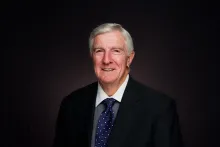
Before his retirement in 2021, Dr. Donald Ward pastored churches in Texas and Louisiana, and taught at Ambassador Bible College in Cincinnati, Ohio. He has also served as chairman of the Council of Elders of the United Church of God. He holds a BS degree; a BA in theology; a MS degree; a doctor’s degree in education from East Texas State University; and has completed 18 hours of graduate theology from SMU.
