
David Mills
This transcript was generated by AI and may contain errors. It is provided to assist those who may not be able to listen to the message.
Good morning, everyone! Good morning! And welcome the third day of the Feast of Unleavened Bread.
As it was brought out, this is the same weekly setting that when Jesus died, this will be the day late in the afternoon that he was resurrected. And by the way, it would begin for Pentecost. Tomorrow after the Sabbath, that would be tomorrow, would be day number one. And the 50th day, of course, will be Pentecost. We have a good Passover on Tuesday night, and good night to be much observed. I've heard good reports on that on Wednesday night, and then a very good service on Thursday. Very exciting day. And here we are the third day. So yes, these days are here. No regular puffed up bread during these seven days. Instead, we're eating lots of good old matzo, flatbread. Well, why do we keep these days? Most of the world certainly is not. They're not putting out 11 for seven days. Why do we keep these days? Because God commands us to. And we're keeping a festival to our God. Each day is a festival day. Tomorrow will not be a holy day. You can do your work. And then Monday, Tuesday, Wednesday will be a holy day. But each day is a festival day, all seven days. We're keeping appointments with God, and we're learning about His great purpose and plan. Our booklet is a wonderful booklet. Let me just hold it up. Everybody should have a copy of it. And that is God's Holy Day plan, The Promise of Hope for All of Mankind. I think all of us are very familiar with the material that is in this booklet, but it explains about God's Holy Days, proves that we should be keeping them today, and also what each of the Holy Days represents. Passover, Feast of Unleavened Bread, Pentecost, Trumpets, Atonement, Feast of Tabernacles, and Last Great Day. What a wonderful purpose and plan God is working out as portrayed in the Holy Days. Well, today we want to especially focus on the Feast of Unleavened Bread. This time of the year, our minds are on the Passover and the Feast of Unleavened Bread. What is the only chapter in the Bible that has both the Sabbath, the weekly Sabbath, and all seven of the annual... is chapter 23. Let's go ahead and turn to Leviticus 20, and read those verses that pertain to this feast, the Feast of Unleavened Bread. It's always good to do this, to remind ourselves what we are doing and why we're doing it. Leviticus 23, and the first three verses, well, verses two and three per claim, verse three pertains to the Sabbath day. And then in verse four, we get to the Feast of Unleavened Bread. These are the Feast of the Lord, holy convocations which you shall proclaim at their appointed times. On the 14th day of the first month at twilight is the Lord's Passover. And so on the 14th day, that makes it clear what day the Passover comes on. It is the 14th day, not the 15th, as some people believe. Some people somehow come up with the idea that Passover is on the 15th. No, it says plainly here that it's on the 14th. Of course, other verses bring out the same thing. But then in verse six, we get to this feast. On the 15th day of the same month is the Feast of Unleavened Bread to the Lord. Seven days you must eat unleavened bread. The first day, that was Thursday this year, this past Thursday, you shall have a holy convocation. Do no customary work. The last part of verse eight, the seventh day, which will be next Wednesday, is a holy convocation. And it is an annual Sabbath day. No work to be done on that day as well. All right. There is biblical proof that Jesus as a child kept the Feast of Unleavened Bread. Where is that Scripture? Anybody remember where that is?
It's in the Gospels.
Okay. Not Matthew, but it is in Luke. Okay, somebody say Luke. Let's turn to Luke chapter two. It's good to be reminded of some of these scriptures that we've heard before. Maybe not turned to recently. In Luke chapter two and verse 41, we're going to see here that Jesus as a child from an anthe right on up year by year would have kept the Feast of Unleavened Bread. In Luke chapter two and verse 41, his parents went to Jerusalem every year at the Feast of the Passover. The Passover often refers to the whole eight-day period, as we'll see here. Verse 42, when he was 12 years old, well, they had been going up already year by year by year, so when he was 12 years old, they went to Jerusalem according to the custom of the Feast. Notice verse 43, when they had finished the days. See, Passover was just one day long, so this shows the Feast of Unleavened Bread. When they had finished the days, and they returned, that's when Jesus lingered behind. They lost track of him for two or three days, and then they found him in the temple with the teachers there, as we are very familiar with that story. So Jesus as a youth would have kept the Feast of Unleavened Bread year by year. There are references in a book showing that the early church kept the Passover. Which book is that?
Okay, 1 Corinthians is a chapter, but before that, it was customary or a reference anyway to the church keeping the Feast of Unleavened Bread. The book of Acts shows the early church references here keeping the Feast of Unleavened Bread. Let's go to Acts chapter 12, and verse 1. 1. Herod the king stretched out his hand to harass some of the church. The church was being persecuted. He killed James, the brother of John with a sword. Verse 3. Because he saw that it pleased the Jews, he proceeded further to seize Peter also. Now it was during the days of Unleavened Bread. Here's a reference to the Feast of Unleavened Bread. Let's also go to Acts chapter 20, and verse 6. There's another reference to the Feast of Unleavened Bread here. So two references in the book of Acts of the church keeping the Feast of Unleavened Bread. Acts chapter 20, and verse 6. We sailed away from Philippi after the days of Unleavened Bread. So Paul is in Gentile territory, and a reference to the Feast of Unleavened Bread. Let me also bring out that there is, in secular history, a reference to the church keeping the Feast of Unleavened Bread. Polycretes. Who was he? He was a disciple of Polycarp. Well, who was Polycarp? He was a disciple of John. So there's a reference in Eusebius' ecclesiastical history. Ecclesiastical means church. I don't have an exact date for Eusebius. I believe around the 300s or so, three to four hundred in that range, he was writing in history of the church. And he writes about what happened in the time of Polycretes around the end of the second century, about the year 197. And you will find in chapter 24 that Polycretes defends keeping the Passover on the 14th because the church was already getting away from it, the Western Roman church, to keeping Easter. And Polycretes defends keeping the Passover and also mentions the Feast of Unleavened Bread. He said, we, here's what Polycretes said, we therefore observe the genuine day, neither adding thereto nor taking thereto from as far as the Passover. He mentions John and Polycarp. He mentions Philip. He said, all of these observed the 14th day of the Passover according to the Gospel, deviating in no respect from following the rule of faith. Moreover, I, Polycretes, and my relatives, always observed the day when the people threw away the leaven, a reference to keeping the Feast of Unleavened Bread. So here, about a hundred years after the New Testament era had ended after the death of John, we have a reference to the church continuing to keep the Feast of Unleavened Bread. Brother, what I'd like for us to think about today is what a wonderful thing it is, the spring festivals Passover and the Feast of Unleavened Bread. And the title of the sermon is Passover and Feast, Perfect Solution for Sin.
And we're going to see that God has provided a perfect solution for sin. Sin is the cause of all of our troubles in our own lives as well as in the world. You know, think of this. If the world did not have sin, there would be no problems. Not any problems at all. There'd be no murder, there'd be no bloodshed, there'd be no war, there'd be no corruption, no crime and evil.
Sin is the cause of all of our problems. And that's true of you and me. If we had no sin in our lives, we wouldn't have any problems in our marriages and any of our relationships and our personal life. So the solution is the Passover and the Feast of Unleavened Bread.
Passover provides forgiveness of sin because we all do sin. And the Feast of Unleavened Bread has us to go on and to begin purging out sin, striving not to sin. And keeping the Passover and the Feast of Unleavened Bread, does it make a difference? It does. It's made a big difference in my life. My first Feast of Unleavened Bread, Passover and Feast of Unleavened Bread was 1960, on the apartment in 1959, 64 years ago. So this is my 65th Passover and Feast of Unleavened Bread. Has it made a difference in my life? It has. Keeping the Passover and the Feast of Unleavened Bread.
Tell you what, sin brings upon us the death penalty. We've read that verse many times, Romans 6 and verse 23. Sin brings the death penalty upon us. And Romans 3 verse 23 says that all have sinned. And John 1 John chapter 1 says that if we say we have no sin, we lie.
The truth does not end us. So God has provided a solution for our sins. And once we are forgiven, well, let's turn to Romans chapter 3 and read that scripture, because we need the Passover, each and every one of us. We can't make it without the Passover. There's a scripture in Revelation 12, I believe it's verse 11 that says we overcome by the blood of the Lamb.
That's how we overcome. We have sin in our life, and we overcome that sin by the blood of the Lamb. We put that blood up on the door post of our lives, like the Israelites put the blood of the Lamb up on the door post. We put that blood of Christ up on the door post of our lives, and it spares us from the death penalty. In Romans 3 and verse 23, all have sinned and come and fall short of the glory of God. Being justified freely, my margin says, without any cost by his grace through the redemption that is in Christ Jesus, whom God set forth to be a propitiation by his blood through faith to demonstrate his righteousness, because in his forbearance, God is so forbearing, God had passed over the sins that were previously committed.
So those sins that have been committed, you know, the past is taken care of. The death penalty is lifted. Our sins brought upon us the death penalty. That penalty has been lifted. We've been set free. You know, one thing I did in the ministry over the years, I went into prison many, many a time to visit prisoners, inmates, and I would go in. The doors would unlock. Already, arrangements had been made. The doors would unlock. As I came in, usually another set of doors would then unlock further in. There was real security in most of these prisons, and there would be a visiting room that I would eventually come to and meet and talk with the prisoner.
But it's always a wonderful thing afterward to go through those doors, and they would open up once again. And finally, I would be out, free, totally out of prison. Well, you know, we were all in prison. The death penalty was upon us, and the blood of Christ, the Passover, had set us free.
Those doors had kept us confined and awaiting the administration of death, were opened up. It's a wonderful thing that has happened for us. But then, after the Passover, there's something that we are to do, the Feast of Unleavened Bread. Let's go to the scripture that was referred to in 1 Corinthians chapter 5, and there's something that we do after the Passover, and that is represented by these seven days of the Feast of Unleavened Bread. We are to strive, then, to put out sin.
We're striving to stop committing sin. And these verses are some of the verses, well, the very best verses in the Bible, explaining what this feast is all about, the very best. 1 Corinthians chapter 5 and verse 6, your glorying is not good. Sin is never good. Do you not know that a little leaven is the whole lump? It doesn't take much sin either to leaven our lives.
Verse 7, therefore purge out the old leaven, that you may be a new lump. We've got some work to do, then, after the Passover, since you truly are unleavened. They were apparently keeping the seven days of the feast, but they weren't unleavened spiritually. And Paul is encouraging them to go on and fulfill the meaning of the Feast of Unleavened Bread. Christ, our Passover was sacrificed for us. And verse 8, therefore let us keep the feast, not with the old leaven, that's the physical leaven, nor with the spiritual leaven of malice and wickedness, but with the unleavened bread of sincerity and truth.
So here's the very meaning of this festival. Once we have been forgiven, our sins, by the Passover, we are to do what Jesus said to the adulteress. He told the adulteress, he did not condemn her, but he said, go and sin no more. So we keep the Passover, our sins are forgiven, and what are we to do? We are to go and sin no more. But to be realistic, we do fall short, as 1 John chapter 1 brings out. We strive not to sin, but we still have some wrong attitudes we fall into. We can even say some things we shouldn't say and do some things we shouldn't do. Christians do commit sin. They need the blood of Christ along the way, and that blood is there.
But we are to strive to purge out sin. What does sin do? Isaiah 59 and verse 1. Let's turn to that. Some of these verses we have not turned to recently. Well, it makes us good to turn to them and let our minds be refreshed, because this very much fits into the Feast of Unleavened Bread and what we are to be busy doing. I've been here for 37 days, but all during the whole year.
Isaiah 59 and verse 1. Behold, the Lord's hand is not shortened that it cannot save, nor his ear heavy that it cannot hear. But your iniquities have separated you from your God, and your sins have hidden his face from you so that he will not hear.
So sin separates us from God. We're cut off from God.
And the only way we can be restored is through the Passover and the Feast of Unleavened Bread. We have to also include the Feast of Unleavened Bread where we are striving to put out sin. So as the title of the sermon, Passover and Feast, Perfect Solution for Sin, God has provided the perfect solution for you and me and for all of mankind, not just us in the church, but for all of mankind. And the world needs Passover and Feast of Unleavened Bread. And soon God is going to provide or give the world Passover and the Feast of Unleavened Bread. He's given us Passover and the Feast of Unleavened Bread now. He's going to give it to all of mankind. Let's just, where are some verses in the Bible that would indicate God is going to give Passover and the Feast of Unleavened Bread to all of mankind? Well, let's first of all begin with the Sabbath, the weekly Sabbath. God is going to give the weekly Sabbath, that day of rest and worship, to all of mankind. Where is that that scripture that says, all flesh will come to worship from one Sabbath to another?
Anybody remember where that is? I'm going to be asking for a little bit of participation if we can provide it. Okay, let's go to Isaiah 66. Isaiah chapter 66.
All of mankind is going to be given the weekly Sabbath day. What a wonderful gift that is going to be. Isaiah 66 in verse 23. It shall come to pass that from one new moon to another, and from one Sabbath to another, all flesh shall come to worship before me, says the Lord. That is in the context of what happens right after Christ returns. Look at verse 15. Behold, the Lord will come with fire and with His chariots like a whirlwind to render His anger with fury. This is talking about the powerful return of Jesus Christ. And then afterward, verse 23, from one Sabbath to another, all flesh will come to worship before God. So yes, the whole world is going to be given the Sabbath day. What a wonderful gift that is.
Six days that can work. That's plenty of time to work. You can accomplish quite a bit in six days. Then a day of rest and a day of worship. Okay, we're saying scripture that shows nations keeping the Holy Days, the annual Holy Days. We all know one. Where is that one? Zechariah 14. Let's turn. Let's turn and read that scripture. It never hurts to be to have our minds refreshed.
In Zechariah 14 and verse 16, it shall come to pass that everyone who is left of all nations, again, this is in the setting of Jesus Christ, having returned to the earth, and everyone that is left of all nations which came against Jerusalem, shall go up from year to year to worship the King, the Lord of hosts, and keep the Feast of Tabernacles. If they don't come, they get no rain. There's some, well, they get no rain. They get no food. I was going to say gentle correction.
When you get hungry, you know, that may not be quite so gentle when your stomach is growing. Anyway, no rain if they don't come. Any nation that will not come to keep the Feast of Tabernacles. Verse 19, this shall be the punishment of Egypt, and all nations that do not come up to keep the Feast of Tabernacles. Okay, there's a scripture that indicates that Jesus Christ himself, when he returns, will be partaking of the Passover. Where is that?
Anybody? It's on the night at the Passover, on the night before he died, that final Passover. The three Gospels all bring it out. Let's go to Luke's account of the Passover, the last Passover that Jesus observed. And let's notice that he is going to partake of the Passover, or participate in the Passover, at his return. And I picture this, you know, year by year by year. Let's read it in verse 14. When the hour had come, he sat down. He said to them, with fervent desire, of desire to eat this Passover with you before I suffer. I say to you, look at verse 16, I say to you, I will no longer eat of it. See, he's not eating of it up in heaven, or at the throne of God. I will no longer eat of it until it is fulfilled in the kingdom of God. He took the cup and said, divide it. He said, verse 17, I will not drink of the fruit of the vine until the kingdom of God comes. Well, doesn't that indicate that Jesus will be participating in the Passover? I wonder, will he officiate in Jerusalem at a Passover service there in Jerusalem? You know, I kind of picture that such might be the case. And he will take the broken bread. Will he get down and wash feet once again? You know, so Jesus will participate in the Passover at his return when he is king on the earth. You know, so Jesus Christ as World King is going to introduce the Holy Days, and that will include the Passover and the Feast of Unleavened Bread.
And it will provide the perfect solution for all of mankind's sins. Can we imagine that?
Take the Passover. Can we imagine all nations beginning to get down on Passover night like we did and wash feet? It's going to happen over in China. Xi and all of the Chinese, Putin and Russia, Iran, the Ayatollah, and in every nation, Germany, all over Africa, every nation, all over the earth. Can we imagine that? It's going to happen.
And then after that, taking the broken bread and then the wine.
And that's going to begin to change the world. It is the solution for sin that has been committed is the Passover. You know, we have verses that indicate forgiveness of sin, and I think in that way, then, they also suggest the keeping of the Passover. Let's go to Joel 3. There's some interesting verses in the Minor Prophets. I think it'd be good for us to read these. We may not have written recently. I may not remember that they're even here, but in the book of Joel in the Minor Prophets, chapter 3, and in verse 17, you shall know that I am the Lord your God, dwelling in Zion by holy mountain. Then Jerusalem shall be holy, and no aliens shall ever pass through her again. So here, this is talking about when Jesus Christ is king. Skipping on down to verse 20, Judah shall abide forever, Jerusalem from generation to generation. In verse 21, the book ends on this note of the Passover. People come into the Passover and the forgiveness of sin. Verse 21, I will acquit them of blood guilt, acquittings to forgive. I will acquit them of blood guilt, whom I have not acquitted, for the Lord dwells in Zion. So this is suggesting that people come into the Passover for forgiveness of sin. Let's go to Micah, chapter 7. Here are some very interesting verses that suggest people come into the Passover for forgiveness of their sins.
Micah, chapter 7. In verse 8, do not rejoice over me, my enemy. This is actually Israel confessing their sins. When I fall, I will arise. When I sit in darkness, the Lord will be alight to me. I will bear the indignation of the Lord because I have sinned against him until he pleads my case and executes justice for me. He will bring me forth to the light. I will see his righteousness. That shows Israel coming to the Passover and the Feast of Unleavened Bread. And skipping on down to verse 16, the Christians shall see and be ashamed. Verse 17, they shall lick the dust like a serpent. Verse 18, who is the God like you? Passover should make us think about this. Who is a God like you? The God has provided a lamb slain from the foundation of the world. This thing has been planned out a long time ago. What we observed on Tuesday night, the Passover goes back in planning to ancient history. Who is a God like you? Pardoning, iniquity, and passing over the transgression of the remnant of his heritage. Forgiveness is a wonderful thing. Passover is a wonderful festival. He does not retain his anger forever.
Because he delights in mercy. I like that verse, don't you? God delights in mercy.
Humans contend to not be merciful, but God delights in it. We should also. To be his son, one day, we have to also delight in mercy. He delights in mercy. He will again have compassion on us, and we'll subdue our iniquities. There are shades of the Passover there.
What a beautiful description! You will cast all our sins into the depths of the sea. I like that, don't you? God does cast all of our sins into the depths of the sea. You will give truth to Jacob and mercy to Abraham, which you have sworn in fathers from days of old. So I see shades of the Passover being brought to Israel and to all nations. To the Jewish people, the Jewish people basically rejected Christ. I know there are messianic Jews today. Some believe in Christ as the Messiah, but many and most still do not. But in the book of Zechariah chapter 12, we have the Jewish people coming to realize who Jesus Christ was. Who was that strange man that walked on the earth 2,000 years ago?
You know, the world did not know him then. The world does not recognize him today. Who was he? Well, he was the Messiah. He is the one, the Lamb of God, by whose blood we are forgiven. In Zechariah 12 verse 10, God is going to pour on the house of David, on the inhabitants of Jerusalem, the spirit of grace and supplication. He's going to grant a spirit of repentance.
Then they will look on me whom they have pierced. The Jewish people, the leadership of the Jewish people here are described, looking upon Christ. They will mourn for him as one mourns for his only son and grieve for him as one grieves for a firstborn. Jewish people do tend to be people that feel things very deeply and can be emotional. They can certainly mourn and weep.
In that day there shall be a great mourning in Jerusalem, like the mourning at Hey Dad.
The land shall mourn every family by itself, the family of the house of David and their wives, the house of Nathan and their wives, the house of verse 13, the house of Levi, the Levites, and their families. Verse 14, all the families that remain, every family by itself and their wives by themselves. So they are coming to repentance. They're coming to the Passover in their lives, to the blood of Christ. In chapter 13 and verse 1, it continues this passage, In that day a fountain shall be opened for the house of David and for the inhabitants of Jerusalem for sin and for uncleanness. And that fountain is the Passover sacrifice of Jesus Christ.
So there's no doubt that the nations, Israel first of all, will be brought to repentance and to the blood of Christ, and then all nations are going to be brought to the sacrifice of Christ. Will they be given also the Feast of Unleaded? The answer is yes. Let's read from Zechariah chapter 8 now to show Israel and by extension all nations are coming, are going to come to the Feast of Unleaded and bred. What a wonderful thing this is when all nations come to the Passover and the Feast.
In chapter 8 and verse 2, it says, The Lord I am zealous for Zion with great zeal, with great fervor I am zealous for her. Thus says the Lord I will return to Zion and dwell in the midst of Jerusalem. Jerusalem shall be called the City of Truth, the Mountain of the Lord of Host, the Holy Mountain. Skipping on down to verse 7, though says the Lord I will save my people from the land of the East and from the land of the West. I will bring them back. They shall dwell in the midst of Jerusalem. They shall be my people and I will be their God in truth and righteousness. And of course this Feast of Unleaded and bred pictures, righteousness, keeping the holy righteous laws of Almighty God. Skipping on down to verse 14, just as I determined to punish you when your fathers provoked me to wrath, says the Lord I will not relent. So again in those days I am determined to do good to Jerusalem and to the house of Judah. Do not fear. These are the things you shall do. This will be then coming to the spiritual meaning of the Feast of Unleavened Bread. Speak each man the truth to his neighbor. Give judgment in your gaze for truth, justice, and peace. Let none of you think evil, and over to purge that out, let none of you think evil in your heart against your neighbor. And you do not love a false oath for all those or these are things that I hate, says the Lord. So we see Israel coming to the Feast of Unleavened Bread. And in verse 20, thus says the Lord, peoples shall yet come, inhabitants of many cities. The inhabitants of one city shall go to another, saying, let us continue to go and pray before the Lord and seek the Lord of Hosts. I myself also, or will go also, yes, many peoples and strong nations, I picture China, India, Russia, other strong nations, shall come to seek the Lord of Hosts in Jerusalem and to pray before the Lord. Here's the whole world actually coming to the Feast of Unleavened Bread. Brethren, the whole world's going to come to the day where they put out the leaven, just like we did. We began to gather up leaven probably a week or more before the Feast of Unleavened Bread. But that last day on Wednesday, before the Feast began that night, we got rid of the last of the leaven. The whole world's going to be busy doing that. Can you imagine that? Over in Russia, Putin, all those will be putting away the leaven. Xi and all those in China will be putting away the leaven. Now, I told in Iran, the Indian people returned from Hinduism.
They'll start keeping the Feast of Unleavened Bread. Verse 23 is an interesting verse here. Thus says the Lord, in those days ten men from every language of the nations all over the earth then shall grasp the sleeve of a Jewish man and say, let us go with you, for we have heard that God is with you. So, you know, that Israel is going to set the pace. They're going to be the first ones to come to the Passover and the Feast of Unleavened Bread, but to all other nations and languages will come as well. Keeping the Feast of Unleavened Bread, purging out sin, taking in the unleavened bread of sincerity and truth. What a wonderful thing to think about. God indeed is going to bring the perfect solution to sin to all nations.
So, what a different world. It's going to be the wonderful world tomorrow. You know, for a thousand years, for a thousand years, then all nations are going to be keeping the Passover washing feet, taking the broken bread and wine. What a difference that's going to make. What a difference. And they'll be keeping the Feast of Unleavened Bread, putting out the leaven, eating the unleavened bread, learning the holy righteous way of God. A thousand years. You know, to extend that on out after the millennium, we know there's going to be then the second resurrection. Can you imagine the hordes of people, those who have lived in this age, billions and billions of people will be resurrected, and what will they need to be shown? They'll need to be shown the Passover, so their sins can be forgiven, and the death penalty can be lifted, and they'll need to be shown the Feast of Unleavened Bread, and start keeping it, putting out the spiritual leaven from their lives, and keeping the seven days that are just an exercise. You know, what we're doing here, the military has military exercises to just hone their skills and be more skillful in warfare. We are keeping an exercise here of what we are to be doing all during the year, putting out sin and keeping the holy righteous laws of God. But the second resurrection of these people, billions of them, are going to be taught and shown, given, the Passover and the Feast of Unleavened Bread, their sins.
So all the deceived masses of this age will be brought back to life. God will grant them repentance. They will keep the Passover. They will start washing feet. Think about that.
You know, I have relatives I think of that have never understood, and they will learn the way of washing the feet, and what that means, they'll learn the way of taking the broken bread and the wine, what that means, and then keeping the Feast of Unleavened Bread. So God has the idea, has the perfect solution. That's what we're talking about in the sermon. God is going to give mankind the heart. I want to read a few verses. You know, God does have to grant that heart to be able to receive the Passover and the Feast of Unleavened Bread. Let's go to Ezekiel 11. Not something humans can just have on their own, and that's true of us. We don't have this heart just of ourselves to want to keep the Passover and have our sins forgiven, and then go on to do the Feast of Unleavened Bread and what that means. God has to grant us a new spirit and a new heart. In Ezekiel 11 and verse 17, therefore say, thus says the Lord, I will gather you, and this is directed to word Israel, but ultimately it extends out to all nations, I will gather you from the peoples, assemble you from the countries where you have been scattered. I will give you the land of Israel. They shall go there, and they will take away all its detestable things and all its abominations from there. Oh, that's purging out sin, isn't it? That's what the Feast of Unleavened Bread will teach them to take away detestable things and abominations. Then I will give them one heart, and I will put a new spirit within them and take the stony heart out of their flesh and give them a heart of flesh.
The stony heart is one that cannot change. It cannot be penetrated. What God does is to give a heart of flesh. A heart of flesh can be penetrated. It can change. It can repent. It can have the impressions of God's law written upon it. God will give a heart of flesh to replace that stony heart. This world today has a stony heart, but they will be given a heart of flesh. When that happens, verse 20, they will walk in my statutes and keep my judgments and do them, and that is what this feast represents. They shall be my people, and I will be their God.
Okay, you could read also if you would like to check in Ezekiel 36, and beginning in verse 24, you'll find the same thing. The God is going to remove the stony heart and replace it with a heart of flesh. This is Ezekiel 36 and beginning in verse 24. It is God that is going to make it possible for mankind to receive this and understand and apply this gift of the Passover and feast in their lives. Do you know that God today has given, I think we do know, God today has given us a heart of flesh. That's what kind of heart you have. It's a heart that is teachable. It's a heart that's willing to change. It's a heart that can have the laws of God written upon it. God has given us that kind of heart. He's taken away this stony heart. Let's read about that in 2 Corinthians 3. It shows that the church of God already can apply this solution to sin in our lives.
2 Corinthians 3. Beginning in verse 1. 2 Corinthians 3. Do we begin again to commend ourselves if also Paul has to defend his being an apostle and a minister of God? Do we need as some others epistles of commendation to you or letters of commendation from you that they need some kind of recommendation from the people to pollinate that?
He said, verse 2, you are our epistle. You're the proof of us being a minister of God.
You are our epistle written in our hearts, known and read by all men. Look at verse 3. That's a key verse here. You are manifestly an epistle of Christ, ministered by us.
Each of us is like an epistle of Christ, ministered certainly by ministers that God has chosen, written not with ink but by the Spirit of the living God, not on tables of stone.
Tables of stone can't have God's laws written upon such a heart.
But he goes on to say, but on tablets of flesh that is of the heart.
So this chapter shows that God has given us a heart of flesh. And that heart of flesh is able to have the glory of God's holy, righteous character and nature written upon it. And it ends in verse 18 by saying, we all with unfailed face. That is, an unfail means that there's no heart of stone. Instead, there's a heart of flesh there. Beholding as in a mirror, the glory of the Lord. We are being transferred into the same image.
We're being transferred into the holy, divine nature of God, from glory to glory, just as by the Spirit of the Lord. There's a lot in this chapter in showing God's holy, righteous laws being written upon our hearts and minds. Being result of the Feast of Unleavened Bread with God's spirit working with us, the end result is going to be the divine nature of God. It's going to be the holy, righteous character of Almighty God. So the Passover and the Feast of Unleavened Bread are indeed the perfect solution for our sin. It's the perfect solution for the world.
That's what the world needs, Passover and the Feast of Unleavened Bread. It will solve all the problems over in Russia, all the problems over in China, India, all the problems in the United States. We have a lot of them. Passover and the Feast of Unleavened Bread provide the solution. But you know, bringing it home to us again, Passover and the Feast of Unleavened Bread, the perfect solution for you and me. We happen to still need the Passover. We overcome by the blood of the Lamb. We do yet sin. Verse 1, again, we do sin. We still need the Passover for forgiveness day by day. We need the Feast of Unleavened Bread so we can strive to purge out sin. Stay busy putting out sin from our lives. Again, can we imagine a world that is keeping the Passover and the Feast of Unleavened Bread, washing feet, taking bread and wine, putting out leaven for seven days. In a different world, it will be no more wars, no more crime and corruption, no more racial, religious hatred, no more greed and corruption, no more drug cartels and drug addicts, no more mass murders, bombings, no more cheating, lying, stealing, no more adultery.
Passover and the Feast do provide the perfect solution. This Feast pictures us going on after Passover, then, and striving to purge out sin, striving to keep the laws of God.
Lawrence Will. You remember him? He was a famous musician. He's been dead many years now, but he had some very quality music. His show on TV, we used to watch it many years ago, many decades ago, but always quality music. How many have ever watched Lawrence Will? Okay, he was a great musician of the past, but he said, it is a crooked world when we try to live to live without God, and I am convinced that the one thing that can save us is a return to God's law.
In other words, striving to do what the Feast of Unliving Bread pictures, a return to God's law.
The world desperately needs that.
At the heart and core of this Feast of Unliving Bread is the opposite of pride and vanity and human pomp and ego, seeking for the self, exalting of the self, seeking to be the greatest, being strong-willed and disobedient.
At the very core of this Feast of Unliving Bread is what that flatbread pictures are, the opposite of pride and vanity and ego and self. Let's go to Zechariah 3. There's a passage here that describes the heart and core of this Feast. This is the heart that all of mankind needs, and it's the heart all of mankind is going to have. God's going to give all of mankind this kind of heart. Can we imagine that? Today we see a lot of pride and pomp and vanity. That's going to go. It's not going to be in the world to come. Okay, that's Zephaniah chapter 3. Let's begin in verse 8.
Zephaniah chapter 3 and verse 8. Therefore, wait for me, says the Lord, for the world is waiting, our nation is waiting, until the day I rise up for plunder. My determination is to gather the nations, pour out my indignation, all my fierce anger, all the earth shall be devoured. So Christ is going to return, then in great power. Verse 9. I will restore to the people of pure language. They can call on the name of the Lord, serve him with one accord. In verse 11. In that day you shall not be ashamed for any of your deeds in which you transgress against me. For then I will take away from your midst those who rejoice in your pride. There's a lot of pride in our country. It's going to be taken away. You shall no longer be haughty. That's what this feast pictures. No longer being haughty. Verse 12. I will leave in your midst a meek and humble people. That's what this feast pictures. They shall trust in the name of the Lord.
The remnant of Israel shall do no unrighteousness. That's what this feast pictures. And speak no lies. Nor shall a deceitful tongue be found in their mouth. For they shall feed their flocks and lie down. And no one shall make them afraid. That is what we should be striving for at this time. That is the heart that God is creating in us. Picture the whole world having this humble, obedient heart and mind. So we in the church, do we need these days each year?
Do we really need these days? Here, this is my my 65th feast of unleavened bread. I will remember my first Passover in Pasadena, California at Ambassador College.
Mr. Herbert Armstrong was up on the stage conducting. In Washington, he washed feet up on the stage as well and then read verses about the wine. 1959, 64 years ago. Hard to imagine. And then I remember my first feast of unleavened bread. I'd never kept the festivals before. I didn't understand them when I arrived on the campus. Learned about them.
So 1959, my first feast of unleavened bread. We had a 90-day much observed together on the campus, also with the local church members. I think there must have been 500 people or more.
The tables lined up with food on the tennis court, which doubled for a basketball court.
And people came through on that 90-day much observed. They stood on the campus, they sat on the grass, they sat on the rock or a bench if they could find one and ate their meal and fellowship. That 90-day much observed. You still remember your first Passover and first 90-day much observed? Do you still remember? I still remember mine. And then my first feast of unleavened bread. Eating the flatbread for eight days on the campus there. It was the beginning of keeping the feast then all these years and decades since. Spiritual exercise. We're just physical enough that God has us to go through some physical things. When you think about the emblems of the Passover are physical emblems. Washing feet, those are very much human feet. And taking broken bread and wine, those are just physical symbols of something very deep in spiritual meaning. And then putting away leaven. What good does that do for seven days? Well, it might not do much good unless we think about it and grow deeper in understanding of what it represents. It represents something very spiritual.
And so it's a spiritual exercise to righteousness. I want to begin to wrap this up a little bit by saying that it is God's ultimate plan and purpose that the whole world will be without sin.
One day the perfect solution will have been applied to every human being. And we're going to have, will we ever have a world that is free of sin? We will. Let's read a couple of verses on that. Second Peter 3. One day, if we continue right on, we will have the honor and privilege of living in a world without sin. That's going to be wonderful. Second Peter chapter 3.
And verse 9 talks about the Lord is not slight concerning his promise, not willing that any should perish. Verse 19, the day of the Lord will come. We'll skip on down. Verse 11, since all these things will be dissolved, what manner of persons ought you to be in holy conduct and godliness? Looking for, tasting, the coming of the day of God, the cause of which the heavens will be dissolved being on fire and the elements melt with fervent heat. Verse 13, nevertheless, we, according to his promise, look for new heavens and new earth in which, if I can add a word, I think this is implied here, in which only, only righteousness dwells. So there's not going to be any darkness in God's kingdom. Thank God for that. We will have only righteousness in the kingdom of God. Never an evil thought, never an evil word. Nobody looking out for number one. Everybody protecting each other, loving each other. It's going to be wonderful. Let's read one more scripture on that in Matthew 13. We're going to one day live in a world without sin. We continue on. I look forward to that, don't you? Be wonderful to live in a world without sin, without leaven.
So these days, in a way, picture that time that will ultimately come to pass, that there will be a world without sin. Matthew 13 and verse 41.
Son of man will come with those angels, and they will gather out of his kingdom all things that offend. Notice that. All things that have been. Any unrighteousness. If there's any leaven, be gathered out. Those who practice lawlessness, the opposite of this feast, they'll be kept into a lake of fire that will be wailing and gnashing of teeth. Then the righteous will shine forth as the sun. But all things that offend are going to be gathered out of God's kingdom. So, third day of the feast. We still have four more days after today. What are we going to carry forth next Wednesday night at sunset? We'll go back to regular leaven. Can we carry forth a deeper appreciation for Passover as well as the Feast of Unleavened Bread? We should. And we should also yearn for the time of all the world we'll be keeping Passover and the Feast of Unleavened Bread.
And just as Passover and the Feast of Unleavened Bread, I believe it has made a difference in your life. It has in mind. So it's going to make a difference when the whole world is keeping Passover and the Feast of Unleavened Bread. It will make a change in the lives of everyone.
So, as the Feast of Unleavened Bread is set the next four days, let's go from them, go closer to God, thank Him for Passover and the Unleavened Bread in your life, and look forward to the time when all the world will be given the perfect solution the world just as it is for us.
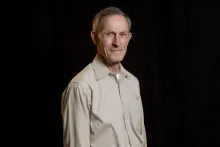
David Mills was born near Wallace, North Carolina, in 1939, where he grew up on a family farm. After high school he attended Ambassador College in Pasadena, California, and he graduated in 1962.
Since that time he has served as a minister of the Church in Washington, Florida, North Carolina, South Carolina, Oregon, West Virginia, and Virginia. He and his wife, Sandy, have been married since 1965 and they now live in Georgia.
David retired from the full-time ministry in 2015.
