
Steve Shafer
This transcript was generated by AI and may contain errors. It is provided to assist those who may not be able to listen to the message.
I was going to start back on May 7th. I gave this in... I don't think I gave it up north, but I gave it here in Saginaw back on May 7th, which is, I think, the Sabbath before Mother's Day. I gave a sermon to show how God and God's Word honor mothers, and the role of a mother, titled her name was life, as that was the original name that Adam gave to his wife, Eve, means life.
And I also went through the ancient word picture, meaning of a mother, and showed how that also honors mothers by the meaning of that has. And we heard in the sermon that tomorrow, June 19th, it's been designated as Father's Day, the third Sunday in June. As I said, though, you know, we're living in a world... it's kind of unbelievable the time we're living in. But we're living in a world that's just changing very, very rapidly, right here in the United States.
Our culture is changing rapidly. Things are happening. And I'm not sure there are some that want to reverse it and get back to the way it used to be, but it's unlikely that's going to happen. And one thing that is changing, as brought out in the sermonette, and as we know, one thing that's changing is the role of Father.
And what's changing rapidly right now is the structure of the typical American family. That's changing. It's not like it used to be back 50, 60 years ago, where the biological father today is often no longer with his family. A lot of children grow up without being in the home of their biological father, having their biological father there with them. He's left or whatever. Some have died in wars.
A lot of fathers fighting foreign wars are dying, not coming back. But also, just a lot of fathers are absent today and have left. There's divorce and so on. Different things are happening. But I wanted to focus on fathers and on the role of the father today, to some extent, even as Richard in his sermonette. And I want to do it from four perspectives.
And the first perspective's already been covered, so I can go over that quite quickly. The first perspective was from the role of the origin of Father's Day, which Rich covered in his sermonette. Also, I want to look at, from the perspective of God's Word, which Rich also covered in his sermonette, but I want to cover a few things a little differently and from a little different angle as well.
And also, then, I want to go from the perspective of ancient Hebrew, because that really says what the role of a father should be and pictures it. And then, I want to look at prophecy, or prophecy says, just in a very brief way, because prophecy is coming to play in what's happening to America, and then what comes down to the breakdown of the family and the role of the father. I get a lot of thought into my time.
I got all done with my sermon. I didn't have my title. I thought, I used it because I thought title earlier on. And then, I decided to change it because of how I'm going to conclude the sermon. So, all the title will not come into play as far as the meaning of it until the very end of the sermon. My title is, He Will Come with Healing in His Wings. I want to make it positive.
I want to give it a positive title because there's so much taking place in our country right now, when it comes to families and fathers and the roles of the typical father and mother. And again, at first, I was going to give it from the perspective, look at fathers from the perspective of the origin of Father's Day, but I say Rich covered that pretty well.
I do want to mention this. As one goes back a little bit, just a year before what he mentioned there in the state of Washington, back on July 5, 1908, a West Virginia church actually sponsored the first event explicitly to honor fathers.
It was a Sunday sermon given in memory of 362 men who died in a mine explosion in West Virginia, or not in a coal mine disaster. I don't know if it was an explosion or a collapse, but it was a coal mine disaster where six years, two men died. And so right after that, in that area, that town, this minister gave a sermon devoted to those men and to fathers. But it was just a one-time commemoration. It wasn't observed annually, just one at one time. And again, then Rich went into the other. And the thing is where I was observed in Washington, and that was the first time it was a statewide observant. It was made a statewide observance, as he said back in 1909. It was observed actually in 1910, July 19th, 1910, in the state of Washington. That's the first time it was a statewide observance. Again, it didn't become a national holiday, as he said, till over 50 years later. But I want to say this, introducing my sermon here today, and what's going on in our country. I was born and raised in Washington, as a lot of you know. And when I was born and raised there, I was born in 1941. And it was a fairly conservative state in a lot of ways. Even though it had two Democratic senators, they were conservative by today's standards. And they were fine individuals and had a lot of views like we would have. But things have changed so rapidly in my state. It's hard to go back sometimes. The state of Washington now celebrates lifestyles that are totally contrary to that of the family that has a father and mother. They celebrate alternate lifestyles. I've mentioned that before. And they celebrate them big time. And they're proud of it.
And now the state of Washington highly celebrates LBGT lifestyles, celebrates the lifestyles of lesbians, bisexuals, gays, and transgenders. And it has a parade for each of those groups every year, downtown Seattle. Special praises for each of those groups.
But that's what's happened in the state of Washington. It's sad to see. So I'll jump on now to the next part of it. That's kind of, I say, which kind of covered that history of the origin of Father's Day. It was originated 56 to over 50 years after that event in Washington. But it's ironic that it started off in Washington. And now it's changed where that's just the opposite. They just about celebrate everything but Father's Day. I won't look at it from the perspective of God's Word and a little bit from a different angle than Rich did. And he covered a lot of it in his sermon. But I want to go back to where the word Father first appears, because it kind of lays the foundation, God's Word lays the foundation, for what he wanted to establish.
The word Father first appears in Genesis 2.24, as it also is the first appearance of the word for mothers as well. And it says there in Genesis 2.24, therefore a man shall leave his father and mother and be joined to his wife, and they shall become one flesh. Of course, that very verse is also quoted by Christ in Matthew 19.5 in addressing the Pharisees' question concerning divorce.
Christ then gave the attended meaning of Genesis 2.24 by stating, so then they are no longer two but one flesh, therefore what God has joined together, Christ said. He says, Genesis 2.24 is showing that God has joined this man and woman together in marriage, because Christ is quoting that verse in Matthew 19.6 says, therefore what God has joined together, let not man separate. So when properly understood, especially in light of what Christ said, that verse in Genesis 2.24 becomes a foundational scripture for the entirety of the Bible, a foundational scripture for God's entire plan and purpose for mankind.
Let's turn back there and just read it again and write down this meaning a little bit more.
Genesis 2. Let's go back and start at verse 22. Genesis 2 verse 22, Then the rib which the Lord God had taken from the man he made into a woman, and he brought her to the man, he presented her to the man. Interesting. And Adam said, This is now bone on my bones and flesh of my flesh, she should be called woman, because she was taken from man. She was taken out of man. Therefore, verse 24, a man shall leave his father and mother and be joined to his wife, and they shall become one flesh. And as Christ added, therefore what God has joined together, let not man separate. So this is obviously Christ here performed that first marriage ceremony. So let's look at three things we can gather from this verse here. One, after creating the first woman, the Lord God brought her to the man, said in verse 22, he presented her to the man. So after creating Adam's wife, God presents her to Adam. Even as the father today often presents his daughter to her future husband. Sometimes the father will give away the bride. Christ here gave away his daughter to Adam. It's interesting how that's kind of described there. Gave her away to Adam in marriage. Number two, then according to Christ himself, God joined them together in marriage to have a permanent marriage covenant relationship with one another. It was never intended to be broken by divorce. The man should not separate. So God never intended for divorce. Now we do have divorce, and just I know a lot of people have gone through divorces, unfortunately. I just want to mention this very quickly because it would take an entire sermon to go through and really explain in detail. But there are three biblical grounds for divorce. And so I'm just going to cover it generally here because I would take a whole sermon to cover that. But there are three biblical grounds. And in a very general sense, the three biblical grounds for divorce are number one, fraud, which could include abuse.
Also, it was called in the Greek, Greek, porneia, which means adultery or gross immorality. And then the third thing is desertion. But here in Genesis 2.24, God Himself creates the institution of marriage between a man and a woman. He not only creates it, He actually presents the ride to Adam and he performs his first marriage ceremony. God joins him together, according to what Christ said in Matthew 19. And then three, third thing from this is the man shall leave his father and mother and be joined to his wife. Children start to stay from the house forever. They said they shall leave their father and mother and be joined to their wife, the man. And the women would leave their father and be joined to a husband. So God's initiative of marriage for the purpose of having children and for the purpose of having a family. As Psalm 127 says, I'm just going to quote it, Behold, children are a heritage from the Lord, happy as a man who has this quiver full of them. But obviously, according to what Christ said here, or what's recorded in Genesis 2, children were not meant to live with their parents permanently.
And you kind of see that a little bit today in some cases. At some point, they were to leave their father and mother and enter into their own marriage covenant to have their own family. So the families could be perpetuated. And it's interesting that the words father and mother, before that says man and wife or man and woman, but the words father and mother first appear in Genesis 2.24. And so I just thought came to my mind why is that? Why the words father and mother first appear in Genesis 24? I think that's because that is where God's first instruction concerning children appears. It takes a father and mother in order to produce children, and children are produced there, and then they should go out and have their own family and perpetuate the family. So from the perspective of God's word, fathers are foundational when it comes to God's plan and purpose for perpetuating God's ordained family relationships, of course, as are mothers as well. The father-mother relationship, family relationship, ensures the preservation of mankind. If you didn't have that, mankind would not perpetuate himself. Let's go to Exodus 20, verse 12. Then, of course, this is the 10 commandments.
Exodus 20, and let's look at the fourth commandment. Or Exodus 20, verse 12, yeah, that's the fourth commandment. It says, Honor your father and your mother, that your days may be long upon the land which the Lord your God is giving you.
And this fourth commandment is basically a key transitional commandment.
It actually connects the first four commandments to the final six commandments, connecting the relationship we have with God, with the relationship we have with one another, with our families, and with mankind. This commandment here, the fourth commandment, also links in both directions. It links back to the first four commandments, and that, as Rich said in his sermon, that God is our heavenly Father. He's our heavenly Father. It then also links forward to honor our physical fathers as well.
Of course, this promise here, I mean this for commandment, excuse me, and fourth commandment also comes with a promise that if we honor and value the role of the father and mother, that your days may be long before the land which the Lord your God is giving you. It's going to promise the longevity if you do this, if you honor your parents.
And it's also repeated, and the whole thing is added to it in Deuteronomy 5. It repeats the ten commandments in Deuteronomy 5, where this commandment, the fourth commandment, adds that it may be well with you in the land which the Lord your God is giving you as well. So not only that you would have a promise of longevity, but also you would have a promise of prosperity by honoring your father and your mother. So the fourth commandment then comes basically with two promises, physical longevity and physical prosperity. Why? Well, it shows the very great importance of this commandment of honoring our father and our mothers. And if we can learn to honor our physical fathers and mothers, we can learn to honor our spiritual father. And I will say our spiritual mother as well, who's our spiritual mother? The church, which is called Jerusalem above the mother of us all, Galatians 4, 26.
Thus we should strive to honor, value all the memory of God's church, because God's church is the mother of us all. So we should honor and value all the members of God's church wherever they are.
But this brings up an important but difficult question that comes up that I think is to be at least to address briefly. What if we had a father or mother who treated us badly, and many do?
What if we had a father and mother who we might not consider worthy of honor, because the way they treated us the way they were?
Of course, we realize we should never honor bad behavior, but we should still try to honor those roles of the father and mother, regardless of their behavior. That's hard. But why should we do that? Why is that important? Exodus 34 gives the account of Moses receiving the second set of commandments after the first set had been broken. Let's turn to Exodus 34. Just read a few verses here. First, verse 1, just giving the time setting here, that Moses had gone up to receive the Ten Commandments. He came down, saw the entire children committing idolatry and gross idolatry and so on. Horrible things were going on. He got mad. He tossed the tablets down. And senior moment, he tossed the tablets down and he broke them. So he had to go back up there, pass it 40 nights again, and went back up to meet with God the top of Mount Sinai to receive a second set of tablets, which it says here in verse 1 of chapter 34. The Lord said to Moses, cut two tablets of stone like the first ones, and I will write on these tablets the words that were on the first tablets which you broke. Dropping down to verse 4. So he cut two tablets of stone like the first ones. Then Moses rose early in the morning and went up to Mount Sinai as the Lord had commanded him. And he took his hand the two tablets of stone. Now the Lord descended in the cloud and stood with him there and proclaimed the name of the Eternal. And the Eternal passed before him and proclaimed the Lord, the Eternal, the Lord God, merciful and gracious. And here he describes himself, which is his name, which is who he is. He has his characteristics, some of which are covered in the sermonette. The Lord God, merciful and gracious, long suffering, abounding in goodness and truth, keeping mercy for thousands, forgiving iniquity and transgression and sin, but by no means clearing the guilty, visiting the iniquity of fathers upon the children and the children's children to the third and fourth generation.
So the sins of the fathers, and sometimes mothers as well, can be passed down from generation to generation by children who had a parent or parents that mistreated them, that abused them, or totally mistreated them and did not behave honorably. How do you break that trend? Because here it says, when that happens, if somehow you don't stop it, it's going to be passed on from generation to generation, and the following generation is going to be hurt, and they're going to have problems, or become not know how to be parents themselves. The only way to break that chain is to replace dishonor with honor. How do we do that? How does a child going up in a home where their parents were not honorable, how do they then not pass that down to their children, instead pass down honor? Well, by trying to be like God, by trying to be merciful, gracious, long-suffering, and abounding in goodness and truth, and by keeping mercy, even when the truth of what they were brought up was not so good, and by forgiving iniquity and transgression and sin, and by being like God, as described right here, that and only that will stop the hurt and prevent that hurt from being passed on to the next generation. So then, from the perspective of God's word, Christ's New Testament reveals God the Father to us, as also which covered in his sermonette. It's interesting, though, in the New Testament, there are well over 100 references to God as our Father, over 100. You can go through, look out, Father, and see wherever Father's capitalized is in reference to God the Father. And that's revealed to us in the New Testament by Christ. There's over 100 verses in the New Testament to cover that, God as being our Father. I'm just going to look at a couple of them. The first one comes from Christ's Sermon on the Mount. Let's go to Matthew 5. Matthew 5, verse 1.
Seeing the multitudes, he, Christ, went up on a mountain, and when he was seated with his disciples, he came to... when he was seated, his disciples came to him, and then he opened his mouth and taught them, saying... I'll drop down to verse 16, because we're just focusing on fathers.
Let your light so shine before men that they may see your good works and glorify your Father in heaven. So Christ now is common. He says, you have a Father in heaven, you have a spiritual Father. He's revealing God as being a mankind's spiritual Father. Why should we glorify my Father in heaven? Verse 45.
That you may be sons of your Father in heaven. You may be his actual sons. You may become a part of his family, spiritual family. So God's purpose is perpetuating and building a family. For he makes his sons rise on the evil and on the good, and he sends rain on the just and on the unjust. In other words, what he's saying here is, regardless of anybody who acknowledges me as their Father or not, as God as their Father, in essence, God is their spiritual Father, even though they don't recognize him and don't act like they know him, or they don't know him, whether they know him or not, or whether they believe it or not. Which is why Christ said in the previous verses what he did. Verse 43, you have heard that it was said, you shall love your neighbor and hate your enemy. But I say to you, love your enemies, bless those who curse you, do good to those who hate you, and pray for those who spitefully use you and persecute you.
Why? That you may be sons of your Father in heaven. Because he treats people good that don't treat him good. Because someday they're going to come to know him as their Father. And he makes the Son rise on the evil and on the good, and he sends rain on the just and on the unjust. Verse 48, therefore you should be perfect just as your Father in heaven is perfect. Have the same kind of an outlook towards human beings as he does, even though they're not behaving correctly. Because someday they will know, they'll have their eyes opened. And Christ tells us to offer up our prayers to God the Father. That's who they should be directed to. Verse 9 of Matthew 6. Matthew 6, 9, In this manner therefore pray, our Father in heaven, hallowed be your name, your kingdom come, your will be done on earth as it is in heaven. And I think, Rich may have covered this, but let's turn there. You also see this in John 14.
Let's go to John 14, just one verse there. John 14 verse 28. Oh no, I think you did cover this one. John 14 verse 28. You've heard me say, Christ of words here, you've heard me say to you, I'm going away and coming back to you. If you love me, you would rejoice because I said, I'm going to the Father. And then he said, interesting what Christ said here. I mean, this verse has a tremendous amount of meaning. We stop and analyze and think about it. He said, for my, because Christ said, for my Father is greater than I.
See, Christ always honored God as his Father, even proclaiming here, my Father is greater than I. Now you stop and think about it. What did Christ do? Christ gave up his glory with God.
He emptied himself of that and he came down and became flesh and dwelled among us as a human being.
And he suffered as a human being and he struggled and he lived a perfect life.
And he suffered and died for us. And yet he says, my Father is greater than I.
Somebody went through all that, but he said, well, I've got to be greater than my Father because look what I went through, not Christ. He always honored his Father and exalted his Father.
He also said in John 6 44, as we're very familiar with, John 6 44, no man can come to me unless the Father who sent me draws him.
So God the Father plays a key role in our calling.
John 6 45 is written in the prophets and they shall all be taught by God. Therefore, everyone who has heard and learned from the Father comes to me.
Not that anyone has seen the Father, except he who is from God, he has seen the Father. So Christ here reveals that he's the only one who is actually seeing God the Father. And of course, we could go on and on and on. And Rich covered many more as well in the sermon. Before moving on, I want to look at one more point when it comes to looking at a Father from the perspective of God's Word. And that's in Matthew 23. Matthew 23 verse 8.
He says, But you, Christ here says, Do not be called Rabbi, for one is your teacher, the Christ. And you are all brethren. And then, excuse me, down to verse 10 for a moment.
And do not be called teachers, for one is your teacher, the Christ. Now, if there's not anything wrong with being a teacher, be called a teacher.
But what Christ is saying here, don't idolize or make an idol out of anyone, regardless of their title or position or responsibility. Don't make an idol out of them.
The person who is given responsibility as a teacher should not take up a title that might put him or her above others spiritually speaking. That's the point, because some were doing that back at the Christ of time. They put themselves above others that they are better spiritually than someone else. And Christ is saying we have one spiritual teacher, and that is the Christ. For verse 9, He says, do not call anyone on earth your father, for one is your father, he is in heaven. Obviously, this is not saying it's wrong to call our father's father. That's what he's talking about. What Christ is saying here is that no one should take the name of father as a religious or spiritual title, saying with teacher, as a spiritual religious title. Why? Because we all only have one spiritual father, he was in heaven.
Again, we can go on and on when it comes to looking to father from the perspective of God's word. You can go on at infinitum. Let's look at ancient Hebrew. Let's look at fathers from the perspective of ancient Hebrew. Now, I've covered that a lot. Some of you have heard it before, so it would be repetition. Some of you may not have. But I think it's very interesting from the view of ancient Hebrew, what the word father is, where it's placed in a dictionary and what it means.
The Hebrew word for father in Hebrew is ab, a-b, or sometimes pronounced av, as to be pronounced like a v, ab or av, spelled with only two Hebrew letters in Hebrew. And interestingly, those two letters are the first two letters in the Hebrew alphabet. Father, or ab, in Hebrew, is spelled aleph, bet. Aleph is the first letter. Bet is the second letter of the 22 letters in the Hebrew alphabet. Aleph being the first letter of the Hebrew alphabet and bet being the second letter.
Now, it's very interesting. Go to Strong's Concordance and look up the word father in the Old Testament, Hebrew Scriptures. Look up father and look in the Old Testament.
What you'll see is, you'll see four pages because it's, I don't know how many, it's well over a thousand references to father, but there's four full pages in Strong's for father and then afterwards it has the number after it, which is when that that letter appears in the in the Hebrew dictionary. If you had a Hebrew dictionary where that would appear in the Hebrew dictionary, and it's a long row of ones because ab is the very first word you'd have in a Hebrew dictionary going in alphabetical order. Starts with letter aleph bet, the first two letters of the Hebrew alphabet. I found that kind of interesting. You look in there and you see a whole list of ones because the very first word alphabetically, ab, father. You know, I've been thinking about a lot, I don't know, you can't prove it, it's just speculation, but I think God may have been the inspiration behind the Hebrew language and God inspired it to be that way. That the word ab would be the very first word listed in a dictionary, Hebrew dictionary. Why? To emphasize the extremely importance of the father and the role of the father. How extremely important that is. To make it so that that word in Hebrew stands out first and foremost. It shows the importance of the role of the father to families and shows the extreme importance of God as being our spiritual father. Both of those stand out. By father being the very first word in the dictionary, in the Hebrew dictionary.
And it shows the importance of the family structure as created and gained by God. So extremely important the family structure is, which is being decimated today in our society, unfortunately. As I've shown in the past, ancient Hebrew was what is called an eugramatic language where pictures are used to describe Hebrew words. Each letter in the ancient Hebrew alphabet was drawn to picture something. So each word then had a word picture meaning.
The Old Testament was probably originally written in ancient Hebrew. I'm sure it was.
Modern Hebrew did not come about until after the fall of Judah to Babylon. Prior to that was ancient Hebrew. So the probably you could find any original scrolls. They'd have not found any original scrolls of the Old Testament. But if they did, they'd be probably written in ancient Hebrew. Not modern Hebrew, which did not come into existence until between the two between the Old Testament and the New Testament. But ancient Hebrew script is still filed on some ancient manuscripts and inscriptions on some old Jewish coins and on some of the Dead Sea Scrolls. They found some of it. And the Samaritan language still contains some of the ancient Hebrew symbols and scriptures in the alphabet. The letter Aleph, the first letter in the Hebrew alphabet, and the first letter also in the word for father, was drawn to picture the head of an ox.
And Aleph was also the Hebrew word for ox. And the ox was the lead work animal of ancient Israel.
And it symbolized strength. And like I indicated, it was drawn to picture the head of an ox with a yoke. It was drawn very similar to our capital A. A little different. When you turn around a little bit, you stem the thing out a little bit. It was drawn to kind of symbolize the head of an ox with a work animal. Actually, the letter Aleph, as it was drawn in ancient Hebrew, actually became our letter A. And you don't have to do much with it to make it into our letter A. It's very, very similar.
In fact, if you look at it, most of the 26 letters in our English alphabet can be traced back to the 22 letters in the ancient Hebrew alphabet. And were drawn very similarly. So our alphabet, you could say, is derived from the ancient Hebrew to a large degree. As a number in Hebrew, the letter Aleph is also used for the number one. In Exodus 20 verse 2, in the Hebrew version, Aleph is used to number the first commandment. Aleph then can symbolize strength, can symbolize leader, and can symbolize what is first. The letter Bet, the second letter in the Hebrew alphabet, and the Hebrew word for father, was drawn to picture a tent or a house. Bet is also the Hebrew word for house. So when you see a Hebrew word that has Bet in it or Beth in it, it means house of something. Like Bethel means house of God. And as I pointed out, Bethel Ham means house of bread.
And the word Bet or Bethel is drawn in a similar fashion as our non-cursy small case letter B.
In fact, it became our letter B, drawn very similarly. As a number, Bet is used for the number two. And in Exodus 20 verse 3, in the Hebrew version, is used to number the second commandment.
What then would the word picture meaning be for the Hebrew word Ab or Av, the word for father?
A father in ancient Hebrew is pictured as being the strength leader or head of the house.
He's a strength leader or head of the house.
The strength leader or head of the household. And that is the role the father has pictured in ancient Hebrew. Now, how does that apply spiritually? We are all members of what? I've just quoted Ephesians 2, 19. Now therefore you are no longer strangers and foreigners, but you are fellow citizens with the saints, and you are members of the household of God. God is building a household, and He wants us to be a part of that household, part of His family, to be a part of His household. So how does that apply spiritually? Well, God is our spiritual father, and God is the strength leader and head of His household, of which we are all members. Which is why Christ said, in this manner therefore pray our Father in heaven, hallowed be your name, because your name is our Father, hallowed be your name as being our Father.
It's also interesting, just as a side note, I don't want to get into it too much, but the Hebrew word El, which is a Hebrew word for God, also begins with the letter Elif.
Elif lamed, spells El, or God in Hebrew. And it pictures God as being the strong controller, or the strong authority. Since lamed, the second letter in El was drawn to picture a shepherd's staff, and it symbolized the authority by which a shepherd guided and controlled his sheep. So God does pictures being the strong controller of the strong authority over everyone's life, and over the entire earth, and over the universe. God is in control. He's always in control. How strong is God's authority in control? There is no authority except from God, Romans 13. But you know, here's the amazing thing. I want to stop here and just make a comment, because even though God is portrayed, just by the Hebrew word picture of El, the word for God, as being the strong controller or strong authority, God doesn't use that power and authority to try to control us, does He? Instead, He gives us the freedom to choose. Why?
Because He wants all of us to be strong controllers of ourselves. That's what He wants us to learn.
I'll just make this final comment here before I go on through the final part of the sermon, but just before you are interested for much more on ancient Hebrew as a word picture language, you can go to one of the world's experts on that who did the research and put a lot together on it. And his name is Dr. Frank Seekins, S-E-K-I-N-S. And he has a website which you can get gained all kinds of information on in ancient Hebrew, and it's livingwordpictures.com.
So let's move on out of prophecy. Let's move on to fathers from the perspective of prophecy. I'm just going to touch on a couple things here, basically as what's happening in our society because our society, as we know, is changing very, very rapidly. And a lot of it's because the family is being destroyed and the family structure is being eradicated. And here's what I want to quote a little bit from Vic Kubik's letter. His letter from the president, dated June 16, was printed in the E-News from Ministerial and Member Services. Again, he addressed a tragedy in Orlando where an Islamic terrorist named Omar Mateen gunned down 49 victims in a gay nightclub. And Mr. Kubik said this, part of what he said in that letter, this time we're seeing a different dimension in overall news reporting. And he talked about, usually the news reporting always focuses on the killer, almost exclusively. He said, this time we see considerable attention focused on the LBGT communities and how recognition of the validity of their non-biblical lifestyles will make things right, supposedly. But that's what the news media is focusing on. He went on to say, there are mounting consequences from the continued advancement of a destructive political agenda that strikes at the heart of family life.
There are great consequences from focusing on agenda that strikes at the heart of family life. The Bible overflows with prophecies that simply reflect the collective and cumulative consequences of breaking God's laws. A lot of prophecies show what the consequences are going to be for breaking God's laws. And God's laws will mostly center around the family and protecting the family and perpetuation of the family, because that's what God is doing. God is the family and He wants to build a family. He wants the family with the father and mother, being the building buck of society. The fathers are now disappearing to a large extent. The disappearance of the father as the strength and leader of the family is now nearly the norm in our society. That's where it's going.
According to one survey, about 43 percent of American children live without their biological father in the home, and that's growing. Of course, many children today are growing up in homes that don't have a father at all. It puts a lot of strain on the mother. A lot of mothers are doing terrific jobs trying to handle that, trying to job, work, and take care of the children, raise your children without the help of others. But again, it puts a tremendous strain on them, and it shouldn't be that way. Also, somewhere between 41, I looked at different surveys. One said 41, 42 percent. One said 48 percent. But somehow, I'll say somewhere between 41 and 40 percent of American children are now born out of wedlock. Somewhere right around that range, 40 to 48 percent are born out of wedlock. And more than half of all couples move in together before they get married today. In fact, it's probably rare that you find a couple that doesn't do that. Many do. And the father then often leaves the home oftentimes. Sometimes he'll leave the relationship to leave the mother to raise her children on her own, which leads to a higher level of poverty and added stress on the mother. And sometimes a stepfather will come in and not have that love for the children, as a father would. And a lot of children get abused, and some even get killed by a stepfather or by a non-father parent.
The government also perpetuates this to some degree by handing out welfare, which in essence, then supplants the husband as being the provider. The government becomes a provider oftentimes, and that's not good. That helps perpetuate the breakdown of the family.
Statistics also show that those who choose an alternate lifestyle very often, and very likely, come from a home where they did not have a right to loving father, either did not have a father, or they had an abusive father, or maybe a stepfather. A lot of those who choose the alternate lifestyles come from those homes. Statistics have shown that.
And of course, America also now has by far the largest divorce rate of any country in the world.
That's where we are. Very sad. Also, when you look a little bit, they bring out a little bit of history of this murderer, Omar Mateen, who killed these 49 individuals in that nightclub.
It appeared that Omar Mateen's father, whose name is Sadiq, Sadiq, I think it's Sadiq, S-E-D-D-I-Q-U-E, Sadiq Mateen, that he played a role in his son's behavior. His father, Omar's father, was born in Afghanistan and supported the Taliban, according to some of his Facebook postings and some reports.
And he obviously had anger, and he passed that anger to his son. His son had a lot of anger.
His son exhibited a lot of anger and bad behavior from a very early age. And a lot of those who knew him at an early age realized this kid's heading the wrong direction. He's going to be a problem because he displayed a lot of anger, right from grade school. In fact, there was an article in the June 17th, just this past June 17th Wall Street Journal, titled, A Life of Violent Threats Paved the Way for Orlando Attack. Because he'd made a lot of violent threats, this man who committed this act, he committed a lot of violent threats, even as a young boy. He had a lot of anger, and anger was passed on through his father. His father had anger.
They were passed on. Now, that was some of the statistics. Those things were an interesting way that you brought out just yesterday, the day before, that some of these things were passed on a while back to the FBI, but nothing was done. And say, why was nothing done? Probably because of political correctness, because Omar and his father were Muslim. I'll just add this. I'm just going to make a general statement here, but I know this to be a fact. And Evelyn especially knows it to be a fact. And I want to generalize, so I'll say the vast majority. I won't say all, because maybe there are some exceptions. There probably are. But the vast majority of Muslim fathers do not ever discipline their sons, even if they display anger. And a lot of times they get the anger from the father, but they don't discipline their sons. And Omar obviously was not disciplined to control his anger. But as Paul warned us in 2 Timothy, we are living in very perilous times.
And we're seeing that on the news almost every week. You wonder if something happens, it will end when the next thing happens, and we'll supplant that and become the major news for the next week or two.
And I'll call that. But the reason we're living in such perilous times, the law of it at least, is because of the breakdown of the family and the absence of the father, and because of the total disregard of God's laws.
God gave us this one. Let's go to scripture. Let's go to Leviticus 26. We know all kinds of scriptures, but I just want to touch on a couple of them.
1 Leviticus 26, verse 17. Well, let's start in verse 14. Leviticus 26, verse 14.
Of course, he's giving blessings and cursings here. Blessings for obedience to God, and cursings and troubles of God's laws are disregarded and ignored.
Leviticus 26, verse 14. But if you do not obey me, and do not observe all these commandments, if you despise my statutes, or if your soul abhors my judgments, so you do not perform all my commandments, but you break my covenant, I will also do this to you.
Verse 16. I will even appoint terror over you.
And that's what we have today, isn't it? I mean, for the past, ever since almost since 9-11, even before 9-11, going back to 1979, but at least since 9-11, we have had terror appointed over us. And we're seeing acts of terror on a fairly regular basis.
And nobody seems to know how to deal with it. Even the presidential candidates. That's a big debate. Of course, presidential candidates, how are you going to deal with terror? That's become the number one issue and a worry that Americans have. So we've had a terror point over us ever since at least 9-11, if not before. For the past 15 years or more, we have had to deal with terrorism and with terrorist attacks on America. Verse 17, Leviticus 26. I will set my face against you, and you shall be defeated by your enemies. And then there's the latter part of verse 17. Those who hate you shall reign over you. Those who hate you shall reign over you, and you shall flee when no one pursues you. It does appear that because of our disobedience as a nation, God has now set his face against us. I said, I'll set my face against you. And that appears to be the case. God's face is set against us. He's just keeping his hands off, letting things happen as they happen, without intervening. In essence, it's setting his face against us. And more and more, it seems that those who hate us are having the upper hand to commit acts of terror. And we see that. Those who hate us, or who hate America as they used to be, who the America that God wanted to be, his people, his nation, he established.
And fathers play a critical role in the family and the structure and perpetuation of society.
They play a critical role in prophecy as well, because when you just lose the family structure and that breaks up, the country is headed for lots of trouble. And a lot of it can be with terrorism. I want to conclude by looking at fathers from the perspective of prophecy, and also to conclude this sermon on the critical role of the father, with one final warning from God, which is also covered by Rich, but I want to cover a little more detail than he did, just real quickly. We have looked at the father from the role of the father, or from the perspective, I should say, of the origin of Father's Day.
And you know, you think about the origin of Father's Day in the 1960s, 70s, just a little over 40 years ago when that originated. You go back to when it was finally set up to be a national observance. That seems like a long time ago now, doesn't it? Because so much has happened to destroy the role of the father since then. We looked at the father and the role of the father from the perspective of God's Word, and from the perspective of ancient Hebrew. And now, just to a very, very small extent from the perspective of prophecy, how breakdown of the family and the role of the father and mother, how that will lead to destruction and the downfall of society, as we're now seeing, where when the role of the father either is undermined or rejected or disappears. So if that role is not reestablished, what's going to eventually happen if the role of the father and the mother and the family is not reestablished?
Malachi 4, verse 1, I'll end where Rich also covered this in his sermon, but I want to cover a little bit more. Malachi 4, 1, Behold, the day is coming, burning like an oven, and all the proud and all who do wickedly will be stubble. And the day which is coming shall burn them up, says the Lord of hosts. That will leave them neither root nor ranch. But there is hope, even as Mr. Kubik titled his letter, truth and hope in an age of terror. That was the title of the Kubik's letter.
Verse 2, But to you who fear my name, as we all do, the Son of righteous shall arise with healing in his wings. The Son of righteous shall arise with healing in his wings, and you shall go out and grow fat like staph-fed calves. And that's what this whole world needs right now and what ours decide needs. It needs healing. Healing from these people who have gone up without a father or mother, possibly, and where they have gotten into these lifestyles that are very destructive. And most of the time they don't really understand where. They think they were born that way. And all likelihood they were not born that way because of the absence of a loving father in the vast majority of cases. But there's going to be... they need to be healed spiritually. So it says here, Christ will come with healing in his wings to heal all those whose lives have been damaged by the absence of a loving father. But to you who fear my name, the son of righteous shall arise with healing in his wings and you shall go out and grow fat like staph-fed calves. And you shall trample the wicked, for they shall be ashes under the soles of your feet on the day that I do this, says the Lord of hosts. And those who refuse healing, who refuse through change, will have to be destroyed so that that kind of thing will not destroy the rest of society. Malak, I think, concludes with this prophetic warning which ties in with the critical role of the Father. Verse 4, Remember the law of Moses, my servant, which I commanded him in Horeb for all of Israel, with the statutes and judgments. Behold, I will send you Elijah the prophet before the coming of the great and dreadful day of the Lord. And he will turn the hearts of the fathers to the children, and the hearts of children to their fathers, lest I come and strike the earth with a curse. Or as it could be translated, lest I come and strike the earth with utter destruction. But that's not going to happen, because Christ and the role of Elijah the prophet will come with healing in his wings.
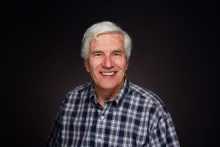
Steve Shafer was born and raised in Seattle. He graduated from Queen Anne High School in 1959 and later graduated from Ambassador College, Big Sandy, Texas in 1967, receiving a degree in Theology. He has been an ordained Elder of the Church of God for 34 years and has pastored congregations in Michigan and Washington State. He and his wife Evelyn have been married for over 48 years and have three children and ten grandchildren.
