
David Mills
This transcript was generated by AI and may contain errors. It is provided to assist those who may not be able to listen to the message.
Well, good afternoon, everyone. Happy first day of the Feast of Unleavened Bread. By all reports, the Passover went well on Sunday night, also the night to be much observed last evening. You know, just picture God's people all over the earth, keeping the Passover Sunday night, washing feet, taking bread and wine.
And then last night, observing the night to be much observed. And we know that our Father is very happy to see His people keeping His festivals. I picture people in New Zealand, Australia, Southeast Asia, India, Africa, Europe, here in North and South America, all over the earth. God's people are observing these Holy Days, the Spring Holy Days. But you know, many of the brethren are not able to meet as we are here this afternoon. We have brethren like in India. We were there for the Feast of Tabernacles last year. And some of them are only able to meet with brethren at the Feast of Tabernacles. During the Spring Holy Days and the Sabbath Days, they are alone. They listen to CDs. They study their Bibles. They pray, but they're alone at home. They would treasure what many of us have. So let's be thankful and pray for them and remember them. Let's certainly remember to pray for our brethren all around the world as we go through these Spring Holy Days. Yes, why are we here on a Tuesday afternoon? All the world is going about its work and business and pleasure. And here we are meeting in a church meeting. We're keeping an appointment with God. The Sabbath, of course, is a weekly appointment with God. And the Holy Days are annual appointments with God. Let's read a few verses about this back in the book of Leviticus 23. These verses show why we are here. We're here by command. God wants us to have this service this afternoon on the first day of the Feast of Unleavened Bread. In Leviticus 23, the first two or three verses talk about God's festivals. Verse 3 zeroes in on the weekly Sabbath day. The six days may work be done, but the seventh day is a Sabbath of solemn rest, a holy convocation. You shall do no work. It is the Sabbath of the Lord in all your dwellings. So each week we do have a holy convocation meeting. It is an appointment that God has made with us. And we want to be sure to always strive to meet that appointment if we can. In verse 4, the rest of the chapter gets into the seven festivals that come up during the year. Verse 4, these are the feasts of the Lord, holy convocations, which you shall proclaim at their appointed times.
On the fourteenth day of the first month at twilight is the Lord's Passover. Well, that was Sunday night, and that was the Passover, the beginning of the Passover day. We have the Passover service. And on the fifteenth day of the same month, and that was last night at sunset, is the feast of unleavened bread to the Lord. Seven days you must eat unleavened bread. On the first day you shall have a holy convocation. Brethren, that's what we're doing right now. God wants us to have this meeting. He commands that we have this meeting, in fact. You shall do no customary work. Of course, back in verse 8, they did offer offerings back in the Old Testament.
Verse 8, the last part, the seventh day shall be a holy convocation. You shall do no customary work in it. Yes, God commanded the Israelites to keep His holy days. But aren't these days ceremonial? Many people believe they are just ceremonial. Like the sacrifices they were for Old Testament Israel, but not for us today. Absolutely not. The Sabbath and the Holy Days were observed by Jesus Christ, and also by the early New Testament Church. We could read verse after verse after verse about Jesus keeping various of the Holy Days. We will not take the time to do that right now.
We could also read verse after verse about the New Testament Church, but I would like for us to turn to a couple of them anyway. Turn to Acts 12. Here we will find the New Testament Church of God, then reference to the Feast of Unleavened Bread and to the Passover. In Acts 12, verse 1, Now about that time, Harry the king stretched out his hand to harass some from the church.
Then he killed James, the brother of John, with a sword. And because he saw that it pleased the Jews, he proceeded further to seize Peter also. He was probably going to murder Peter as well. Now, notice it was during the days of unleavened bread. And so, the King James, I think, says, then were the days of unleavened bread.
So during this festival, when Peter was seized, verse 4, So when he had apprehended him, he put him in prison and delivered him to four squads of soldiers to keep him, intending to bring him before the people after Passover. If you have the King James translation, it will say Easter. That's just a gross mistranslation.
It's the same word that everywhere else is translated Passover by the King James translators. So it was after the Passover season that Herod would bring Peter forth and maybe martyr him very possibly. The Passover and the Feast of Unleavened Bread referred to here in Acts 12. Let's go to 1 Corinthians 5. And one of the very best verses in the New Testament showing the early church was to keep the Feast of Unleavened Bread.
1 Corinthians 5. And these verses also bring out the spiritual meaning and significance of these days. 1 Corinthians 5 and verse 6, Your glorying is not good. Brethren, it's never good to glory. It's never good to get puffed up and to let vanity and pride begin to enter into our hearts and minds or think more highly of ourselves than we should.
Do you not know that a little leaven leavens the whole lump? Therefore purge out the old leaven that you may be a new lump since you truly are unleavened. For indeed Christ our Passover was sacrificed for us. Therefore, let us keep the Feast. And what feast could this be other than this feast, the Feast of Unleavened Bread? Let us keep the Feast, not with the old leaven, nor with the leaven of malice and wickedness, but with the unleavened bread of sincerity and truth.
And this verse shows a lot about the meaning of this feast. It pictures putting out the leaven of sin and malice. And taking on the unleavened bread of sincerity and truth. We want to talk about that quite a bit as we go along today. The great counterfeit church turned away from the Holy Days. They turned away from the Sabbath.
They turned to Sunday. And they turned to Christmas and to Easter. But the true Church of God continued to keep the Sabbath and the Holy Days. You can read in encyclopedias like the Encyclopedia Britannica that the early Church continued to observe the festivals, the Holy Days. They might even call them the Jewish holidays or Holy Days, but they are God's Holy Days. Also, Eusebius in his ecclesiastical Church history, chapter 25 refers to the early Church.
A hundred years, in fact, after the death of John, you'll find reference to the keeping of the Passover and the Feast of Unleavened Bread. So it's not difficult to show that the early Church continued to observe the Holy Days. In 1926-1927, Mr. Herbert Armstrong was angered into Bible study. His wife was going to start keeping the Sabbath. And so to Mr. Armstrong, that was just like heresy. And he said he was going to prove his wife wrong. And she said, well, if you can prove from the Bible, then I'll believe it.
So he was angered into Bible study. And in the process, he proved the Sabbath, in fact, is the day that God wants us to keep. And also in the process, he proved that or saw that the Holy Days were also commanded by God. He made a long study, a lengthy study, about six months, as I remember, of the Scriptures. And he saw that the Holy Days were being observed by Jesus and the early Church as well. And so he and Mrs.
Armstrong started keeping the Holy Days alone. I believe, as I remember, for quite a number of years, maybe the first seven years, they observed the Holy Days alone. Then other people began to join with them. This was up in Eugene, Oregon.
And during this time, these early years, back in the 1930s, Mr. Armstrong began to understand that the Holy Days had spiritual meaning and significance. Of course, the Passover is very obvious what it means, referring to the sacrifice of Christ. But then he began to understand about the Feast of Unleavened Bread and coming out of sin. After our sins are forgiven by the sacrifice of Christ, then we have a responsibility to change the way of life that we live and begin to strive to live God's way of life. And so he began to understand that. And then Pentecost, a feast of firstfruits, began to see that this is the age that God is calling only a few. Most of the world is blinded and deceived, and God's allowed it to be that way. And then the fall festivals began to fall in place. The Feast of Trumpets. Well, that fits in very neatly, describing the Second Coming of Christ. And on toward the end of God's plan, after 6,000 years, then there will be the Second Coming of Christ. And Satan will be bound the Day of Atonement. And that understanding began to come. The Feast of Tabernacles. Happy, joyful Feast of Tabernacles, picturing the Millennium. And as I remember, it took, though, about 14 years for Mr. Armstrong to understand that step by step in the Holy Days, God is showing His great plan of salvation. I've heard him describe that many times, and maybe some of you also may have heard Mr. Armstrong go through some of this. Brother, we are here because God commands us to be here. We are here by way of appointment with God. But I want to ask a question this afternoon, which I think is very fitting after the Passover on Sunday night, and also the night to be much observed as we get into these days of unleavened bread. What is God looking for at this Feast from us? He is looking for something. But what is it? We'll get to that in a few minutes. I'd like to first of all show that before too long, all over the earth, people are going to be keeping the Passover and also the Feast of Unleavened Bread. They will be observing these very days. They will not be observing Easter or Christmas or going to church on Sunday each week. They will be keeping the Sabbath and the Holy Days. You know, Jesus Himself indicated on the night before He died that He would participate in the Passover service. Turn over to Luke 22 and verse 15.
He indicated by that that He would participate in the Passover service in the Kingdom of God. When God's Kingdom is set upon the earth. Verse 17, He took the cup and gave thanks and said, Take this and divided among yourselves. I say to you, I will not drink of the fruit of the vine until the Kingdom of God comes. So these verses indicate that Jesus will participate. He will not do it because He has any sins that need to be forgiven. It's like baptism. Jesus was baptized, but He had no sins that had to be washed away as we do. Jesus indicated here that He will participate in the Passover service. In the Old Testament, we have verses that indicate people, human beings coming to the Passover, coming to understand the sacrifice of Jesus Christ. One of the most graphic descriptions is describing the Jewish people. We know the Jewish people have the wailing wall at the temple and the temple area. They certainly feel deep emotion about it. But what about when the Jewish people come to understand that Jesus Christ was the Messiah, the Savior? I mean, when they as a human people, a tribe, come to really see it. The Bible describes that time when they come to the Passover, they come to really understand it and begin to keep the Passover. Let's go to Zechariah 12 and begin in verse 7. The Lord will save the tents of Judah first, so that the glory of the house of David and the glory of the inhabitants of Jerusalem shall not become greater than that of Judah. In that day, the Lord will defend the inhabitants of Jerusalem. The one who is feeble among them in that day shall be like David, and the house of David shall be like God, like the angel of the Lord before them. It shall be in that day that I will seek to destroy all the nations that come against Jerusalem. Notice in verse 10, The Lord will accept the Passover sacrifice of Christ. In that day there shall be a great mourning in Jerusalem, like the mourning at Hadad, Remon in the plain of Megiddo. And the land shall mourn every family by itself, the family of the house of David by itself, their wives by themselves. It's just a lot of mourning that goes on when they come to really understand about the sacrifice of Jesus Christ. And going on to chapter 13 in verse 1, In that day a fountain shall be opened for the house of David and for the inhabitants of Jerusalem for sin and for uncleanness. And that fountain actually would be the sacrifice of Jesus Christ, which does clean us from sin and wickedness. Verse 2, It shall be in that day, says the Lord of hosts, that I will cut off the names of idols from the land. And they shall no longer be remembered. I will also cause the prophets and the unclean spirit to depart from the land. It shows really going on to what the Feast of Unleavened Bread pictures, and that is putting out idolatry and false worship, and beginning to live by God's laws and commandments, and to worship the true God. Let's also read from Joel. We see then that there are verses that foretell people coming to the Passover. Another passage then is in Joel chapter 3. Joel chapter 3, let's first of all read verse 17. So you shall know that I am the Lord your God, dwelling in Zion, my holy mountain. Then Jerusalem shall be holy, and no aliens shall ever pass through it again. In verse 19, Egypt shall be a desolation, and eat them a desolate wilderness, because of violence against the people of Judah, for they have shed innocent blood in their land. So God will deal with the other nations as well. But verse 20, Judah shall abide forever, and Jerusalem from generation to generation.
And now verse 21, you know, about coming to the Passover.
This means forgiveness, and forgiveness is only possible through the sacrifice of Christ. Let's also read from the book of Micah. Micah chapter 7.
Micah chapter 7. Let's first of all read verses 8 and 9. And this is Israel when they are being corrected, and that is during the time of Jacob's trouble that lies just ahead. And Israel comes to repentance.
And so Israel does come to repentance.
And so Israel does come to repentance. Skipping on down to verse 14, God is going to restore a repentant nation.
So other nations are humbled, not just Israel.
Verse 18, we get to verses about the forgiveness, how the forgiveness is possible. Who's a God like you? Pardoning iniquity and passing over. He even has the expression of the Passover. Passing over the transgression of the remnant of his heritage. Who's a God like our God who has arranged to pass over lamb? He does not retain his anger forever because he delights in mercy. He will again have compassion on us and will subdue our iniquities. You will cast all our sins into the depths of the sea.
You will give truth to Jacob and mercy to Abraham, which you have sworn to our fathers from days of old. This shows God bringing Israel and also other nations to the Passover and to the Feast of Unleavened Bread. There's no doubt that the nations will be keeping the Passover in the millennium. Jesus himself said he would take of the fruit of the vine in the kingdom. And he will participate in the Passover service himself. There's no other name given among men whereby we may be saved, whereby our sins may be forgiven. We read that God is reconciling the world to himself through Christ. So all the world has to be brought to the Passover. In the Second Resurrection, the same thing. All the deceived masses of this age must come to the Passover.
And Jesus indicated that, Tyre and Sidon, the queen of the South, Nineveh. He referred to them in Matthew 11 and 12. It will be more tolerable for some, easier for some to come to the Passover and to repent than for others. But billions and billions will repent and be keeping Passover service at that time during the Second Resurrection. I think it's hard for us to realize people will just need to walk a few blocks away in their community to go to church each Sabbath and also to keep God's Holy Days. It won't have to travel sometimes the long distances that we travel today. But all the world will be keeping the Passover, keeping the Feast of Unleavened Bread. Can you imagine all nations washing feet? Over in Libya, over in Egypt, in Iraq, Iran, China, India, all over the world. People washing feet, eating broken bread, representing the Body of Christ, and drinking the wine, representing His blood. Yes, the time is coming when all the world will keep the Passover, year by year, just as we do. What about the Feast of Unleavened Bread? The verses in the Bible that indicate that mankind is going to be keeping this Feast and also learning what the Feast symbolizes what it represents. Let's go to Zechariah once again, Zechariah chapter 8. And beginning in verse 1. Zechariah chapter 8, beginning in verse 1. Again, the word of the Lord of Hosts came saying, thus says the Lord of Hosts, I am zealous for Zion with great zeal, with great fervor I am zealous for her. Thus says the Lord, I will return to Zion and dwell in the midst of Jerusalem. Jerusalem shall be called the City of Truth, the mountain of the Lord of Hosts, the holy mountain.
In verse 7, Thus says the Lord of Hosts, behold, I will save my people from the land of the east and from the land of the west. I will bring them back, and they shall dwell in the midst of Jerusalem. They shall be my people, and I will be their God in truth and righteousness. That's what this Feast represents, truth and righteousness. And the world is going to be learning the way of this Feast.
Will they not also be keeping this Feast? We know verses in the Bible then indicate the Passover. Jesus said He would be participating in the Passover. What about... we know the Feast of Tabernacles. All nations will observe the Feast of Tabernacles. But certainly they'll be keeping the Feast of Unleavened Bread also. And what a wonderful thing it's going to be, because they'll begin to live the way that this Feast represents. The way that we're striving to learn to live today.
In verse 14 of this eighth chapter, Thus says the Lord of hosts, Just as I determined to punish you, When your fathers provoked me to wrath, Says the Lord of hosts, And I would not relent. So again, in these days, just ahead of us, after Christ returns, I am determined to do good to Jerusalem and to the house of Judah, do not fear. These are the things you shall do. Speak each man the truth to his neighbor. Give judgment in your gates for truth, justice, and peace.
Let none of you think evil in your heart against your neighbor. And do not love a false oath. For all these things are things I hate, says the Lord. So mankind is going to learn this holy and righteous way of life that is pictured by this feast. Let's read also, verses 20 on down. Thus says the Lord of hosts, Peoples shall yet come, Inhabitants of many cities, The inhabitants of one city shall go to another, Saying, Let us continue to go and pray before the Lord, And seek the Lord of hosts. I myself will go also. Yes, many peoples and strong nations Shall come to seek the Lord of hosts in Jerusalem, And to pray before the Lord.
It shows all of the world, then, Coming to the Passover and coming to the Feast of Unleavened Bread. It's going to be a wonderful time. And God is going to make a covenant with Israel, And by extension to all other nations as well. Let's read about that in Jeremiah, chapter 31. He's going to make the new covenant with the house of Israel. And it will extend on out to the other nations.
They'll be able to also participate in the new covenant relationship. In Jeremiah, chapter 31, beginning in verse 31, Behold, the days are coming, says the Lord, When I will make a new covenant with the house of Israel, And with the house of Judah. Not according to the covenant that I made with their fathers, In the day that I took them by the hand to bring them out of the land of Egypt.
My covenant which they broke, though I was a husband to them, says the Lord. But this is the covenant I will make with the house of Israel after those days, says the Lord. And that's what this feast is all about, brethren. I will put my law in their minds, and write it in their hearts, And I will be their God, and they shall be my people. That's exactly what God is doing with us today. He is writing His laws upon our hearts and minds.
And we are His people. He is our God. And in verse 34, notice, No more shall every man teach his neighbor, And every man his brother, saying, Know the Lord. For they all shall know me, From the least of them to the greatest of them, Says the Lord. Everyone is going to be in the church, you might say, at that time. Everybody is going to have an opportunity for salvation. And notice it goes on to say, For I will forgive their iniquity, And their sin I will remember no more. You know, this verse indicates that there will be sin in the millennium. Human beings will sin.
They will need the Passover. But God will forgive them of their sins, Just as he does us today. And God does the same thing for us today. Not only does he forgive, but our sins, he remembers no more. He doesn't keep a record. When he forgives sin, it's gone. It's past. He doesn't remember our sins anymore. So in the millennium, that's the way it's going to be for Israel, And it's also in the way that it will be for all nations. Just picture Israel and all nations keeping the Feast of Unleavened Bread.
They'll be doing the same thing we were busy doing yesterday. Gathering up the leaven, Seeing if there's any bread products that have leaven in them. We gathered it up, and then we got rid of it. So they'll be doing the same thing on the Passover day. They'll be gathering up and getting rid of all the leaven before the Feast of Unleavened Bread begins. Let's go back to the book of Zephaniah. This is a beautiful passage here showing what Israel and all nations are going to be doing as they turn to keeping the Passover.
Begin to keep the Passover in the Feast of Unleavened Bread. Zephaniah, chapter 3. And let's begin to read in verse 8. Zephaniah, chapter 3, verse 8.
That is what happens at the Second Coming of Christ. All nations are gathered against Jerusalem. And God will certainly defeat them and then proceed to set up His kingdom on the earth. Or Christ will set up the kingdom of God. In verse 9, for then I will restore to the peoples a pure language, that they all may call on the name of the Lord to serve Him with one accord. From beyond the rivers of Ethiopia, my worshippers, the daughter of my dispersed ones, shall bring my offering. In that day you shall not be ashamed for any of your deeds in which you transgress against me. You know why that is? Because there's a changed way of life. They no longer do the deeds they were doing before. They change. They start keeping the feast of unleavened bread and the righteousness pictured by this feast. For then I will take away from your midst those who rejoice in your pride. And you shall no longer be haughty in my holy mountain. That's the opposite of this feast. This feast pictures humility and meekness, not pride and haughtyness. Notice in verse 12, I will leave in your midst a meek and humble people. That's exactly what this feast pictures. And, brethren, this begins to get to what God is looking for in us at this feast. What is God looking for in us as we keep the feast? This is it, a meek and a humble heart. They shall trust in the name of the Lord. And in verse 13, the remnant of Israel shall do no unrighteousness and speak no lies. They go on to keep the meaning of this feast. Nor shall a deceitful tongue be found in their mouth, for they shall feed their flocks and lie down, and no one shall make them afraid. This begins to get to the very heart and core meaning of this feast. What God is looking for, he's seeking, he's looking for a meek and humble people. The unleavened bread that we eat. I eat some matzo this morning. I eat some. It's flat, isn't it? There's no air in it. It's not puffed up. What you see is what you get. It's just flat. It pictures the meekness, the humility, the sincerity and truth that God wants in our lives.
This feast means coming to have this kind of heart and mind. In the opposite, sometimes it helps to understand by looking at the opposite. The opposite of this feast is a strong-willed, disobedient heart. The opposite is pride and vanity and human pomp and ego putting on airs.
The opposite is self-seeking and self-exalting and selfish ambitions. Seeking to be the greatest. Seeking position or fame or status. This feast picture is putting away all of those things. They're the opposite of the feast of unleavened bread. For us to be able to have the heart and the mind that God wants us to have, this one that is described here in verse 12, a meek and a humble spirit. In order for us to have that, there has to be a new heart given to us. A new spirit from God. Let's turn to Ezekiel 11. Notice we're reading a lot of verses in the Old Testament today. We'll read some from the New Testament too, but the Old Testament has a lot to say really about the Passover and the Feast of Unleavened Bread and the time when the whole world is going to come to these two holy days, these two festivals, and what a difference it is going to make, just as it's made a difference in our lives. Notice in Ezekiel 11, verse 17. Therefore say, thus says the Lord God, I will gather you from the peoples, assemble you from the countries where you have been scattered, and I will give you the land of Israel. It's talking about Israel being brought back from captivity. They shall go there, and they will take away all its detestable things and all its abominations from there. And all the evils we see about us going on in our country today. All of these things are going to be taken away. And notice in verse 19. Then I will give them one heart, and I will put a new spirit within them. It will be God's own Holy Spirit. And take the stony heart out of their flesh, and give them a heart of flesh.
Brethren, that's what God is going to do for all the world. He's going to take away that stony heart. He's going to give the world a heart transplant, a new heart, a heart of flesh. You know that already God has done that for you and me, members of the Church of God. How does God do that? You know, even before He calls us to His truth, He begins to soften and prepare our hearts to receive the truth. He prepares the ground so that He can plant the seed, the truth of His Word. And so God gives us a heart of flesh that is able to repent, that is able to change and able to have His laws written upon them. The goodness of God grants to us repentance. And then God gives us the Holy Spirit once we do repent, after we're baptized. Let us in verse 19, that God will take away the stony heart and He will give a heart of flesh. As He has done for His people in the Church today. Verse 20, that they may walk in My statutes. So there's this heart transplant, taking away the stony heart and having the heart of flesh that God gives to us. That makes it possible to receive God's laws and to live by them. That they may walk in My statutes and keep My judgments and do them. And they shall be My people and I will be their God. These things have happened to us, members of God's Church today. Let's also read from Ezekiel 36. God is going to do this for all of Israel and for all of the world in the Millennium. He will give the world a heart transplant. He'll take away the stony heart. And humans will be able to have the soft heart of flesh that can repent and change and receive God's Spirit. In Ezekiel 36 and verse 24, For I will take you from among the nations and gather you out of all countries and bring you to your own land. I will sprinkle clean water on you and you shall be clean. I will cleanse you from all your filthiness and from your idols. Brethren, the only way we can be cleansed is by the Passover. This shows Israel coming to the Passover and being forgiven and cleaned up. In verse 26, I will give you a new heart and put a new spirit within you. I will take the heart of stone out of your flesh and give you a heart of flesh. I will put my spirit within you and cause you to walk in my statutes and you will keep my judgments and do them. And dwell on the land that I gave to your fathers. You shall be my people and I will be your God. All of these things are going to happen to Israel, all of Israel, and on out to the other nations also. But it has happened to the church of God now. Without us even knowing it, God softened our hearts before we even began to realize our calling. He was working with us. He had looked it down long before we even knew and was preparing us and giving us a heart of flesh, having taken away the heart of stone, preparing us for our calling and repentance and receiving His Spirit. There's a whole chapter in the New Testament I'd like for us to turn to and read. It's not a real long chapter, but it's 2 Corinthians chapter 3. And it shows that in the church of God, we've been given a heart of flesh, a heart that can have the laws of God written upon it, a heart that can repent. 2 Corinthians chapter 3 and verse 1. Do we begin again to commend ourselves? Or do we need, as some others, epistles of commendation to you or letters of commendation from you? And Nepal is just saying that he did not need human endorsement because he had the endorsement from God for what he was doing for his ministry.
In verse 2, you are our epistle, written in our hearts, known and read by all men. You are manifestly an epistle of Christ, ministered by us, written not with ink, but by the Spirit of the living God. Not on tables of stone, because God has taken away the stony heart, but on tablets of flesh that is of the heart. God has given us a heart of flesh on which he can write. His Spirit can write His law. And we have such trust through Christ that we are God. Not that we are sufficient of ourselves to think of anything as being from ourselves, but our sufficiency is from God. We realize everything is from God, nothing is from us. Who also made us sufficient as ministers of the new covenant. Not of the letter, but of the Spirit, for the letter kills, but the Spirit gives life. But if the ministry of death, like in the Old Testament, written and engraved on stones was glorious, so that the children of Israel could not look steadily on the face of Moses because of the glory of his countenance, which glory was passing away. How will the ministry of the Spirit not be more glorious? Brethren, what we have going on today in the Church of God is more glorious than what the Israelites saw when Moses came down with a glow on his face. What we have going on here is far more glorious, the ministry of the Spirit.
Verse 9, For if the ministry of condemnation had glory, the ministry of righteousness exceeds much more in glory. That's what kind of work is going on in the Church of God today, the ministry of righteousness. And it is a glorious work. And God's laws are being steadily written upon our hearts and minds. We're taking on the meaning of this feast of unleavened bread.
We're taking on the holiness and the righteousness of Almighty God.
In verse 10, Even what was made glorious had no glory in this respect because of the glory that excels. This is so much greater what God is doing in us. For if what is passing away was glorious, what remains is much more glorious.
Therefore, since we have such hope, we use great boldness of speech, unlike Moses who put a veil over his face so that the children of Israel could not look steadily at the end of what was passing away.
But their minds were hardened. Ancient Israel just didn't have that heart of flesh. They still had the stony heart. God wasn't working with them.
For until this day, that same veil remains un-lifted in the reading of the Old Testament, because the veil is taken away in Christ.
But even to this day when Moses is read, a veil lies on their heart.
Nevertheless, when one turns to the Lord, that veil is taken away.
When that person has a heart of flesh, he can repent. He can be baptized. He can receive a new spirit. He has a new heart, a heart of flesh. God's laws can be written upon it. It's a soft heart. It's not the stony heart that humans just naturally have.
In verse 17, the Lord is the Spirit. And where the Spirit of the Lord is, there is liberty.
Verse 18 summarizes what is happening in our lives.
Being in a new covenant relationship with God. Having had the stony heart taken away.
Having been given a heart of flesh that can repent, that can be sorry, that can ask God's law to be written upon it through the power of the Holy Spirit.
Verse 18, but we all with unveiled face, that is what you could say with the heart of flesh, beholding as in a mirror the glory of the Lord, are being transformed into the same image from glory to glory, just as by the Spirit of the Lord.
There's a transformation that is going on in our lives from glory to glory. You know, each of us have reached a certain level of glory. If we are converted, we have. If God's Spirit is at work in our lives, we've reached a certain level, but tomorrow and next week and as we go on forward, we'll reach a higher level of glory. The Holy Spirit will continue to write more of God's law and God's character upon our hearts and minds. We'll take on more of the holy and righteous character of Almighty God.
What is God looking for this feast? Here we are. We're starting to keep the feast of unleavened bread. We have a little bit more than six days remaining in this feast.
He's not looking for something outward. He's looking for something deep within us. Let's go to Jeremiah 7. This chapter really puts a finger on what God is looking for in us, what He wants from us and in us.
It's not something that is outward. It's not something like sacrifices or gold or silver possessions.
In Jeremiah 7, verse 22, God is not really that much interested in burnt offerings or sacrifices, except what they typified in the Old Testament. But this is what I commanded them saying. This is what God wants of us, this feast. Obey my voice. Obey my voice. And I will be your God, and you shall be my people. And walk in all the ways that I have commanded you, that it may be well with you. Yet, back in ancient Israel, and we are to learn from them, they did not obey or incline their ear, but walked in the counsels and in the imaginations of their evil heart, and went backward and not forward. Since the day that your fathers came out of the land of Egypt until this day, I have even sent to you all my servants, the prophets, daily rising up early and sending them. Yet they did not obey me or incline their ear, but stiffened their neck. They did worse than their fathers. Therefore you shall speak all these words to them, but they will not obey them. You shall also call to them, but they will not answer you. And so Judah was about to go into captivity in Jeremiah's time, just as the ten northern tribes had gone into captivity earlier. But what is God looking for? These verses reveal that he's looking for an obedient heart. An obedient heart and mind.
That's what this feast pictures. He desires to write his law upon our hearts and minds. He desires a broken heart and a contrite spirit. He wants us to be like Jesus, who said he was meek and lowly in heart and poor in spirit. Let's go to Micah 6 and verse 6.
Micah 6 and verse 6. And these verses show what God is looking for of us at this feast. So very well. It's not something outward as deep in our hearts and minds. Micah 6 and verse 6. With what shall I come before the Lord? And bow myself before the high God? Shall I come before him with burnt offerings? With calves a year old? Will the Lord be pleased with thousands of rams? Or ten thousands of rivers of oil, if that were even possible? Shall I give my firstborn for my transgression? That really goes to about as far and extreme as you can go to. Give your firstborn for your own transgression. The fruit of my body for the sin of my soul. Would God be satisfied with that? No. That's not what God is looking for. Verse 8 shows very well what he wants. And that's what this feast is to help us to be able to grow in and to have more fully. He has shown you, old man, what is good. And what does the Lord require of you? But to do justly, to love mercy, and to walk humbly with your God. Those three things go a long way in describing what this feast is all about. What is to do justly? To do justly is to do what is right. That means to keep the first great commandment, to love the Lord our God with all of our heart, mind, soul, and being. To walk with God. That means to be close to God in our prayers. We should think about that during this feast. Are we striving to keep God's commandments and to be close to Him and to love Him? Also, the second great commandment, doing justly with fellow man, the way we treat one another. The second great commandment shows how we are to love each other. So God wants us to learn to do what is right, according to, as His Ten Commandments describe. The second thing He wants us to learn is to love mercy. I thought about this one quite a bit, to love mercy. It is not natural at all. It is natural to hold grudges. It is natural to seek revenge. If somebody, even your own mate, says something sharp to the word you, it is just natural to want to strike back.
But God doesn't strike back. He is merciful. He is long-suffering, slow to anger. He puts it into a larger framework. And so must we. We should ask ourselves as we go through this feast, do we love mercy the way God loves mercy? Or do we seek revenge? Do we get angry quickly? God wants us to learn to forgive from the hurt. He wants us to absolutely love extending mercy to others, not holding anything against anyone, but extending forgiveness and being tender-hearted. And the third thing listed here is to walk humbly with your God. This means to agree with God, because it says in Amos 3 that two cannot walk together except they be agreed. You know, we are to picture ourselves walking through life with God. My wife and I sometimes go on walks. We walk down the road, walk around our place, and we are headed in the same direction. And you know when we walk along, we walk, we talk with each other, we discuss things.
I see some of you nodding your head. You do that as well. And when we walk with God, it means we're walking side by side with Him. It means that we're going in the same direction with Him. We recognize Him as our superior and that we are subordinate to Him. We submit willingly and gladly. He's our maker, our Creator. He takes care of us. He provides for us. He has big things in mind for us. Walking with God humbly. Notice the word humbly here. It's not just walking with God only, but in a humble attitude. An attitude that is that of a broken heart and a contrite spirit.
This walking humbly with God is no doubt, the young doubt, going to require that we stay close to God in prayer each day and in Bible study. And also in meditation. We're constantly praying, in fact. We are constantly meditating about God's ways and God's laws. There is a communication between us and our Father as we walk with Him, humbly walk with Him each day and each moment. You know, these three things here give us quite a few things to think about as we proceed forward during the days of Unleavened Bread. And that is that we would strive to do what is just and right according to the laws of God. And that we truly do love mercy. We just love it. We don't have anything against anybody. And we are forgiving. Even if ones have not sought forgiveness yet, it's stored up there, ready...
When they are ready, God has it stored up for the world. He's already arranged forgiveness for the world. It's stored up for them. He's eager to... He looks forward to the time when He can grant that mercy to the world. And so should we love mercy, just as God does. And then to walk humbly with our God. That's what this feast is all about. Walking side by side, humbly with our God. Well, brethren, it's exciting to think about what this feast pictures. It's the flatbread, and that's what we're supposed to be. Not proud, not lifted up, not self-seeking, not self-exalting. We're to be flat.
Let's ask God to help us to stay flat, and not ever to glory, and to ever be puffed up. That's what this feast is all about. It's an attitude that is lowly in heart and mind. It's a broken heart. It's a contrite spirit. Before too long, it's exciting to think that all of the world is going to come to this type of attitude. They're going to have the stony heart removed, and they're going to be given the heart of flesh, and they will be able themselves at that time to do justly, and to love mercy, and to walk humbly with our God. And what a different world it is going to be. So different than the world today will be like it is in God's church. It may be even better, because Christ will be here and be ruling. All the world will be keeping the Passover, and the Feast of Unleavened Bread, and the other Holy Days, and the Sabbath. You know, just as keeping these days has changed our lives, so keeping these days will change the world. Let's read in conclusion in Revelation chapter 15. This will be our final verses. Revelation chapter 15, and verses 3 and 4. Revelation 15, verses 3 and 4. We sing the song of Moses, the servant of God, and the song of the Lamb, saying, Great and marvelous are your works, Lord God Almighty. Just and true are your ways, O King of the Saints. Who shall not fear you, O Lord, and glorify your name? For you alone are holy. For all nations shall come and worship before you. For your judgments have been manifested. God's judgments and God's laws and God's purpose and His plan is going to be made clear to everyone. And all nations will come and worship the great God. Brethren, the Feast of Unleavened Bread is just beginning. Let's pray for each other. Let's pray for our brethren around the world. Have a wonderful and joyful feast. And draw close to God in your prayers and in your study. Have a good Wednesday, a good Thursday, a good Friday. And then have a good Sabbath and Sunday. And we'll see you back here next Monday.
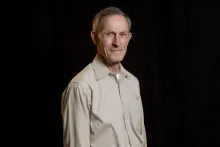
David Mills was born near Wallace, North Carolina, in 1939, where he grew up on a family farm. After high school he attended Ambassador College in Pasadena, California, and he graduated in 1962.
Since that time he has served as a minister of the Church in Washington, Florida, North Carolina, South Carolina, Oregon, West Virginia, and Virginia. He and his wife, Sandy, have been married since 1965 and they now live in Georgia.
David retired from the full-time ministry in 2015.
