

Robin S Webber
This transcript was generated by AI and may contain errors. It is provided to assist those who may not be able to listen to the message.
We are moving through a series here in the Los Angeles congregation. The title is simple. It's God's will for the body of Christ. Sometimes people say, what is it that God is doing?
What is it that God would have us be? I know where God started with me, but now where does He want to take me and where is He guiding me to? And that's the reason why God gives us in a holy canon the book of Ephesians. I'd like to go back just a little bit to bring everybody on board here to let you know where we are before we move forward a little bit. We've had a couple of messages up to this point. I'd like to just review a little bit of where we've been, and maybe as we go along, you might want to jot a word to kind of use as a reference point to keep us moving on the stepping stones to where I'd like to bring us today. In part one of this series, let's review for a moment, we focused on the reality that a holy God has called people from around this world and down through time to sacred service. Sacred service to be a holy people before a holy God. Not just to show up in a church building, not just to be a part of a biblical society, but indeed, and I use my words carefully, toward sacred service to God Almighty, which knows no bounds in time, which is done eight days in a seven-day week. Such people are called saints. That's what the Bible calls them. They know that they've been granted a personal invitation to begin now in this lifetime to understand what God's will is and to experience the will of God in our life now. Now, that's a mouthful and that's our heartful and people might say, well, Robin Weber, how can you be up there and be able to tell people what the will of God is? Well, the reason I can do that is I can open up Scripture. As you will now, let's go to Ephesians 1, and it plainly states in Scripture itself.
We don't have to cobble it together, but we can go to Scripture and see what God Himself says His will is through the pen of the Apostle Paul. Ephesians 1 and verse 9, having made known to us the mystery of His will, so it has been made known. And the Greek there, Mysterion, is not a mystery like a detective story to where there's something held in a deep dark closet away from everybody. That is the last thing that you find in the last chapter of the book, as far as who done it, but more of an unveiling, more of a rolling out of what God is doing.
The mystery of His will, so it says right there, this is His will, according to His good pleasure, which He purposed in Himself. This isn't about somebody else. This is about God the Father, and the family of God, God, and the one that was and known as the Word from before the beginning, that in the dispensation of the fullness of the times, this is the will of God, He might gather together in one all things in Christ, both which are in heaven and which are on earth in Him.
In Christ, in Him also we obtain an inheritance, being predestined according to the purpose of Him, who works all things, notice, according to the counsel of His will. That is the will of God, that God is desirous of bringing all back into restoration. And to notice that this will of God and this body that He's dealing with, called the body of Christ, moves beyond human dimensions and designs and human structures, whether it be brick and mortar. The church that's being talked about here in Ephesians is not a church like this, church building with brick and adobe and lovely wooden rafters and tile roofs and windows out there. That's not what God is developing. That's not what God is building. That's not what God is putting together. But He's bringing together a structure called the body of Christ that's made out of flesh, that's made out of heart, that's made out of faith and hope and confidence in Him. One thing that I always like to remind people when I share with them, this body of Christ is spiritual in nature, and it knows no bounds.
It's the spiritual body of Christ. The same one that he mentioned that back in the book of John, when he says there is going to come a time and a day when we will neither worship on this mountain or that mountain, but those that worship God will worship Him in spirit and in truth. We covered that in the first part of this series. The second thing that we covered last time I was with you is simply this. We came to appreciate that this collective grouping of saints called the body of Christ praises God, praises God due to the abundance of spiritual blessings that God has put in motion for those who believe and accept His calling. In fact, when you look at Ephesians 1, let's just look at it if your Bible is open. From verse 3 all the way down to verse 10 is actually one thought, one sentence of praise. Paul is almost breathless when he runs out because he is so saturated and so full of what God above has done for him through Jesus Christ. And it's changed his life, this saturation, this understanding of what comes from above, that the blessings that God is talking about are not simply the blessings of having a job or having a car or having a garage that will house the car or how so often we think as human beings as what blessings are. And sure, our good Father above would love to bless us with those as well and does at time. But the blessings that are basically being spoken about in Ephesians are spiritual blessings that move beyond simply our time or simply by what we would have because our Father above knows best. And it is in this reality of God's blessings that saturates the Apostle Paul, that he is able in the book in Ephesians 3.1 and Ephesians 4.1, he's writing to Ephesus, but he's writing from Rome and he's in prison. He's locked in a box and he's probably tied, tethered, chained to a Roman soldier.
And yet he does not feel bound. He says, I am the prisoner of Jesus Christ. He says, I am the prisoner of the Lord in another verse in Ephesians. He never once says that he is the prisoner of Rome. I want you to think about that for a moment. You and I, you know, we might be as mad as a wet hen. You know, Lord God, I've been doing this and this and this, kind of doing the Jonah, this and this, and now you want me to do, and I'm going to be here. This is it. After all these years of what, of faithful obedience to you and loving and loyal faith to you, this is it. I'm in, I'm stuck here.
Paul did, was not like that. Paul understood something very basic that I'd like to share with you before we move forward, because he was saturated with praising God and understanding what those blessings were. Here it goes. His condition that was on the ground was trumped by his position before God. And I want to share something with each and every one of you today. You and I have that same opportunity as the Apostle Paul in whatever you and I are going through right now, whatever situation that we might feel locked in, whatever walls that we think might be surrounding us, that if we truly believe in God the Father and Jesus Christ, and are the saints of God that are being trained for sacred service forever before God the Father and Jesus Christ, and to go out no more from them as the book of Revelation says, then we will come to understand that you and I operate in a different world, for you and I have begun to understand what the kingdom experience is.
Our position that God the Father has invited us to, to be before him and accept it before him because of Jesus Christ and accepting that sacrifice, trumps, trumps any position or any condition that we have on the ground. That now leads us into this third message regarding God's will for the body of Christ. And that is simply this, that our personal praise towards him, and there was so much that we've already covered in Ephesians 1, that our personal praise towards him will lead us, here it goes, this is how it works, our personal praise towards God and being saturated and filled with what God is doing rather than what we are doing will lead to meaningful prayer for others.
Meaningful prayer. Now what do I mean by meaningful prayer? I'm sure all of us sometimes have gotten down on our knees, we're sitting on a bed and looking up to the ceiling or trying to get above the ceiling and we'll say, well, you know, regarding people that we know or regarding our family members, we'll basically say, God, you save them. You save them. I will be done on earth as it is in heaven, as well as my adult children. God, you go get them. Go, God. They're all yours. We're talking about a different kind of prayer and or at times we know that there are people that are scattered around the world and sometimes we say, well, what are we supposed to pray for?
How do I pray? I say, God, you know your body, bless them, keep them. They need you. I need you. If I need you, they need you. So, God, be with them. Now, that's an all-right prayer to begin with. Please understand. I'm glad you're doing that, but Paul shows us how to expand upon that and that means we need to do that.
When we understand that our passion towards God moves into new directions and that is compassion for others and where they are today and how to pray for them. And that takes God's Spirit in us to make that happen. I want to share something with you and that is that members that are in the body of Christ today more than ever need to have their eyes open and need to have their hearts open. Allow me to be plain.
Allow me to be clear. What Paul is addressing here in the book of Ephesians is his prayer for the body of Christ. Ephesians 1, the beginning, is basically movement praise towards God. Now, the reason I bring this up is that some of us at times in our conversation with God, we are what you might call praisers. Praising God is more comfortable for us and to bestow to Him all that is His glory and to praise Him.
Others of us might be just simply comfortable with praying, kind of getting down into the mechanics, down into the gears, remembering Christ's own prayer of example, our Father, which are in heaven, and going through the gears and the machinations of that. But here's what I want to share with you. The book of Ephesians and what God's will is for the body of Christ is this. He wants us to be able to praise Him as Paul did. And number two is to pray for others in a meaningful and a direct fashion that we're going to find out here.
Let's see how it works. The title of today's message is simply this, Enlighten the Eyes of Their Understanding. If you want to jot down a title, and we'll come back to it again, enlighten the eyes of their understanding because this is what's going to fill up the rest of Ephesians 1 that we're going to cover.
We've already covered what the will of God is, and it's about being reconciled to Him by, through, and in Christ. What is interesting is we begin to move down from that as we cover that in verse 11, who works all things according to the counsel of His will. It's very interesting the first thing that He deals with to be reconciled. And I want to dwell on this for a moment because when you deal with the will of God, it talks about all things in Christ, both which are in heaven and in earth and all that is, and you get this somewhat cosmic dimension happening, but it's noteworthy, frankly, it's sobering and it's humbling, that such cosmic reconciliation doesn't start with the universe, the stars, and the moon. Do you know why? Because they are not out of alignment.
This cosmic reconciliation that Paul is alluding to, the will of God, is not dealing with streams that run into rivers and rivers that run into oceans because they too are in harmony.
Where it all begins is, are you ready? It begins with man. It's man that needs to be reconciled.
It's man. The ground was cursed because of man and not vice versa. So we need to understand something as we begin to look at these verses. If you look up here, you might want to jot these words down because this is what we're going to cover in this discussion today. Just three little words. We, you, and our. And you say, well, Mr. Weber, I see up on the white board that you put three pronouns. But those three pronouns basically are the pronouns that are going to define God's will for man. You notice what it says here that we who first trusted in Christ should be to the praise of His glory. And in Him you also trusted after you heard the word of truth and the gospel of and the gospel of salvation. Now with a simple read, you would think this is very fine scripture, talking about people that trusted Christ, talking about glorifying God, talking about the word of truth and the gospel of salvation. But there's something much deeper here and allow me to bring it out here. What Paul is basically dealing with was the great barrier of antiquity. The great barrier of antiquity was the animosity between the Jew and the Gentile, between the Jewish mind, the philosophy, and the religion. That at its core said that you cannot measure God and then to come up against a culture in the Greek world where the Greeks wanted to measure everything. They like to measure rivers. They like to measure geography. They like to measure around the world even before there was a Christopher Columbus. In fact, they even tried to turn their measurements on God back in the third and fourth century AD. So this is in parallel to a culture to where in the Jewish mind, the mind that came out of Israel, you don't measure God. We're dealing with different mountain, different God. And these two peoples came into play and the twain shall not meet. There was no way of tying them together. There is no way of unifying them. It's just like if you tied the tail of a dog and the tail of a cat together, you can have unity. You can have unity, but how long does it last? And so here were people that were at odds with one another. This begins to give us then the focus of verse 12, where Paul speaking on behalf of his people, the Jewish people, that we who first trusted in Christ should be to the praise of his glory.
And what Paul is doing is here, he's speaking to the Ephesian church that his people were people of covenant. They had actually been in this way, not perfectly, but aware of it for over 1,500 years.
It was said that Jerusalem and Israel was a first for it amongst the nations, as the prophet Jeremiah had declared. And they were the first people to whom the good news of Messiah came, that out of Bethlehem would come a Messiah. From a virgin would come the salvation of the world. And they were the first that when Jesus did come, the Jewish men of the Galilee, they were the first who trusted Christ. They were the first that heard the call over the water. They were the first who dropped their nets and say, we will follow you. We will follow you wherever you take us, even though there were many that wanted to follow, but would not. They gave it all. They were the first to let go and to let God. But now there's something that's happening here in verse 12. In Him, speaking of Jesus Christ, you also trusted after you heard the Word of truth, the gospel of salvation, in whom also haven't believed you were sealed with the Holy Spirit of promise, who is the guarantee of our inheritance until the redemption of the purchased possession to the praise of His glory. Now, let's go back for a moment and understand what he's saying. It's very important when you look up here, it says, we who first trusted and Jesus Christ did come amongst His own. The man of Judah came amongst the Jews and lived that life. But now the pronoun personality changes. It's talking about you. What Paul is telling us, and I want to share with you this thought is simply this, that what God is doing is expanding. Now, that's really hard for people to understand something, especially when for over 1,500 years, are you with me? You're told you are it. That's it. You are it. You're the person of covenant. You are in the midst of what the word for Gentiles was, the nations. And so you almost had God as your own private property.
He's all ours. He's not theirs. He's ours. Remember when you were a kid? For some of us, that's getting to be long ago and far away, like the opening of Star Wars. But to remember when you were a kid and you had a sandbox? That was your sandbox. And that's your sand. That was your pale.
That was your shovel. And you were glad that it was yours. Your folks had built that for you. Then all of a sudden, you looked over your shoulder and there was Johnny. Your name wasn't Johnny. The other was Johnny. And all of a sudden, uh-oh, you're treading on my domain.
And your parents probably had to teach you how to share your sandbox and how to share your pale and to create a more open thought in your mind as to the relationships that were coming into your life. This is exactly what God is doing with the Apostle Paul in the book of Ephesians.
Is that God is inspiring Paul to write to us down to this day that we worship a God that has no bounds. And he will use and he will choose and he will render to his will to those whom he chooses. After all, John 644 says that it's the Father. It seems it's God the Father's role that he chooses as to whom he might bring into this body. And notice what it says, you who first trusted, well, in him, you also, verse 13, trusted after you heard the word of truth. Now, it's very important to play on word heard because we're going to come back to it again. They heard the word of truth. How important is to hear the word of truth? Think about your life for a moment when you first heard the word of truth. And what that meant to you, hearing that word the first time you heard about the truth about God or the truth about the world and its relationship with God and or, as we got personal, the truth about ourselves. How important is this word heard? You know, Paul is writing this for a reason because in other places in the book of Romans, it says, faith comes by hearing and hearing by the word of God. How important is it for other people to hear the word of God that they might even be able to have faith? They heard about that.
This message regarding the message of salvation. And they trusted in Christ. That means, you know, sometimes that's hard for us to understand because, again, remember, Paul is writing basically to the world of either Syria or Asia Minor. And to recognize that these were people that were in villages or towns or urban centers of Bethany or Cappadocia or Asia.
Today, we live in basically still a Judeo-Christian society in the United States. But here were people, not just the Jews of the diaspora that became Christians, but now these Gentiles, the Yews, not the Wees, but the Yews, and they dropped their net as well because they trusted. They heard a story based on fact and they believed it. That there's a God that sent His family member to this earth. And this family member lived a perfect life and died a hideous death. But God did not keep him there, but raised him up from the dead and is now back up in heaven.
And that if He is up in heaven, and if God resurrected Him, that they too can be resurrected and join the one that loved them so much that He came down here and can join Him in the future, the Kingdom of God. They trusted so much that they dropped net and they changed their life.
And notice what it says. They were given this Spirit, this seal, the Spirit, the Spirit of promise. That's a guarantee. Back in the ancient world that people, not people, but excuse me, when cargo was being loaded onto carts or on a galley, perhaps going from Ephesus to Alexandria to Philippi, they were sealed. That seal showed where it came from, who it belonged to, and where it was going. And Paul is using this analogy with the Holy Spirit that because they believed the Gentiles, as well as those who first trusted Christ in the Jewish community, they were sealed with the Holy Spirit of promise. The promise was fulfilled and they were sealed and a pledge was made, a guarantee was made. Upfront money was given and offered to show that the deal was real and that the rest would be coming. Now I want you to notice verse 14, if you haven't looked at your Bible to show you how this works now. It started with the we who first trusted Christ, but now you have trusted Christ. And it speaks in the sense that you also have received the Spirit because you have trusted Christ. If you go to Acts 19, you can look at it later if you want to. In Acts 19, it speaks of Paul going to Ephesus. And what happened there, which is very interesting, God does everything for a purpose. When Paul went to Ephesus, it might have been the middle of the century. Paul didn't know everything that was going to be happening there, but Paul went because the Spirit directed him. Paul did not necessarily know what was going to be happening 30 to 40 to 50 years later, as it would no longer be Jerusalem, but it would be Ephesus that was the springboard of moving the Gospel out into the world. Paul didn't know that, but he acted in his moment and in his time with what God gave him to do and left the consequences to God. Now, what happened at Ephesus in Acts 19 is that Paul came. They only knew about the baptism of John, and therefore they were baptized. It says that the Spirit came upon them very much in the same sense as what had happened in Jerusalem. It's interesting. It says that there were 12 men that were there in Ephesus. Do you see the linkage? The Spirit of God coming upon the audience. They began speaking in languages, and there were 12 of them. What God was showing to the Ephesians is that what he had done for the Jews, that he will do for the Gentiles. What is interesting here, then, as you look at this, is they were sealed and given this guarantee. Notice verse 14, who is the guarantee of our inheritance. Our inheritance. Now, this is so powerful, my friends, when it comes to understanding the will of God for the body of Christ as to how we look at one another.
That no sandbox, are you with me, belongs to us alone, and that we are to share.
God is not our private property. God will choose whom he will. He will guide to whom he will. And what you have now, Paul leads in this revelation of the will of God from what God first started with we being the Jews, being Israel, to the you speaking of the Gentiles, and then came down to it. Now, it's our inheritance, what God has for us. I have a question for you, and only you can answer this, and this is where I'm leading to. What is your pronoun personality when it comes to people? Do you have a pronoun personality that is inclusive?
Let's make it blunt. How selfish are we? How is that? How selfish are we with God?
Or how giving are we? How open are we? How inclusive are we to whom God will work with as he chooses to reveal himself? I ask you a question. Are you a we person?
Have you left God in the past where he started?
A you person or an our person? Here's the point I want to share with you in Ephesians 1.
Paul was leading the discussion to show us the expansion that both the Jew and the Gentile, this barrier of antiquity, these folks despised one another. There was no way back. You know, just like right now in America with the challenges that we have, when you think of Congress, when you think of the barrier, the philosophical barrier between the left and the right, when you recognize where we are right now with the with the debt ceiling crisis and all that's going on, there is no middle ground is there? This is not a political statement. This is not a political advertisement. I'm making an analytical statement as one with a history background. There is no middle ground. Nobody wants to get on the bridge. Nobody's daring enough to get out there and saying there's a better way. This is exactly where the world was in 31 A.D. when Christ came on board.
There was no way to reconcile the Jew with the Greek, much less the Greek with what they called the barbarians, those that did not speak the Hellenic tongue. Sometimes it's not just the Jew and the Gentile, but the conflict is even within the man himself, men with men, and ourselves within ourselves there's conflict and there's no bridge. There's no way back. There's no way of going from we to you to our. I want to share something with you. When you begin to understand this simple pronoun, you begin to understand the will of God that there is a bridge. There is a bridge.
The veil did go down and there is a return for all to the Creator. And Paul says it is through Jesus Christ. Now notice how this works as we go to verse 15. Therefore, I also, after I heard of your faith in the Lord Jesus Christ and your love for all the saints, do not cease to give thanks for you, making mention of you in my prayers. Now what is very interesting here, notice verse 16. Come back here if you would for a moment. Verse 13. In him you also trusted after you heard the word of truth. I told you there would be a play on words. When they first heard the word of truth, God was depositing, as it were, his seed in them. God puts seed in us, not just to stay seed, but to bear much fruit, to be like Christ. Because if Christ is the head of the body, then our arms are the ones that do his work. Our feet are the ones that run his errands.
Our tongue is the one that speaks his words. Our body parts are not separated from the head.
They are a compliment. And what you notice here, verse 15, is simply this. Here's Paul.
He's in prison. He had ministered to these people for years. They were very special to them.
Some churches were a problem. Ephesus was not. Paul was close to Ephesus. He felt a special bond to them. But notice, I heard of your faith, of your loyalty in the Lord Jesus Christ and your love for all the saints. What he heard was simply this. And this speaks to the will of God for the body of Christ. And that is simply this. God has not called us simply to bear seed, but to bear fruit.
I have a question for you that only you can answer. It's a personal question. You don't have to put your hand up. Please don't. But just simply a question. When you think of when God, when you first heard the word of truth, you heard about the gospel of salvation. Might have been a year ago. Might have been five years ago, 15 years ago, 30 years ago, 50 years ago. Just a simple question. And this is not, please understand, not to discourage you, my dear friends, but to encourage you of what can be.
Have you simply remained a seed-bearer? Are you just holding on to seed? Or are you bearing much fruit?
Have you just simply remained a very closeted, exclusive, we kind of person? Or can you admit that God deals with the yous and that together you've become our?
And that God, that you and I can inspire people from afar? Here's Paul. He's in Rome.
These folks are in Ephesus and their reputation of their loyalty and their faith in Jesus Christ, which had to be incredibly challenging in that time and in that world. Let's understand something. When you say the Lord Jesus Christ, that's words that we often just roll off our tongues, but to when you understand what each of those words meant and what was incumbent upon a citizen of the Roman Empire or a subject of the Roman Empire, that when you said the word Lord, you were using the same term as was given to Caesar. So there was a problem here, a problem.
Already there was a dual loyalty, sounded craziness, sounded seditious. What do you mean the Lord Jesus Christ? The term curios meant Lord. That was a title that was reserved for Augustus. When you use the word Jesus, is to recognize that you're saying Yeshua, you were saying salvation, that it had come, didn't come through Caesar, didn't come through your local holy man, but from God and from this story that you came to believe and then to say Christ, that you said this is God's anointed. This is the fulfillment of all the prophecies of the past and that these people had been loyal, not by what they knew, but by what they did, and that loyalty traveled all the way to Rome. But notice something very important here about the will of God as shown in the book of Ephesians.
Paul says, I do not cease giving thanks for you because he says your faith in the Lord Jesus Christ and your love for all the saints. Very important. Here we go. If you want to take a note, if you get anything out of this message, being a member of the body of Christ, being one that is fulfilling the will of God in 2011 is this. You must have loyalty to Christ and loyalty to others. Not just simply love upwards and passion going up and praise going up, but that passion for God, the passion that we see Paul mention in the beginning of Ephesians, must be matched with the compassion towards the others that are in the body of Christ.
It's called what you might call a double love. A double love is what God's spirit in us should be developing. That is the fruit. Fruit is fruit. When we talk about fruit that's in the Bible, it's not ethereal. That fruit that God wants us to develop is as real as the fruit that's on your kitchen table where there's that wooden bowl that probably belonged to your grandmother that you ladies have and it's on your kitchen table. There are bananas and there are oranges and there are a bunch of grapes and there's a pomegranate with its funny little top for all you pomegranate lovers. It has color, it has size, it has weight, it has substance, and it's not only good for you, but it's good for others. I want to share a thought with you. Having double love as members in the body of Christ is what God is calling us to. Love towards God and love towards others.
Love and God can be, let's be frank, easier most of the time than loving others. But if we're going to be a member of the body of Christ, it must, I must share with you, it must be seamless. Now, if I can make a comment, that's not just something that happens overnight. That's a lifetime process of God's Holy Spirit working with us, noticing the example of Jesus Christ. Sometimes trials, sometimes failure, sometimes victory, sometimes falling down on the job of loving those that God brings into our life. But notice what Paul says here, in everything to give thanks. And this is where I'd like to lead you and to conclude with this day, because let's notice now how Paul prays for the body of Christ. Let me share something with you. The body of Christ is known but to God. It knows no bounds. It is not limited to any one organization. Jesus himself said in John that there will be that day when there will be those that worship God, neither on this mountain or that mountain, so it's not a location. But it says that they will worship God in spirit and in truth. Brethren, Christianity is under attack in this world. You know that, and I know that. Beyond that, you know and I know that as members of the body of Christ, Satan is going about as a roaring lion trying to devour the people of God. Remember how I showed you that portrait last time I was here? How you see yourself. He doesn't even want you to see yourself in the portrait that God has on his throne of you. He doesn't want to think of you existing. There's two ways that he can do that. Number one, by the body of Christ being sloppy and losing the truth and taking it for granted and recognizing how precious the Gospel of salvation is. Number two, which is actually easier for him probably than the other one, is simply this. He wants the body of Christ to lose heart. And I think, may I make a comment because we're just friends here talking Christian to Christian? I think that's where Satan is trying to do his unbest work on the body of Christ. It is just for people to get tired, to get worn out, to say, Lord, I've followed you for 20 or 30 or 40 years and I just need to sit down. I don't think I can take it any longer. I can't take it any more. I see these people around me. They're people. They disappoint me. And if this is who I'm going to be stuck with in eternity, I think I'll just take a chair. I don't want to go on the journey any longer. Let's understand how Paul prays for the body of Christ. And this says, as your pastor and as a fellow Christian, we can take heart that this is the will of God for the body of Christ to pray this way. Paul says, I do not cease to give thanks for you making mention in my prayers. Now he transitions from praise and what has happened to his prayers for those that he commits to God. Let's notice how it works. Very simple. Number one, if you want your prayer life to bear much fruit and to impact other people, let's look at how Paul puts it here. Number one, he says here that the God of our Lord Jesus Christ, the Father of glory, may give to you the Spirit of wisdom. Number one, members of Los Angeles and friends that are visiting us today, we need to ask God to give members, fellow members, the our folks, the Spirit of wisdom. The wisdom that is being spoken of here is not prudence, it's not practical, but it's a spiritual wisdom. It's about the deeper things of God regarding the eternal truth of God.
Brethren, we need to be focused more than ever on the great eternal truths of God and ask God to solidify them and magnify them and bring out nuances in them that perhaps we have not perceived. Allow me to make a comment, being one from Pasadena, I remember back in the 1960s, late 60s, across the Royal here, where Bible study after Bible study, great truths were being brought about, the understanding of what the Spirit of man, the Spirit in man, is, and how that relates with the Spirit of God and human nature. And seeing that then, as we go into the 70s and the 80s, as we heard again and again, not so much peripheral matters, but the great eternal compass that goes back to what God was trying to accomplish in Eden, and to understand what the tree of life was about, and to understand what the tree of good and evil was about, and the choices that were being made there, and how gracious God was opening up his kingdom to humanity at that time, but that how humanity rejected the kingdom of God, the tree of life at that garden, and all of those ramifications of sense, and how deeply we went into that. I remember, sometimes I go to Bible study, and Mr. Armstrong would get up and say, oh, brethren, I've got new truth for you. I thought, oh my, new truth? What's that mean? Maybe there's a third tree, because he'd always go back to what? The two trees, and what that all meant.
I was looking for a third tree, but he got stuck on those two trees because that's what God put in the Bible. But it has to be fleshed out. It has to be understood. The revelation has got to come.
We need to, more and more, brethren, in our own personal studies as members of the body of Christ, as pastors and elders and those that are responsible, just say, in our own fellowship, that we spend more time and ask God to grant us the spirit of wisdom to go layer down into the great eternal truth of God so that we can understand what he is doing. So important.
John 16. Join me there for a moment. John 16.
Jesus promised that it could happen. We notice here it says, Nevertheless, I tell you the truth. It is to your advantage that I go away, for I do not go away. The Helper will come to you, but if I depart, I will send him to you.
And when he has come, he will convict the world of sin and of righteousness and of judgment.
Of sin because they do not believe in me, of righteousness because they go to my father and see me no more, and of judgment because the ruler of this world is judged.
Notice verse 12 now. Interesting comment. I still have many things to say to you.
But I can't tell you right now. You can't bear them.
However, when he, the Spirit of truth, has come, he will guide you into all truth, for he will not speak on his own authority, but whatever he hears, he will speak and he will tell you things to come. And it's not a lone ranger, the Spirit.
It says, he will glorify me, for he will take of what is mine and declare it to you.
The Apostle Paul, in praying for the body of Christ scattered around the world at that time and into this day, asked that God's Spirit of wisdom would come upon the church regarding those great eternal truths. Notice what else it says here as we go down. Point number one, pray for the Spirit of wisdom. Can you do that, brethren? To pray that God will grant the body of Christ a deeper Spirit of wisdom to truly drink in the scriptures at a depth that is yet to be known.
Notice what it says here, then.
And revelation in the knowledge of him. Point number two, pray for the body of Christ, that they might have revealed to them what God is. It's interesting what Peter said in his last words and his epistles, that we might grow in the grace and in the knowledge of our Lord and Savior, Jesus Christ. Baptism is just the beginning of a relationship. But you know something? When you stop learning, you stop growing, and when you stop growing, you stop living. Anyone who's in a profession knows they must keep current with developments. I see Mr. Darden out here. Mr. Darden is an attorney, a fine attorney. He has to stay current. He has to open the books. He has to know what's happening out there, if he's going to be relevant and if he's going to be able to serve and to help others. So must Christians. We must grow more and more in the revelation of who and what God is to plummet, to explore the depth of the attributes of love and wisdom, kindness, graciousness that Mr. Velasquez was talking about, commitment to our word, and to ask that the body of Christ can develop more in this, to understand it. Let's go back now to another point here. It says, may give you the spirit of wisdom and the revelation and the knowledge of him. Notice verse 18, just to side point the eyes of your understanding that they might be enlightened.
It's a side point that Paul puts out there. He talks about the eyes because the eyes are basically received messages. Sometimes when we've been on this way of life for so long, our eyes begin to blur. Our eyes get tired, just like we've been driving for a long, long time. Maybe it's dark.
Those headlights, or am I the only one that has that? Those headlights. Pretty soon, you're nodding, and it's not nodding in agreement. You're nodding, and you're nodding. You know, allow me to share something with your friends. Some of us that have been in this way of life have had a lot of headlights come our way on this journey.
Headlights from others. Flat tires created by ourselves.
And sometimes our eyes can also become distracted, can become distracted from the goal that is ahead.
I think more than ever, again, this is a challenge that we have, and I'm speaking very frankly.
This is a challenge for the body of Christ to remain focused on the will of God and not become distracted. We can become distracted. We can get off game. Our human nature, the human nature of others. Sometimes I've seen people that have folded up their tent and packed it in and left this way of life, not initially because of what they did, but because of what others did. And they're looking at others and what others have done, rather than what God, the Father, and Jesus Christ have done. And when you do that, you've taken your eye off the ball.
I don't know of anybody else that has the holes in their hand.
But sometimes we have propped up people over the years. We've thought them to be somebody.
And then when they show their humanity, we become disappointed. Because we become disappointed in them, then we become disappointed in God. And we lump it all together and we pack it in.
I want to share something with you on an encouraging note, please. I'm speaking to the Los Angeles congregation. I'm amongst friends. By and large, you are indeed loyal and have faith in God, the Father, and Jesus Christ.
What I'm sharing is to encourage you of what can be. And you do have faith and you do have loyalty to one to another. You do have that double love, but you've got to get a read on it and understand how it develops. You and I have been called to bear much fruit, much fruit.
Not just minimal, but much fruit. Where our light shines is an example. That if Jesus is the head of the body and we are the arms and we are the legs and we are that voice and Christ went back up into heaven is now at the right hand of God. What he's saying is I have full confidence in the body down here to do the job. Do it! Pray for wisdom. Pray that they might know the Father and the Son above better. Ask God to open the eyes of people that have grown tired, that have become distracted, that have grown old with time. Notice what it says here also. It says, and that they might know what is the hope of His calling, the hope of His calling. You and I have been called to hope in a world of despair. Our fellow Americans right now don't know which way this country is going.
The pundits don't know which way it's going. We see a world that is in a frenzy as much as it was back in the 1960s. If you miss the 60s, welcome. It's back. And people are full of despair. Just take that word and pray about it. Father above, I know your precious saints are in the squeezer of this world. Give them hope. Let them know.
Join me if you would in Romans 8. And you can go down this in your prayer, going right through the book of Romans, because Satan wants to snuff out our hope. He wants us to think about ourselves. He wants us to think that somehow God has forgotten us. Or what the journey that we began long ago when Jesus said, follow me, is not really all that it was cracked up to be. In Romans 8, it's interesting the rhetorical questions. Notice that are mentioned here, where it says in verse 31, For what then shall we say to these things, if God is for us, who can be against us?
If God's for us, who can be against us? Our position before God trumps any condition that is on the ground. And as we are loyal to the Father and to the Son, we therefore then leave the consequences of our obedience to them. We responsibly abandon our future, our way of doing things, our good thoughts, our high notions into the will of God. The one that didn't spare his own son. Verse 33, who shall bring a charge against God's elect? It's God who justifies. Verse 35, Who shall separate us from the love of Christ?
Shall tribulation or distress or persecution or famine or nakedness or peril or sword?
Brethren, it's right there before us what the will of God is. To pray for revelation, to pray that we might know God better, to pray that God will grant his people hope. You know, people can go four to five minutes without air. They can go 10 days without food. They can go 30 days, up to 30 days without water. But no one, no one, no one can live without hope. Would you do me a favor this week? Will you pray the prayer that is in this book that shows us the will of God, that you will ask for God's revelation of wisdom upon his people around the world, that you will ask God to open up that relationship of his that they might get to know him better, that their eyes will be enlightened, and that God will give them hope. Let's notice just two more here. Two more here. And what are the riches of the glory of his inheritance in the saints?
Ask God to grant his people the vision of the world that is ahead of them. To be like a Paul, who never considered himself a prisoner of Rome, but a prisoner of Jesus Christ. That as members of the body of Christ, when we were baptized and we accepted Jesus as our Lord and Savior, and accepted the call of the Father, we said we will give up our past, we will give up our present, and we will give up our future, and we will drop net. Just as much as Paul, not just as much as Peter, John, Andrew, and the guys on the sands of the Sea of Galilee. God, I'm giving it all up to you. I'm going to believe in you. I've heard that story. I know it's not a story. I know it's real, and I'm going to give my life up to you. And I'm going to believe in you, and I'm going to obey your holy word. And I'm going to leave the consequences of my obedience to you. Because what you have in store for me, beyond these walls, beyond the walls of the challenges and the trials that I have right now in my life, and I know some of them look pretty thick, and I know some of them look pretty scary, but I'm here to share something with you that your position before God the Father and Jesus Christ trumps any condition on the ground. And you need to think of the inheritance mentioned here in Ephesians that God has in store for you in the future. To have glory, to have honor, as a first fruit to be in a realm of priest, of sacred service forever before God the Father and Jesus Christ. And as it says in Revelation 3, 12, and not go out any longer. Nothing will ever separate you again from the glory of God. It's interesting what C.S. Lewis said. C.S. Lewis said, it is those that think the most about what is to come and that world that is to be that do the most for society today. Interesting. Those that think about the world that is yet ahead, what we used to call the wonderful world tomorrow, are those that do the most today. In other words, they have not just simply mortgaged or deferred their faith and good works to the future, but they're also experiencing that kingdom today by the way that they live. Let's just pick up one last point.
What are the riches of his inheritance to the saints and what is the exceeding greatness of his power towards us, towards us who believe, according to the working of his mighty power? Now, let's see how it works. Verse 20, which he worked in Christ when he raised him from the dead and seated him at the right hand in the heavenly places. The power of God, when it's all said and done, incorporated within the will of God, centers on the resurrection. This is the manifestation of the power of God. What does that mean? Number one, that Jesus was raised from the dead. Number two, in that resurrection, he was raised not corruptible, but incorruptible. And number three, he was raised to a new existence and a new state of life and not the life of old. And it all centers on this great story that comes out of the scriptures of what God did and what Jesus said would happen after three days and three nights. And that same power and that same glory is available to you and to me as members of the body of Christ as we follow him wherever God the Father leads and wherever Christ takes us. The same power that resurrected Jesus from the dead is what is being spoken about here. That ultimately all things that kneel to God the Father through Jesus Christ will be reconciled, both heaven and earth will come through this. This is the grand vision. This is the grand lining of the will of God. And he now sits at the right hand of God, far above all principality, all power, all might, all dominion, every name that is named, not only in this age, but also that which is to come. Paul leaves nothing out.
And he has put all things under his feet and given him to be the head over all things.
The Jewish mind of the first century A.D. did not think like you and I do, just looking at that which is around. The Jewish mind that Paul came from, the culture that he stemmed from, looked at dominions, both the good guys and the bad guys, dominions in heaven and on earth, and looked at a world that was both living and dead. And he's saying that God the Father's will is that all of this might ultimately be accepted before him through this Christ and this power and this acceptance that now the one that died in his resurrected is now at the right hand of God and as the Apostle Paul says in other places in Corinthians, and if so for him so it shall be for us.
And he's put all things under his feet, given him to be the head over all things to the church.
And then Paul, under the inspiration of the Spirit, uses the grandest metaphor in all of the New Testament. And he likens what God is doing, this assemblage of flesh and blood and hearts that have been surrendered to him. He calls it his body, and it is the fullness of him who fills all in all. And that this life, this death, this resurrection, just like water seeks its level and touches everything, this one will touch everything. And notice what it says, which is his body, the fullness of him. Not less, not opposite, not half, not just seed holders, but bearing much fruit. Brethren, as we move forward into this week, until I have an opportunity to talk to you in three more weeks, as we begin to plunge into Ephesians 2, let's give thanks that it's just not we. Let's give thanks that it's just no longer them or you. Let's give thanks that God has called us to a kingdom of our, where all is hedged in and abides under his Son in peace, in harmony, in love, not only towards God, but towards one another.
Looking forward to bringing you the rest of the story of the will of God. Certainly, we'll be remembering you as I'm back in Ohio, back in Cincinnati. We'd certainly appreciate your prayers.
And as you pray for me, and as I pray for you, let each and every one of us pray for the body of Christ.
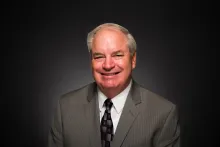
Robin Webber was born in Chicago, Illinois, in 1951, but has lived most of his life in California. He has been a part of the Church of God community since 1963. He attended Ambassador College in Pasadena from 1969-1973. He majored in theology and history.
Mr. Webber's interest remains in the study of history, socio-economics and literature. Over the years, he has offered his services to museums as a docent to share his enthusiasm and passions regarding these areas of expertise.
When time permits, he loves to go mountain biking on nearby ranch land and meet his wife as she hikes toward him.
