
David Mills
This transcript was generated by AI and may contain errors. It is provided to assist those who may not be able to listen to the message.
What a wonderful feast of Tabernacles we all have had. We have wonderful days of worship and fellowship, and we come back greatly refreshed and rejuvenated and ready to go on forward. And that is exactly where we need to go, forward toward the Kingdom of God.
Today we want to look ahead to these months ahead and maybe beyond and things that we need to be doing. I want to ask you a question. What is our greatest need? What's your greatest need? Isn't it a closer walk with God? I believe we're all striving to walk with God. We're striving to be close to God, but isn't our greatest need to even have a closer walk with God and be close to Him in these evil times. And we do live in evil times. Wars and violence and beheadings. We read about that in the Middle East, and we've had at least one in our own country. The fear of ISIS and what they might do, the jihadist. I tell you, Mr. Kubik's sermon during the feast, the feast webcast was certainly a very sobering one on Matthew 24 and 25, showing the times in which we are living, and we need to be very much aware of it. Of course, the sermon before the feast also brought out how we are living in precarious, evil times, and this age could suddenly present problems.
This society could begin to experience major turmoil so easily, and we could go down. Our grocery stores could, the shelves could be empty. You know, we're all dependent upon that. That could happen so quickly. Mankind is rushing ahead toward self-destruction, and Jesus said in verse 22, 21 and 22 of Matthew 24, that no flesh would be left alive. He went on to say also that the time that just before His Second Coming would be like it was before the Flood. And what was it in the days of Noah just before the Flood? Let's go back and read that in Genesis chapter 6 and beginning in verse 5. Genesis chapter 6 and verse 5. Then the Lord saw that the wickedness of man was great in the earth, and that every intent of the thoughts of his heart was only evil continually. You know, they developed an evil society before the Flood that was like in our age in many ways, very corrupt, very evil, a godless society. And God said in verse 7, I will destroy man. But notice in verse 8 that Noah found grace, favor in the eyes of the Lord. And why did Noah find favor? Well, verse 9 answers that question. This is the genealogy of Noah. Noah was a just man. He was not corrupt and evil like all the rest of the world. He was trying to do it right, God's way. He was perfect in his generations. The margin has blameless or having integrity. And it goes on to say that Noah walked with God. And so God told Noah that all the earth was going to be destroyed and to make an ark. And Noah then obeyed God. Noah walked with God and was close to God. We also read that another before the Flood walked with God, Enoch. In chapter 5, Genesis 5 and verse 21, Enoch lived 65 years and begot Methuselah. And after he begot Methuselah, Enoch walked with God 300 years. That's a long walk, isn't it? 300 years. I tell you, sometimes my wife and I go for a walk, maybe 15 minutes. We have gone longer, maybe 30. But to walk with someone for 300 years, Enoch walked with God. 300 years and begot sons and daughters. All the days of Enoch were 365 years. And Enoch walked with God. And he was not for God took him. Something happened there. We don't have all the details on that. But corruption and evil were everywhere, even in the days of Enoch. And also, it even got much worse in the days of Noah, not too long later. But these men walked with God. And they were close to God. We too must be close to God and walk with God in these evil times that we're living in. And today, then, I want us to think about that and talk about it.
The title of the sermon is A Closer Walk with God in Evil Times. This should be our goal as we come back from the wonderful Feast of Tabernacles. I determined in my own mind I wanted to draw closer to God at the Feast of Tabernacles in prayer and in reading of God's Word and in being there to worship Him and to fellowship with brethren. And I want to continue after the Feast to draw closer to God. I know that I need to. How about you? Do you know that God desires to be close to mankind just as loving parents desire to be close to their children? Parents want to be close to the children, and God wants to be close to us. Think about the Garden of Eden.
It was actually not God, but it was man who hid. God didn't hide. God came walking through the garden, and Adam and Eve had hid themselves. And God said, where are you? We may have read this saying that does God seem far away? Who do you think moved? So God really hasn't moved. He wants a close relationship with mankind, but mankind doesn't really feel comfortable around God, because mankind is not willing to do what is necessary to be comfortable and close to God. But God is a personal God, and you and I can be close to Him. And we, after the Feast of Tabernacles, we can draw closer to Him, and we should. I'd like to ask then, how can we have a closer walk with God? As we go forward after the Feast of Tabernacles, how can we have a closer walk with God? I want to bring up six things that we can do. I'm sure there are many others, but these are certainly some of the ways that we can have a closer walk with God in these evil times in which we are living.
Number one is to carefully keep and obey God's commandments. And let's turn to Deuteronomy chapter 10, and we see that this is what it means to walk with God. To walk with God means to obey God. It means to do what is pleasing to Him. It means to seek His will and want to do what He instructs us to do. So Deuteronomy chapter 10 and verse 12. And now Israel, what does the Lord your God require of you? But to fear the Lord your God. That means to deeply respect God and to be afraid to, and not want to disappoint God, but to instead honor Him and respect Him deeply. To fear the Lord your God. To walk in all His ways. That means keeping His commandments and His laws. To walk in all of His ways. And to love Him, to serve the Lord your God with all your heart and with all your soul. And keep the commandments of the Lord in His statutes which I command you today for your good.
Indeed, heaven and the highest heavens belong to the Lord your God. All said the earth with all that is in it. God owns it all. The universe belongs to Him. Verse 16 therefore, circumcise the foreskin of your heart. That means to cut away anything that is evil and strive to do the will of God and be obedient to God in heart and mind. It's a spiritual circumcision that's being talked about here. Circumcise the foreskin of your heart and be stiff-necked no longer. For the Lord your God is God of gods and Lord of lords, the great God mighty and awesome, who shows no partiality nor takes a bride. He administers justice for the fatherless and the widow, those who are helpless. God administers justice and He loves the stranger. Therefore love the stranger, verse 19. In verse 20 you shall fear the Lord your God, you shall serve Him, and to Him you shall hold fast and take oaths in His name. He is your praise and He is your God, who has done for you these great and awesome things which your eyes have seen. Of course, this was being written by Moses and directed toward the Israelites, who had seen the miraculous things that God had done. The brethren is in the Bible, and we've seen the miraculous things God has done in our time as well. God has not changed, He still does His wonders, if we just have eyes to see. In chapter 11, in verse 1, therefore you shall love the Lord your God and keep His charge, His statutes, His judgments, and His commandments always. And so if we are to be close to God, and if we are to draw closer to God after the feast, we are to carefully keep and obey all of His commandments. Jesus said the first great commandment is to love the Lord your God with all your heart and with all your mind and with all your soul. And so let us then draw closer to God by striving to be even more careful to obey Him and to want to please Him and to do His will, carefully keeping and obeying His commandments. Number two thing that we can do to draw closer to God after the feast as we go forward, it concerns our daily personal worship. Yes, there is daily personal worship that is necessary if we are to draw closer to God. The very word worship means to bow down, and so every day we must bow down to our great God and live our lives, then striving to do what is pleasing to Him.
This will involve things like personal prayer with God, sufficient time in personal prayer with God. Not just a short little prayer and then get up and go about your work, but spending sufficient time. I think we have felt that, you know, certainly it's more than just two or three or five minutes, but maybe, you know, getting down and like King David said, he would pray to God and cry aloud more evening, morning, and noon. You find that in Psalm 55 and verse 17.
And what a wonderful example that is. He would get down and worship God evening, morning, and at noon, and cry aloud. He wouldn't just pray, you know, a half-hearted prayer. He would be putting himself into it, crying out to God. Other verses even show lifting up holy hands to God. That's gesturing as we pray. You ever gesture when you pray lifting up holy hands? The Bible does mention that. Daniel also prayed three times a day when it was against the law. The King Darius had been tricked into signing a law by these men that didn't like Daniel. Daniel was not intimidated. He got down with his window open toward Jerusalem just like it was before. He had been doing before, and he prayed just like he had done before. What would you have done? Would you have said, well, boy, this is getting serious. I'm going to go and hide in my closet when I pray. Well, maybe that would have been okay, but Daniel didn't choose to do it that way. He prayed just like he did before, three times a day. He was thrown into the lion's den because of doing it. We know the rest of the story. God delivered him from that. But certainly wonderful examples of David and Daniel praying to God three times a day. Prayer is so essential. Of course, the constant attitude of prayer and having that constant contact with God in prayer is important. Somebody asked Herbert Armstrong once, how often, how many times a day do you pray? His answer was hundreds. I'm sure he did get down upon his knees, and maybe he got down three times a day. I don't know, but he certainly was in that constant contact with God hundreds of times every day. He'd go about walking around the campus or doing his work, and he'd be saying, God help me and be with me. And he would be praying or maybe thanking God also for answers to prayers. So hundreds of times every day we can actually be praying to God, and we can certainly get down upon our knees. Now, sometimes it is difficult to get down at noon. Like today, I was driving from Roanoke, you know, a congregation here, but I did pray in my vehicle as I came on down. And so, you know, sometimes you have to do the best you can, but all of us have a morning where we get up and we can have sufficient time for prayer in the morning, and all of us have an evening before we go to bed. So we can certainly, at least at the very minimum, have those two times where we can get down and pray and give God thanks. But if we are to be close to God, we need daily personal worship, and prayer is a part of it. Something else that is a part of daily personal worship is the study of God's Word, the Bible, reading and studying the Bible. This book, according to what Jesus said in Matthew 4 and verse 4, we are to live by every word in this book. And look at this book. My! There are so many words in this book. Genesis to Revelation. What a big book! God is inspired. And according to the apostle Peter, God inspired holy men of old to write down these words. Holy men of old were moved by the Holy Spirit, and they were inspired to write down the Bible. The Bible is a unique book. There's no other book like it. It's the only book God has written that he's given to mankind, and it's our guidebook of how we are to live and the meaning and the purpose of human life. And so it's a lifetime study.
And so daily personal worship includes prayer every day and also Bible study reading. I would say most every day that, you know, if you miss a day, don't let it become a habit and keep missing. You know, we all do sometimes have a day we might miss, but we need to read and study God's Word continually and not to neglect it. What about one other item in daily personal worship that is very important, and that is meditation. What is meditation? It's kind of mulling things over. It's thinking through certain things based upon principles of God's law and God's Word.
And one verse, Psalm 1 and verse 2, says, blessed is the man who meditates on God's law day and night.
We will be blessed if we meditate on God's law. How do we do that? Meditate on God's law day and night. And then at the same time, we are praying without ceasing, or prayer and meditation and thinking about God's laws and God's Word. They all work together. And we are to ponder and meditate then upon these things continually. In Joshua chapter 1 and verse 8, it brings out also to meditate day and night on God's law and that we will have good success if we do.
So prayer every day, Bible study and Bible reading and meditation every day are very important as part of our daily personal worship if we are to be close to God. Number three, number three is a special worship on the Sabbath day. Let's isolate one of the Ten Commandments, the fourth one, which says, six days shall you do all of your work, and then no work is to be done on the seventh day. Of course, we understand that. We've proven that to ourselves that we are to keep this day holy. Remember to keep the Sabbath holy. So don't forget about it. The very way this commandment is worded shows that we can neglect it. We can forget to keep it holy. But think of this. If you wanted to keep water hot, what would you do? You would turn on the heat and you would let it become hot, and then you would keep it hot by at least keeping it on a low setting, summer or or a low setting. If you turn off the stove, then you know it's going to grow cold.
You've got to continue to put on the heat if you are to keep that water hot. The Sabbath is that way as well. Remember to keep it holy. 24 hours we have that responsibility, you might say, or that challenge of keeping this day holy. Our minds can begin to wander off onto what we're going to be doing this coming week. Some maybe work of our work or business, or maybe there's even a leisure trip we're taking on Sunday, or something something of a leisure nature coming up on Saturday night. So our minds can so easily begin to wander on things that don't belong on the Sabbath, that don't fit.
So the Sabbath is a day of solemn, well, rest. Let's read about that in Leviticus chapter 23 in verse 3, and we are to keep it holy. And we have to put out effort to keep it holy.
And without effort, we could certainly begin to neglect keeping this day holy as God commands. Leviticus 23 in verse 3, 6 days shall work be done, but the seventh day is a Sabbath of solemn rest. This is a day that, you know, we are to have solemn rest. That means with a purpose. We're resting with a spiritual purpose of drawing close to God and doing what is more pleasing in His sight. You shall do no work on it. It does say also a holy convocation. So this meeting is very important. It is a commanded assembly, and we ought to strive to attend the holy convocation every time. You know, I think God is putting stars up beside names and He wants a star to be there every time, unless we're sick or have some valid reason, then He wants us to be at His commanded holy convocation service. Not just to take it lightly, but it's a holy convocation. You shall do no work on it. It is the Sabbath of the Lord in all your dwellings. So brethren, the Sabbath is a time for extra prayer and study and meditation. The Sabbath is a time to draw closer to God. The Sabbath is a time to come to worship with brethren and to fellowship with brethren.
And think of this. Every Sabbath is brand new. Last night at sunset, a 24-hour period, the Sabbath began that had never happened before. This Sabbath, you know, is happening right now.
It'll be over at sunset tonight. And every Sabbath is brand new. We've never kept this one before. We've kept this part of it up until this time, but we haven't completed it yet. And so every Sabbath, we have that 24 hours that we can use in a special way to draw closer to God. That's why it is a very important one. We can examine ourselves. We can study and pray. We can ask ourselves, how are we doing? Are we drawing closer to God? This day gives us time to reflect. God must have had many things in mind when He created the Sabbath. The Sabbath was created. It was made for man, made for the benefit of man. And so God beckons to each of us, use these 24 hours to grow in your relationship with Me, to draw closer to Me. All right, number one, then carefully keep and obey God's commandments. We want to have a closer walk with God after the feast. Number two, make sure that we maintain a daily personal worship through prayer study and meditation.
And number three, do then have special worship on the Sabbath day. Let's go to number four now.
Number four, special worship on God's holy days. The holy days, the seven holy days, we have the opportunity to spend extra time with God as well as with brethren. And God commands us to rejoice. Have a good time when you have special worship on My holy days. And we must take the holy days seriously. I tell you already, I've got my calendar for 2015. Got it marked. I know when the Passover is coming, the night to be much observed and feast of unleavened bread, Pentecost, feast of trumpets and day of atonement, feast of tabernacles. So it's time to go ahead and look ahead to 2015 and take God's holy days seriously and begin planning for them. In the millennium, everybody will be required to keep the feast of tabernacles. And, you know, by extension, the other holy days as well. The holy days will not be optional. Christ won't say, well, we'd like for you to keep them if you don't mind. No. He's going to say, keep My feast of tabernacles. Come to worship on My festivals. And God's holy days are not optional today.
And brethren, plan to keep all the seven days of unleavened bread, all the seven days of the feast of tabernacles and last great day. I've known people that leave, you know, halfway through the last great day and they're on their way home. They don't stay around for that second service.
Maybe there may be circumstances at times, maybe a death in the family, illness, sickness, or there may be some situations, but if there are not, then how does God look at that? I think He expects us to be there all seven days. Probably some have left early for some kind of, well, you know, visits with friends or family somewhere or some kind of attraction. But that's not acceptable with God. He says, keep the feast to Me seven days for the feast of tabernacles and then the eighth day after that. So, you know, how does God look at it if we miss part of His holy days? I don't think He looks at it very well. So the holy days allow us or give us, provide to us an opportunity to examine our relationship with God. Are we really walking with God? Are we really close to God like Noah and Enoch? Keeping the holy days in a proper manner, conscientiously keeping them will help us to grow closer to God in our relationship with Him. That's number four. Number five is faithfulness in tithing. Yes, we're going to get right into your pocketbook now. God's law gets into your pocketbook in tithing and offerings. Let's explain just a little bit about tithing. First of all, we know that God owns everything. Heg-Ei 2 in verse 8 says that all the silver is God's, all the gold. In the Psalms, we read that the cattle on a thousand hills are God's. I saw some cattle this morning out grazing, and they all belong to God. Everything. It all belongs to God, but He gives us it to enjoy.
But He does on things where we have an increase from our labor, He does require that we give the first 10 percent to Him. Now, in the Old Testament, that went to the Levites. In the New Testament, it goes to the church for its work. But the tithe is holy to God. Leviticus 27 in verse 30 says the tithe is holy to God. And so we must give to God what is holy, what actually belongs to Him.
Proverbs 3 brings out that when we do give God the first fruits of our labors, that this honors God. We honor God. When we write out that check and we give our tithe to God, that honors Him.
And if we don't tithe, then let's notice what it is. In Malachi chapter 3, if we withhold the tithe, maybe we use human reasoning and say, well, I had a bill coming up, I just couldn't pay all of the tithe. We could not give the tithe to God. You know what that is? That's robbing God.
That first 10 percent, whether you know you have a hard situation paying a bill, that first 10 percent still belongs to God. And we should not compromise with that. In Malachi 3 in verse 8, will a man rob God? Yet you have robbed me, but you say, in what way have we robbed you in tithes and offerings? Not only should we give that 10 percent. Say you have a hundred dollars increase. How much is 10 percent? Well, 10 dollars. That's God's. But then in the offering, include an extra dollar or two or whatever you feel in your heart to give. We've had people to ask, well, just how much should my offering be? We can't answer that, brethren. That's between each individual and God. That's between you and God. We cannot tell you how much your offering should be. We can tell you how much your tithe should be, of course, 10 percent. But God promises to bless. As it goes on down the say, He will open the windows of heaven and bless and watch out for us if we are faithful in tithing. So don't compromise in tithing, even in hard times.
Go ahead and give God that 10 percent that is His, and then pray about it and work hard. Use all your very best creativity in money management to pay your bills and make ends meet.
Abraham, Jacob, and other men of God tithed. And so let us follow their example. But you know, it's not only tithing and money matters. Pocketbook matters. Not only the tithe that goes to God, but the second tithe is also commanded. Let's notice that in Deuteronomy chapter 14.
And this is important. The second tithe is what we sometimes call the festival tithe.
It's very important as well. In Deuteronomy chapter 14 and verse 22, you shall truly tithe all the increase of your grain that the field produces year by year, and you shall eat before the Lord your God. What tithe is this talking about? It's not the same one as it goes to the Levites or goes to the church. You shall eat in the place God chooses then the tithe of your grain and wine and oil and firstlings that you may learn to fear the Lord your God always. They could turn their goods, farm goods into money and go to the place. And verse 26, you shall spend that money for whatever your heart desires. Ox and sheep, wine, similar drink, whatever your heart desires. You shall eat there before the Lord your God, and you shall rejoice you and your household. In the commentaries of Greg, we're not the only ones that realize that this is not the same one that went to the Levites. This is a second tithe, and it shows the importance of the festivals of God. God has us to save aside 10% for that special worship at His holy days. And we can use that money for gasoline during the spring holy days or for the night to be much observed. Expenses for food and gasoline traveling to the first holy day, Pentecost, and the other local holy days we can use our festival money. But most we've got to make sure we save a sufficient amount to go to the Feast of Tabernacles, the most joyous of all the festivals.
So part of being close to God is faithfully saving our second tithe, or our festival tithe, and then using it to worship God and rejoice before Him at His holy days. So it's a part of walking closer to God that we faithfully save the second tithe, and not dip into it if we have hard times again as far as making a payment on a bill. That money is therefore a sacred purpose. It is holy money in that respect for God's festivals, and we should be faithful in saving it.
I might mention that the Church does request of all that are financially able to do so. Somebody is just on such a tight budget they can't do it. That's understandable. But for those who are able to send 10% of your festival money to the Church to pay for all the hall rentals and equipment and other things needed to have a feast, when you go to your festival site, it does take some money to pay for the hall and equipment.
We also use some of these funds to assist the needy. So if we're able to do so in the spring of the year, we do at the time we make our festival plans request that we send in 10%. Most people will not miss that because when you think about if you're making several thousands of dollars that you'll save aside for the holy days, in many cases, then you will not really need that 10%.
You'll have plenty left to go to the feast. And many people have, they give excess beyond that 10% for use of the Church for festival needs and expenses. Do you know, be faithful then in financial matters, first tithe and second tithe, did you know there was in Israel a third tithe, and it's mentioned right here in this same chapter, Deuteronomy 14 and verse 28, at the end of every third year, you shall bring out the tithe of your produce of that year in storage within your gates, the Levite, the stranger, the fatherless widow.
The needy then would come and be able to eat and be satisfied that God would bless you in all the work of your hand that you do. And so there was in ancient Israel a welfare type tithe, one that would assist the needy. Today the Church has ruled that we give a lot of money in the form of taxation. And by the way, as far as even figuring your increase on your first tithe and your second tithe, you can do that on the net income after taxes have been taken out because the government just reaches in by law and they take out a big chunk of your income and that which remains can truly be considered your increase.
The Church does not come into your finances and determine what your increase is. You have to determine that for yourself. But we do have a ruling that that can be calculated on the increase or on the net income as your increase. If a person chooses to tithe on his gross income, that certainly is up to him in doing it that way. So we don't try to determine what your increase is except to give that guideline.
So the third tithe that was in ancient Israel was for the needy. And so today we have ruled that much of that is actually taken care of by our taxes that we pay in food stamps and other welfare programs. But at the same time, the Church does maintain a third tithe account or fund and we are able to help when there is a need. There are some needs that come along that welfare doesn't cover.
So sometimes we have paid someone's rent, we have paid someone's electric bill or bought food for them. But number five, faithfulness and tithing and money matters. Let us be faithful to God. That's part of being close to God and honoring God and showing that we appreciate all that He does for us.
Number six, the final one, is teaching our children to be close to God. That's what the new Deuteronomy 6 program is going to help a lot as parents begin to teach their children. The Church is going to support and assist but not supplant. So it's a good approach. All of us working together. We're going to talk about it more today after the service and in the days ahead.
The theme for this year is making God real. What a good topic to begin. What better topic could there be than making God real? At the same time that we explain to our children about God, all that He reveals to us, all that we can come to understand, we try to explain all that to our children, then we can encourage our children to develop a closeness to God in their own lives.
So making God real and encouraging our children to be close to God. Yes, and those 6 and 8 and 10 and 12 year olds can begin to develop a relationship with God. And they can begin to be close to God. And they can draw closer to God, too. And I think parents ought to encourage their children.
Son, daughter, I'm striving to walk closer to God and I hope that you'll do the same thing. But, you know, the child has his own free moral agency. He has ultimately to decide that for himself. Parents can certainly encourage their children to be close to God. Like, say, Joseph was close to God and walked with God and would not compromise. Samuel also, and David, and Daniel, and Timothy, and many others in the Bible were close to God.
Well, brethren, let's begin to wrap this up. God desires to be close to man. He desires to be close to you and me. And I hope that we desire to be close to him. These points will help us to be closer to God in the days ahead. Let's carefully obey and keep his commandments. Let's maintain our daily personal worship of God.
Let's make sure that the Sabbath is a day of special worship and drawing close to God. As the Holy Days also extra time to draw closer to God. Let's be faithful in money matters, tithing, offerings, all that God instructs us along that line, and then teaching our children to also be close to God. Let's turn to Micah chapter 6 for our final Scripture. And this is what God wants. This is what God is looking at. He wants to be close to you and me. You know, in the Bible, we read in three separate Scriptures. This is Micah 6 in verse 6. While you're turning there, I'll mention this other. In the Bible, there are three separate verses that use the expression Abba Father. And the word Abba is the Aramaic for father, so the expression means father-father. It's a close, warm, intimate expression. Abba Father. Do you feel that you have a close, warm, Abba Father relationship? I think it's something to meditate about. You do have that kind of relationship with God. Only you can answer that, and hopefully you do. But the first time Abba Father is mentioned in the Bible is in the Gospel of Mark in the account where Jesus was praying on the night before He died. And He knew that He was facing a horrible, painful death. And we know that blood mixed in with His perspiration according to one of the Gospel accounts. He was in agony, and He prayed Abba Father. That's the first time that's mentioned in the Bible, when Jesus was praying on the night before He died. Abba Father. Paul later uses that expression twice in his writings, but it shows the kind of relationship that we should strive to have with our Father. Close, warm, intimate. And as we go forward after the feast, we should strive to grow in that type of relationship with God. Closer than ever to Him. In Micah 6 and verse 6, with what shall I come before the Lord and bow myself before the Most High? What's God looking for? What does He want? Shall I come before Him with burnt offerings, calves a year old?
Will the Lord be pleased with thousands of rams or 10,000 rivers of oil? Some of those things are not even possible. 10,000 rivers of oil. How would you do it? Shall I give my firstborn, firstborn child for my transgression, the fruit of my body for the sin of my soul? That would be an extremely extreme measure. Is that what God wants? No. In verse 8, He has shown you, O man, what is good. This is what God says is good. This is what He wants. And what does the Lord require? But to do justly, live by God's laws and commandments. Do what's pleasing to Him and to love mercy. We certainly should do that. God Himself is a God of mercy. To love mercy and to walk humbly with your God. It does take a humble, broken, contrite heart and mind to walk closely with God and to be close to Him. So after an inspiring feast of tabernacles, where did we go?
We go forward in a closer relationship with our great Creator God. In these evil times, the people of God must look up and lift up their heads, as Jesus said, because their redemption draws near. These are evil times. What is this coming week going to bring? We don't know. What kind of murders, shootings, killings? Maybe things will ease off. We hope they will.
But scriptures indicate they will get worse in the days ahead. So we must watch, therefore, and pray always that we may be a county worthy to escape all these things that will come to pass and stand before the Son of Man. Brother Nefter, an inspiring feast of tabernacles, in these evil times in which we are living, let's walk with God that is, draw closer to God.
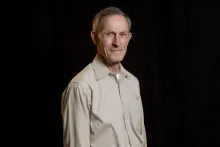
David Mills was born near Wallace, North Carolina, in 1939, where he grew up on a family farm. After high school he attended Ambassador College in Pasadena, California, and he graduated in 1962.
Since that time he has served as a minister of the Church in Washington, Florida, North Carolina, South Carolina, Oregon, West Virginia, and Virginia. He and his wife, Sandy, have been married since 1965 and they now live in Georgia.
David retired from the full-time ministry in 2015.
