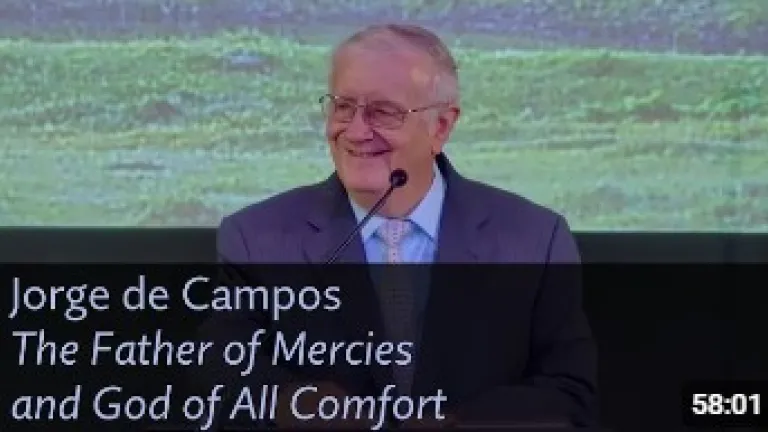


Jorge de Campos
God's grace is often mentioned but not deeply examined or practiced. Grace is more than forgiveness. Christ did not merely teach grace. He lived it by acting with grace, suffered graciously, and gave Himself for us. He calls you and I to imitate Him. To give goodness to others like God does to us. Let us grow in grace and in the Knowledge of our Lord and Savior, Jesus Christ.
What does Christ teach us? Well, that's quite a large subject, isn't it? You could write books and books about it. You could teach about love because He taught us about love. He taught us about obedience and repentance and faith and humility, servant leadership, the kingdom of God, and other things that may be practical, small things to each one of us, for instance, how to pray. So all these things are true and correct, but yet woven quietly throughout all these teachings, there's another truth that is often misunderstood and often under-practiced.
And so today I want to focus on one word, which encompasses what He taught and how He lived, what He did, in fact, what He is. It's something you and I need to grow in. Surely the word could be love because God is love, God's law is love, love towards God and love towards fellow man. And surely outgoing love, agape love, is a motivating factor or engine towards this. But I want to focus on one word today, and the word is grace. That describes an example of what Christ and what God is. God is good and gracious towards all of us, and that is part of knowing Jesus Christ, what He is.
And the example is set for us. In 2 Peter 3, verse 18, verse 18 said, This is a scripture that I quite often think about because it's telling us to grow, obviously, in the knowledge of Christ, what He is, how He acted, how He lived, His example. But for you and I to grow in grace, which means that you and I need to develop that same grace, the same goodness and graciousness that God has for us, you and I need to develop.
That's part of His teaching. But in another way, grace is love in action. It simply is what God and what Christ are. Of course, they all love, but that love in action produces acts or deeds which are gracious. Paul experienced that firsthand. He describes the mercy, the patience that you received from Christ as a pattern for us of what Jesus Christ will do for you and I. Turn with me to 1 Timothy 1, verse 16.
He says, However, for this reason, and if you read it in the context that Christ came into the world to save all sinners, of whom Paul admitted He was chief, and he says, However, for this reason, I'll obtain mercy, that in me first Jesus Christ must show all long suffering as a pattern to those who are going to believe on Him. For ever-lasting life. And so God's grace, Christ demonstrated grace towards Paul, and he admitted He was a great sinner.
But that's a pattern of what Christ is doing for you and I. In the Church we have a booklet, which I strongly recommend you all to read and study before Passover, because it really addresses this very misunderstood and under-practiced act of grace. Because it's an act, an action, which is godly, which you and I need to emulate into our lives by showing grace towards others, how by how we treat others. And so Jesus Christ was a life, was a continuous teaching to us by Him living a life of undeserved favor towards you and I, of being patient to you and I in mercy, of being forgiving.
And therefore, through this, Christ teaches us what God's grace means, which basically is the good that God gives, the goodness that God gives us. It's God's love in action. It's God's favor, God's love, God's kindness, God's unmerited blessings towards us, even when we don't deserve it. But you may ask, so what? So what? For what purpose?
Yes, that's what God is. That's what Christ has done. Is that the end of the road? Or is there more to it? Is it an intended final outcome for you and I? Turn with me to Romans 11. Romans 11, at the end of Romans 11, we see Paul in this last section from Romans 9, 10, and 11, he's showing how the Israelites have messed it up, but he says that they will, in the end, all will be saved.
We see that in verse 26 of Romans 11. But then in verse 32 says, God has committed them all to disobedience. God has allowed the Israelites to disobey. They might have mercy on all. This is kind of mind-boggling, isn't it? Because it says, verse 33, Oh, the depth of the riches, both of the wisdom and knowledge of God. How unsearchable are His judgments and in His ways past finding out.
Who has known the might of the Lord and who has become His counselor or who has first given to Him and it shall be repaid to Him? God does not show mercy and goodness and kindness towards us. God doesn't show grace towards us so we can pay Him back. You and I can't pay Him back anything. And so why? Why? Well, the answer is in the very next verses. Well, that's chapter 12, Romans 12, verses 1 and 2. And yeah, Paul is saying, I beseech you, brethren. I pray. I'm asking you, please, brethren. I beseech you, therefore, by the mercies of God, that you present your bodies a living sacrifice, holy, acceptable to God, which is your reasonable service.
The reason why God shows mercy to you and I, shows goodness, shows grace to you and I, is so that we be transformed, as it says in verse 2. Don't be conformed to this world, but be transformed by the renewing of your mind.
God wants you and I to change. God wants us to become better, to become like Him, to imitate Him. And that's what Paul says in Ephesians chapter 5. Ephesians chapter 5, verse 1. Therefore, be imitators of God as dear children, and walk in love as Christ also has loved us, and has given Himself for us an offering and a sacrifice to God for a sweet-smelling aroma.
And so this action of love and exhibiting sacrifice and goodness is God's grace towards us, which you and I need to imitate. We need to replicate. We need to do the same thing. As Peter explained at the end of 2 Peter, as I read a little early on, we need to grow in the knowledge of Jesus Christ. His example in his life is to us an example of living, practicing grace. And you and I need to learn from him how to live, how to apply graciousness in our lives like Christ did. We must learn how to deal with others in a gracious way like Jesus Christ does and did for us.
Therefore, we must grow in grace and knowledge of our Lord and Savior, Jesus Christ. And so grace is central to how God relates to us and how we understand his character. It's actually key. So correctly understanding grace changes how we see God and how we see ourselves and how we treat others. And grace, brethren, doesn't start with you and I. Grace starts with God. For instance, if we look at John 6, 44, it says, No man can come to me unless the Father draws him, and I'll raise him up at the last day, John 6, 44.
Think about it. It removes pride because it's not you and I that initiate that relationship. It's God.
And so your calling, my calling, our family, as it was clearly explained in the sermonette, the forgiveness that is extended to all of us does not begin with our goodness or insight, but of God's initiative and, as we heard in the sermonette, sometimes many years even before you and I were born. And so God's grace is an act when he moves first. It's God's loving action towards us.
Now that does not weaken obedience. It makes obedience possible and a requirement. You see, this is where the world today says, oh well, grace, therefore the law has gone away. No, it's not. Christ teaches us that grace is much more than just forgiveness.
You see, one thing that Christ teaches us is that God's law is part of God's grace. Have you ever thought about that? God's law is part of God's grace because God's law is good and he gives us the law for our good. It's the good that God gives us, for one through the law. And therefore, with his law and his direction and us understanding and applying his law, you and I can be transformed. Our lives can be transformed. And therefore, true grace does not abolish God's law. In Romans 6, verses 1 and 2, Romans 6, verses 1 and 2, Romans 6, verses 1 and 2, what shall we say then? Shall we continue in sin that grace may abound? Certainly not! Absolutely. Completely ridiculous! How shall we who die to sin live any longer in it? A little bit lighter in verse 14 and 15, still of Romans 6, it says, For sin shall not have dominion over you, for you are not under the law but under grace. You are not under the penalty of the law, you're not to obey God's law, you're not under that penalty. The law is not on top of you. Why? Why would the law be on top of you? Because you're disobeying. The law for instance, the police will not be on top of you if you're obedient. They're going to go after the disobedient. And so the law is for the disobedient. And so therefore, if you are obeying because you are under God's grace, and therefore you want to imitate and be like God, and therefore you're going to obey His law, you know, it says, sin will not have dominion over you.
Verse 15, what then? Shall we sin because we are not under the law, not under the penalty of the law, but under God's great goodness and acts of love? Certainly not. Certainly not. We know well Matthew 5, 17 through 19, where Christ says, I do not come to abolish the law. Not one iota or one little tick of the law will be done away.
God's grace doesn't do away with the law. In 1 John chapter 2, verse 3 and 4.
By this we know that we know Him if we keep His commandments.
I don't think it can be any plainer. He who says, I know Him and does not keep His commandments is a liar. It's not me saying it's our own Bible saying to those people, says, oh well, the law is done away.
It says then the truth is not in Him. The truth is not in that statement. And so God's grace empowers us and makes obedience a requirement. It empowers us to walk God's way. And how? How does it empower us? Because you and I receive God's Holy Spirit. And God's Holy Spirit in 2 Timothy chapter 1 verse 7, you know, is not a spirit of fear, but of power, and of love, and of a sound mind. And God's Holy Spirit is what? It's a gift, right? Acts 2.38, repent and be baptized, and you shall receive that gift. It's something good from God. It's a gift. And so God's Holy Spirit is God's power, and through grace you and I are in power to live God's way, that is, to obey, because we have received God's gracious gift of His Holy Spirit, which is God's power to help us to obey God. And you know, it's like a virtuous circle. Okay, that's a little play on a vicious circle. You know what a vicious circle is? You know, it gets, one thing gets worse and worse and worse. Well, the opposite is a virtuous circle. And a virtuous circle is, at baptism, you and I make a commitment to obey God. Right? In fact, before, you see, Christ died for us, symbolic Passover. We make a commitment to obey God, symbolic, and even bread. Then we are baptized because we have repented. We made a commitment to obey God. Then we're baptized. We literally signed that contract. And then, symbolic or Pentecost, we receive God's Holy Spirit. And so, God's Holy Spirit is given to us when we obey, but the more you obey, here is the virtuous circle. The more you obey, the more God gives you of His Holy Spirit. Hex 5.32, God gives His Holy Spirit to those that obey Him. And so, we got this circle as the more you obey, the more of God's Spirit you have, and the more of God's Spirit you have, the more you obey. It's beautiful. And with God's Holy Spirit, that is the guarantee for us to have eternal life, right? Romans 8. For this is, let's go and look at Romans 8, verse 9 through 11. Romans 8, verse 9 through 11.
Romans 8, verse 9 through 11.
And says, but you are not in the flesh, but in the Spirit. Why? Your mindset, your thinking is not on the things of the flesh. Your mindset is doing the things of God, of the Spirit. If indeed the Spirit of God dwells in you. Now, if anyone does not have the Spirit of Christ, obviously it's the same Spirit. There's only one Spirit, right? So it's the Spirit of God, it's the Spirit of Christ, it's the Spirit that you and I will have too. It's the Spirit of... We knew that we work with your Spirit of man, so it'll become part of your Spirit too. And so, if we do not have God's Holy Spirit, we're not His. And if Christ is in us, living in us, the body is dead because of sin. We're not gonna live anymore the passions of the flesh. But the Spirit is life because of righteousness. So God's Holy Spirit is in us, gives us life. And if the Spirit of Him, which is of God, who raised up Jesus from the dead, dwells in you and I, He who raised Jesus from... or who raised Christ from the dead, that is the Father who raised Christ from the dead, will also give life to our mortal bodies through His power, His Spirit, which dwells in you. And so God's Holy Spirit is essential for eternal life. And so, even though, even though you and I are justified freely by Jesus Christ's sacrifice, we need to use God's Holy Spirit to be sanctified. We need to use God's Holy Spirit to be sanctified. And so God's Holy Spirit gives us the power to live God's way to be sanctified.
And so that is the second point that Christ teaches us besides that we've got to obey, is that we've got to use God's Holy Spirit to be set aside, to be separate. In John 3, verse 34, if I read it from the New Living Translation, it reads, For he is sent by God, he speaks God's words, for God gives him the Spirit without limit. Christ was full of God's Holy Spirit and not by measure. He was full of God's Holy Spirit, was full of power. You and I need to be in the same condition, and the more we obey, the more God gives of his Spirit, and the more we'll be filled with the Spirit. In 1 Peter 1, verse 2, he says, we are, as we have God's Holy Spirit, as the Holy Spirit says, it helps us in the sanctification of the Spirit. For what? For what reason? You read it in your own Bible, in 1 Peter 1, verse 2, for obedience. In 2 Thessalonians 2, verse 13, he says, And we read, for instance, when Paul, writing to the Corinthians, is saying that the brethren there had become like a spiritual letter written by God's Holy Spirit in their hearts. And so God's Holy Spirit writes things in your hearts, as he did to the Corinthians. And what does God's Holy Spirit write in your hearts? You read in Hebrews 8, verse 10, for instance, and you also have in the Old Testament. God writes his law, the law of love, in our hearts and in our minds with his Holy Spirit. You see, God's Holy Spirit empowers us to obedience, and God's Holy Spirit therefore helps us to be set aside and different than the world. And so Christ teaches us through the Holy Spirit that we got obey, and we'll use the Holy Spirit to help us obey, and for being more and more close to God and more and more becoming like God. And that brings us to my third point that I want to mention, which is probably the most vital one. And that is that Jesus Christ teaches us that grace must be reflected in our conduct to others. Now think about it. Grace must be reflected in how you and I treat others.
You know, that's the crux of the matter. And that is the point that you and I got to grow in. We got to grow in how we treat others, so we treat others like God, and Christ treats you and I.
In Galatians 2, verse 20. Galatians 2, verse 20.
Galatians 2, verse 20.
In other words, there is nothing physically in the flesh. In the flesh, I live by faith in the Son of God, who loved me and gave himself for me. I do not set aside the grace of God. For if righteousness comes through the law, then Christ died in vain. In other words, there is nothing physically that I can do to earn. But I imitate, I follow Christ's grace. Christ teaches us His gracious acts of love, through which you and I need to be transformed and changed to be like Him. Now, you and I can read, for instance, Matthew 18. And quite often we talk about Matthew 18 and say, well, you know, have this approach. But towards the end of Matthew 18, it talks about the unforgiving servant.
And you know the story, because the disciples came to Christ and said, How many times must I forgive this person? Seven times?
Oh, what did Christ say? Seventy times seven. Matthew 18 verse 22. Seventy times seven.
And then it goes on to the parable of that unforgiving servant. They had a huge debt, and that was forgiven to Him. But then He didn't want to forgive something from the other person. And there wasn't a small amount. It was quite a large amount as well, but not as huge. The comparison is to you and I. Our huge debt is what God has forgiven us. Can't we forgive our fellow man? Even though in my mind or in your mind that sin may be very big, can't we forgive? Because then it says, if you can't do it, then I can't forgive you.
I can quote various scriptures that say, Be merciful like your Heavenly Father is merciful. Scriptures that say, I desire mercy and not sacrifice. Christ, before He died, He said, Father forgive them, for they do not know what they do. But I think the clincher is in Matthew 6. In Matthew 6, verses 14-16. Matthew 6, verses 14-16.
Matthew 6, verses 14-16. After giving the Lord's prayer, the sample prayer, He says in verse 14, For if you forgive men, they trespass us. Your Heavenly Father will also forgive you. Do you and I need forgiveness? Do we need mercy? Do we need grace from God? Because grace, I understand, is more than forgiveness. So we need all these great, good, loving, caring acts from God. But it says, but if you do not forgive men, if we do not show grace towards our fellow men, our sins will not be forgiven. And what does that mean? We'll not be in the kingdom. We will not be in the kingdom. If we don't give grace back, we will not receive further grace from God. Wow!
Because we have not learned from Christ's example. We give, we serve, we sacrifice, to treat others in a godly way. Why? To earn a favor? No. But it's because God has already given us grace and has given us an example to imitate. We need to do that and want to do that. We need to want to forgive and show grace to others and treat others properly from the bottom of our hearts, sincerely, without hypocrisy.
Why? Because our hearts have been changed by God's only Spirit. Why? Because our goal is to be children of God in the kingdom of God, the sons of God, and that means we're going to be like God is, and that means we're going to be one. Like God and the Father are one, and you and I are to be one. We are to be united, and to be united we've got to show forgiveness and mercy and grace to our fellow men. John 17, verse 21 through 23. That's what Christ prayed. As let's say, His lost prayer in front of His disciples was not technically His lost prayer because we know He went on a mountain of olives and then prayed afterwards. But that was His lost, let's quote, public prayer. Like His lost will in His prayer, that you and I may be one like they are one. And for us to be one, to be united, we've got to show grace like they show grace towards us.
So let's learn what Jesus Christ taught. To show love like Christ did through acts of goodness, through Christ's teaching on grace. Again, grace, brethren, is not just a belief. Oh, I believe in grace. Grace is imitating God, imitating Christ. To have grace is to love when it costs us. To have grace is to forgive when it hurts. To have grace is to be merciful when judging somebody else will be a lot easier. To have grace is to give when it could withhold. So Christ did not just merely teach grace, He lived by acting with grace, by suffering graciously, by giving of Himself to us. And He calls you and I to do the same, to grow in that grace, to give goodness to others like God does. And I want you to read Hebrews 12, verse 28 with me. Hebrews 12, verse 28. Therefore, since we have received a kingdom which cannot be shaken, let us have grace by which we may serve God acceptably with reverence and godly fear.

Jorge and his wife Kathy serve the Dallas (TX) and Lawton (OK) congregations. Jorge was born in Portuguese East Africa, now Mozambique, and also lived and served the Church in South Africa. He is also responsible for God’s Work in the Portuguese language, and has been visiting Portugal, Brazil and Angola at least once a year. Kathy was born in Pennsylvania and also served for a number of years in South Africa. They are the proud parents of five children, with 12 grandchildren and live in Allen, north of Dallas (TX).
