
David Mills
This transcript was generated by AI and may contain errors. It is provided to assist those who may not be able to listen to the message.
Well, it is a privilege, isn't it, to be a part of God's church? And God has called us to do a work. We have business that our Father wants us to be attending to. Jesus gave the marching orders to His church after His resurrection, and we read about it in a few passages. We might just turn to, first of all, like Matthew 28. We have work that we need to be busy doing. God has called us to do a work individually as well as collectively. Notice in Matthew 28 and verse 18, He said, All authority has been given to Me in heaven and on earth.
Go therefore, and here is those marching orders, go therefore and make disciples of all the nations, baptizing them in the name of the Father, and of the Son, and of the Holy Spirit, teaching them to observe all things I've commanded you, and lo, I am with you always, even to the end of the age. Amen. So Jesus Christ has commissioned the church to reach out into the world and to preach a message.
It is the message of God's kingdom, the kingdom of God. It's actually the same message that Jesus Himself came preaching, the gospel of the kingdom of God, and commanding people to repent and to believe the gospel. You know, our message goes out in the same way. In Mark's account, it says that we are to go to all the world and preach the gospel to every creature. And I want you to notice Luke's account of what Jesus told His disciples to do in Luke 24.
Again, these are words of Christ after His resurrection. It's the commission He gave the church. It's what He wants us to be busy doing, making disciples, preaching the gospel to everyone. And in Luke 24, notice in verse 45, He opened their understanding to comprehend the Scriptures. He said it's written, and thus necessary for the Christ to suffer. He explained His own suffering and death and resurrection.
In verse 47, that repentance and remission of sins should be preached in His name to all nations, beginning at Jerusalem. Notice that repentance and remission of sins is very much a part of the message that the true church of God teaches. We do. Our Good News magazine, if you'll notice near the end of most of our articles, there's an appeal for people to act. Take action. That's what repentance is. Repentance is turning in the right direction and taking action.
So we appeal to people individually as well as to nations to change their ways, to repent, have their sins remitted. That's the solution to our problems. And so repentance very much accompanies the preaching of the gospel. John, in his gospel, in chapter 21, Jesus told Peter three times to feed my sheep. And so he focused more on the feeding of the sheep so that they can be prepared to reign with Christ at His return. So the mission of the church, the work that God has given to us to do, is an exciting work.
I've been privileged to be a part of it myself for over 50 years, and many of you have been around for quite a while also. You've been called into the field, you might say, God's field, to do a work. You're not called to sit, we're not called to sit still. We're called to look around and find things to do. And we, certainly there's a lot that needs to be done. You know, one thing that we all want to do is to have our hearts in the work of the church that is being done.
About two years ago, there was an administrative change in the leadership of United Church of God. And we began at that time to focus on the preaching of the gospel in a greater way. We began to talk about it and write about it. In letters that came out, we brought out that we must strike a balance between the preaching of the gospel, and certainly as far as building a campus and buildings, which have been in the works a lot of talk about up to that time.
And so we began to focus more on the preaching of the gospel, which has been our focus down through the years anyway. So in additional letters we have mentioned that we would use all the powerful tools of television, radio, the internet, and printed literature.
Did you know that we were not on WGN two years ago quite yet? I believe that would be in May or June, if I remember correctly. Maybe even June of two years ago that we began to the door to WGN opened to us 8.30 a.m. Eastern Time. That is an excellent time to have our program on the East Coast. It is a little bit early for the West Coast, not quite as bad in the middle section, but just an ideal time to have our program on the Eastern half of the country. And so we begin then to preach the gospel in a greater way. Our theme at the GCE, the General Conference of Elders, two years ago was, Go Into All the World, taken out of Mark's account, Mark 16. It's an exciting thing then to be a part of the work of God. It really is the same work that Jesus started preaching the gospel. It's the same work that the early church then continued after the start of the church. They took the gospel, first of all, to the Jews, locally, starting in Jerusalem, yes, and then branching out in Judea, Samaria, and beyond. God prepared and called a special man to take the gospel to the Gentiles. And after all, Jesus already had indicated it was going to go to the Gentiles. Go and make disciples of all nations. So obviously, the Gentiles would be called to be a part of God's church. So the Apostle Paul was specially prepared and called by God to take the gospel message to the Gentiles.
Then God's church down through the centuries didn't do quite as much of a worldwide work. There was work being done. We can trace Sabbath keepers and ones that looked for God's kingdom to be set up on the earth. We can trace ones who are members and who call themselves Church of God as well.
Eventually, they wound up in parts of Europe, then on into Northwestern Europe, into England, and then on into the New World. We can trace the Church of God down through the centuries until our time. Mr. Armstrong came in touch with the Church of God, and they were keeping the Sabbath. For certain things they had lost, though. They had lost the knowledge of the Holy Days.
Certain things had to be restored to the understanding of the Church.
The big work was done under the leadership of Mr. Herbert Armstrong. We have strived to continue that work in the United Church of God.
In our time, a big work again is being done.
Right now, we are... Turn to Acts chapter 1. There is something here that maybe is only possible to be done with all of the powerful media that we have available to us.
In Acts chapter 1, and in verse 6, the apostles asked Jesus, Lord, will you at this time restore the kingdom to Israel? He said to them, It is not for you to know the times or the seasons which the Father has put in His own authority.
Seems like God's people have always been interested when will the kingdom be set up.
We still wonder that today, don't we? We still like to know just how close we are. When will God's kingdom come and be set up on the earth? When will Christ return? So we just don't know. Even today, with all that's happening in the world, we still cannot know exactly how close we are.
I'll tell you what, only God, the Father knows. This thing can go on just as long as He wants it to, and it won't go any longer than that. But the Father has the times and seasons in His own authority. Verse 8 is again our commission. You shall receive power when the Holy Spirit has come upon you, and you shall be witnesses to Me in Jerusalem. You know, that's what we are doing. Witnesses. We're not saving the world, but we are witnessing witnesses of Jesus Christ.
Well, that it began in Jerusalem and in all Judea and Samaria and to the end of the earth.
Well, the early church did not go, I don't believe, to the end of the earth. They didn't come into the new world here.
They didn't go, you know, all in the Orient. But you know, today, through the Internet, the message is literally, if anybody can get on the Internet, then they can tune in to the message that is being sent out.
So today, it is possible for us to go to the ends, or to the end of the earth in a way that never was possible before.
It's an amazing age that we live in, the age of the Internet, and of course, also television and the printed page and rapid transportation. We have, you know, we can go anywhere in the world in just a matter of a short time to get there.
So it is possible to fulfill this prophecy or this commission in a way that was never possible before. Something I'd like for us to think about today is that we have been called to the work of God, and we want to certainly have our hearts in God's work.
Mr. Armstrong often said that we're only as converted as our hearts are in the work of God. And isn't that true? If we're just thinking about all the trivial things that come up day by day, then our hearts are not very converted.
But what God is interested in is setting up His kingdom, and right now, of course, before that, He's interested in preaching a message to the world as a witness and then calling certain ones. That's the work of God. The work of God is to preach a message out into the world, and then He will call and choose certain ones. And He uses us to do that work of preaching the gospel. And that's our goal. That's what we want to do. Since the beginning of the United Church of God, we wanted to preach the gospel to the world beginning in 1995. When we started, that has been our desire from the very start, from the very beginning. And we want to continue doing that, preaching the gospel to the world. We realize we can't convert or call a single person, but God can and will, as we sow those seeds and thousands and hundreds of thousands and millions of people, then listen to our program and maybe learn about us on the internet or through our literature, then God does the choosing and the calling. I get indication that things are picking up. We have a family that is moving into one of my areas that is very interested, and they say they want to start attending. It's not here. There is another individual that would like to start attending. He's learned about us, and he says, well, he was baptized in a Protestant church, but now he's learned that that's not where he wants to go, because he's read our literature, he's looked into the Bible, and he wants to be a part of us. And so that does happen to be in this area. This is exciting to think about, that God is working, and he only can call and open hearts and minds. Jesus said that no one could come to him, except the Father draws him. So God, the Father draws people. He adds to the church. He gives the increase, but we have our part.
And the Scriptures, where Jesus said that we are to be fishers of men. And so a fisherman is one that he makes it attractive in catching fish. And we make the truth attractive for those that God wants to bring into his church. So, and Jesus said that fields are white for the harvest, and that the harvest is plenteous, but the laborers are few. So we're called to be a part of this exciting work of what God is doing. This is what God is interested in, what he is doing, and it's what we want to have our hearts and minds in completely and fully. We want to let our light shine, be good examples of the message that we are preaching, and stay focused on the head of the church, Jesus Christ. We each then have our individual job and responsibility. We have been called to help to do a part of God's work, and collectively God uses us in doing the huge work that is being done. I was blessed in being able to grow up on a family farm. It was hard work, very hard work. I have six of us children, four brothers and two sisters, and one sister now deceased. But we grew up on a family farm, and we always had chores and always had work to do.
We worked in the family business together, and actually my parents needed us, the children, to work on the farm. When we went to chop corn, we also grew tobacco, which of course is not the best crop to grow, but we were in the eastern part of North Carolina where a lot of that crop is grown. That was the main cash crop for the family income. But we went out and we chopped and we worked together in the fields. Instead of my mom and dad taking a row of piece, there would be other of the children who would also chop and work. We worked together in the family business, and we're important to the success of the family business. In a similar way, God has called us to His work. Each of us then has a role to play in the work that God is doing. God's called us not only for our own salvation and preparation to reign with Christ, but He has called us to help in doing the work He's called the church to do. We've already pointed that out that it is to go out and preach the gospel to every creature, everybody, every human, and it is to make disciples of all nations. So we have our part to play in that. Of course, our tithes and offerings play a role. Our prayers play a part of the work of God. But also, and something I'd like to focus on for a little bit here, is coming to services and being able to help new ones that come along. We believe that God will be calling people. We know that He will be right on to the end of our work.
And when people are called by God and they look for a church to come to, then they will come here. And we want to be ready to make them welcome. So let's think about how we can make new people welcome, ones that may come to our kingdom of God Bible seminars. And of course, some who will just learn about us and want to come, come to our service. We want to be ready to receive them.
When new people come, what kind of people should they find? They should find a people that is different. They should find a peculiar people or a different people. They should find people that are living by the Scriptures. Many of them, when they come to our service, already will be aware of certain things. Maybe certain things they will not be aware of. But we need to be able to set that example of living by every word that proceeds from the mouth of God, as Jesus said. And look at 1 Timothy chapter 3. What kind of church are we? We're a church who follows the truth.
And if anyone maybe doesn't understand a particular doctrine, we still live by that doctrine. Maybe they don't understand tithing or clean and unclean meats. Maybe they don't understand yet even things like the holy days or maybe the resurrections. But maybe just understand certain things. You know, when I went to ambassador college, I did not understand the Sabbath yet. I understood more about prophecy than I did about some of the doctrinal things such as the Sabbath and holy days. But my mind was open and I did study and prove these things to myself. So there will be people that come who have partial understanding, but we need to reflect the truth and be able to explain it to them as they find out. If their minds are open and God is calling them, then they will be receptive. They will be receptive to the truth. In 1 Timothy chapter 3 and verse 15, Paul says, If I am delayed, I write so that you may know how you ought to conduct yourself in the house of God.
We all do need to know how to conduct ourselves in God's house, which is the church of the living God, the pillar and the ground of the foundation of the truth. So, you know, that's what we base our lives on here. We base our way of life. Our beliefs are based on the truth. What is the truth? Jesus said, thy word is truth. So we base what we do on the truth of the Scriptures. So when people come to our service, they should find a people that are living by the truth of the Scriptures. We should represent the Word of God then. And another thing that new people should find when they come, let's turn to John chapter 13. And this is very important. I know I found this when I started coming to services in Pasadena, California when I arrived as a freshman student there in the summer of 1958. I found people living by this verse, and I still appreciate that very much. It no doubt was a big help to me in becoming a part of the church. In John chapter 13 and verses 34 and 35, a new commandment I give to you that you love one another as, and he defines the kind of love that we are to have for one another as, that's a very important word here because it defines the way we are to love each other, as I have loved you that you also love one another.
You know, Jesus set that example. He was saying this on the night before he died. For three and a half years they had seen the love of God through Christ. And he says the same kind of love. They saw Jesus time and again drop everything to go help someone. He said, yes, I will when somebody wanted to be healed. And whatever way he could serve, he was always so willing and ready to serve and to help. So they had seen example after example of it. And so Jesus told them that as I have loved you, that you also love one another. And of course we know that the next day he gave his life as the greatest way that you could express your love for another. So that same way, that's the kind of love that we must have. And if we do, then verse 35, by this all will know that you are my disciples if you have love for one another. So, brethren, we need to think about that, don't we? Do we have this kind of love? And when people come into our service, they need to see it. And as they get to know us, they need to see the love of God. The same love that Christ exemplified when he was here. And it will stand out as being different because it's the love of God. It's not of a human origin. It's genuine. It's real. It's outgoing. It's warm. It's kind. It's courteous. They will pick up. New people will pick up on the love of God in us. We need to ask for more of it. So, think about that. New people that come need to pick up that we are different. There's a love. There's something about us. And it's actually the love of God that makes us different. Let's go to Matthew 12, something else that will make new people to feel welcome. I know that, again, when I went to college in Pasadena and arrived on the campus, that there was this family atmosphere that was very obvious. Everybody was like family, brothers and sisters to one another. And Jesus here in Matthew 12 and 46 points out that God's church is a family. God is developing and creating a family. And it's close and it's united and warm. Matthew 12 and 46, while he was still talking to the multitudes, behold, his mother and brother stood outside seeking to speak with them. Then one said to him, look, your mother and your brothers are standing outside seeking to speak with you. And he answered and said to one who told him, who is my mother and who are my brothers? And he stretched out his hand toward his disciples and he said, here are my mother and my brothers. For whoever does the will of my Father in heaven is my brother and sister and mother. You know, we're striving to do God's will and therefore we are the brother and the sister of Jesus Christ. So, yes, we are a family.
And when I went to college, I was really impressed. I was invited out to homes in the area.
I was far away from home, all the way across the country, and I was very homesick. But there were ones who invited me in that became like a father and mother, or like a brother and sister to me.
So we need to have that close family relationship as well, and to be close to each other and united as the family of God. Turn to 1 Corinthians chapter 4. And this shows how we are to be united and close as family and work to be a close, warm, and loving family. And that's what people should see and will make them feel welcome when they come. In Ephesians chapter 4 and verse 1, I therefore the prisoner of the Lord beseech you to have a walk worthy of the calling with which you are called, with all lowliness and gentleness, with long suffering, varying with one another in love. And then in verse 3, endeavoring, and that means we'll have to work at it, endeavoring to keep the unity of the spirit in the bond of peace. And so it's a wonderful thing when a family is together as a close-knit family. How good and how pleasant it is, as it says in Psalm 133. You know, when newcomers come, they should find the family of God. They should see the love of God in action. And they should feel like this is a family that they would like to be a part of. Let's go to Acts 2, verse 41. This is a part of the work of God. We all have our role to play in this, to create and have this atmosphere of closeness and love and family. In Acts 2, verse 41, the early church showed this kind of closeness to each other and this kind of zeal, and God added to them newcomers were added to the church. Acts 2, verse 41. Then those who gladly received His word were baptized, and that day about 3,000 souls were added to them. So the church was off to a big start, even that very first day. They continued steadfastly in the apostles' doctrine and fellowship, in the breaking of bread and in prayers. And fear came upon every soul, and many wonders and signs were done. God was working in a big way to get the church off to a good start. All who believed were together and had all things in common, and they sold their possessions and goods and divided them among all as anyone had need. So continuing daily with one accord in the temple, I mean, this was something that never has happened any other time in the church. People had come in from different parts of the empire, and they saw this. They saw the great miracles that were done, the Holy Spirit, the rushing of the mighty wind in the temple, and speaking in other tongues and languages.
Miracles. And so they continued together for several, maybe weeks, or maybe a month or two. We don't know just how long. This didn't go on forever, you know? And we're not saying today that we should all sell everything and be together, you know, daily as they were. They were together daily for a while, maybe a few weeks or a month or so, a month or two. And some of the people sold possessions so they could help provide groceries and food for people to eat. So it was an exciting time. And again, no other time in church history has been quite like that.
Verse 46, so continuing daily with one accord. They were really together, united then as a family, and in love with each other. In the temple, in breaking bread from house to house, they ate their food with gladness and simplicity of heart, praising God and having favor with all the people. And the Lord added to the church daily those who were being saved. So we do, one thing we do want to have, we may not be together day by day as they were in that same way, but we do want to be zealous. We do want to share with each other. We do want to be close as a family. So we want new people to, you know, see that we're different when they do come.
We believe that God will add new people, and we each have our role. The ministry has its role to play, and the membership, we all together have our our role to play. We're working together as co-workers. Newcomers, new people should find representatives of the kingdom of God. That kind of sums it up, because that's what we are. Go to Philippians chapter 3 and verse 20. We are citizens of God's kingdom. Our citizenship, as Paul brings out here, is in heaven. And we represent a kingdom that is to be set up on this earth, God's kingdom. Philippians chapter 3 and verse 20. Our citizenship is in heaven from which? You know, some people think that means we will, the heaven is the reward of the saved, and that is not at all what this is saying. The present time God's kingdom is in heaven, has not been set up on the earth yet. Our citizenship is in a kingdom that will come to this earth when Jesus Christ returns. Our citizenship is in heaven from which we also eagerly wait for the Savior, the Lord Jesus Christ. So, yes, new people that come should find representatives of the kingdom of God. That's what they should find when they come.
So, what should...let's be more specific in some of the things that will make us very unique and peculiar people. Let's go to Galatians chapter 5 and verse 22. Galatians chapter 5 and verse 22.
Newcomers should see a people that manifest these characteristics, these qualities that come from the Holy Spirit. Galatians chapter 5 and verse 22. The fruit of the Spirit is love, joy, peace.
Mr. Armstrong said if we had those three, we're likely to have the others as well. Those go a long way, don't they? Love and joy and peace, long suffering, kindness, goodness, faithfulness, gentleness, self-control against such there is no law. So, those who come to our services should find a people that manifest these fruits. Let's go to Romans chapter 12.
And this, again, is a part of making disciples, the kind of example that we set for people that are new. And we just believe that God is going to bless us in the days ahead with newcomers, some of the ones that have come to the Bible, seminars in the past, seeds have been sown.
Let's pray for God to add new ones. We believe that He will do that.
In Romans chapter 12 and verse 9, let love be without hypocrisy, abhor what is evil, cling to what is good. Let people see that our love is then genuine. Be kindly affectionate to one another with brotherly love, in honor giving preference to one another. We certainly do not need to have rivalry. We have any of that. We need to put that aside, put that away. We don't need to have friction in our relationships. We want to be close to each other and let that be very obvious. Not lagging in diligence, fervent in spirit, serving the Lord, rejoicing in hope, patient in tribulation, continuing steadfastly in prayer, distributing to the needs of the saints, given to hospitality. This is describing the kind of people that we are to be.
Bless those who persecute you. Bless and do not curse. So if somebody says something out of line, we don't have to come back. We can just take it. Be of the same. We'll rejoice for those who rejoice and weep with those who weep. Really relate to people wherever they may be. Be of the same mind toward one another. Do not set your mind on high things but associate with the humble. Do not be wise in your own opinion or think too highly of the self. Repay no one evil for evil. Have regard for good things in the sight of all men. If it is possible, as much as depends on you, live peaceably with all men. Do not avenge yourselves but rather give place to wrath. It is written, vengeance is mine. I will repay, says the Lord. Verse 21 says, Do not be overcome by evil, but overcome evil with good. Again, these are good verses on the kind of people that we should be and that newcomers should see. Let's go to Matthew 12. The Beatitudes also describe the kind of people that we want to be. And you know, overall, I think that our members set a very good example. We just need to even grow and set a better example. We can do that. In Matthew 5, in verse 3, Blessed are the poor in spirit, those who are broken and humble, not thinking of themselves in a manner of pride or lifting themselves up as better than others, but poor in spirit. Blessed are those who mourn. Verse 4 and verse 5, Blessed are the meek, those who truly are humble and lowly in their opinion of themselves. And verse 6, Blessed are those who hunger and thirst for righteousness. They will be filled. Blessed are the merciful. They'll obtain mercy. Blessed are the pure in heart. They shall see God. Blessed are the peacemakers. And blessed are those who are persecuted for righteousness, say. In verse 11, Blessed are you when they revile and persecute you and say all kinds of evil against you falsely for my sake.
Again, that's the kind of people that we need to be and the kind of people that newcomers should find. Well, we do believe that as we publish and preach the gospel into the world, that we will have ones that respond. We believe that we'll have newcomers here, and we need to be part of the work of God that we are prepared to receive them, to be a part of God's family. We'll have ones that are very new to the truth. Will we be friendly to them? Will we open our hearts to them? We'll have new babes. You know, I'm one of six children. Five were born over a 10-year span, and then 10 years later, number six came along.
And she was very special, that last one, very, very special to the family. I was 15 years of age, 15, yes, I believe that would be correct, 15 or 16, when she was born. And that was just three years before I went to college, left home and went to college. She later said that she did not remember me being there, but I remember her, those first three years of her life, and I remember helping to hold her. She was crying sometimes to calm her down. And, you know, when new babes come in a family, older siblings help to care for the new babes. That's what I'm saying here today. That's part of the work that is upon our shoulders, that we help to take care of little babes that God will add to the family. Be able to, you know, new babes have to be treated with care, don't they? You have to be very careful to hold them in a way that their heads are held up even until they're strong enough to hold up their heads. So, in many ways, there's a lot of special care for little babies and small children. So, we ourselves need to become good in providing care for new babes that God adds to the family. How good are we at doing that? As older siblings, you might say, to them. I hope that we can be very good. What about strangers? You know, newcomers, they are strangers. We don't know them. They don't know us yet. They are curious about what we are like. It takes time to develop the relationship. But we need to become good at meeting strangers and new people and making them to feel at ease. Look at Hebrews 13. So, when someone is a newcomer, then we need to be at ease ourselves and let them get to know a little about us as we also get to know about them. But we need to become good at meeting and entertaining strangers. In Hebrews 13 and verse 1, let brotherly love continue. And verse 2, do not forget to entertain strangers, for by so doing, some have unwittingly entertained angels. So, we don't anticipate entertaining an angel when we see a stranger. I don't know of any that I thought was an angel, but it is possible that that could happen. The main point is that we need to be able to be at ease and to take care of the needs of strangers. The word entertain in the Greek is filio, the same word that is loved toward a brotherly love. And it has to do with being a friend, having an affection toward, to be fond of, to have love for. So, we do need to be able to to be comfortable ourselves with new people, strangers.
Well, brethren, this is an important part of the work of God. Our job, after all, is to preach the Gospel. Let's keep helping every way we can, preach the Gospel on the Internet with the printed word, with television. Again, our prayers and our tithes and offerings help a great deal. But then, what about those who God calls? What about ones who come to the Kingdom of God Bible Seminars?
Well, that's part of the work of God. That's a very important part of God's work. Let's be ready to greet them and make them welcome. If they're in our area, we might be able to invite them over to our home. That is always a very nice way to get to know people, to become acquainted with them.
And make them begin to fit into the family. Let's go to a few verses, then, as we begin to wind down. In 3 John, verses 5 to 8, let's think about, then, how we can better do the work God has called us to do.
It's the most important work on the earth. It's the work of God. And we have a part in it.
An important part. 3 John, verses 5 through 8. Beloved, you do faithfully whatever you do for the brethren and for strangers.
Because it's a part of God's work to serve the brethren and to welcome entertained strangers who have borne witness of your love before the church. If you send them forward on their journey in a manner worthy of God, you will do well. Because they went forth for His name's sake, taking nothing from the Gentiles, we therefore ought to receive such that we may become fellow workers for the truth. These were apparently ministers that were going out to serve and to preach the message. John is encouraging them to help further their work.
So we also want to help to be hospitable to ministers and to brethren to further God's work.
Let's go to 1 Peter, chapter 4. 1 Peter, chapter 4. All this is a very important part of God's work that we all can participate in. God's called us to be workers in His church. We can help in the preaching of the Gospel, and we can also help in making disciples of those that God is calling. 1 Peter, chapter 4, verse 7. But the end of all things is at hand, therefore be serious and watchful in your prayers. And above all things have fervent love for one another, for love will cover a multitude of sins. Be hospitable to one another without grumbling. As each one has received a gift, minister it to one another as good stewards of the manifold grace of God. It's doing God's work when we serve and help one another. That's God's work, too. Ones that we've known for a long time. What ways can we help and serve each other? That's God's work. We're emphasizing new people and making them welcome and setting that example of love and family before them. And that's important also. That's a very important part of God's work. But also ministering and serving one another is a part of God's work also. And it goes on the same verse 11. If anyone speaks, let him speak as the oracles of God. If anyone ministers, let him do it with the ability which God supplies. That in all things God may be glorified through Jesus Christ, to whom belong the glory and the dominion forever and ever. So in conclusion, then, let's ask God to help us as we do his work. It's an honor to be called to do the work of God. Let's think of ways that we can preach the message to the world more effectively. And let's pray for God to bless the internet and bless the television program, bless our magazines and booklets. We have some wonderful printed literature. And ask God to bless our efforts as we preach the gospel to the world. Ask him then also that as he brings new ones and ask him to bring new ones. Pray for the the seminars that God will bless us with new people to come. And then as new ones come, let us make them, let's set the example of love and make them to be welcome. And let them find a church that represents God's kingdom, which is the theme of the seminar. So, brethren, let's pray that God will bless us as we go forward doing the work of God.
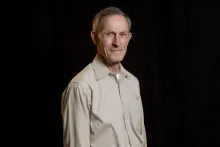
David Mills was born near Wallace, North Carolina, in 1939, where he grew up on a family farm. After high school he attended Ambassador College in Pasadena, California, and he graduated in 1962.
Since that time he has served as a minister of the Church in Washington, Florida, North Carolina, South Carolina, Oregon, West Virginia, and Virginia. He and his wife, Sandy, have been married since 1965 and they now live in Georgia.
David retired from the full-time ministry in 2015.
