
Robin S Webber
This transcript was generated by AI and may contain errors. It is provided to assist those who may not be able to listen to the message.
It's very lovely. Thank you. A nice thought on God's holy Sabbath day to consider His creation.
Sophomons said that you cannot watch grass growing underneath your feet. There's another expression that's very similar to it, and that is simply this. You can't watch a teapot boil, but as you know, that has not stopped any of us over the years. I think especially with the teapot.
And, but there are bigger challenges to talk about, rather than the grass growing underneath her feet and or a teapot. One of the greatest frustrations that I want to share with you today is one that Christians face at times. Not about grass under their feet or a teapot that may boil over, but the frustration of watching how God's Spirit is planted, how it develops, and how it grows in us to serve God's purpose, rather than our immediate, personal, seemingly well-purposed desires.
Ever been that way? You wonder again, why is God doing what He's doing, and why does God allow what He is allowing? Because we look at our stopwatch or we look at our wristwatch, and we want Him to perform right now, either in this world and or inside of us.
It's an important lesson that I want to guide all of us through in the next several times that I have an opportunity to speak with you. And again, allow me to be specific, and that is, how does God's Spirit become planted in us? How does it develop? And how does it grow? And in all of that, how can we know that God has not abandoned us and has our very good in the palm of His hands?
It can be utterly perplexing to a Christian when we consider it and wonder what is going on in our lives at times, and why perhaps God has not answered the way that we wanted Him to answer. And we come up with this very basic question, which is going to be the title of this entire series, and you might want to jot it down to stay on board, and it's simply this, how come it's taking so long? How come it's taking so long? Remember, as a kid, you'd be in the back seat, and you'd ask your parents, are we there yet? Then finally, when they did answer you, you'd say, yeah, we're almost there. And you'd say, well, that was five minutes ago. And actually, when you say it was five minutes ago, that was an hour ago. Hush, hush, Johnny. We're almost there. We're almost there. And it never quite seems like we have arrived. Well, that can happen in our own spiritual growth and create a frustration as to how come it's taking so long for me and for you, as Mr. Rodege brought out in our Bible class today, to become complete in Christ. When we started out on this spiritual journey, that was our desire. That was our goal, and that was our quest, but we're not there. And it can become frustrating. And we can become upset with ourselves. And we can become upset with ourselves. We can be bewildered. We can grow in despair.
We can begin, unfortunately, to develop a hypocritical lifestyle. And most importantly, it can create the saddest sight of all. And that is a defeated Christian. And that's one thing that God never wants of any one of us is to be a defeated Christian. So allow me to come back again and ask you, have you ever asked yourself, how come it's taking so long? The question that is before us knows no human boundaries in the church. It can be a new member. It can be a church veteran. It can be an elder. It can be your church pastor. And the struggle and the spiritual pain can go on for years and years and for some seemingly never dissipate. The reason why this occurs, brethren, is because unfortunately there are some very real factors that I want to share with you. You might want to jot them down so that we have a conversation as we go along in the next couple of weeks. Unfortunately, oftentimes this happens, number one, due to false expectations. False expectations of what the Christian journey is about. And number two, a lack of understanding. A lack of understanding of what? Allow me to give you three points. A lack of understanding of what God is performing, number one. What is God doing? What is God performing? Number two, what are we to do? First of all, is God. What is God performing? Number two is, what are we to do? And number three, what lies before us?
Now, these are important questions to answer, points to understand. I have noticed in my lifetime in the church and I've been in a church since I was a little boy. I've been in the Church of God community since I was 12 years of age. And so what I'm about to share with you is not just off the cuff, it's my experience and how I viewed things that people that come into our doors at times mistake church affiliation or activity within the church, with the activity of Christ within us to be out about our Father's business. There is a definite difference between church activity and the activity of Christ dwelling in our hearts and being molded, as we heard today, again, with that excellent study on Colossians, with that which is made without human hands. Some people, when they come to the church, they're on fire for church work. They are on fire for doctrinal study. They're on fire for helping others. And the oven by and in its own right, none of those are necessarily bad, but sometimes people are on fire on one of these things that I'll just be involved. I'll be an ombudsman or a fireman in the church and or I'm just going to study, study, study. I remember growing up in the 60s. There used to be that song up until the midnight hour. Sometimes I would talk to people that just studied through the night. You know, they'd study through the night and they'd hear the rooster crow and they'd still be studying through the night and they'd be writing and writing and writing and writing and writing and writing about things or facts that perhaps they had not understood before. But learning about things and learning about facts while oven by itself is not wrong is not the same as the activity of Christ working in our hearts and coming into alignment with our Father's business.
Join me if you would in 2 Corinthians 5 and verse 21.
Epistle of Paul, a verse that may be familiar to many of us. In 2 Corinthians 5 and verse 21, let's take a note here where it says, 5.21. Pardon me. Excuse me. 2 Corinthians 5 verse 17. Therefore, if anyone is in Christ, he's a new creation. Great! Wonderful! We're a new creation. We have new batteries.
We're brand new. New creation. Old things have passed away. Behold, all things have become new.
So here Paul says in one sense that we're a new creation. If that be the case, then why for some of us how come it's taking so long? Well, it's interesting that the same author Paul also wrote the great scriptural bafflement of Romans 7. Romans 7, and I'd like to just read it to you. I'm going to read it out of the New Living Translation. I think it makes a little bit more common sense in our everyday parlance. And I'll just read it out of this starting in Romans 7 verse 15. And it is here. So verse 15, I don't really understand myself, for I want to do what is right, but I don't do it. Instead, I do what I hate. But if I know that what I am doing is wrong, this shows that I agree that the law is good. So I'm not the one doing wrong. It is sin living in me that does it. Now wait a minute. This is the same Paul that earlier on it said, I'm a new creation. And yet he is also saying that there is sin within him that is doing something. Just reading the Bible as it is here.
And I know that nothing good lives in me. That is in my sinful nature. I want to do what is right, but I can't. I want to do what is good, but I don't. I don't want to do what is wrong, but I do it anyway. But if I do what I don't want to do, I'm not really the one doing wrong. It is the sin living in me that does it. But wait a minute. Paul said that we are a new creation.
We have a challenge here that in this new creation, as God already sees things as if they are, there is still something in us that is contrary to God.
I've discovered this principle of life, that when I want to do what is right, I inevitably do what is wrong. I love God's law with all of my heart, but there is another power within me that is at war with my mind. This power makes me a slave to the sin that still is within me. Oh, what a miserable person I am! This is a new creation person saying, oh, what a miserable person I am! Who will free me from this life that is dominated by sin and death?
Sounds pretty gloomy so far. Except when you sometimes we stop there and we don't get the rest of the story, because the rest of the story is simply here. Thank God! The answer is, in Christ Jesus our Lord. So you see how it is. In my mind, I really want to obey God's law, but because of my sinful nature, I am a slave to sin. I would suggest that Paul, whether he's speaking Latin or Greek or Aramaic and or Hebrew, and I believe he could speak all four, was basically in a moment of frustration saying, how come it's taking so long? And yet he punctuated with the answer of thank God for Jesus Christ. And that's what we'd like to talk about here today. And that's why sometimes in our life it seems as if we have not quite come to the point that God wants us to come to. I think much of this is due to thinking like people and not like God. We tend to have a certain measurement. You know, when I think about life that we have these measurements that we put out. When you're 16, you can drive. I know one of our granddaughters is really excited because she's getting near 16. I keep on asking her, what freeway is she going to be on? I'll be on another one. Actually, I'm helping Megan to learn to drive out in the cow trails of Riverside. But we think of age 16. What are you? All of a sudden a perfect driver when you're 16? No. When you're 21, all of a sudden in America, you can't vote. We notice that at times you look at all of a sudden when you become 55, you have this wonderment. You find out that you can get cheaper coffee at McDonald's.
And so we have all these different thoughts that, oh, we have arrived by these dates that are set out there before us. I remember years ago in the church when the church was smaller and new that we often had younger ministers and along with their wives, once they graduated, they got married. They'd had four whole years of Ambassador College, and they went out at age 22 and 23 with all of that background behind them of four years of book learning and maybe a half year of marriage to share with others that had been married for 40 years how to be married.
Oh, for the joy.
But there was a reason why that was done then, and there's a reason why we do things today. Let's consider for a moment something that's very important here. We don't want to think like men, we want to think like God, and that's why I'm bringing you this series. And sometimes it does take longer than we think, and the challenge is harder than we think because of three points that I want to give you, and we're going to build upon this in the series. Number one is the depth, the depth of our calling, the depth of our calling. Brethren, you and I have been called to nothing less than holiness. God says, I am holy, and therefore you be holy. That is not a surface encounter. That goes deep.
That's an excavation. Number two is the depth of the battles and the challenges that lie before us. And number three, then, we do get caught up in our time frame of what we think should arrive. When we come to understand that God works on an ageless time frame that is based upon His perfection for us, His perfection, we need to understand that. One of the precepts I want to share with you, and I'm just laying down some groundwork, we're going to build a foundation here. I think a part of the frustration that times I have shared in my own being, you have shared perhaps, is simply this, is that we need to create a differentiation here that I'm about to expand upon.
But I'd like you to jot these two down. This is going to be kind of a note-taking sermon if you want to take notes, because we're going to pivot on these different points, and this is simply this. There is a difference between a commitment to Christ, number one, there is a difference between a commitment to Christ and number two, growing in Christ. There's a difference between, number one, a commitment to Jesus Christ at baptism and number two, growing in Christ.
They are not the same. And to not understand that they are not the same is number one, to underestimate God, and number two, to underestimate the struggle that is before us. So today, our task today, as we begin to develop this subject, and why is it taking so long, is by understanding the preciousness and the power of our position in Christ, in contrast to our condition in this life. The way I want to explain this is perhaps the best way to understand this is to use a historical parallel and draw upon American history, some which is of a living memory in some of our lives.
And I'd like to draw some lessons from World War II. I'd like to draw a lesson from the South Pacific. In 1941, the American nation was attacked by the Japanese Empire at Pearl Harbor. Surprise, snake attack, a broad America into World War II. America immediately went into war with that famous speech of FDR before Congress, and a strategy had to emerge. I think when we understand that strategy, we'll begin to understand what God is performing in each and every one of us.
And that is this strategy that was in World War II. America was over on this side of the Pacific and Japan was on the other side of the Pacific. And there were a lot of islands that were in between, and those dots had to be connected along the way to ultimately conquering Japan. This is familiar conversation to me because my father was a Marine during World War II, and he would tell me stories later on in life, and of course being a history major, I've also read them.
So there are some things that are very key in understanding what we call connecting those dots or connecting those islands as the Navy and the Marines went along. There was a specific plan. I'd like to share that with you for a moment. You might want to jot down some of these thoughts. The first thing that would occur, because remember the Japanese had already been on those islands for anywhere between 15 and 30 years as they created that greatest fear of Japanese influence.
So they've been on those islands for years and years and years, and to just use an analogy, they had really, really dug in to those coral islands. The first thing that would occur is aerial reconnaissance. Number one would be aerial reconnaissance, and that is where the planes would go overhead, and they would take shots of the island photographs, and they would do mapping. That was the first thing that would occur.
The second thing that would occur would be what is called softening up the island. Softening up the island. By softening up the island, that would mean dropping bombs, and then to be followed up by precise shelling by the Navy flotilla off those islands. It's interesting what would happen. My dad often described that to me, that when the Navy was out there bombarding the islands, what happened as those shells hit those islands out in the South Pacific, they were made of coral. And oftentimes, the bombs just skipped off the coral, so they had to put a lot of payload down to do something in those islands.
The third point would be this. The Marines were sent in to establish a beachhead. The Marines were sent in to establish a beachhead. That's why they're called Marines. They come off the ocean, onto the beach, onto the land, and to establish a beachhead. And they would take a fragment of that island, and then they would radio back to the commanders and to the Navy guys. Land it situation well in hand. Having finally taken a portion of the beach, they'd say, it's okay! We've landed! And yet, we recognize that they only had a very small stretch of the beach.
Was the battle over? is my question. Was the challenge really over? No, I don't think it was.
But again, in truth, the situation was well in hand, as the Marines had secured an area of operation, thus to bring in heavier equipment, heavier artillery, and supply lines.
But the Marines did not come in just simply for a beach party. They would have to move into that interior of the island, and they would have to reclaim it one hill, one dell, one valley, one mountain, one jungle at a time. It was not easy. My own father was on two or three different major campaigns during World War II. One of the major ones was Palalu. Palalu was an island that was two miles wide and eight miles long. And they had been basically told that the Navy had, again, softened up the island, point number two, where you soften up the island. But they were there a month taking the island, my island that is two miles wide and eight miles long. And on that, there were over 10,000 Marine casualties in one month. You can just imagine. So there is a challenge, not only in establishing the beachhead, but moving forward over each hill, in each dell, over each valley, through each jungle, past every palm tree, until the island was completely conquered. And just when one piece would be secured on those different islands, there would be another flare-up, there'd be another mission, there'd be another fight, ultimately until all of that island, which had been enemy territory, that same enemy territory that Paul was speaking about, being assigned to be a new creation, and yet he had this enemy inside of them, would be conquered.
But it didn't happen overnight, and without struggle and casualties along the way. A question I want to ask all of you is simply this, and I speak to myself up here as one Christian, is simply this. How come it's taking so long? Well, when we understand this, conversion is similar to such an invasion, and I'd like to now use the parallels to take you a step further. We have an aerial reconnaissance which has occurred in our territory. Join me if you would in John 644. In John 6, in verse 44, let's notice what is spoken here. There is a heaven above, and there is a father that is looking down. And it mentions here in John 6, 4, in verse 44, where speaking of the father, no one can come to me unless the father who sent me draws him, and I will raise him up that last day. Therefore, when we read John 644, we come to understand it's not whomsoever will, by whomsoever is called. God is doing the mapping today. God is doing the targeting today. God is doing the selecting of those that are firstfruits in that body of Christ, in that family that He is spiritually creating. Join me over in Romans 8 and verse 29 when it comes to this matter of reconnaissance. In Romans 8 and verse 29, For whom he foreknew, he also predestined to be conformed into the image of his Son, that he might be the firstborn of many brethren. Moreover, whom he predestined these he also called, and whom he also justified, and whom he justified, he also glorified. What I want to share with you here when we look at this, for whom he foreknew, God had a plan from the very beginning of time, and He had foreknowledge of it, that He had a purpose, and that purpose was to make man after His image and after His likeness. And it would be predestined, especially from the time of Eden forward, because of what occurred, that it would have to be in the image of His Son, because of what had occurred at Eden. And then it says, Moreover, whom he predestined these he also called.
So God did predestined a future for humanity, even apart from what had happened at Eden.
And then it would be a first fruit people, and He has selected those people today. He's mapped that, and He's called people to be in that. But now we go to the second point, and that is the softening up process before the invasion. And God does soften us up.
And when I say invasion, I say that in a lower case term, in a benign way, when God enters into our life. But there can be a softening up process, and only God knows how to reach us.
It can be that God allows economic distress. It can allow alcoholism, sexual addictions, career disappointments, fear of world conditions, drug addiction, absence of a purpose in life, shattering guilt, prison terms, a ruptured relationship, consumed lives disillusioned with success. Okay, I've done all of this like Solomon did. Now what's left? The death of a loved one, or perhaps the personal witness of what I call a real-deal Christian, and that's one of you. I know in our own family's story that God softened up my family through the death of my brother, and that my mother had been a very religious person all of her life. In fact, she was my Sunday school teacher and the district superintendent of the Sunday schools in the Lutheran Church.
And when my brother died, when I was young, it hit her. It really hit her hard as to why does God, why would God allow a 13-year-old boy and a good guy, a really neat older brother, and a wonderful, loving son? I was the rodent son. I was the little brat in the pack.
My brother was the good guy. In fact, he took all my spankings for me.
Why did God allow flip, which was my brother's name, why did God allow flip to die?
God was softening up. My mother at that time, back in 1959, 1960, she'd already had a love affair with God and a love affair with Jesus Christ, but he was taking her to a deeper picture of that there is life beyond the grave. There must be a purpose for this. This was the son that you gave me. And so that was the softening up process. That's only one family and one story. And I'm sure you have your family story of how, yes, God had this reconnaissance. God calls above, but then how he softens his up to help us recognize that we don't have all the answers down here below. Whatever the factor, the resulting response was probably found in Jeremiah 10 verse 23. Join me if you would. In Jeremiah 10 verse 23.
O Lord, I know the way of man is not in himself, but is not a man who walks to direct his own steps.
Some things are just too big to handle alone. We simply do not have the tools. And that's when then God's Spirit begins to work with us in that softening up process. As it says in Romans 8, 14, for as many as are led by the Spirit of God, the same become those children of God.
Not by dominance, but by cooperation. And I want to talk about that. At that reality point, when we recognize that we don't have all the answers that Alex brought out in his first fine message, the invitation for a landing commences. We've gone from reconnaissance to softening up. Now is the landing. We find that over in Revelation 3 verse 21. Join me there for a moment. Revelation 3 verse 21.
To him who overcomes...
No, excuse me. Verse 20. Behold, I stand at the door and I knock.
And if anyone hears my voice and opens the door, I will come to him and dine with him and he with me.
Now, reconnaissance, softening up. Now God through Christ is about to do something.
And he knocks at the door, not on a piece of wood, but on our heart. And just like a door, we have to open it up and invite the presence of God and the Spirit of God to direct our lives and say we don't have the answers anymore.
They're not coming up on my computer screen. They're not coming up on my heart screen.
I'm going to unconditionally surrender and I'm going to give my life to God the Father through Jesus Christ. God doesn't push that door down. We have to unlatch it. God does not dominate.
We are to cooperate with that invitation and that's what God does. And we need to understand that.
Thus, the incursion, the great incursion of a friendly and a loving God commences into what might be called enemy territory to liberate us as much as the Navy and the Marines liberated those islands during World War II. And it is an enemy territory. Join me if you would in Romans 8 and verse 7. In Romans 8 and verse 7, because the carnal mind or the meaty mind, the fleshly mind, is inmity against God.
It's contrary to God. It is not subject to the law of God. It's at odds with God. It's opposite God. It's not one plus one equals two in God's math.
Humanity wants to go one plus three but still get to two.
In circles, weaving around. But for every cause, there's an effect. And this mind is inmity.
The mind that is at enmity with God is not always a mind that goes, you know, like this, shaking a fist at God. Oh, God! See, there is one sad person. You see, there's a person that's inmity with God. He's got his fist up in the air. Emmity against God is sometimes just simply not doing anything and being like a Missouri mule because it says, to him that knoweth to do good and does it not, the same it is sin. Sometimes it's just being sullen. Sometimes it's just being quiet. When God says, move, you sit. When he says sit, you move. You ever raised kids? Any of you? Child-wearing? You tell them to do this? They do that. Okay, we start all over again. You say this, and they do that. And we're just recycled children, sometimes growing up.
When God does enter, when we do open that door, it is just the beginning. It's just the very beginning of the experience. Now, sometimes can we talk? Some people will ask, well, why God's landing in their life is different than others. Sometimes it seems that by people's experience, and I'm looking at this room, I see those that we might call first-generation Christians, second-generation Christians, third-generation Christians. God's calling us all to be children, but sometimes that door opens different ways. Sometimes it's like a piece of dynamite that has to, you know, open up that door.
Sometimes it's a firecracker. Sometimes it just blows open. Well, why did God do that? I know sometimes people say, why have we not all been called like the Apostle Paul? Well, first thing, not all of us have a donkey to fall off of. But beyond that, why couldn't we be called like the Apostle Paul and know that God was really calling us? In other words, where we were just throwing off the mount and we hit that dust and the dust goes up and we hear that voice, Paul, Paul, you know, why do you fight against me? And we all say, why didn't we have that road of Damascus experience? It doesn't always start at the beginning of the incursion. For some of us that have grown up in the church that are second or third-generation Christians who grew up in the way of life, we perhaps have not had those big road of Damascus challenges, may I say, yet, yet in our life, they will come. They will come. Where God might open our door, in a sense, with a softening up of a firecracker, understand that later on He's going to have to know that He knows, as He did with Abram or Abraham, that we really do believe and trust Him in faith. So we need to understand those things. God calls in different ways and He has His purposes and we need to understand that. What I want to share then in beginning to go to some other points is simply this and something I mentioned earlier. When we hit that deck and we've established that beach landing, that beach landing is established by having accepted Jesus Christ as our personal Savior. But that is not necessarily the same as growing in Christ. One is awareness and the other is development. I like to focus for a moment about our position in Christ and to help us understand that because we must start with that first and having that position in Christ. I just wrote an article that was a take-off recently of a message that I gave during the feast on what heaven above is like and how that opens up the book of Revelation. We have got to start, first of all, by understanding what our position in Christ is before we look at the conditions on the ground. That is utterly essential to our spiritual well-being and to create the growth that God wants us to grow in. Our presence before God and our position in His eyes is perfect, as it were, from the moment we accept His loving incursion into our lives by accepting and receiving Jesus Christ into our formerly, totally controlled enemy territory at war with the ways of God.
What I want to do is have you join me in Ephesians 2 and verse 10. In Ephesians 2 and verse 10.
In Ephesians 2 and verse 10. For we are His workmanship, created in Christ Jesus for good works, which God prepared beforehand that we should walk in them.
That's the positioning. It's God's work in us. It's what He is doing. It's His reconnaissance. It's His softening up to where we're ready to receive that which He wants us to receive. It's then that knock on the door, always, always moving towards us for our best and to begin working with us. It's when we are secure in the knowledge of our position, being perfected in Him and in the sight of God, that we do have the courage to face up to those present challenging situations that we have. Join me if you would in Hebrews 10 verse 14.
When I say that about perfection, it comes out of the Scriptures. Hebrews 10 verse 14. Notice what it says here. For by one offering He has perfected forever those who are being sanctified, those that are being set apart. That when we come to God's throne in our challenges, and in those valleys, and in those deep dips, and in those hills which seem insurmountable, and when we say, Father, this is where we are at, this is where I am at, and I can't go any further, and I need your help, and I need your encouragement, I need heavier artillery, I need more munitions, I need your encouragement. When we say in Jesus' name, at the end of that prayer, as we've been instructed to, notice what it says here. For by one offering He has perfected forever those who are being sanctified. We're able to come in His presence. We come to Him through the framework of Jesus' perfect life, perfect death, perfect sacrifice, and ascension. And that is the position then that we are in. When Christ begins to establish His Beechad in us, it begins with the revelation that He has given everything of Himself to us. And in turn, we surrender everything in turn to God the Father through Him. That is what we are aware of at the time. But here's the point I want to share with you, please. You might want to take a note on this. Much of the time, there is hidden territory. There's hidden territory.
Things we don't recognize about ourselves that are well within the walls of our hearts. And we haven't chosen to enter and or perhaps are blocked out at that time.
Sometimes there is so much that God in His mercy allows just a little to come later on because when we're first called and when we first come into this way of life, we might not be able to handle it. Have you ever thought about that? Some of the challenges that you're going through right now. I remember when my family first came into the church back 1963. And there were a lot of, shall we say, exterior challenges that we had to face with a new way of life, dealing with a new set of holy days, dealing with a new pattern of worship, dealing with this and dealing with that. You know the story? Most of you have been there.
And at that time, those seem to be really, really, those were boulders.
And we really needed to have God's Spirit guiding and leading our family. That was enough for right then, just changing our, shall we say, our lifestyle as to how we practice the Christians. Most likely at that time, we weren't ready to go down and to deal with other things that at that time might have seemed like pebbles, but that now in my life become boulders. Boulders like humility. Boulders like love. Love without return. Love that does not keep score. Love that loves the unlovable. Dealing with mercy the way that I've been dealt with with mercy. Being just. Things that at a time I had not considered as a young man, but I have to consider now, or perhaps what you've had to consider. God doesn't expect us all to necessarily deal with it one at a time. What happens is, basically, if you're looking up here for a second is, we might look at this, and this is why sometimes we can ask, well, God, how come it's taking so long? I'm going to come down here for a moment. Let's say this is the, you know, this is the island landing. You didn't know that, did you? This is the island. So all of a sudden, I come up here. I radio back. God, Christ, Captain of our salvation. Everything's okay. I've made a landing. Ten-four. I want to say big buddy, big brother. And for the moment, I feel good. And I am inhabiting this point at this point at my baptism, just as many of you were baptized over here in this baptismal font. And we go, yoo-hoo!
Wonderful. Fantastic. I've arrived. This is it. No more problems.
Graduation. Graduation, though. What's the other name for graduation?
Commencement. Commencement meaning just beginning.
Everything I left, all the problems are behind me. I'm not saying you're behind me. You're not all my problems. Please understand. And then what happened, though? Now we begin to come up to the island. And you know, I was on this beachhead. This is where Christ planted himself in me. And this was really cool. And this was really fine. But now as I get up, notice what happens.
I've moved away from the beachhead. Now I have all of this territory, along with the Apostle Paul, and along with you, to take care of through God's Spirit and to recognize the depth, the depth, the breadth and the depth of that which faces us. So we need to understand that.
Now once we understand our position in Christ, then there's a transition to the condition on the ground. I want to just finish up that. We can now begin to confront ourselves as we never have before, knowing that we're not alone. The beach landing, the beachhead, is established by Jesus Christ living in us. Join me now in Psalm 139. In Psalm 139. Let's notice what's spoken here. And it's beginning in verse 23. Now it says, search me, O God, and know my heart.
Try me and know my anxieties.
Why is it taking so long? And see if there is any wicked way in me, and lead me in the way of everlasting life. Search me.
There are still areas in Robin Weber that have not yet been touched by God's Holy Spirit, of which God the Father has in store for me to work on. Maybe areas that I have not even conceived of, tripped over yet, understood, that are not pleasing to Him.
And that's why the psalmist says, search me, O God, and to know my heart. In other words, you might put it this way. After the beachhead, after recognizing that we have to deal with the whole island of humanity that we are God, what is the next assignment? You ever ask God that one? That'd be interesting to ask. God, what is your next assignment for me?
To conquer. What's the next assignment? Where is it in me? Search me, O God, and reveal it to me. He will reveal it to you through perhaps your spouse, perhaps through reading the Scripture, perhaps by a little one coming up at church just when you least expect it, and out of the mouth babes will say something. It may actually come from your neighbor next door.
Never discount the source of where God is directing you by His Spirit as to what is your next assignment, to go down deep and to conquer enemy territory. Very important. We need to understand that. Will it sting? Will it hurt? Are you willing? Join me if you would in Hebrews 4 verse 12. Hebrews 4 verse 12.
God says here about His Word, for the Word of God is living and powerful and sharper than any two-edged sword, piercing even into the vision of soul and spirit and of joints and marrow, and as a discerner of the thoughts and the intents of the heart.
And there is no creature hidden from His sight, but all things are naked and open to the eye of Him, to whom we must give an account.
So when we ask God and share the conditions that are down here on the ground to understand where He is and where we are and how to make up that distance, recognize He's going to use His Word.
And a kid go deep and it could, yes, humanly sting us. And we need to understand that. Additionally, when we understand that, is to also understand it's not going to be on our timing.
How many of you have ever prayed for God to work with you and it comes according to your stopwatch?
No, we're talking about having open-heart surgery. Can we talk? We're talking about open-heart surgery here. God going deep that we might become complete in Christ. So I can't, you know, most surgery occurs in hospitals normally about 5 or 6 a.m. in the morning.
And so I say, okay, I'm ready. It's God. I prayed my prayer. I asked you to search me out. I asked you to show me my next assignment. I set my alarm at 4 o'clock. I am now prepared to go into spiritual open-heart surgery at 5 a.m. Hello? Is that when it arrives?
It doesn't, because God is perfect and He has the perfect way of molding and shaping us and making us complete in Christ. And we need to understand that.
The question I want to leave you with is simply this. Me, one that's on some of your hearts today.
Why so much at this stage of my spiritual development?
Why am I having the challenges? Why am I having the trials that I have?
I think it's just simply put best this way, because we're no longer at the beachhead. The territory has broadened, but the assignment remains that we bring our entire man, we bring our entire woman into the subjection of Jesus Christ, our Lord and Savior. We need to understand that.
And why does He ask us to do this? Why does He ask us to go forward? Join me if you would in Psalms. Book of Psalms, Psalms 103.
And let's pick up the thought if we could in verse 13.
In this analogy that I've used today, why is it taking so long? And using the historical parallel of the invasion of the islands leading to Japan during World War II, there's one more very important scenario that we need to remember as we leave this building tonight. And it's an old army, marine vow that they take to one another. And that is simply this. We will not leave a buddy behind. We will not leave a buddy behind.
We will not leave somebody alone. They are a brother. They are a sister today that we have women in the services. They are a member of the family. And whatever it takes, whatever it means, even if I have to lay down my life, I will lay down my life for my brother.
On that beachhead that you stand on today, or in that valley that you're on, as we're moving into that occupied enemy territory of our heart that God is asking us to discover today, we have a buddy with us. Let us complete the thought today by going to John 6, verse 35. John 6. How come it's taking so long? We might accompany that with another question that Alex brought up earlier today. Where is God? He's right there with us on the beach, front of our heart and our existence. In John 6, we pick up the thought here then. For I, verse 38, have come down from heaven, not to do my own will, but the will of him who sent me. And this is the will of the Father who sent me, that all he has given me, my flock, my soldiers, his children, I should lose nothing. I should lose nothing, but should raise it up the last day. And this is the will of him who sent me, that everyone who sees the Son and believes in him may have everlasting life, and I will raise him up at the last day. That is the mission. That is the goal. As we move forward through this week until I talk to you next time, let's remember that our position in Christ trumps any condition on the ground. And next time when I come back, we're going to continue to provide answers as to, God, how come it's taking so long?
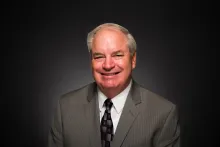
Robin Webber was born in Chicago, Illinois, in 1951, but has lived most of his life in California. He has been a part of the Church of God community since 1963. He attended Ambassador College in Pasadena from 1969-1973. He majored in theology and history.
Mr. Webber's interest remains in the study of history, socio-economics and literature. Over the years, he has offered his services to museums as a docent to share his enthusiasm and passions regarding these areas of expertise.
When time permits, he loves to go mountain biking on nearby ranch land and meet his wife as she hikes toward him.
