
Robin S Webber
This transcript was generated by AI and may contain errors. It is provided to assist those who may not be able to listen to the message.
Always good to hear those stories.
I'm going to review just a little bit for a moment just to bring us all into it because some of you weren't there last time. But as Christians at times, sometimes when we've been a Christian for 20, 30, 40 years, sometimes we come to a point of wrestling with ourselves and asking ourselves, challenging ourselves, how come it is taking so long? And it can become a dilemma for us. It can become a tremendous frustration. Here, in one sense, we're to be a new creation in Christ, as the Apostle Paul says. But we are also very aware that there are still dimensions of human nature that are within us. And not only that, but sometimes we can feel overwhelmed with our own human nature. And we need to put these two items together and continue talking about them. How can we be a new creation in Christ, and yet at the same time have human nature?
Seems to be two opposite poles that have come together in one person being us. If we don't come to understand this, we can become bewildered. We can grow in despair. We can be driven into a hypocritical lifestyle that in church were one way, and away from church were a different way. And most of all, it can create the saddest effect of all. And that is a defeated Christian. And we do not want defeated Christians. God the Father did not send His Son, Jesus Christ, for us to be defeated. Why is it sometimes that we can be overwhelmed with our human nature, with this title of a new creation hovering over us? Why is that? Two reasons. It's review. Sometimes there are just simply false expectations. False expectations, coupled with a lack of understanding of what baptism is, and what conversion is, and or the converted life that proceeds from the Bible. From that, oftentimes people make a fundamental mistake, and I'd like to share it with you. The fundamental mistake is that people believe that when they have become committed to Jesus Christ, it's over. End. Done. Amen. Not so. There is a fundamental difference, and I'd like to share it with you. Continue with that today. There is a difference between being committed to Christ and growing in Christ.
We must understand that to be able to move forward. If we don't, we underestimate what God is performing in us, and we will underestimate the struggle. Last time we were at a spot that we were talking about the analogy of World War II, where the American forces would go through the different Japanese islands. We came to a point talking about a typical island landing that the Navy and Marine operation would confront, and that so much energy went into what we call here the beachhead.
After the Navy softened up the island, the Marines would come in, and they would establish a beachhead, and the Marine would radio back to the Navy ships saying, mission accomplished. Mission well in hand. Well, was that true or not? Because, look what's out here. There's still a whole big island that was unoccupied by the friendly forces. Now, when he did say that mission was accomplished, the mission was accomplished in the fact that a beachhead was established, and the landing did occur. But that did not mean that the entire island had yet surrendered itself to the invading force or the occupying force. Then we are confronted with a situation that the further that you go in, we begin to recognize that we're facing actually more challenges, not less challenges, in the parameter of what first started out as the beachhead. Well, that's what we want to talk about today. We want to talk about moving forward from the beachhead into the interior. There are two vital terms that I'd like you to write down, please, to stay with me. If you don't write down these terms, we may leave you on the beach, and you will not get into the interior. And that is simply this. There are two vital factors in recognizing what we're doing here before we can go anyplace. There is a vital difference between our position in Christ, that's number one, our position in Christ versus the conditions that are on the ground. It's incredibly fundamental to the subject of Christianity, and we're going to discuss that. So today we're going to move from that beachhead that Christ established for us as He knocked on the door through the Father's invitation, began to move onto that beachhead into our life when we were called, and we're going to go deeper into enemy territory, unoccupied territory that God's Spirit in us has not yet conquered. We're going to deal with three vital factors. Number one is this. It's called the breakout from the beachhead, the breakout, very important. Number two, we're going to be dealing with taking a stand, taking a stand for the right side, and number three, hunkering down for long warfare. Let's move. Number one, the breakout. Now, last week we talked about how an island would be prepared for an invasion, as there would be aerial reconnaissance, there would be the the Navy would soften up the island, finally the Marines. That's why they're called Marines because they come off Navy ships, they come off the water, they're established on the beach. That's why they got the name Marines. They would finally make that landing. They would establish the beachhead, but it was only beginning. Once secured, the beachhead would begin to receive reinforcements and equipment off of the Navy ships. And during this build-up period, the beachhead would often be subjected to incredible bombardments and incredible battery from the enemy. I saw a picture of a war in Pelalu, where my dad was hunkered down on the beach with thousands of guys. Just because you were on the beach didn't mean the war was over. You were holding that beach to bring in the heavy artillery, to bring in the heavy equipment. Now, while punishing nature, these barrages and this resistance from those that were on the island gave the forces on the beachhead an opportunity to feel out the enemy and to gauge both his strength and his abilities before the major assault was launched. And it gave them one last opportunity before they began to move in here and confront more theaters and operations of war to establish their position.
For a Christian soldier, the position is in Christ. If we lose that, we will not be able to deal with the conditions that are on the ground. Now, as the buildup became complete, the compression became greater and greater and left them more and more vulnerable. What happened is, as all of the heavy-duty equipment was coming on, they did not become a lesser target, but they became a greater target. There was this compression point, this moment in time, when there needed to be a breakout into new territory to seize it, to allow them to maneuver and to complete the job. How does that sink in with God's Word? Join me, if you would, in Matthew 9.
I think Mr. Smith gave a message on this recently about old wine and new wineskins and the parallels that are there, but I'm going to go back to it for a moment. Let's understand how that beachhead and moving into the interior affects a Christian. When we read God's Word, when we pray, when we fellowship with Spirit-led and Bible-fed individuals, it is inevitable that we are going to move from a beachhead to a breakout point.
When we are praying, when we are seeking God's will, when we are reading God's Word, when we are absorbing the example of Jesus Christ, when we're hearing the cry of the prophets of old, when we're beseeching that, God, Your will be done, not ours, there is going to be a moment of breakout. It is expected! That is what Jesus says in the Word of God in Matthew 9.
Let's take a look at verse 16. No one puts a piece of unshrunk cloth or an old garment, for the patches pull away from the garment and the tear is made worse. Notice, nor do they put new wine into old wineskins, or else the wineskins break, the wine is spilled, and the wineskins are ruined, but they put new wine into new wineskins, and both are preserved.
God never expected us, friends, to simply stay on the beachfront. Christianity is not a holiday away from the world, even away from self, from dealing with the unoccupied territory that we have not yet surrendered to God. When fasting, Bible study, medication, meditation, can be medication, pardon me, is to recognize that we're taking in heavy equipment, and as we do, there's a compression. God is going to expect that, then, of what He has delivered to us to come out to deal with unoccupied territory that is yet in us, that has not yet been surrendered to Him.
Now, nobody knows the time. It might be a month, it might be a year, it might be a decade. That compression point, only God knows, but we also recognize that God does expect activity of us. When you look at the Apostle Paul, the Apostle Paul basically went into, shall we say, at least from the recorded word, hibernation, in Tarsus for about 10 years.
He was a new Christian. He had had a beachfront experience. He actually knocked out a lot of the enemy just in the beachfront experience, but he was too hot to handle. He had more to learn. He had to become more diplomatic. God took him from Jerusalem, put him off over into Tarsus for seemingly years. But He continued to develop. He continued to grow. There was a breakout point. He was ready to move, and He did that. All of us in this room, and I'm speaking to myself, friends, need to be prepared for breakout moments in our spiritual life.
It's expected of God. What is not expected is what we call the status quo. Unfortunately, far too many Christians. You say what Christians? I say even Christians in the Church of God community retain the status quo of always remaining in the build-up process, always meaning to engage, but don't engage, and they never break out. That goes against the scriptural example. What would we do today in our faith community if somebody like a Steven came into our midst, or a Mary Magdalene, or a Paul, or a brilliant oratorical star like Apollos?
What would we do with them in their breakout moments? Would we just use me? Back to the beach. Back to the beach? That's where you need to stay. Just cool it. Slow down. It'll be okay. You just don't quite understand how it is done. At times, churches, even, not just individuals, wittingly or unwittingly, can foster the status quo and develop a stalemate atmosphere of much information but no movement, bringing in the heavy equipment, bringing in the armament, pointing the way, showing this, showing that.
But whether as a congregation, whether as a faith community, or whether as an individual, we never move until the bus starts coming from behind us. And then necessity is the mother of invention. Rather than recognizing that as God calls us, as our position in Christ is confirmed, and that the heavy artillery does come in, which is the spiritual armament God gives us, that He doesn't expect us to stay where we started.
Even as tough as the landing was, He expects us to engage those areas that are not yet surrendered in our lives and give them over to Jesus Christ. Join me if you would in the book of Philippians. I'm going to go to the Living Bible Translation. Let's go to the book of Philippians chapter 3.
Let's consider the words of the Apostle Paul as he jettisoned from the beachhead and moves into seemingly endless interior of enemy occupied territory inside of himself. Philippians 3.
And let's pick up the thought in verse 10.
Now, as we read this, let's understand the book of Philippians. Paul has probably now been in this way of life, friends, for 15 to 18 years. He's not just wet behind the ears after baptism. He is a spiritual veteran. He is an Apostle of God. And notice how he considers the challenges that are before him in Philippians 3 in verse 10. As a result, I can really know Christ and experience the mighty power that raised him from the dead. I can learn what it means to suffer with him sharing in his death so that somehow I can experience the resurrection from the dead. Now, verse 12, I don't mean to say that I've already achieved these things or that I've already reached perfection. Paul never settled for staying on the beachfront, staying with the initial call on the road to Damascus. But I keep working toward that day when I will finally be all that Jesus Christ saved me for and wants me to be. No, dear brothers and sisters, I am still not all I should be. What incredible self-disclosure! What incredible humility! Here is a bona fide man of God on God's visa, traveling the world of antiquity, bringing people to the understanding of Jesus Christ and the kingdom of God.
And yet he still saw holes in himself. He was still not satisfied. He did not want a beachfront existence. For getting the past and looking forward to what lies ahead, I strained to reach the end of the race and receive the price for which God through Jesus Christ is calling us, as other translations say, I believe, for the heavenly call. This translation is a little bit differently. Such an approach, such realism about what had been obtained and yet not what was obtained yet, created in Paul a spiritual fascination and observation. He was ready for new encounters with new beachheads that would then establish new encounters for him. He did not think of a beachhead experience as simply being a sole event, but as he went in, another beachhead would be established. As he went in, another beachhead would be established, but the positioning would always be in Christ, even as the conditions on the ground changed. He was prepared for God to perform and to do something in him. And what this did was this approach prepared him for perhaps matters had been obscured early on in his life that he could now deal with. Just like things that happen with you and me. Why is it that right now you and I, as children of God, are confronting issues that we didn't perhaps confront 15 or 20 years ago or when we were first baptized? Let's think that through for a moment. Allow me to give you some suggestions. Number one, maybe initially there were just certain conflicts to resolve. You know, you can't fight the whole world. Sometimes you just have to fight yourself and deal with the issues that are at hand and master them. Number two, perhaps that there were matters that were just too great for us to handle early on in our road on conversion. The boulder was just too big, too much heavy lifting, and God in his wisdom held that off for a while. Number three, perhaps some matters have been in plain view all along, but our stubbornness and our willfulness simply dismissed them as not a part of God's conquest in us. It's very interesting that sometimes matters are obscured, but because they're obscured, they don't go away. Allow me to come back to the World War II island analogy of the Japanese Empire and what the Americans had to do. The Japanese soldiers were incredibly generous laden when it came to preparing those islands. They would dig tunnels deep, deep, deep, deep into those coral islands to where they could, to the best of their human ability at that time, not be discovered, not be found. They went really very, very, very deep. They had a genius for concealment. They would dig and they prepared that digging for 15 to 20 to 25 to 30 years before World War II began. And what they dug seemed impervious at first to the bombardment or the invasion of the American forces. Some of you have read World War II history books. Some of you have watched the History Channel and seen those stories. Our human nature, friends, is a lot like those Japanese tunnels during World War II. And our human nature runs incredibly deep, wants to remain obscured, wants to remain off the radar or off our screen, would like to be avoided at all costs as if it doesn't exist. And the Bible speaks to this. Join me if you would in Jeremiah 17 and verse 9. Jeremiah 17 and verse 9. Because God calls things for what they are.
And sometimes we want to say, well, it's not really all that bad, but Jeremiah 17 verse 9 says this to you and me, the human heart is most deceitful and desperately wicked. Who really knows how bad it is? We could also say to you and stay in the analogy how deep the problem goes.
Well, what does this have to do with how come it is taking so long? That is exactly the case why for some of us it takes so long. And that is simply this. We can read the statement, we can know the statement, we can memorize Jeremiah 17-9, which I first memorized when I was 14 years old in the church school, but to believe it, to understand it, and to understand that at times way down deep inside of us we are still riddled with human nature that God desires to have surrendered to His kingdom.
We can be in a position in Christ and still have to confront the enemy that is inside of us. Mark 7, verse 20. Join me there for a moment.
Jesus Himself fed off of Jeremiah 17 by sharing this story. Mark 7, verse 20, inciting the religious community of His day who thought that they were pretty good. And He then added, It is the thought life that defiles you. For from within, out of a person's heart, come evil thoughts, sexual immorality, theft, murder, adultery, greed, wickedness, deceit, eagerness for lustful pleasure, envy, slander, pride, and foolishness. All of these vile things come from within. They are what defile you and make you unacceptable. Unfortunately, sometimes when we've established a beachhead, what happens is we think everything is secure up here on top. I'm going to put S for secure. We think everything is fine and dandy. It's called fig leaf religion. We're looking at the outside, the cover. That's an external religion. God says, it's down here. It's down here in the heart that I'm really concerned about.
The faith community in that day and age got more excited about cleaning up the outside of cups and plates and cans than they did their own heart. They would come like children. Have you ever been to somebody's house before where a little child will start bringing out all the toys from the back room? At first, all they're kind of shy, but pretty soon all of a sudden they bring something up. Then pretty soon their whole room is on the living room table. All their toys are on the living room. Look, look, and look, and look. They bring it all out to impress you. They're lovable in doing that. Don't mistake me. That's how these people were in this religious world back then. They brought out all of their prizes. Look at all of our clean cups. Look at all of the things that we do on the outside. Jesus Christ said, wait a minute, it's not the outside that I'm even concerned about. You have overlooked what's deep down inside of you.
When we move from the beachhead into the interior, there is something that has to go.
To have Christ live in us and to maintain that position in Christ, to be able to face the conditions that are on the ground, something has to go. Something has to die.
And the one thing, the most important thing that has to die is self. It's interesting over in 1 Corinthians 15, 31, it's interesting what Paul stated. He said, I die daily. Now, in that he was talking about everything that happened in his ministry a lot with the exterior forces that had beset him. But I would suggest if you couple 1 Corinthians 15, 31 with what is stated in Romans 6, that baptism, that beachhead experience of death of self, is not just simply an event, but it's an ongoing existence like Paul stated, I die daily. Now, that can be tough. But as we begin to confront all of these things, it begins to develop a godly confidence in us for the next area, the next movement into our interior to deal with. And that's why I'd like to take you to point 2. Point 2. It is taking a stand. Taking a stand. In other words, whose side are you on? Jesus, in Matthew 6, 24, made a profound declaration, and He simply stated, can a man serve two masters?
And in our acceptance of Christ in His beachhead excursion into our lives, and our sincere commitment to Him, we said, at that time, of course not. No, no, no, we cannot. We will stand by you. And that's what we said, and that's what we committed to. But sometimes we get into what shall we call it? A fuzzy life pattern. Let's talk about this from it. If you were in sports, could you imagine playing for two different teams at the same time?
You can probably think of a few players that you think are. Could you play for two different teams at the same time? Could you possibly wear two different kind of uniforms?
If you were at war, could you imagine fighting for two sides, wearing two uniforms, and slaying people on both sides? Of course not. We need to recognize that to move forward, to sustain our position in Christ, and to face the challenges that are on the ground, as we move from the breach head to a breakout, to the incursion we move into the spiritual reality, that we find that the Apostle Paul again spoke of in Galatians 5. Join me there. Paul has a lot to say. So often we kind of think of the Apostle Peter as kind of just opened up his suit and showed himself in his humanity, but the Apostle Paul was not too far behind. In Galatians 5 and verse 16, join me there if you would, please. Galatians 5 verse 16. Here we go.
Let's start in verse 16. Yeah. So I advise you live according to your new life in the Holy Spirit. Then you won't be doing what your sinful nature craves. The old sinful nature loves to do evil, which is just the opposite from what the Holy Spirit wants. And the Spirit gives us desire that are opposite from what the sinful nature desires. Now, notice this very revealing stretch of Scripture. These two forces are constantly fighting each other, and your choices are never free from this conflict. But when you are directed by the Holy Spirit, you are no longer subject to the law. Amazing! Here's Paul. Galatians is probably written in the early 50s AD. They're about 50 AD. He's been in this way of life for 15 years. Obviously, he's no longer just simply at the beachfront. There's nothing about Paul that was status quo. He's moving into the interior of the conquest of his personal kingdom for God the Father and Jesus Christ. And he says there are still battles here. The battle is not done. It's not over. So he's saying, understand this. Don't think you're a spiritual freak because you're having problems. Because, as we say in the 21st century, because you've got issues. It is what it is. Conversion is not just simply an event. It's a process. And we need to understand that we will not be able to go through it unless we spiritually understand that. Which then leads us back to this question. Whose side are we on? And whose uniform are we wearing? Paul again answers this in Romans 6. Join me if you would. Romans 6.
And verse 16.
Don't you realize that whatever you choose to obey becomes your master? You can choose sin, which leads to death. Or you can choose to obey God and receive His approval. Thank God, once you were slaves of sin, but now you have obeyed with all your heart the new teaching that God has given you. Now you are free from sin, your old master, and you have become slaves to your new master righteousness. I speak this way using the illustration of slaves and masters because it's easy for you to understand. Before you let yourselves be slaves of impurity and lawlessness, now you must choose to be slaves of righteousness so that you will become holy.
But in all of that, it's a choice and it takes time. You know, in our present world of instant coffee and instant communication and even instant money that comes out of ATM machines, can you imagine growing up? Did you ever think you'd go to the side of a wall, push a few buttons, and get a bunch of greenies come out and meet you just because you know a passcode?
You know, you're always kind of used to going and standing in line and waiting for that bank teller that looked like a bank teller. You know, bank tellers, they all kind of... no, go in there anyway. You know, a bank teller, they're kind of waiting there for you. And we always thought that's how it's going to be night. We can just go and we get spoiled. We want everything instantly. And the technology of the world wants everything faster and faster and faster and quicker and quicker and quicker. And thus, we think that our ability to perform what God is doing in us and through us is going to be overnight. That's a false concept. That's a wrong way of thinking.
Let me put it simple. As Paul would say it, we are at war. You know, we all sing that song, Onward Christian Soldiers. You ever do that? We're already done. We're, you know, we're all kind of getting in the march speed and we're ready to take off and deal with the world. Onward, out goes the Gospel. But next time you sing that song, you just don't think about marching away from church and telling everybody else. Perhaps our greatest soldiering is performed inside of us by Christ living in us, by God's Spirit, by the word of God shaping, moving us. It's been said that when a man's fight begins with himself, he's entered a worthwhile fight for the first time. We need to be willing. We need to be able to take a stand. Let's go to point number three and conclude. It's a long warfare ahead. It's a long warfare ahead. As we contemplate the depth of the battle that lies ahead, as we break out and confront an ever-widening theater of war. What do I mean by that? What do I mean by that? I know when I was baptized in 1970, I thought, you know, I'm ready. I mean, I've grown up in the church. I've observed the Sabbath since I was 11. I keep the biblical holy days. I do this and I do that and I do this and I do that and I do this. Do you hear the rhythm? I and I do this and I do that. But they weren't really hard issues. Now, they were external and they are important because obedience to God's Word is incredibly important. But those were the initial challenges as a teenager to abide by God's Word. And God honored that. But that was like being at the beachfront. And that's what challenges a lot of people as they begin to fellowship with us because they've come to an understanding that what they're hearing perhaps in other fellowships is not what the Bible says. And they long to keep the commandments of God. They long to observe the Holy Sabbath day. They long to keep the biblical holy days. They long to do this and they long to do that and they long to do this. And that is well and fine. But God also longs for us, friends, to go much deeper into the spirit of the law and to analyze those areas in our lives that are yet unoccupied by the forces of the Holy Spirit in us. What can happen sometimes is that when we are challenged, we begin to hit more territory. We can, number one, begin to doubt our call by our Heavenly Father. And we begin to say, why me? Why now? Number two, we can begin to doubt the power of Christ saving life and the work of the Holy Spirit. We can begin to say, I really wonder if the Holy Spirit is everything that it is cracked up to be. Let's read Paul's words in 1 Timothy 1, 15. Take a look at this and gain a godly and refreshing perspective as to how come it is taking so long. And as we ask how, at the end of the set of scriptures, let's focus on the who.
Verse 15, this is a true saying, and everyone should believe it. Christ Jesus came into the world to save sinners. And by the way, I was the worst of them all. But that is why God had mercy on me so that Christ Jesus could use me as a prime example of his great patience with even the worst sinners. Then others realize that they too can believe in him and receive eternal life. Glory and honor to God forever and ever. He is the eternal king, the unseen one who never dies, and he alone is God. Amen. What do we derive out of this set of scriptures? And I read out of the living translation because it has a more present tense than the past tense that the new King James offers. First of all, number one, Christ came to save sinners. Always remember that. Christ came to save sinners. Paul considered himself one. He basically said foremost that he was the primary example having been the chief of sinners, that it was in a sense a work that was still in motion, needing completion, needing guidance of the Holy Spirit. But then even with those challenges, that inner conflict that was still waging inside of him, notice what he says. He talks about the great patience, the great unlimited patience. Some of you in your Bibles might have the term long-suffering does anybody have long-suffering out there? Well, at least Sheila does. Long-suffering.
The long-suffering of God can also mean God being willing to be long-bothered.
Long-bothered. He puts up a lot with us, recognizing that there is a difference between him allowing Christ to establish the beachhead and what he has yet to perform in us by conquering the entire territory and surrendering our personal kingdom to him. He's long troubled, and he's willing to do that. He wants us to succeed. Basically, think about this for a moment, that as many challenges as Paul knew that he still had in him, and being a sinner, and all of his pasties being out there for the entire Christian community look at, he did not focus on his sin as much as the love and the patience of God that overwhelmed him more than his sins. And that love and that patience propelled him to the next step. What do you mean, love and patience? And why? I'll say this. All you have to do is read the book of Ephesians. All you have to do is read the different epistles of Paul, and he always talks about his position in Christ. In him, by him, for him, through him, with him. To live in Christ is wonderful, and to die is just as wonderful too. He always held that position that the Father placed before us. The position is always in Christ.
If I were not in Christ today, if I operated on my own or my own framework, boy, I'd be out of here in a second. I couldn't face the challenges that were on the ground. But because our position is that the Father bestowed and planted on this earth by the example of his Son, and that love and that forbearance and being long troubled, we stay in that position. This circle continues to move down the island. It doesn't stay on the beachhead. We take the position as we face the different conditions. To not know this will not get us anywhere in here.
Now, where do we go from here? We're going to come back next time. We're going to conclude this message. We have more ground to cover. We're not done occupying this circle up here and our hearts for God. We have more ground to cover. So there's going to be one more message. And just that message is simply going to be this. We're going to come to understand something. Even though we continue in battle, the victory has been won. How are we going to put that together? Even though we continue in battle, the victory has been won. I'm a little bit like Sandy Beatty. Come again next time and we'll discuss that.
A review of part 1, the establishment of the beachhead and the completion of that part of the mission.
Our position in Christ vs the conditions on the ground.
1) the breakout
Our beachhead position is in Christ. As it is strengthened, the need to break out becomes great Matt 9:16-17. New wine in new wineskins - move on. We need to be prepared for breakout moments.
Retaining the status quo is not right.
Churches can actually encourage the status quo and discourage growth as a church or for individuals.
Phil 3:10-14. Paul didn't settle. He acknowledged that even he was not all that he should be.
Why am I now confronted with issues that didn't confront me previously?
Was the boulder too big back then?
Was I too stubborn and willful to see then?
Our human nature tends to be obscured by us (Jer 17:9)
Mark 7:20 God cares about the heart, the inward man. To move from the beachhead to the interior, the self has to die. 1 Cor 15:31. Die daily.
2) taking a stand
Matt 6:24 Two masters?
Gal 5:16-18 the battle continues, so you're not a freak just because you're still battling. conversion is not an event, it's a process.
Romans 6:16-18 Who will we serve? We are at war inside ourselves.
3) hunkering down
A long slog of a war ahead. Doubt can creep in. 1 Tim 1:15. Christ came to save sinners, namely me. God is patient, puts up with a lot. Even though we continue in battle, the victory is won.
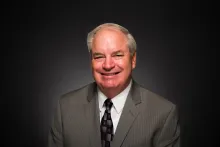
Robin Webber was born in Chicago, Illinois, in 1951, but has lived most of his life in California. He has been a part of the Church of God community since 1963. He attended Ambassador College in Pasadena from 1969-1973. He majored in theology and history.
Mr. Webber's interest remains in the study of history, socio-economics and literature. Over the years, he has offered his services to museums as a docent to share his enthusiasm and passions regarding these areas of expertise.
When time permits, he loves to go mountain biking on nearby ranch land and meet his wife as she hikes toward him.
