
Robin S Webber
This transcript was generated by AI and may contain errors. It is provided to assist those who may not be able to listen to the message.
I brought my PowerPoint with me again. Are we on? Yes, we are. Thank you very much.
Well, we do appreciate having everybody here this afternoon, and hopefully I'm going to, by God's design, and hopefully with this help, bring you a message that hopefully will be very rewarding to all of us in our spiritual journey.
It's often been said that you can't watch the grass grow under your feet. And, or if you don't like that expression, there's another one that you can't watch a teapot boil. But, as you know, that hasn't stopped any of us, has it? With certain challenges that come along in life. Even the greatest challenges, even when we remember that you can't watch the grass grow underneath your feet, and or watch a teapot boil, to watch something come to the fore. One of the greatest frustrations is watching how God's Spirit is planted, how it develops and grows in us to serve God's purposes rather than our own. And sometimes we get tired of watching. We become frustrated. We become exasperated. And we fall into despair. It can be utterly perplexing to a Christian as we stare and focus on ourselves and wonder what's going on. Why aren't we developing? Why aren't we Christ-like? Why aren't we godly? It seems as if my get up and go has got up and went. And there's nothing happening. We say to ourselves, it wasn't supposed to be this way. And I don't want to be this way, but it is this way. It can cause bewilderment to spare and most tragically create a hypocritical lifestyle. And most importantly, it can create the saddest sight of all. And that is a defeated Christian. Maybe I'm talking to some out there today that while you do not have a name tag on you, you feel that that title might apply to you. I am a defeated Christian. As we focus on ourselves, and perhaps grow in despair, and or as our carnal human habit is, is to look at others and wonder why they're not growing. And we stare and judge the person in front of us or behind us, and most importantly, the person by us. Have you ever asked this question, how come it's taking so long? And if you've ever asked that question, that's also a good title for a message, this message. And it is simply this, how come it is taking so long? Now, as we venture towards answering this, allow me to share something, please. This inquiry knows no bounds. Be it a new member, be it a veteran member, or your pastor.
The struggle, and sometimes the spiritual pain, can go on for years and years and years. And for some, it has never been dissipated, yet, even as I'm now speaking.
Now, unfortunately, much of this is due to false expectations, and due to a lack of understanding of what God is performing, what we are doing, and what lies before us. Allow me to repeat that. For I believe that this could be one of the most important messages that you will hear. Let me go back. Let me reboot. When we ask, how long is it going to take God? Unfortunately, much of this is due to false expectations, and due to a lack of understanding of what God is desiring to perform in us. And as He performs in us, then what is the responsibility that lies ahead of us? In other words, what was the deal, and who was supposed to be doing the dealing?
Sad to say, but it's a common occurrence. Even with those that are, shall I say, well-intentioned, we often mistake church affiliation or activity within a church for the activity of Christ in us. And there's a tremendous difference, and therein lies a part of the frustration. Allow me to offer that again for your reconsideration. There is a difference between activity within a church and the activity of Christ in us. And if we don't understand the difference, and we simply combine them and make them synonymous, we can stay lingering on that question. How come it is taking so long? Have you ever noticed certain people that are really on fire with church work? It can be a member. It can be a deacon. It can be a man. It can be a woman. It can be a young adult in the church. It can be a pastor. It can be a council member. It can be any and or all of us. And sometimes you know when there's something on fire, everybody just wants to come along because they recognize it's going to burn sooner or later, so we might just be around for the spectacle. That we can be on fire for seemingly what we consider all the right things rather than the right thing. Allow me to bring this back down to a basis for us to all come into, to make myself plain. Being a workaholic for Christ and allowing Christ to work in us is simply two different things.
Over 45 years in the church, I have been exposed to many workaholics for Christ, for a church, the church. Many workaholics, including myself, because there seems always to be something to be done.
But there's a difference between being a workaholic for Christ and allowing Christ to work in us. It's simply two different things. Join me, if you would, in 2 Corinthians 5, and let's see what the Word of God says. I'm rereading from the Living Bible translation today. I will not apologize, but I do want to bring you into understanding that it may be a different translation than the one that you have in front of you. 2 Corinthians 5 and verse 21. Let's notice something here. 2 Corinthians 5, 21. Pardon me. Maybe that's how we want. What's up, Corinthians? 5, 21. Where is it says that if a new thing, behold? 1 Corinthians 5, 17. 2 Corinthians 5, 17. What this means is that those who become Christians become new persons. They are not the same anymore, for the old life is gone. And notice what it says, and a new life has begun. A new day. A new start. New world and new creation. New, new, new. New and improved. New is best. Question. It goes back to the title of the message. If I am a new creation, and if everything is supposed to be new, I have a question for you, God. Why is it taking so long? What's interesting is that the same human author that penned this also penned something else over in Romans 7. Join me if you would there. In Romans 7, the famous plea, the cry, the bellowing of the Apostle Paul in Romans 7 and verse 15. When he says, after he wrote, behold, all things are new, and a new creation, he says, I don't understand myself at all. In other words, in our modern-day language, I've got issues. I'm perplexed. For I really want to do what is right, but I don't do it. Instead, I do the very thing I hate. I know perfectly well that what I am doing is wrong, and my bad conscience shows that I agree that the law is good, but I can't help myself because it is sin inside me that makes me do these evil things. The new creation. Perplexed. Doing evil. I know I am rotten through and through so far as my own sinful nature is concerned. No matter which way I turn, I can't make myself do right. I want to do, but I can't. And when I do good, I don't. And when I try not to do wrong, I do it anyway. But if I'm doing what I don't want to do, I'm not really the one doing it. The sin within me is doing it. It seems to be a fact of life that when I want to do what is right, I inevitably do what is wrong. I love God's law with all of my heart, but there's another law at work within me that is at war with my mind. And this law wins the fight and makes me a slave to the sin that is still within me. Now notice what this New Covenant Christian says, the individual that wrote about a new creation. Oh, what a miserable person I am! You think that maybe Paul asked the big question, How come it's taking so long? Who will free me from this life that is dominated by sin? Thank God! And he's not saying that in a swearing fashion. The answer is in Jesus Christ our Lord. Interesting. When we are baptized, and we're going through a baptismal class right now, and what a wonderful time we had this early afternoon. And it's very important that we look at this, that when we are baptized and we do become that new creation in Christ, hear a spiritual reality. All of Paul. Some things do change. Some things do change. Some things don't change. And to not understand this can create despair. It can create quiet suffering. It can ultimately create a spiritual drought to wither and dry us up.
We can, in a sense, if we want to be honest with ourselves, talking to myself, talking to all of us as a church family, we can, in our despair, frustration, or misunderstanding, just simply live a life of pretend. Pretending to be a Christian because we don't really know the conditions of Christianity that God has set before us. I think much of this is due to thinking like man and not like God, because we don't appreciate the depth of our calling, the depth of the battle, and we get caught up in what we might want to call time traps of maturity. You know, when we're dealing with humanity, we deal with time. And so what happens sometimes is we put down age 16. Now, let me ask you, what can you do at age 16? Pardon? You can drive a car. So we think, oh boy, I've gotten to a point where I can drive a car.
And or we come to age 20, we're mature enough now to be able to, are you ready? Handle the wheel. Sort of.
Not the American male, though. No, just teasing. Then we come to age 21.
Somebody. Vote and or drink. V and D. We've come to this stage of where the grass is growing enough that now I've arrived.
I've got another one for you. Some of you know about this, some of you don't.
Seniors coffee at McDonald's. They finally look at you and guess what? If you paid enough money over the years, the coffee is cheaper.
62 and 65.
The government gives you its surprise. A little poetry. Social security. What I'm trying to say is simply this. We get in this world of time and space. We get caught in what we call the time traps of maturity. We go to college three or four years. We get a BA. We go later. We get an MA. It's trapped into four years, two years. Some of us went to Ambassador College many, many years ago. We go to a seminary school. We learn about God. We learn the Bible. We memorize verses. We graduate. We're ready to tackle the world and tell everybody else how to live that has lived so much longer than all of us. We've already been married and had children, but there's this level of maturity. There's this time trap. The grass has grown enough. It's enough. Let's move on. In being caught in the time trap of maturity, we fail to see the timelessness of God's plan. God does not deal with us the way that we choose to deal with ourselves humanly. God's timelessness is based on two different but seamless factors that I'd like to share with you. I'd like you to jot it down so that you'll stay in the message. I don't even know if I'm going to get through this message. We'll cut off at a certain point if I don't, because it's going to continue. I think it's important. Two different factors. The first is this. A commitment to Christ. We just had that in the baptismal class. A commitment to Christ. But some people make the mistake of just simply staying with the first factor of, number one, a commitment to Christ. Number two, please. The second factor is growing in Christ. And that is where the rub comes in, my friends, is that some people think that if they're committed to Christ, they will now grow in Christ. Rather than recognizing that number one to be committed to Christ is but the beginning of the journey. Growing in Christ is completely something different. They are not the same. And not to understand that difference of being committed to Christ versus growing in Christ is to not understand God. It is to underestimate God, and it is to underestimate the struggle that is ahead of you and me on the journey of Christianity. And when we underestimate what God is doing and underestimate the breadth of the struggle, we come up with the question. How come it's taking so long? So that's what we want to talk about today. We want to talk about and give answers to why it seems to be taking so long at times. I'd like to share something with you as an analogy that I hope will be helpful to all of us to understand this. What God is doing with you and with me is very similar to what occurred 65 years ago. And you know what? I did not bring up an eraser. Could somebody bring me an eraser, please? What God is doing with you and me today?
Thank you.
It reminds me of Shakespeare. An eraser and eraser. My kingdom for an eraser. Isn't that out of Richard III? This is not a good eraser either, but... It's a terrible eraser. Bring me another eraser.
You say, friends, this is a part of the struggle. Stand by, Victor. We made you another one. Yeah, I tell you. That's a little better. We're going to make do. Rome was not built in a day. That's why it lasted so long. Okay, here we go. You're going to get the point. What an ugly board. Some of your parents, maybe some of you I'm looking around, might have been involved in the greatest struggle that occurred in the 20th century, which was the World War II. And what we are going through in Christianity is very much like military operations during World War II, especially in the early 20th century.
Let's do a little history test for a moment and then bring it up to our journey and our battle. During World War II, there were two major theaters of war. One was the European Theater, the other was the theater that was in the South Pacific. We recognize in 1945 that the European Theater was the one that was in the South Pacific. We recognize in 1941 that it was not only Pearl Harbor, but many, many islands that were all of a sudden seized by the Japanese Empire. And as they were seized and encountered that, ultimately, that those islands had to be taken one by one.
It was basically connecting the island dots to the goal. The goal being conquering the island of Japan. But it didn't happen overnight. Now, all of us, we can read a history book and say that in 1945 there was the VJ Day, victory over Japan, and that World War II was finished. All we do is basically see the results, but we don't recognize everything that led up to it.
Basically, the first step was, the strategy was to connect the island dots to the goal, conquering Japan. So many islands that were out there in the Pacific, but then the next step, as an island was selected, was to deal with reconnaissance. That was basically to have aircraft go over and photograph the island and to map it. But that was just one step. Then there was what we call the softening up of the island. Maybe some of you that may be older that were in World War II will remember this. This was very much my father's experience being a member of the 1st Marine Division, and this was his experience in many of the campaigns that he was a part of during World War II.
After aerial reconnaissance, after the photographs and the maps, then would come softening up the island. That would be where the Army Air Corps or other divisions would air, Army Air Corps at that time, not the Air Force, because it did not exist, as we know today, but perhaps the Navy would begin dropping bombs on the island to, in a sense, soften it, prepare it for invasion.
Then after that, there would be more softening up, as you would have the battleships offshore, and they would be lobbing in incredible bombs into the island. Sometimes those islands were only two miles... They weren't like Catalina. Sometimes those islands were only two miles wide and maybe eight or nine miles long. They would be dropping bombs, and they would be precise from the battleships.
But that was all just in the softening up process. The battle had not even really begun yet, because then the Marines would be dropped on to shore. Of course, that's always the famous thing between Marines and the Navy, is they kid one another.
My father, having been a Marine and having been waiting to land, and knowing that the Navy is supposed to soften up the island, what happened is many of those islands were made of coral. Basically, the bombs just skipped off the coral. They didn't do a lot of damage at that point. They'd say, well, the island softened up. You can now go in. Well, that's a whole different story. If you're a Marine and you're dropped off several hundred yards from shore, and you're going on.
I remember one time my dad told me a story, and he didn't really talk about the war for about 30 years, as many veterans don't. But he said that basically he was dropped in with about 2,000 men. The island was supposed to be all theirs. It was supposed to be softened up. And then he looked down the beach, and 4,000 of the other side were coming right at them.
This was meeting you at the beach, is what it's called. Quite scary for a 22-24-year-old man. That one island, which was two miles wide and six miles long, which was supposed to be a two-week campaign, became a two-month campaign, and there were 10,000 casualties. American.
But nonetheless, there is the softening up process, which is indeed important. Then what would happen is that the Marines would be sent in. Why are they called Marines for some of the younger people? Because their action usually occurs on or near the water with relationship to the Navy. The Marines would be sent in to establish a beachhead, and then the Marines would take just a fragment of the island. What would happen is, here would be the island. For you over here, I can't see if there is an island happening up here. There would be the island. And notice, it's a perfectly round island. When the Marines would establish, after all the softening up process, they would grab hold of a little bit of the island. And this was called a beachhead.
We were on. Now, at that point, what the Marines would do, once they established that beachhead, they would radio back and say, we have landed. Situation is well in hand. Wait a minute. What? What's this all about? They'd say, Situation is well in hand. Oh, yeah. Seemingly quite presumptive. Really, it was just the beginning. Because they would now be confronted with the genius of our World War II adversary that had been there for years. And had been preparing for years to hold that occupied territory. But the Marine kid gets on the radio. Why is General Headquarters saying, Land it. Situation well in hand. Wherein lies the truth. Was the young corps guy telling a fib? Or was something profound that he was saying? The truth is simply this. The situation was well in hand. As the Marines had secured a beachhead, they had secured an area. A notch, if that. Now heavier artillery, more equipment, more help could be on the way.
But the Marines had not come just simply for a beach party. They would have to move into the interior of the island. And they would have to reclaim it. Valley by valley, hill by hill, volcano by volcano, mountain by mountain, and squad by squad. They would go slowly. They would inch in. And just when everything was settled here, a battle would flare up here. Just when things were settled here, this area was not secured down here. They were still, by and large, on occupied territory. Now, ultimately, all of the island, one-centimeter territory, would become a U.S. possession. But here's what I want to share with you. It didn't occur overnight, and without struggle, and without casualties along the way. What can we learn from this on this, the Sabbath day? Conversion is very similar to the invasions of World War II. There is a softening-up process that God utilizes when he begins to work with us. That precedes his friendly invasion into our lives. The softening-up process for Roland is different than mine, for Susan, different than Pat's, for Waltz, different than Chris's. The softening process is different for each and every one of us. It's diverse. God is wondrous. He knows exactly what is needed. That softening process is not necessarily by bomb or by missile. That can be where God allows economic distress in our lives. It could be alcoholism. It could be sexual addiction, career disappointment, fear of world conditions. Is anybody hearing me? Fear of world conditions, drug addiction, absence of purpose in life. Maybe we're just guilty, shattering guilt in us. Prison terms. Somebody turns to God in the jail cell. Ruptured relationships between friends, between mates, between family members. Maybe just disillusionment with life itself. Had it all just like Solomon and it's just not taking us anywhere. Maybe the death of a loved one is a wake-up call that God wants to enter our life. Perhaps one that we've never thought about is just the very real witness of the very real deal of a Christian that is setting a good example that is a part of our wake-up call or softening process that God uses. Whatever factor, and I put out a wide net and you probably are affected by one or the other of these. I look at my own life. I look at my family coming to the church. A great wake-up call was the death of my own brother here in San Diego in 1959. My mother was a religious lady. She was my Sunday school teacher. She was the superintendent of the Sunday school for the Lutheran Church. It wasn't supposed to happen that way. She was a godly woman. She had a great son, my older brother. A great guy as much as I remember of him. And he died. It wasn't supposed to be. In a Christian's mind, one plus one ought to equal two and then three and live happily ever after because the beach had of God's presence in our life. But it caused my mother at that time to begin a twirl in the world of wondering what God was doing and what a greater purpose in life was about. You have your story. I'm just sharing a brief story. My family started our way into this way of life. Whatever the factor, the resulting reactions run this way. Come to us. Whatever that softening process is, that there is something too big for us to handle alone. And we need to turn for help. The other factor is simply this, that there becomes an awareness of a loving God that if he controls and rules the entire universe, that we are the desires of Him occupying our life, coming aboard on our life's shore and handing over our territory to Him. Not by overpowering, not by evil design, not as a terrible invading force, but as a friendly force. And at this reality, after this softening process of whatever occurred in your life, the invitation begins. Join me, if you would, in Revelation 3. Revelation 3 and verse 21.
Notice what it says here. Revelation 3 and 21. The softening process is out there. Loss of job, challenging world, broken relationships, death in the family, drug or sexual addiction. Whatever it might be, God was drawing you towards Him, softening you for now His invasion into our life. Notice Revelation 3 and verse 20. Look! Here I stand at the door and knock. If you hear me calling, open the door, and I will come in, and we will share a meal as friends. And I will invite everyone who is victorious to sit with me on my throne, just as I was victorious and sat with my Father on His throne. And anyone who is willing to hear me should listen to the Spirit and understand what the Spirit is saying to the churches. Very interesting. As we look at this, He knocks at the door, and we say, come in. But let's understand something. God is not going to push that door down. For God's invasion to begin in our life, we must unlatch the door. And the latch is on the inside. There was a time in your life and my life when we said, I'm pulling the latch. I've never trusted anybody else before, but I believe in you and I trust. Begin the process. So the great invasion of a friendly and a loving God commences into our enemy territory that is apart from Him. Occupied territory in this world dominated by the Spirit of Satan. And something incredible begins to happen. Join me if you would in Romans 8. Romans 8. And let's look at verse 14. God tells us what the beginning of the invasion will look like. For all who are led by the Spirit of God, they're the children of God. For all that are led by the Spirit of God are the children of God. The same powerful spirit that raised Jesus Christ from the dead enters and establishes a beachhead of operation. In Revelation, Christ stands knocking at the door. We unlatch from the inside. We welcome His friendly invasion. And what God does for as many as are led by the Spirit of God, He establishes a beachhead in our lives and in our hearts of baptism. We sometimes make that mistake of thinking that all enemy territory is now in His domain. That it's all over. I'm a new creation and all the old problems have gone. That is a mistake that a Christian can make. It's a mistake and a misunderstanding that you and I can make at our own peril. We need to recognize that. Some will question why God's landing in their life is different than others. He alone knows where and how He lands. Actually, in the old days of World War II, on island landings, there were actually sometimes three or four different venues of where they might land. And they did that to confuse the enemy. But we're not the enemy. We need to understand why God lands where He does. He alone knows that. It's interesting, as you go back to Revelation 3.21, where He says He stands at the door and knocks. He knocks for some. He taps for others. And to others, it says, I stand at the door and bomb. Boom! Wham! And we're almost blown off of our feet because of the softening process and as He comes into our life.
Maybe some of you felt you just got a tap. Some of you felt that you got a knock. And some of you felt like you got all of it. And the shrapnel is still there. Why the bomb versus the knock? Well, one thing, if in God's softening-up process and in His knocking and in His friendly invasion to our life, He bombed, it's better to be bombed than to live a life of domination under Satan's spirit and in Satan's world.
For others that just received the knock or the tap, I have a thought that I'd like to share with you. And I say this especially sometimes to those that have grown up in this way of life. Shall we say, good church kids that stuck around and seemingly nothing too exciting has happened in your life yet? Just stick around.
If you've just gotten a tap or a knock, there'll be some grenades in there. There'll be life challenges. God will know that He knows that He knows that He knows that you have opened up your kingdom to Him from the inside out. It will come. I know a lot of sometimes young people grow up and, you know, what a blessing to grow up in the church. What a blessing to grow up in a moral environment. What a blessing to grow up keeping the law of God, the Sabbath, the Holy Days, to understand that not all of our money is ours, that we get to give God's word. God is a great offering and everybody's so nice when we come into church. They smile, they even stick out their hand and they shake hands with you. Oh, they're all so friendly and I just like them. I've become friendly because these are my people. You know, I'm a pretty good person.
Maybe I ought to get baptized because everybody else is. Seems to be just the thing to do and it is the right thing to do. And nothing too much has happened in your life yet. Don't worry. Stick around.
Things will happen. You might have a surrendered mind, but God doesn't want a surrendered mind. He wants a surrendered heart. And those conditions will come upon us sooner or later. Let's come to understand and appreciate something. Part of the dilemma that we have sometimes when we ask God, why does it take so long? Part of that surrounds what I call mistaken theology and our over-the-top preaching. That creates a dilemma for Christian soldiers that are on the ground.
What do I mean by mistaken theology?
Some people will say, well, all you have to do is accept the name of Jesus Christ and you're on a roller coaster ride to the kingdom. It's a thrill ride you'll never forget.
Others preach that way. They preach a gospel of just good, health, wealth, and prosperity. They teach a gospel when they go to Psalm 23, where it talks about the still waters, and it talks about the green pastures. And it sounds so pastoral, and somehow they inadvertently leave out that there's a valley of the shadow of death.
To preach only half the Bible, to only preach half a Psalm, does an injustice to what God is doing. Some people then come to think that God establishes a beachhead, that the conquest is over. It's complete. And then when they understand, like Paul, that they become frustrated, and they recognize that there is still an occupied territory for them to conquer, there becomes that bellow that comes out of the book of Romans. God, what in the world are you doing? Because the world inside of me is not pretty. It is ugly. I thought it would be different than this, and it's not. What do we do? Normally we ask, the Lord, how long is it going to take? Let's talk about that for a moment, and let's understand some things here that are very important.
Because what happens is that when we do this, and we begin asking this question, and we lose confidence in what God is doing in us and what Christ is performing in us, what can happen is that we can begin to pretend. And we can go through all the motions on our exterior, but our interior isn't working. We can say all the right things, but our public speaking does not match our private heart. And when our public actions and our public speaking do not match our private heart, there's a collision that's going to occur in the future. That's why we're talking about this to me today, to you today, to us as a congregation, so that we can realistically understand how God performs His work in us. Because our frustration is normally that of an Adam or an Eve, that we lash out, and we play the blame game, and it usually goes right to God. God, what did you get me into? I thought that when I was baptized, that all the junk would be gotten rid of. Everything that I was would somehow go down the drain of baptism. I didn't recognize that there was still all of this enemy territory out here, that you're charging me to submit to you as Christ works in me, and as I work through life. I thought that when I got baptized, that all the old stuff was going on, all the junk. Are those vans for starving students, or am I the only one? I thought somebody was going to come up to the back door of my life and haul all the junk out, and I'd never see it again.
That's not how it works.
Now, there is one thing I do want to say to you, and I want to point you to Scripture. Let's go to John 1, verse 12. Let's make no mistake that when God lands on our shore at baptism, and begins to work with us with His Spirit, and begins to forge a divine beachhead in us, it is a wondrous event. John 1, verse 17. Let's take a look at it. John 1, verse 17. John 1, verse 12. John 1, verse 12.
But to all who believed Him and accepted Him, He gave the right to become children of God. They are new. They are reborn. They are born. They are born. They are born. This is not a physical birth resulting from human passion or plan. This rebirth really truly does come from God. There is a beachhead that begins to be established. Operations are now underway. Help is on the way. God has launched something incredible. So, we have to be aware of that. Help is on the way. God has launched something incredible, special in us. Something somewhat different from what ever experienced before by people of old. In ancient times, people often experienced God's help externally. Not always. There seemingly are cases. We could say many. We can say few. That's a matter of judgment in the Old Testament, of which people had the Spirit of God. But it was not in general to everyone. There was a basic concept within the religious community that God's Spirit was an external force. It came, it stayed, it went. It came, it left. Remember what David said in Psalm 51? Lord, please do not take your Spirit away from me. But the beachhead that God establishes with those that are under the new covenant is different. It is not external. It is internal. God says that when I've begun something in you, when I've created that beachhead, I am there to stay. Join me if you would in John 14, please. In John 14 and verse 15.
If you love me, obey my commandments, and I will ask the Father, and He will give you another counselor, another comforter, who will never leave you. Not like in the Old Testament. Not with the worry that somehow God is going to draw it away and pack up ship and go over the horizon and leave you alone on the beach at the beachhead. He is the Holy Spirit who leads you into all truth.
In other verses it says, Jesus said, I will not leave you as an orphan. I'm not going to abandon you. Quite different from old. Christ has given us a guarantee. Now, as we move forward from God's initial impact in our lives, from the beachhead into unconquered territory in our own lives, we often have not considered what true spiritual maturity is. Here's the point I want to make to you. Let's go to the board here for a moment to this stunning PowerPoint that is up here.
The beachhead is baptism. This is where God lands in our lives. This is where He begins to work with us. He shows His interest in our human island. My dad and all the other Marines 65 years ago didn't come just for a beach party. Trust me, the Marines didn't have any beach balls out in 1943 or 1944 on Iwo Jima or Palalu or Guadalcanal. This was just the beginning. Now, now, and now they had to go in and mop up, which was the term that they used, mop up the rest of the island piece by piece. We too, as Christians, have to move in from that initial beachhead and begin to deal with the unconquered territory in our lives. I have a question for you that only you can answer. Pause for a moment. Where do you join Paul in his bellowing out of Romans 7? What issue confronts you right now in your life? My life? That is still occupied by forces other than God's great love and the example of Jesus Christ. What are you wrestling with that you thought was supposed to go away 20 or 30 or 40 years ago? And you're still like Jacob wrestling with that angel? What is it? Perhaps a part of the difficulty is that at times people think that, well, that spiritual maturity or occupying the island is by somehow preaching of the impending divine invasion for others. If it was good for me, it would be good for them, even though I don't understand everything that it's supposed to be doing for me. Nonetheless, I'll get involved in a cause and I'll preach it to everybody else. And or that they get caught up in the thought that their island is occupied now because of a list of dos and don'ts that they now observe of things that they did before. Whatever they did before, now they don't do that. And therefore, that is the sum total of spiritual maturity. Join me in 1 Corinthians 13.
1 Corinthians 13 tells us what spiritual maturity is.
We find here the love chapter in all of its fullness.
All of the wonderful factors in verse 4, love is patient and kind. Love is not jealous or boastful or proud or rude. Love does not demand its own way. Love is not irritable. It keeps no record of when it has been wronged. It's never glad. When it has been wronged, that means love doesn't keep score.
Has anybody in this room been keeping score the last week?
It's never glad about injustice but rejoices. Whenever the truth wins, it never gives up. It never loses faith. It is always hopeful and endures every circumstance.
Now, if God had laid all of that on us at baptism, and all the fullness of everything that love touches and what it means, we might never have invited a man. We might have been swimming away from the island, saying it's too much. Can't do it.
Not me, not now, not know-how.
To use bad English to make a good point.
God is the author of timing. Of timelessness. On a perfection of what He's doing in each and every one of us. Basically, what is saying to you today is that as babes in Christ at baptism, if we had everything exposed to us that is inside of us, we would have been overwhelmed.
And thus God in His mercy allows us to render our personal kingdom to Him, peace by peace, act by act, situation by situation. But it doesn't come overnight. That's why it's important as we begin to conclude, I want to share two very key points with you today. To understand how to move out from the beachhead and begin to deal with life, not as we thought it would be, but as God intended it to be, so that we might give Him glory. There are two powerful factors. Number one, our position in Christ. And number two, the conditions on the ground.
Our position in Christ comes first and foremost. Our presence before God and our position in His eyes is perfect.
I didn't say we're perfect.
Our presence before God and our position in His eyes is perfect from the moment we accept His loving invasion into our lives by accepting and receiving Jesus Christ into our formerly totally controlled enemy territory at war with the laws of God. Romans tells us the carnal mind is enmity against God. It's opposed, it's confronted to the kingdom of love. But when we accept Jesus Christ as our Savior at baptism, and I'm not just saying, mouthing the words, but with the lips of our heart, surrendering our lives to God by the sacrifice of His Son Jesus Christ, we take a position. Such perfect positioning for us is not by us, but by what Christ has done. It's not about us. That's the thing we've got to learn. It's not about us. Hebrews 10, verse 14. Join me there.
Hebrews 10 and verse 14.
For by that one offering, speaking of the Christ, He perfected forever all those whom He is making holy.
By what He is, by what He has done, as it speaks of in Romans 5, 5-10, you can turn to that later and review that. That for surely, but for a good person, someone ought might die.
That can be well and good humanly. But for us, that while we were yet in sin, and while we did not yet know God, that perfect man died for we that are imperfect.
But it's not only what He has done, but what He is doing. Join me, if you would, in Romans 8. In Romans 8.
What's happening today, I've got a different Bible with a different translation, so it's like wearing a new pair of glasses. Notice Romans 8.35. Can anything ever separate us from Christ's love? Does it mean He no longer loves us if we have trouble or calamity, or are persecuted, or are hungry or cold or in danger or things like that? We have to be careful with that. We have to be careful with that. We have to be careful with that. Even the Scripture says, For your sake we are killed every day, and we are but sheep to the slaughtered. No, despite all of these things, overwhelming victory is ours through Christ, who loved us. And I am convinced, I'll do a Weber paraphrase, I am dead certain, I am dead sure, I am committed to the Lord, and I am not a God, I am not a God, I am dead certain, I am dead sure, I am convinced that nothing can ever separate us from His love. Death can't, life can't, the angels can't, demons can't. Our fears for today, our worries about tomorrow, and even the powers of hell cannot keep God's love away.
We must understand our position before God the Father in Christ, of what He is, of what He has done, and what He is performing on behalf of His Father. We must be secure in the knowledge of that position so that we can have the courage to go out into life's conditions to face the rest of the island. And the island is there for each and every one of us. We just have a different valley, a different stream to cross.
We must believe and know the position that we stand before God in through Jesus Christ in Him. To move out of that is a folly. To move out of that is despair. To move out of that is to ask myself, did you ever know what a position was in the first place? When Christ begins to establish His beachhead in us, it begins with the revelation that He has given everything, everything of Himself to us. But also the realization when the beachhead is first established in our biblical infancy, in our spiritual infancy as babes in Christ, we only have so much to give to Him. And He understands that. He's a parent. You don't teach, as a teacher, you don't teach a five-year-old trigonometry. You give Him one plus one equals two. You take Him where He's at, what He can understand, what He can deal with. But as we come to understand that position, then we must move into the conditions that are on the ground. I want to share something with you. As we move forward to understand those conditions, you say, you know, I remember when I was first baptized, and it seemed awfully easy.
Church was cool. Pastor was all right. Everything was happy. Sure, I had some butterflies, but they were all flying information anyway. Why is it now 20 or 30 years down the line? Is it a ratio when I need it? Why is it now 20 or 30 years down the line that there seems to be so much coming my way? Hey, Paul, move over. Make room for me in Romans 7. Well, notice the territory and notice where we started. Just a smidgen, a fragment, a sliver. As we begin to protrude with our surrendered life positioned in Christ into the conditions that are on the ground, did you notice something? There is a vast difference. The theater of war has broadened. Did you notice that? Picture is worth a thousand words. There is now more than ever before. There is now more coming at us. Up here in our spiritual infancy, God knew that we couldn't take anymore.
That was all right. But now we're hitting. Remember what it was like with Iraq about eight years ago? Remember shock and awe? Over bag that? We all seen that picture on television. You know, all the lights. Took a week. Shock and awe.
Wild the world. Then the dust settled.
Houston, we got problems.
We had decided to go all the way into the capital with shock and awe. But what happened?
We'd forgotten all this territory up here.
Good plan, but.
Thought we might, for a change in history, do away with all the heavy sledding. Avoid casualties.
That's what happens when we're baptized. Man, there is shock and awe when God lands the forces at first in our life. Fireworks, spiritual excitement, spiritual romantic glow, baptism.
Even throws the enemy, Satan, a kilter. And then the dust settles. And we look around, and we recognize that God still desires perform His wondrous, marvelous work in us.
It's not about us getting more of God, but us giving God more of us. To get the job done. And to recognize that we can't do it without Him. Let's close with a verse today. Join me if you would in Psalms 103.
Let's take a look at verse 13. He has, speaking of God, removed our rebellious acts as far as the East is from the West. The Lord is like a father to His children. And let's remember that's what the beachhead was all about. I want you. I love you. I want you to be a part of my family. I want you to be a citizen of my kingdom. He's tender. And He's compassionate to those who fear Him. For He understands that He is a God. And He understands that He is a God. And He understands that He is a God. And He understands that He is a God. And He knows that we fear Him. For He understands how weak we are. And He knows we're only dust. Bottom line is He knows more about us than perhaps we know about ourselves. Our days on earth are like grass and like wildflowers. We bloom and die. The wind blows and we are gone. And though we had never been here. But notice verse 17. But the love of the Lord remains forever. And those who fear Him. And His salvation extends beyond even us.
As we conclude, I have the news for you.
See all of this up here? We're not done. We've just talked about the beachhead today.
We've talked about the aspect of our position in Christ. In relationship to the condition of the ground that lies before us. We've discussed that we must know our position in Christ. So that we can securely and squarely be able to face that which lies ahead of us. Today is only the first step. When I come back in several weeks, we're going to venture further into the island. I hope that you'll be prepared.
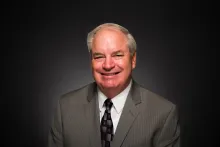
Robin Webber was born in Chicago, Illinois, in 1951, but has lived most of his life in California. He has been a part of the Church of God community since 1963. He attended Ambassador College in Pasadena from 1969-1973. He majored in theology and history.
Mr. Webber's interest remains in the study of history, socio-economics and literature. Over the years, he has offered his services to museums as a docent to share his enthusiasm and passions regarding these areas of expertise.
When time permits, he loves to go mountain biking on nearby ranch land and meet his wife as she hikes toward him.
