

Robin S Webber
This transcript was generated by AI and may contain errors. It is provided to assist those who may not be able to listen to the message.
Here we are just a week before the festivals that are going to be coming up, the Spring Festival of Pentecost. I'd like to bring you into this message by just staying with me for a moment and talking about all the different handles of names that God puts on this festival. The various titles are literally baked into what God desires for us to spiritually reap from the upcoming Holy Day, because this upcoming Holy Day really does depict a harvest, as those that have studied the Scriptures and have come to become aware of their meaning that this is the Spring Harvest, the first harvest of the year.
So we call it the Feast of First Fruits. Also, beyond that, this festival that is coming up also has other names, other handles on it. Allow me to share them with you, those that may be new to the Word or new to the festival, and that would be that in the Old Testament it's called the Feast of Weeks. And also, it's also called the Feast of First Fruits. So there's a lot going on here, and I'm going to kind of unpack it for you for a moment as to what these different titles mean, as to where we're going to be moving to in this message.
What we find here when you mention Pentecost, when you mention the Feast of Weeks, when you mention the Feast of First Fruits, allow me to share a few words. You may want to jot them down if you want to, to kind of just stay along in the message. And that is simply, one is anticipation, because it's called the Feast of Weeks. That's giving you a measuring of what you're moving towards. It's also called, in the Greek, in the New Testament, it's called Pentecost. It's called to count 50. And also, then, it's called the Feast of First Fruits.
So, allow me to share a few words with you to move you into the message that we're going to build upon, is that this day that is coming up in less, well, just over a week, is it deals with anticipation. There's a countdown. Remember when we were kids and maybe we were firing a rocket in the air or whatever that might have been? We go 10, 9, 8, 7, 6, 5, why? 4, 3, 2, 1, because there is going to be a blast off.
There is going to be a take off, something is going to happen. But also, it's this Feast of First Fruits depicts growth. And we're going to be talking about our growth as the family of God today. And it also then ultimately as fruit grows, it is then harvested.
So, we're looking at a lot of this. So, we're looking at counting, we're looking at anticipation, and we're also, I'm going to throw out a word here for you for a second just to bring you along. We're going to be talking about waiting. There's a wait. There's a countdown, but there's a wait to come to fulfillment.
Now, whether it be ancient Israel at Sinai, whether it be the disciples at Jerusalem, and where we today, the spiritual Israel of God, all were, all are needful to go through the exercise of waiting on God. The exercise of waiting on God in faith-filled obedience to His will that you and I may be witnesses.
Because that's what all Christians have been called to be, is to be a witness that God truly did send this Jesus of Nazareth as the one who really was His Son. And we witness that by modeling ourselves after Him. It is the witness that we really believe that God sent His Son to this world.
And Pentecost is a part of that. Now, allow me to lead you to another thought. I think all of us just remembered I was talking about the aspect of counting. So, let me just take it in a different way, because as we come up to the festivals, we always think about the aspect that we are here to worship God.
But when we count to 50, when we count to 50, let's ask ourselves something. On that day of Pentecost, it's going to come next Sunday, simply this. As we come to worship God, do we truly count on God to be there in our life? Do we count on Him? We can know Him. We think we can have a relationship with Him.
But at the end of the day, do we truly count on our Heavenly Father and Jesus Christ? First question. Second question. And can He count on us? Think of Pentecost simply as this. Can God count on us? And can He see that we truly count on Him? With this stated, my SPS is simply this. How can a first fruit grow?
How can a first fruit grow by waiting on the Lord? I hope you'll be patient with the length of this sermon, just teasing, because you're going to be waiting through my notes. But how can a first fruit grow by waiting on the Lord? Let's talk about that. In our Bible study that we're having right now, and you're always all welcome to be a part of it on Tuesday every other week, and we send out the email, and we always invite all of you to it.
But we've been talking, we've been going through Acts 1 over the last couple of studies. Let me just talk about Dr. Luke. Have you ever met him before? Otherwise, Luke, the man that wrote the Gospel of Luke and also the book of Acts. Luke was the great observer of the early church.
He came along later, and he reported on what he had seen. He noted in his two writings, the Gospel of Luke and the book of Acts, number one, in the book of Luke, how salvation came. But then in the book of Acts, and this is where you and I are going to come in, he showed how salvation spread around the world of antiquity at that time. And the way he did that, he was, well, Luke was a doctor. And what do doctors do?
They examine. They inspect. They take notes. They make commentaries. They put in their files for another day. And what he found as he gave a diagnosis of what was happening in the first chapter of the book of Acts, he said, he found disciples that, number one, were following Jesus' command, following Jesus' command, and number two, were waiting on his promises. They were obedient.
They were obedient. And they were patient. And they were waiting. And that's what we're going to bring together today in the course of this message. They were waiting on something that had been promised to them. And they knew that Jesus was true to his word. He had said in John 14 and 18, we're not going to turn there, but allow me just to share it with you.
On the last night of his life, he said, of his human life, he said, I will come to you. I will come to you. That was a promise. That's not only a promise they took to the bank, but later on that they would give their lives for, and recognizing that Jesus was true to his word.
And that was not just simply an aspect. Think about it for a moment. And I've given other sermons on that. It was not only an aspect of coming back after the resurrection, but what the day of Pentecost is also about. I may speak on that on Pentecost. He said, I will come to you. Join me if you would in Luke 24. In Luke 24. And we're going to spill over into the book of Acts in a moment. But let's notice what he said here. He says in verse 47, speaking about the repentance and the remission of sins that would be preached about in his name to all nations.
Notice the key word beginning in Jerusalem. Beginning in Jerusalem. And then he says, and you are my witnesses. You are the ones that are going to give testimony about me of these things. Now notice verse 49. Behold, I send the promise of my Father upon you. But tarry and or wait in the city of Jerusalem until you are endued with power from on high.
So he'd given a promise in the book of John. Now he gives a command statement that you are to wait in the city of Jerusalem. Now let's understand after his resurrection that for much of that time they'd been up around the Sea of Galilee. But now he's saying as we move towards Pentecost, you're going to be stationed in Jerusalem. That you might be a witness of me until you are imbued with the power on high. There's that promise that he had talked about that I will come to you. Now join me if you would then. Now let's turn over to the book of Acts. Which parallels what we just talked about in the book of Acts. Acts 1.
Verse 4, And being assembled together with him, he commanded them not to depart from Jerusalem, but to wait for the promise of the Father, which he said, You have heard from me. Of which he goes back to what he stated. Then it says here, For John truly baptized with water, but you shall be baptized with the Holy Spirit not many days from now. Therefore, when they had come together, they asked him, saying, Lord, will you at this time restore the kingdom to Israel? And he said to them, It is not for you to know the times or seasons which the Father has put in his own authority. That's not in your domain. But this is what I'm going to give you to do. Notice, But you shall receive power when the Holy Spirit has come upon you. And you shall be witnesses to me. Notice, in Jerusalem and in all Judea and Samaria and to the ends of the earth. It's very interesting that he mentioned this. Now, you go back up to verse 5 for just a second. I don't want to leave this alone. He says that you will be baptized with the Holy Spirit not many days hence. Let's understand that he was basically with his disciples for 40 days. Now, that means then that there are 10 days that yet remain when he's gone up from the Mount of Olives and they're alone in Jerusalem. Let's think about that for a moment. So there are 10 days out. How many days are we out right now from Pentecost?
Great days out, aren't we? How would you say, Paul? Eight? Yeah, eight days. So I want you to think about in the framework that we are in the same period of time of where the disciples are asked to wait. They're asked to tarry. They're asked to have their confidence and trust in what God is going to do. Their response of obedience is what we find is immediate and unlike before, because we find as we go travel through Acts 1, we find that they're in that upper room area again and they're meeting together. And I may address that at the end of the message. What we find here, simply put, stay with me. What we find here is Luke clearly displays the very beginning of that church. The one that we heard about this man on the video saying that it really gives him a connection to the first century as to how and why God was using them. Luke is diagnosing here in Acts 1. He's finding that, let me stay with it. You might want to jot these words down and then ask yourself, is this the mirror of me? As to how I am exercising my stewardship with the truth. As far as my witness to the church family, to my neighborhood family, to perhaps non-member family, perhaps to the world around. He clearly states, his diagnosis, his read on this early church, he's kind of examining the body of Christ at this moment, is that they are faithful, they are expectant, they are patient, and they are obedient.
Would that be how God might describe you? Is that how he might describe me? Or is that something yet that we need to grow in in one of those four? I'm going to share them again just in case you missed it. Luke clearly makes a diagnosis. From what he heard, he understood that, number one, they were faithful, or faith-filled. Number two, that they were expectant, they were waiting. Christ had promised them something very, very special. And when he said something, they'd come to understand that he meant it, and that it would come to pass, and that they were patient. They were going to have to stay in Jerusalem without the rabbi, without their master, without the one that had just been resurrected from the dead. It's kind of neat, you know, when you have him around, but when he's gone up and you're down there alone and you're in Jerusalem just a month after everything broke loose with the crucifixion, that could be scary time. And they were obedient. Now, why is that so important? Let's realize these men had not always been obedient, and what we sometimes might call the dirty dozen, like the old movie, they were not always reliable. Just when you think you had them, Peter would say something like, whoa, what's that all about? But since the resurrection, and even more so now, they are focused. And it's plain to see that from the very beginning, that obedience, this is what Luke is laying out, obedience was going to be the pathway to usefulness by a gathering of people that would turn the world upside down, as it says later on in the book of Acts. Let's just put it this way. The O word. Now, sometimes people say, well, we're saved by grace. Absolutely. And amen. We're saved by grace. And we talk about our faith. But never mistake, never mistake, as people under the new covenant, we are also to be obedient. You show me your faith by works. Works are the shadow of faith. Yes, we are saved by God's grace. We do come to him by faith. But we are also to be obedient. And so we take a look at that. In Acts 5 and verse 32, join me if you would here for a second. As we see what made that early church, the church that would turn the world upside down. In Acts 5 and verse 32, and this continues to lead on with Luke's diagnosis, it says, And we are his witnesses to these things, and so also is the Holy Spirit whom God, notice, has given to those who obey him. God's Spirit is given to those who obey him, that follow his Son, the Living Word, who follow his Son that gave the written Word.
Obedience. And now Luke recognized that, and we need to recognize that, that in all of this then, that Luke recognized that being patient for God's promises to manifest is not passive. It's muscle. It's muscle. And there's one thing I can try to get across to you in the minutes ahead. Waiting on the Lord. A phrase that I think a lot of us are familiar with. You can go to any concordance. It's throughout the Bible. Waiting on the Lord is in one sense passive.
We draw back the self. We draw back what we think we are. So, waiting on the Lord is passive. It's also very active. There is passivity, and there is activity when it comes to waiting on the Lord. So, how do we handle that? Now, we may not be called in our day and age. Maybe we do not necessarily have the role of the twelve apostles and later on Paul and Barnabas and Sylvanus and the other apostles that would come along. We may not be called individually to turn the world upside down, but I will share this with each and every one of you.
Are you with me? We have been called to allow the Holy Spirit to turn our personal world upside down, to take us in a manner to shake us up, to wake us up, and to allow us to allow God to take the lead rather than ourselves, and to listen to that spirit, follow that lead, and to be more than when God first picked us up along the way and invited us into this great journey.
A question. Why is this opening account so extraordinary and given to us? Luke says that these men were obedient, and they were obedient to the word. They were obedient to the one that authorized the word God or spoke the word Jesus Christ. So why is this? Luke starts out with this. Because disobedience is not marginal to the human experience, but it's central. I'm going to put it in a way that maybe you've never heard before. The gospel truth is simply this, that human nature is not obedient to God's way. That falls differently from the world around us.
The world around us basically thinks that mankind is basically good. Mankind is basically all right. But God's word says different things about it. He says that the carnal mind, that fleshly mind, it's enmity against God. And so when we look at that, we even notice at times that people think about this for a moment. The people that God literally touched and opened up new horizons, new worlds, even put them into paradise, as it were, became disobedient to God.
They did not wait on the Lord, and they were not patient. Allow me to share a few with you just to kind of get you into this message. Adam and Eve. Adam and Eve did not wait on the Lord. That famous phrase, to wait on the Lord. Adam and Eve did not wait on the Lord. To ask his confirmation about Satan's lie, that you won't die.
These were people that were literally created by God, but they weren't patient. They did not wait on him. They did not have a further conversation. And we know the rest of the story. Let's think about another couple that God touched, but they did not wait on the Lord.
Their names were Abram and Sarai. God said, you are going to have a baby. Surprise! You're going to have a baby. But they had a baby, but later on Abram had a baby, but it was not by Sarah. They did not wait on the Lord. Abram literally took matters into his own hands. Along with Sarah's goading, her idea. Here, you take my handmaid. Let's understand this. They did not wait on the Lord. Now, God can take what we do and work around it, and things happen.
And of course, Ishmael came along, who was a son of Abram. But you know what? When you think about that, because they did not wait on the Lord to recognize that for thousands of years after that, those two sides of the family have been at one another in the Middle East ever since. For every cause, there is an effect. Think about this for a moment. Are you with me? This is just spiritual engineering.
For every cause, there is an effect. For every cause, there is an effect, whether it is a blessing or a cursing. Let's talk about another group that did not wait on the Lord. That's the children of Israel. The children of Israel. They did not like how long God was keeping Moses up on Sinai.
They got scared. They got nervous. They did not wait on the Lord to excuse Moses to come down with the Ten Commandments. How did that work out? Just a question. What about Moses himself? What about Moses when Israel needed to quench their thirst? And God told him how to come up to the rock to produce water. But Moses had a hissy fit with the children of Israel.
God upset. Bang on the rock! In that sense, under his own power. Question. Did he wait on the Lord? I don't think this is multiple choice. He didn't. What was the outcome? Because of that one action, he was not allowed to cross the river and go into the land of promise. He could lead the people up, but could not. How important is it to wait on the Lord? Let me just draw another example. First Samuel 13. You can look at it later. That's where Samuel had told Saul, You go ahead and you wait for me.
You wait for seven days and when I come, I will offer sacrifice to God on behalf of you and Israel. What happened? Saul got delayed. Samuel got delayed. What did Saul do? He was not the man of God. He was a king. He offered up the sacrifice. He did not wait on the Lord.
Saul could no longer be a witness for that kingdom of God that was called Israel at that time. Because of that action, in 1 Samuel 13.8 and forward, the kingdom began to be taken away from him. He was told that because he did not wait on the Lord. So, with all this stated, where is the rub? What is the bottom line? We know Scripture tells us that God will never be late. Our human nature arrives early. That's a large part of the problem.
Therein lies the intersection. I want to share that with you. Please, I'm quite sincere in that. We're going to talk about a certain intersection. Therein lies the intersection where choices are made. There is a space in everybody's life. There is that vacuum of space and time. It does not necessarily connect to where you make a choice as to whether or not you are going to follow God in a given manner, in a given event, in a given situation.
And wait on him. Wait for the lead of the Spirit. Wait to model the example of Jesus Christ. Wait to cooperate rather than to resist. And I understand that there comes a challenge in developing the fruit of the Spirit of Patience as a first fruit ought. So let's do some unpacking here. I'm going to unpack here. I'm going to share. I'm going to break this down. Be ready. I'm going to give you about seven quick points. Are you ready? Here we go. Waiting on the Lord involves committing yourself to the sovereignty of God. Waiting on the Lord involves committing. There's no such thing as being half-pregnant, and there's no such thing as being half-committed.
You are either committed or you're not to the sovereignty of God. Join me if you would in Proverbs 16. In Proverbs 16. Proverbs 16. The preparation of the heart belong to a man, but the answer of the tongue is from the Lord. All the ways of a man are pure in his own eyes, but the Lord weighs the spirit.
Commit your works to the Lord and your thoughts will be established. Proverbs 16. 1-4. We must first and foremost commit ourselves to the sovereignty of God. Waiting involves the next step. 2. Commit ourselves to a God who is loving, knowing, and committed to you. Join me in Isaiah 30. Proverbs 30. We can talk about people being sovereign, but our Father in Heaven is a different kind of sovereign.
You could say that Genghis Khan was a sovereign. You could say that Charlemagne was a sovereign. You could say that Charles V was a sovereign. But when you give your all to this sovereign, what is he truly like? And we notice this in Isaiah 30 and 18. Therefore, the Lord will wait. God also waits. He not only asks us to wait on him and to wait for his word, he waits on us.
That he may be gracious to you. And therefore, he will be exalted. That he may have mercy on you. For the Lord is a God of justice. And blessed are those who wait for him.
So our question so far, and there's going to be more to unpack here, is, do we truly look at God as being our sovereign? I know that sounds like a funny question, asking a religious crowd, especially Christians. But I must ask it, because I don't want you simply to be filling a seat.
I want you to be able to fill your hearts and know who you're waiting on. That he is a God who has said, I will make you in my image, not we making him into our image. But not only that, but he's a loving God. And he waits. We wait on him and he waits to see our response.
Have you thought about that for a moment? God doesn't just simply ask us to wait on him. He is waiting on us. He wants to be worshipped. He wants to be known. He wants to have that bond of where he says, you know, I am your God and you are my people. And unlike any other entity back in antiquity, he deals with a family. He were his children and he has that interest. Let's go to another waiting. Waiting on the Lord involves committing yourself to seeking God. Join me if you would in the book of Lamentations. Lamentations follows Jeremiah because it's Jeremiah's Lamentations.
So let's go to the book of Lamentations and join me if you would in chapter 3 and verse 25. In Jeremiah 3 and verse 25, let's take note. The Lord is good to those who wait for him, to the soul who seeks him. It is good that one should hope and wait quietly for the salvation of the Lord. Let's read that again. The Lord is good to those who wait for him, to the soul, to the living being who seeks him.
It's good that one should hope and wait quietly. Question. Did Adam and Eve wait quietly? When you think about it, think of the story of Esau and Jacob. Did Esau wait on the Lord, even in a famished condition? Or did he settle for his brother's fast food soup and to recognize that he lost his birthright? Do you know how important a birthright is in the world of antiquity?
Esau did not wait on the Lord. It was just like a roaring stream of self. He did not understand the graciousness of God, the mercy of God. He lost his birthright. When we come up to the Feast of Pentecost, let's understand something, dear friends here in San Diego and those that are watching. You have a birthright. Maybe you don't have that in a will from your parents or your grandparents, but you have a birthright. God has called you to be a first fruit. That's what Pentecost is about. It's about a harvest of those that God has appointed and elected to be first fruits.
When the judgment comes, you don't want to be a second fruit. You don't want to be a third fruit. I think God is extremely merciful. But you know what? You've been called to be a first fruit. The thing that we have to learn the most in this day and age, in this age of darkness, is that when we don't have a clear light, that we have a God above who is sovereign, a God who is loving, and a God who wants us to seek Him out and say, Father, Abba, you help me. You be with me.
I need your help. How do we seek God? How do we seek Him? How does He know that? Well, number one is spending time in His Word. Spending just time in His Word, studying, seeking answers, claiming those promises. Be like a disciple in Acts 1. Father, your son said, I will come to you. You've said that you're my God and that we are your people. I am your child.
I am individually wrapped by the life and the death and the resurrection of Jesus Christ. Help me. I need you. Help me to understand what your Word is telling me. I need answers. I don't have them on my own. You claim those promises. You claim a promise.
I'm just going to ask you a question. You don't have to raise your hands, please. Not one hand, not two hands. Not a television and a tenor and not a goal post. It's something like this. When is the last time that you opened up your Bible? It would be an x-ray to your heart in seeking after God.
When is the last time that you claimed a promise of God in your life? You put a claim to it. You said, Father, I could call upon you. I can ask you for my daily bread.
That may be physical, that may be emotional, that may be mental, and it may just be downright spiritual. I am claiming, Father, in the name of Jesus Christ today, that I need your help.
Claiming the promise that God says I will give you a spirit of wisdom and of discernment. Let me ask you another question. Just one more on this one. When you are seeking God, we are going to take time to meditate on who God is, what He is doing in us and through us, and what we need to do by way of answer and direction.
Involved in all this may be our need to examine and evaluate our motives and our attitudes. So often we get caught with, oh, I should not have said that. It is too late when you are out here because you cannot catch your words. They are like a dandelion seed going in the air. Once they are out here, it is over.
When is the last time we meditated that God is not just concerned about our words, but He is concerned about the thoughts that lead to those words that gets our tongue going? When do we come back and say, okay, what was I thinking? And then basically getting it right down to the soil of our heart. When we meditate, let's not just meditate on what we have done, but what we are apart from God. Mr. Smith was in the class the other day, taking a Gospel course by Mr.
Ashley. I loved it. The word for meditate... don't go away. This will wake you up if you are getting sleepy. The word for meditate in the Hebrew is actually speaking of the sense of... and of course, back then they had lions in that area of the Middle East. It's a lion that is literally gnawing and crunching on its prey.
Of getting down to the bone, of getting down to the marrow. And that's how we meditate on Scripture. W-I-I-F-M. What's in it for me? What is God telling me? And we crunch, and we crunch, and we crunch, and we unpack God's wisdom, and God's revelation, and God's love put out in black and white, and we just keep on crunching it down and make it a full meal. For every cause there is an effect, and God does not operate in a vacuum.
God does not operate in a vacuum. I'm not talking about a Hoover vacuum machine. God does not operate in a vacuum. I tell you who will operate in a vacuum. Self, that four-letter word of self, and Satan will operate in a vacuum. God does not operate in a vacuum. Let's go to another one. Waiting on the Lord involves committing and surrendering, and thus rusting ourselves into God's timing. Surrendering ourselves to understand God's timing is not our timing. We live in a world of where we go by the watch. Where we go by the watch.
We run by the watch, we live by the watch, we die by the watch, we die on the watch. And everything's got to be immediate, immediate, immediate, immediate. Psalms 145 verse 15. Psalms 145 verse 15. The eyes of all look expectantly to you, and you give them their food. Notice, in due season, you open your hand and satisfy the desire of every living thing. But notice, it's in due season. Due season. Let's talk about that for a moment. And what does that mean when we think about it?
Again, like I said, when you think about timing, God's timing is different than ours. God said that He was going to lead Israel to the promised land. And instead of going straight, connecting two dots with a straight line, He turned south and went along the Red Sea.
And then, of course, other things happened. What should have been probably a three to four month trip turned over to 40 years' time. And it became God's time. 40 years. Think about this again. God allowed 400 years to go between Malachi till Jesus. When, as Paul said in Galatians 4, and when the time was fulfilled. 400 years. Here's one that I'd like to share with you. David was anointed, probably when he was about 16 years of age. Oh, wow! I'm ready.
Where's the throne? You know? Take me to it. No. He was anointed by Samuel at 16, but he wasn't appointed till he was 30 years of age. Now, I want you to think about this for a moment. Are you with me? Now, if this was deduced to a two hour movie on David, this would have all occurred in 15 minutes in a movie. But God's not making a movie. He's creating a family to live with him for eternity. Life does not always happen in 15 minutes, and it doesn't happen in a second.
I'm quite sincere in what I'm saying, and maybe you've never thought about this for a moment. Have you surrendered yourself to God's timing in your life? That's a big question. That's a big question. I've told this story before over the years, but maybe some that are watching today have never heard it. It's about the little boy. Maybe you'll remember that one, the little boy who started talking with God. And he said, God, I have a question for you. What's a penny like to you? I thought about it for a moment. He says, my son, a penny is like a million dollars. The little boy kind of caught on here for a moment.
He thought he was going to snicker God. He says, God, can I just ask you one more question? What is the second like? God thought about it for a minute. He says, well, my son, a second is like 10,000 years. The boy then asked the third question and it became a learning thought.
God, can I have one of your pennies? And God said, yes, you may, but it'll take a second. And that's how we are. We want everything immediate when God is dealing with perfection. Waiting for God is not easy. Sometimes, seemingly, there's no answer. And when we do not think that God is answering us, we can begin to think that God is not in control and that God is not fair. But here's the one thing I want to share with you. Are you with me?
God's answer is always worth waiting for. You're my friends. You're my family. I want you to understand something. God's answer in your personal life is always worth waiting for. Praying about, seeking after, and knowing. It's always worth waiting for. And understand that. God often allows that waiting time that we think is eternal in scope to allow us to learn not only more about Him, but about ourselves. God will answer. See, each and every one of you are a part of His purpose.
And to recognize that, as it says in Isaiah, His ways are not our ways. His timing is not our timing. I want you to think about this for a moment, about waiting on the Lord. You know, one of the most incredible people that ever lived, most incredible person ever lived, was Jesus Christ. And He waited on His Father's will. I'll tell you the story, and you'll know it as soon as I say it. News had come out of Bethany that His dear friend Lazarus had taken ill. And Jesus answered, not now.
It was not the time to intervene. It would have been wonderful if He had intervened, but there was a purpose that was beyond that moment. Jesus came four days later. He came four days later. Lazarus was dead, dead, dead, like Rover, dead all over. This was not going to be a fake miracle. And not only that, but He was going to be using Lazarus as an instrument to point to His own death and His own resurrection 30 days later. I've found that over the years, maybe it's just myself as a pastor, that oftentimes when I'm with people, I certainly do pray for God's intervention. As you know, I certainly believe in healing. I do believe in intervention. I won't go into that story that you know about me. I was healed. I really believe sincerely in healing. But more and more, I do ask for healing, but I ask for God's perfection for that individual.
I move into that timing of God and surrender myself to His will and to His perfection, because sometimes the things that we might ask might be good, might be wonderful, but good is not the same as perfection. Good is not the same as perfection, and therefore to learn to understand to wait on the Lord. I'm going to take you to one verse here. My eyes are going to fall on it for a moment here. Let's go to... talk about meditating. Let's go to Psalm 37. We're going to conclude with Psalm 37.
I'd like to pick up in verse 1. What we're doing here is we are going to conclude by meditating on a psalm. Here with David, and you think about David in this, is to recognize that he had to surrender himself to God's timing. He, you know, for 14 years, he was chased around like a bandit all over what is now Israel by no less than the king. Later on in his life, then he was chased all around by his own son.
What was happening? What was his attitude? Let's take a look at this. It says, number one here in Psalm 37, in verse 1, Let's understand something, what God's word is telling us to meditate on. I'm not sure what you're going through right now in your life. You don't know what Susan and I are necessarily going through, perhaps, in our lives. But whatever is there, what the word is saying here in Psalm 37, it is going to ultimately pass away. It's going to pass away. It is not always going to be there. We, as the people of God, need to look ahead and look beyond whatever is dominating our lives right now because we are not waiting on the Lord in understanding his sovereignty. We're not waiting on the Lord understanding his goodness. We're not waiting on the Lord in the matter of timing. It says, to trust in the Lord and to do good. Dwell in the land and feed on his faithfulness and delight yourself also in the Lord. And it says, and he shall give you the desires of your heart. Now, let's notice something twofold here. Number one says, whatever is in front of you right now is not always going to be there. Don't let it rent space in your mind free. Don't let it rent space in your mind free and don't let it bog down your heart. You've got to keep on keeping on. You need a trust in the Lord. And no matter what other people are doing in your marriage, in your family, at work, in a congregation, in your community, our responsibility is, notice verse 3, to do good. To be a light. A light is always strongest in contrast to the darkness. And feed. Feed on faithfulness. Feed on faithfulness. We live in such a plastic world today where there is no more absolute concrete truth. I remember 50 years ago when I first began hearing the Word of God over the radio, there was a man that said, even back then, as things were beginning to change in the educational world, he said, there are absolutes. Some of you remember that. There are absolutes. There are things that you can hang your life on, your heart on, your family on. And you can put your thoughts to bed at rest at night because you know that God has called you to be a first fruit, to be a witness, to be growing right now as a fruit grows and to be ready for that harvest. Commit your way to the Lord. Commit your way to the Lord. Move out of this world of fickleness. Be committed. You know, don't be like people today with the television. You know where they have... I don't have my remote control. Actually, Susan works remote control, not because we don't watch that much television, but she knows how to work the thing. I'm not good with buttons. But you know today, this is how people are. Watch this. You think they might have a nervous reaction or something. They come to church and they're still kind of going like this, just like this. Boom, boom, boom. God has not called us to be on a remote control existence as a Christian. They keep on flipping to see what's going to entertain us. We've not been called to be entertained. We've been called to be firstfruits. We have been called to be the children of God. We have been called as we come up to Pentecost, just as much as those men in Acts 1, to declare that this man that came out of Nazareth is the one that God the Father sent. And he is no longer just simply up there, but by the Spirit now dwells inside of us. Commit your ways. Be committed.
You know, sometimes it's interesting that today with marriages, you know, I'll mention as somebody that, you know, how long Susan and I have been married and they go, their mouth drops. I said, we've had a blessing, but we also had a blessing before that. Both sides of our parents were married over 65 years. But today we don't have commitment. We don't even have a commitment in the basic family relationships. But when we are committed to God the Father and we start at the top, that commitment can come down to every part of our lives.
Trust in Him. We can commit our ways to Him because we need to trust in Him. And He shall bring it to pass and He shall bring forth your righteousness as the light and your justice as the noon day. Notice verse 7 now. Rest. Rest in the Lord. Wait on the Lord. Wait patiently. You know, I've always found this very easy. I'm always patient till I become impatient. Have you ever done that on the road? Have you ever done that? I'm good till I'm not good. God is saying, go beyond that and wait patiently for Him. See, patience is a fruit. And this is the festival of first fruits. Patience is a fruit. That's the result. It's a fruit and a fruit does grow. But it is seeded by waiting on the Lord. Waiting on the Lord with some of the things that we've talked about this afternoon bears that fruit of patience. Patience doesn't just drop from the ceiling. Patience comes from an activity of flexing a muscle inside of us because of whom we know who's caring for us that it develops that. Do not fret because of Him who prospers in His way. What are you worrying about today that's dominating your life as we're coming up to the Holy Day of Pentecost? It's said, don't fret because of Him who prospers in His way, because of the man who brings wicked schemes to pass.
Cease from anger. Cease from wrath. Forsaken. Don't fret. It only causes harm. For evildoers shall be cut off, but those who wait on the Lord, they shall inherit the earth. And for yet a little while, and the wicked shall be no more. Indeed, you will look carefully for His place, but it shall be no more. But the meek shall inherit the earth, and shall delight themselves in the abundance of peace.
But first of all, we have to wait on the Lord.
I have a question that I want to finish up with. It's a short question. Maybe you've been waiting on the Lord for me to finish this sermon. But beyond that, simple question that only you can answer, and honesty is good for the soul.
When is the last time that you waited on the Lord?
That's what the early disciples did in Acts 1, and the rest is history. They turned the world upside down. Do you want to turn your personal world, because God starts small and then goes big? Do you want to turn your personal world upside down? Take some of these points today and begin waiting on the Lord. I'm going to tell you something. I know wonderful, wonderful things will happen. Because when you abide by the seed of God's Word, fruit grows before Pentecost and afterwards.
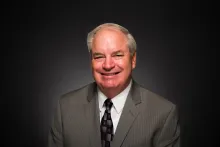
Robin Webber was born in Chicago, Illinois, in 1951, but has lived most of his life in California. He has been a part of the Church of God community since 1963. He attended Ambassador College in Pasadena from 1969-1973. He majored in theology and history.
Mr. Webber's interest remains in the study of history, socio-economics and literature. Over the years, he has offered his services to museums as a docent to share his enthusiasm and passions regarding these areas of expertise.
When time permits, he loves to go mountain biking on nearby ranch land and meet his wife as she hikes toward him.
