
How Should a Christian Prepare for the End of the Age?
Given on
Given in
Downloads
Downloads
To download a file, right-click (or long press) a link above and choose Save As.
We are living in times that rock the world. But will we be rocked ourselves? This sermon gives food for thought on how we need to prepare for the most challenging times that the world will ever see!
Transcript
This transcript was generated by AI and may contain errors. It is provided to assist those who may not be able to listen to the message.
A couple of weeks ago, I asked for input regarding our midweek Bible studies. I asked you for what you would like me to be covering in those studies. And a number of you said, Mr. Delisandro, we really would like to hear something about preparing for the end of the age. And so, I started a series this last Wednesday, and I sent out the first of what will be a number of Bible studies on that topic. As I was getting into it, though, there was something I felt I needed to say today in the sermon about that topic. This is an addition for the material you'll be getting over the next several weeks. So, if you'd like to take notes, write this across the top of the page. It's a question, how should a Christian prepare for the end of the age? How should a Christian prepare for the end of the age? Now, I'm going to go through a few scriptures here at the beginning of the sermon to kind of set the stage. These are not things you've never heard before. You've read all of these in the past. But I think, brethren, we need to get serious about our walk with God. If we're not serious, we better get serious about our walk with God. This world is going to be going through something horrendous, perhaps in our lifetime. We see from the various prophecies how God is going to allow there's going to be hailstorms, there's going to be earthquakes, God is going to move islands here and there, we're going to experience world war, nuclear war, we're going to experience chemical warfare, biological warfare. It's going to get so bad that the angels are told, don't hurt anything that's green, because people can hardly take a breath. It's going to be a very difficult time. And you and I, and no one in this room is exempt from the sermon I'm giving today. I gave this first to myself, and now I want to share my thoughts with you. But, brethren, we are looking at some serious times down the road, and we just can't play church. We just can't come warm up a chair and say, well, we are Christians in good standing. Why? Because we're sitting in a chair here today. It's like the man said, you know, just because you sit at McDonald's doesn't make you a hamburger. Sitting at church doesn't make you a Christian. So let's take a look starting now at Matthew chapter 24, and obviously the tone of the sermon today is going to be very straight from the shoulder. It's not one of these ones we're going to do a lot of chuckling today. Matthew chapter 24 verses 21 and 22. Matthew 24 verses 21 and 22. Here you've got the Olivet prophecy, a summary of a very, like a Reader's Digest summary of what's in the book of Revelation, or at least a portion of it. Matthew 24 verse 21, for then there shall be great tribulation, such as not been since the beginning of the world until this time known or ever shall be. So it may well be, brethren, possible, maybe even probable, that you and I are going to be living through the worst times that humankind has ever experienced. And unless those days were shortened, no flesh should be saved. But for the elect's sake, those days will be shortened.
There's a saying, brethren, that probably you have uttered in your life. I know I've uttered it many times. If you don't have your health, you don't have anything. Now, you know, a person can have all the riches in the world. But if you can't get out of bed, or if you're in bed in an extreme pain, what good are all the riches in the world? Now, I would add to that on a spiritual level, if you don't have God, and you're in a church, you don't have anything. Now, again, just because we're coming to church doesn't mean we've got God. It doesn't mean we've got a relationship with God. As a matter of fact, let's take a look. We're in Matthew 24. Let's look at Matthew 25 for a second. Matthew 25. Matthew 25 is actually a part of the Olivet Prophecy. We typically think just Matthew 24 is. But let's take a look at Matthew 25. Matthew 25, verse 1. Then the kingdom of heaven shall be likened to ten virgins who took their lamps and went out to meet the bridegroom. So here we have an analogy here of Christians, and they are preparing to be met by Jesus Christ. Christ is going to return to Second Coming. Five of them, verse 2, were wise, and five were foolish. Those who were foolish took their lamps and took no oil with them. So here we've got people who may well have been members of the church by analogy, but the Holy Spirit is becoming weaker and weaker and weaker and maybe even non-existent in their lives. But the wise took oil in their vessels and in their lamps. While the bridegroom was delayed these last two thousand years, they all slumbered and slept, so they all had issues. And at midnight at cry of a serie, behold, the bridegroom is coming, go out to meet him. So there comes a point in time when Jesus Christ is going to return.
Then all those virgins arose and trimmed their lamps, and the foolish said to the wise, give us some of your oil, for our lamps are going out. So by analogy, brethren, what you have here are some Christians, or some people who profess to be Christians, they realize they don't have a relationship with God. They realize they're not close to God. They realize they have not been praying and studying and fasting and meditating. They have not been coming to church like they should be coming to church. And they realize they are just not where they should be spiritually.
But the wise answered, saying, verse 9, no, lest there should not be enough for us and you, go out and rather for those who settle and buy for yourselves. And while they went to buy, the bridegroom came. We've got the second coming of Jesus Christ here. And then those who were ready went to him to the wedding, and the door was shut.
So what you see here is the second coming of Jesus Christ. You've got the wedding supper of the Lamb being alluded to, but the door was shut. Not all the virgins, not all the people were ready, not all were accepted. Excuse me, not all were with Jesus Christ. The door was shut. Afterward, the other virgins came also saying, Lord, Lord, open to us. You know, they're knocking on the door. But surely I say to you, verse 13, I do not know you.
I do not know you.
The point of this message, brother, the point of this section of Scripture is, as loving as our God is, as merciful as he is, as much rope as he gives all of us, there comes a time where time has run out. Either we are prepared when Christ returns or we're not prepared when he returns. These five were not prepared. The door was shut. Their opportunity was now gone.
Brother, any one of us in this room could be one of the five who've got the oil or one of the five who don't. It depends on what you and I do between now and the second coming of Jesus Christ for the end of our life. Which camp are you and I going to be in? Revelation 12.
Revelation 12.
Here in Revelation 12, we've got a history, kind of a Reader's Digest version of the history of God's church. Very condensed, very concise. Revelation 12, let's start here in verse 7. It says, And war broke out in heaven. Now, this is Galactic War number two. Lucifer tried to knock God off his throne way before this point. But we're going to see as we go through the section here, the context will show us. This war, this segment here, takes place just prior to the second coming of Jesus Christ. And war broke out in heaven. Michael and his angels fought against, fought with the Drevel and the dragon, and the dragon his angels fought. But they did not prevail, nor was there a place found for them in heaven any longer. So the great dragon was cast out, that serpent of old, called the devil and Satan, who deceives the whole world. He was cast to the earth, and his angels were cast out with him. So this is taking place just prior to return to Christ. You see that here now, verse 10. Then I heard a loud voice saying, The heaven come, salvation and strength and the kingdom of our God and the power of his Christ have come. So, verse 10, you know, date stamps this prophecy, talking about just prior to the return of Christ, Satan is going to be thrown back to, he's trying to knock God off his throne a second time. He's going to lose a second time. And he's going to wreak havoc. Verse 11. And they overcame him by the blood of the Lamb, by the word of their testimony. They did not love their lives until the death. And so we drop down now to verse 12. Therefore rejoice, O heavens, and you dwell on them. But woe to the inhabitants of the earth and the sea, for the devil has come down to you, having great wrath. Pause for a second. I've thought the last 6,000 years there's been plenty of wrath by Satan on mankind. But now we're seeing this is going to intensify at the end of the age. He's come to you having great wrath because he knows he's got a short time. You've got a, it's like a wounded beast. He realizes, you know, I've got just a short time to wreck as much havoc as I can. And believe you me, brethren, we as Christians, we have got bull's eyes on our backs. We better be ready for what he's going to start throwing at us. Verse 13. Now when the dragon saw they had been cast to the earth, he persecuted the woman. And the woman here is God's true church. He persecuted the church who gave birth to the male child referring to Jesus Christ. So we see that Satan is going to have tremendous wrath against the people of God. We go over to Matthew 24. Matthew chapter 24.
Again, here we're going back to the Olivet prophecy. And we're going to take a look at God's church at this point in time.
Satan is angry. He's wanting to wreck as much havoc, ruin as many lives as he possibly can. But take a look at what we do to ourselves.
Matthew chapter 24 verse 9. Then they shall deliver you up to tribulation and kill you. And you shall be hated by all nations for my name's sake. So here we see something that's happening to God's people. There's going to be persecution. Our people are going to be martyred, some of our people. Then many will be offended, betray one another, and will hate one another. That's talking about us as Christians, one against another. Not a very pleasant picture, is it? Then many false prophets will rise and deceive many. Now verse 11 is not some sort of verse that we want to rip out of context. We're taking a look at false prophets in the world and some of our people. Because they don't have that relationship with God they should have. Some of our people don't get it. And they are deceived.
And because lawlessness will abound, the love of many will grow cold. But he who endures to the end shall be saved. Brethren, you and I want to be those people who endure to the end. But there's something that we've got to be doing to accomplish that. So here we have in Matthew 24 a cycle. People in the church get offended. Because they get offended their love begins to grow cold. Because their love grows cold, hatred begins to grow in their hearts. Betrayal takes place. Martyrdom takes place.
Let's go back to Revelation 24. Now, I don't want to paint just a totally negative picture because we've got Revelation 24 here. It has some interesting words for us. Revelation 12, I should say. Revelation 12.
And verse 14.
But the woman, talking about God's church, the church was given two wings of a great eagle that she might fly into the wilderness to her place. Now, this is made mention of regarding Israel. Now, Israel didn't fly anywhere. They didn't have airplanes or what have you. But this is an idiom. It's a statement showing that God was with Israel as they left Egypt. That's the way it was used back then. Now, this is talking about our day to day. The church was given the opportunity to flee this persecution and go to her place. Now, some people think that means we've got a place of safety. I don't know. And frankly, in some ways, I don't care.
What I want is a relationship with God. If he wants to do like he did with the people in Israel and just protect us in our homes like the Passover, that's fine with me. If he wants us to go someplace, that's fine with me. If he doesn't want to do anything, if, you know, if Randy Delosandro gets martyred, well, that may not be so fine with me. If that's the way it's going to be, that's the way it's going to be. If he wants to go someplace, that's fine with me. Jesus Christ was tortured. The apostles, with the exception of John, were tortured. You've got Hebrews 11, where people were sauna sundered, they were tortured, they lived in caves. And brethren, as we're talking here about a possible place of safety, as your pastor, I don't want any of you banking on the fact that you've got a hundred percent guarantee that when the time of the end comes, you're going to be protected by God in terms of none of this will ever touch you. Because you and I don't have that guarantee. As a church, God says He's going to protect His people. But it doesn't say He's going to protect each and every one. He doesn't say He's going to protect each and every one.
In Revelation, it also talks about, well, when is the end going to come? And the answer is, well, there's got to be a martyrdom first before the end comes. Now, some of God's people will be protected. Some of them won't. Some of us in this room may be protected. Some of us won't. And the reason I bring that up is I don't want somebody falling away, becoming disillusioned, because when the crunch starts, we start hearing about this one or that one in the Detroit church, wherever.
And, well, where was God? Well, where was God in Hebrews 11? You know, where was God when Jesus Christ was being tortured? That's what we as Christians go through. Soldiers are many times told that if you want to be a good soldier, you've got to go into battle thinking you're already dead. You're already dead. Then you can do your job. And I've got to steal my mind thinking, well, De'llestandro, you better be ready, because if God wants you to be one who gets martyred or tortured, that's the way it's going to be.
It's like Meshach, Shadrach, and Abednego. They said, well, God, you know, if you can save us here or not, but whatever you're going to do, we're going to obey you. So, brethren, I want you to keep that in mind. So, anyhow, we see here the woman was given an opportunity to go to her place, middle of verse 14, where she's nourished for a time, times, and half a time from the presence of the serpent.
So, here we've got a prophecy that shows that God's church in general, many people in God's church will be protected. It says, for a time, times, and half a time. This is biblical language to talk about three and a half years. The last three and a half years before the return of Christ is called the times of the Gentiles. The times of the Gentiles. During that three and a half year period, you've got the great tribulation that goes through that whole three and a half years.
The great tribulation is Satan's wrath on mankind. The last year of that period is called the day of the Lord. That's God's wrath on mankind. Now, that last year, you've got both the great tribulation and the day of the Lord running concurrently.
So, you talk about hard times coming for a full calendar year. You've got Satan's wrath and God's wrath on mankind who are unrepentant. Of course, Satan will do it, you know, he's wanting to get at us. So, it's going to be very, very difficult times. So, brethren, with all that having been said, I wanted to give you some not pleasant thought, but how do you and I prepare for an atmosphere like that?
How do you and I get ready for something like that? We go back to Matthew 24, and there's a statement that is made that I found intriguing. You know, a number of you asked me to give a sermon like this. You know, give us a sermon like this. You know, give us some practical solutions or practical advice as to how we prepare for what we see coming in prophecy. A number of you said that, so that's why I'm giving this. We see something here in Matthew 24, verse 37, and we've talked about this for years and years and years, but I think there's another layer of understanding here for us.
Matthew 24, verse 37, But as the days of Noah were, so will the coming of the Son of man be. Now, we've looked at that scripture and scripture to talk about Noah's time, and we've said, well, what we understand is at the end of the age, the end of the age will just at the end of the, be just like what was taking place during Noah's day. And that's great. That's fine. That's that's why we should understand that. But I think there's something more there, brethren, because understand something. Noah, his world, came to an end. There was a tremendous cataclysm that killed everybody, but eight people. Now, the question is, what did Noah do that allowed him to escape that cataclysm and come away all right?
What did he do? And brethren, if we can follow and do what he did, that's the best way for you and I to prepare for the end of the age. Let's go back to Genesis chapter 6. Genesis chapter 6. Because there is a, we're going to do a little detective work here, and you're going to want to put a marker here, because we're going to go some other places, but put a put a marker here in Genesis chapter 6.
And let's take a look at some some clues as we do some spiritual detective work here. We want to gather these clues, analyze these clues, and we're not going to take a long time with this, but it's going to give us a lesson to be learned. And then I'm going to take that lesson and run with it the rest of the sermon. Genesis chapter 6 verse 1. Now it came to pass on men began to multiply in the face of the earth and daughters were born to them that the sons of God saw the daughters of men that they were beautiful and they took wives for themselves of all they chose. Now some people will think, well, you know, here you've got, you know, men marrying angels. And of course, that's not the case. That's another subject, but what we have just people marrying other people here. We see something interesting in verse three. And the Lord said, My spirit shall not strive with man forever, for he is indeed flesh, yet his day shall be 120 years. 120 years. God is calling Noah to do a very special work. And this work is going to extend for 120 years. A very lengthy work. Now in your notes, you might want to put in your notes 2 Peter 2 and verse 5. 2 Peter 2 and verse 5 says that Noah was a preacher of righteousness. So for 125, he's doing a work where he's preaching the righteousness of God.
Over the years, we've speculated, and what I'm about to say is speculation, so we can, I want you to label it as such. But over the years, we've wondered, well, why 120 years? Now the ark was massive. The ark was 450 feet long. That's a football field and a half long. It was 75 feet wide. It was four and a half stories high. And it wasn't sitting next to some big body of water. So you build something that gargantuan. The world has never seen anything like that, I think, until the Queen Mary. How are you going to put that in the water? Well, you're not going to put it in the water. God's going to put water all around it.
But did that really take 120 years? Or because Noah was a preacher of righteousness, did Noah go on evangelistic tours of the whole world? Now we don't have historical evidence of that one way or another, but we do know that God gives people a warning. And we feel that God probably did give people a warning by Noah going around the world and telling people, you know, here's what's coming down the road. I'm building an ark right now over in the such area, and you better get it right with God or else. So evangelistic tours, evangelistic campaigns, he was a preacher of righteousness. We drop down to verse 8. But Noah found grace in the eyes of the Lord. Noah found grace in the eyes of the Lord. So here we've got a tremendous spiritual component here. How do you and I prepare ourselves for the end of the age? Well, Noah did it by finding grace in the eyes of the Lord. Can we do that? Sure, we can do that. Put a marker here. Let's go now over to Hebrews 11. Because, brethren, here in Hebrews 11, the faith chapter, there is one verse. I've never really looked at this verse that closely, but in preparing the message for today, I took a good long look at this verse, and this is full of meat. Tremendous spiritual meat. I believe Hebrews 11, verse 7, gives us a blueprint for spiritual survival at the end of the age. That one verse. Now, of course, there's other verses, other places, but this one has everything that's just so nice and neatly compacted here. Hebrews 11, verse 7, By faith Noah, being divinely warned of things not yet seen, moved with godly fear, prepared an ark for the saving of his household by which he condemned the world, and became heir of the righteousness which is according to faith. Now, there is a tremendous amount of meat there. Noah, as it says in Ezekiel 14, verse 14, Noah was one of the three most righteous men who ever lived. You've got Noah, Daniel, and Job, listed as three of the most righteous men who ever lived. So, if somebody's going to teach us a lesson about how to survive at the end of the age, because he survived at the end of his age, it would be Mr. Noah. Let's go back now and get the rest of the story. Let's go back to Genesis 6. Genesis 6. We're starting here in verse 5. Genesis 6, 5.
Then the Lord saw that the wickedness of the man was great in the earth, and that every intent of the thoughts of his heart was only evil continually. This is why, brethren, we think we're living in that type of an age right now. And the Lord was very sorrowful that he had made man on the earth, and he was grieved in his heart. So the Lord said, I will destroy man whom I've created from the face of the earth, both man and beast, creeping thing, birds of the air. For I'm sorry that I've made them.
Dropping down further to verse 11. The earth also was corrupt before God, and the earth was filled with violence. I dropped down to verse 13. And God said to Noah, The end of all flesh has come before me, for the earth is filled with violence through them. And behold, I will destroy them with the earth.
There is an interesting message here in verses 11 and 13. In verse 11, brethren, the word for corrupt... You see the word there in my New King James, corrupt, in verse 11? In the Strongs, it's the same in verse 13 as the word destroy.
Verse 11, corrupt, verse 13, destroy. It's Strongs number 7843. In God's mind, what is corrupt, what is sinful, will be destroyed. So the lesson of Noah, the lesson we want to learn as we're preparing for the end of the age, is righteousness and faithfulness saves, but sin destroys. Righteousness and faithfulness saves, but sin destroys.
So let's now take... I've given you an overview of what I want to cover with you today. Let's take this in Hebrews 11.7. Let's take this apart bit by bit. I've got three major sections of the sermon to go here. We go back to Hebrews 11.7, or you just have me read it for you. Hebrews 11.7, where it says, by faith, Noah, by faith. How are you and I going to develop the kind of stout-hearted faith we need to endure what's coming at us?
Brethren, God has given us the same spiritual ability. God gave Noah grace. He has given us grace. The world is blind to what's happening. The world is blind to the fact that God is there to help them. We are not. We are God's kids. He's given us His Holy Spirit. And even though the rest of the world may not see, we can see. But remember the foolish versions. We can't be like them and just come to services and, you know, just take up a seat and go to the feast and write a tie check, or whatever it is that we do and think, well, because I do these things, I'm right with God. Well, we need to be doing those things. We need to be coming to services and keeping the Holy Days and tithing and doing all those things. But we need to have an individual, personal relationship with God the Father and Jesus Christ. And we have to walk by faith, not by sight. Are you walking? Am I walking by faith and not by sight? We need to examine that in our hearts and minds. Because when times get rough, you know, if they killed somebody, you know, your husband, your wife, your kids, if they, your employer says, we're not going to allow you to work and you don't have money to eat, you know, and there's nothing in the stores, you don't have a garden, you don't have any money, then it's a matter of your personal faith and God the Father and Jesus Christ that gets you through. Remember the story of the widow there that Ezekiel went to go see? And, you know, God brought him to this widow lady and he says, you know, he says, I'm hungry, would you make something for me to eat? And the widow lady says, hey, look, fella, I'm about to prepare my last meal for my son and I, my little boy, and we're going to die. But God blessed that widow lady in that, you know, she had this pot and food kept on coming out of that pot and food kept on coming out of that pot and kept on coming out. That's living by faith. Maybe in the future where you go to your fridge after praying fervently and you open the fridge where there was nothing the night before and you've got something there in that fridge and you keep on going and you keep on going, that's living by faith. Noah walked by faith, not by sight. Ezekiel 9. We want to start probing now the kind of mind that Noah had. We see a type of thinking here. We see it in the book of Ezekiel. We're not going to be reading explicitly about Noah, but he had this kind of thinking as well. Ezekiel 9 and verse 4.
And the Lord said to him, go through the midst of the city, go through the midst of Jerusalem, put a mark on the fords of the men who sigh and cry over all the abominations that are done within it. When we walk by faith and not by sight, we see the real issues. We're on the same page as God. We see life through God's eyes. And this world is so horribly corrupt, so horribly wicked. You watch the news, and I know a lot of our people are giving up on news because it's so depressing. And yet even when you watch the news, you get a filtered version of things. I was struck just the other day watching the news, you know, there were 12 people over in France who were killed by terrorists. 12. Horrible thing. In Africa, Boko Haram has killed thousands of black people in Africa. You never even hear that. 12 people in France, thousands over in Africa being killed by Boko Haram. The same group that took those 300 young women who have never been returned. They may have been sold to old corners of the earth.
This is what we sigh and we cry about. As you walk by faith, this is the kind of thing that God wants us to see and understand. We want a new world, and we've got to do something about it. We don't just wish and hope. We've got to act.
Sometimes I wonder if the reason God has not brought us kingdom yet is because he's waiting for us as his church to get our act together. Do they really want it? You know, you take a look at Israel. Israel had to go through the first three plagues before they left Egypt. Why was that? They said they wanted to leave, but I don't think they wanted it bad enough. We want the kingdom of God, but do we want it bad enough? Do we want it bad enough so that we do something about it? I know it's interesting. You know, you give a sermon like this. Brian puts it up on the web, and people listen to various sermons that different ministers give. Somebody, I forget where this gentleman lives, I think someplace out west. He listened to one of my sermons, and he wrote me back. He said, Mr. Delosound, I want to thank you. He said, when I listen to some of your sermons, sometimes I get something out of it. I forget exactly how I put it. He says, I find some helpful. I wrote him back on a tongue-in-cheek, and I said, I really would enjoy what sermons of mine you find helpful and which ones you don't.
He wrote me back a very insightful letter talking about how we, it was kind of a generalized letter, it wasn't just to me, but a generalized letter about how we as Christians listen. You know, Mr. Delosound, I've been coming to church for a while now, but I come to church, and I, you know, do I listen in order to change my life? Or do I find myself, a guy's giving a sermon or a sermonette, I listen, I agree, and because I agree, I just kind of drop it and move forward and go on with my life? Or do I take what I'm hearing and actually do something with it? Now, I told him I was going to say his notes because he gave a lot of insightful thought, and I think I need to give that as a sermon about how we should listen to a message.
Listen for the sake of doing. That's what a disciple is, not just a listener, but somebody listens for the intent of doing and changing. That's what you call walking by faith, because you're walking in the faith. Now, walking by faith isn't easy. Turn to James, please. James 2. You know, what we're talking about for you and I, and brethren, this is not a sermon where I'm preaching to you. I'm preaching to me as well. We talked about Matthew 24 about people betraying one another. I don't want to betray you. You don't want to betray me. You don't want to betray the person sitting next to you. But prophecy shows that's going to happen. Now, it doesn't have to happen here in Detroit. Let's pray that it doesn't. Let's go over to James here.
James 2. 17. Thus also, faith by itself, if it does not have works, is dead. You know, if we listen to something and don't do anything about it, it's dead. Our faith is dead. Verse 20, the second time. But do you want to know, O foolish man, that faith without works is dead? And verse 26, for as the by without the Spirit is dead, so faith without works is dead also. Three times in one chapter, faith without works is dead. So I say we need to walk by faith. There's something we need to do. Noah built an ark. Abraham left his native home, traveled to some place, even though where he's going. Moses at the age of 80, you think you're old? Moses at the age of 80 liberated God's people from Egyptian bondage. Gideon had 300 men to face 135,000 Midianites. Now, here in a little while, we're going to have a Super Bowl. How would you like those odds? 135,000 to 300. I don't think I like those odds, but you know, with God, you know, just our one God, God family. One is everything.
So we want to make sure that we are walking in faith. That's the first thing we see there in Hebrews 11. Let's go back to Hebrews 11, verse 7 and see something else.
Hebrews 11, verse 7, by faith, and we talked about that, Noah being divinely warned of things not seen. Brethren, you and I have been divinely warned of things not seen. We understand prophecy. Now, you and I would like to understand more things about prophecy, but we understand enough. No, we don't know the Social Security number of the false prophet. We don't know where the beast is at the current point. We think it's going to be over in Europe, but maybe we're mistaken about that. Anyway, we have enough understanding of prophecy to know that we have a good enough understanding. But here's the second thing. He was moved with godly fear. He was moved with godly fear. So, brethren, if we want to prepare for the end, we have to have a stout-hearted faith based on works, based on doing the things of God, and we have to be moved with godly fear. Now, what does that mean, to be moved with godly fear? Let's go to Deuteronomy chapter 10.
Deuteronomy chapter 10.
Shortly after re-giving the Ten Commandments, we've got this statement being made here in Deuteronomy chapter 10, starting in verse 12. And now, Israel, what does the Lord your God require of you? What's required but to fear the Lord your God? To walk in all of his ways, to love him, to serve the Lord your God with all of your heart and with all your soul. Not part of your heart, but part of your soul. All of your heart, all of your soul, and to keep the commandments of the Lord in his statutes, as I command you today, for your good. Brethren, the fear of God is not understood as a dread that comes out of fear, of punishment. When we properly fear God, that means we reverence God. That means we stand in awe of God. We recognize and submit to his power and his works. We understand his majesty. We understand his transcendence. We understand his holiness. Because we understand all those things, we stand in awe of the great God. And that's what it means to have godly fear. Paul admonished the believers to work out their salvation with fear and trembling. That's Philippians 2, verse 12. Now, we do that with God's help. The next verse says that. We don't work out our own salvation on our own. We don't pull up our own self by our own bootstraps. We have to have God's help with that. Remember Noah found grace in the eyes of the Lord. We need that same grace to help us. In Acts 9, verse 31, the early church grew in numbers as they lived in the fear of the Lord, it says. If we want to grow in strength and have God prepare us for the end of the age, we've got to live in the fear of the Lord. The fear of the Lord.
Let's move on to the last section of this blueprint. Let's go back to Hebrews 11, verse 7, one last time. Hebrews 11, verse 7. By faith Noah, we've discussed that. Being divinely warned of things not yet seen. Moved with godly fear, we've discussed all of that. Here's the third part of the equation here. He prepared an ark for the saving of his household. There was a work to be done. A work to be done.
You know, today, brethren, because of what's happened in the church over the last number of years, since 1995 with all the, you know, split with worldwide and all the other various splits, ad nauseam, people, some people have just gotten so tired of that, and I don't blame them, but they've taken a wrong approach. Some people say, I'm just going to stay home. I'm not going to be a part of any organization. I'm just going to do my own thing. Brethren, you and I have not been called to stay home and do our own thing. We have not been, you know, now it's different if you're living someplace where there's not a church within 500 miles of you, and you don't have good health, and you don't have good transportation. That's a different set of circumstances. But if you've got good health, if you've got good transportation, there's a church near you. You need to be in God's church. The Sabbath is a commanded assembly, and we're not to come here just to warm a seat. We are commanded to be here to worship God. We are commanded to also be a part of something bigger than ourselves. People who simply want to stay home and feed themselves to me, I'll be honest, to me, I think that's only so much selfishness. We want to be people who are not just feeding ourselves. We want to feed the world as Christ told us to feed the world spiritually. Let's take a look at John 4 for a moment. John 4. John 4, verse 34, Jesus said to them, My food is to do the will of him who sent me, and to finish his work. Noah found grace in the eyes of God because he built that ark. He did the work God gave him in his day. Jesus Christ had a passion, and his passion, his mission, was to finish the work of God. Over in John 17, let's take a look at this. We read this every year at Passover. John 17, verse 4. John 17, verse 4. Here we're talking toward the end of Christ's life. He said, My food is to finish the work. Chapter 17, verse 4. I have glorified you on the earth. I have finished the work which you have given me to do. Jesus Christ was tremendously successful because he did the work. Noah did the work. You and I are to do the work. Matthew 24, verse 14. I'm just going to quote this here. We're running out of time. Matthew 24, 14. The gospel of the kingdom shall be preached in all the world as a witness to all nations, and the end shall come. Brethren, we want to be focused on our mission. It's a matter of a mindset. If you and I are focused on the mission, then you and I have our minds where they need to be. Noah's mind is where it needed to be. Christ's mind is where it needed to be. Is your mind is my mind where it needs to be? Are we focused on the mission? Do we have a passion for doing the work? Matthew 6. Matthew 6.
When you're doing anything of consequence, you've got to have your mind set properly to do that task. If your mind is not where it should be, you're going to fail. I'm going to fail. Matthew 6. Do not lay up for yourselves treasures on earth where moth and rust destroy, and where thieves break in and steal. The physical is the physical. It's nice to have things, but it's not the important thing. But lay up for yourselves treasures in heaven, where neither moth nor rust destroys, where thieves do not break in and steal. For where your treasure is there, your heart will be also. Brethren, where is your heart? Where is my heart? Where are we in all of this? How prepared are you right now if the end of the age was going to start in the next year or two? Where are you right now? Where am I right now? I'll put together a checklist. I'm going to end the sermon with this. I've got seven points here. The second thing, I'm not going to read a lot of scripture or quote and turn to a lot of scriptures because I do want to get this in.
I was thinking about this in terms of Randy de la Sandra, but I want you to think about this in terms of you. What is your name? Where are you at these areas? Okay. A personal checklist. Number one, how's your zeal? How is your zeal? I'll quote Revelation chapter 3 verses 15 and 16 where you've got Laodicea. They're told that they are lukewarm. We're told that God was going to spit them out of his mouth because they weren't zealous. Brethren, God has not called you just for your own personal salvation. God has called you to do a work.
Let me go from preaching to meddling here.
Remember when you first began getting the information from the church? You would get a piece of literature or you get a letter from the church and you would rip that thing open. You would read that.
You know, maybe a barometer of your zeal is when you get a letter from the home office, how long does it take you to open that letter?
When you get literature from the church, whether it's the magazine or the United News or whatever it is that you get, maybe you order the booklet, how long does that stay unopened and unread?
Do you enjoy reading the things about the home office? Do you enjoy hearing announcements about what's happening in a work? Do you go online if you have the internet and see what's happening in the church?
Once upon a time you did. Once upon a time I did. Do I still do that? Do you do that? Where is their zeal?
Number two. Connected to number one, first love. First love. There in Revelation 2, verses 4 and 5, you see the church in Ephesus being upgraded. They were a church full of love. They had first love, but Christ has to chide there. He says, you know, you had a first love and you left it. You left your first love.
How about you and I, brethren? How about our first love? Again, remember back in the days when you were first learning the truth of God and you couldn't get enough study of the Bible? And now I hear people coming to me and saying, Mr. Del Centro, I don't know what to study. We have so much on the internet. We've got so many things that people can be getting into. We've got literally hundreds and thousands of sermons on our members' website. We've got over 500 feast sermons at the feast site. Feast website. There's so much there.
Number three in our personal checklist, are you excited about this way of life? Are you excited about this way of life? I'll quote to you in Matthew 13, verses 44-46. Matthew 13, verses 44-46, where you see the Christians wanting to buy the field because it's got a treasure there, or the pearl of great price. Are we excited about the fact we've got knowledge of God as especially given to our hearts and minds? Not because we're better than anybody else, but just because it's our time to know it. He's opened up our hearts and our minds. Are we excited about that truth? Do we want to talk about that truth? Do we come to services and hear messages and then after services want to talk about what we've heard? Or do I hear in both Ann Arbor and Detroit where people hear a message that really moves them and there's nobody to talk it over with because people are too busy talking about minor little chitchatty things?
Are we excited about the way?
Number four, do we have a humble, teachable spirit? You know, when God begins to open our minds, our hearts, we want to act on that. We want to do something about what we're hearing. You know, we want to make that a part of our lives. Number five. Number five. I just put this down as we can't get enough church.
Remember back in the day? I remember back in the day. Now, back in the day was way back in the day, but I remember back when I was in my 20s. And so I've known some of you since those days. And some of you've had kids since those days and grandchildren since those days. But I remember back when I moved back from Ambassador College to Detroit area. And there were any number, I don't know how many, we had six or eight different couples that didn't have kids. We were all in our 20s and we had come to services and we would talk about the scriptures. We had talked about things in the news. We would listen to services. We would go out for lunch or dinner depending on when time is of service is going. And then we'd go out in the evening, on Saturday evening, and we would spend time with one another. And again, we would talk about things of the Bible. We, and there was a social, we were at the social. If there was a work party, we were at the work party. Now, I know that things have changed. Last Sunday, I turned 63. I'm not 20 anymore. And so a lot of the things we used to do, I just, we don't do anymore because we're old or we don't have money. We've got a lot of other obligations. But again, in the heart, in the mind, do we want to be in church? Or do we say, yeah, no, had a hard week. I think I'll just stay home today. I'm not talking about somebody who's ill or somebody who has economic issues, didn't have gas for the car. But if you don't have gas for your car, let me know. I'll give you gas for your car. We want you here. But, you know, what is, you know, in the Bible there in Matthew, in Hebrews chapter 10, verse 25, it talks about some who are forsaking the assembling of ourselves together. But the Bible says there, don't do that more so as the end of the age comes.
We need one another. We want to get to the place where we can't get enough church for whatever our situation is. You know, if we're old and we're sick and we can't go out as much, God understands that. I'm not saying you've got to get out when you're old and you're sick and you just can't make it. But, you know, if there's not any roadblock in your life, then let's get with it. Not only you, me as well. Number six of the seven, do we have that love of the brethren?
Love of the brethren, where we just really miss seeing one another if we're gone.
Now, I'm a pastor, and one of the things I love is I love my churches. And, you know, Mary and I might be gone someplace. You know, we're in Cancun. It's sunny. It's 85 degrees. It's white, sandy beaches. It's a beautiful blue Caribbean out there, and we would spend hours in the Caribbean this last trip. We would walk into the water, and it's the same white sand that was on the beach. It's down there under the water. And the water is a nice shade of turquoise. And all the hours we spent in that water, I don't think my foot hit a pebble one time. Nice, firm, sandy bottom. I'm up to here in the water. I'm looking around and seeing all these angel fish swimming. Now, Mary was scooped by that. I said, come on, bring them up. You know, all these angel fish to swim all around, all these little guys.
But I was always taking a look at my watch and saying, well, I wonder what this one is doing, or that one is doing. Or when a Sabbath came, we didn't have a church to go to there. Well, Detroit's starting a church right now. Detroit's ending church right now.
Do we have a love of the brethren? Too many times, brother or sister has things to say about brother or sister that shouldn't be said. We want to have love of the brethren. But we don't want to have these canker sores when it comes to the love of the brethren, because when a time comes for persecution, we don't want to have Satan whispering on our ear. You know, that guy never did like you. That woman always gave you a hard time. This person said all these wrong things about you, and now's your chance to get them. Turn them in. No, we don't want that. Lastly, number seven. Checklist here about first love and so forth. How about our serving? How about our serving?
You know, brethren, I remember back in the day where people thought it was an honor and a privilege to do anything in the church. Scrape the bottom of gum off a chair so we can sit in church and enjoy church, handing out songbooks, ushering parking cars, standing at a feast site in the pouring rain with an umbrella, or maybe not with an umbrella, because we wanted to serve at the feast. And now, every year at the feast, you know, last year was no different for me as running the feast. We had to scramble for people for volunteers. I had to scramble for volunteers. We had plenty of good ones, but we didn't have plenty enough good ones who wanted to serve. So, brethren, today we've taken a look. We've asked the question, how should a Christian prepare for the end of the age? We've taken a look at Hebrews 11. We've come up with a formula. It was good for Noah. It helped him to weather literally the storm in his life. The whole world went down, but he and his family didn't. Brethren, his whole world is about to go down, but you and your family don't have to. We need three things. We need a resolute, stout hearted faith. We need a godly fear that impacts our daily life. And we need to be motivated to do God's work. God's called us to do something, not just to sit in a chair. And, you know, if all you can do is pray for the work, then that's doing something. If you can write a type check, that's doing something. If you can do other things for the work, that's, you know, fasting for the work. That's doing something. Reading up on what's happening and discussing with the brethren, that's doing something. We want to be engaged. We want to be plugged in. If we're doing those things, brethren, I believe that you and I are preparing for the end of the age.
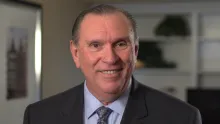
Randy D’Alessandro served as pastor for the United Church of God congregations in Chicago, Illinois, and Beloit, Wisconsin, from 2016-2021. Randy previously served in Raleigh, North Carolina (1984-1989); Cookeville, Tennessee (1989-1993); Parkersburg, West Virginia (1993-1997); Ann Arbor and Detroit, Michigan (1997-2016).
Randy first heard of the church when he was 15 years old and wanted to attend services immediately but was not allowed to by his parents. He quit the high school football and basketball teams in order to properly keep the Sabbath. From the time that Randy first learned of the Holy Days, he kept them at home until he was accepted to Ambassador College in Pasadena, California in 1970.
Randy and his wife, Mary, graduated from Ambassador College with BA degrees in Theology. Randy was ordained an elder in September 1979.
playlist
