


Robin S Webber
This transcript was generated by AI and may contain errors. It is provided to assist those who may not be able to listen to the message.
Lovely. Well, the Passover season is coming upon us, and I'd like to speak to that to you as a congregation this afternoon. And I'm really just going to share two words with you today. I wish it was only a two-minute long message, but that'd be a minute per word, but it's not. But it's two words that I hope that by the end of this message that you will carry with you as you partake of the bread and as you partake of the wine coming up in several weeks from now. In the Passover season, we come up to what's called the Passover, and there are tremendous parallels between the Passover of old and the Passover that Christ instituted under the new covenant. There's also tremendous continuity, and there is an expansion of understanding of what God's performing in our lives today. God calls the church and or the ecclesia. He calls it the Israel of God. You can find that in Galatians 6 and verse 16. So it's very interesting that so often the world associates Passover of old with Israel, but under the new covenant as Christians, we also have that term Israel, and that, as Paul said, that we are the Israel of God. These parallels that I talk about, this continuity that I speak to, this expansion of understanding that I would hope that all of us could receive this afternoon is perhaps best understood by focusing on the name of God. The name of God. A name that appears throughout the length and the breadth and the depth of all scripture. Old Testament, New Testament. It's only man that has divided the Bible up. As Christians, we look at scripture as being one book. Today's message is going to focus on how God reveals Himself down through the ages by these two words. Just two words. How He reveals Himself to assure and to comfort all of us. Does anybody need assurance out there today? Does anybody need deliverance? Does anybody need comfort? Well, God provides His name, these two words, to grant us all of that. To those that He claims as His own, to those that He delivers, and to those that He sends forth in His service. Be they prophet of old, or whether they be minister today, or whether they be a Christian. All of us, in that sense, have been sent forth. And so it's my hope that in presenting this, the name of God to each and every one of us, that it will increase our faith and our confidence that when we partake of that bread, and we partake of that wine, that you will reflect on this concept. I'd like to give you the title of my message before I go any further, because it's the concept I hope will be carried by you away from today and towards the Passover service this year. The name of my message, then, is simply this. I am. I am. And indeed, you are. There is a statement, and there is a response. I am. And indeed, you are. Because that's basically what we say when we partake of the bread, and we partake of that wine, recognizing fully what that name comprehends. Let's begin the message by turning over to the book of Exodus, Exodus 3, where God reveals his name to one of his servants before the Passover of old. And it's interesting what goes on here, because it's a little bit our story, God's story, with us. It was Moses' story. And it says in Exodus 3 and verse 9, Now, therefore, behold, the cry of the children of Israel has come to me, God speaking. And I have also seen the oppression which the Egyptians oppressed them. Come now, therefore, and I will send you to Pharaoh, that you may bring my people, the children of Israel, out of Egypt.
Moses was being commissioned to be sent on behalf of God. But, verse 11, notice what it says, but Moses said to God, Who am I? Who am I? That I should go to Pharaoh, and that I should bring the children of Israel out of Egypt. And have you ever had that comment or that question lingering or rolling around in your mind? Why me? Why now? Who am I to be commissioned? Who am I to be called of God now? What am I to do as I go to work? We heard about work. What am I to be doing in my community? What am I to be doing in my school? What am I to be doing in my marriage? Why me? Why now? Who are you after all, God? What is this all about? And so he said, I will certainly be with you, and this shall be a sign to you that I have sent you when you have brought the people of Egypt, and you shall serve God on this mountain. And then Moses said to God, Indeed, when I come to the children of Israel and say to them, The God of your fathers has sent me to you. Remember, it's been hundreds of years now, and you're telling me I'm going to go do all of this on your behalf? What is the calling card? What's the name on the card going to be? And they say to me, What's his name? And what shall I say to them? Verse 14, And God said to Moses, I am who I am. And he said, Thus you shall say to the children of Israel, I am has sent me to you.
Now, I don't know about you, but I know about me. I have never been handed a business card with quite that name on it. I am who I am. What was God telling Moses?
One way of perhaps even synthesizing this even more, not to play around too much with Scripture, is that God was just basically telling Moses, tell them, always is sending you, always. Always. Not, I am who I was, or I am who I will be. Simply, I am who I am.
I'm always. What God was describing to Moses was that he was not just simply a local deity down in the land of Midian. He could not be confined to a box or a tent or simply to one ethnic or racial group. He was not just to be found in the desert, neither was he to be found in the Delta of Egypt. Simply, God is. He's always. I am who I am. There is no beginning. There is no end. Sometimes we mistakenly say the beginning and the ending. The verbiage in the Bible really is not talking about an A to a Z, but it's really talking about is I am. I am the source of life. I am beyond time and space, and that's who I am. I am self-existent. I am eternal. I transcend time, space, and matter. Now, with that stated, and some of this may be new to some of our members that are here and perhaps a good refresher for those that are older students of the scriptures, the term I am describes two things. Let's put this down. Number one, it begins by describing the nature of God. That's very important. I think some of our own Bible students don't always comprehend the fullness of what is being spoken about here. The term I am describes the nature of God's essence as well, number two, as to the eternal values of His being.
God has nature, His existence, His essence, and He also has values that are eternal. Nature of what He is and understanding of what He is like. Nature and understanding of what He is and nature and understanding of what He is like all fits into this. Both need to be understood separately and then both need to come together seamlessly. The nature of God, the attributes of God. What He is, essence. I didn't frame that. He's eternal.
And the values that are always the same. And the values that we partake of when we come to partake of that bread and that wine at the Passover service, that as we partake of that bread and we partake of that wine, which represents the sacrifice of our Savior, as the author of the book of Hebrews says in Hebrews 13 and verse 8, Jesus Christ, the same yesterday, today, and forever. And as this message unfolds, we'll come to understand that Jesus Himself was indeed that I am. I'd like to take you to John 8 verse 51 to just show you exactly that. When Jesus came, He baffled the religious audience of His day. They never quite heard anything like it or from anybody like Him. We know what it says in the book of Matthew that He came speaking as one who had authority. Sometimes in years gone by, we've said that because He was a good speaker and or His message was tight and firm and He got to point and or because He raised His voice and or because He took on the religious community of His day and they were astounded. Brethren, it was much more than that. It's what He was saying about Himself. It was the boldness of declaring who He was, indeed the Son of God. Let's pick up a thought like that in John 8 verse 51. Notice what it says. He's in this discourse with the religious community. Most assuredly I say to you, if anyone keeps my word, he shall never see death. We're breaking into thought. Then the Jews said to Him, now we know that you have a demon. Abraham is dead and the prophets and you say if anyone keeps my word, he shall never taste death. Then the question comes up. Are you greater than our Father Abraham who is dead? And the prophets are dead. Who do you make yourself out to be? This was always the question. Who do you make yourself out to be? And of course, Christ would turn that on and say to each and every one of us as He did with His disciples, well, who do you? Who do you say that I am? Jesus answered verse 54, if I honor myself, my honor is nothing. It's my Father who honors me, of whom you say that He is your God. Yet you have not known Him, but I know Him. And I say I do not know Him. I should be a liar like you. But I do know Him and I keep His word, speaking of His Father. Then He turns around in verse 56, your Father Abraham rejoiced to see my day. He takes it right back to the George Washington of Israel, the Founding Father of whom we call the Father of Faith today in the Christian community. Your Father Abraham rejoiced to see my day and he saw it and was glad. And then the Jews said, Whoa, whoa, whoa, you are not yet 50 years old and you've seen Abraham? And Jesus said to them, most assuredly, you bet. Yes, I did. I say to you, before Abraham was I am.
And with that, He took up stones to thaw at Him. But Jesus hid Himself. Jesus came and declared that He was the same one that had spoken to Moses out of the burning bush. He was the same one that had talked and shared a message of encouragement with Abraham in Genesis 15 and verse 1, when He said, Fear not, for I will be your shield. I will be your buckler and I will be your great reward.
You see, brethren, Jesus was more than a man. He was the Son of God. He was fully God. And He was fully man. In a mystery that you and I will not fully always be able to grasp in this lifetime. We take that on faith. We take that on the understanding of how the early writers focused on both the Son of Man, that human element, and the Son of God, that divine element, and how they came altogether.
And that's why Jesus Christ is so very special. He claimed to be the I am. And not only that, but notice what it says in John 8, verse 21. Then Jesus said to them again, I am going away and you will seek me and will die in your sin and where I go you cannot come. So the Jews said, will He kill Himself? Because He says, where I am going you cannot come. And He said to them, you are from beneath. I am from above. You are of this world. I am not of this world. Therefore I said to you that you will die for your sins.
Now notice, very importantly, the end of verse 24, for if you do not believe that I am the He, if you'll notice in your Bible, is an italics. It is added for definition. Unless you believe that I am out of this world. Jesus was claiming the name of none other than God. That He was Lord. That He was Yahweh. And that He was Jehovah. That He is the One who is. Interesting, isn't it?
When you think about that and you see what's going on here. Understand that. It's very interesting that He takes that name and then He develops it. Now, I am can in one sense, you could think of it as a verb describing that which is going to follow. And or you can also look at it as that which is an echo from the voice on Mount Sinai and from that burning bush and from God of declaring what God's nature and what God's attributes are. I want to open up because I did some study on this and my point in all of this is not to just give you an all-inclusive message, one message.
We're going to have many messages on Passover. But in this particular study, I came to be fascinated at how much the term I am is throughout the Bible. So often we think of the seven I am's that are listed in the book of John and we're going to go through those very rapidly. But it is amazing that there are other I am's in Genesis. There are other I am's that are in the book of Exodus.
There are other I am's that are in the book of Ezekiel. There are other I am's that are in the book of Revelation. The reason why I'm sharing this with all of you is to understand that God plasters his nature and his eternal attributes all over the Bible, identifying that he is always going to be there for you and for me, that he is constant, that he is consistent, that he is, and that when you think of Paul's words where it says of God has begun a good work in you and that he will see it to the end.
And how many of us have been challenged this year where we sometimes have said, God, are you hearing me? Are you really there? I'm having some problems downstairs here. And maybe we think that God has gone to sleep or maybe God has lost our cell phone number or that somehow God doesn't care. And to recognize again, brethren, allow me to share this word with you.
God tells you and me from his holy word, I am. You know, you think of today all the changes that are happening, all the changes in technology. Just when you buy a cell phone that's old because the next day they've created the new and everything is like that. Everything is moving so rapidly. Everything is changing. Statistics are changing. Things come, things go away. Do you know what the tallest building in the world was in 1908? I know you have it right on the tip of your tongue. What was the tallest building in 1908? Does anybody know? Pardon? It was in New York City. It was a building called the Woolworth Building. Have any of you been to Woolworths recently?
In 1908, it was everything in America. Five and dime. Five and dime? Are you kidding me? Go to the counter and have a soda. That's a little bit before my time. I caught that at the end. And yet, that which seems so looming and so large on Wall Street in 1908 with that gothic tower rising, there's not even a support system now to keep the lights on in that building. Probably owned by some international country. Things change. Things come. Things go. Brethren, I'm here to confirm your faith today by the name of God, I AM, that He changes not. That Jesus Christ is the same yesterday, day, day, and forever. Let's just notice a few encouraging scriptures. I'm going to jot them. We're just going to go through them for a few minutes here. Join me if you would in John 641. In John 641.
My purpose here is to push you towards greater study on your own, but to show you where the nuggets are in the Bible. And notice how Jesus took on that name, that He was the Son of God, that He was the I AM, that He is that one that was prophesied in Deuteronomy 1815 when Moses said, and there will be one likened unto me, a deliverer that will come among you. But what's amazing, actually likened to the one that spoke to Him out of the burning bush. John 8. John, let's pick it up in John 6, John 6, verse 41.
Words to maybe really think out as we're coming to the Passover here. Then the Jews complained about Him because He said, I AM, I AM, the bread which came down from heaven. And they said, well, isn't this Jesus, the Son of Joseph, whose father and mother we know? How is it then that He says, I have come down from heaven? And Jesus therefore answered and said to them, Do not murmur among yourselves. No one can come unto Me unless the Father who has sent Me draws Him, and I will raise Him up the last day. And it is written in the prophets, and they shall be all taught by God. Therefore, everyone who has heard and learned from the Father comes to Me. Not that anyone has seen the Father, except He who is from God, and He has seen the Father. I AM the bread of life. Says it twice. Declares the family name. Declares the link to antiquity and beyond. I AM the bread of life. I AM that living bread. Verse 51, which came down from heaven. And if anyone eats of this bread, he will live forever. And the bread that I shall give is my flesh, which I shall give for the life of the world. Jesus said, I am nourishment. I AM that living Word. I am also the one that has inspired the written Word. I AM the one that has said in Matthew 4 that man shall not live by bread alone, but by every word that proceeds from the mouth of God. Jesus believed that. Jesus practiced that. That gave Him the life. That gave Him an example for us, that as He went through this earthly existence, and He was earthly, and He was in human form, and none the less though, every step of the way He would say, it is written. And would go to the Bible for His source of nourishment and life and staying close as possible to His Father. Jesus, brethren, if you want to jot it down in your notes, says, I AM. I AM.
The bread of life. I AM the staff. Bread is essential. We talk about even money being, you know, shell out the bread. Bread. Money. And in societies of antiquity, the raising of wheat, the raising of barley, was the staff of life. It was bread. Join me if you would in John 8, 12, for the second great I AM of John. John 8 in verse 12. Notice what it says. Then Jesus spoke to them again, saying, I AM the light of the world. I AM. I AM GOD. I AM nothing less than that son of His. And I AM the light of the world. He who follows Me shall not walk in darkness, but have the light of life. You know, when you think of scriptures of old, think of the beginning of the creation story, where it says that the Spirit of God was hovering over the surface of the earth, hovering over the surface, and it was dark and it was gloomy. And one of the first things that God brought, He says, let there be light. Let there be light. The book of Colossians says that God had Jesus create all things. He is the light-bringer. He is the light-giver. And He is the light. He says, I AM the light. You know, it's so interesting when you think about this in the future that remember what it says that in Revelation 22, where there'll be no sun, there'll be no moon in the future. In that spiritual sphere of eternity that you and I are going to be privileged to enter, to where when that new heaven and that new Jerusalem emerges, it says there's going to be no sun. There's going to be no moon. He says because God is going to be there. It's going to be His light. Jesus claims to be the light. Join me, if you would, in John 10 and verse 11, just sketching through the Bible to begin your study as we move forward to give you encouragement and confidence. In John 10 and verse 11, the third grade, I AM, I AM the good shepherd. The good shepherd gives his life for the sheep. But a hireling who is not the shepherd, one who does not own the sheep, sees the wolf coming and leaves the sheep and flees, and the wolf catches the sheep and he scatters them. This, in particular, is given in contrast to what God mentions about the shepherds of ancient Israel. Let's just take one verse out of Ezekiel 34 and verse 5. Join me, because if you've ever studied the book of Ezekiel, it speaks very much of the Son of Man. In fact, being called that was Jesus' favorite self-description of Himself, and it comes from the book of Ezekiel, which was a prophecy about Him. He constantly referred to Himself as that Son of Man. But notice what it says in Ezekiel 34 and verse 5. Ezekiel 34.
Verse 5.
So they were scattered, speaking of the people of God, because there was no shepherd, and they became food for all the beasts of the field when they were scattered. My sheep wandered through all the mountains, and on every high hill, yes, my flock was scattered over the whole face of the earth, and no one was seeking or searching for them. Therefore, you shepherds, hear the word of the Lord. As I live, says the Lord God, surely because my flock became a prey, and my flock became food for every beast of the field, and because there was no shepherd, nor did my shepherd search for my flock, but the shepherds fed themselves and did not feed my flock. Therefore, O shepherds, hear the word of the Lord. Behold, I am against those shepherds. Jesus comes along in His incarnation and says, I am that good shepherd. He will be there at our beginning. He will be there at our end. When we are baptized, and some of you are going to be baptized in the very near future, and when the minister asks you, have you accepted Jesus Christ as your personal Savior and as your Lord and as your master, and you say yes to that, you need to recognize that He is on the beginning of the journey with you, and He will never leave you nor forsake you, even when family will, even when faith community does, even when your neighbors do. I'm always reminded of that beautiful, beautiful story of the young man that was healed, and it was not because of the sins of his parents, and it was not because of his sons, but that God might be glorified. Boy, did He have a problem. His parents didn't even know who He was, said, I'll let him answer for himself. His neighbors didn't recognize that He could now see, and they said, this is the same guy that we knew before. And then when He claimed relationship, that Jesus was more than a man, more than a prophet, then His faith community cast Him out. That man was cast out of the house of the Lord. But the Lord of that house, the I AM, Jesus, our Lord and Master, when everybody else had abandoned Him, He goes quietly and gently and knows exactly where that young man is. And He asked the question that every Christian is always asked by our Master. Who do you say that I AM? And He comes to that grand realization that He's not just a man, He's not just a good man, He's not just a prophet. He is indeed. Yes, He's in human form, but He is the Son of God. That is the I AM that champions you at the right hand of the Father and petitions for you, has died for you, lives for you, makes intercession for you, and for me, and for you. And for me, He always is always. Join me if you would in John 11 verse 25. In John 11 and verse 25, let's notice again another one of the great I AMs.
Responding to Martha, who said to Him, I know that He will rise again in the resurrection at the last day. She thought she was really doing well, even in her grave, that she was putting forth the best answers that she could. And Jesus said to her, notice, I AM always is here. He that has transcendence beyond all grief, all challenge, all trial, all ups and downs, all hills, dales, and valleys encapsulated in time and space, yes, I whom transcendent and eternal in nature and attribute. I AM the resurrection and the life, and He who believes in me, though He may die, He shall live. And whoever lives and believes in me, believes in who? I AM. Shall never die. Do you believe this? Very interesting. What was said here?
This expands the equation. Jesus, at the beginning of His ministry, had said, I AM the bread of life, bread being thought of as the major source of nourishment, the staff of life. Jesus now, in this I AM statement, moves it from simply the staff of life or an instrument of nourishment. He says He has life. He is saying that He has life inherent. He has eternal life abiding in Him. He takes life. He gives life. This is what He is saying. Join me if you would in John 10 verse 17. In John 10 verse 17 here for a second. Very interesting comment that is made to recognize, and I want you to have this confidence as you move towards the Passover, that you and I do not have an accidental Savior. That when Jesus Christ gave His life, He was not dragged into Jerusalem. He marched on Jerusalem. He marched on Jerusalem. And it says here, very interesting, in John 10 verse 17, notice what the words say here, therefore my Father loves me because I lay down my life. Then notice that I may take it again.
Jesus could lay down His life and He could take it again.
What's that mean? Join me if you would in Revelation 1. In Revelation 1, again, one of the I Am phrases out of the book of Revelation. Verse 17, and when I saw Him, chapter 1, I fell at His feet as dead, but as laid His right hand on me, saying to me, do not be afraid. I am the first and the last. I am He who lives and was dead. And behold, I am alive forever. Amen. I have the keys of the grave and of death. Jesus Christ owns both worlds. He has visited both worlds. They are both subject to Him.
He is life, life inherent along with His Father. Join me, if you would, for a moment with words spoken by Jesus on the last night of His earthly life, John 17 and verse 3.
John 17 and verse 3. Notice, And this is eternal life, that they may know you, the only true God, and Jesus Christ, whom you have sent. Notice the phraseology, whom you have sent. Jesus was that second Moses. He was that greater Moses. The Father above sent Him to this earth to deliver us from Egypt, to deliver us from the bondage of sin. He is that second Moses, that greater Moses. He was sent forth, never with the doubts, as it were, of the first Moses, but with the confidence that comes from above.
John 14. John 14, another one of the great I.M.s. And I want to spend a moment on here. John 14. Let not your heart be troubled. You believe in God. These were words that were being spoken amazingly on the night that He was going to be betrayed. He was going to die the next day. And He's encouraging you and me today as we read these words. Don't let your heart be troubled. You believe in God. Believe also in me. In my Father's house are many offices or mansions, and if it were not so, I would have told you, I go to prepare a place for you. And if I go and prepare a place for you, I will come again and receive you to myself that where I am, that you may also be. And where I go, you know, and the way you know. Now, Thomas said, Lord, we do not know where you are going, and how can we know the way? And then Jesus uttered these immortal words. Jesus said to him, I am the way, the truth, and the life. No one comes to the Father except through me.
These are words that are very, very important. And I think it's important that I share something with you and a concept to enrich your Passover experience this year, and to also enrich your relationship with Jesus Christ, and recognize who and what he is as the I am, and his incarnation on earth. It's very important that we understand that as you and I come up and partake of the bread and the wine here in a few weeks, that we are there in memorial of our Savior's death. The point I really want to make to each and every one of you is simply this, is that he was fully human, and he was fully God. He was that Son of God. He was that Son of Man, and he was that Son of God. And I think it's best described in Michael Green's book, Acts for Today, page 78, under what was their message, speaking of Jesus. And I hope you will hear me out. Green captures the essence of what the early writers, the early apostles, how they conveyed Jesus. They spoke of Jesus the man. Jesus of Nazareth was a man attested to you by God with mighty works and signs. That was the first big utterance of Peter at the sermon at Pentecost. He says, Jesus was no less than a man. Green argues this. We need a delicate balance in the way we make Christ known and or understood by us as Christians. In the past, him speaking, the Church has majored too much on the divinity of Jesus and perhaps given so entirely the impression that he is God, that he is scarcely one of us. That's dangerously wide of the mark. It can lead to Jesus' worship with scant attention to the Father. On the other hand, if we regard Jesus too exclusively as a man for others and no more, there can be no salvation. There can be no way back to God. We are then driven to paradox whenever we seriously consider the person of Jesus. He is both divine and human. He is the bridge that is firmly anchored on our side of the river and yet reaches equally firm to God's side. In this way alone, can he be a reliable interpreter of God to us and a sure route back to God. A bridge that does not reach both sides of the river is not a bridge. It's a folly. The earliest evangelists instinctively managed to keep that balance and face that paradox. I think it summed up best in the Messianic prophecy about Jesus that sometimes we heard sung, "...unto us a child is born, conveying his humanity.
Unto us a son is given, conveying his divinity. He was no less than God in the flesh." But with that spoken to where we gain that balance, let me just quickly—you might just jot these down. I'll probably send out my notes, but I just want you to understand that as it says in Isaiah 53, we did not have—when God came in the flesh, he did not have a Teflon exterior. He was very man, if I can use that phrase. He was not a Gnostic spook. He was not a puff of vapor. He had flesh. He had feeling. He had emotion. He had everything that you and I have. And as it says in the book of Isaiah chapter 53, he was a man of sorrows. The Psalms, which are very Messianic in poor tent, just simply say this, Psalm 40 verse 17. Speaking of Jesus, speaking of where he would be at humanly and emotionally, he would say, I am poor and I am needy. Psalm 69 verse 8, I am a stranger unto my brethren. Psalm 69 verse 20, I am full of heaviness. Psalm 69 verse 29, I am poor. I am sorrowful. Psalm 102 verse 7, I am as a sparrow alone upon the housetop. That's putting it mildly as he was nailed to a cross on a mountain. Psalm 102 verse 11, as his life began to exude from him, I am withered like grass.
You see, we need to understand that as we partake of the Passover, and some of you are going to be partaking of it the first time, it's a memorial of our Savior's death, but he's also risen, and he also is our high priest. In heaven, at this point, he serves a dual function. He is forever our Savior. He is forever the Lamb of God. If you doubt that, go to the book of Revelation. The Lamb of God is mentioned 28 times. He holds on to that title. He is forever the Lamb. That's how he is basically identified in the book of Revelation. But he is also our high priest. Hebrews 4 and 14 through 16 says, don't you know, don't you understand that we have a high priest that knows exactly what you are going through? Have you ever gone through Paul's writings in the book of Romans where it says that, you know, sometimes we don't even know what to say. We can't even put two words together, and yet the Spirit gets that utterance up to God to let him know what we're going through? What do you think that Spirit is? That's the Spirit of God. That's synonymous with the Spirit of Christ. They're synonymous. The Spirit of Christ, the Spirit of God. You can go through the New Testament. They're one and the same. God is holy and he is Spirit. And Christ, because of what he went through with these words out of the Psalms and so much more, is able to share exactly what you're going through down in Imperial Beach. What's happening over in La Mesa? How you're feeling in El Cajon? What's happening up in Poway? What's going on up in Fallbrook? He knows exactly what you're going through. If anybody understands loneliness, Jesus understands lonely, just like that sparrow on the top roof. I'd like to share one last I AM, and I pass it up here. Yeah, John 10 and verse 9. We'll just do this very quickly. John 10 and verse 9. But again, it shows us again about Jesus.
Notice what it says. Verse 7, John 10 verse 7. Then Jesus said to them again, Most assuredly I say to you, I am the door of the sheep. And all whoever came before me are thieves and robbers, but the sheep did not hear them. Notice again a repetition of thought. I AM. That's the name. That's the name that sent Moses forth and sends you and me forth into the commissions that God gives us as a man and a woman today. I am the door. And if anyone enters by me, he will be saved and will go in and go out and find pasture. There's two thoughts here, brother. Number one, the Old Testament of Old, what was done on that evening of Passover, the blood had to go up on the portals of the door, correct? That the Avenger, that death might be held at bay, that God's judgment might not be visited upon that household. The blood had to go up all over that portal and all over that door.
You need to understand that Jesus was claiming that he is that salvation and that it is his blood.
When John the Baptist said, Behold, behold, the Lamb of God, that it is his blood for you and me that holds at bay the judgment of God for what you and I so richly deserved in the past and may be forgiven in the future. Beyond that, he is that door that when he speaks of the sheepfold, that sheep, when they go out of the sheepfold, they go through the portals of the door out into the world. They move through the framework then. Think about this. Are you with me? The framework of Jesus Christ, his life, his death, his resurrection, his example. It is how they move into the world, moving through that corridor of existence and example as they go out in the commission that God has sent you and me out to be his disciples, to be the light to the world. Then when they come in from the world, after a day or after a night, they again go through those portals. They then remember what Jesus said, I am your arrest. You can put your yoke on me. You come back. You return.
A sheep looks at a doorway of that sheepfold much differently than in our life. But what does God call us last time I looked? He says, We're his flock. We're his sheep. And thus we need to recognize that God puts his name, I Am, on that. He wants us to think about that as we come to Passover. Let's conclude with this thought then, brethren, and it's simply this. I'm not going to be able to be here with you for Passover. I wish I could be with each of our congregations, Suzy and I would. We'd love to be with each and every one of you, but we're human. The most important thing is that you are going to be here on that evening of Passover with none other than Jesus Christ and God, his Father. And as the book, the epistle of 1 John says, our fellowship is with them. And I leave you with this thought, and maybe you've never seen it this way. Join me if you would in Psalm 46. Psalm 46. One more manifestation of God's name.
Psalm 46 verse 10. And I leave this with you. Be still.
Just as ancient Israel of old had to be, as they allowed God to fight a fight against the greatest empire that had ever existed. And obey God as a measure of their faith that they were being delivered. We are the Israel of God today, brethren. Be still. And know, notice, that I am, I am God. I will be exalted of all the nations. I will be exalted in all of the earth. With the message that I've given you then, brethren, I just simply ask you to consider this. God has stated that to His servants in the past and to us today, that I am. When we partake of that bread and we partake of that wine on the evening of the New Testament Passover, as God says, I am, you are returning by imbibing that wine and imbibing that bread saying, you are. You are. You are the I am. You are the source of life. You are the door. You are the way. You are the truth. You are the light. You are the resurrection. You are the life. You are. I am.
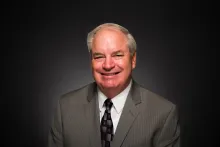
Robin Webber was born in Chicago, Illinois, in 1951, but has lived most of his life in California. He has been a part of the Church of God community since 1963. He attended Ambassador College in Pasadena from 1969-1973. He majored in theology and history.
Mr. Webber's interest remains in the study of history, socio-economics and literature. Over the years, he has offered his services to museums as a docent to share his enthusiasm and passions regarding these areas of expertise.
When time permits, he loves to go mountain biking on nearby ranch land and meet his wife as she hikes toward him.
