

Robin S Webber
This transcript was generated by AI and may contain errors. It is provided to assist those who may not be able to listen to the message.
Thank you very much to the men's ensemble. Beautiful, beautiful words. Every time you hear that song, very, very moving, very personal. I do want to mention that one announcement I wanted to give, and that's simply that I realize that we may have new people that are amongst us, and perhaps not familiar with either the New Testament Passover or the Night to Be Much Observed, the Days of Unleavened Bread, how to observe them, etc.
And if you do have any questions about that, please see one of our elders that are here today, Mr. Budge, over here to my left. Mr. Fish is right there in the middle, and Mr. Helge is towards the rear, so we have you covered. And if you have any questions, that's what we're here for, to be able to assist you, that you may enter this time of joy, fully informed and fully involved. Today, I'd like to establish a common focus for all of us by turning over to 2 Timothy 1. Join me, if you would.
Let's open up the Word of God on this Sabbath day and understand what God would have us to learn. In 2 Timothy 1, verse 6, it's the ongoing instruction of the Apostle Paul to his spiritual son and the Lord, Timothy, in mentoring him and communicating with him, which is so very important. And we pick up the thought in verse 6, Therefore, I remind you to stir up the gift of God, which is in you through the laying on of my hands.
And we do need to be reminded of the calling at times. Perhaps this is a dual reminder to Timothy, a younger man, perhaps 30, 31, or 32, as we would understand the story, to be mindful of the laying on of hands. That could either be at baptism and receiving God's Holy Spirit, surrendering his life to God the Father through Jesus Christ, and or it could also be expanded to his ordination.
But nonetheless, let's draw a principle of this out of verse 7. God has not given us the spirit of fear, but of power, and of love, and of a sound mind. And friends here in Los Angeles, that is my encouragement, and that is my communication to you as we approach the spring festivals. As we approach the New Testament Passover, that these are festivals of faith. These are festivals in believing what the Living God has revealed to us, that we have chosen to act upon, and that he will continue to sustain our effort by that spirit that is in us.
The most important word that I could share with you today or phrase is simply this. The feast days of God, the festivals of God, are festivals of faith, that what God has said he will do, he will indeed do. Let's continue in verse 8, Therefore do not be ashamed of the testimony of the Lord. Don't be ashamed of the words of Jesus Christ, the lifestyle of Jesus Christ.
What God sent his Son to this earth to reveal as what God the Father himself was like. But share with me in the sufferings of the Gospel, according to the power of God. Bringing us in remembrance once again that who we are and what we are today, as the Israel of God, is no different than the Israel of old.
It wasn't Moses that alone brought Israel out of Egypt. It was the sovereign living God that by his hand Israel was delivered from the darkness of slavery. Who has saved us, called us with a holy calling, not according to our work, but according to his own purpose, and grace which was given to us in Christ Jesus before time began. But has now been revealed by the appearing of our Savior Jesus Christ. It's interesting that in a sense this is put in the present tense for those that would read down through the ages in our time, in our century, in our experience.
Those that have now been revealed by the appearing of Christ who has abolished death, brought life and immortality to light through the Good News, the Gospel, to which I was appointed a preacher, and an apostle, and a teacher of the Gentiles. Now, let's center on verse 12. For this reason, this is it.
This is the reason I live, I draw a breath, why I've gone through what I've gone through. For this reason, I also suffer these things. Nevertheless, I am not ashamed, for I know whom I have believed. I know who I have believed. I know who has called me, and I know who I confess. And I am persuaded that He is able to keep what I have committed to Him until that day. When we come up to the New Testament Passover in a few days, as we do every year, we renew a covenant with the living God, our Heavenly Father, through the sacrifice of His Son Jesus Christ.
Paul says here that he knew and knows, when you look at the words here, I know whom I have believed. And when we come up and we partake of the bread and we partake of the wine, we are saying, not before the audience that will be with us that evening, but we are saying before God Almighty, I know whom I believe. I know what I am about. I know what I have been assigned, and I am about doing it. And I have noticed it says here, like Paul said, I have been persuaded that He is, that what God says He is and what He says He desires to do with me, and that He will be there at the end of this.
I take this bread and I take this wine in confidence that God will do exactly what He says He is going to do.
The question I have this afternoon is simply this. How can we define and how can we describe whom we believe? That's the question before us. That's what we'll explore during this message. Today, what I would like to do is I would like to share seven reasons, seven reasons why I know of whom I believe. Seven reasons of why I know whom I, Robin Weber, believe.
And we can take my name out of it. That's not the important part of it, but the Passover is personal. And we must approach with faith, not with just rote ritual, but with faith that what we are doing, what God is doing with us, and why we are there that evening and renewing that covenant as purpose, as meaning, as we once again surrender our lives to God Almighty.
These seven reasons are not mystery and they're not my reasons alone, but are plainly outlined in a chapter in the Bible. I'd like you to join me, if you would, in Isaiah 9 and verse 6. In Isaiah 9 and verse 6. These are words that are familiar to us because of an incredible song of praise from the Messiah.
It's very interesting that in the world out there, normally, these words are sung around the time of December in what they regard as a birth statement. But at the same time, I think it's even more meaningful as we approach the memorial of the death of Jesus Christ as we look at these words. We recognize the ingredients that make up that unleavened bread that we will partake of, the ingredients that will make up the wine that we partake of, in which we renew that covenant. These two verses give us the core elements of what we believe.
Interesting, in the class today, as Mr. Fish was covering the end of 1 Timothy 6, it's very interesting. It talks about confession. What did the early church confess? What was their confession? You can find that over in Philippians. It says that they were to confess the name of the Lord Jesus Christ. That was their confession. Was that simply about Jesus Christ? No. The confession was that God the Father, in His great love for humanity and the One that was the Word, made a determination, made a decision before time was, that the Word would ultimately empty Himself and become Jesus of Nazareth.
That we might have a return to the Eden that was lost. That we might have an intimacy with God that was lost, not by what He did, but by what Adam and Eve and every man and every woman since has done. Therefore, we find in Isaiah 9 the very core elements of our faith. They offer weight, they offer substance to the dimension of the bread and the wine that we're going to partake of.
Let's look at it, please. We're going to go through it one by one. I hope it will be meaningful to all of you. When we look at what it says here, For unto us a child is born, and unto us a son is given. Allow me to give you point number one. I know of whom I believe, because unto us a child is born. What does that mean? We need to understand that Isaiah is writing approximately 700 years before Jesus would be born in Bethlehem. He writes in a time of darkness and tragedy and apartness from Jehovah, from the God of Israel.
It's a dark and it's a gloomy time. And God visits him with this prophecy, not when it's light and not when it's bright, not when everything is cheery and everything is going well, but in the abyss of history of his people. And he says unto us a child is born. And this phrase is offered to every reader and every would believer in a very incredible, personal, and present first time, tense, and sense. Think about it. Look at it here for a second. This is not written as if it's only for the people back then.
It's like we're opening up the books right here and now in Isaiah 9. Look, it says unto you and to me unto us, unto me, unto you, unto us. A child is born. Incredible. When we look at this, it offers me the confidence that the same one that revealed this to Isaiah is at Jesus' birth, his birth spot, and his manner of birth.
It was not by accident, but by design.
Jesus didn't just, quote-unquote, fall into the straw in the manger. Plop! Might not have been straw. I'm just using that as an example for a moment. In other words, it was not accidental. Every step of this special child being born was by divine design. When I read this, brethren, I come away as I partake of the bread and the wine on that evening, that I do not worship an accidental God, and I do not worship an accidental Savior. The last thing that we need to consider as Christians is that we live by accident. We live by design. We live by God's grace. We live by God's design. He says that all things work together for the good of those that love and keep my commandments. He didn't say all things are good, and happy cherry. There can be tears along the way. There can be sighs. There can be sorrow. But God says, I have a design for you. I have called you. I am to be your God, and you are to be my people, and I will never leave you. I will never forsake you. I know whom I believe. And it comes through this story, this incredible story of this child being born. And the way that he was born in humility, and when I think of the birth story, which we usually cover in the month of autumn or so, his beginnings refresh me about God's start with me every day. In bringing many sons to glory, it's through the crucible of humility. Not the crucibility of being noticed, not the crucibility of power, not the crucibility of office, not the crucibility of being on the front row. I guess everybody's humbled today. Nobody's on the front row.
God doesn't operate that way. He operates, my thoughts are not your thoughts, my ways are not your ways. God operates starting on the foundation of humility. And to think that this, the Word, the Word Himself, emptied Himself. Join me if you would for a moment in Philippians 2. In Philippians 2, and let's pick up the thought in verse 5 if we could, please. In Philippians 2, Notice what it says here. And I'm actually going to read this as I've got you turned to most of you. I have the New King James English. But I'm going to read it out of the New Living Translation because I think it makes a lot more sense, especially to our young people. Though He was God, speaking of the Word, speaking of the One that became Jesus of Nazareth, though He was God, He did not think of equality with God as something to cling to. Instead, He gave up His divine privileges. Gave Him up.
He took the humble position of a slave and was born as a human being. He emptied Himself, as it were. If we had two glasses of water, and I don't have them here right now, I was thinking about that. It would be like two glasses of water. And here's a jug that is actually... well, you can't define it because it's eternity. But He poured whatever He was into this other glass, emptied Himself for you and for me. He emptied Himself into our sphere of flesh, the One that was the I AM, the One that was the Word, the One that it says in John 1, 1-3, that in the beginning was the Word, and the Word was with God, and the Word was God.
Many religions start off with a definition of deity. But what makes Christianity Christianity, and what allows you and me to partake of that bread and that wine at the New Testament Passover is found over in John 1. Join me if you would there for a moment, John 1. And let's look at verse 14. In John 1 and verse 14, notice what it says. Following, and in the beginning was the Word, the Word was God, the Word was with God. Notice verse 14. This is what defines Christianity. And the Word, that which was a member of the Godhead, that which was an is, eternal, became flesh, dwelt amongst us, and we beheld His glory, the glory as of the only begotten of the Father, full of grace and truth. The word dwelt there comes from the Greek. It's scha-nu. It means He came down and He tinted with us. He tinted. He tabernacled. He is the Lord of the tabernacle. He tabernacled with us. It would be like somebody living over in Holmby Hills or Bel-Air with a 15,000 or 20,000-acre house. That would be big. 15,000 to 20,000 square foot. That pretty big house, that other one. That's the big house. Anyway, 15,000 or 20,000 square feet and not one swimming pool, but two swimming pools and a 15-car garage set. And He gave that up. And He decided to come into your life and pimp in your backyard. And that's even a bad analogy because we're talking about that which is uncreated into the creation. You know what I'm saying? But just think about it. He did that for you and for me. The Son of the Living God because of God the Father and His Son's great love for us. Why did He do that, though? Why did He become this child? Unto us, a child is born that we might experience God through Him.
You see, Jesus came to reveal the Father, not just His nature, but more so His attributes. And to allow humanity to be able to, in that sense, have God touch us. And for God to be touched by us through Jesus Christ. For you and me, as He grew up to understand how God would live if He had two legs and walked this earth, to be able to experience wisdom and love that had never been known.
That's why. All packaged in a human body. When you think about why Jesus Christ came to this earth, let me just make it very, very plain. He came to an orphan planet to reveal their Father. You ever thought about it that way? He came to an orphan planet to reveal their Father to them. It doesn't get any richer than that. Jesus talking to the church of His day said, if you've seen Me, you've seen the Father.
He came in the likeness of men. That meant when you think that unto us a child was born and He came in the likeness of men, that means He had a physical body of flesh and blood. He was indeed fully human. He knew the trials of growing up. He experienced the joys and the sorrows that come in everyday life just like you and me. He knew what it meant to be lonely. And I know there are lonely people in this audience today. You can be surrounded by a crowd and you can be indeed terribly lonely. He received the satisfaction of a job well done as he worked with his father, Joseph, as a stonemason, as a carpenter. He experienced the closeness of good friendships like Peter and James and John. He saw it at the death of friends and family, like the son of the widow of Nain or Lazarus, his dear friend. He wept for them. He wept for the misfortunes of others. He had to grapple with personal disappointment. Perhaps the greatest that, when he needed everybody, on that night of the Passover, everybody fled. He also needed the encouragement of growth. He also had encouragement towards others when he saw them grow. He was persecuted. He was ridiculed. He was murdered. Simply, profoundly, brethren, the reason why we love him. And as we come before the living God in faith, that we do know in whom we believe is because he was one of us. Fully man, the son of man. And yet, as I share all these similarities, he had a daily beauty in his life that makes all of us ugly in comparison.
But nonetheless, he loved us. He emptied himself. And that's why, indeed, he is the experience of experience today. Yes, I know in whom I believe because that child was born as the son of man. A man like me. But better than me. For he was God's perfection in flesh. Because he was God in the flesh.
Let's remember that as we partake of those symbols on the evening of the New Testament Passover. Number two. I know, as it says in Isaiah 9, as we go back here a second, you might want to put your marker there in Isaiah 9.
We notice the second part here. It says, Unto us a child is born. Point number two. Unto us a son is given. I know of whom I believe because unto us a son is given. As the Passover of the New Covenant comes upon us, it allows us to renew and strengthen our understanding that, yes, that child, that son of man, was born unto us.
He was known as the son of man, but he is also the son of God. The son of God given to us as a gift. God's precious gift on which humanity has no claim, no price, no works to offer. Only a response in faith because we've surrendered ourselves to his sovereignty.
What God has we can't buy. What God has we can't work up. I remember as a boy growing up in San Diego, we used to play workups all the time. Softball, kickball, whatever it was. We worked ourselves up around. I see a lot of the guys nodding. That's what we did. You kind of worked yourself up from left field to right field. You got to third base, second base, first base. You were about to get to home, and then it was time to go back into class. No, anyway. You can't work your way up. And that's what happens sometimes even as we come up to the New Testament Passover. We get the dreads about ourselves.
We see where God is, and we see where Christ is, and we see ourselves, and we say, I don't know if I can take the Passover. Brethren, this is a festival of faith, not a festival of discouragement. We are not God. God called us not at our best, but at our least. And that's something that we have to remember. God did not call us because we were perfect, but because He's perfect.
He didn't call us when we were doing everything correctly, but when we were at our least, as it says in the book of Romans, that while we were yet in sin, that this man did something that no other man would do, that any good man would die for another good man, but he died for us as the Son of God when we were in sin, and that there is nothing that will separate us from the love of Christ.
Unto us a Son is given. We approach these festivals not in trepidation or in fear, but, yes, indeed, with respect, with awe, with carefulness, but not to everything that we have done, but what God is performing in our lives in this day and age. Let's understand the ramifications of this gift for a moment. Join me, if you would, in John 3.16. In John 3.16. In John 3.16. Very familiar, famous scripture, out of scripture, the conversation between John and the Pharisee Nicodemus, which is an engagement of two Jews that are having a discussion.
And Jesus is trying to illuminate his purpose and what God is doing. Notice what it says in John 3.16. For God so loved the world. We're talking about God the Father. For God so loved the world that He gave His only begotten Son, that whoever believes in Him should not perish, but have everlasting life. Very simple, brethren, but very profound.
And sometimes we overlook this when we look at verse 16. For God so loved the world that He gave. See, God the Father also has skin. If I can use the proverbial phrase in this game. And it's not a game. You know what I mean. I'm not trying to demean it. God the Father has skin in this game.
He gave His Son. He gave He who had experienced and does experience worthwhile eternity with them. Our Father in heaven gave His Son. Galatians 1 and verse 4 now. This is a tandem effective giving. In Galatians 1 and verse 4. Join me if you would there, please. In Galatians 1 and verse 4. Let's pick it up in verse 3. Grace to you and peace from God the Father and our Lord Jesus Christ.
Notice, speaking now of the Christ who gave Himself for our sins, that He might deliver us from the present evil age according to the will of God our Father. Jesus also gave Himself for sin. Both the giver of the gift, God the Father, and the other giver of the gift Himself, the incarnate Jesus, gave of themselves willingly, lovingly, purposefully. When we look at this and the immensity of this gift, Christ's life cannot be received by human works. Neither could it be taken by human works. He gave His life. It was not taken away.
He was God in the flesh. He was the Son of Man. He was the Son of God. He could have called down the angels at any moment that He wanted to. But also He recognized that He was that Lamb of God founded from the foundations of time. And He gave of Himself. Let's notice Mark 10 and verse 45. Mark 10, the Gospel of Mark. In Mark 10 and verse 45, let's notice what it says here.
For even the Son of Man did not come to be served, but to serve, and to give His life a ransom for many. To give His life. Now, I want to share something with you, and we'll move to the third point. Simply this. I've already mentioned one point unto us a child is born, speaking in that sense of the element of Jesus being fully human and the Son of Man.
But here it also says this prophesied Messiah would also, unto us the Son is given. He would also be the Son of God. There would be this element of divinity that is in Him. How then do we put this all together? As you and I come before the New Testament Passover table, we stand in awe.
We stand in wonderment. For here at once and in one, in the man of Nazareth, Jesus Christ, is both the Son of Man and the Son of God. He's both human and divine. As Michael Green in his book acts for today, shares, he's like a bridge. He's like a bridge, firmly embedded on our side of the river, as it were, and on God's side of the river. And it is only in this way and this way alone that he can be a reliable interpreter of God to us and, at the same time, a sure route back to God.
A bridge that only reaches one shore is not a bridge. It's a folly, and it can be found up in Alaska, the bridge of no return. But sometimes we can do that, mistakenly, brethren, that we can create within that which was unto us a child is born and unto us a son is given, we can create a bridge that does not have a landing. If we make Jesus too fully human, too fully human, then we have no recourse back to God. If we make him too fully divine, as it were, then he is not of us.
He is not Emmanuel, God with us, feeling our pain, feeling our sorrow, feeling our discomfort, feeling our trepidation. We must understand him as both in mystery, both fully God and fully man. And that reliable bridge that brings heaven to earth and allows our prayers to go back up through him as the spirit of experience. When I think about coming up against this New Testament Passover, I not only think of the humility that is exhibited by unto us a child is born, but brethren, as I partake of that bread and wine, I must think of the giving manner of God the Father and Jesus Christ.
And as they give to me, and I deserve none of their giving other than by God's grace, I in turn then am to model their example, to utilize their spirit, not to be stingy with their love, not even to be stingy with my own personal love. I am to look for opportunity to express myself, to share myself, as Frank was giving us in the Bible class day, to give myself away.
Even at times if it comes at personal hurt, personal loss, to recognize that God will make up the difference. Each of us, brethren, each of us as covenant people, are confronted with the same question that was asked of Peter. Long ago when he asked, who are people saying that I am?
They talked about, well, you're this prophet or that prophet, but then what he wanted to know is, but who do you say that I am? I want to know what you think. I want to know what you know, of whom you believe. Is God just theory? Is he a book on a shelf? Is he the living God? And Peter said, no. He said, you are the Son of God. And Jesus looked at him and said, man has not revealed this to you, but the Father that comes from above, which reminds us that as we approach the New Testament Passover Table, brethren, it's not by our works, but by God's grace, by God's revelation and the faith of God and the faith of Christ in us that we partake of that bread and that wine on that evening.
Point number three. I know of whom I believe because it says in Isaiah, it says that the government will be upon his shoulders. The government will be upon his shoulders. Let's remember that as Christians under the New Covenant, we are ultimately under the jurisdiction and the rule and the judgment of Jesus Christ. In ancient times, as in modern times as well, the ensign of an office was worn on the shoulder.
What's on the shoulder even today tells you, is this guy a PFC? Is he a sergeant? What is he? And that rule and that jurisdiction and that government, that incident was upon his shoulder. But Christ not only wears the badge of that office, but willingly sustained and sustains the burden of the office. There are many times when people want an office, but they don't want to do all the work and all the labor along the way.
Because there's something else that was laid on his shoulders. And it wasn't an incident, it wasn't an insignia, it wasn't something that was patched. It was not even a tattoo, as a Roman soldier would have in that day and age, which is called a shiragma. He had a cross placed on those same shoulders. He had a cross. A cross being. I wasn't there. Whatever it was, it was heavy, it was rough, it was laborious. He fell down in the streets of Jerusalem and had to be helped to the place of execution by Simon of Cyrene.
A cross was placed on those shoulders. When we think about that, that is why our devotion is to him and to him alone. Join me if you would in Hebrews 3 and verse 1. In Hebrews 3 and verse 1. Therefore, Holy Brethren, partakers of the heavenly calling, where do you look? What do you hone in on? Where is your focus? Who do you report to? Who do you keep your eye on? Who do you strive to model as the leader in your life? Therefore, Holy Brethren, partakers of the heavenly calling, consider the Apostle and High Priest of our confession, Christ Jesus, who was faithful to him, who appointed him as Moses, also was faithful in all his house.
As we partake of that bread and as we partake of that wine this coming evening, and we acknowledge God as our Father and Jesus to Christ as his gift, and understanding the rest of Scripture that he is the head of the body, the spiritual body. That is where our focus is. That is where our devotion is. Not to man, not to any group of men. Oh yes, men as they follow the Father, follow Christ, yes, we are to respect them.
But the head of the church, the living head of the spiritual organism called the body of Christ, is none other than Jesus Christ. The government is upon his shoulders because he had the cross on his shoulders. And God looked down and said, this is my son, in whom I am well pleased.
He alone is worthy. Why am I saying this, brethren? There will be times in our past or in the future when men will get sidetracked by man. Sidetracked by men. Sidetracked by something here on earth other than to recognize that our devotion, our being, has been bought and paid for by the blood of Jesus Christ.
Who not only was given a position at the right hand of God, but because of the condition that he bore on this earth, is forever precious to our Father above. And when he looks over, he says, I remember. I remember when I had to turn away. I remember when you said, my God, my God, where are you? Why have you forsaken me?
And now, because of that humility, he reigns on high. Thank God. That's wonderful. So as I come up to this Passover, yes, I do know whom I believe. And I have an understanding of how and why the government is on his shoulders, and it reminds me that before I bear a crown, I too must bear a cross.
Jesus never said that it would be easy, but he did say that it would be worth it. Point number four. These are going to go rather quickly now. The Bible says in Isaiah, as we go down the line, Unto us a child is born unto us, a son is given, and the government shall be upon his shoulder. It says that he would be a wonderful counselor. Yes, I know who I believe because I believe that indeed Messiah is a wonderful counselor. All that is attributed to Messiah is divine, God in the flesh, and his entrance into human history would be God's greatest wonder of all. Wonderful counselor. The greatest wonder of human history was the incarnation. That God invested himself into the creation. He that was uncreated. And now we can draw upon his wisdom and upon his counsel. You know, presidents and kings have multiple counselors. Kings of old, presidents, prime ministers of today, they have offices and offices of people that give them counsel. But this is different. Join me if you would on Isaiah 40. I want to share something with you. Isaiah 40. Notice what it says here in verse 12.
This is a self-disclosure about God. He's saying, I am wisdom. I am counsel. As he goes on to say in Isaiah 40, who then will you compare me to?
I Corinthians 1 and verse 24. Speaking of this child that was born and the son that is given, Paul offers this thought about Jesus Christ that we can draw upon in every incident of our life that occurs every day that we can draw upon his counsel, which is divine. 1 Corinthians 1 verse 24.
But to those who are called both Jews and Greeks, Christ the power of God and notice the wisdom of God.
He is the power of God and he is the wisdom of God.
You know, I know a lot of us get excited today about what's on our smartphone.
What do you have to teach me now?
Now we do the sign of the cross and kind of figure out where the information is. And there's more information on those smartphones today than all of the books that were in the Library of Alexandria back in 250 B.C. But you and I have the privilege of drawing upon the wisdom of God, eternal wisdom.
Our server is not AT&T. Our server is the Holy Spirit. And we have access to the wisdom of the ages, ageless wisdom, to guide us.
Oh yeah, I know who I believe and I'm looking forward to partaking of that bread and partaking of that wine.
Because he is a wonderful counselor.
And he also said that he would send another comforter and has. That same comforter that Paul reminded the young man Timothy of. That God has given us a spirit of love and of power and of a sound mind to see beyond the moment. To know that God, as we go through our Mondays and Tuesdays and Wednesdays, things will come before us. It will look foggy and God will in that sense say, I set before you life and death, blessings and cursings. And he's not going to force us, but he will give us a nudge and he'll say, choose life. Choose life! And that spirit gives us a clarity of vision that this world does not have.
God's gift. His Son and yes, also His Holy Spirit. So when I look at all of this, everything that comes my way, the best counsel that God gives me is again Romans 8 28. As I partake of that bread and that wine, the wisdom of God tells me that I serve the living God. And he says that all things work together for the good to those that love and keep my commandments.
Number five, I know of whom I believe, for he is a mighty God.
Isaiah tells us that he is a mighty God. L always refers to the Creator, the one true God, that which is sovereign. We know the term El Shaddai, out of the Hebrew, the mighty God. The word here for mighty is Gabor, which means hero, mighty hero, mighty deliverer. Not only the one that delivered Israel out of Egypt at that first Passover, but the mighty God that continues to deliver and to mold and to shape the new creation from dust towards that which is immortal. He is that mighty God. It's interesting that he is our hero. And it is used there because a hero in the Hebrew depicts things that are only done by him and cannot be done by others. The word there is often used as to what man cannot do. And he is our hero. He is the one that, when his son died by the power of the resurrection, raised his son after three days and three nights as a statement of his power. Whenever you read the words of the Apostle Paul about the power of God, they are indelibly linked with the resurrection.
And that's a joy that as we partake of that bread and that wine, which does indeed symbolize our Savior's sacrifice for us, is at the same time to recognize what God did through him for us. And if it did it for him, he will do it for us, as Paul says in the book of Corinthians, that we worship a Lamb today, yet, yes, died. Jesus did die. He was that sacrificial Lamb. But he's also a Lamb that is living today. Do you ever think about it that way? He is a Lamb. He's alive. Twenty-eight times in the book of Revelation, he is mentioned as the Lamb of God. So we do not worship simply a dead Passover, dead, been resurrected by, yes, the mighty God. And so when I think about these things, brethren, I look forward to what God is going to do in my life this coming year. That mighty God, that rock that led Moses and led Israel through the sea and through the wilderness, that we will probably rehearse to one degree or another that on that seventh day of the Feast of Unleavened Bread, the sea opened up.
And God led Israel through the dry land, as we heard the windlings speak about today in Psalm 66. That's our God. That's our champion. That's our hero. That's who we've surrendered our life to. Number six, I know of whom I believe because it states in the book of Isaiah, he is an everlasting Father.
What creates the wonderment about the sacrifice that God the Father has given us is that he's not only a child that is born, he's not only a son that is given, but then he's called an everlasting Father. Well, how do you get that? How can you be a child, a son, and a father all at the same time? How are we to understand this scriptural attribute assigned to Jesus of Nazareth? Does that mean that God the Son replaces the Heavenly Father? Absolutely not. Certainly, why do the ditch? None scriptural. We often call our heroes our founding fathers. They are the elders of our heritage. They set a course. The Pilgrims of Plymouth, before they were called Pilgrims by Daniel Webster in 1820, they were known as the forefathers, the first comers. As the abiding head of a kingdom or a nation or a pervasive civilization, earthly rulers are often called the father of a nation or the father of a movement. We can think of George Washington, who we still call the father of our country. We could think of India with Gandhi being the father of a movement. We can think of the struggle that occurred during the 1960s and 1950s, and we can think of Martin Luther King as the father of a movement. It denotes a beginning. It denotes a source. It denotes, in a sense, the purveyor of a culture. Christ is our everlasting Father, in that sense, in that He is the head of the body, the first of the first fruits. He was used by God the Father, our spiritual God the Father, to found a new age, which in turn is ageless. He is the Alpha. He is the Omega. He is the source. As Adam Clark so aptly renders, you might want to jot this down, he is the father of an everlasting age.
And being that father, brethren, he denotes stability. Jesus Christ is the same yesterday, today, and forever. How much does this world right now, and how much does your own personal world right now, need stability?
We look at the Middle East. We look at our nation, the challenges. We look at our own life. Oh, how much do we pray for? Stability. Spiritual stability. Emotional stability. Mental stability. Family stability. Financial stability.
Jesus Christ represents stability in our life. It is upon this rock that we are to be founded. And what we're saying as we partake of that bread and we partake of that wine on the New Testament Passover is that it is on this rock, this everlasting rock, this beginning of the civilization, this first of the first fruits, the Lord of my life, the gift of our Heavenly Father.
This is what I have been called to be planted on, and I will not move. I will seek their counsel. I will seek God's love. I will be His tool. I will be His child. That is what that means. Number seven. We're almost done. I know of whom I believe. And, brethren, I know you believe this too, but like Paul speaking to Timothy, I'm just here to remind you today.
I know of whom I believe because he is called the Prince of Peace. The Prince of Peace. Not a peace that is absent of conflict. Not at all. Doesn't mean that. But a condition of harmonious and positive well-being. No matter what the externals are, that we have peace at the center. That even when our knees are trembling, our heart is firm because we have been chosen.
Not because of who we are, but because of what God is. You're coming before that table at the evening of the New Testament Passover. Not because of what you know. There's a lot of people that are smarter and more brilliant than you and me. But we're coming just as Peter came, as Jesus asked the question, but who do you say that I am? I don't care about anybody else. I want to know what you think.
I want to know what you know. Are we connecting? Am I yours and are you mine? Peter said, you're the Son of God. And Jesus said, this has not been revealed to you from below, but from God above. Brethren, let's not take for granted what we're going to be experiencing, and we have the honor and the privilege of doing and assembling to memorialize the death of the wonder and the greatness of God's gift to each and every one of us, Jesus to Christ.
Romans 1 and verse 17, and I'll conclude. You've been so kind. I don't have an opportunity to speak to you every week, so I hope you don't mind if I can share God's love and God's truth with you for just an extra few minutes. In Romans 1, let's allow this to be our pathway to that table that evening with the symbols of our Savior's sacrifice. In Romans 1 and verse 17, let's take a look here. Romans 1 verse 17, For in it the righteousness of God is revealed from faith to faith, as it is written, the just shall live by faith.
The question comes forth out of the Scriptures so long ago, but immediately in the moment today. The words of the Apostle Paul, a fellow member of the covenant, whose time is come and gone. He's dead and in that sense healed and sealed. But for us to ask the question then and to make that statement confident when asked and known, I know in whom I believe.
What a wonderful calling that each and every one of us have. As we partake of that evening, may God bless you, may God keep you, may God instill within you the faith of Jesus. Not just our own faith, but that same faith of Jesus that saw him through those last days of his life in Jerusalem.
That faith that said, no matter how dark it is, not my will, Heavenly Father, but your will be done. That faith that allowed him that on that place of execution, that place of the skull, that with everything that accomplished, that everything that was done to him, at the end he was able in his last breath say, I have committed my spirit unto you. Let that be the words. Let's allow that to be the tone of our experience of this New Testament Passover. Unto you, I commit my spirit.
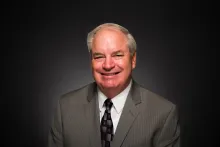
Robin Webber was born in Chicago, Illinois, in 1951, but has lived most of his life in California. He has been a part of the Church of God community since 1963. He attended Ambassador College in Pasadena from 1969-1973. He majored in theology and history.
Mr. Webber's interest remains in the study of history, socio-economics and literature. Over the years, he has offered his services to museums as a docent to share his enthusiasm and passions regarding these areas of expertise.
When time permits, he loves to go mountain biking on nearby ranch land and meet his wife as she hikes toward him.
