

Isaiah 7 - Stand Firm in The Faith, Not Trusting in Flesh
Given on
Given in
Downloads
Downloads
To download a file, right-click (or long press) a link above and choose Save As.
This sermon examines two historical events, one from the ancient history of Israel and Judah and the other a more modern day occurrence. More specifically, it examines a time of perceived crisis that the nations of Israel and Judah were facing in Isaiah 7 and then examining a perceived crisis situation in Europe just prior to the onset of WW2. This message focuses on a fundamental spiritual principle vital to all of us as Christians! That fundamental spiritual principle is "Stand Firm in The Faith, Not Trusting in Flesh, or You Won’t Stand at All"
Transcript
This transcript was generated by AI and may contain errors. It is provided to assist those who may not be able to listen to the message.
Certainly want to take the time to thank Mr. Barbusch, every member of the choir, Mrs. Bizak, the fellows who work on sound for being able to present material like that is very inspiring. We certainly appreciate all of your efforts. We know that it takes a lot of practice to perform as you do, and it makes the Sabbath so very special. We thank all of you for that. We'd like to begin our message today by outlining what I hope to accomplish. I don't normally do this, but I thought that I would do that today. Today we're going to take a look at history. We're going to take a look at a couple of historical events, one that took place in the ancient history of Israel and Judah. We'll take a look at that, and then when we're done with that, we're going to take a look at something a little more in line with our day-to-day, something in fairly recent history as we look at the history of mankind. More specifically, what I want to do today is examine a theme that is explicitly stated in the Scriptures that you know about. We've discussed from time to time something that's a hallmark of our faith, but I think it's always good, as Paul told Timothy, that it's good to keep the brethren in remembrance of these things, especially in the days in which we live. So we want to focus in on a very fundamental spiritual principle that we see when we look at those two historical examples. That fundamental spiritual principle is this, and if you want to put something on the top of your notes for a theme, this is the theme statement. Stand firm in the faith, not trusting in flesh, or you won't stand at all. Stand firm in the faith, not trusting in flesh, or you won't stand at all. Now we're going to begin our journey with the first historical example, and we'll find that in Isaiah chapter 7. Let's go to Isaiah. We will not be going through even the bulk of chapter 7 today. There's only just actually a few verses I want to key in on in chapter 7 that brings home this particular point. After we've done that, we will go to the more recent historical example. After we've gone through those two historical examples, I want to give you a spiritual takeaway as to why I'm doing this. A little bit of background in terms of Isaiah chapter 7. In the Old Testament, God often teaches vital spiritual lessons through political events, many times even through military events. That is the context that we see here in Isaiah chapter 7. By this point in Israel's history, there are two kingdoms. You've got the northern kingdom of Israel and the southern kingdom of Judah. As was the case from time to time, those two nations were at war with each other at this particular time.
At this time in Isaiah 7, you see a situation where both the nation of Israel and the nation of Judah are very concerned about a power that was threatening their existence. That power was the Assyrians. The Assyrians, their emperor Tiglath-Pileser III was an expansionist. He wanted Egypt. Egypt was the breadbasket of the region. For him to get to Egypt, he had to go through a number of smaller nations, such as Israel, Judah, such as Edom, Syria, and Philistia. Knowing this, you had the people of Israel saying, you know, we need some help. The king of Israel made an alliance with the king of Syria. They wanted the king of Judah to join with them because they thought that the Assyrians were coming at any moment. The king of Judah, Ahaz, wanted none of that. The reason he wanted none of that was because, unbeknownst to Israel and Syria, Judah already had an alliance with the Assyrians. And so the king of Judah didn't feel he needed any help from Israel and Syria. Now, to outline what we're going to cover today, there's just a few verses. Verses 1 and 2 show the life and death threat that is emerging, a perceived national crisis. That's in verses 1 and 2. Verses 3 through 7, we see where God's plan is going to stand, regardless of mankind. And verse 9 is the key statement. Let's take a look at that to begin our message today. Isaiah 7, verse 9. Here is the keystone statement. The head of Ephraim is Samaria and the head of Samaria is Remeliah's son, talking about a human being, talking about flesh. And he says, He says, If you will not believe, surely you shall not be established. If you will not believe, surely you will not be established.
Other places in this scripture, Habakkuk chapter 2 and verse 4. For example, the just shall live by faith. The just shall live by faith. But I'm getting ahead of the story here a little bit. Let's start with Isaiah 7, verse 1. Now it came to pass in the days of Ahaz, the son of Jotham, the son of Uzziah, king of Judah, that Rezen, the king of Syria, and Pekah, the son of Remeliah, king of Israel, went up to Jerusalem to make war against it, but could not prevail against it. Now here's something for those of your friends who want to talk about how all Israel was Jewish. Here's a good instance where you point out to them that here's a place in the Bible where the Jews are at war with Israel.
Verse 2, and so it was told to the house of David, house of David being Judah, saying, serious forces are deployed in Ephraim, Ephraim representing Israel. So his heart and the heart of the people were moved as the trees of the woods are moved with the wind. Now God, by His very nature, is compassionate. God is caring. When God's people are being intimidated, when they're being threatened, God wants to act. God wants to be there for them. But something else is true about God. Let's take a moment and turn over to Isaiah chapter 59. Isaiah chapter 59 verses 1 and 2.
Isaiah 59 verse 1, Behold, the Lord's hand is not shortened that it cannot save, nor is his ear heavy that it cannot hear. But your iniquities have separated you from your God, and your sins have hidden his face from you, so that he will not hear. Isaiah was a very sinful nation. Judah was a sinful nation. And God is not going to respond. Now God can always respond due to his mercy, due to his graciousness, but he doesn't have to when we're in that sinful state. So to stand against the threat of the Assyrians, and when we think about Assyria, brethren, let's think about ancient Nazis.
They were a ruthless, cruel people. They wanted to expand. They wanted to gobble up everything in their way to get to Egypt, and then they would want to take care of Egypt as well. So here we see in verses 1 and 2 where King Ahaz of Judah is hearing now that these troops are entering into his land.
He's shaking. He should be looking to God. He should be standing firm into faith that God will intervene. God will take care of the situation. And again, brethren, as we go work through our way through the material today, we want to be asking ourselves, as you and I face various threats, whether it be economic threats, social threats, health threats, whatever kind of threats you have on my face. Are we standing firm in the faith? If we don't stand firm in faith, we will not stand at all.
In other words, what we see here in chapter 7 is that both Israel and Judah were trusting in flesh. Flesh does not hold up against Satan the devil. You can have whatever alliance you want to have. And there are different kinds of alliances. You've got alliances between countries. You've got alliances between corporations. You can have alliances between individuals. And there's only so much strength in any one of those kinds of alliances. But up against Satan, all of those will wilt.
That's why the just shall live by faith. Stand by faith, or we won't stand at all. Let's continue on in the story here. Verse 3. In the Lord said to Isaiah, Go now to meet Ahaz, you and Sheret, Jashub, your son, at the end of the aqueduct from the upper pool on the highway to the Fuller's Field.
So here's an interesting thing. We see the king here is probably taking a look. He's thinking about the fact that he may be invaded. He wants to check out his water supply. God, realizing where he is, says, I want you to go meet Ahaz king and bring your son, your son, Jeru, Jashub, which means a remnant will return. Now, let's pause for a moment. Let's put ourself in King Ahaz's shoes. What did Isaiah's name represent?
Here you've got two people standing in front of the king. Isaiah. Isaiah's name means the eternal is salvation, or the eternal shall save, or salvation is of the eternal. That's what Isaiah's name means. His son's name, Sheret, Jashub, means a remnant will return. Two people, Isaiah, his son. Two possible ways of looking at the situation that's presenting itself to good King Ahaz. I'd like to quote a couple of commentaries here from the Kyle Adelash commentary in the Old Testament. They say, the two together were, as it were, a personified blessing and curse, presenting themselves to the king for him to make his own selection.
The prophetic name of Isaiah's son intended to drive the king to Jehovah by force through the threatening aspect to present it. Remember, his name stood for a remnant shall return, which shows something bad is going to happen for a remnant to have to return. The prophetic announcement of Isaiah himself, whose name pointed to salvation, was to allure him to Jehovah with its promising tone. The Expositor's Bible commentary says this. The name Shear Jesheb can suggest either a warning or a hope, and also either a physical return from exile or a spiritual return to God.
King Ahaz of Judah had a decision to make. Is he going to trust in flesh? Is he going to trust in his alliance with the Assyrians? Or is he going to trust in God? Again, brethren, you and I have that same sort of decision to make many, many times in our lives. Are we going to trust in God, or are we going to trust in our alliances? Are we going to trust in our whatever of the flesh, our family, our friends? I remember so many telling me back in 1995 and before when we had our split with our parent organization that I don't understand what Mr.
Armstrong is saying here, but you know what? I'm going to follow that man. He's God's Apostle. Mr. Armstrong dies. The next guy comes in. Same people saying the same thing. You know, I don't understand where he's coming from, but he's taken Mr. Armstrong's place, and I'm going to follow him. And where do they follow him to? What was their alliance? They allied themselves with people who no longer believed in the truth of God.
So we've got to be very careful with our alliances. Let's continue on in the story here, verse 4. We're going to read verses 4 through 6. And say to him, Take heed, and be quiet. Do not fear or be faint-hearted for those two stubs of smoking firebrands, for the fierce anger of the resident in Syria and the son of Remaliah, because Syria, Ephraim, and the son of Remaliah have plotted evil against you, saying, Let us go up against Judah and trouble it, let us make a gap in its wall for ourselves, and set a king over them, the son of Tabal.
Verse 4. And say to them, Take heed, and be quiet. Do not fear or be faint-hearted for these two stubs of smoking firebrands, for the fierce anger of the resident in Syria and the sons of Remaliah, King Pekah. Put a marker here. Let's go over to Exodus 14. Because we see the same thought here.
Exodus 14. And Moses said to the people, Do not be afraid. Stand still and see the salvation of the Lord, which he shall accomplish for you today. For the Egyptians, this gathering of flesh, whom you see today, you shall see again no more forever.
Trust in God. Stand firm in the faith. If we don't stand firm in the faith, we are not going to stand at all. Have faith in the power of God to be there for you. Have faith in the power of God to be there when the odds look very, very long. Here in verse 5 and 6, we see where Syria and Israel, noted as Ephraim here, they want to do something that is never a wise thing to do. They want to stop the throne of David from having somebody over the throne of David. That doesn't go very far. That doesn't go anyplace in God's thinking. You don't say, you know, we're going to knock this guy off of the throne of David. We're going to put somebody else on that throne. No, no. Let's take a look at 2 Samuel chapter 7. 2 Samuel chapter 7.
Verse 12. God promising something to David here. 2 Samuel 7 verse 12. When your days are fulfilled and you rest with your fathers, you've died, I will set up your seed after you who will come from your body, and I'll establish his kingdom. He shall build a house for my name, and I'll establish the throne of his kingdom forever. I will be his father, and he shall be my son. If he commits iniquity, I will chasten him with the rod of men and with the blows of the sons of men. But my mercy shall not depart from him as I took it from Saul, whom I removed from before you. And your house and your kingdom shall be established forever before you. Your throne shall be established forever. So when Syria and Israel said, we're going to knock this guy off his throne, they're going up against God. That is never a good idea. That is a horrible idea. If you go to 2 Chronicles 13, we never want to fight against God. We will always lose.
I'm in 1 Chronicles. No wonder why that didn't look good. I better get the right scripture here.
2 Chronicles 13, verse 5, Should you not know that the Lord God of Israel gave the dominion over Israel to David forever to him and his sons by a covenant of salt, a covenant of salt, a covenant that represented perpetuity, a covenant that would be preserved. So we go back now to Isaiah 7. These fellows wanted to do business by knocking the occupant off the throne of David. That's not going to happen.
Verse 4, going back to verse 4 for a second, God says, you know, these two guys that feel they're so great, King of Israel, King of Syria, not so great. Brethren, history shows that both of these men, King Pekah of Israel and King Rezen of Syria, within two years were both dead. Within two years, they both died. Verse 7, Isaiah 7, 7, In your notes, you might want to jot down Daniel chapter 2 and verse 21. God sets up kings. We see that also in chapter 4 of Daniel verse 17. God sets up kings. He removes kings. He's taking these fellows down because of what they are trying to do. Then we see the key statement that we have already read in verse 9. The head of Ephraim is Samaria, and the head of Samaria is Ramaliah's son, King Pekah. Notice they don't name him very often. He's the next to last king of Israel. King Rezen is the last king of Syria before Syria becomes a vassal state of the Assyrian Empire. So you don't challenge God. If we're going to have alliances, our alliance is with God. Our alliance is with Jesus Christ. Flesh does not stand a chance against Satan. Flesh does not stand a chance against Satan. Isaiah chapter 7, verse 9, can be translated. Let me give you a couple of other translations here. Isaiah 7, 9, again this is the theme of the sermon today, from the Christian Standard Bible, if you do not stand firm in your faith, then you will not stand at all. God's word translation of Isaiah 7, 9, if you don't remain faithful, you won't remain standing. And we've already quoted Habakkuk chapter 2 and verse 4, that just shall live by faith. That's also found in Romans chapter 1 and verse 17. Brethren, God uses the crises of our life to help us see where we stand in terms of our faith with God. What crisis are you going through right now? What crisis have you just come through? What crisis will you or I go through in the future? God wants us to be very much like him. He's our father. He loves his children. We're his kids. He wants us to be people of faith like he is. So if we're not where we need to be, God will take us where we need to be. And those will be the trials we'll go through to take us where we need to be.
As far as I can remember, we're done with Isaiah 7. Let's go to Isaiah 31. Further down in their history, Israel is going to want to have another alliance. This one is with Egypt. Here, Egypt is symbolic not only of Egypt but also of the world. Isaiah 31. Woe to those who go down to Egypt for help, who look to flesh for fortification, who look to flesh for help, and rely on horses who trust in chariots because they are many and in horsemen because they are very strong, but who do not look to the Holy One of Israel, nor seek the Lord. So once again, brethren, you have to ask yourself. I've got to ask myself. None of us gets a free pass on this. When we go through life, daily life, the crisis in life, just average living, how are we doing in terms of what we rely on? Are we relying upon God or not? Now, there's a reason why over the—you know, this coming trumpet—this coming trumpet, I will have been in the ministry 40 years. My 40th anniversary is coming up. It's kind of like that one commercial for the insurance company. I know a thing or two because I've seen a thing or two. Forty years, you see a lot of things. And one of the things that people continually will ask is about their faith. Why do people ask that? Because we wonder where we are with our faith. So it's not a given that we always stand firm in the faith. And so, as Paul said, I believe it was to Timothy, put the brethren in remembrance of these things, myself as well. I mean, I was supposed to give this sermon two weeks ago. I've been thinking about this for the last two weeks. So, you know, I'm going to ask myself that same question. Where is de los Andros with all of this? Okay, now I promised you a second historical example. We looked at Israel and Judah. I'd like to get, just so I understand where I'm at coming to you speaking, how many of you have heard of the Maginot Line?
Okay, kind of. Some. Some. The Maginot Line was named after French minister of war, Andre Maginot. So, we're now looking at the 1930s in Europe. The French people had gone through devastating losses in World War I. The French people said, we don't want to go through that ever again. And so we are going to be proactive. We are going to build a series of fortifications on our border with Germany. And they won't be able to penetrate it. The Maginot Line was a line of concrete fortifications, obstacles, weapons, fortifications, all throughout that border that the French built during the 1930s. The purpose was to ensure that Germany would not invade France.
So, they built this tremendous defensive bulwark here. People came from all over the world, once it was finished, to view the Maginot Line. People who were military people, heads of state, they would come and say, this is a matter of genius what you've done here. Now, when you think of, when I say the word Maginot Line, you may think of something that's fairly linear. But the Maginot Line, from where it started on the border of France and Germany, going inside of France, was anywhere from 12 to 16 miles deep. It wasn't just a string, it was 12 to 16 miles deep. You had a series of forts all along the border. Each of those forts was able to cover the fort to its north or south, so there's overlapping fields of fire. Now, there's a reason, ladies, there's a reason I'm going through this. You fellas probably enjoy this, the ladies thinking, I'm going to check out and do my own personal study here. This was very elaborate, and this is going to come to play as we work through the sermon. Very elaborate set of defenses. They had the forts, they had an underground rail system that was able, where they were able to move troops very quickly wherever they needed them. The larger forts would have, we'd be staffed by a thousand soldiers. The smaller forts between 200 and 500 soldiers. You had artillery, you had machine gun emplacements, where the smaller forts were to kind of strengthen them. You had barbed wire, you had tank pits, you had obstacles 12 to 16 miles deep. 12 to 16 miles deep.
Underground with that rail system, you had places where the troops would sleep. Eat. It was heated. It was air conditioned. You had munitions, ammo dumps, and all those sorts of things. Whatever an army would need, you had there at the Maginot Line. Now, was it successful? Germans tried a number of frontal assaults. They met with defeat.
The Germans had more up their sleeve than just trying to do that, beating their head up against the wall. The Maginot Line ended in the north, where you had the low countries. Belgium, Netherlands, Luxembourg. Now, in that area, you also had the Ardennes Forest. The French thought, the Ardennes. No way the Germans with their mechanized army are coming through the Ardennes. It's hilly. It's very densely forested. If they get through that, it's going to take them 15 days. And so, the French were very secure in their trusting in the flesh, in their walls of defense. Well, when the Germans wanted to attack France, they tried a couple of frontal assaults on the Maginot Line and said, this is nuts. Their army swept around, came up north, through the Ardennes. The French said, it's going to take you at least 15 days. It took them two days, two days to get through the Ardennes. The famed German Air Force, the Luftwaffe, simply flew over the Maginot Line. In six weeks, France was conquered, because once the German army did an end round around the defenses, all the might of the Maginot Line was pointing toward Germany.
You know, brethren, you and I may have our walls, too. And nothing stops Satan from going over our walls, going around our walls, to attack us in a way we don't suspect. We have to stand firm in the faith, or we won't stand at all. Do you and I trust in the flesh? We probably would say, no, Mr. D, we don't trust in the flesh. Israel and Judah did. They had their alliances. Do we sometimes have our alliances? Do we sometimes stay with a group of people who think the same way? Not that it's wrong to have friends who think the same way, but I mean, do we kind of get ourselves closed off into a little clique, which can be unhealthy? The French set up their walls of concrete and steel and armament, a very elaborate thing to do. And I would tell you, brethren, from my 40 years in the ministry that yes, some of God's people do rely upon walls of flesh. And that never stands against Satan and Satan's attacks on us. Walls of flesh won't do it. We have to be people of God who rely upon God, who stand firm in the faith. Now, there are four major reasons why the Magineline failed. I'm not going to go through all that today. I want to go through a couple of things. One of the things that caused the Magineline to fail, number one, and this, again, there are spiritual lessons that we learned here. The French had a false sense of security, a false sense of security. Can you and I have a false sense of security in what we are placing our trust in? Again, the French had certain experiences. They built that Magineline for because of what they had gone through in World War I. You may have gone through some experiences in your life, and maybe you've kind of walled yourself off. You don't want to be vulnerable. You're kind of like me. We're kind of like the French. We don't want to be vulnerable. So we set up our walls, our barriers. We'll get to that a little bit later. The difficulty for the French with the Magineline, and our thinking, if we do that, is our enemy adapts. As the Germans went around the fortifications or flew over the fortifications, we've got a more cunning adversary in Satan the Devil. So whatever walls of flesh we surround ourselves with, those are laughable for you, for me, for any of us. What kind of walls might we have?
Over the years I've known where some people have emotional walls. They've been hurt emotionally, and so they wall themselves off so they won't be vulnerable. Hard to talk to them, hard to get to them, hard to know much about them, because if they allow themselves to bring those walls down, they may get hurt. So those walls stay up.
And that can have a very detrimental effect to our spiritual growth.
Some people have economic walls. I'll build up my cash reserves. Now obviously that's not a very spiritual way of looking at things, but I've seen that. You know, I've got this money. Things happen. I've got this money. Well, I guess as a very green Christian, maybe to some degree I felt that way back in the day, back when I was in my 20s and I thought I had a pretty nice bank account. Of course, it's nothing like some of you have today, but for me I thought it was a lot of money. And then God said, well, you think that's a lot of money? Let's take all that away. And as I was in sales, the sales just weren't popping. There was enough coming through for me to feed my family, but that was about it. But then after a while, this lasted for about a year and a half, and they didn't know at the time, but when this was happening, God was saying, you know, Alessandro, there's some things you've got to learn because I'm wanting you to be in the ministry full-time. If you're going to stand in front of God's people and talk about things, you better learn a few things here. And so for about a year and a half, it got to the place where, I think it was over a thousand dollars a month more was going out than coming in. And that nice bank account was melting and melting and melting until finally, as I've told you in the past, it disappeared. Then it got to the place where I started getting the phone calls. Randy Delosandro, yes, that's me. We're coming to get your car. Or we want to take your house. Well, the last thing I wanted for them was take my house. Now, if they got my car, my house would soon follow, right? So I remember talking to the fellow who wanted to come get my car, say, look, you're a businessman. I'm a businessman. You know, I'm just not paying the bills here.
Come get the car. And he was kind of surprised. You know, back in Detroit, most people would meet them with a crowbar or a baseball bat or something like that. He said, maybe we can do something. I said, well, why don't you just change the date that it's due that I can rob Peter to pay Paul a little easier. And so he did that. And, but again, I had this really nice, fat second tithe account. And boy, that would have solved a lot of issues temporarily. But I said, I'm not touching that. I'm not touching that second tithe. And that went on for a while. I never did touch the second tithe. But then God said, you know, I think he's learned his lesson because then the sale started coming back. Then I got a phone call from Pasadena saying, hey, you still want to be hired by the church? Now, remember, this is from a guy, me, who did a whole Jonah thing for a while. I didn't even want to be in a ministry for a while. And now I'm saying, yeah, I want to be full time. You know, from the fellow who said he never wanted to leave Detroit. But that showed you had some something to learn right there and then. So economic walls. Now, here's one I think maybe you can relate to a little easier. Some people have set up church walls. Church walls. I'm not going to have anything to do with organized religion ever again. 1995 came, it just obliterated me, took away my best friends, it was chaos. And so I'm going to stay at home. I'm going to get literature from whoever. I'm going to listen to whomever. I'm going to go to the feast wherever. But I'm not going to align myself with any church organization. I'm setting up walls. Setting up walls. Some areas are stronger in that than other areas. The area I just came from in Michigan was fairly strong in the independent movement. A number of the independent churches in Michigan were stronger, were larger than the largest churches in the United Church of God in Michigan. So some areas are, have been affected by that more than other areas. So different kinds of walls is the whole point that I'm making here. Let's turn to 2 Corinthians chapter 3.
2 Corinthians chapter 3.
And verse 5, here's what God says about fleshly walls. Not that we are sufficient of ourselves to think of anything as being from ourselves, but our sufficiency is from God. Our sufficiency is from God. He is our high tower. He is our defense. He is the one we look to. He is the one we lie in. He is the one we have an alliance with. If our walls need to be built, let Him build the wall and take care of us. Romans chapter 5. One of my favorite verses here. Romans chapter 5.
Romans chapter 5 and verse 1. Therefore, having been justified by faith, faith in the sacrifice of Christ, we have peace with God through our Lord Jesus Christ. Peace because we are now at one. Our sins have been forgiven. Our names have been written in the Lamb's Book of Life. We've got God's Holy Spirit. We're on our way to the kingdom, through whom we also have access by faith into this grace in which we stand. Again, stand firm in the faith. How do we stand firm in the faith? We stand firm in the faith by standing firm in the grace of God. And rejoice in the hope of the glory of God. Looking to the future. The hope of the glory of God. Standing firm in the faith. Standing firm in the grace of God. Not our walls. Not our alliances unless they are an alliance with God. Ephesians chapter 6.
I think a couple of weeks ago, Mr. Bradford might have gone through this. It's interesting, he went through this. I remarked, you know, as he does so very nicely, he calls me after a service when I've not been here and tells me how things went and made mention how he went through this. I remarked to him, I was thinking of going through this myself at some point, but he did, and I'm sure he did a very fine job with it here, in Ephesians chapter 6 verse 10. Finally, my brethren, be strong in the Lord. Strong in the Lord. Not fleshly alliances. Not fleshly defensive. Be strong in the Lord and the power of His might. Put on the whole armor of God. Don't rely upon your own Maginot line that you may be able to stand against the wiles of the devil. Notice this idea of standing. We stand firm in the faith. We stand in the grace of God. We stand by having the whole armor of God. There's a theme running through all of that. For we did not wrestle against flesh and blood, verse 12, but against principalities, against powers, against the rulers of the darkness of this age, against the spiritual hosts of witness in heavenly places. I commented in the past, you know, anybody who's ever done any wrestling, whether you've done it in high school or just wrestle with your siblings, if you are wrestling and you're really an earnest about it, you spend an awful lot of energy. Wrestling is tough. It is tough. And if you are wrestling with somebody you're equally matched to, muscle on muscle, you give it a few minutes and you are spent. So here we see about how we are wrestling, not wrestling, we do not wrestle against flesh and blood, but against spiritual entities. We're wrestling against Satan. And we don't do that. We're not successful by having a building campaign of flesh, against principalities, against powers, against the rulers of the darkness of this age, against the spiritual hosts of witness in heavenly places. Therefore, take up the whole armor of God that you may be able to withstand in that evil day and having done all to stand, to stand in the faith, to stand in the grace of God, to stand victorious. So the French had a false sense of security, thinking that all they needed was the imaginal line. The second reason that the French failed with the imaginal line was a matter of improper focus. Improper focus. They spent every dollar they possibly could on that imaginal line. The French are world famous and have been so for generations of being the creators of very good armaments. And yet, because of the imaginal line, they let all that development go by the sideline. Research and development, trying to think of the term. They just didn't do that. They said, well, let's just pull all the money and put it into that imaginal line. So they stunted their growth as a nation. Their focus was very one-sided, one-dimensional. Brethren, we've got to be careful that our focus is not one-dimensional.
Due to their past focus, they didn't grow. Again, if we have erected these walls and we've walled ourselves from our brothers and sisters in the faith, don't want to get too close, might get hurt, then we are stunting our growth just like the French did. You know the story of Moby Dick. You had Captain Ahab, who had a very linear way of thinking. He just wanted that white whale. That's all he saw to the time he died on that white whale. Let's go to Isaiah 66.
Isaiah 66, verse 1, Thou says the Lord, Heaven is my throne, the earth is my footstool. So here you've got a being who does tremendous creation, design, creation, sustaining, tremendous power here. Where is the house that you will build me? Here's what I build, God says, what are you going to build me? Where is the place of my rest? I've got the whole universe to rest, and what are you going to give me to rest in? Verse 2, For all these things my hand has made, and all these things exist, says the Lord, again talking and referring to His power, but on this one will I look, on him who is of a poor and contrite spirit, and who trembles at my word.
Here is where our focus needs to be. Our focus always needs to be on God's power. On what God can do for us. No matter what the odds look like, no matter what the odds look like, we focus in on God's power.
The way God is able to take care of us and defend us. Acts 17. We don't want to just maintain a status quo. We don't want to just get to a place where we lose the proper focus. We want to be people of God who are always moving forward. That we are always looking at ourselves with a way to, how can we walk this way of life in a better way? How can we be better Christians? How can we understand the Bible more clearly? And then, what we see clearly, how do we employ that in our lives? We want to be aggressive in that. Acts 17. Then the brethren immediately sent Paul and Silas away by night to Berea. When they arrived, they went into the synagogue of the Jews. These are more fair-minded than those in Thessalonica, in that they received the Word with all readiness. Again, in my 40 years of the ministry, I've seen too many people who think, I've been in a church a long time. People can say, I've been in church 40 years or more. I've heard all these sermonettes, all these sermons, all these Bible studies, all these feasts. I kind of know it all. Well, that's danger for anybody. That's a danger for any of us. They received the Word with all readiness and searched the Scriptures daily to find out whether these things were so. A positive mindset as we're studying the Word of God. To find out whether those things were so. Therefore, many of them believed, and also not a few of the Greeks and prominent women as well as the men. So we want to work at growth. We don't want to have a lack of focus like the French did with that Maginot line. So, brethren, a spiritual takeaway from all of this. Who do we trust? Who do I trust? Who do you trust? Do we trust in flesh? A question we need to ask ourselves. Do we have a kind of alliance that we look to? Do we have our own Maginot line, our own wall of defense? For some people, they trust in themselves, and that's one of the bravest issues any of us could ever face. Trusting in ourselves. The Bible has a lot to say about that. I don't have time to go through that at this point. We don't want to trust in ourselves. We want to trust in God. Final Scripture. Let's turn over to Matthew 11.
Now, this Scripture has had a variety of commentators give a variety of discussions on it. You've probably heard a number of various ways people have looked at this Scripture. Matthew 11, verse 12. I believe there's a concept here. A number of the commentators would quote what I'm about to tell you. Matthew 11, verse 12. And from the days of John the Baptist until now, the Kingdom of Heaven suffers violence, and the violent take it by force. The violent take it by force. One of the thoughts that we see in this verse, that some see in this verse, is the fact that we don't just drift into the Kingdom of God. If we want the Kingdom of God, we've got to do something about it. We've got to want it. And we've got to do something. We've got to be proactive. We've got to look into the Scriptures and see what they say and employ them in our lives. If we see things that need to be changed, we change them.
That's what we think about during the days of Passover and the days of Unleavened Bread. We're so thankful God has forgiven us of our sins. But that's not the ending point. God forgives us of our sins, but then He says, there's a whole new way of life. I want you to live. I want you to get sin out. I want you to bring righteousness in. There's something we need to do. Something we need to do. We can't be half-hearted. You know, we sing about being a Christian soldier. A soldier, a good soldier, is not half-hearted. He's not complacent. He's not indulgent. He's not at ease. He's on the ready. He's looking to the battle. He's looking to conquer the enemy.
And so the kingdom of God is taken by force, proactively, by people who really want it. So today, brethren, we've taken a look at a couple of instances from history in Israel and Judah, and also the Maginot line. My point has been very simple. Stand firm in the faith. Not trusting in flesh. Realizing if we don't stand firm in the faith, we won't stand at all.
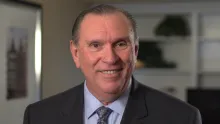
Randy D’Alessandro served as pastor for the United Church of God congregations in Chicago, Illinois, and Beloit, Wisconsin, from 2016-2021. Randy previously served in Raleigh, North Carolina (1984-1989); Cookeville, Tennessee (1989-1993); Parkersburg, West Virginia (1993-1997); Ann Arbor and Detroit, Michigan (1997-2016).
Randy first heard of the church when he was 15 years old and wanted to attend services immediately but was not allowed to by his parents. He quit the high school football and basketball teams in order to properly keep the Sabbath. From the time that Randy first learned of the Holy Days, he kept them at home until he was accepted to Ambassador College in Pasadena, California in 1970.
Randy and his wife, Mary, graduated from Ambassador College with BA degrees in Theology. Randy was ordained an elder in September 1979.
playlist
