
Robin S Webber
This transcript was generated by AI and may contain errors. It is provided to assist those who may not be able to listen to the message.
Well, I know we certainly appreciate the labor of love of Dr. Henderson, and what a beautiful, beautiful him. Well, we want to welcome you today to the United Truth of God, where we're in the midst of a two-part series, an opening house, and we're discussing Jerusalem's past, present, and future. We have an audience here today, but we also realize that this message is going to be going out in the weeks and the months, and recognizing the shelf lives of some tapes and or CDs. Some may be hearing this very message years down the line. But whenever we speak out of God's Word or we speak about Jerusalem, I also think that we also expect a blessing whenever we might be able to hear it. We just heard the words to Yerushalim, Shay, Yahav. And I'd like to repeat the words just for a moment, because I think it'll be poignant and meaningful. Dr. Henderson, the special music that was just offered, sang the olive trees that stand in silence upon the hills of time to hear the voices of the city, its bells of evening chime. The shofar sounding from the temple to call the world to prayer. The shepherd pauses in the valley, and peace is everywhere. And then the chorus goes, Jerusalem, Jerusalem, forever young, forever old, my heart will sing your songs of glory. Jerusalem, Jerusalem, Jerusalem, Jerusalem, oh city with a heart of gold, my heart will sing your songs of glory. Jerusalem. Beautiful song. Beautiful words. But to the contrary, today, and we're talking about today because, well, we live in today, Jerusalem is anything but peaceful. Once again, even as I speak today, Jerusalem and Israel are in the headlines around the world. All of the eyes around the world are focused into this area of the Middle East into Israel, whose capital is Jerusalem. Yet, what's going on here today, I want to mention, is much bigger than a bombing raid in the Baka Valley of Lebanon. And, or as to how great a buffer zone the Israelis will be able to create between themselves and the Hezbollah along the Latani River. There are much greater sweepstakes that are involved here. When it's all said and done, the geopolitical goal post is simply this. Whose flag is going to fly over Jerusalem? Make no mistake. This is not about Tyre, Sidon. This is not about Haifa. This is not about Beirut.
This is not about the Baka Valley. When it's all said and done, down the line, the goal post, you know, where you take the football and you move it along to a destination, it is about whose flag is going to fly over Jerusalem. Always has been and always will be. Back to the time of the Crusaders and forward. Make no mistake about it. The big question is demanding answers. And we're asking questions as the letter that I sent to you and why you came, because I suppose that you came because you're in search of answers. The big question demanding answers is simply this. What is to become of this city?
The city that hosts three of the great monotheistic religions of humanity. Christianity, Judaism, and Islam. I have a question for you as we begin. Have you ever thought of, well, what makes Jerusalem special?
Well, you just say, because it just always has been special. It's just special. Everybody thinks of Jerusalem as special. People are fighting over it. It's special. But why do people fight over it? Why do people call it special? Have you ever noticed sometimes in the magazines where there are people, you don't know what they do, but they're always on the covers, they're just famous for being famous?
Am I the only one that... I don't read those too much. Trust me. But, you know, there's just people that are famous for being famous. And they always show up on the covers. Is Jerusalem just kind of famous for being famous? Or is there something beyond that? Have you ever thought about what makes Jerusalem special?
Now, let's think about this city for a moment. Amazingly, it has no great harbor, a la San Francisco, or a New York, or an Amsterdam. It does not lie on any great river like New Orleans. It doesn't sit on any natural migrational pathway. And it does not rest on any great natural mineral wealth. In one sense, strategically and geographically, down through the ages, Jerusalem is nothing! It's nothing! Nothing should have separated this city on a hilltop from any other Judean village. But history tells us a different story. For the history of Jerusalem is the history of humanity in microcosm. It's set on four hills, Moriah, Zion, Accra, and Bessatha.
Jerusalem's story is the saga of war and peace, greatness and misery, splendor and squalor, lofty wisdom! Great things and great thoughts have come from the walls of Jerusalem. And yet, within those same walls, blood has flown down the gutters, down through the ages. And frankly, when you think about it, when you mention Jerusalem, there's not too much in between. So why should you care? I think you do care.
I think that's why you're here today. You are people that are people of the Book, people of faith, people know that there's a God, and know that there's something about Jerusalem that you need to understand about and care. Because the Scriptures do clearly indicate that the greatest and the final chapter of this city's 4,000-year history is going to affect every human being that is going to be living at that time on this earth.
Allow me to explain. Are you with me? Allow me to explain for a moment. Mr. Smith just gave a very fine presentation of the flow and the ebb of tide, of time, of events. They come, they go. They come, they go. It is the cycle of history outside of God, outside of the sense of believing in God, of humanity left to itself. The Bible will reveal that as the first four seals that you can read about in the book of Revelation, chapter 6.
But there is going to come a time when there's going to be a gear shift and things are going to change. Things are going to move forward, things that just can't naturally be explained by historical sequence or another personality coming on the scene. Just like the other personality that came or as all of us have grown up and said that, you know, there's nothing new underneath the sun. But there is going to come a time when there is going to be an incredible change in human history, and it is going to center around Jerusalem.
For those listening to this message, allow me to be plain. May I? No one will be immune to the events that are going to occur around Jerusalem. It's going to have far-reaching conclusions. Remember how when we were growing up, we'd say, well, X marks the spot. Well, I'm here today to tell you when it comes to the Bible, the X is Jerusalem, and Jerusalem marks the spot. The purpose of today's message, then, is to share with you the audience here and those that will be listening down the line.
I want to share with you the significance of Jerusalem in the eyes and the hearts of God. He does have a love affair with the city. Why did Jesus cry out as he went to his death? Oh, Jerusalem! Jerusalem! How often I would have gathered you up just as a mother hen gathers up her chicks and would put them underneath her wing. What's the story behind that story? Why would Jesus Christ say that? Well, today we're going to move through history, Scripture. We're going to set a focus on Jerusalem's historical past and also its present plight, because the story of Jerusalem is more than the story of events, dates, people, and monuments. So often people go into a history class, and it's not history, it's mystery. Maybe some of you have been like that, where you just didn't have a teacher that was able to relate with you, because history is not just about events and about dates, it's about relationships. And God has always, from the beginning, desired to have a relationship with this very special city called Jerusalem. You say, what's in it for me?
What I want to share with you today, as we go through this message and the next message, is to understand that as we understand God's relationship with Jerusalem, you're going to see a lot of yourself in that story, because just what God does with and for Jerusalem, He wants to do with each and every one of us. To begin with, allow me to paint a word picture in your mind to bring you into this message, why Jerusalem is so important, why X marks the spot. I'd like to put it this way. The history of Jerusalem is basically the story of where Heaven has chosen to touch Earth. It's the spot where Heaven has chosen to touch Earth again and again. And it's also the spot in which we can understand then and acknowledge what the divine will of Heaven is. With that statement, which is quite a statement, and I make no apology for it, allow me to unfold this story step by step to explain why. First point. Jerusalem first became a symbol of faithfulness through the act of one man. His name was Abram, the man of faith. And we find an interesting story mentioned over in Genesis 14, if you'll join me there, in the first book of the law in Genesis 14. And it's the story of Abram before he had a name change to Abraham. And we find a very specific event. There had been a very large battle, and perhaps bigger than we would even imagine, and what a great victory Abram had over the local kings. And we pick up the story in Genesis 14 and verse 18 after this tremendous victory that Abram had had in Genesis 14. Then Melchizedek, king of Salem, brought out bread and wine, and he was the priest of God most high. So we find this Melchizedek. He's a king of Salem, which in the language means peace. And he comes out, and it also mentions that he was the priest of God most high. So it's interesting, if you've never heard of Melchizedek before, this gentleman is both a king, and he is also a priest of the most high God. And he blessed him, Melchizedek speaking, and said, Blessed be Abram of God most high, possessor of heaven and earth, and blessed be God most high, who has delivered your enemies into your hands. And then notice, upon this blessing, there is an acknowledgment, denoting faith towards the one that Abram felt had given him the victory over the kings of the area. And he, speaking of Abram, gave a tithe of all. Now, if you'll join me, because over in the book of Hebrews, it allows us to understand a little bit more of the significance of this man named Melchizedek. Hebrews 7. And we pick up the story beginning, pardon me, in verse 1. For this Melchizedek, now the author of Hebrews is going back to something that was well known in the book of Genesis, and he's speaking to the Christians in the area of Jerusalem. For this Melchizedek, king of Salem, priest of the most high God, who met Abraham, returning from the slaughter of the kings, and notice, blessed him, to whom also Abraham gave a tenth part of all. Tithing is not about money. That's a byproduct. Tithing is about faith.
And it's about surrender. And it's about acknowledging the creator of the universe. And it says, to whom Abraham gave a tenth, first being translated king of righteousness, and then also king of Salem, meaning king of peace. And then notice the attributes regarding this Melchizedek. An individual without father, without mother, without genealogy, having neither beginning of days nor end of life, but made like a son of God, and he remains a priest continually. Well, who is the high priest that is spoken about in the book of Hebrews other than Jesus Christ?
So we recognize, if I can put it this way, at the beginning of the history of this area, there was a king, king of Salem, king of peace, Jerusalem, city of peace, a man who was a king and a man who was a priest of the most high, who had no beginning and who had no end, and it is to this man, Abram, again, the man that walked out of civilization, moved away from the land of the two rivers, when all the world was beginning to cluster into the village cities of the river valleys of Mesopotamia or Egypt, this is the man that walked away from the best that man had and said, I would rather have God's best.
And he was faithful to that God. Lokezadek, king of Salem, Jerusalem, city of peace. Number two, Jerusalem became the symbol of surrender to the divine will, when Abraham was willing to give up his very own son, the son of promise, Isaac.
Let's pick up that story for a moment in Genesis 22. In Genesis 22 and verse 1, because again, this is going to ultimately surround Jerusalem, and now it came to pass after these things that God tested Abraham and said to him, Abraham, and he said, Here I am. And then he said, Take now your son, your only son, Isaac, whom you love. And now notice this, please. And go to the land of Moriah. Didn't I just mention to you that one of the hills within Jerusalem is called what? It's called Moriah. Go to the land of Moriah and offer him there as a burnt offering on one of the mountains, which I shall tell you.
You've got to recognize that Jerusalem is a city that is built on hills and on mountains. There's a biblical phraseology that some of you that read the book will recall. It says Paul often uses terminology.
Well, I've got to go up to Jerusalem. Now, that wasn't just biblical prose and something that sounds pretty. It was real. To go from Caesarea and to hit the hills in the heights of Jerusalem, you had to go up. And here it speaks about the Mount of Moriah. And then notice in Chapter 4, Then on the third day Abraham lifted, because you're looking up, lifted his eyes and saw the place afar off. And then we pick up the thought in verse 9. Then they came to the place where God had told him, and Abraham built an altar there and placed the wood in order, and he bound Isaac his son and laid him on the altar upon the wood.
Many of you know the rest of the story. We understand that Abraham was willing to do whatever his God asked him to do, even if it had to be, to sacrifice his son. And we recognize that it is in the mountains or the Mount of Moriah, in the environs of Jerusalem, that we come to understand something, the example of the surrender to the divine will accomplished by Abraham. Point number three. Later, Jerusalem had become a symbol of unity and oneness and worship. As David transformed one more Canaanite town that had been occupied and founded by the Jebusites, he took this Canaanite town and he used it as the center of unifying the tribes of Israel.
Some of you may not realize that at the beginning of David's reign, he only had a portion of the tribes, and he was centered out of Hebron. It was only later that all of the tribes of Israel came together underneath David, and he decided that there needed to be a new center of unification to bring everybody together in oneness. And so he chose Jerusalem. But not only that, but he did something very special that begins to create even more significance about Jerusalem.
Join me if you would for a moment in 2 Samuel. If you wonder where 2 Samuel is, it follows 1 Samuel. I hope he gave you a hint here. But over in 2 Samuel, and let's take a look at verse 6. In 2 Samuel 6, and let's look at verse 12, pardon me, Now was told King David, saying, The LORD hath blessed the house of Obed-edim, and all that belongs to him because of the ark of the covenant. Now for those of you that are just now becoming students of the Bible, the ark of the covenant was that precious artifact that the Israelites for many centuries carried around with them that actually had the Ten Commandments within them.
So it was very, very, very special. And it always preceded them wherever they went to. God went ahead of them, wherever God is, there is law. God, law in his people. It's a nice way of traveling, either back then and or now. But it had been re-obtained by David, and he brought up the ark of God from the house of Obed-edim to the city of David with gladness. And there was rejoicing, they sacrificed oxen, and the fatted sheep in verse 13. Verse 14, David was dancing, and it goes on and on and on. What is important about this is to understand this.
Jerusalem, already a center based upon Abraham of faithfulness and surrender, now became a center synonymous with oneness, bringing people together of unity. And also now there became a religious significance for the first time, because now, are you listening, the ark of the covenant was there.
But let's take it one more step. Point number four, later Jerusalem would become a... Excuse me. Later, under David's son, Solomon, Jerusalem would become a symbol of God's presence in the temple. Join me if you would in 2 Chronicles. Now, you're not going to ask me where 2 Chronicles is, because I told you how to find 2 Chronicles. No. After 1 Chronicles. In 2 Chronicles, which are the stories of Israel and Judah, 2 Chronicles 5.
And let's pick up the thought in verse 1. In all the work that Solomon had done for the house of the Lord, when it was finished, Solomon brought in the things which his father David had dedicated, the silver and the gold and all the furnishings, and he put them in the treasuries of the house of God. Remember, David was not allowed to build the temple, because God had said, you're a bloody man, David. You're not going to be allowed to do it. You can make the plans, but your son will do this. So now it was done. But then notice verse 13.
Indeed it came to pass, when the trumpeters and singers were as one, to make one sound to be heard in praising and thanking the Lord, and when they lifted up their voice with the trumpet and cymbals and instruments of music, they praised the Lord, saying, for he is good, and his mercy endures forever. There was a dedication of the temple. And then notice at the end of the verse, and then the house. The house of the Lord was filled with a cloud, the shekinah. Going back to the time of the tabernacle, going back to the time of Israel, being in the wilderness, is that dealing with the physical people, God used physical instruments. He would use the cloud coming down. And that cloud did notice the very holy presence of God, and it would come upon the tabernacle of old. And now in this temple, in Jerusalem, already with a stepping stone of significance to God, of faithfulness, and of surrender, and of unity, now God's holy presence would come upon the city. Now, why do I share all this with you? Because it's simply put this way.
God has always had a love affair with His sight. He has designed. I think it becomes very clear. And more than that, it's the picture of the Bible, and not only what God would do with the city, but do with the people. God's favorite miracle is always to take something that is nothing, and to make it something. And once we, as people, recognize that we're nothing, then God can take our nothingness, our zeroness, and do something with it. Because then it's got to God's glory. You see, you begin to see the story of Jerusalem and Christians coming together. But the problem is, Jerusalem forgot its purpose. With everything that God did for this city and amongst this city, something occurred. Join me, if you would, over in Ezekiel 16. In Ezekiel 16 and beginning in verse 1.
With everything that God did for this city that should not have been a city. Over a period of time, this city lost touch with its origin. And in verse 1 of Ezekiel 16, again, the word of the Lord came to me saying, Son of man, cause Jerusalem to know her abominations. And say, thus says the Lord God to who? To Omaha, Nebraska? To Tallahassee, Florida? No. X marks the spot. Because of what God had done with this city. Say to Jerusalem, Your birth and your nativity are from the land of Canaan, and your father was an Amorite and your mother Hittite.
Now, this is, in a sense, not genealogically correct. What God is saying is, He is saying, yeah, I want to act like them. You want to think that's where you come from? Well, okay, it's all right with me. If that's who you think you belong to, well, then that's where you're coming from. As for your nativity on the day that you were born, your naval cord was not cut, nor were you washed in water to cleanse you, and you were rubbed with salt, and you weren't even wrapped in swollen clothes, and nobody pitted you to do any of these things for you, to have compassion on you, but you were thrown out into the open field when you yourself were loathed on the day that you were born.
And when I passed by you and saw you struggling in your own blood, speaking of Jerusalem, which is also synonymous with the people of God, He says, I said, live! And I said again, even as you were in that blood, live! And I made you thrive like a plant in the field, and you grew, matured, and you became very beautiful. Your breasts were formed, your hair grew, but when it was all said and done, you were naked and bare.
And so God, through Ezekiel and through this poetic prose and through these words, talked about His love affair with Jerusalem and what He wanted to do for it. But Jerusalem, for God, is God. Forsook God's laws. He wanted to be like everybody else, just like our kids, when we're trying to teach them, when they're trying to nurture them, and they come home, and what do they say? Well, Johnny's doing it, Janie's doing it, Sally's doing it, why can't I do it?
Has anybody else had that conversation or heard it? Or am I the only one? And that's exactly how Jerusalem was. So God let them have their wish. They went that way. But when God deals with somebody and gives them opportunity, there also comes a time of accountability.
And God punished Jerusalem and Israel and Judah. And over the centuries, Jerusalem would be threatened or pummeled again and again, whether it be by the Egyptians, the Assyrians, the Chaldeans, the Macedonians. But what is amazing about all of this? It's as if Jerusalem was like a cat with nine lives. It was like that phoenix that was rising from the ashes. God allowed it again and again, no matter how far it went down, to be restored and to have another opportunity.
I have a question for you. Why would he do that? Was it because of the monuments that were within the walls? Was it because of all the dates and events and history and people that had gone before? No. Because God desired a relationship with Jerusalem. So much so that ultimately he sent one more prophet. Not human, but the very Son of God, a Son of David.
A man that had with him the same spirit as the one mentioned in Genesis 14 and Hebrew 7. The spirit of Melchizedek, the ageless spirit. Jesus Christ would come amongst his own. It's very interesting if you'll join me in the third Gospel of Luke, Luke 9. Join me there for a moment in Luke 9, verse 51. I've had the pleasure over the years of teaching the Gospels. I've always found it very interesting that as we come to Luke 9, 51, we see a tremendous transition.
Jesus was one that had been basically raised in the Galilee and up in the hills. And so the first part of the Gospels is normally called the Galilean ministry. But then when you come to Luke 9, 51, you see something very specific happen. There's one of those great transitions that occur in Scripture. In Luke 9, 51, now it came to pass. That's always a very important thing. It's like, well, time out. I want you to get this.
Now it came to pass. When the time had come for him to be received up, that he steadfastly set his face to go to Jerusalem. This is the transition from the ministry to Galilee and to Samaria. And it says, he set his face. When you set your face, that means you... are you with me? Determined. Focused. Why was he focused on Jerusalem? Because X marks the spot. This was the center of God's attention.
And he would now begin to march on Jerusalem. I've always stated that Jesus was not dragged into Jerusalem. He wasn't tricked into Jerusalem. But when you understand at the end of his earthly ministry, he slowly and surely marched into that city. So that this city that had been so special to God, that he wanted this relationship with, could have one more opportunity to acknowledge him.
To have a message from him. To be witness to, and also to warn. And he expressed that love that I already mentioned. But let's look at it in full, because I only mentioned a part of it in Matthew 23 and verse 33. In Matthew 23 verse 33, one thing about God, he does not hide what he's thinking.
He says it like it is. And this is pretty loud and clear. Verse 33, serpents, brudes of viper. Who's Jesus speaking to? He's speaking to the people of Jerusalem. In fact, he's speaking to some of the religious folk, which should make us stand up and think. How can you escape the condemnation of hell? Therefore, indeed, I send you prophets, wise men, scribes, and some of them you have killed and crucified, and some of them you will scourge in your synagogues and persecute from city to city.
Jerusalem had not been nice to the men of God. Jerusalem had gotten too big for its britches and didn't even recognize the servants of God when he would send them. And then he says that on you may come all the righteous blood shed on the earth, from the blood of righteous Abel to the blood of Zacharias, and of Barachii, whom you murdered between the temple and the altered.
Surely, I say to you, all these things are going to come upon this generation. And then that beautiful lament, oh Jerusalem, Jerusalem, the one who kills the prophets and stones those who are sinter her, how often I wanted to gather your children together, just as a mother hen gathers her chicks and places them under her wings. But you were not willing. So your house is left desolate.
After he said that, something else would occur. And within days of his triumphal entry into that city, he was crucified. He would be crucified on Golgotha, the place of the skull. Not too far, in a sense, poetically within the shadow of Mount Moriah, exactly where another father and another son had been in a sequence of sacrifice, except this one went through. Before his death, he prophesied to his disciples and all those that were in earshot, something that we need to look at in Luke 23.
In Luke 23, and let's focus on verse 27. And a great multitude of the people followed him, women who also mourned and lamented him. This is what we call the way of the cross, or as Jesus was being marched to his death to Golgotha.
All these people followed him, women who also mourned and lamented him. And Jesus said, turned to them and said, Daughters of Jerusalem, do not weep for me, do not weep for yourselves and your children. For indeed the days are coming in which they will say, blessed are the barren, wounds that ever bore, and breath which never nursed. And then they will begin to say to the mountains, fall on us, and to the hills, cover us. For if they do these things in the green wood, what will be done in the dry? Jesus spoke to about this generation. Now, as I state this, are you with me for a moment? I want to make a comment here.
We recognize, most of you people in the book, and people that believe in God as professing Christians, we recognize that the Jews are not solely responsible for the death of Jesus Christ.
Every human being alive then to now is responsible for our Savior's death. But they were people of the covenant, and with opportunity and with witness does come responsibility.
And there was a warning, and there was a prophecy to that generation, that there would be an outcome for this initial rejection of what occurred. Nearly 40 years later, this prophecy would come through in the destruction of what is often called the Second Temple and or the Herodian Temple in the time of 70 A.D.
In 70 A.D., the Jews would be scattered around the world, around the globe, and even that, many people do not recognize that there was another rebellion in 135 A.D. And that was called the Barcoppa Rebellion, which frankly was even more disastrous for the Jewish community. Allow me to explain why.
This was during the time of the Emperor Hadrian of Rome, and what he did was he desired, because of the rebellion, the Jews were these people that had this God, but you couldn't see Him.
That really got to the Greek and the Roman mind. It was just something that they could never handle, and there was just something bad between them.
The Jews didn't like the Romans, the Romans didn't like the Jews, and the Jews had always been that gnat, as it were, that splinter that you couldn't get out. Well, finally it started with Titus, under Vespasian, his father, in 70 A.D. The next generation, the Barcoppa Rebellion, because the Jews were always coming back, they were the one people, because they still had, even though they had not been totally faithful to God, they had this knowledge, and what they knew they acted upon, they were just different.
And the Romans wanted to eradicate them, and thus they did. And what Hadrian did was he renamed it Jerusalem, and he called it Aelia Capitolina. Aelia is a family name. Capitolina is one of the hills, the Capitoline in Rome, upon which the Temple of Jupiter was located. Some of you may not realize this, but what Hadrian did was he had erected on the Temple Mount a Temple of Jupiter. And so you recognize what Jerusalem had come to. And from that time forth, in 135 A.D., for many, many centuries down the line, a Jew could not enter Jerusalem under pain of death. It would be 1,813 years from that time until a Jew could be by the Temple Mount, be by the Wailing Wall. They were cast out. And for the next 1,800 years, one invader after another came to Jerusalem, not Tallahassee, Florida, not Omaha, Nebraska. I like Tallahasseeans, and I like Omahaans, but I think you know what I'm saying. There was always Jerusalem that was the bullseye. Whose flag is going to be on top of the Mount in Jerusalem? And that would be the Romans, then later on the Byzantines, then later on the Persians, in the second wave of the Empire. Later on, we'd come the Arabs, then we'd come the Seljuk Turks, then we'd come the Crusaders, then we'd come the Ottoman Turks. Later on, we'd come the British, again and again and again, a way to have dominance over this one city.
And you begin to ask yourself, why Jerusalem? Why is it so important to plant the flag in Jerusalem? And at the same time, the Jews, all during this time, never offered a residence, a land of their own, a home of their own. It's interesting that when the Arabs captured Jerusalem in 637 A.D., that for all that time since, basically Jerusalem was a backwater. Oh yes, there was the mosque on top of the Mount there in Jerusalem, but Jerusalem never really held any political significance. Except when somebody else wanted to have, be it the Crusaders, be it the British, or be it the Jews. But for the Jews, now outside of Jerusalem, what a unique people. And against all historical odds for nearly 1,800 years, amazingly, they were never assimilated into the host country in which they lived. Be it Muslim Spain, be it the time of the Plantagenets in England, whether it was in Germany or later on in the Shoal over in Eastern Europe, they never were fully absorbed.
It's interesting that every year the Jews, wherever they were, whether in Poland or Russia or England or Germany or Spain, or in Baghdad, wherever the diaspora were, they would always say, Next year in Jerusalem. And not only that, but oftentimes the more orthodox Jews would keep one of the walls of their home temporary in nature, not permanent, to remind them that they were not home.
They're homeless somewhere else. Perhaps it's best understood by the story of Napoleon. Napoleon one time was going through a European capital, and his aides were all around him. You've seen those fancy pictures of Napoleon with all the French, well, no nobility they were before. I mean, his cavaliers all around him. And all of a sudden he heard all of this wailing and all of this moaning. And Napoleon said in his Corsican accent, which I'll not try to duplicate, but he said, What is that? And one of his aides came up to him and said, Oh, it's the Jews. They're wailing for the destruction of their temple. He said, Well, when did that occur? 1800 years ago. He said, Any people that long for their temple and or long for their city that much one day will have it restored. In 1948, that dream began to become true. From the rubble of World War II and the narrow genocide that occurred on the European continent, the Jewish nation was founded under the auspices, most interesting today, of the United Nations. And Israel, the Jews, now the state of Israel, were given a homeland. A homeland for the first time in over 1800 years. Did the world rejoice? No. Immediately war broke out, and all the Arab and Muslim nations around Jerusalem tried to extinguish Jerusalem in 1948. Later on, there was the Suez Crisis in 1956. In much of the lifetime of you that are sitting here, even the younger ones, we had the Six-Day War in 1967, the Yom Kippur War in 1973. Of recent days, we've seen the Intifada, and now, even as I speak, we have a ceasefire, and it is really just ceasing until the next fire. As now, perhaps, Israel is faced, and the Jews are faced with the greatest threat in all of their ancient history. As we see Iran trying to establish hegemony over the entire Middle East, with a man that represents them underneath the mullahs that is calling for the destruction of the state of Israel, and the Jews, and even the Muslims that are there. A man that, in years to come, maybe not too many years from now, could have his finger on the trigger. You know, it's very interesting that in the early 1920s, there was a young Austrian in a prison, and he wrote a book of what he would have liked to have done. And he was in prison. He'd just been a corporal in the German army. You know who his name is? Hitler. And he wrote Mein Kampf in my way. And he said what he wanted to do. Oh, no, he doesn't want... He does not really mean that.
Let us come and reason together. I've always found, at least in my lifetime, and I'm in my sixth decade, that I've normally found that people mean what they say, and say what they mean. But I'm going to begin concluding here. I want to share a thought with you, and I want to share a key snapshot moment. One of those Kodak moments, you know, kind of like when you're at the Matterhorn in Disneyland, they say, shoot here. Are you with me? We're all going to go over here for a moment, and this is where we're going to take the snapshot. It's 1967. All of the Arab states are on the attack. At that time, Western Jerusalem is a part of the Kingdom of Jordan. And things happened so quickly back then, for those of you that are alive, to recognize that it even surprised the Jews. And all of a sudden, they found out that all the defenses of the Jordanian army were going down one after another, just like a bunch of dominoes. And before they knew it, they were at the Temple Mount. And all of a sudden, an announcement went out over the radio, the army radio, to others, saying, The Temple Mount has fallen. The Temple Mount has fallen. Can you imagine what that was like in the ears of the Israelis and the Jews that had come from around the world? The world had gone out. They were back at the Temple Mount. And before you knew it, there was the Brigadier General of the Israeli Armed Forces, a general named General Brigadier Shlomo Gorin, who came flying through the walls in that Jeep, got out, went through the gate of the Lion's Den, went through the walls, put on a prayer shawl, put on the prayer skull cap, set a prayer for the deliverance that had come to them, that they were back after 1,800 years. And then he took out from his side, he took the ram's horn, and he blew the shofar, which is only reserved for the Day of Atonement. Amazing events to think about. A snapshot in history. And from that time forward, Jerusalem has been the eternal and undivided capital of Israel. Where does that leave us as we're moving up to the present? This is only the close of one chapter. I've covered several thousand years. In the beginning of the next, as we're going to move to the future next time. Let's understand that there are devout—we had this conversation before services— there are devout Orthodox Jews that would like to once again reinstitute the animal sacrifices. We'll talk about that next week.
There are also those within the Muslim community that would once again want to establish and build another mosque on this, the third holiest site of Islam. The site in which they believe that Muhammad went up to heaven. Beyond this, we recognize that the Arabs, increasingly supported by the European Union, are pushing for a deal with the Palestinians that would give them a portion of Jerusalem. With the Jews, seemingly everything has been on the table, except for one thing. Jerusalem, the eternal and undivided capital of their land. What will they do? I have a question. May I ask you a question? As we as students in politics, and we read papers, and we see the events, over the last 60 years, basically what has come about is a diplomatic effort called Land for Peace. How much more does Israel have to give to establish peace? All they're holding onto now, basically, is the goal on high. They've given back to Gaza.
They're in the process of giving much of the West Bank back after they were attacked 50 years ago. So where are we?
And now, and I must say, based upon what Mr. Smith said, we can only look at events where they are today, and there are interesting events.
We watch and we pray. We watch because God asked us to. We pray, then, to modify our attitude about what we're seeing. But we see Iran moving up in the East with the threat of nuclear potential. Join me in Zechariah 12. In Zechariah 12, you know it's interesting that Zechariah is called theologically, or when you're in a seminary, it's called a minor prophet.
But I want to share something with you. You that are just kind of getting established in a Bible study pattern, there's nothing minor about the minor prophets. The minor prophets have major messages. They're just called minor because of their length. In Zechariah 12, which is towards the end of the Old Testament, let's take a look here. The Bible speaks to the events of today. And in Zechariah 12 and verse 2, notice what it says here.
My Bible is literally glued together. Zechariah 12 and verse 2. Behold, I. Now, it's always very interesting when you're reading the Bible to establish who the pronouns belong to. Behold, I. The I is God. It's not about man. See, we read the LA Times and the San Diego Union or the Wall Street Journal. That's what's happening down here.
But the really big headlines are not being made down here. They're being made above. The newsmakers are not down here on earth. They're up there. There is a spiritual world. Behold, I will make Jerusalem a cup of drunkenness to all the surrounding people who they lay siege against Judah and Jerusalem.
And it shall happen in that day that I will make Jerusalem a very heavy stone for all the people. And all who would heave it away will surely be cut in pieces, though all nations of the earth are gathered against it. Jerusalem is just like that bad penny that keeps on rolling back. Have you noticed that the world around us thinks, you know, if the Jews would just cooperate?
If somehow the Jews weren't there and Israel weren't there, peace might break out. We wouldn't have these problems. God calls things for what they are. It's a cup of drunkenness. You can't move it from your hand. It's not going to go away. It has to be solved. Can I tell you something? It's not going to be solved by the United Nations.
It's not going to be solved by the President of the United States. It's not going to be solved by the Arab League. It's only, only going to be solved by none other than Jesus Christ coming back to this earth. The Bible speaks of that in Isaiah 62. Join me here for our last verse. In Isaiah 62, and you've been a kind audience and I thank you for your patience. In Isaiah 62, and notice what it says, because everybody's looking at Jerusalem, but I want to share something here.
There's one other set of eyes that are on Jerusalem that we need to bring to the table. Isaiah 62 and 1st verse 1, for Zion's sake, I will not hold my peace. Again, who is the pronoun about? Is this about the Secretary General of the United Nations?
Is it about the French? Is it about the Lebanese? No, God! And I will not hold my peace for Jerusalem's sake. And I will not rest until her righteousness goes forth like brightness. And picking up the thought in verse 6, I've set a watchman on your walls of old Jerusalem. Remember, Jerusalem is the bullseye of biblical prophecy. They shall never hold their peace day or night.
You who make mention of the Lord do not keep silent, and give him no rest until he establishes, until he makes Jerusalem a praise to all of the earth. May I make a comment as we begin to conclude? Jerusalem is not a praise to all of the earth today. Do you know why? I'll tell you why. We'll talk about it geopolitically. Most of the ambassadorships or the embassies of all of the world are not in Jerusalem.
Because if they were in Jerusalem, then you would be siding with Israel. When countries have diplomatic relationships with Israel, they have it in other cities of Israel, but not Jerusalem. So Jerusalem is not a praise to all of the earth today. That means that that verse is not yet fulfilled. When something is not yet fulfilled, it means it is yet to occur. And that's what we're going to be talking about next week. Because we've brought you, I think, in the line of why Jerusalem is so very, very special to God.
Next week, I hope all of you will come back. Because I'm going to show you out of your Bible why Jerusalem is going to be a praise to all of the earth. And when it's all said and done, may I share something? It's really good news. Now, for those of you that are here today, we do appreciate you coming.
And for those that are listening to this CD somewhere down the line, I'd like to show a booklet to you that can... This is just the tip of the iceberg. The United Church of God has a booklet called The Middle East in Bible Prophecy. We have it on our table today. It's free. Please just take it with you.
I hope you'll take some cookies along with you, too. And it's called The Middle East in Bible Prophecy. And for those of you that are listening to this, you can just call 1-800-55-UNITE. Just like The United Church of God, 1-800-55-UNITE. And or you can go to the web, and you can find us on www.ucg.org.
Look under Literature. Do a few clicks, and you'll find that magazine. Until next time, let's understand something, friends, that are here that love God, open His Word, and want to receive a message from today. Jerusalem's story is our story.
It's the story of how God takes something that is nothing and makes it special. Not because of the entity, but because of Him. It's the story of coming to God in faithfulness, in surrender, in unity, and in worship. It's also when we think of the story of Jerusalem rising again and again. It's the story of ruin and repentance, of return. And sometimes, again and again, just like you and I sometimes have to return to God again and again.
And when it's all said and done, next week, when I share the really good news with you, it's always this book that's before us. Whether it's about Jerusalem or whether it's about you and me, it's always about the restoration and our return to God in fullness. Let's remember something as we part today. God's eyes are on Jerusalem. And not only that, they're also on you because He truly loves both. See you next week. Same time, same place, 2 p.m.
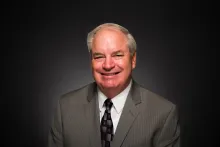
Robin Webber was born in Chicago, Illinois, in 1951, but has lived most of his life in California. He has been a part of the Church of God community since 1963. He attended Ambassador College in Pasadena from 1969-1973. He majored in theology and history.
Mr. Webber's interest remains in the study of history, socio-economics and literature. Over the years, he has offered his services to museums as a docent to share his enthusiasm and passions regarding these areas of expertise.
When time permits, he loves to go mountain biking on nearby ranch land and meet his wife as she hikes toward him.
