
Robin S Webber
This transcript was generated by AI and may contain errors. It is provided to assist those who may not be able to listen to the message.
I'd like to give you the title of my message right up front so there'll be no mistaking what we're talking about in the minutes to come. My title is simply this. Jerusalem, where heaven touches earth and you. Jerusalem, where heaven touches earth and you. I want to bring this message to you because Jerusalem, Israel, the Middle East has once again been in the news and will always be in the news. That is the Middle East, that is Jerusalem, and that is Israel. And I want to share some perspectives about that. Here we have found over the last month, month and a half, another challenge between the state of Israel and the quasi-semi-state of Gaza as they have been going back and forth. There's been turmoil, there have been battles, there have been deaths. Not only that, not only the matter with Gaza and the Palestinians that live there and the groups that control them, but also let's move beyond that because that is maybe just a firecracker compared to a much larger situation that is going on right now. Additionally, Israel is rattling its saber as one of its Middle East neighbors is also rattling their sabers, not only verbally but building up their armaments. And I'm talking about the nation-state of Iran. And to recognize that challenge lies ahead of all of us, to see the outcome of that, to recognize that Israel is in a very challenging spot, to recognize that the Jews there have no place else to go, and to recognize even while Israel is perhaps moving towards a transition of government, even while I am speaking, whether it be this party, this party, this coalition, whether it be the religious Jews, whether it be the secular Jews, whether it be labor, whether it be the different conservative parties, they are all agreed on one thing, that Iran cannot cannot create the nuclear bomb again, again, because the Jews have nowhere else to go.
And they've already signaled that whatever the different big powers may or may not do, they may need to unilaterally do their part to protect themselves. After all, the Jews have had to have a whole history of at times relying on people and them not showing up. Today, as the children of God, and as students of the scriptures, we need some perspective. And that's what I want this sermon to be about, perspective, not only about Jerusalem, but I am going to personally link it with each and every one of us here for a very important reason that I'm going to bring out. We need perspective. We need to get above all the noise and all the distractions and all the social media that is out there and come to understand Jerusalem's purpose and your purpose and what it's all about. When we think of headlines and date lines, we often think of cities like Washington, D.C. or Beijing or Moscow, Brussels, we think of New York, we can even think of Tehran, and all of those place names will continue to dominate our news going forward. But here's the point. Let's make no mistake about it. When it is all said and done, the global geopolitical goal, the great goal post, is simply this, but very simple for each and every one of us.
Whose flag will fly over Jerusalem? Whose flag will fly over Jerusalem? Since the time of Nebuchadnezzar, Cyrus, Alexander the Great, Titus the Roman, the Crusaders, the Turks, this has been the question that each and every one of us tried to answer in their time. Their flag comes down. Whose flag will fly next over Jerusalem? Always has been, always will be. This is the geopolitical goal post of human history. Make no mistake about it. Allow me to bring it down to the common denominator. We know in a target range, we talk about X marks the spot. Well, let's understand this. Jerusalem is the X that marks the spot for biblical prophecy, for biblical perspective, whether it be in the past, whether it be in the present, and or whether it be in the future. The big questions, then, and that's our role as ministers of Jesus Christ, is to ask the big questions and then allow the Scriptures to fill in the big answers. It's simply this. Allow me to share them with you. Number one, why Jerusalem? Why Jerusalem? I think it's a good question. I hope to answer that today. Number two, what is to become of this city? Number two, what is to become of this city?
And number three, and what's your personal involvement? Why should you be interested in Jerusalem? Now, say, well, that's because that's where biblical prophecy is going to be fulfilled.
But I'm going to add another tier to that today that is going to connect you. So tight with Jerusalem and what has happened there through the biblical account. And why it is so important that you understand what has occurred there over the time of human history and how it relates to you and how you can have specific takeaways that will actually match what Mr. Dennis Star Wars was just talking about in the first message. Before we go any further, before we go any further, before we go any further, let's ask ourselves, what makes this city of Jerusalem? Why is it so important? What makes it what it is? Why is it famous? Well, let's think about that just for a moment, okay? Just a couple of points. Most cities are famous for certain reasons.
Geography, different things like that. But let's just consider for a moment this number one, Jerusalem does not lie on any great harbors. Allah, a Hong Kong or a New York, San Francisco, and Oakland up in the Bay Area, Segaddle up in Puget Sound, doesn't lie on a harbor. Again, another point which is very interesting. Number two is that simply it doesn't lie on a river. It's not like St. Louis or New Orleans or Minneapolis, St. Paul. A river doesn't flow through it. Number three is to think about this. It is not in the midst of any major migratory passage or trail. Number four, it does not sit on any large mineral riches that can be mined, that can be got for gain. So what is it about Jerusalem? Because geographically and where it is on the map, there is no reason why it should be so important of and by itself. Nothing should have separated this ancient village from any other town resting in the Judean wilderness.
And yet, the biblically documented history of Jerusalem is God's almighty story, it's God's story of where heaven touches earth. And to understand, for us to understand what is the divine will, again allow me to repeat that. So we're all together. It is where heaven touches earth. So much has happened there. But it's not only for it to happen in the moment, but for us upon whom the ends of the ages have come to understand the divine will, not only for the citizens of Jerusalem, but for we that are citizens of the heavenly Jerusalem today, and look forward to being a part of Jesus Christ's team, that kingdom of priests that is going to assist him as the word goes out from Jerusalem during the millennium. So today, I want to systematically, for you my friends, our brethren, to systematically demonstrate from the words of scripture of how and why Jerusalem is where heaven touches earth. And to understand then, not only there, but how it touches our lives to this day. So let's proceed. I'm just going to go through some points. I'm going to give you four points first. Number one, why Jerusalem and why we say that this is where heaven touches earth, for the divine will to be made and for us to incorporate. Number one, Jerusalem became a symbol of faithfulness. Jerusalem became a symbol of faithfulness through the act of one visionary and faithful man named Abram when he acknowledged God's sovereignty by offering tithes and captured bounty to notice Melchizedek, king of Salem. Join me if you would. Let's open up our Bibles. That's why we're here today, Genesis 14, and understand what was happening with Abram in Genesis 14. And let's pick up the thought in verse 18, please. Genesis 14, 18. Then Melchizedek, king of Salem, brought out bread and wine. He was the priest of God at Most High. He brought this out after there had been a nature battle between the kings of the area, and there was a victory. And he blessed him speaking of Abram and said, blessed be Abram of God Most High, possessor of heaven and earth, and blessed be God Most High, who has delivered your enemies into your hands. And then notice what Abram's reaction was as he received this blessing from Melchizedek, of whom we think is a theophany and or a God appearing of the one that one day would become Jesus of Nazareth. And notice what it says here, and he gave him a tithe of all. In other words, a tithe of all of the bounty that had been won through this war as Abram allied with the local kings of that time. He gave him an offering. He was denoting the intervention of God and the deliverance of God into this victory, and he gave him a tithe. He acknowledged God as being sovereign. Now, let's think about this for a moment. As the as the author of the the book of Hebrews brings out, this was a very unique individual. Join me if you would over in Hebrews 7. In Hebrews 7, which tells, as Paul Harvey used to say the rest of the story, Hebrews 7, and let's pick up the thought in verse 1, for this Melchizedek, now we're going to define him. For this Melchizedek, king of Salem, priest of the Most High, God, who met Abraham returning from the slaughter of the kings and blessed him, whom also Abraham gave a tenth part of all, first being translated, in other words, Melchizedek being translated king of righteousness. We might ask ourselves, who is righteous? Who is the ultimate king of righteousness? That scripture is both in the Old Testament and the New Testament book before us. And then also king of Salem, meaning king of peace. Think about this for a moment. Jerusalem, Jerusalem, city of peace, without father, without mother, without genealogy, having neither beginning of days nor end of life, but made like the Son of God, capitalized the Son of God, remains a priest continually. What was that?
Hebrews tells us that there's only one priest that is now forever continuous. That's Jesus Christ. Now consider how great this man was, to whom even the patriarch Abraham gave a tenth of the spoils.
So here we see, number one, we see a very important point of Jerusalem.
Heaven, this theophany coming down, the Word, called Melchizedek in this sense, later in his human manifestation, Jesus of Nazareth. And we notice that Abram puts first things first and denotes God's sovereignty in his life. He does not live circumstantially, but by design and gives God a tie. Let's go to the second point here. You might just want to jot down faithfulness and surrender to God's sovereignty. Well, number two then is simply this. Jerusalem became a symbol of surrender to the divine will. Jerusalem became a symbol of surrender to the divine will. When Abraham would willingly, as most of us know the story, would willingly offer up the son of promise. Isaac, what an incredible story. Join me if you will for just a moment. Let's go to Genesis 22. In Genesis 22, if you'll join me there, please, you find the famous story of now no longer a Brahm. He's given the name Abraham, but he's given something else to do. And we find in Genesis 22, and picking up the thought in verse one. Now it came to pass after these things that God tested Abraham and said to him, Abraham, Abraham, and said to him, Abraham, and he said, here I am.
Then he said, take now your son, your only son, Isaac, whom you love. And go, notice, important now in the story, go to the land of Moriah and offer him there as a burnt offering on one of the mountains of which I shall tell you. So Abraham rose early in the morning and settled his donkey, and took two of his young men with him, Isaac and his son, and he split the wood for the burnt offering and rose and went to the place of which God told him. It's very interesting then when you go to verse 14. Chapter 22 verse 14, notice what it says, moving further into the story for sake of time.
And Abraham called the name of the place, the Lord will provide. As it is said to this day, in the mount of the Lord it shall be provided. But he came to that after what he did, that he was willing to go up this mount, take that journey, go up that mount, sacrifice the son of promise in this land of Moriah on one of the mountains. Now, for those of you that are just becoming acquainted with the word, may not know the different parts of Jerusalem, Mount Moriah. What they now call Mount Moriah is in the environs of Jerusalem.
And he took this man, this faithful man, this man that walked out of civilization and made that pilgrimage to wherever God told him to go, this God that could not be seen, this God that was his compass. He did not have a GPS other than he surrendered his will to God. And what God asked him to do, even that which is like humanly incredible, to sacrifice your son, that he would do so. And it was in the environs of Jerusalem.
This is where God was drawing out the story of where he wanted all of us to go one day, to surrender ourselves to the divine will, even when we don't understand all the answers at the moment. God provided a sacrifice. We know that he found Abraham was willing to go through with it. The angel held Abraham back. The goat was provided. And it is on that mount that it is said that Abraham named that mountain the mount where God shall provide.
Tuck that away for a moment. Let's go to point three. Later, Jerusalem would become a symbol of unity and of oneness and of worship. This spot where Abraham had offered ties, this spot where Abraham now had been willing to surrender up his son to God's sovereignty, surrender himself, and again give more than just booty from a war, but to flesh of his flesh and bone of his bones to give that up. Now, number three, Jerusalem becomes a symbol of oneness and of unity.
This was the time of David. The kingdom had been divided between Saul and David for the first seven years. And now that kingdom of the northern tribes and of Judah and the others had to come together, and David transformed a Canaanite, Jebusite town into a unifying symbol for all the tribes to come together and to be united and to be one with serving God after this time of civil war. Join me if you would in 2 Samuel 6.
In 2 Samuel 6, and if you'll be so kind, let's look at verse 12. Now it came, now it was told King David, saying, the Lord has blessed the house of Obed-Edom, and all that belongs to him because of the ark of God. So David went and brought up the ark of God from the house of Obed-Edom to the city of David with gladness.
Now, in that ark which Israel had had for 400 years, it was kidnapped by the Philistines, it's now back in the hands of the Israelites, David is now ready to bring it into Jerusalem to the city of David, his city, with great gladness. It is in that ark that was inside the ark where the Ten Commandments was the the the sample of the manna was the budding rod of Aaron to show that who will God select?
And so it was when those bearing the ark of the Lord, the ark of the Lord had gone six paces that he sacrificed open and fatted sheep. That's quite a sight, every six feet or six paces. Then David danced before the Lord with all of his might, and David was wearing a linen ephod. So David, in all the house of Israel, brought up the ark of the Lord with shouting and with the sound of the trumpet just a just a matching what that must have been like.
And again, he was not running over and sometimes this is overreacted. He was not running or because his wife was not happy with him. He was out there bouncing around. He was dancing. He was joyful. But he wasn't wearing his swimming trunks or doing something. He most likely was wearing some kind of holy garb. And perhaps the wife did not like it because he'd taken off his crown or taken off his royal garments just to be in the humility and the holiness of perhaps a white garb.
Now, as the ark of the Lord came into the city, so they brought the ark of the Lord and set it in the place in the midst of the tabernacle that David had erected for it. Then David offered up burnt offerings and peace offerings before the Lord. And when David, verse 18, offered burnt offerings and peace offerings, he blessed the people in the name of the Lord of the host.
Israel had come together. Where did they come together? Unity is of God. Heaven touched earth. God touched Jerusalem. God inspired David to bring in that ark for his flock, his chosen people, his covenant people to be one. Number four. Number four. And last, it's under David's son, Solomon, that Jerusalem would become the symbol of God's presence in the temple. Not just his presence of touching Jerusalem off and on, but that Solomon was chosen to be the one to build the temple.
And it is in that temple that the presence, that shekinah presence of God came down and dwelt in that holy of holies. Twelted in the holy of holies. Imagine that. The presence of God. Incredible. Let's think about that for a moment. Let's go to 2 Chronicles 5. Join me if you go there for a moment. 2 Chronicles 5.
And let's pick up the thought if we could in verse 1. In 2 Chronicles 5 verse 1. So all the works that Solomon had done for the house of the Lord was finished, and Solomon brought in the things which his father David had dedicated in the silver and the gold and all the furnishings, and he put them there in the treasuries of the house of God. So we pick that up in 2 Corinthians 5 and in verse 1. But then notice what happens in verse 13. In verse 13 it says this, And indeed it came to pass, when the trumpeters and the singers were as one, who make one sound to be heard in praising and thanking the Lord, and when they lift up their voice, when the trumpets and the cymbals and the instruments of music, and praise the Lord, saying, for he is good, for his mercy endures forever. We sing that our hymnal, that the house, the house of the Lord, was filled with a cloud. That was an a-roving cumulus or cirrus cloud. This is speaking about the cloud that is that kind of presence that would come down in the tabernacle in the days of the wilderness, and now is touching Jerusalem. Why? Because that's where heaven touches earth for you and me even today to understand the will of God in our own lives. Join me with that over in chapter 6, and let's pick up the thought in verse 18. Verse 18, it says, where Solomon is talking, but will God indeed dwell with men on the earth? Behold, heaven and the heaven of heavens cannot contain you. You have much less this temple which I have built. Yet regard the prayer of your servant and his supplication. O Lord my God, listen to the cry and the prayer which your servant is praying for you. Let's now move beyond that and to recognize then, thus with these four points, we clearly begin to see that God has designs on Jerusalem all along. A nowhere town, maybe capital, to a people who had not been a people, a people whose forebearers were slaves. Let's understand something about Jerusalem. God created from nothing something that it might be to his glory, that it might be a witness to all of the nations. If you want to just jot down Deuteronomy 4, 7 through 8, where God's talking to Moses and Israel, that he took these people that they might be a light to the nations around them, like a lighthouse declaring his way. And what was his way? Again, what we've just reviewed, it was a city whose undergirdings were faithfulness, surrender, and sacrifice, unity, and oneness, worship, and the divine presence. I'm going to repeat that again because we're going to build upon that as heaven touches you. Faithfulness, surrender, and sacrifice, unity, and oneness, worship, and the divine presence.
Jerusalem forgot its purpose. Jerusalem went its way. You can go through Ezekiel 16, where God speaks to Jerusalem, and I did all of this. I washed you up. You were in the wilderness. I washed you up. I made you something special, and you went after other gods, and you went after other lovers. That was the story of Jerusalem for the next many, many hundreds of years. But now I want to share another thought with you. Join me, if you would, in Luke 951, as we move to the Gospels. How important is Jerusalem? Luke 951 says it all. Jesus of the lineage of David, a son of David. His ministry was to be three and a half years. He knew his time. He'd been to Jerusalem for the different faiths since a child. He'd been there ministering to Jerusalem, but now time is drawing near. And this is one of the great verses of Scripture. It tells us about the the wherewithal that was within our Savior and how special Jerusalem was. Now it came to pass, Luke 951, when the time had come for him to be received up, that he steadfastly set his face towards Jerusalem. Like this.
He was locked on to Jerusalem. The shortest distance between two dots is a straight line. His time had come, and this is where heaven would touch earth, and the will of God would be known once again. This is incredible when you think about it, because, again, Jerusalem is the bullseye of God's purposes on earth. He has a purpose for all of the earth, but it's magnified by him touching Jerusalem and what he does there. And to recognize that Christ was not dragged into that city, he marched into it. He walked into it, and yet they turned it upside down, and they took the Messiah of God, the Savior of mankind, and they crucified him. They crucified him. Amazing. And to recognize that where he was crucified, remember that other sacrifice 1800 years before Abraham and Isaac. Hmm. And to recognize that as he was being nailed to a piece of wood on one mount, he was most likely looking over at Mount Moriah.
Brother, this is awesome. Heaven does touch earth. There is a purpose that is being worked out here below, not only in Jerusalem, but in your life, as we'll continue to see. He had mentioned that as he was going to his execution, how much that he had wanted to gather up his children, just like a mother hen with his chicks. But then he said, don't weep for me. Recognize what's coming your way.
And it would. Nearly 40 years later, his prophecy would come true in the destruction of the Second Temple, the Herodian Temple, as we call it, around 6970 AD. The Jews would be scattered. 50 years later, in 135 AD, there would be a second revolt called the Bar-Koth-Vort Revolt. And the Jews would be scattered to the four corners of the earth. The Emperor Hadrian tried to eradicate the memory of the Jewish people. And what that town on that hill was all about, he expelled them from the city on pain of death and changed the name to a pagan name, Aelia Capitolina. Aelia was the family name of Trajan and Hadrian. And Capitolina was one of the seven hills of Rome, of which all of the all of the big monuments, all the big temples were on. And in the spot of where the temple was, he built a temple. He built a temple to Jupiter, the major god of the Romans.
He also sowed salt into the ground that nothing might grow. And so this was what happened to Jerusalem. And it would only be another 1800 years from that time forward that the Jews might even be able to come back, back in the late 1940s, and be able to be in this city of David. It's an amazing story. It's an amazing story. And now, Jerusalem is Israel's eternal and undivided capital.
Interesting. I want to share a thought with you to join me in Zechariah 12.
Zechariah 12. And if you'd join me, please, in Zechariah's right there at the end of the Old Testament, reminding myself. And let's take a look at chapter 12. And let's pick up the thought, if we could, in verse 2. And as you're turning there, I am actually going to be reading this in the New Living Translation. This message concerning the fate of Israel came from the Lord. This message is from the Lord who stretched out the heavens, laid the foundations of the earth, and formed the spirit within humans. So thus, it's a universal message. I will make Jerusalem and Judah like an intoxicating drink to all the nearby nations that send their armies to besiege Jerusalem. On that day, I, here we have ownership, here we see that a purpose is being worked out here below. My comments will make Jerusalem a heavy stone, a burden for the world. None of the nations who try to lift it will escape unscathed. Something's happening here. Actually, in the New King James English, it says this, Behold, I will make Jerusalem a cup of drunkenness to all the surrounding people when they lay siege against it. Jerusalem is a problem. I mean, humanly, it's a problem.
And it always has been. And humanly, it's been where man wants to dominate over that which God is doing in God's purposes. And that's where we want to continue and understand what not man is going to do, but what God is going to do. What lies ahead? Is there a greater flashpoint that we have not touched upon yet where God, once again, heaven is going to touch Jerusalem? What's going to occur in this city, Jerusalem, which is called the city of peace? Well, let's take a look at this for a moment. If you'll join me in Isaiah 62. In Isaiah 62. Because God has all sorts of promises about Jerusalem. And as I'm saying that, please understand, God has all sorts of promises in store for you, too. And they coincide. They just link. They're like locked together. In Isaiah 62, for Zion's sake, I will not hold my peace. And for Jerusalem's sake, I will not rest until her righteousness goes forth as brightness and her salvation as a lamp that burns.
Here's what I want to share with you, friends, today. You and I worship. We have faith in. We have surrendered. We have united.
We have the presence of that one in us. That is a restless God. Have you ever run into somebody that's restless? No, I could, you know, they don't, they're, they're, they're like this. There's an edge. There's a, there's an energy. God, God's not shaking up there. He knows what he's doing, but there's an energy moving ever forward, ever forward, never stopping. He's restless, not only to rescue Jerusalem, but to rescue all of humanity. Because Jerusalem, Israel, the Jews, they, they, they are a model of what God wants to do for all of humanity. They don't have the monopoly. They are a first fruit people, but they don't have the monopoly. What, how heaven touches Jerusalem is what God wants to do for all of mankind. We also notice then, join me even in verse six. This is very important in verse six. Maybe you've never seen this before. We've heard about the watchmen, but notice, I have set watchmen on your walls, O Jerusalem, and they shall never hold their peace day or night. You who make mention of the Lord, do not keep silent, and give him no rest till he establishes, until he makes Jerusalem a praise to the entire earth.
God is not only watching over Jerusalem, but over the centuries he appointed people to be watchmen on the walls to protect it. But he's speaking about something else as well down to our time, that you and I are watchmen, and we are to be watching Jerusalem, and we are to be watching heavenly Jerusalem above, and proclaiming, and being a witness, as Mr. Starrose brought out by our example, by our training, by our development, in what God is wanting us to do as being a part of his family, that kingdom of priests that are going to teach his ways, that are going to proceed out from Jerusalem. How restless are you today to proclaim the example of Jesus Christ in you?
And when things happen to give God the glory, because he's touched your life, and it's not all about you. Join me if you would in Zechariah 14. God is going to interrupt human history, and by now, if you haven't guessed, where is he going to do it? Where is heaven going to touch earth? Notice chapter 14 verse 1, Behold, the day of the Lord is coming, and your spoil will be divided in your midst, for I will gather all the nations to battle against Jerusalem. It's that they can't get... they always want to get a hold of Jerusalem.
The city shall be taken, the houses rifled, women ravished, half the city shall go into captivity, but the remnant of the people shall not be cut off from the city. Then notice verse 3, Then the Lord will go forth and fight against those nations, and he fights in the day of battle, and in the day his feet will stand on the Mount of Olives, which is right across the valley from Jerusalem, the Mount of Olives, which faces Jerusalem on the east, and the Mount of Olives shall be split in two from east to west, making a very large valley. Half of the mountain shall move toward the north, and half of it toward the south.
Houston, we're going to have a landing.
God the Father is going to send Jesus Christ back to this earth, and he is going to land on the Mount of Olives. This Jerusalem and its environs is where heaven touches earth. As the angel told the disciples, as you have seen him go up, and where did he go up? Mount of Olives. Thus he shall come down. God is going to interrupt human history through his Son, and you and I have an opportunity to be a part of that.
There's a verse. I've got to go over to Joel 3. Join me if you would in Joel for just a second, because this tells you that there are things that are yet to happen.
Joel. Joel is right in front of Amos. Joel 3 verse 17, because I'm asking you this to make you ponder for a moment. Joel 3 is 17, so you shall know that I am, there's I am, the name of God, the Lord your God. Not separate. He's our God. We're his people. He's our God.
Dwelling in Zion, Jerusalem, my holy mountain, then Jerusalem shall be holy. Now notice this, and no aliens shall ever pass through her again. No conqueror going through her gates.
You think about Jerusalem. The Chaldeans, the Persians, the Macedonians through Alexander, the Romans, Byzantines, the Arabs, the Turks.
Into this day and age, the British during World War I, on and on and on. No more, nada, it's over. God has come to earth. Heaven has touched earth. How exciting is that going to be? That hasn't happened. So this has yet to happen in the future. How then do we, and where do we fit in this, heaven touches Jerusalem? We got that by now, by what I've shared with you. Well, how about us? How do we as watchmen proclaim that heaven has touched us? Let's understand one thing. Join me in Galatians 4. I'm going to just give you two quick verses on this to identify where we're going to...Galatians 2, if you'll come with me, please.
How do we get linked in with Jerusalem?
Galatians 4. And notice what it says here.
But the Jerusalem above, this is the heavenly Jerusalem, where the heavenly tabernacle is, which is the mother of us all. It is from above that our new birth comes from. It does come, it does come from heaven above. It comes from the throne of God, because it is God the Father that calls us, and by, and with his Son. So Jerusalem above nurtures us. We are touched, individually, by God's will, not because of who we are, but because of who he is, by his grace.
Just like Jerusalem, this nowhere town, a nowhere person like myself, was touched by God.
That we might be watchmen, that we might sing his praises, that we might glorify him, that we might example that which is above, down here below for a moment, as heaven touches earth. Join me if you will then in Philippians 3. In Philippians 3. In Philippians 3, let's pick up the thought in verse 20. For our citizenship is in heaven, but what's in heaven? The heavenly tabernacle, the heavenly Jerusalem, from which we also eagerly wait for the Savior, the Lord Jesus Christ. With all of that then, this identifies us, this links us then. We are part and parcel of Jerusalem, upstairs, and what's happened downstairs here on earth. So then, let's ask this question. What are we proclaiming? I'm going to give you some very quick points. Buckle up. Not going to go fast, but I want to make this for you to take away from this message about Jerusalem.
Jerusalem is where heaven touches earth but you. And this is what you proclaim daily as a citizen of the heavenly Jerusalem, of where you're gaining your nurture from that nurturing that comes from God the Father and Jesus Christ. Is this you? Is this you that I'm going to mention? Number one, number one, that there is nothing innately special about ourselves. That there's nothing innately special about ourselves, just like ancient Jerusalem. It's not about us. God did not choose us because of who we are but because of who He is. All glory, all honor, all praise goes to Him. It's He that chose us, not we Him. Jesus Himself said in the Gospels, I have chosen you. You have not chosen me. Heaven has touched you here on earth. You, me, for such a time as now. Do our thoughts, do our tongues, do our actions, and do our deeds. Glorify God, for glorify our nothingness, our zeroness in front of Him.
What you do this Monday, Tuesday, or Wednesday, or Thursday will proclaim what kind of a watchman you are. Number two, we proclaim this as watchmen, as citizens of that new Jerusalem, by surrendering, like Abraham, all we have before God, whether it be A, our substance, or B, whether it be our person, and allowing no man to come before us, God.
What have you, what have I surrendered before our God? It doesn't quite make human sense, but that we have trust and confidence that at the end of the day, He will equalize everything to His glory and bring us along, and will allow us to be a part of His story.
Number three, by being a uniter, not a divider, bringing people together like David did, are you a uniter, or are you a divider? Does your tongue, does your body language, do your actions, by who you choose to be around or not be around, by your self-righteousness and or your pride?
Does it bring people together, or does it separate them? Do we sometimes forget the pool that God has called us out of? Do we make room for the other? Do we make room for the stranger? Do we judge people by their outward person alone, that book by its cover?
Or do we recognize that our responsibility is not to choose God's family, but to accept them and welcome them to the front porch of God's home? Ready to do that on Wednesday or Thursday as a citizen of the heavenly Jerusalem, where people can see that there's something different about us, that heaven has touched this person, and that there is that contrast between dark and light? Number four, by allowing the presence of God to permeate us, just as much as Solomon's temple in Jerusalem, to recognize that God's divine presence is in our lives. And therefore, then we act accordingly, that we are not our own person, that we have been purchased by the blood of Jesus Christ, and thus we are not our own property, but we are the property of God, with His name on it. And so, when people see us, they see on us the property of God, or something different. And that we, as Paul says in 1 Corinthians 6, 19, that we are the temple of God. That word, temple, naos, n-a-o-s, always defines the holy of holies, where that shekinah came down in the temple of Solomon. And thus, we ought be, as the citizens, in the making, and in the reality of that heavenly Jerusalem, that it matches what God did in this earthly Jerusalem, and to always remember that heaven has touched us, and that there is now the indwelling of that shekinah experience in us. Is that what people see? Is that what people see glowing and flowing out of us, where we stuck in the swamp of the kingdom of self, and thus not being the watchman that God wants us to be? Number five, to recognize that we will humanly falter just like Jerusalem did over the many centuries and millennium, but God always makes a way of return and desires to bless us. God is the God of return.
How often he said, oh, if you would just return, you have the Israel, they say, return, return. Jerusalem, I just want to wash you up all over again, return to me. God, no matter what we have done, God has a purpose for us. He has touched us, and when he touches us, and he knows our name, and when he's given his son to be our sacrifice, he's not ever going to let go. It's only us that he will never let go. Susie and I are parents three times over, and we love our girls.
We will never let go of them. We might have to handle them differently now that they're in their 40s and late 30s, but we'll never let go in prayer, or where we can affect, where we can responsibly, as the older generation mold, and they know no matter what they've done, they will always be welcome in our household. If that's human parents, then how much are profit above? That no matter what you perhaps have done that you feel alienated from God, I want you to know today, and I'm telling you as a public Christian, that God is waiting for you to come back. He loves you. He's given his son for you, and it says in Philippians 1.6 that if he has begun a good work in you, he will see it to the day that it is done. And those are terms good and finished in that verse, Philippians 1.6, that deal with sacrifice. These were terms that were used in an extra-biblical language dealing with sacrifice. He is sacrifice. We also have to sacrifice. We're in a relationship with him, and that's the whole thing about Jerusalem. God has always wanted a relationship. Jerusalem should be spelled R-E-L-A, and he's filling the rest. Jerusalem defines relationship not only with itself but with the world and all ages yet to come that will one day, one day be taught in Jerusalem. Number six. Thus be prepared for God to be—here's the next point. Just like Jerusalem down here below, we as the citizens of the heavenly Jerusalem, we need to be ready to have our lives interrupted by God. Yeah? Again and again. Just like Jerusalem. Whether it be in 586, whether it be in 69 AD, whether it be God's miracle of what occurred in 1947-48, with the Jews going back into that area, or whether when God is going to rescue Jerusalem from the beast, power, and he's going to land in all of his glory. Are you ready this week as citizens of the heavenly Jerusalem to have heaven touch you, to interrupt your life, not on your time scale, not on your time plan, not when it's convenient for you to recognize it as being interrupted in a way that maybe you don't even understand, but at the bottom line and underlined by that is God's love for you. God loves Jerusalem, and he does love you and me. Number seven. Right now, maybe you don't understand things. Things are not working out the way that you thought in your life. You've been surprised. Perhaps you've even been glorified by things that have happened over a recent date. Or will you? Remember Faithful Abram, Abraham, on that mountain of sacrifice with the Son of Promise, that when it was all said and done, and when God intervened, he said, we named that mountain, and it said, this mountain henceforth will forever be known as the mount in which God shall provide. We're playing a long game, brethren. We're playing something that moves beyond time and space in our lifetime, and beyond that block wall of death. God has invited us by his grace.
Heaven has entered our mind and entered our heart in that sense through God Almighty, that we do not look at things as they are for the moment, but beyond that, and that in him, time hath full provision. No matter what comes, no matter what comes, God sees you with him, and that's your roostering in the future. It is secure. It is as locked in as can be, and that's where we need to be, that he is the God that you provide.
I hope today in this message it's been one of instruction. I hope it's one of encouragement. I hope in some small way that heaven has touched you today by that which I've been able to share with you, you who are the citizens of the heavenly Jerusalem.
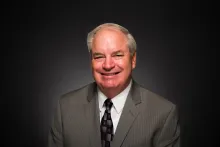
Robin Webber was born in Chicago, Illinois, in 1951, but has lived most of his life in California. He has been a part of the Church of God community since 1963. He attended Ambassador College in Pasadena from 1969-1973. He majored in theology and history.
Mr. Webber's interest remains in the study of history, socio-economics and literature. Over the years, he has offered his services to museums as a docent to share his enthusiasm and passions regarding these areas of expertise.
When time permits, he loves to go mountain biking on nearby ranch land and meet his wife as she hikes toward him.
