
Robin S Webber
This transcript was generated by AI and may contain errors. It is provided to assist those who may not be able to listen to the message.
I do have a message that I hope will be extremely relevant to all of you. We're going to be dealing with scripture. We're going to be dealing with history. We're going to be dealing with current events. We're going to be dealing, most importantly, with you and with me, because that's where God wants us to be during this festival of tabernacles.
When we read a newspaper, we look at a magazine, we'll look at the date lines, we'll see the headlines, we'll see where those events are happening around the world. Cities will come to the fore in our mind. We'll think of Washington, D.C., we may think of Brussels, where NATO is located. Of course, of recent date with the Queen's death, we think of London. In the headlines today, we hear so much about Moscow, we hear about Kiev, and the challenges that are going on over there.
We hear of Tehran, and the threat of nuclear armament happening there in that part of the Middle East. These are all terms that we are all used to, big headlines. But every so often, a headline comes up in the news, usually every two to three years, and it kind of goes like the weather. It kind of goes up, and it kind of goes down. It kind of goes up, and it kind of goes down.
I'd better do this for you over here. It kind of goes up, and it kind of goes down. And the name that I want to talk about here is Jerusalem. Because, make no mistake about it, the ultimate geopolitical goal line of human history and of God's divine interruption on this earth is Jerusalem.
I remember many years ago in Pasadena, hearing an older gentleman simply say this, that Jerusalem marks the acts of biblical prophecy. It is the center, it is the touchstone of God's attention on this earth. And not only what he's doing with earth, but what he is doing with each and every one of us. And that's important to understand. All human history comes down to this point. You will not be getting this in your public education, whether it's on the East Coast, in the Heartland, or on the West Coast.
Human history comes down to this, pure and simple. And it always has been, and it always will be. From the time of Nebuchadnezzar, to the time of Cyrus, to the time of the Macedonians, to the time of the Romans, to the time of the Byzantines, to the time of the Turks, the Arabs, and the Crusaders. And I submit to you that it's simply this. Whose flag will ultimately fly, and remain flying, over the city of Jerusalem. And that's what I would speak to you about today.
But not just simply from a historical perspective, from down here below, but from a divine perspective. And the title of this message is simply this. And I hope that you'll come with me for a journey, in a couple of minutes, of discussing this topic, and it's simply this. Jerusalem. Where heaven touches earth.
Jerusalem. Where heaven touches earth. And we're going to bring all of ourselves along here, and touches you. Because if you don't understand about Jerusalem, then you don't understand what God is doing with you, as a citizen of the heavenly Jerusalem today. And hopefully, by God's inspiration, and me stepping aside, and him coming in, that we're going to have kind of a moment here to understand how important the topic of Jerusalem is to you and me.
The big questions are simply this. Number one, why Jerusalem? Why Jerusalem? Number two, what is to become of this city that has been fought over the Iah, and number three, what is going to be your personal involvement? Maybe you have not been as involved with Jerusalem, because you didn't understand how much God wants you to be involved with Jerusalem. And that's going to be very important. And then, at the end of this message, we're going to give you some takeaways.
Our members always ask us, as ministers, give us something to do. Give us something to understand. Break it down. Unpack it. If I have not unpacked enough for you by the end of this message, come up to me and I'll get a new suitcase, okay? But we're going to unpack, we're going to unpack, and we're going to unpack.
But before we go any further, let's ask ourselves some questions here. Let's ask ourselves, what makes this city so special to begin with? What of and by itself in this location, this X that marks the center of biblical prophecy, what makes it so special? Let's think about that. Have you ever thought about what makes Jerusalem special? Well, it's in the Bible. Okay, thank you very much.
But what about its founding? Why would it be on so many people's minds today? What was its start? Let's break this down for a second. Let's understand something about Jerusalem, and we're going to come to understand something about ourselves through all this.
Number one, it does not sit on any great harbor. Allah a San Francisco, Allah a Hong Kong, Allah a New Orleans. It doesn't sit on a harbor. That's where most great cities originate, develop, and grow. Number two, it does not sit on a major waterway like a river. And you think of all the great cities, whether it be over in Rotterdam or Hamburg, or you think of London on the Thames, or you think of New York on the Hudson, the East River, or you think of, again, New Orleans on the Mississippi at the bottom, at the Delta.
It doesn't sit on a river. Number three, when you go through understanding the way of the sea from Mesopotamia down to Egypt, it was in and of and by itself not on any major migratory path. And you know how important paths are even here in Ohio, that things start with a deer trail, then it's a Native American trail, and then the horses came by, the French came through.
Then you think of the Conestoga wagons coming from New England or from the South, and then it goes on and on, and now we have highways. But there was no real trail at that point to understand that. Point number four, to think about this city, is that it did not sit on any mineral-rich perifurma. When you think of California, you think of gold.
When you think of other areas, you think of mineral riches that built up cities of old. You might even go back to the days of Sodom and Gomorrah on the Dead Sea, that they were in the midst, they were the microcosm of the salt trade, and the world needs to live on salt.
There is nothing—can I make a comment? May I? There is nothing happening in this area that should have made Jerusalem what it is today. Very interesting. Nothing. And nothing separated this ancient hilltop village from any other Canaanite town that is around. Yes, that's what we look at. So we look at all of this, and the biblically documented history of Jerusalem is God's almighty story, where He chose. With all of this—and I want you to think of yourself a little bit in this story.
You see where I'm going? With all of this, He did not choose a Rome. He did not choose a Babylon. He did not choose a Memphis or Thebes. He did not choose an Athens. He did not choose a Constantinople. For you and me to understand what He's doing with you and me today. People that were looked over.
People that the world would look around and say, why them? People as the Apostle Paul said, not Paul, but just God in 1 Corinthians, he says he chose the weak of the world, the nothings of the world. Do I might say the deplorables?
It's safer to say that here than California. He chose us, that it might be to His glory, to His honor. As I said that opening message that I gave, it's not about us. It's about Him that He reached down and touched us, whether in the 60s or the 70s or the 90s or a month ago. We're here to learn about His greatness. That's what we're going to learn about Jerusalem. You and I have been elected to be citizens of the heavenly Jerusalem. So that's where we're going. Put on your seatbelts, tuck yourself in, airbags deployed. We're now going to go a little bit further. I want to systematically demonstrate how God has touched the environs of Jerusalem down through the ages. And to recognize that, I keep on going back how He touches us today. We will come to discover that Jerusalem's story is our story. People select it and elect it to serve His purposes. By God's grace, we're chosen to portray His will. I'm going to take you down a ladder, a few steps, and we're going to go back up that ladder towards Him. Why does Weber say that Jerusalem is where heaven above touches earth below? Point number one. Thank you for asking. This will be a point sermon. Number one. Jerusalem became a symbol of faithfulness. Jerusalem and its environs became a symbol of faithfulness. Through the act of one visionary and faithful individual, as Mr. Bates mentioned, had eyes to see. His name was Abram, that pilgrim of old, that father of the faithful, that it was in the environs of Jerusalem, and with the personnel of Salem, that he acknowledged God's sovereignty by offering tithes of captured bounty. To one known as Melchizedek, a king and a priest of Salem. Would you join me, please? Let's open up the Word of God on this day. Join me, if you would, on Genesis 14.
In Genesis 14, and let's pick up the thought here.
Let's pick up the thought. I'm looking. I was actually reading this this morning. I want to go up a little bit further. Yeah, let's go to verse 17. And the king of Sodom went out to meet him at the valley of Shabbat. That is, the king's valley. To meet him would have been Abram. After his return from the defeat of Kedrulomir, and the kings who were with him, there was this big battle. Remember, they had taken his nephew Lot, family members, and Abram, along with others, went out to get them back. Now, notice verse 18, please. Then Melchizedek, king of Salem, brought out of interest, of interest here, bread and wine. He was the priest of God Most High, and he blessed him and said, Blessed be Abram of God Most High. He's receiving a blessing, possessor of heaven and earth. And blessed be God Most High, who has delivered your enemies. It was not Abram's good looks. It was not the armaments of the king of Sodom and or of Gomorrah. It was not the collection of Canaanites that were there. It was God that delivered. But Abram said to the king of Sodom, and so now the king of Sodom said to Abram, Give me the persons and take the goods for yourself. Now notice Abram's answer. But Abram said to the king of Sodom, I have raised my hand to the Lord, the God Most High, the possessor of heaven and earth. And I will take nothing from a thread to a sandal strap, and that I will not take anything that is yours, lest you, lest that which is on earth, somehow then I owe, and that you will say that I have made Abram rich, except only what the young men have eaten and the portion of the men who went with me. And he mentions the gentlemen, let them take their portion. It is here the first incredible moment of which heaven above touches earth and deals with a man whose heart is towards God, a man that says in one sense, I am not of this world. I will not have an entangling alliance with the world. I will not bend my knee to man. This is the same man that I discussed with you the other day, the man that is known for two things. He is known as the man that lived in a tent, for he was a pilgrim just like you and me. He was not of this world. Remember what we did the other day? Remember the hand gesture? You want to look up? This is the PowerPoint. And it's me. Sorry.
I'm just passing through. Let's have some fun, like when I used to teach. Let's get our hand up. Ready? This is a part of the blessing of the prayer this morning. This was not on my mind to do, so this is the prayer that the guy gave. We're just what? We're just passing through.
It's almost like a California surfer move, you know? Just like that. He was a visionary. Notice then again, and I want to draw your attention to Hebrew 7.
No, it's not actually Hebrew 7. I want to go to... Yeah, we discussed that. Let's go to Hebrew 7. Because then we're identifying who this was, this Melchizedek. In Hebrew 7, the author of Hebrews points this out. Notice what it says here. Starting in verse 1. For this Melchizedek, a king of Salem, priest of the Most High, God, who met Abraham, returning from the slaughter of the kings, and blessed him. To whom also Abraham gave a tenth part of all, first being translated, this is about Melchizedek, king of righteousness, and then also king of Salem. Meaning king of peace. There's the definition. Without father, without mother, without genealogy, having neither beginning of days nor end of life, but made like the son of God.
Remains a priest continually. Now consider how great this man was, to whom even the patriarch Abraham gave a tenth of the spoils.
This journey of the pilgrim started here in the environs of Jerusalem. As the pilgrim, the man of God, the one with the eyes that Mr. Bates talked about, understood that his vision needed to be looking above rather than what is below. He understood that. Dear brethren, I submit to you, each and every one of you, that this is where heaven above touched earth to grant us an incredible lesson in following the Father of the faithful, that we might be citizens of that heavenly Jerusalem. Number two, Jerusalem became a symbol of surrender. Surrender to the divine will. Surrender to that divine will. This is in the environs of Jerusalem, in the land of Moriah, in the hills of Moriah. And here we're talking about this man that was faithful, that had given the tithe to Melchizedek.
And then he promised him a son of promise, and the son of promise came. He gave his goods to God as a tithe. Later on, he waited for the son of promise to come, and this guy was even older than Mr. Schmidt when he got the kid. The son of promise.
Have you or I ever said, you know, God, we've done enough. I mean, we've got... I remember when I used to go to Sunday school, he used to get stars, you know, if he did a verse. I was in Sunday school. Okay. Anyway, so that... My mother was my teacher in Sunday school. And you get these stars if you did a verse. Have we ever done that, where it's about our works and we start doing the... Well, we've done this, and we've done this, and we've done that. And all of us are talking about how long we've been in this way of life, and we've been in this fellowship. We've been in the body of Christ. And we remember when God interrupted our life, whether it was my family in San Diego or Susie's up by the lake up here, up in... Not John's Lake, up at Lake Erie.
And we say, we start doing this star. We've done this, we've done this. But then God performed and asked Abram and Abraham to do something that just did not make human sense. He said, you're going to take that son of promise that you and Saria waited for, and you're going to go up to the hills and the mounts of Moriah.
I'm going to ask you to do something. I'm going to ask you to slay your son, to sacrifice him to me. This whole story, the story in the environs of Jerusalem where heaven touches earth, reminds us on this day that we need to be prepared for God's interruptions, continued interruptions in our life. Not only because we are striving to be holy, not simply because you're striving to be a good subject of the kingdom of God, but he has continuing business in this clay that he's working with in our lives as the potter. And sometimes it is simply not going to make human sense. Let's see, Robin, how do you know that? Because I just go to Isaiah 55, 7-8, and what's God say? His ways are not my ways. His thoughts are not my... Oh, that's right.
But Abraham did that. And he took the lad as they went towards the hills of Moriah. That's the environs of Jerusalem.
And he told them in at the bottom of the hill in Genesis 22. He said, the lad and I will return. We're going to go up the mountain for a while. And Isaac, he bore the wood on that hill of Moriah. He bore the wood himself. That was a type of an antitype to come 1800 years later, of another young man that would bear a piece of wood up the mountain in that very environs. And as he did, kids are curious, aren't they?
Got the wood, he built the altar. What's the sacrifice? And what did Abraham say? God will provide. You know the rest of the story. And after that, as they walked down together happily, they've been put to the ultimate test.
He named that mount in the land of Moriah. And you know what? He named it God Will Provide. That's what we'll call it. We're not going to call it Mount Everest. We're not going to call it out in California. Dan Cern lives by Mount Whitney. You've heard of Mount Whitney. We're going to call it the mount where God will provide. Because he provided a ram. And with that ram, that is why the Israelites and the Jewish community, down from that time, blow the shafar, the ram's horn. And when you blow the horn, when you blow the shafar, so often it's translated trumpet, but it's shafar. When they blow that horn, it is to take them back to Father Abraham. It's back to take them to the environs of Jerusalem, to their father Abraham, and his faith, and his confidence. And that he surrendered the most precious thing he had in faith to God.
Yes, that's where heaven touched earth. And that's where we learn that each of us has to surrender ourselves to the divine will of God. Number three. Later, Jerusalem would become a symbol of unity and oneness and worship. Remember, it was a Jebusite city. It was a Canaanite city. And David took it. And then he made that the United Capital of Israel. Remember, because there were the Benjaminites and everybody that were following King Saul. And that David, for seven years, only had the Southern Kingdom as being a Jew. But then he put it all together. And he made Jerusalem the capital to unite. Just as much back in the Revolutionary War when where was the side of our national capital? It was right between the North and the South. And actually, back in that time, a few inches into the South, Washington, D.C., there had to be a central spot where people could meet. Not too far North, not too far South. And that's exactly what David did. And what did he do? He brought in the Ark of the Covenant. And I'll just let you jot that down for purpose. And that can be found in 2 Samuel 6, 12-18. We know the story. David is jiving up the road, dancing, hands up in the air as a Jew will, doing a little shake back to the Watusi days. His wife's going, oh, he's not even old yet. Oh, good night. You know? But he brought it because Jerusalem became the center of the worship of God on Earth. It is where the Ark of the Covenant was. And in that Ark was what? The mind of God printed at that time in stone. Printed at that time in stone. And God's miracle in that little jar of the manna. And that rod of Aaron, the blooming rod that shows who God will elect to serve and guide him. And it was all there. And so that is again where heaven touched Earth and guided David to make that his capital in a nowhere place, in a nowhere city. No river, no harbor, no mineral goodies. Not on a major pathway. It was Jerusalem. No. 4. Jerusalem under Solomon would become a symbol of God's presence in the temple. It is where God would dwell. It is where heaven would touch Earth by the very presence of God coming down upon it. Join me, if you would, for a moment in 2 Chronicles 5. In 2 Chronicles 5, let's pick this up a second. If you don't know where 2 Chronicles is, I'm going to give you a hint. It's after 1 Chronicles. 2 Chronicles 5. In verse 1, So all the work that Solomon had done for the house of the Lord was finished, and Solomon brought in the things which his father David had dedicated, the silver and the gold, and put all the furnishings, and he put them in the treasuries of the house of God.
Then let's notice verse 13. In verse 13. I think I'm going to say, oh, I see where I'm at. In verse 13, then let's notice what happens. Now notice that the house, the house of the Lord, was filled with a cloud. We call it chikine, which is not really a word that appears in Scripture, but that's what is oftentimes known as that cloud, so that the priest could not continue ministering because, notice, of the cloud, for the glory of the Lord filled the house of God. The cloud came down and went into that holy of holies, that cube-square area of the holy of holies behind the veil. And when you have a cube like that in the mind of the Bible, it means perfection. It means holiness. And God took that house that David had designed, that Solomon built, and he made it a home, that when he touched earth, it would be in the holy of holies. Amazing. Solomon's Prayer over in 2 Chronicles 6. Join me just over here in 2 Chronicles 6. And let's pick up the thought in verse 17. And now, O LORD, this is Solomon speaking, God of Israel, let your word come true, which you have spoken to your servant David. But will God indeed dwell with men on the earth? Behold, heaven and heavens cannot contain you. How much less than this temple which I have built! Yet, regard the prayer of your servant in his supplication, O LORD, my God, and listen to the cry, and the prayers which your servant is praying before you, that your eyes may be opened towards this temple, and night, day and night, toward the place where you said you would put your name, that you may hear the prayer which your servant makes towards his place. And may you hear the supplication of your servant and of your people Israel, when they pray toward this place where you have touched from heaven, this earth. Hear from heaven, your dwelling place, and when you hear, and when he hears us under this tabernacle, where his presence is and where his home is during these seven days plus one, and as we pray, forgive to know that that father above, the God of Abraham, of Isaac, of Jacob, the Father of Jesus, forgives us. For his presence is not only in and under a tent, but as we'll discuss later, that cloud is now in our heart, which, as Paul said, is the temple of God. Through these points, these four points that I've shared with you, we clearly begin to see that God has designs on Jerusalem down through the ages. A nowhere town, to be a capital of a people who had not been a people. We've heard about how God took them out of Egypt. And again, dwelling in booths, like the nice Succoth, this in his senses is a sug Succoth as well, to remind us of what he did for us. To remind us what he did for us. He took something that was nothing and made it something. Made it a vessel of his glory that would not reflect us, but that would reflect him. It was to be put into the midst of little Egypt, Canaan, as you go through Deuteronomy 4, which can be on your time, is to recognize that he says that you will be a light. I'm going to put you in the midst of all of this paganism. And you're going to shine, not for yourself, but for me. And the people of tribes and the nations of the Canaanites are going to say, What? Who is this? What people have such a great God, so loving and so wonderful, and his ways work? They're incredible! They're so different than even the darkness that we live in. We could poke our eyes in the eye, we could poke our fingers in the eyes of our idol, and they won't even blink. They won't even squint because they're stone.
There's something happening here. And there's something happening underneath this tent today, this moment, as you're hearing me, as you're hearing the Word of God, as you're hearing that story that was brought out by Mr. Paz yesterday, that you and I have a ticket. When we were growing up, especially in Southern California, living near Disneyland, which I told you yesterday is a Mickey Mouse experience, but beyond that, to recognize this, that we used to, back in the 60s, how many of you remember, did you ever go to Disneyland and you got what? You got a... where's Brenda? Where's Brenda? Where are you, Brenda? Oh, that's right. I'm getting old. She's been sitting with us all week, and she's right by my wife. Brenda, what did we used to call the ultimate... you're on, don't blow this. What did we used to call the ultimate ticket? An E-ticket. Anybody remember it? Did you ever go... I know you were deprived of back-e's because you had to wait for Disney World. But out in California, an E-ticket was the golden ticket. That's where you got on the Matterhorn. That's where you got on Pirates of the Caribbean. Now it's just like everything else. It's like changing the names and the dates. It's just, spend $300 and you get into Disneyland. But back then, you bought... tickets had value. You knew what you were getting on. And God has given us, by His grace, an E-ticket to His Kingdom. He wants us to have it all. He is so incredible. But Jerusalem forgot its purpose. For God, it's God. In Ezekiel 16, join me if you would there for a second. In Ezekiel 16...
And let's pick up the thought here in Ezekiel 16 in verse 1. You'll be familiar with this, I believe.
God, speaking about this jewel that He had fashioned. And all those creative experiences beforehand that He had touched earth through this individual, that individual, and that individual. Again, the Word of the Lord came to me saying in verse 1, Son of man, cause Jerusalem to know her abominations. And say, thus says the Lord, God to Jerusalem, your birth and your nativity are from the land of Canaan.
Your father was an Amorite and your mother a Hittite. And as for your nativity, on the day that you were born, your naval cord was not cut. Nor were you washed in water to cleanse you. You were not rubbed with salt, nor wrapped in swaddling clothes. No, I pitied you to do any of these things for you, to have compassion on you. But you were thrown out into the open field when you yourself were loathed on the day that you were born. And when I passed by.
That when moment that is not just encapsulated in time, but continues to happen as God calls people into his way of life today. And when that happened, and I passed you by, and I saw you struggling in your own blood, I said to you in your blood, live! Yes, I said to you in your own blood, live! It was a miracle that Jerusalem would even be, that the people of Israel, who were not a people, a loose confederation with family ties going back to Abraham, God took them. Like He took Jerusalem, wiped the mud of the Nile off their bodies, put them into the wilderness for 40 years to sandblast them, to get Egypt off their skin.
But you know, and I know, God doesn't want our epidermis. He wants to go inside, below our endodermis. He doesn't want our skin. He wants our heart. He doesn't just want rules. He wants relationships. And that's what He's always wanted with Jerusalem, which points to down through prophecy, down through history. He wants a relationship, not just with a city.
He wants a relationship with each and every one of us, from the front row to the back row. And He wanted so bad that He says, you can call me Father. That's the God that we worship. Ultimately, down through human history, He sent more than a human prophet to war in Jerusalem, but He sent a son of David, one of the Kingly line, one with the same spirit that resided in Melchizedek, the King of Salem, the priest of the Most High, the messenger, the prophet, that which is the second Moses, the deliverer, had a very special focus.
I want to share something. Maybe you've never seen this before. Hopefully you always learned one thing over seven days. Join me if you would in Luke 9.51. I've taught the book of Luke, and this is really the dividing point of Luke. In Luke 9, verse 51, come with me, please. Let's just take a look at this.
Luke writes like a doctor. He's examining what's going on. He's got a science of systemizing. So here's the report. Jesus, as you know, kind of went into Jerusalem like a yo-yo, back and forth, back and forth, because he had to what? He is the Word created time, but now as the Word of God on earth, God incarnate, he had to watch his time because it had to be three and a half years.
But now the time is ripe. He'd been up in Galilee, been up in Samaria, in those ministries, been up Capernaum. But now I want to share something with you, Luke 951. And now this is called a Lucan commentary. Now it came to pass. Those words are always really good. You know something's about to happen when it says, now it came to pass. Notice. When the time had come for him to be received up, that he steadfastly set his face towards Jerusalem.
Follow me a second. We're going to go Word, PowerPoint, I'm it. I'm sorry. Let's all look up here. I'm not good with buttons like John is. Up to this time, he'd been over here. He'd been over here in Galilee, been over here in Samaria, and he kind of every so often go into Jerusalem in and out.
On a pilgrimage festival. But now what our Lord and Savior did, knowing what was coming his way, he set his face towards Jerusalem. He was not dragged into Jerusalem. He was not a lamb to the slaughter. He knew what he was doing. He marched on Jerusalem. Not like a Roman army. Not like the Messiah that they wanted. But every step was with purpose, not only for them, but for you and for me today.
That's our hero. That's the model. To be about our Father's business. To recognize it's not about us. To recognize it's all about the Father and through the Son. And that you and I had the privilege to be discipled by the molding of the Holy Spirit and by the Word of God and print. Oh my, my, my. What a good God we have. And he would go up. He would go up. Another Mount of Moriah. On that Passover. And they would take the Son of God. The ultimate sacrifice. And as he was on that Golgotha, that altar of Golgotha, the greatest altar that ever was, and they nailed him to a piece of wood, sacrificed for you and for me and for all those Jerusalemites before that one day we'll get to meet him.
As we'll cover on the 8th day. And even as he was there, he still saw the pilgrimage festival going up towards the temple. Towards the sacrifice of animals. In the hills and on the Mount of Moriah. Brethren, Jerusalem is the spot where heaven touches earth. Can we go a bit longer? We're not overtime yet. Unless you want it to be. Remember, six years to an hour. Just joking.
Join me in Matthew 22. In Matthew 23. Oh, we've got plenty of time. Goodie. Matthew 23. I'm glad that wasn't a long fish story that you told John. During announcements. Matthew 23. Even as he was being offered up, how did Jesus feel about Jerusalem? Did he have issues? You know, today, outside the column, we said, you have issues. You have issues. Did Jesus have issues with Jerusalem? Listen to what our Savior said about this very special place where heaven touches earth. In Matthew 23, verse 33.
In Matthew 23, verse 33.
You weren't like your father Abraham. You. You were not there. So therefore your house is left to you desolate. For I say to you, you shall not see me anymore, till blessed is he who comes in the name of the Lord. Forty years, nearly forty years after that, the prophecy would come true. In destruction of the second, what we call the second temple, the Herodian temple, the fall of Jerusalem, 69 to 70 AD, which you don't want to read too often. It was horrible. Horrible. But to recognize, be careful what you ask for, of what you deny.
About fifty years later, there would be what is called the Barcofa rebellion, which a lot of people don't know about another rebellion. You think 69 to 70 AD was bad, the Romans finally went in, the Romans and the Jews never mixed too well. So another Messiah came up, the Barcofa, the gentleman, about 135 AD, and the Romans went in full tilt. And from that time forth, Jerusalem went down, they built a temple to Jupiter, a type of the abomination of desolation. They built a temple of Jupiter on the Temple Mount. They renamed Jerusalem Aelia Capitalina. Sounds all Greek to me. It's Latin.
Aelia was the family name of the Caesars that were then ruling, and Capitalina was one of the seven hills of Rome, and the Capitalina is where all the pagan temples were. Get it? They were putting their stamp. And Jews were expelled from Jerusalem on pain of death, and that's what happened. Jesus was not only our Savior, but he was also a prophet.
Just checking my notes here.
Goodie.
It would be 1,813 years from that time before the Jews would regain their independence in Jerusalem. I want to share an exciting story. Many of us are old enough to remember this. Some of us are not. The 1960s were exciting. Mr. Paz told you about them. He told you about Woodstock. It really did happen. And we're going to talk about another major event just about that same time. It's 19...excuse me. That what happened was...let's go back for it. In 1948. Then we'll go to the 19th scene. The prayer would come true. From the rubble of World War II and the horrific genocide perpetrated upon the Jews. The nations of the world, probably out of guilt, because many of their boats had been turned away. But they established the state of Israel out of Transjordan, divided it between the Jews and the Arabs. But perhaps the key moment I want to talk about was on Wednesday, June 7, 1967. And I remember that night watching the news. As Israeli troops broke through Jordanian lines and dared to do the unthinkable. They rushed towards the plaza before the Western Wall of the Ancient Temple. You and I call it the Weyling Wall. A site they had been denied access for two, nearly 2,000 years. Let me set the stage for you just a second. The Brigadier Commander Radio General Headquarters. The Temple. You think about this in the Jewish mind. Being in the squalor and the ghettos of Eastern Europe, experiencing the pogroms of Russia and Ukraine. Of experiencing being kicked out of Spain during the Inquisition. Kicked out of England. Every nation in Europe. It was not just the Germans. But down through the Middle Ages into the Renaissance. Even into the ghettos of Italy up into the 1800s. Ghetto actually does mean Italian. It means wall.
They had been denied humanity. They had been denied being home. Being in Jerusalem. Where heaven touches earth. The Brigadier Commander Radio General Headquarters. The Temple Mount is ours. Repeat. The Temple Mount is ours. And at 10.15 a.m. on that morning, the Chief Chaplain of the Forces, General Brigadier Slomo Gorin, came flying through the Lionsgate and across the Temple Mount, oblivious to the snipers, jumped out of the Jeep, down the lane to the Western Wall. And he offered a Hebrew prayer and took out a shofar. God will provide. Normally only blown on Yom Kippur, and he blew the blast. Since that time, Jerusalem has come to be known among Israelis as the eternal, undivided capital of the world. Of Israel. Pardon me. But this is only close of one chapter. And one chapter leads to another. Towards the future. Now, with all of this happening, I want to take us forward for a moment. I want to have you join me in Zechariah 12. In Zechariah 12.
I'm glad I still hear those pages turning out there. That means I'm not going to be the last one getting to Zechariah. It's on page 1092 in my Bible. Zechariah 12.
Verse 1. The word of the Lord against Israel, Thus says the Lord, who stretches out the heavens, lays the foundation of the earth, and forms the spirit of man within him. Behold, I will make Jerusalem a cup of drunkenness to all the surrounding peoples, when they lay siege against Judah and Jerusalem. And it shall happen in that day that I will make Jerusalem a very heavy stone for all peoples. All who heave it away will surely be cut in pieces, though all nations of the earth are gathered against it. Most of us that are a little bit older that have even been following since 1948 recognize the challenges of Jerusalem. To recognize even today in our American universities, there is an anti-Israeli fervor. And that's what happens as society gets more and more secular and more and more away from the Bible. They don't understand what God is doing, but it is also prophesied that there would be this heavy stone. There would be this... they just wouldn't know what to do with it. Where are we going to put the Capitol? Most nations today are not flowing up to Jerusalem. Most nations' embassies are down in Tel Aviv because they don't know what to do with Jerusalem.
It was only three or four years ago that the American embassy was put square right in Jerusalem. But not everybody followed. Because they're more worried about humanity rather than worried about God and giving honor to a people of God.
Right now, Jerusalem is a... it's like a heavy yoke around oxen. With all this, what lies ahead? Is there a greater flashpoint yet that we have not yet experienced? Is there something yet to occur to give substance to Jerusalem's name? City of Peace, which is such a misnomer when you recognize how many times Jerusalem has been attacked down through the centuries. And even today in Israel, that innocent civilians have to watch for missiles at night. And they strike this kibbutz or that kibbutz or this city or Tel Aviv. Remember, remember, Jerusalem, though, is the bullseye of biblical prophecy. It is the geopolitical goal line of whose flag will ultimately be on it. I have... you're my class for a few minutes. Mr. Principal, can I have them for just a few more minutes? I'm looking at John. I'm going to share something. And that is simply this. How many want to know how this turns out? Can I see a show of hands? Good! You're awake. We've gone four years in this sermon. Okay. Join me if you would in Isaiah 62. Join me in Isaiah 62.
I want to share something with you. I know you're the people of God. I know you're devout. I know you say your prayers before now I lay me down to sleep. That's a good one if you can't get sleep at night. Just keep on repeating that, or we'll put you back to sleep. And you do pray. And you do pray, thy kingdom come. This is how it's going to happen. Notice chapter 62. For Zion's sake, I will not hold my peace. And for Jerusalem's sake, I will not rest until her righteousness goes forth as brightness and her salvation as a lamp that burns. Let me read this out of the New Living Translation. This message concerning the fate of Israel came from the Lord. This message is from the Lord who stretched out the heavens, laid the foundations of the earth, and formed the spirit within humans. I will make Jerusalem and Judah like an... Oh, I know I already read that. That's not what I wanted. Pardon me. But anyway, we notice something here. There's actually other translations. Pardon me. God says, I will hold my peace. I will not hold my peace. And notice, and for Jerusalem's sake, I will not rest. That's what I wanted. I want to give you something new to think about. That's why we come to the feast every year, to learn maybe just a little bit more of the story. You and I worship a restless God. We worship a God that does not rest. That same God that says, I've declared the end from the beginning, and the beginning from the end, and I will do my pleasure. I will do my counsel, and I will do it. You and I worship a restless God. Now, what's that mean to you and me? Even as God has designs on Jerusalem to fulfill its restoration and its return, remember, you're a citizen of Jerusalem too, aren't you? God's not done with you. He's restless and working with you. His hands and his heart are still fidgeting and working and molding and shaping you. And even if you've gone off for a couple of years, or maybe you've been out of it so far during this feast, and you have not woken up until this message, we have the God that interrupts the cosmos, the God that interrupts human history, and the God that is so desirous of interrupting your life and bringing you full sway as a disciple of Jesus Christ to be faithful like Abraham, to surrender like Abraham, to be in unity like David was in Jerusalem, and to allow his presence to literally dwell inside of you. Have any of you—no hands, please, this is not a testimonial—but I hope some of you have felt the touch of God during this festival. And understand that you, as Mr. Miller brought out at the beginning, you are not alone. Join me if you would then. Interesting. Interesting. Let's notice Isaiah 62, 6-7.
He's not the only one that's supposed to be restless. I have set watchmen on your walls, O Jerusalem. They shall never hold their peace day or night. Who make mention of the Lord, do not keep silent. And give them notice no restraint. Don't give them any rest until he establishes, until he makes Jerusalem a praise in the earth. Now, let's put 1 plus 1 equals 2 together. We worship a restless God. He wants to see this come to full fruition. He wants to come down and be our God and we be his people, and we'll be covering that on the eighth day. But he's asking you, you that are the followers of Christ who follows the Father, we need to be restless. We need to be in motion. We need to be restless in showing forth the light of Christ in us, the ultimate King of Israel, the one that's going to be landing in Jerusalem. All ten holy toes are going to be coming down on that Mount of Olives. And the nations are going to go up to Jerusalem. They're going to go up. Are they going up now? I don't think so. But they're going to go up. And they're going to say, teach us our ways. That's you that are restless out here. They're being called stewards to the King and helpers of the great High Priest, Melchizedek, the ruler of the wonderful world tomorrow.
We as Christians need to be restless, not passive. And let that light shine. And make sure it's not our flashlight on ourselves, but on God. Two verses. I'll just let you jot it down. You have been granted the opportunity to be a child of Jerusalem above. Galatians 4, 26. We have a direct line to Jerusalem above. Now, Jerusalem's all over in different types in the Bible. That's where our nurture comes from. The great nurturing comes from God the Father and Jesus Christ. Not myself as a communicator of the Gospel. Not me as a pastor of many decades. It's not about me. I can be a mouthpiece. If anybody comes up and says, I really appreciate it, your message, I usually say, yeah, God can speak through donkeys. It's not about me. It's not even about a church organization. And church organizations have their part. They have their role. And you and I, along with those that are visiting us today, have elected to be potted, where we feel that God has placed us, where we can grow in grace and knowledge in this fellowship. But our nurture, there is no man between us and the Christ. That's what the Day of Atonement was about. And He's up in the Holy of Holies now, in that heavenly tabernacle. And we know how busy the High Priest was on Atonement Day, coming and going, washing all those sacrifices, washing himself, sacrificing, sacrificing out. That just tells us how busy and how restless Jesus Christ, the great High Priest, is in serving you and me. Isn't that neat, when you think about that? In Philippians 3 and verse 20, it says our citizenship is in heaven. Well, listen, let's start closing the curtain here. I'm going to give you—you won't believe it, but it's going to go in about five minutes—I'm going to give you the capstone of where we've been, of why this message has been about Jerusalem, where heaven touches earth, and you and me. Number one, let's review. Number one, that there's nothing innately special about ourselves. God took something that was nothing and made it something, just like Jerusalem. All glory and all praise goes to Him.
As He calls us and says, I no longer want you to be a part of the kingdom of dust. That's all we are. Dust thou art and dust thou shalt—that doesn't sound kind of inviting, doesn't it? That's what we are. We were called out of the kingdom of dust.
And we're being given that ticket that Mr. Paz talked about to be a part of the kingdom. Number two, we've learned that our comparison to Jerusalem is surrendering all that we have, just like Father Abraham, and give it to God. Whether it be our substance, whether it be our person, allowing no man, whether it be the kingdom of Sodom of old or any man today, that you and I have a direct line. Through the man, the Son of God, who was the Son of Man, lifted up in glory at the right hand of God, Melchizedek on high. Number three, by being a uniter and not a divider—remember, David, Jerusalem, put it in the middle? Be a uniter, not a divider. Bring people together. Be salt, not vinegar. Be honey, not vinegar. Be like Jesus Christ. Number four, this is done by allowing the presence of God to penetrate us as much as it penetrated that temple on the hills of Moriah, Solomon's Temple. Allow his presence. Hold on to it. Allow it to be precious. The Apostle Paul said that we are the temple of God, N-A-O-S, temple, that was used in Scripture in the Greek to basically connote the Holy of Holies. God resides in you. It's the most precious thing that we have. Number five, to recognize that we will humanly falter, like Jerusalem. But God always makes the way of return.
My wife, Susie, and I have had to return many, many times over our years since we were first called when we were both eleven. Many, many returns, personally, marriage-wise. Marriage is not for sissies.
And you learn the most from the person that is your closest neighbor. And we are to love our neighbor as ourselves. Gals, that's kind of hard when you're married to a man, isn't it?
And yet that's the tool that God gives to help us to mold us, to bring us forward to understand how Jesus loved the church and that interaction between both. We're just simply going to conclude today.
And I'd like to, I'm going to sit up here with you for a moment. Because this is one of my, oh, I don't have the glorified voice. I've got to come back here a second. We're going to play a song for you. I played it over the years in the Midwest. When Darris is going to be here, we used to go out on the Prophecy Tours, and I'd give a message like this. They're always different when you give them. But I love sitting in front of a Midwest crowd, and to be able to play this song for you.
And it's from Marty Goetz. Marty is a Messianic Jew out of East Cleveland. He's a Buckeye. He's a Jewish Buckeye.
And he's like our lady here, just a troubadour that's been singing for us.
And it's called, For Zion's Sake. It's very special to me. I think it's special to God. I think it sums up what I've been trying to share with you in my own poor human way for the last six years. Let's listen to it together, and let's remember that God's got a touch on you. He'll never give up on Jerusalem. There's always a way of return. Our Father is always at the porch waiting for us to return. His arms are out wide, and He says, For Zion's sake.
Thy kingdom come, and as heaven touches Jerusalem as it touches you. Thy kingdom become.
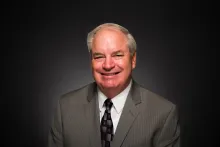
Robin Webber was born in Chicago, Illinois, in 1951, but has lived most of his life in California. He has been a part of the Church of God community since 1963. He attended Ambassador College in Pasadena from 1969-1973. He majored in theology and history.
Mr. Webber's interest remains in the study of history, socio-economics and literature. Over the years, he has offered his services to museums as a docent to share his enthusiasm and passions regarding these areas of expertise.
When time permits, he loves to go mountain biking on nearby ranch land and meet his wife as she hikes toward him.
