
Don Ward
This transcript was generated by AI and may contain errors. It is provided to assist those who may not be able to listen to the message.
One of the greatest events in the history of humankind occurred on the day of Pentecost in 31 A.D. On that day, Pentecost, 1,984 years ago, the Holy Nation of God, the Israel of God, began. The Church of the Living God began, God's holy temple, a building not made by hands. God began to dwell in man, not just with man, but in man. The greatest mystery of God began, that is how humankind can become God. Upon the resurrection, this great mystery will be completed. Look at Colossians 1, 27. A big part of this mystery has to do with, of course, the sending of the Holy Spirit and the Holy Spirit being within us. And eventually, by the same spirit that He raised Jesus from the dead, He will also quicken or make alive our mortal bodies. We shall be born into the family of God as glorious, radiant spirit beings. In Colossians 1, verse 27, To whom God would make known what is the riches of His glory of this mystery among the nations, which is Christ in you, the hope of glory.
So God, through His Spirit, the same spirit that is in God, is in Christ, is in each one of us. This great mystery will be completed, of course, upon the resurrection. But in the meantime, we are recipients of God's spirit. So on this day, 1984 years ago, God began to fulfill many of the prophecies of the prophets that you find in the Old Testament. He began to call out a people for His name's sake. This day is what the Bible to a large degree is all about. God is bringing sons and daughters to glory in His family. God began on this day calling out the firstfruits. And Pentecost is called, oftentimes, the Feast of the First Fruits.
From the time that God created Adam and Eve, He wanted to have a relationship with them, to dwell with them, and eventually to dwell in them, so that He could have an intimate relationship with them, as we say in today's modern parlance, 24-7, continual communion with them. But as we know the story so well, Adam and Eve rejected this opportunity. They were deceived by Satan the Devil, at least Eve was. As a result, they were cut off from the Tree of Life, which represents the Holy Spirit, the Holy Spirit that was sent to the church on this day, so many years ago.
So they were cut off from the Holy Spirit. They were driven from the Garden of Eden. They were no longer able to have access to the Tree of Life. But in spite of all of this, and of their unbelief, and even what happened in the pre-flood world, God eventually calls out a people for His name's sake, the physical nation of Israel. And in spite of them, He wanted to dwell with them and in them, and eventually to dwell with and in all the peoples. Israel was to be used as the model nation to help bring all peoples into a relationship with God.
According to Jewish tradition, Israel entered into the Old Covenant on Pentecost. So let's turn there to where they entered into the Covenant in Exodus. In Exodus 24, God had thundered the Ten Commandments.
Moses had gone upon the Mount and received the Ten Commandments. God wrote with His finger eventually the Ten Commandments. And so they entered into this covenant relationship with God. In Exodus 24, we'll read just the highlight here. Verse 6, Moses took half the blood and put it in basins. Half of the blood he sprinkled on the altar. He took the book of the covenant and read in the audience of the people. The book of the covenant was basically the Pentateuch, the book of the law. And they said, all that the Lord hath said will we do and be obedient.
And Moses took the blood, sprinkled it on the people, and said, Behold, the blood of the covenant, which the Lord hath made with you concerning all these words. So they entered into the old covenant on the day of Pentecost, according to Jewish tradition.
But the Holy Spirit was not sent to be in them at that time, though they were led, many of them, by the Holy Spirit and by God Himself, as we shall see. Now, one of the first things that God instructed Israel to do after he had freed them from the grips of Pharaoh and they crossed the Red Sea, we'll look back now, if you would, to Exodus 15. In Exodus 15, they had come up out of the Red Sea, they witnessed the host of Pharaoh and his armies being drowned before them. In Exodus 15, 1, then sang Moses and the children of Israel this song unto the Lord, and spoke, saying, I was saying unto the Eternal, for he hath triumphed gloriously, the horse and his rider hath he overthrown in the sea. The Eternal is my strength and song. He has become my salvation.
He is my God, and I will prepare him in habitation, my Father's God, and I will exalt him. I will prepare him in habitation.
And shortly after that, God began to instruct them with regard to what He wanted them to do.
I've already referenced this a bit. Look at Exodus 19. He wanted them to be the model nation. He wanted them to be the ones, the emissaries, who would eventually take this message of redemption to the whole world so that they could also be a part of the congregation of God, the Israel of God, but they failed miserably. We read this here in Exodus 19 and verse 3. Moses went up unto God, and the Lord called him out of the mountain, saying, Thus shall you save the house of Jacob, and tell the children of Israel. Jacob usually represents in Scripture the physical side of Israel. Remember, Jacob's name was changed to Israel, meaning prince with God. Jacob, meaning supplanter.
You have seen what I did unto the Egyptians, and how I bare you on eagles' wings, and brought you unto myself. Now therefore, if you will obey my voice, indeed keep my covenant, then you shall be a peculiar treasure unto me above all people, for all the earth is mine. And you shall be unto me a kingdom of priests and an holy nation. As we shall see in just a moment, that has passed on to the church. These are the words which you shall speak unto the children of Israel. So they made great preparation the rest of chapter 19 to receive the Ten Commandments. And in chapter 20, God thundered the Ten Commandments there to them. And eventually, they were written on tables of stone and put in the Ark of the Covenant, which was in the mercy seat under the mercy seat.
And on top of the mercy seat, God placed His presence. Now you notice that in chapter 25, chapter 25, remember we read that I will prepare for Him in habitation. So after they entered into the terms of the Old Covenant, they had received the Ten Commandments. They had received their charge. They were told to prepare a sanctuary, a dwelling place, for God. This is Exodus 25, in verse 1. The eternal spoke unto Moses, saying, Speak unto the children of Israel, that they may bring me an offering of every man that gives it willingly with his heart, that you shall take my offering.
He describes the various elements that he wanted in the tabernacle. Verse 8, And let them make me a sanctuary, a dwelling place, that I may dwell among them. See, it didn't dwell in them, among them. According to all that I show you, after the pattern of the tabernacle, and the pattern of all the instruments thereof, even so shall you make it. Now, it was made according to the pattern of the heavenly. That earthly tabernacle was made according to the pattern of the heavenly. And so, for the next year or so, they went about building this tabernacle.
Now you turn to Exodus 40, the last chapter of Exodus, and we see the time has come now. The tabernacle is going to be raised up, and what happens when they raise up this tabernacle? Remember the victory song of Moses?
I will prepare him and habitation. God instructed them on how to prepare that habitation. And so they did. Now, in Exodus 40, verse 16, Thus did Moses according to all that the Lord commanded him, so he did. And it came to pass in the first month, in the second year, on the first day of the month, that the tabernacle was raised up. And then what happened as they raised up the tabernacle? We pick it up again in verse 33. And he raised up the court round about the tabernacle and the altar, and set up the hanging of the court gate, so Moses finished the work.
Then a cloud covered the tent of the congregation, and the glory of the Lord filled the tabernacle, glory representing his presence, the presence of God. And Moses was not able to enter into the tent of the congregation, because the cloud abode thereupon, and the presence, the glory of the Lord filled the tabernacle. And when the cloud was taken up from over the tabernacle, the children of Israel went forward in all their journeys.
So they were led by God into the Promised Land. Of course, we are being led by God in Christ, the Word of God, and the Spirit of God, into the Promised Land of the Kingdom of God, an eternal place. But if the cloud were not taken up, then they journeyed not till the day that it was taken up. For the cloud of the Lord was upon the tabernacle by day, the fire was upon it by night, in the sight of all the house of Israel, throughout all their journeys.
So God led them. In 1 Corinthians 10, 4, it says, and they followed that rock, and that rock was Christ. So the one who became Jesus Christ led them into the Promised Land. They were to be a kingdom of kings and priests, as we read from Exodus 19, verses 5 and 6. But Israel failed, and now that charge has been given to the Church of God. You look at 1 Peter 2, 1 Peter 2, 1 Peter 2, verse 9. It's so very similar to the charge that God gave Israel in verses 5 and 6 of chapter 19.
So in 1 Peter 2, verse 9, But you are a chosen generation, almost identical words from Exodus 19, a royal priesthood and holy nation. See, this nation began on the day of Pentecost, when God sent His Spirit, a purchased people that you should show forth the praises of Him, who has called you out of darkness into His marvelous light. Which in times past were not a people.
This epistle was written from Babylon. A lot of Jews had gone to Babylon, of course they were taken there captive by Nebuchadnezzar. Many remained there. Not all the Jews returned to the land of Palestine. When the contingent led by Joshua and Zerubbabel returned, and then some had migrated to that area, which in times past were not a people.
Of course, the prophecy in Hosea talks about this, that God put away Israel and they became Loami, not my people, and Lo-ruhama, not having obtained mercy. But in contrast to that, but now the people of God, Ami in Hebrew, which had not obtained mercy, Ruhamah, but now have obtained mercy. So rather than that charge has been passed on to you and to me, that we are to be this holy priesthood, a holy nation, a people called out of God.
Now this law covenant that was given at Sinai made nothing perfect. We'll see this here if you look at Hebrews back a few pages, chapter 7, Hebrews 7, verse 19. Hebrews 7, verse 19, For the law made nothing perfect, but the bringing in of a better hope did, by the which we draw an eye unto God. So the law in and of itself could not make one perfect. Now notice further concerning this in Hebrews chapter 10.
Remember that Hebrews compares contrast elements of the old covenant with that of the new. So just about the major aspects of the covenants are contrasted. The promises, the calling, the priesthood, the temple, the sacrifices, the reward.
Hebrews 10.1, For the law having a shadow of good things to come, and not the very image of the things, it was a physical representation of the very image of that which was to come, we have entered into the very image, into the spiritual temple, into the temple not made by hands, can never with those sacrifices which they offered year by year continually make the comers there unto perfect. They could offer sacrifice from here on. It would not pay for sins that are passed. Only the sacrifice of Christ could do that.
For then would they have not ceased to be offered because that the worshippers, once purged, should have had no more conscience of sins.
But in these sacrifices there is a remembrance again made of these every year of the sins. For it is not possible that the blood of bulls and goats should take away sin. Wherefore, when he comes into the world, he says, sacrifice and offering, you would not. That is not what is going to bring you to a reconciled position with God, so you are viewed as sinless. Those sacrifices, kafar, is the Hebrew word, covered sin. They remained ceremonially clean. But their hearts and minds were not purged of an evil conscience. Neither were their sins forgiven in the ultimate sense. But a body have you prepared me. In burnt offerings and sacrifices for sin, you have had no pleasure. Then said I, lo, I come in the volume of this book, as it is written, to do your will, O God. And so Jesus Christ came, and he paid the price for the sins of the world. And he became the first of the first fruits. Of course, that His resurrection took place during the days of Unleavened Bread. He became the first of the first fruits. He was eventually the spiritual wave-sheaf, as you will, that was waved before the Father. So let's go to Leviticus 23. Leviticus 23 verse 9. The Lord spoke unto Moses, saying, Speak unto the children of Israel, and say unto them, When you come into the land which I give unto you, and shall reap the harvest thereof, then you shall bring a sheaf. And we talked about this during Unleavened Bread. It's an omer. It's about, I guess, two quarts plus. I'm not going through the whole thing. We went through Unleavened Bread. They would grind up the grain and very fine and bake these loaves on penny cost. It was two loaves. And, of course, there's all kind of speculation about the two loaves. What do they represent? Many say, quote, Old Testament Christians, which is an oxymoron, and New Testament Christians. I'm very convinced that the two loaves represent Jew and Gentile joined together as one body in Christ, as in Ephesians 2. But that's...we don't have time for all of that. You shall bring a sheaf of the first fruits of your harvest unto the priest, and he shall wave the sheaf before the Lord to be accepted for you on the morrow. After the Sabbath, the priest shall wave it. So after the Sabbath would be on a Sunday morning. So here we are on a Sunday morning, the day of Pentecost, some 1,984 years after the Holy Spirit was sent, and some 1,987 years since Jesus Christ was...his ministry began. And notice this, verse 12, And you shall offer that day when you wave the sheaf, and he lamb without blemish of the first year, for a burnt offering unto the eternal, and the meat offering. And you shall eat bread, verse 14, You shall eat neither bread, nor parched corn, nor green eaters, until the selfsame day that you have brought in, and offering unto your God shall be a statue for you throughout your generations. And you shall count unto you from the morrow after the Sabbath, from that day that you brought the sheaf of the wife, offering seven Sabbaths. So we are here at the fiftieth day after the seven Sabbaths. Even unto the morrow after the seventh Sabbath shall you number fifty days. Pentecost literally means count fifty. And you shall offer a new meat offering unto the eternal. You shall bring out of your habitations two wave loaves of two tenths a deal. They shall be a fine flower. They shall be taken with leaven. They are the firstfruits unto the eternal. They are the firstfruits unto the eternal. They are the firstfruits unto the eternal. The two loaves who will be the firstfruits unto the eternal upon resurrection. Well, it's the church, those who are in the first resurrection.
Jesus Christ, if we turn to John chapter 20, we also covered this in more detail during Unleavened Bread, Jesus Christ, upon resurrection, was that wave sheaf, wave before the Father. You look in John chapter 20. They ran to the tomb on that Sunday morning to do the ritual of their version of embalming and the spices and all of that. When they got there, the tomb was empty.
Verse 11, John 20, Mary stood without at the sepulchre weeping, and as she wept, she stooped down and looked into the sepulchre, saw two angels in white sitting, one at the head, the other at the feet, where the body of Jesus had lain, and they said unto her, Woman, why do you weep?
She said unto them, Because they have taken away my Lord, and I don't know where they have laid him. And when she had thus said, she turned herself back and saw Jesus standing, and knew not that it was Jesus. Jesus said unto her, Woman, why are you weeping? Whom do you seek? She supposing him to be the gardener, said unto him, Sir, if you have borne him from here, tell me where you have laid him, and I will take him away. And Jesus said unto her, Mary, and she turned herself and said unto him, Rabboni, which is to say, Master.
And Jesus said unto her, Touch me not, for I am not yet ascended to my father, but go to your brethren and say unto them, I have sinned unto my father and your father, and to my God and your God.
And so Jesus Christ was the wave-sheaf, as it were. His sacrifice was accepted by the Father on our behalf. You notice in Hebrews 9 now, Hebrews 9, Hebrews 9. Jesus Christ, the first of the first fruits. In Hebrews 9, in verse 20, saying, This is the blood of the testament which is God has enjoined unto you. Of course, Jesus Christ instituted the symbols of the New Covenant Passover on that night before he was betrayed and crucified the next part of the day in the daylight hours.
And his blood represents his life essence given for them. Of course, the Old Covenant, as we read from Exodus 24, was also ratified by blood. Moreover, he sprinkled with blood both the tabernacle and all the vessels of the ministry, and almost all things are by the law purged with blood, and without shedding of blood there is no remission. It was therefore necessary, it was therefore necessary, that the patterns of the things in the heavens should be purified with these, but the heavenly things themselves with better sacrifices than these, that which represented the heavenly, the blood of bulls and goats, but the very thing, the heavenly itself, and so whose blood?
Verse 24, for Christ is not entered into holy place made with hands, which are the figure of the true, but into heaven itself now to appear in the presence of God for us. Now, later you'll read in Matthew, various accounts, that on that same day, Jesus Christ appeared to the disciples and they held his feet, and so we believe that Jesus Christ ascended.
At that point, his sacrifice was accepted. He was the wave chief before the Father. Now to 1 Corinthians chapter 15. In 1 Corinthians 15, here we see directly from the Scripture the statement that Jesus Christ is the first of the first fruits. 1 Corinthians 15, called the resurrection chapter. It's amazing that in Corinth there were people, and they claimed to be part of the Church of God, who did not believe that there was any resurrection from the dead.
You look at verse 12 now, Christ be preached that he rose from the dead. How say some among you that there is no resurrection of the dead? I mean, why are you here if there's no life, you're after no resurrection of the dead? But if there be no resurrection of the dead, then is Christ not risen? And if Christ be not risen, then is our preaching vain, and your faith is also vain, and we're false witnesses.
Verse 20, but now is Christ risen from the dead and become the first fruits of them that slept. For since by man came death, by man came also the resurrection of the dead. For as in Adam all die, even so in Christ shall all be made alive. But every man in his own order, Christ the first fruits, afterward they that are Christ at his coming. Now, we have had people in the church, and some, I think, still hold to this, believe that Christ is coming on Pentecost, because that's when the harvest took place, the first harvest, the barley harvest, unleavened bread. There's the wheat harvest in June, usually fell in June, maybe the end of May as it is this year, and that Christ would be coming back for the first fruits on Pentecost. On Pentecost, God began to call out the first fruits. It is at the last trumpet, at the sound of the last trumpet. All the typology symbolism regarding the resurrection, and when we're actually born into the family of God, centers on the Feast of Trumpets, which is, of course, the next feast, the next Holy Day in the plant. So if we're looking at the Holy Days in the prophetic kind of sequence of being literally fulfilled, it's a Passover in the literal sense of making us available to have our sins remitted. Jesus Christ is our Passover. Unleavened bread. We have been freed from sin and death, and we are living now the resurrected life, our baptism. Israel was baptized in the Red Sea on the last day of the Feast of Unleavened Bread. And so that has been made possible for us. We have the Word of God. And now the Pentecost has been literally fulfilled in the sense that the Holy Spirit was sinned. So we're in that period of time between Pentecosts calling out of the first fruits and trumpets in the prophetic sequence. So that you could do a sermon, obviously, on that as well. So Christ was figuratively waved before the Father by figuratively in the waved sense, but before the Father. Now, Father would not recognize any human being as his children and grant him forgiveness of sin, full reconciliation, entrance into his family until Jesus, as a great high priest, had not only died but had ascended up on high and made applicable the merit of his sacrifice on our behalf. Woman, don't touch me, for I have not yet ascended to my Father. I ascend to my Father. Go tell the brethren to meet me over there somewhere around Galilee or whatever he said. And later that day he did appear to them. Christ said concerning his temple. Let's read. Before we do that, let's go to Hebrews chapter 3 here because I want to look at this. Hebrews chapter 3 concerning Moses, what he said. Remember, Hebrews compares and contrasts the elements of the Old Covenant with that of the New. Hebrews chapter 3, Moses was a faithful servant with regard to the Old Covenant. But notice what this says in Hebrews chapter 3 verse 5, Moses barely was faithful in all his house as a servant. For a testimony, a witness, Maturia, of those things which were to be spoken afterward, but Christ as his son over his own house, whose house you are, if we hold fast to the confidence and the rejoicing of the hope firm unto the end.
Now let's go to John chapter 4. Concerning the temple and worshipping God in spirit and in truth, remember the charge to be a holy nation, a kingdom of priests, to be the model nation for the world, the instrument through which God would bring others into his family. It's now passed on to the church. Here in John 19 is the account of Jesus Christ's encounter with a woman at the well.
We're breaking into the story.
In verse 16, Jesus said unto her, Go call your husband and tell him to come here. The woman answered and said, I have no husband. Jesus said unto her, You have said, Well, I have no husband, for you've had five husbands. And he whom you now have is not your husband, in that said you truly.
The woman said unto him, Sir, I perceive that you are a prophet.
One of the trends of the day is go do cohabitation, do a little trial marriage, and then maybe later you'll get married after you have a few children. Verse 20, Our fathers worshiped in this mountain, and you say that in Jerusalem is a place where men ought to worship. Remember that's the place where God had placed his presence in Solomon's temple. Though in the Restoration Temple, it was spoken of during the Offertory, God's presence did not fill that Restoration Temple as it had Solomon's temple. But yet God's Spirit was with them, but not in them. And Jesus said unto her, Woman, believe me, the hour comes when you shall neither in this mountain, and that mountain was Mount Gerizim in Samaria, where the Samaritans had built a rival temple to that one in Jerusalem. Nor yet at Jerusalem worship the Father. You worship, you know not what, we know what we worship for salvation is of the Jews. It doesn't mean it's exclusive to the Jews. We really talked about that recently. The process of salvation is exclusive. There's only one name given under heaven. But it is inclusive in that it includes all people, and God had to start with some people, so he started with Israel. And of course, Jesus himself was a Jew.
But the hour comes, and now is, when the true worshipper shall worship the Father in spirit and in truth, for the Father seeks such to worship him. So the worship of God is not limited to any geographical location. God is spirit, and they that worship him must worship him in spirit and in truth. So how do you worship God in spirit and in truth? Paul explains the reality of this statement. Today, the church is the temple. So let's notice the scriptures concerning that in 1 Corinthians chapter 3, verse 16. Those who worship him must worship him in spirit and in truth. God today does not dwell in a building made by hands. You are the temple of the living God. Now, we have had some discussion, and there was a sermon that was out on the Internet somewhere by the time of the day. It was on the Internet somewhere by one of the United Ministers concerning this particular verse here, in which it seemed to give the application strictly in the collective sense, but it is collective and individual. Collectively, we are the temple of God, the church of God, but in the individual sense, you individually, are God's temple. I think we'll see this from these verses, that you are the temple of God, and God's spirit dwells in you. It's personalized even here. 1 Corinthians 3, 16, Know ye not that ye are the temple of God. And collectively, ye all of you, we all make up the church of God in the universal sense, and we could say in the universal sense, we're all the temple of God. But at the same time, God dwells in you. You are one of His people in which the Holy Spirit is, that the Spirit of God dwells in you, if any man. Now, if you want to look at it in the collective sense, and we can look at it in the collective sense, Paul talks about in 1 Corinthians 12, that you are members one of another. In Romans 12, he says that we are all joined together. And so if you do anything to hurt one of the members of the temple or the body, defile it. Of course, one of the things that leads into Matthew 25 is that many will say, My Lord delays His coming and begins to smite His fellow servants, then the Lord shall come in a day that that servant thinks not. So this warning here can be applied in the collective sense. It can be applied in the individual sense. If any man defile the temple of God, Him shall God destroy, for the temple of God is holy, which temple you are.
Now, further on this, this is not the only place where this is. You look at 1 Corinthians 6 and verse 19. 1 Corinthians 6 and verse 19. What know you not that your body, your body, is the temple of the Holy Spirit, which is in you. In you. See, Paul also is combating here this. Corinth was one of the most liberal, moral cities of the ancient world. To Corinthianize would be sort of like to Las Vegas eyes today. What know you not that your body is the temple of the Holy Spirit, which is in you. What you have of God, you are not your own. So the part of the message here is, why would you join your body in fornication? Because your body is the temple of God. For leave fornication, verse 18. Verse 20, you are bought with a price, therefore glorify God in your body, and in your spirit, which are God's. Now, in 2 Corinthians 6, 2 Corinthians 6 and verse 16, we send you something somewhat similar. I think from all of these verses you can see that this, that you are the temple of God, is a collective thing, and it is an individual thing. In 2 Corinthians 6 and verse 18, I don't want 18 immediately. 1 Corinthians 6 and verse 16, 2 Corinthians 6 and verse 18, Therefore come out from among them, and be you separate, says the Lord, and touch not the unclean thing, and I will receive you. God has called us to holiness and to be separate. A great challenge as we see the world go in the direction that it's going. I mean, it will be almost what will it require to be able to stand in the days that lie ahead with all of the moral debauchery and the acceptance of it on a national chain, as the Irish, over 60% of the people voted yes, so they will change their constitution to make it lawful to have for same-sex marriage.
Whereas only 22 years ago, it was a criminal offense to be a homosexual. You could be put in jail. That's how far in 22 years Ireland came, one of the most conservative nations in the world.
And even though the laws haven't been officially changed on the federal level, some have on the state level, the Supreme Court ruling that's coming in June, I believe in all probability, they may take some kind of wishy-washy position, but we know what's coming and what it will take to be separate.
It is going to be quite a challenge. Wherefore come out from among them and be you separate, says the Lord, touch not the unclean thing, and I will receive you, and will be a father unto you, and you shall be my sons and daughters, says the Lord Almighty.
Now let's note what the Holy Spirit is. Let's reiterate it. John 4, 24. God is spirit. God is spirit.
Just as our essence, our substance is flesh, we are flesh and blood.
Now spirit, you don't talk about spirit in the sense of substance, because substance indicates something that you can discern via the five senses. But spirit is an essence.
It's invisible, but it's even more real. It is the reality than the physical substance.
So God is spirit. It is the spirit of God. The spirit of God moved upon the face of the waters. The spirit of God did such and such. The famous Zechariah 4, 6. Not by might nor by power, saith the Lord, but through my spirit.
So the spirit of God is in the direction of God. And God the Father, as we talked about yesterday, John 15, 26. The Holy Spirit proceeds from the Father. He is our Father. The Holy Spirit is personified at times through Jesus Christ. John 14, 26 says, The Comforter is the Holy Spirit, and the Comforter He will send in my name. We'll probably see that later if we have time.
For you to have Christ in you, you must be called, convicted, granted repentance, exercise faith in the sacrifice of Christ, be baptized, and receive the Holy Spirit. As you heard in the offatory, and I'm very glad he brought this forward, look at Acts 2, verse 38. See, Pentecost, to a large degree, is about repentance, because you cannot receive the Holy Spirit in the Begettled sense unless you repent.
Now Peter preached his inspired sermon. And we come to Acts 2, verse 36, 37. They were pierced in their heart. They were convicted in their heart. Let's read it. In Acts 2, 36, Therefore let all the house of Israel know assuredly that God hath made that same Jesus, whom you crucified both Lord and Christ.
Now when they heard this, they were pricked in their heart. Now this is in contrast to what they did with Stephen. Stephen preached his inspired sermon. They were pricked in their heart, and they rushed to kill him, and they did. But here, on this day of Pentecost, they took a different attitude toward what they were convicted of. I mean, what Stephen preached obviously was the truth, and it cut them to the quick.
Now they were cut to the quick here, but in a different way. And they said unto Peter, and to the rest of the apostles, men and brethren, What shall we do? Well, let's repent and thin no more. Verse 38, Then Peter said unto them, Repent and be baptized every one of you in the name of Jesus Christ, for the remission of sins, and you shall receive the gift of the Holy Spirit.
So receiving the Holy Spirit is absolutely contingent upon repentance. Now the apostle John, let's go to 1 John chapter 12. Remember, we read that those who worship God must worship God in spirit and in truth, back in John chapter 4. And what does that mean? What does that entail? You can't worship God in spirit and in truth unless you have the Holy Spirit, or the Holy Spirit is working with you.
So we have read here how you receive the Holy Spirit. Repent, be baptized, you shall receive the gift of the Holy Spirit. Now in 1 John chapter 3, verse 19, And hereby we know that we are of the truth, and shall assure our hearts before him. Now to assure our hearts before him is not to have any pings of guilt. You don't feel guilty. You are set free from guilt. For if our heart condemn us, God is greater than our heart and knows all things.
God already knows what we have done, but he does expect us to come before him, confess our sins, and cry out for forgiveness. Beloved, if our heart condemn us not, if we repent of our sins, and we are guilt-free, and we don't have that knowing aching, I ought to do, or this or that or the other, then have we confidence toward God. Boldness come boldly before the throne of God, because I'm set free. The slave is wiped clean. I have no pings of conscience, no guilt.
And whatsoever we ask, we receive of him, because we keep his commandments and do those things which are pleasing in his sight. And this is his commandment, that we should believe on the name of his Son, Jesus Christ. To believe on the name, his authority, name has to do with authority. What he stands for, what he is, and to love one another as he gave commandments. This is the essence, then, of worshipping God in spirit and in truth.
We'll see a little more. And he that keeps his commandments dwells in him, and he in the him, that's through the Holy Spirit, and hereby we know that he abides in us by the Spirit which he has given us. And it begins with this calling, this conviction, the repentance, baptism, laying on of hands. Now, let's go to Matthew 22. I would say the great summary of worshipping God in spirit and in truth. And the great summary, in one sense, of the Bible, according to what Jesus says here, is given in these few verses when the detractor came and tried to trick him up and say, well, Master, what is the greatest commandment in the law?
So we're in Matthew 22. Matthew 22, in verse 34, When the Pharisees had heard that he had put the Sadducees to silence, they were gathered together. Then one of them, which was a lawyer, asked him a question, tempting him, and saying, Master, which is the greatest commandment in the law? You know, I'd just really like to know that. And Jesus said unto him, This is the first and great commandment, and the second is like unto it, You shall love your neighbor as yourself. So a summary, really, of the Ten Commandments, the first four, directed toward God, and if you include the Sabbath, five, and the rest toward the neighbor, all of it is toward self in the sense that all sin is against God and self because the wages of sin is death.
Now, this verse 40, On these two commandments, paying all the law and the prophets, the whole ball of wax right there, so worshiping God in spirit and in truth is through doing what it says here, loving God with all your heart, mind, and soul, loving your neighbor as yourself. The Holy Spirit is acquainted with the Word of God, John 6, 63, a verse that I've quoted no less than, I'd say, 15 to 20 times the last few years, in sermons. Jesus Christ says, this is John 6, 63, The flesh prophets nothing, it is the Spirit that quickens.
The words I speak, they are spirit and they are life. The words I speak, they are spirit and life. So, words of God, equated with the Spirit of God, the Holy Spirit is the enabler. It allows you to know something in the mind. No man can come to the Father except... No man can come to the Son except the Father draw him. God draws us through his Word and through his Spirit. Look at John 16, John 16, verse 7. Of course, John 16 is a part of the scenario of what was going on from the time that Jesus Christ washed the disciples feet, instituted the symbols of the New Covenant Passover to the time that he was crucified, and then appeared to the disciples there in the last chapter.
In John 16, verse 7, Nevertheless, I tell you the truth, it is expedient for you that I go away if I go not away the comforter, and you should have in your margin John 14.26, the comforter is the Holy Spirit. For if I go not away, the comforter will not come unto you, but if I depart, I will send him unto you, and the comforter, masculine pronoun, the Spirit is neuter. And when it has come, it will reprove, and that word is Elancho, it will convict the world of sin and of righteousness and of judgment. And the Word of God works in concert with the Spirit of God to convict us.
Look at Romans 10, verse 14. We took up an offering during the first part of the service here today, and the Holy Day offerings are earmarked more for the propagation of the gospel, to send out the message by electronic means, by published means, or whatever means that are available to us now. Of course, the Internet is one of the main ways whereby people come in contact with the church and the Word of God.
In Romans 10, verse 14, How then shall they call on him in whom they have not believed? How shall they believe in him whom they have not heard? And how shall they hear without a preacher? See, God uses us, the temple of God, the members of the body of Christ as instruments to propagate the gospel. The Holy Spirit doesn't just go out and preach in and of itself. Now, the Apostle Paul was an exception in that he was struck down on the road to Damascus, but that is not the way that God has called us.
We heard the gospel preached. And how shall they believe in him of whom they have not heard? And how shall they hear without a preacher? And how shall they preach except they be sent? As it is written, how beautiful are the feet of them that preach the gospel of peace and bring glad tidings of good news. So, God raised up the church to take the gospel to the world.
And the church means every last one of us. So we see here that the Holy Spirit works in concert with the Word of God, and the principal purpose of the Holy Spirit is to give life, new life, that we receive new life from above. It doesn't mean that as some say we are born again. Look at 1 John 5. Now, this is a case in which Jesus Christ personifies the Holy Spirit, or you could say the Holy Spirit is personified by Jesus Christ.
So the Holy Spirit that was sent on the day of Pentecost, what does it do? It engenders new life within you. A new creation, a new mind, a new person. Not the old man made over, but new life. In 1 John 5, verse 10, he that believes on the Son of God has a witness in himself. What is that witness? The Spirit of God. He that believes not God have made him a liar because he believes not the record that God gave of his Son.
And this is the record, the witness, the record, the testimony, the Maturia. This is the record that God has given to us eternal life, and this life is in his Son. He that hath the Son has life, he that hath not the Son of God hath not life. These things have been written unto you that believe on the name of the Son of God, that we may know that we have eternal life, and that we may believe on the name of the Son of God. So here the Holy Spirit is personified by the name of God, by the name of Christ, having Christ in you. That is not to say that the Father is not in you as well. Remember yesterday we read John 14.26, it says, we will both make our abode in you. The point is that when we receive the Holy Spirit, we have new life, a new mind. Now we notice after this, 2 Corinthians 5, verse 14.
This understanding can help people have peace of mind. God wants us to have peace of mind. See, when we repent, baptize, receive, those promises of God were raised, the newness of life. God has removed our sins as far as the east is from the west, but He has not removed the old mind. He has not removed the old man, and it's still there, it's still wars.
But we have this new mind, this new man, and we through that can mortify the deeds of the flesh.
In 2 Corinthians 5, verse 17, Therefore if any man be in Christ, he is a new creation. Old things are passed away. Behold, all things are new. It is a new man. It is a new conscience, a new knowing within. Look at Ephesians 4, 23.
Ephesians 4, 23. These are some of the things that the Holy Spirit, working within you, you have this new mind, a new conscience, a new knowing within. The old conscience, the old sense of right and wrong, is to be ruled over and passed away in Ephesians 4, verse 23. And be renewed in the spirit of your mind, and that you put on the new man, which after God is created in righteousness and true holiness. Wherefore put away lying, speak every man true with his neighbor, for we are members one of another. So the Holy Spirit gives you this new mind. The Holy Spirit can purge the old conscience. The law did not do that. Look at Hebrews 8. Hebrews 9, we'll get there one way or the other. In Hebrews 8, I don't want that. In Hebrews 8, verse 15, I believe it is, The Holy Spirit can give us a new mind. This is verse 10, Hebrews 8. For this is the covenant that I will make with the house of Israel after those days, says the Lord. I will put my laws into their mind and write them in their hearts, and I will be to them a God, and they shall be to me a people. Now in chapter 9, verse 15, We can have through this new covenant with the law written on our inward parts a new conscience, a new knowing within, so much so that we can rule over that old man, and we can put that old man to death. So brethren, we have been given this great charge, the church has, that we go forth the Holy Spirit in us to be a witness, a holy people, a purchased people of God. I don't think we fully realize at times that we have the very essence of God dwelling within us, and I know that I am guilty, I know that virtually everybody is guilty of quenching the Holy Spirit at times.
See, the Holy Spirit is somewhat likened to the laws of biology. You use it, or you lose it. Now, when the Holy Spirit is pleading through, and generally the plead is, you read the Word of God, you're convicted by the Word of God, this weight is upon your mind, I should do such and such.
And if you quench it, if you don't do it, then you begin to quench the Holy Spirit. And so the Holy Spirit, to some degree, conforms to the laws of biology, use it, or lose it. I know, brethren, we do not want to lose God's Spirit. We do not want to quench God's Spirit.
You know, in the letter to the seven churches, in Revelation chapter 3, it says, Unless you repent, I will come and remove your candlestick out of its place. The candlestick was down in the bowl, receiving the Holy Spirit.
And to be a church without God's Spirit is a fearful thing.
It says, I'm convinced that the first works are the weightier matters of the law of judgment, mercy, and faith.
If we exercise judgment, mercy, and faith with God and Christ and each member of the body of Christ, and as much as we can with our neighbors and world extended, then the world will be a different place.
The church will be a different place.
So, brethren, to that end, let us strive to bear the fruit of God's Spirit.
See, the first three fruits of God's Spirit, love, joy, and peace, to a large degree, is a state of being.
A state of being. Love, joy, and peace. The other six has to do with that toward God and your neighbor.
And so, we don't want to confuse doing just good works with fruits of the Spirit.
We want to bear what the fruits of the Spirit are, as listed in Galatians 5, 22, and 23.
So, brethren, here on the day of Pentecost 2015, 1984 years from that day that the Holy Spirit was given, here we sit. We are God's Holy Nation. We are the Israel of God.
So, let's meet the challenge that God has put before us to be that Holy Nation.
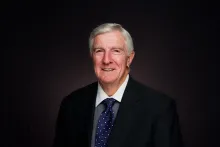
Before his retirement in 2021, Dr. Donald Ward pastored churches in Texas and Louisiana, and taught at Ambassador Bible College in Cincinnati, Ohio. He has also served as chairman of the Council of Elders of the United Church of God. He holds a BS degree; a BA in theology; a MS degree; a doctor’s degree in education from East Texas State University; and has completed 18 hours of graduate theology from SMU.
