
Robin S Webber
This sermon was given at the Oceanside, California 2016 Feast site.
This transcript was generated by AI and may contain errors. It is provided to assist those who may not be able to listen to the message.
Well, here we are, and as is the tradition in the Church of God community, so often on these festivals we ask, why are we here? And we are here on this, the eighth-day festival. Here we are in the midst of completing seven festivals of Almighty God that outline our Heavenly Father's saving work through Jesus Christ. I have a simple question for you this afternoon. I am a simple individual. I will try to give you some simple and profound answers out of the Bible. And my simple question is this. Why are we here on this eighth day? And what is the takeaway that God wants us to carry in our hearts back to this world that we re-enter? For dear friends here in this audience, the pilgrimage is not over. It is not done. For some of us, it is just beginning. For some of us, we will have days and months and years ahead. But we have not yet arrived. And I've come to understand that in our understanding of the Kingdom of God, it is not just simply a destination. It is a way of traveling. For indeed, we are pilgrims. And pilgrims continue forward, never putting down permanent routes in the travel that they take. For once they do, they are no longer pilgrims, but are moving to something better, something new, something greater, something yet out ahead. And we await that day when we enter not only into the Kingdom of God at the Trump, but to recognize that all of God's children are going to have an opportunity to know Him and come to know Him. We are a church that thinks big. We have been granted a revelation that thinks an enormity that takes all in because we understand the love of God and the revelation of God.
Today, I'm looking forward to preaching to you. We've had some fun during the feast. And it's good to have fun during the feast. And it's good to tell stories. But today, brethren, I am here to talk to you. I am here to preach to you. And I want to give you a little warning, can I? Is that all right if we talk for a moment? Can I give you a little warning? I'm planning to meddle with your hearts in the next hour. Because until we meddle with your hearts and reach deep and reach true, we are not really preaching. We might be teaching, but I was born to be a preacher. And I want to connect heart to heart. My heart with your heart, your heart, my heart with God's heart, so we know what this eighth day is about and what we are preparing for. I want to share something with you, and I will repeat it again because repetition is the best form of emphasis. For as we go out on this pilgrimage, in this world that we re-enter, there are three great themes of Scripture that I want to share with you today. Three great themes. They are echoes of God's purpose, plan, provisions, and promises that come down through the decades, the millennia, the centuries, and there is this constant echo that comes through the Scriptures. I want to share them with you. The three great themes. We might also call them the three great beacons of light. The three great beacons of light, just like some of you that went down to Point Loma and saw the old Spanish lighthouse, and to recognize the purpose of lighthouses is that when it is dark, when it is foggy, that those lighthouses are there. They are very altruistic in nature. They were created to serve man, to avoid accidents, to get us through the shoals that are on the shore. And that's why God gives us these three great themes and these three great beacons of light as you and I go back out into that darkened world around us. As we discuss them, I want to make a comment to you, please. I know my good friend Howard Marchbanks the other day talked about protesting and also the aspect of revolution. Revelation and revolution go in hand, and God has called us to be radical. I will not apologize for that word, especially when you understand where the word radical comes from. The word radical comes out of the Latin. The word is the base root in the Latin means roots.
Roots. We know how important roots are in our Southern California mountains when they have been destroyed by forest fires. And then we have the mudslides because there are no roots. God wants us to be radical. He wants us to be rooted and grounded because of what you and I have been called to. Not only what we are... Well, oh boy, there I go. I'm going back into that. There's this word in the church that says, the world. What I'm giving you today is not to join the cowardly lion and the Wizard of Oz who's scared of his tail. I want to give you the lighthouse. I want to give you the great themes of the Bible that you will hold in your breast, that you will hold in your heart, that will be embedded in your heart so deep that neither man nor trial nor challenge can touch them, can reach them. And they will be there in that temple within your heart of which Jesus Christ is on his throne, ruling and guiding your actions. Allow me to give you the first one right now. Join me if you would in Deuteronomy 7. We're just going to acquaint you with them, and then we're going to build upon them. Deuteronomy 7, verse 6. In Deuteronomy 7 and verse 6, and allow me to give it to you here, the first great theme of the Bible is simply this, and it speaks to Israel of old, and it speaks to the Israel of God today. Know that the Lord your God is God. Know that the Lord your God is God.
And you know, and I know that we will test it to the hilt again this year as we move away from this facility. Join me if you would in Deuteronomy 7, verse 6. For you are a holy people to the Lord your God. The Lord your God has chosen you to be a people for himself and a special treasure above all the peoples on the face of the earth. We hear sounds of 1 Peter coming through this. The Lord did not set his love on you, nor choose you because you were more in number than any other people, for you were the least of all peoples. But because the Lord loves you and because he would keep you, keep the oath which he swore to your fathers, the Lord has brought you out with a mighty hand and redeemed you from the house of bondage from the hand of Pharaoh, king of Egypt. First night now, that's all centered together as a congregation. Therefore, know that the Lord your God, he is God, the faithful God who keeps covenant and mercy for a thousand generations with those who love him and keep his commandments. The first great theme of the Bible is simply this, that we might know that the Lord your God is God. Join me if you would in Leviticus 26. In Leviticus 26, and let's pick up the thought in verse 9.
Leviticus 26 and verse 9, For I will look on you favorably and make you fruitful, and multiply you, and confirm my covenant with you. And again, recognizing that's the speaking of people of old and those that were under the old covenant. But as the Apostle Paul says in Galatians 6 and verse 16, You and I have been elected and chosen, selected, and have heeded that invitation, and have been grafted into the body, and that indeed we are the Israel of God. You shall eat the old harvest, and clear out the old because of the new. And notice verse 11, And I will set my tabernacle among you, and my soul shall not abhor you. Now verse 12, I will walk among you, and I will be your God, and you shall be my people. I am the Lord your God, who brought you out of the land of Egypt, that you should not be their slaves. Therefore, the second great theme is simply this, I will be their God, and they will be my people, and I will dwell with them. The third is Leviticus 11. Join me if you would there. Leviticus 11. And let's pick up the thought in verse 45. And Leviticus 11, verse 45 again says, For I am the Lord who brings you out of the land of Egypt. Not Moses, not a man. Oh yes, Moses had his part as he followed God and surrendered himself to God. But it was not the work of man. Again, it was by God's grace, by God's favor. It was not by human works that Israel came out of Egypt. For I am the Lord who brings you up out of the land of Egypt to be your God. You shall therefore be holy, for I am holy.
This repeats itself over in 1 Peter. Join me if you would for a moment, and then we'll begin to build. 1 Peter 1. And let's pick up the thought in verse 13.
Peter, speaking to the Israel of God. Verse 13. Therefore gird up the loins of your mind, and be sober, and rust your hope fully upon the grace that is to be brought to you at the revelation of Jesus Christ, as obedient children, not conforming yourselves to the former lust, as in your ignorance, but as He who called you. It is not whosoever will.
It is whosoever is called. It is holy. You also be holy in all of your conduct, because as it is written, be holy as I am holy. So, friends, let's stop for a second. Let's mark where we are right now. Are you with me? We've come to understand that there are three great themes that are seen throughout the Scriptures. 1. To know that the Lord your God is God. 2. That God will be our God, and we will be His people, and He desires to dwell with us.
3. That we might be holy as God is holy. The title of this eighth-day message centers on the first theme, which the other two flow from and build upon, because unless we incorporate that first theme fully in our lives and are immersed in it, and we understand it, as Mr. Horchak said several days ago, as to really, really make it real, then we cannot build. So, the title of this message is simply this. Know that the Lord your God is God.
That's why we're here during the eighth-day festival. To be renewed, to be refreshed, to be reinvigorated, to revolutionize our thinking, to move more away from that old man to the new person, to move more away from the old creation to the new creation, and be able to go out and as we meet the public, as we meet those at work, as we meet those at school, as we meet those that are in the neighborhood, as we talk to our family that they will know that you know and God knows above that you know that God is God.
That's the purpose of this message. This foundational theme of the Scriptures is mentioned a lot in the Bible, and I'm just going to go through some Scriptures. Let's go to Exodus 6 to begin with. In Exodus 6, we notice in Exodus 6 and verse 5 how God acquaints Himself with ancient Israel as they're in Egypt. In Exodus 6 and verse 5, notice what it says, And I have also heard the groaning of the children of Israel, whom the Egyptians keep in bondage, and I have remembered my covenant, going back, speaking of what he had promised to Abram.
Therefore, say to the children of Israel, I am the Lord, and I will bring you out from under the burdens of the Egyptians, and I will rescue you from their bondage, and I will redeem you with an outstretched arm and with great judgments, and I will take you as my people, and I will be your God.
Now notice verse 7, And then you shall know that I am the Lord your God, who brings you out from under the burdens of the Egyptians. One thing that we find when it comes to this theme of knowing that God is God, that God often issues His calling card in the deepest moments of anguish. It's not always in the sublime moments of life. It's not always when everything is going well this year. As you go back to Arizona or Utah, Nevada, back to Tennessee, there are going to come moments in your life, in the dark of night. Maybe something's happening at work. Maybe something's happening as far as the health crisis.
Maybe there's a challenge with your teenager. Aren't those fun years? And you do not know what to do with that child that has your name and that you love so much, and you're just not making it happen right now. And they will drop you on your knees because you have nowhere else to go. And it is in those moments, just as Israel of old, that you will come to know that the Lord your God is indeed God, and that He is a faithful God.
Join me if you would, just page over in Exodus 7 and verse 5. God not only shares this with covenant people, whether in the Old Testament or the New Testament, but He's also dealing with the world at times. Notice Exodus 7 and verse 5. And the Egyptians shall know that I am the Lord. When I stretch out my hand on Egypt and bring out the children of Israel from among them, Egypt would come to know that God is God.
But here's the point that I think again Mr. Horchak was making a couple days ago. It's one thing to know God, and that He is God. But it's another thing to yield to Him, to surrender to Him, to be a living sacrifice to Him. Two different ways. Simply knowing God, but not yielding ourselves to God, is two different worlds with two different outcomes.
We need to be aware that God exists. We need to accept that He exists, and then we need to act upon it. Exodus 10 and verse 1. Join me if you would for a moment. Again, going through Exodus verse 1. Now the Lord said to Moses, Go into Pharaoh, for I have hardened his heart and the heart of his servants, that I may show these signs of mine before him, and that you may tell in the hearing of your sons and your son's son the mighty things that I have done in Egypt, and my signs which I have done among them. Notice that you may know that I am the family name of God. I am the Lord. That's why we have so many young people here at the Feast. That's why the Feast is set in this framework of family. That is why, again, we think of the great concept of the Feast, that we gather the family. We break the bread. We tell the story. Again, we gather the family. We break the bread.
We tell the story. What story? What story? That the Lord our God is God. He's a faithful God.
That's the story that resonates. That's what allows us, as Mr. Liechtenstein said this morning, to have that key theme word that we rejoice because we know that in our heart of hearts. As we go away from this Feast, there is nothing that can rip that from our hearts.
That in this time and in this day and in this age, the great God has invited you and me to be participants in this kingdom experience. Again, join me if you would in Exodus 14.
In Exodus 14, when Israel was crossing the Red Sea and God was opening the sea, then He was going to close the sea. Notice what it says. So He made ready His chariot and took His people with Him. And speaking of Pharaoh, He took 600 choice chariots.
Verse 16. God speaking to Moses. But lift up your rod, and stretch out your hand over the sea, and divide it. And the children of Israel shall go on the dry ground through the midst of the sea. And indeed I will harden the hearts of the Egyptians, and they shall follow. And so I will gain honor over Pharaoh and over his army, his chariots and his horsemen. And then the Egyptians shall know that I am the Lord. When I have gained honor for myself over Pharaoh, his chariots and his horsemen. This is something that God above, the God who is God, wants all people to know. And there are people like the Egyptians that bumped into God, and that the mighty hand of God moved through time and space. He who is uncreated, and reached down into history, and halted the greatest empire on earth. They came to know that there was a force. God wanted to know that He is God above all gods, but that didn't mean that Egypt would obey. We even have the same story over in Daniel 4. Join me if you would for a moment. Come with me if you would. Let's open up the Bible here, and let's go to Daniel 4. A very famous story, and this takes place after the story with Meshach, Shadrach, and Abednego.
You might say that Nebneb, otherwise known as Nebuchadnezzar, almost got a little religion here after Meshach, Shadrach, and Abednego. And notice what's mentioned in chapter 4, verse 1, Nebuchadnezzar, the king, to all peoples, nations, and languages that dwell in all the earth. Peace be multiplied to you, and I thought it good to declare the signs and wonders that the most high God has worked for me. And how great are His signs, and how mighty His wonders! His kingdom is an everlasting kingdom, and His dominion is from generation to generation. Now, let's talk about this for a moment, can we? Here's Nebuchadnezzar, that head of gold in Daniel 2, one of the beast types. He bumped into God. He got some religion for a few verses, but that doesn't mean that He changed. There's a difference between a change that happens on the outside and the change that God wants in us that can only occur on the inside by surrendering ourselves to God. See, when you talk about the Egyptians and you talk about Israel, Israel had been in Egypt for hundreds of years. And, of course, the Egyptians worshipped all sorts of gods and goddesses for every reason, for every season. And so, when they found out about a new God, just like Nebuchadnezzar did, you know, a thousand years later, what they would do is, oh, here's a new God. And what they would do, it's like you all probably have like a fireplace with a mantle on it with different items on it. They go, oh, here's a new God. And they would just add.
But then, when Israel got to Sinai, God said, I am the Lord your God, which brought you out of Egypt. Clear the mantle. Scoot it all off. And, by the way, you're not going to put anything on that mantle because you cannot encapsulate the I Am. You will not see me. You can't put your mind around me. I can reveal to you what I'm like, but don't try to make a graven image after me because I can't be put in a box. Dear brethren, here in Oceanside, God has not called us to be like Nebuchadnezzar and to be so near and yet so far. He's not called us to the drinking fountain just to come so close and not to take a drink and have that living water. What does this have to do with and why we are here on the eighth day? Let's move now into the eighth day and how this affects what we do in knowing that our God is God. Let's consider a type of what points to what God is doing with us, the Israel of God. Join me if you would in Exodus 29. In Exodus 29, it is the story of the consecration of the priest of the house of Aaron.
And we find in Exodus 29 and verse 45, if you'll join me there, in Exodus 29.45.
Let's take note.
It simply says this.
Actually, let's go up to verse 43. I'm sorry note takers. If you're right, put down verse 45. Forgive me. Okay? Verse 43.
There's one of those themes.
The household of Aaron and the tabernacle had to be consecrated, had to be prepared for seven days in preparation. We go over to Leviticus. If you'll join me now, Leviticus 8. And let's pick up the rest of the story concurrent with this. Leviticus 8.
And let's pick up the thought in verse 35.
Therefore, you shall stay at the door of the tabernacle of meeting day and night for seven days and keep the charge of the Lord so that you may not die, for I have been commanded. And so Aaron and his sons did all the things that the Lord had commanded by the hand of Moses. Chapter 9, verse 1 now. Please notice. And it came to pass on the eighth day that Moses called Aaron and his sons and the elders of Israel. And he said to Aaron, take for yourself a young bowl. And it goes on to talk about what he instructed Aaron to do. Let's understand what is going on here, brethren, that the priesthood prepared for seven days, and the tabernacle was prepared for seven days. And it was on that eighth day, then, that they were prepared, then, for the sacred service that God wanted them to be a part of. The eighth day is a very, very special day. When you look at how God dealt with his peoples down to the ages, the different things that came up on the eighth day, and I'm going to build a little bit upon Mr. Lichtenstein for a moment, that many of us are acquainted with circumcision. And circumcision was prescribed on the eighth day as the male child was circumcised and given to God. Not only that, you go into Scripture and you recognize that the firstborn of both man and animal were dedicated and consecrated to God on the eighth day. You come to see this example that the priesthood and that the tabernacle was consecrated, then dedicated, and then the people of God could move in service to God on the eighth day. You come to recognize, as you go through the book of Ezekiel, that the millennial temple was consecrated on the eighth day. The eighth day is unique because, as was mentioned, it moves beyond the completion of what we call the completion that is in time and space of seven. And to recognize that we are moving on the eighth day towards something beautiful. Are you with me? Something wonderful. Something that God just gives us enough to understand that you and I want to give our lives for it. And that you and I, just like those priests of old, the house of Aaron and the tabernacle of old, you and I are now in this time. We have two things that God is doing the same with us. Maybe you've never heard this before. Maybe you're here for the very first time, but I'm just going to share it with you. You are being called, are you with me? You are being called to sacred service. We are in training now to become the priest of God in the future. Priests are teachers. Priests are teachers. And so, this eighth day reminds us that now, in this lifetime, in this world of time and space, we are being groomed by God the Father, Jesus Christ through the Holy Spirit to become a realm and a kingdom of priests to serve Him in the future. Join me, if you would, in 1 Peter 2. In 1 Peter 2. And let's pick up the thought, if we could, in verse 5. You also, as living stones, are built up a spiritual house a holy priesthood. But here, in Peter, he's not speaking to the house of Aaron.
He's speaking to the members of the body of Christ to offer up spiritual sacrifices, not goats, not bullets, not turtledoves, nor lambs, but ourselves to God through Jesus Christ. Brethren, the awesome wonderment of the Scriptures is to recognize that God is now preparing us to be a realm and a kingdom of priests. It was always his hope for his covenant people. He actually mentions that to Israel in Exodus 19. But they were a physical people, and we know what happened to Israel. We are a spiritual people. We're a spiritual nation, and God wants us to do that. Number two, remember when we were in the book of Exodus and Leviticus, where they were consecrated, as it were, number one, to prepare their priesthood, but also to consecrate the tabernacle. What does Paul tell us in 1 Corinthians 3? Join me if you would for a moment. In 1 Corinthians 3. And let's pick up the thought in verse 16.
Do you not know that you are the temple of God, and that the Spirit of God dwells in you?
If anyone defiles the temple of God, God will destroy him. For, notice, he comes back again with this thought, for the temple of God is holy, which temple you are.
Brethren, I've got news for you on this eighth day.
We are the living, walking, talking temple of God. Yes, indeed, we're flesh. We are meaty. But God calls us his temple. God places his Spirit in us. When we think of days of yore, when we think of the Shekinah presence coming down into the tabernacle and hovering around it, that is where God was. And today, Paul refers to us as being the temple of God, that God's presence, his essence, not just his attributes, love, power, and sound-mindedness, but his presence, his distilled nature, that divine nature that Peter speaks about, that God now dwells in us, that for this time he is tabernacling within us.
So therefore, we do not necessarily have to reach for him, but to understand that he is inside of us to draw upon that gift of the Holy Spirit that he has put in us and to understand the miracle and the dynamism of the revelation that God has given us. Now, why do I mention this to you on the eighth day? We say, well, Weber, you know, so far we've been in Exodus, Leviticus. When are you going to get to Revelation 21? It comes in about two hours, don't worry.
But to recognize this, brethren, we can't be more than we can be, and we cannot teach what we are not. We have been called as members of the body of Christ to be a faithful people, of knowing people, and to experience God now in our lives in this grooming of this sacred service of being priests in the wonderful world tomorrow and when God opens up his plan to all humanity.
Do you think that God just simply wanted to dabble with Pharaoh or meddle with Nebuchadnezzar, or that his favor is only upon Israel? To recognize that when we say our Heavenly Father and his Christ, that he loves every human being that has ever existed down through the ages.
We are blessed with three beautiful daughters. How do you love one daughter less than the other when they've all come out of the same factory? Susan! As a father, I would jump over a cliff and dive into a stream for any one of them. I would never think double. I would never think, well, I might for her, but not for her. And that comes down to the essence that as you and I leave this room in a few minutes, what will we take? I have a question for you. Can we talk? That means when you can nod. Let's talk. What is the essence of our belief? What is the takeaway that we will take out of these festivals that people will understand that we know that God is God, the faithful God? And how will God above our Father know that you know? Because He really wants to know that you know because He gave His Son, Jesus Christ, for you and me that we might know, that we might experience His grace, that we might be recipients of His unmerited pardon, and yet also have that sustaining grace as we go out into this world to continue to groom to be those sacred priests of His entraining. Allow me to share some very basic thoughts with you. I'm going to give you some verses. I'm going to copy my good friend Ralph Helge. I'm just going to go through some verses here for a moment. Here's what I consider the essence of our belief. A belief that will be tested.
Yes, indeed, a belief that will be tested. For indeed, our Savior never said that it would be easy. He never promised that it would be easy, but He did promise that it would be worth it.
So therefore, what is the essence of our belief as the people of God? It's the body of Christ, that if Jesus Christ is the head, then we have arms to reach out to others. We have feet to do His walking, a heart to do His moving into other people's lives. What makes us tick to face the challenges of life? 1. Genesis 1, 26-27. Genesis 1, 26-27, where God Almighty said to the one that is the Word, let us make man in our image after our likeness. That gives us every confidence that, no matter what we face, that you and I have been called to a life of destiny and not disaster. You and I have been called to a life of divine design and not accident. We are not the end result of love-sick amoeba having a photosynthesis encounter in a slimy pond in the Polycycine era.
We are made in the image of God, physical now, but as we move through the festivals, we come to understand that we are being called to be the immortal, spiritual children of God, and to, by the Father, through His Son, be invited into eternity by their grace. Genesis 3, verse 15, even as Adam and Eve were being ushered out of Eden, and it looked like everything was going bad in that prophetic promise that was mentioned this morning that God spoke to the serpent. He said, by the way, your seed will be stomped on the head by Eve's seed, and yes, you will get to bite the ankle of Eve's seed. But I have a question for you.
This is the PowerPoint. Don't miss it. I am the PowerPoint. What that is saying is simply this, is that there would be this challenge, and there would be this struggle down through the ages. And yes, in a sense, the seed or the serpent itself might bite the ankle. But the dynamism of that verse, the dynamism of that verse is that the seed of Eve, Jesus Christ Himself, would crush the head of the serpent. That was with my bad knee. Oh no!
What does Paul say in Romans 16 and verse 20, that the serpent's head will be crushed? God made a promise. And if you believe in God that He keeps His promises, He will keep them at the macro sense, and He will keep them at the micro sense in your life. Luke 19 and verse 10, where it speaks of Jesus the Christ, it calls Him the Son of Man, came to seek and to save the lost. We worship a God that is on the move.
He is the Good Shepherd. He is the one that seeks. He is the one that goes out of His way. He is the one that reaches through time and space and begins to work with our mind and work with our heart. As it says in Romans 8 and verse 14, for as many as are led by the Spirit of God, the same are the sons of God. We don't have a God running away from us.
We don't have a God in hiding. We have a God that is looking after us, moving towards us, desiring us with all of His being and with all of His heart. A God that loves us so very... Are you with me, friends? A God that loves us so very, very much that He gave His only begotten Son. Which leads me then to John 3, 16 and 18. The essential part of our belief that God so loved the world, that He gave His only begotten Son, that whosoever might believe within Him might have eternal life. That God sent His Son into this world not to condemn the world. But that the world through Him might be saved.
You say, well, it's not going to do with me. Well, let me ask you a question. Let's talk.
What kind of approach, what kind of an attitude do you have?
Do you have a nature about you that is negative?
Do you have a nature about you that is condemning? Do you have a nature in you that you just don't have a love for people?
Maybe you came into the ocean side with that nature.
Maybe you still have that nature on this eighth day.
That's not Christ-like. You need to get rid of it. You need to repent.
You need to ask for God's mercy. And then you need the help of the Scriptures. You need to feed and drink in of the Gospels. And how Jesus, our Savior, and our elder brother treated people. He embraced the Samaritan. He embraced the leper. He embraced the woman with the issue of blood.
His last buddy on earth was the thief on the cross that he resonated with as they hung above the earth nailed to pieces of wood.
While all the good church folk were down there condemning him, here is a man that was a criminal that God's Spirit was beginning to work with. And he said, you know, we deserve to be here, but this man does not. And Jesus said, you know what? Here's a man that I can do business with. Assuredly I say unto you, assuredly I say unto you, this day you shall see paradise. Now you know, and I know the punctuation of the words. That's not where I'm going right now. But Jesus never shrank from meeting people because he died for each and every person that has ever lived, and he loves each and every one of us. John 14 and verse 13. Ask in my name. You ask my Father in my name, and it will indeed be granted.
You know, there's power in the name of Jesus Christ.
God our Father above, on that magnificent throne of which he sits upon, when he hears the name of Jesus Christ his Son, he turns his head. And he remembers that forever moment that is a snapshot in his mind when he looked down and he saw his Son dying for you and for me. The faithful Son. The Son of man, indeed the Son of God, but the Son of man that knew that his Father was God, the faithful God. And in his last dying breath said, Into your hands I commit my spirit. That is the essence of our belief. I want to share one more thought. 2 Corinthians 12. Join me if you will there for a moment. In 2 Corinthians 12. And let's pick up the thought in verse 7. Interesting story. Many of you will be familiar with it. It's the story of the thorn in the flesh. 2 Corinthians 12 verse 7. Let's take a look.
It says in verse 8, let's pick up the thought. Let's pick in verse 7, And concerning this thing, I plead it with the Lord three times, that it might depart from me.
And Paul was expecting an answer just like you and I are going to expect an answer this year in Redlands or Los Angeles or in Las Vegas or in Nashville. And somehow we don't mean to, but we want to bring God down to simply being a cosmic bellboy. Ding, ding, ding. Hello!
And we expect our answer from his divine presence to answer us. But notice what it says here. Paul asked me, and he said to me, My grace is sufficient for you, for my strength is made perfect in weakness. Brother and I have a question for you here in Oceanside.
It's a very serious question. Is God's grace sufficient for you?
Having just been invited into his family in this lifetime, having experienced his grace and relationship with the Almighty, and him already being involved in your life and answering the prayers that he has prayed, is it enough? Is it enough just simply to know God and to have that intimate, immediate relationship with him that passeth all understanding?
Do we have to make our God a cosmic bellboy and that he's only as good as the last thing that he's done for us? Or do you and I realize that we have been called to sacred service? We have been just called to a church convention. We're not just a part of a roster on some local congregation. We are the members of the body of Christ.
The Lord Jesus Christ is the Lord of our life. His Father is the ruler of this universe, and we have had mercy visited upon us, and therefore we surrender our lives. Why is this important? Because we're going to be teaching all of those that are going to be coming up in the future to do that, and I'm going to be looking forward to that along with you.
This day is very, very important to me because I think of a story of two brothers.
There was an older brother and there was a younger brother, and the older brother just had to be the very best, wonderful 13-year-old boy that you could ever want in your family.
That older brother was the hero of the little brother, the eight-year-old. The older brother was smooth and calm and always said the right thing and would have been every parent's pleasure.
The little brother was very, very energetic and always on the go.
One night, those two brothers were in the back seat of a car.
They were both in their pajamas in a bathrobe because the little brother was going to be dropped off and the older brother was going to go to the hospital. That little brother will always remember what that older brother told him. He looked down to the little brother and said, you're looking at me as if you're never going to see me again.
That little brother never saw that big brother again.
Two days later, that brother died.
Our family moved from San Diego in 1963, but we hold a plot of land and of all places, Mount Hope Cemetery, the 3400 block of Market Street in San Diego.
That's where my older brother, John Phillip Flip Weber, lies and rests.
All of my life, all of my life, I've wanted to adopt people that are five years older than me, that are like my brother, that are like Flip.
And like that little brother say, come along, you come with me, we're going to have fun today, we're going to go out into these canyons of San Diego, chase jackrabbits, watch the tumbleweeds blow in the wind, let's climb a cliff together.
But all those people that I have met are not my brother. I love them, but they're not my brother, because all human beings only come just like our handprints, individually wrapped like a snowflake.
I remember, at eight years of age, the wails of anguish of my parents, having lost their child.
That's a lot for an eight-year-old to take in. It's been 57 years. It's still very hard for me to talk about, as you can tell. Sometimes I watch movies, and my wife will look at me because she knows that I'm going deep and expressing grief that I didn't do as a little eight-year-old American boy, where boys don't cry, and I'm still having to work that out.
I worship a God that is so big and so great that He's going to fill my heart again. My heart is filled with hope. I think by now you realize I am an optimist by nature. But there is still that sting of death of my brother Flip and your father and your mother and your brother and your sisters and those that have not known that the Lord our God is God, those that do not know that He wants to dwell amongst us and that He wants each and every human being that has ever lived to be holy as He is holy. So, on this day, I say this is to all the Flips in the world, the Margrets, the Saros, the Mohammeds, the Friedrichs, all the names of all the earth that are going to be raised to come to know that the Lord our God is God. Join me if you would in Ezekiel 37. Ezekiel 37. And let's pick up the thought in verse 1.
The hand of the Lord, verse 1, came upon me and brought me out of the in the Spirit of the Lord and set me down in the midst of the valley, and it was full of bones. And then He caused me to pass by them all around. And behold, there were many in that open valley, and indeed they were very dry.
And He said to me, Son of man, can these bones live? And so I answered, O Lord God, you know. And again He said to me, prophesy to these bones, and say to them, O dry bones, hear the word of the Lord. And thus the eternal God to these bones, surely I will cause breath to enter into you, and you shall live. And I will put sunus on you, and bring flesh upon you, cover you with skin, and put breath in you, and you shall live. And then you shall know that I am the Lord. There's that phrase, and then you shall know that I am the Lord. In this verse, just taken as it is, we come to understand, speaking to the house of Israel, that God does have unfinished business with the house of Israel. But we're going to expand upon that. Indeed, as I looked, the sinews and the flesh came upon them, and the skin covered them over. But there was no breath in them. And He said to me, prophesy to the breath, prophesy, son of man, say to the breath, Thus says the Lord God, Come from the four winds, O breath, and breathe on these slain, that they may live. And so I prophesied as He commanded me. And breath came into them, and they lived and stood upon their feet, an exceeding great army. And then He said, Son of man, these bones are the whole house of Israel. They indeed say, Our bones are dry. Our hope is lost, and we ourselves are cut off. Therefore prophesy and say to them, Thus says the Lord, Behold, O my people, I will open your graves and cause you to come up from your graves and bring you into the land of Israel. And then you shall know that I am the Lord. And when I have opened your graves, O my people, and brought you up from the graves. And notice, it's not just the bones that are rising, but what God's going to do. And I will put my spirit in you, and you shall live, and I will place you in your land. And then you shall know that I, the Lord, have spoken it and performed it, says the Eternal.
Now, when we look at Ezekiel 37, we understand that in context it is speaking with God's unfinished business to Israel. But do I dare say, Are you with me? I believe that the house of Israel is a but a model of what God desires for all of humanity. They are firstfruits, after all. It says in Jeremiah, They are a model, but I do not believe that they have a monopoly on God's love and concern. That what God said in Genesis 1, 26-27, Let us make man in our image after our likeness.
That the process is a process that goes from dust to spirit. God in the Scripture says that I am not a respecter of persons. Jesus loves every human being and knows them by name of those that he died for. And I believe that day is going to come. I believe that God gives us a panorama and a GPS.
I may not understand everything, but I get a sense. Are you with me? Do you have that same sense of the God that we love? The God that we love? A God that fulfills his promises? The God that says that I will declare the end from the beginning and the beginning from the end, and I will do my purpose and I will do my plan and I will do my pleasure for your father, for your mother, for the little African boy of the 1300s that lived outside of Timbuktu, that was then Islamic, or the little Chinese boy going down the Yangtze River, or the little Indian lad going down the Indus River, that all of God's children will have the same opportunity that you and I have had. And the privilege that you and I have had, brethren, is that at this time you and I are in training, sacred service, that we have surrendered our lives to God Almighty to do this.
Knowing all of these truths makes us optimistic.
A Christian cannot help but be optimistic. We worship the great God. We worship a God that opens seas. We worship a God that opens doors. We worship a God that opens hearts. We worship a God that when doors don't open, he just walks through walls. Makes it simple.
We worship a God in which there is no stone too heavy that He will not help you and me this coming year. The one verse that is so elemental and so essential to our faith, and I left out earlier, is simply this. So, brethren, let me wrap it up here. Why are we here? Why are we here?
What manner a person then ought we to be?
I'd like to quote from Walt Whitman from 150 years ago. Walt Whitman said this, O me, O life, of the questions of these recurring, of the endless trains of the faithless, of the cities filled with the foolish, what good amid these, O me, O life? Answer, that you are here. Answer, that life exists and identity, and that the powerful play goes on, and that you may contribute a verse.
Brethren, as we leave Oceanside this afternoon, allow me to tell you the powerful play will go on.
Our pilgrimage in this way will continue until the day of our death, or when we hear the trumpet sound.
But let us remember those three great themes, those three great themes of Scripture that echo down through the ages, through various voices, but they're all the voice of God, that He wants each and every one of those that are training to be sacred priests to help those in the millions and the billions that are going to come up to simply know three things. Number one, to know that I am God, your God, the faithful God, to know the intimacy that God desires, that He wants to dwell with us and be in our midst, and that we have that privilege of doing that as we bid Him welcome into our lives and our hearts, and through His Spirit and through His forbearance, come to be holy as He is holy. Let us wrap up this message today and this feast by turning to Revelation 21.
You and I have a glorious vision of the future, the same that the patriarchs of old had, the apostles had, and all the little people that have had a great faith and a great hope down through the ages. You and I look forward to this time in Revelation 21 when indeed God our Father will come down from the heavens after this world is indeed sacred, and all of those that follow the way will be on this earth, and as this earth moves from time and space and into eternity, where everything, everything, everything will be holy, will be sacred, for our Father above, our Father above says that the pure shall indeed see Him. Now I saw heaven and a new earth, for the first heaven and the first earth had passed away. Also there was no more sea, and then I, John, saw that holy city, New Jerusalem, coming down out of heaven from God, prepared as a bride adorned for her husband. And I heard a loud voice from heaven saying, Behold, the tabernacle of God is with men, and they shall be His people, and God Himself will be with them and be their God. And God will wipe away every tear from their eyes. There shall be no more death, nor sorrow, nor crying. And when my brother is resurrected, and my family has the opportunity and sacred service on behalf of Jesus Christ to work with Him, I'm going to be able to tell Flip, Flip, you were right all along. I am seeing you again, for there shall be no more pain, for the former things have passed. And then he who sat on the throne said, Behold, I make all things new. And he said this for you and for me two thousand years ago in this vision for John, write, write, for these words are true. They're faithful. For after all, I am God. The God I have spoken about today is your God, my God, the faithful God. May He deserve and receive all honor and praise. And as the book of Revelation ends, I know it is all of our prayer, Come, Lord Jesus, come. At this time, I'm going to call upon Greg Hilgen and Mrs. Ingrid Helgry to come forward. And they are going to be singing the New Jerusalem. And with that new song, we're also going to be singing along with them. It's been a wonder. It's been a joy being with all of you these seven days plus one. May God bless each and every one of you and keep you as we move forward on the journey, moving towards the destination of the Kingdom of God in all of its fullness.
Thank you.
I saw a whole city descending round the sky. So brilliant, the night of God, the city is bright. There is no chapel in this town, no sun, no moon, no lamp. For God's own glory is to light. You are created by the Lamb. Then God Himself will wipe the tears from everywhere below. No death, no pain, no morning climb, and every tear may dry. And now our God will dwell with them, and you shall rule so well. And He Himself will walk through with them, and you shall rule so well.
And so let all of those who first come now and drink for free. And to the one who overcomes, come now and you will see.
Behold, the old has passed away, now everything is new. The now-fulent, who make us worse, are trustworthy, and so true. And God Himself will wipe the tears from every weeping eye. No death, no pain, no morning cry, and every tear may dry. And now our God will dwell with them, and you shall rule so well. And He Himself will walk through with them, and you shall rule so well. And now our God will dwell with them, and you shall rule so well. And He Himself will walk through with them, and you shall rule so well. And He Himself will walk with them, and you shall rule so well.
And now our God will dwell with them, and you shall rule so well.
And now our God will dwell with them.
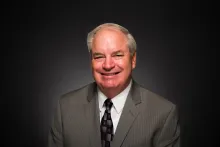
Robin Webber was born in Chicago, Illinois, in 1951, but has lived most of his life in California. He has been a part of the Church of God community since 1963. He attended Ambassador College in Pasadena from 1969-1973. He majored in theology and history.
Mr. Webber's interest remains in the study of history, socio-economics and literature. Over the years, he has offered his services to museums as a docent to share his enthusiasm and passions regarding these areas of expertise.
When time permits, he loves to go mountain biking on nearby ranch land and meet his wife as she hikes toward him.
