

Robin S Webber
This transcript was generated by AI and may contain errors. It is provided to assist those who may not be able to listen to the message.
Well, what a beautiful day to have nice music. We're switching microphones here for a second. They'll get my voice in an unleavened manner in a moment, perhaps in the twinkling of an eye.
Well, I realize that we have some people that have been visiting with us over the weekend, and some of you, maybe others that I have not yet met, are attending the United Church of God for the very first time. And here we are on this, what is called the first high day of the Days of Unleavened Bread. I'd like to just explain for a moment, maybe you came in through the door today, and I'm not quite sure what this is all about, but to recognize that we are a church that looks at the Bible as one book, one book, given to us by one God.
And we strive as best as we can. We strive to emulate the examples that are set before us by the people of old, and by Jesus Christ Himself, and by the apostles, that we look upon what they were doing. We look upon that they continue to observe those festivals that were first given nearly 3,500 years ago in Sinai. But that today, as a covenant people, not old covenant, but new covenant, we observe those festivals in the light of Jesus' life and His death, His resurrection, His ascension, and the Second Coming that is spoken about throughout the Bible.
So we find that these are festivals that are given both to those that were of the old covenant and to those that were with Jesus on that night when He says, I give to you the wine which is of the new covenant.
And yet we find examples in Scripture that those same individuals were in their time still observing what we call the festivals of God which have holy days in them. This is one of those holy days that we are observing today. Perhaps there's no better example of putting into microcosm what I'm talking about, other than turning to 1 Corinthians 5.
Join me if you would there, because the book of Corinthians, and maybe you are not aware of this, but the book of Corinthians basically centers around the time of the New Testament Passover and the days of Unleavened Bread. The words and the messaging are very powerful. The Corinth church was a newer church. It was basically Hellenic or Greek by stock. Paul had to do a lot of homework with them and a lot of mentoring for them to understand what God was asking for them to respond to in the Gospel.
They had some challenges. They had some internal issues in the congregation that they were not handling properly. Paul came down a little heavy as their pastor, came down a little heavy and told them, you're not quite getting it. You're putting up too much with that which God called you out of. And that brings us into 1 Corinthians 5, where after they had finally dealt with the individual that needed to be dealt with, we notice what it says here in 1 Corinthians 5 and verse 6, your glorying is not good.
Do you not know that a little leavened, so he introduces this aspect of leavening, which is that yeast agent that expands and allows the bread to arise. It says here that, know that a little leavened leavens the whole lump.
Just getting a little bit in there, it begins to spread and begins to metastasize. And pretty soon it engages as an active ingredient with the other ingredient and becomes one. Therefore, purge out the old leaven that you may be a new lump, since you truly are unleavened, for indeed Christ, our Passover was sacrificed for us. Therefore, let us keep the feast, not with old leaven, nor with the leaven of malice and wickedness. So we see that the analogy moves from leaven, which you might find on your shelf or in the baker's store, but now moves to this metaphor of wickedness and malice, but with the unleavened bread of sincerity and truth.
Two opposites. On one side you have malice and wickedness, and on the other side the unleavened bread of sincerity or wholeness of purity and truth. So we look at this and we understand that. We see that. But then Paul builds upon this in a later writing. I'd like you to join me in 2 Corinthians 5, because the key that we take out of the verse I just read is that we're to be something that we had not been before God first started working with us, leading us by His Spirit, and then at baptism being given the indwelling of His Spirit.
Now we turn to another aspect of expansion, 2 Corinthians 5 and verse 17. Let's take a note here. It says, therefore, if anyone is in Christ and or abiding in Christ, he is something new. He's a new creation.
Old things have passed away, and behold, all things have become new.
So we notice two key concepts that we're going to build upon for the rest of this message. Number one, we are to be a new lump.
A new lump. Number two, God's purpose is He truly is creating a new creation. Let's understand that. The initial creation, the Genesis account, is about a creation that was made out of dust. That's the easiest way of putting it. That which was made out of mud, that which was made out of clay. But now, that which composes the body of Christ is not dust. It is not stardust. It is of the Spirit. It's something different. It's something that comes down from heaven. It's something that involves God and Jesus Christ. It is new. It is different. Allow me to put it this way, may I? It's not of this world. We'll build upon that a little bit later. Again, let's move to another verse to lay a foundation that we're going to build upon. Join me if you would in Matthew 13.
Matthew 13.
Now, here we are during the days of Unleavened Bread. Normally, during the days of Unleavened Bread, we get a little nervous about the L-word. Do you know what the L-word is? L-ev-en. It's like this. Uh-oh. But did you realize that the Bible actually speaks about leavening in a very positive sense? Did you know that? It speaks about leavening in a very positive sense during the days of Unleavened Bread. Notice what it says in Matthew 13 and in verse 33. Another parable, he spoke to them, the kingdom of heaven is like leaven.
It's not hard to forget. Heaven and leaven. That's not a difficult one. The kingdom of God, sometimes that's the last thing we think about, that the kingdom of God would be like leaven.
The pastor is talking about this during the days of Unleavened Bread. The kingdom of God is like leaven, which a woman took and hid in three measures of meal till it was all leavened. We recognize that sin, unchecked, bears out the lesson of leaven during these days of Unleavened Bread. We recognize that a little leaven leavens the whole lump. But did you notice this? God says the kingdom of heaven. That term is used in Matthew. It's not used in other accounts. Matthew uses this account, calling it the kingdom of heaven. Same thing as the kingdom of God, synonymous with what God is doing. He says that it's likened to leaven expanding.
He's speaking of it in a very positive, expanding, and developing sense in us. Again, let's go to another scripture. We're building up to a point here. How can I best explain that? Galatians 2 and verse 20. Join me if you would, please. Galatians 2 and verse 20.
Oh, that's what it says here.
Galatians 2 and verse 20. I have been crucified with Christ. That's what we said the other evening as we renewed the new covenant, that as He died, likewise, figuratively, we have died. And yes, need are willing to die for Jesus Christ. It is no longer I who live. Oh, those ingredients that were there before are now left. But Christ lives in me, and the life which I now live in the flesh, I live by faith in the Son of God, who loved me and gave Himself for me. We are diminished that His life, the Father's love, and Christ's love can expand in us and replace that which was with that which is ageless.
Now, in all of this, as I started with the book of Corinthians, lest we become too hard on the Corinthians, and so that we can fully understand some of the words of Paul that I've used here this afternoon, let's understand three things. This is simple. You might want to jot it down. Number one, baptism is an event. Baptism is an event. Number one, partaking of the symbols the other evening of Christ's sacrifice is a responsibility that we do once a year. I mean, but conversion is a process. One is event. Another is a responsibility. But conversion, it's a process. It's going to take some time. It is taking time. It's a journey. Put your seat belt on. Have your airbag deployed. It's going to take everything that you and I have, along with what God's Spirit gives us, to make it to the end.
What I want to talk about today is simply this. How do we deal with that new lump? How do we deal with that new creation? What I'd like to do today is I would like to give you a scriptural recipe. I'm going to give you a scriptural recipe so that we can understand the leaven that comes from the kingdom of heaven. There is a scriptural recipe they want to give you. It's going to be simple because each one of these is going to begin with one word, new. It's a good way of remembering. We're going to keep on hitting new, new, new, and new. The first thing I'd like to acquaint you with is point number one.
In dealing with the new man, in dealing with the new lump, in dealing with that which is the new creation, let's start with number one, the new covenant. Let's go back to basics. Let's go to Jeremiah 31, 31. This is what God offers us in Jeremiah 31, verse 31.
Israel to this point, around 600 BC, had been under the old covenant. But through Jeremiah, something was mentioned that was yet to come. Something that would be special. Something that would be new. And we pick it up here in Jeremiah 31, 31. Behold, the days are coming, says the Lord, when I will make a new covenant with the house of Israel and with the house of Judah.
Not according to the covenant that I made with their fathers in that day. I took them by the hand to lead them out of the land of Egypt. My covenant, which they broke, even though I was a husband to them, says the Lord.
Doesn't say anything about the law being bad.
It doesn't put the law on a shelf that you don't want to reach for.
Didn't say that the fault was in the law.
God is love, and God's law defined his love. What part of God don't we appreciate love and like?
And it says that God does not change. So we have to look into this and understand where the issues were. The issues were not with the law, the issues were with the people. They broke. Even though he was this loving husband type to them.
But this is the covenant that I will make with the house of Israel after these days, says the Lord. I will put my law in their minds.
I will notice, write it on their hearts.
And one thing does not change that never changes. And I will be their God, and they shall be my people.
And no more shall every man teach his neighbor, and every man his brother, saying, Know the Lord. For they all shall know me, from the least of them to the greatest of them, says the Lord. For I will forgive their iniquity, and their sins I will remember no more. Now this is repeated again in Hebrews 8, 6, through 10. So that covenant is mentioned both in the Old Testament and the New Testament. By the way, I've got good news for you. God didn't change his mind over those 700 years. When God promises something, he delivers. Now what is interesting about this new covenant, let's take it apart for just a moment here, because this is a major ingredient of the new lump, that God gives a gift, and we have responsibility. But let's understand some of the gifts that God gives us through this the new covenant. Number one, he gives us better promises. He says here right in the scripture that there's something even better, better than something that is written on stone, that you have to carry, that somebody can run off with. He says you're going to write it in our hearts and in our minds. He's not going to be an outside God. He's going to be an interior being dwelling inside of us under this, the covenant. Number two, he offers a better mediator, offers a better priesthood. Join me if you would in Hebrews 7. In Hebrews 7, let's pick up the thought in verse 20. Notice what it says here. Inasmuch as he was not made priest without an oath, for they have become priest without an oath, but he with an oath by him who said to him, the Lord has sworn and will not relent, you are a priest forever, speaking of Jesus Christ, according to the order of Melchizedek. By so much more Jesus has become a surety of a better covenant. That surety means he is it. He's the down payment.
He's the guarantee. Also, there were many priests because they were prevented by death from continuing, but he, because he continues forever, has an unchangeable priesthood. Therefore, he is able to save to the uttermost those who come to God through him, since he always lives to make intercession for them. For such a high priest was fitting for us, who is holy, harmless, undefiled, separate from sinners, and has become higher than the heavens. Who does not need daily as those high priests to offer up sacrifices, first for his own sins and then for the people's? For this he did once and for all when he offered himself who we worship and who God recognizes, that when we say in Jesus' name and God the Father's ear bends towards us, he did it. It's done! There's probably things that we do sometimes. Well, it didn't get quite right on Monday. I've got tomorrow. Tuesday. Glad Wednesday's coming.
Start over again. Life can kind of be like that hamster wheel, using up a lot of time, using up a lot of space, but not going anywhere.
When God the Father sent his Son, and his Son willingly divorced himself of divinity, became as we, and lived that perfect life, humbled himself in that death, he did everything according to his Father's will, and he gave blood. His flesh was that of the Son of Man, but that which was inside of him, that blood was that of the divine. He was the Son of God. He was the Son of Man. And when he gave that, that was all done.
No more going up and down steps. No more going in and out of holy of holies. What he did, it was done. Fantastic. Wonderful. For this he did once and for all when he offered himself up. For the law appoints his high priest men who have weakness, but the word of the oath, which came after the law, appoints the Son who has been perfected forever. Chapter 8, verse 1. Now this is the main point. Paul would say it this way today, get this. This is the main point of the things we're saying. We have such a high priest who is seated at the right hand of the throne of majesty in the heavens, a minister of the sanctuary and of the true tabernacle, which the Lord erected and not man. During this, the days of Unleavened Bread is the wave sheaf. And that wave sheaf was offered up for nearly 1500 years to God almighty, portraying that there would be a time of the acceptance of he who had been dead, he who was resurrected. But now, as God said in the beginning of his ministry, at the end, this is my son in whom I am well pleased and I accept him. And he went up to where he always belonged and now sits at the right hand of God as our Savior and as our high priest. We have better promises. We have a better priesthood. We also, brethren, have a better hope. Join me if you would in Hebrews 7.19. In Hebrews 7 and verse 19, notice what it says here, For the law made nothing perfect, on the other hand, there is the bringing of a better hope through which we can draw near to God. We have a better hope. Indeed, we do. Our better hope is more than a promised land based upon conditional obedience.
The old covenant was based upon—are you with me?—conditional obedience. I will be your God. You will be my people. You do this. You will be blessed. You don't do this. You will be cursed.
When God came along under the new covenant, he understood that he was the one who was the one who understood that we came to him both, yes, one, in repentance, but number two in faith.
And faith that he was a good God, the God of grace, the God that saw in us, as Dennis was bringing out today, that our desire is to practice righteousness. Even as we stumble, our desire in our heart is bent towards practicing righteousness. So it's not like the carpet is being pulled out underneath us all of the time. God is firm. God is steady. God wants to give to us what he has promised—familyhood in his family. Romans 15 verse 13.
Romans 15 verse 13. Let's notice what it says.
Now may the God of hope fill you with all joy and peace. Notice in believing, and we're going to build upon that aspect of believing, that you may abound in hope by the power of the Holy Spirit. Not abound in fear, not abound in wondering, but to abound in hope. Now God is desirous of giving this to us, which leads us now to the second point—another new.
Have you ever gotten a gift from somebody and you know it's a big box? You go, wow! And you shake it, so heavy it's so heavy you can barely pick it up, and you shake it. What's in there? And then you open it and you go, wow! Can't wait to use it! But then you recognize batteries not included? Or am I the only one that's had those kind of boxes before? This new covenant, God includes the batteries. When we covenant with God and when we have accepted Jesus Christ as that which is our propitiation, God gives us more than batteries. He gives us—are you ready? Number two, a new spirit, and He gives us a new heart. Join me if you would. Let's understand this in Ezekiel 11 and verse 19. In Ezekiel 11—back again in the Old Testament, one book—because God was telling us what He was going to give us. In Ezekiel 11—and let's pick up the thought in verse 19—then, speaking of the day when that new covenant would be given—now, again, Ezekiel is primarily written, in a sense, to Israel at that time. But the model fits, and the expansion is to all humanity, and ultimately to what is called the Israel of God out of Galatians 6, 16. The church, the body of Christ, the Israel of God. They're all synonymous, and they all have the same heavenly Father. Then I will give them—notice—one heart, and I will put a new spirit within them, and I will take that stony heart out of their flesh and give them a heart, a flesh.
That they may walk in my statutes and keep my judgments and do them.
There it is again, that aspect of covenant. And they shall be my people, and I shall be their God.
Now, what's very important in understanding all of this is He's going to give one heart.
Now, that can be spoken about collectively to people, but let's think about it this way, if you're with me. One heart means not a divided heart. Not divided, as Mr. Star Wars brought out in his fine verse message that, okay, whose slave am I today? Am I going to be a slave of sin, or am I going to be a slave of righteousness under the new covenant with God giving His Spirit? What is God's Spirit is no less than God. It's His essence. It is what He and Jesus Christ are. God is holy. God is Spirit. The Christ is holy. He is Spirit. God says in Psalms 104 in verse 30, I send forth My Spirit, and they are created. God sends forth this Spirit. He sends forth what He is, and that Spirit indwells in us. It's His marker on us, and it's the batteries that we need to do that which is pleasing in His sight. Very important here, brethren. It says that He will give a new heart. He doesn't say that He's going to give a transplant. Not a transplant. Not another human heart. I know people do that today, and that's wonderful, those that donate organs, and they somebody can pick up their heart. I know years ago, about 30 years ago, they were they were transplanting baboons hearts and people around where I live, up in the SDA hospital up there. That'll make a monkey out of you. Just joking.
That's not in my notes. That must have been a part of the blessing today. Okay.
All kidding aside, moving back to seriousness, brethren, we that are under the new covenant, we have a new heart. That which is fleshly is removed. God has put a new heart in us.
He's put it in us. We have to use it. We have to lean towards it. We have to respond to its beat.
We have to respond to the life that comes from God above and yield to that heart. Jeremiah 32, in verse 39. Join me there for a moment. Jeremiah 32, verse 39.
Again, then I will give them one heart and one way that they may fear me forever for the good of them and their children after them. You know, when you look at that word, fear, God doesn't give us a new heart, so we'll quake before Him. That fear can be better translated to respect, to stand in awe, to revere what He is doing with us. This is an incredible thing, and this is a beautiful thing. It's a wonderful thing. God's always desired. You know, one thing sometimes—can we talk a moment? Sometimes people think, well, you know, that Old Testament, that's a whole different story. God had a different plan, different way back then. But join me if you would for a moment. Interesting Scripture here. Join me if you would in Deuteronomy 30, verse 6. Show you a verse that may be your eye or heart, as it were, has never landed upon. In Deuteronomy 30, verse 6, notice what it says here, and the Lord your God will circumcise your heart, and the heart of your descendants to love the Lord your God with all your heart and all your soul that you may live. God is always centered on the heart. God wants to get inside of us. God wants all of us. He just doesn't want the outside. He wants the inside. He wants our heart.
The heart of and by itself is not strictly a New Testament phenomena. God wanted Adam and Eve's heart. He didn't get it. God wanted the children of Noah's heart. He might have gotten one. God's always wanted our hearts. He's a heart God.
Knowledge, at its best, will take you seven feet in this lifetime, one foot back and six feet down, added up. But when our heart is right with God and we've surrendered our heart to God and given this who has given us this covenant, a heart that is not looking for loopholes. Let's understand some of you that are hearing about covenants for the first time. A covenant is until death do you part. A covenant is made by blood. That of the old was by goat, lamb, and or turtledove. That which is of the new by the Son of God himself. A covenant is for life. Contracts are for lawyers.
Lawyers that are looking for loopholes and their clients that are looking for loopholes. There is no loophole when it comes to being a slave of righteousness. It's a daily work that needs a new heart, that needs a new spirit. Sometimes our hearts will wake up in the morning and we'll want to do something. But then we'll get a little bit like, you know, scarlet or a hero. When things aren't working out, dear scarlet and gone with the wind, oh, fill ID. But, well, there's always tomorrow. Then the clouds part, the music begins, etc., etc. I want to share something about tomorrow. May I? Tomorrow sometimes will when you go to sleep. You wake up in the dawn at Lux Brighter.
But also tomorrow is the graveyard of a million aspirations. How often have we said, well, tomorrow I will begin. Tomorrow I will start. Tomorrow I'll do this. Tomorrow I will do that. Tomorrow, tomorrow, tomorrow. Here, brethren of San Diego, is the great lesson of the days of 11 bread and why we eat on 11 bread. Join me, if you would, in Exodus 12 and verse 11. Exodus 12, verse 11.
Exodus 12 and verse 11 says, And thus you shall eat with a belt on your waist, your sandals on your feet, and your staff in your hand, so you shall eat in haste. It is the Lord's Passover. For I will pass through the land of Egypt on that night, and will strike all the firstborn in the land of Egypt, both man and beast, and against all the gods of Egypt. I will execute judgment. I am the Lord. So are you with me? They had to have sandals on their feet. They had to have the staff in their hand. And they had to have a heart that was ready to go. The reason, brethren, why we eat unleavened bread on this, the festival unleavened bread, is to remind us that God, above all gods, the one true God, leveled Egypt in a night. And then he said, Go Israel, go! When that moment comes, you've got to be ready to go. You have those sandals on your feet. You have that staff in your hand. You have a heart that's leaning forward. You go. Because it's going to happen so quickly that the bread's not going to be able to rise. That's how great the God is, the I AM, that is going to lead you out of Egypt.
He will do it. Not Moses. He alone will do it. But you've got to be ready. And what he initiates and you have to be willing to respond to.
Exodus 20, I am the Lord which brought you out of the land of Egypt. You shall have no other gods before me. The days of unleavened bread center around the aspect of A, the mighty God, and that when he delivers, it comes so mightily and so quickly that you've got to be willing and ready to respond. Deuteronomy 16.3, just to make that point. Deuteronomy, fifth book of the law. You shall eat no unleavened bread with it. Seven days you shall eat unleavened bread with it. That is the bread of affliction for you came out of the land of Egypt in haste.
That you may remember that day in which you came out of the land of Egypt. The day of your, the days, all the days of your life. You are to keep the days of unleavened bread to remember where you were before God began to deal with you. Whether of old or in our lives today, in the 21st century. And that when God enters into your life, be ready to move. Make haste.
Don't say tomorrow. Don't say, as it says in the book of James, oh, if down the line I do this, and oh, today is the day. The moment is the moment. I know something I'll share with you, and I know Susan was there years ago when we heard this message. One of the best messages I ever heard, and that was simply that. How often, I'm speaking to myself, how often do we say that we should fast? And then this comes up, and that comes up, and this comes up, and at the end of the day who wants to go hungry? And this comes up, and that comes up, and the best sermonette that I've ever heard, other than all of yours, was when you fast, fast, fast. When you fast, fast, fast. If God's putting that impulse in His Spirit in you to fast, don't put it off. Move. What are you, brethren, dear brethren, sitting upon right now, thinking about, molding about, wondering about, that you're putting off to a better time, to a better day, and not doing it today. These days of Unleavened Bread can be life-changers, heart-changers.
The greatest lesson out of the days of Unleavened Bread is that you and I worship a mighty God, and a loving God who has made covenant with us, given us a Spirit, given us a heart, but we have to, with that heart, be willing to respond. God's willing to give us everything, and He asks us to surrender and to respond. I have a question for you that only you can answer.
No, you go into Rite Aid, or you go into Walgreens, you have these machines, you know, no, go into your, you know, tell you about your heart.
What is your response pulse?
To our Master of Spiritual Position, when He sends you something to do. How quick are you to respond? Mr. Smith gets up here and speaks on healing. I heard it was a very fine message. Mr. Clark gets up here. Mr. Garden, how are others? How quick are we to respond to a message that we've heard? How quickly are we responding to what we read in God's Word when it's right between our eyes, right between our hearts? How quick are we to respond to our wives that are the closest thing to us that God uses to mold and to shape us? How quick are we to respond? The whole lesson of the Days of Unleavened Bread is to make haste, to respond. Well, that's for ancient Israel. But we can use that example today. Mondays, Tuesdays, Wednesdays, this high day. Did you just kind of come to this high day and say, I don't say, no, no, you know, I'll see who's in church today and I'll kind of come and, you know, hear about Unleavened Bread again and, you know, I'll give an offer. And, you know, somebody will play a little music and, you know, and, you know, do a little soft shoot, you know, yeah, you know, you know, kind of like a ritual, kind of like being that hamster, you know, just going around and around and around and not really going anywhere. God says on this, the Days of Unleavened Bread, get up, get ready, get moving, have those spiritual sandals on your feet, have that staff in your hand, have a heart that is leaning forward, that is not dulled by the hearing of God's Word, that is not dulled by God's servant speaking to us, that understands that we have a heart, that we have a spirit, that is from somewhere else other than down here below that God has given us. Brethren, we need to wake up on this, the high day. Wake up. Be inspired.
Understand that God's calling us to be a new creation, a new lump in His service for His cause, for His calling.
Let me go to another one here.
I'm going to give the third one. We'll conclude. I had 20, but we'll just go three.
Because I know you have your sandals and your staff ready to go at a certain time. God's called us to a new and a living way, a new and a living way. Join me if you would in Hebrews 10.
In Hebrews 10.
Let's pick up the thought in verse 19. Therefore, brethren, having boldness to enter to the holiest by the blood of Jesus, by a new and a living way, which He consecrated for us through the veil, that is His flesh.
And having a high priest over the house of God, let us draw near again with that true heart in full assurance of faith. Having our hearts sprinkled from an evil conscience in our bodies washed with pure water. And let us hold fast the confession of our hope without wavering, for He who promised is faithful. He changes not. In this day and age, and we recognize the technology and how it's just propelling forward so rapidly, and just when you have something, it changes and you have to get a new one to keep up with the Joneses, the Smiths, and or the Perezes.
And just when you think you got it, you have to start all over with a new gizmo, a new little machine, a new buzz, a new beep, a new attachment, a new this and a new that. Brethren, there is a joy in life that we don't have to start over with the same God. He's faithful. He's the same yesterday, today, and forever. It says in James that with Him there is no shadow of turning. What you read is what you get, and we come to Him in belief and confidence of this new and living way which He has given us. Let me share something about His messenger, His Son, Jesus the Christ. People have thought about Him and written books about Him by the thousands and the thousands and thousands. Let me share a little story here. Jesus said to the theologians, who do you say that I am? And the theologians replied, you are the eschatological manifestation of the ground of our being. You are the actualization of the potential God-Man relationship which is divine. You are intended truth about every man. You are the kirigma manifest in conflict at the cutting edges of the humanizing process. You are the paradigm of human perfection. And Jesus said, what? What?
Today, so much study sometimes, and even too much knowledge, blocks us to the simplicity which is in Jesus Christ. It is not only in seminaries, but it can also be found in the Church of God and Church of God members, if we're not careful, as to knowledge and perhaps moving into areas that God has not entered. I'd like to share an opposite story about that, showing that simplicity. A teacher was guiding a young pupil towards further studies in Christianity.
He rightfully warned her that she had many choices set before her because different instructors taught a different Jesus. He asked her then, well, which Jesus will you study? And she simply applied the one who rose from the dead. That's the one that she wanted to get to know about. She didn't have all that theological gobbledygook. She had belief, as a young lady, that God sent His Son, that Son lived that perfect life, died that humble death, and was resurrected. To her, the resurrection was not fiction. To her, the resurrection was truth. 1 Corinthians 15 and verse 1. This is what this new and living way is based upon. This is what the Apostle Paul taught wherever he went. Moreover, brethren, in verse 1, I declare to you the gospel that good news which I preached to you, which also you received, and in which you stand, by which also you are saved. If you hold fast that word which I preached to you, unless you believe in vain, for I delivered you first of all that which I also received from a theologian. No, I didn't say that. That I received from Jesus the Christ. That's who He received it from. That He died for our sins according to the Scriptures. And that He was buried. And that He rose again on the third day according to the Scriptures. And that He was seen by Peter, and then by the twelve, and then over by five hundred people.
Brethren, let's talk about this for a moment. It is during these the days of Unleavened Brad.
That you and I have the honor, the privilege, the humble undertaking of living this new and living way because of the resurrection. Because of that wave sheaf that was offered up for fifteen hundred years, depicting this time that there would be a tomb that would be empty.
And the words would go out as people ran into Jerusalem. The tomb is empty. The tomb is empty. He has risen. Christ having risen allows us to live a resurrected life.
Not only did we go down in the water, but we came up out of the water. As we went down in the water, we died in Christ as He died. As we're lifted up out of the water, we live in a type of resurrection as He indeed was resurrected and now sits at the right hand of God. You look at this gobbledygook that these theologians spoke about. Let me make Christianity 101 very simple. So simple that our young people can hear this and understand it. This is what we need to understand as we go through the days of Unleavened Brad. We need to understand that we don't follow the man Moses. We follow the God-man, the Christ that came down and became that second Moses, one that brought the law. Not the law just externally, but one that is written in our hearts and our minds. And He that delivers us, delivers us beyond that of a Red Sea, but delivers us from one bank to another, from the bank of death because of our sins, to the other bank of immortal life as we follow Him through that. Here's Christianity very simple. Number one, you might want to jot it down, study it during the days of Unleavened Brad. Number one, God so loved the world that He gave His only begotten Son. John wrote that. Who said that? Jesus the Christ. Speaking of the good news. John also wrote that about the Baptist that as he saw his cousin coming down to the bank of the Jordan, he said, Behold the Lamb of God. That giving would entail a sacrifice that none other than God in the flesh, Emmanuel, could offer. He also said, This is my Son in whom I am well pleased. This is my Son in whom I am well pleased because Jesus responded to the will of His Father. The Apostle Paul said, I preach Christ crucified.
I preach Christ crucified. He spoke of that death that the Son of God would undertake. That was pivotal to him. We also know that the gospel writers would say He is risen.
And so therefore, when we see all of this, brethren, this is the simplicity of our understanding. Join me if you would in Philippians 3. Philippians 3.
The Apostle Paul always associated the power of God with the resurrection.
Philippians 3. Philippians 3. Let's pick up the thought of you, verse 7. But what things were gained in me, these I have counted lost for Christ, yet indeed I also count all things lost for the excellence of the knowledge of Jesus Christ, my Lord, for whom I have suffered the loss of all things and count them as rubbish, that I might gain Christ. And notice, and being found in Him, not having my own righteousness, which is from the law, but that which is through faith in Christ, the righteousness which is from God by faith, that I might know Him. And notice, and the power of His resurrection, and the fellowship of His suffering being conformed to His death, if by any means I might attain to the resurrection from the dead.
Brethren, that power that resurrected Jesus Christ during the days of unleavened bread, after three days and three nights, is the same power that is vested in us, the same God that oversaw that is overseeing us today. That same power is there for us to be able to utilize. I know all of us believe that on our good days. Come away from a sermon. Yes! Come away from reading Ugg-Dah-Kum. Yes! All alone. No.
And we can sometimes become like that man that cried out to Jesus of Nazareth. And he said, Lord, I believe, help thou my unbelief. That's kind of the quandary of being in the human tent, isn't it? We want to. Kind of go back this way. Go this way over here. Go over this way a little bit, instead of straightforward with faith towards God.
You and I will enter moments at times when we think that this coming year that God has abandoned us. And we will wonder where God is. We feel like we have been doing our part of the covenant, this new covenant. We feel that we've been responding with a new heart. We feel like we've been responding with a new spirit. We feel like we have been in that new way and living that new way with all that we can. And then just when we need him the most, where is he? Jesus had a very similar experience. And I'd like to conclude by speaking about this. It comes from Berkeley's commentary, and I think it's encouraging. The Days of Unleavened Bread are about a journey.
In fact, that's why there's seven days. Why is there seven days? Because it took seven days for Israel to leave Egypt. And just as baptism is an event and Passover is a responsibility, conversion is a lifetime journey, it doesn't just happen. And maybe that's why God put seven days in the Days of Unleavened Bread. So here we are at times at our, do I dare say, our Christian best, our side of the covenant, giving everything that we can. And then it seems as if God goes, are you ready? Silent on us. Such is the case of Jesus on that mount so long ago called Golgotha, in which when he needed his father the most, he sensed him the least. And he bellowed out from the cross, my God, my God, why have you forsaken me? There's been all sorts of thoughts about that. There's been all sorts of books written about it in chapters, multitudinous, as to what it meant. But I'd like to share one chapter to share with you as you go away during the Days of Unleavened Bread. Berkeley says this in his commentary in Matthew, it may be that there is something else here that we might put it this way that's very, very human with what Jesus did. It seems to me that Jesus would not be Jesus unless he had plumbed the utmost depths of human experience. In human experience, as life goes on and as bitter tragedy enters into it, there comes time when we feel that God has forgotten us. We started the journey with him, but where is he now when we need him the most? When we are immersed in the situation beyond our understanding and feel bereft even of God, it seems to me that is what happened to Jesus here. We have seen in the garden that Jesus knew only that he had to go on because to go on was God's will, and he must accept what it is he could not fully understand. Here, though, we see Jesus plumbing the uttermost depths of the human situation so that there might be no place that we might go where he has not been before. There were people that listened to him. Some thought he was calling on Elijah that they must have been the Jews. The pagans had heard him, and they thought maybe he was saying something else. In any event, his cry was heard by all both Jew and Gentile. But here's the point. It would have been a terrible thing if Jesus had died with a cry like that upon his lips, but he did not. The narrative goes on. The narrative from what was the narrative going on from? My God, my God, why have you forsaken me? I was baptized.
Now, bringing units. I was baptized. I partook of the renewing of the new covenant.
I'm striving to live this new and living way. I've got this heart. I've got this spirit. I've got this covenant. I'm trying to do my part. Lord, where are you taking me? It is simply this. The great shout left its mark. The next shout left its mark on man's mind forever. It's in every Gospel. And there's one Gospel, though, that even goes further. John tells us that Jesus died with a shout. And he said, It is finished. It is finished is in English three words, but in Greek, it is one. Telotostai, as it would be also in Aramaic. And Telotostai is the victor's shout. It is the cry of the man who has completed his task. It is the cry of the man who has won through the struggle. It is the cry of the man who has come out of the dark into the glory of the light and who has grasped the crown. So then Jesus died a victor with a shout of triumph on his lips. It is finished. Here's the precious thing, Arkley concludes. Jesus passed through that uttermost abyss, and then the light broke. If we too cling to God, even when there seems to be no God, desperately and invisibly clutching the remnants of our faith, quite certainly the dawn will break and we will win through. The victor is the man who refuses to believe that God has forgotten him. Even when every fiber of his being feels that he is forsaken, the victor is the man who will never let go of his faith. Even when he feels that its last grounds are gone, the victor is the man who has been beaten to the depths and still holds on to God. For that is what Jesus did. Hebrews 4, we conclude. Join me. As we go through these days of unleavened bread with this new covenant, with this new heart, with this new spirit, with this new and living way, this is he that is above not only our Savior but our high priest that we can have the uttermost confidence that where he has been and where we are indeed can be one. And see, that's the whole thing, brother. The New Testament Passover is about the death of Jesus Christ. The Passover is now in place. Now we move forward, no longer worrying, no longer wondering. Our sins are underneath the blood of Jesus Christ. Now we focus not to what we have done but what God has yet in store for us, the new life, the new way. We take off those grave clothes. You ever thought about Lazarus for a moment? What did Jesus do when Lazarus came out of the grave? He said, get off his grave clothes. He doesn't need them anymore. They're bound. They're binding him. He's been resurrected.
You ever thought about that in the sense of baptism?
We've been dead. In type, figuratively, we have been resurrected with Jesus Christ. Brethren, during the days of Unleavened Bread, we've got to get rid of the grave clothes that are still hanging on us. You ever thought about it that way? You know, the stuff that's still wound around us that we keep on carrying as a badge of humanity when we're to be a slave of righteousness? Sin binds. Grave clothes bind. We've been called, created to a new life with a new heart, with a new spirit. This is the message. This is the response. What God says we do. We have the sandals on our feet, the staff in our hand, and get ready to go wherever God leads us to. Hebrews 4, 14. Seeing then that we have a great high priest who has passed through the heavens, Jesus the Son of God, let us hold fast our confession. For we do not have a high priest who cannot sympathize with our weakness. He's been there. He came from the top of the mountain, went down to the valley, and he's back at the top of the mountain at the right hand of his father, saying, I'm here. Keep your eyes fixed on me. You can do it. My father and I are with you.
Let us therefore come boldly to the throne of grace, that we may obtain mercy and find grace in time of help and need. Brethren, the one thing I want to share with you during these days in Leavened Bread, let's get ready to get up, to get to going. Take those grave clothes off. You know what? They're not very attractive on some people. You ever talk to people and you know all they want to talk is about their grave clothes? You ever gotten those conversations with people?
I have to ask you now, there's a time to share. Please understand, right? Just a time to bear one another's burdens. She ain't heavy. She's my sister. That's a new song. He ain't heavy. He's my brother. But, brethren, for those of you that remember 45 records, some of us have been playing them way too long. It's time to take them off the track. Take those grave clothes off. Be a modern-day Lazarus, accept that you have been resurrected and typed by Jesus Christ. You have a new heart. You have a new spirit. God's given you a new and a way of life, and He's leading us to a promised land, not filled with sand and cactus, but with eternity. What a glorious day! What a joyful day is the day of unleavened bread that us all rejoice before God our Father and Jesus Christ.
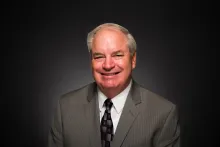
Robin Webber was born in Chicago, Illinois, in 1951, but has lived most of his life in California. He has been a part of the Church of God community since 1963. He attended Ambassador College in Pasadena from 1969-1973. He majored in theology and history.
Mr. Webber's interest remains in the study of history, socio-economics and literature. Over the years, he has offered his services to museums as a docent to share his enthusiasm and passions regarding these areas of expertise.
When time permits, he loves to go mountain biking on nearby ranch land and meet his wife as she hikes toward him.
