
Robin S Webber
This transcript was generated by AI and may contain errors. It is provided to assist those who may not be able to listen to the message.
I have a question for you as we begin this message on this high-day morning. It's simply this. What would you do if you saw someone raised from the dead? What would you do? And what would you do? And what would I do?
What would be our response? Would you? Could you ever forget it? How might you communicate that to other people? And the last question I'd like to share with you to begin this inquiry, simply this. How deeply embedded is it if and when you have that experience? Events that occurred and continue to occur during these days of Unleavened Bread speak to these inquiries. I do not speak of the resurrection in past tense, but I speak to the resurrection in present tense.
Nearly 3,800 years ago, the patriarch Job asked a telling question, and it was simply this. If a man dies, shall he live again? That was answered. It was answered by one that was called the Son of Man, one who was known in his time as Jesus of Nazareth. And it was proclaimed when an angel told the two Marys outside the supplicor. In Matthew 28, verse 6, he's not here, for he is risen, as he said, come and see the place where the Lord lay. It's interesting when you go to that account, Matthew 28, verse 6, that's kind of the last part of it, but because it's most interesting that you recognize that the stone had not yet been removed.
There was an earthquake, and the angel removed that heavy stone. But the Son of Man and the Son of God could not be bound by death, much less a heavy, heavy stone. The angel proclaimed that. The two Marys witnessed that. Other of the disciples would later on witness that. Five hundred individuals, we are told by the Apostle Paul in 1 Corinthians 15, over five hundred individuals at different times, saw the risen Christ. Thus, we realize that it was not one case of mass hysteria falling upon one crowd at one time. See, God never wastes a miracle, does he? He knows exactly what he is doing then, as well as what he is doing with us today.
Why is the resurrection so important to discuss? I am so glad that Mr. Zajac began it, and I hope to, in a sense, add comments to it. I don't know if we can ever conclude or fill our minds with what the resurrection is like, but I would like to share with you today, on this high day, the importance of the resurrection.
There is a story about a Muslim talking to a Christian, which is interesting in itself. And the Muslims said to the Christian, we Muslims have one thing you Christians don't have. When we go to Medina, we find a coffin and know that Mohammed lived because his body is in it. But when Christians go to Jerusalem, all they have to visit is an empty tomb.
Thank you, replied the Christian. What you say is absolutely true. And you see, that's what makes the eternal difference. The reason why there is an empty tomb is because we serve a risen Christ. Interesting story. But it's interesting what he said that the eternal difference. And I have a question all for you today. It's simply this. When we go through this season of Passover, which we have the Passover and we have the Days of Unleavened Brad, and I'm very pleased that Mr.
Zajac was able to serve. He was able to tie in life and death and death to life. And I want to build upon that again. And again, remembering I used to hear a phrase when I was growing up that repetition is the best form of emphasis. So with that said, let's go back over to Romans 5 again. I want to share something with you because whenever we give messages in the Church of God, we want to anchor it in Scripture.
We want to give meat in dew season. In Romans 5 and verse 5, it says, Now hope does not disappoint, because the love of God has been poured out in our hearts by the Holy Spirit, who was given to us. For when we were still without strength, in due time Christ died for the ungodly. For scarcely for a righteous man will one die, and yet perhaps for a good man some would even dare to die. But God demonstrates, and that word is interesting in the Greek, it's like he rolls out, he lays it out, he paints a full picture. He demonstrates his own love towards us, and that while we were still sinners, Christ died for us.
Much more than having now been justified by his blood, notice again, we shall be saved from wrath through him. For if when we were enemies, we were reconciled to God through the death of his Son, much more having been reconciled, we shall be saved by his life.
As Mr. Zajac brought out, a life that was obedient. But to expand beyond that point, a life that was resurrected, one who was dead, that was given life. And if he does not live in heaven above, and rest in our lives today as we'll go through the Scriptures, then as Paul said in 1 Corinthians 15, our faith is futile. It's in vain. For if he is not resurrected, then he's only one more lamb offered to God, just like the bullocks and the lambs and the turtle doves of old that were killed.
But it did not fully reconcile us to God. It did not give us that new life. It does not allow us to be a new lump. It does not allow us to be a new creation, unless Christ is risen from the dead. I have a question for you. This is a time for confession for all of you. Now you say, where is he going? How many of you have ever seen somebody dead that is now alive?
You see, that's why Jesus Christ is special. And that is why God loves us. That he did not allow his Son, his beloved Son, to suffer away from him more than three days. And after three days and three nights, he was risen.
That's why we are here. If we were just simply worshiping and acknowledging one more dead sacrifice, that would not be Christianity. That would only be a portion of it. What makes it special is that during the days of Unleavened Bread, as we'll talk about, that was in the plan of God, that your Savior and mine was risen. So, let's understand one more thing before we get into the rest of the message. Let's just take apart the word resurrection for a moment. Fancy Latin word with many syllables. Resur-rection. What does that mean? The term resurrection really comes from Norman French out of the 13th, 14th century. So it's a later development, but you have to kind of go back to the Greek, because the New Testament was written in the Greek, and the different Greek words give us this. You might want to jot it down if you're a note-taker. A resurrection means a raising up. It means to cause to stand. And it also means arousing. Arousing. Something comes out of a deep sleep, and death is likely to sleep in the Scripture, but simply to cause to stand. You and I have been to enough funerals, enough wakes, enough where you go by and see the coffin, and somebody's in there. Can I tell you something, folks? Nobody's standing. And that's what makes the resurrection so very, very special. Because the one who was crucified for you and for me, and who was laid out on a stone in a sepulchre by Joseph of Arimathea in his plot. He was put down like every Jew was put down in those days, and he was bathed, and he was made ready, and then he stayed on a slab, and he had the different funeral clothes on him. He was laid out. He was not standing at that point. But I'm here to tell you today and to wake us up. He stands. He is risen. And it all goes back to what was performed many, many years ago, back in the Old Testament that I'll allude to in a moment.
So the title of my message is simply this today. Standing and expanding in Christ.
Standing and expanding in Christ. For Him standing allows us to expand, and I'm going to share about that a little bit later. My intent today is to help us not only to strengthen our belief that Christ rose from the dead, but the reality that His Spirit, the Holy Spirit, the Spirit of the Father, the Spirit of the Son, their very essence is designed.
And I know Bob was kind of alluding to famous days of 11 to rise. Rise when we sing.
But it is designed to rise and expand us in the 11 of the Kingdom. Not merely for seven days of dieting. We have this object lesson during this time of excluding from eating leavened products. But it's much more than just simply these seven days. If it's just these seven days and we go on and do our thing afterwards, we might as well eat all the leaven in the world. I'm not telling you to break the commandment. I'm just saying, just look at the contrast. Have you ever been on a diet and you're looking at me like, when are you beginning, Robin?
We all go on diets at times. We all say, we're not going to have this. We're not going to have that. We're not going to... we're going to be good. We're going to be good for a while. And we're going to get rid of the surplus old man. You notice, ladies, I'm picking on the men. Surplus old man.
But you know what happens? We have that pool of human nature. We go right back, and twice as much weight comes on you than when you began. You see, the days of love and bread are not designed to be just some kind of a limp. The days of love and bread are designed by God to jolt us, to wake us up, and to recognize that God wants us to be on more than just simply a spiritual diet. He wants us to be in a way of life every day. Not just seven days, and they're wonderful days, but not just seven days, but a way of life that we are brought into memory and spiritual consciousness about during this time. So we want to understand that the days of love and bread are a micro exercise designed by the master teacher, but to be a boost towards a macro existence of having Christ live in us and stand in us. I want to share a few thoughts with you. This has kind of been weighing on my mind here recently because, you know, there's nothing worse than a godless Christian. There's nothing worse than a Christless Christian. You can be that. And that of all species is so sad under God's earth and under God's heaven. Let's talk about that for a moment. And to recognize, brethren, for a few minutes before we get into the rest of the message, I just want to remind you just one simple thing as your pastor today. I don't have as much opportunity to speak to you as I would like to as Susan and I move through Southern California, Nevada. But here's what I want to share with you today. It's the good news of the Gospel. We worship a living God.
We worship a living God and His Son who is living. Do you realize that that is one of the great themes of the Scriptures? That's just something that you can hold on to. And sometimes we forget that. We can become familiar with the Scriptures. We can become familiar with even God or with our Lord Jesus Christ. The living God is so important. It's interesting when you look at it that we need to be reminded. I want to remind us for a few minutes. Ole was talking a little bit about Israel coming out of Egypt. Join me if you would for a moment in Deuteronomy 5.26. In Deuteronomy 5.26, in Deuteronomy 5 and verse 26, let's understand that Deuteronomy is basically written nearly 40 years after the initial Exodus. Different generation, different group, different generation. Very few that were there from the beginning as we know the story. They're about to go from being a pilgrim people and the sojourning people. They're about to cross Jordan. They're about to go into becoming a nation and a settled people. And notice what it says in Deuteronomy 5.26, For who is there of all flesh who has heard the voice of notice the living God, speaking from the midst of the fire as we have. And we've lived and Moses is harkening back to that first initial encounter with Israel underneath Mount Sinai when they heard the voice of the living God.
And the emphasis is on living. See, they'd come out of Egypt and they worshiped idols.
They worshiped every critter for every reason in every season. But they were not alive.
They were phony. They couldn't solve the issues in your life. They could not deliver you.
You could never please them other than to appease them. And this God is the living God.
And what makes him so special as our Father is simply this. He's not only living, but he's loving.
And so I take no umbrage today in reminding you, as Moses did, some of us have been in this way, this pilgrimage for 40 or 50, 60 years, that you and I on this day of Unleavened Bread on this high day, we worship a living God. Join me if you would in Joshua 3. In Joshua 3, and this is the story of Israel about to go again over into the land. And they're about to cross the river Jordan, which is interesting. It's right during this time. And if you want to hear the rest of the story, I'll be speaking on it in Redlands tomorrow so you can come out. But anyway, it's just before they're going to cross the Jordan River. Notice what Joshua says, because now Moses is no longer on the scene. And sometimes we look at men. We look at patriarchs of old. We look at ministers of today. But they're men. They will come and they will go. In Revelation, Joshua 3, verse 9. So Joshua said to the children of Israel, come here and hear the words of the Lord your God. And Joshua said, By this you shall know that the living God is among you, and that he will without fail drive out from you the Canaanites, the Hittites, the Hivites, the parasites, and the Gergesites, and the Amorites, and the Jebusites.
And the Gergesites, and the Amorites, and the Jebusites.
God did not join Moses in death. Whenever we are in the transitions of our life, whenever we are about to cross river and we're a little weak in the knee in whatever is going on in our life, we are reminded as Ola reminded us, I am the Lord your God. I'm the one that brought you out of Egypt. Pharaoh will come and he will die the God-man, but I am the living God, and I do go before you. Join me if you would over in the New Testament. Again, this is a theme that runs throughout the Bible. In John 6, verse 66. In John 6, verse 66, there were some that were turning away from Christ. It was getting a little tough. And from that time, many of his disciples went back and walked with him no more. Then Jesus said to the Twelve, do you also want to go away? Will you too leave me? Because following Christ is not easy. Jesus never said that it would be easy. He said, though, that it would be worth it. But Simon Peter answered him, Lord, to whom shall we go? You have the words of eternal life. And also we have come to believe and know that you are the Christ. Now notice the theme, the Son of the Living God. Brethren of Los Angeles, and those that are listening to this today, you and I worship a living God. And he gave his Son for us, who died, and now lives, as we'll come to find in a moment. But we will be challenged in our life after we leave the days of Unleavened Bread, after we come up against a sea of not of our making. And it seems like we can go no further. Our back is up against a wall. It may be in a marriage situation, it may be in a financial situation, it may be in a health situation. And we don't think we can go any further, and we will be challenged with this always, always, as to whether or not God is simply theory, God is fiction, God is the God of our parents, but we haven't quite gotten into it. You know, for many, many years Jacob would say the God of my fathers, the God of Abram and Isaac. It was only when he got to be almost a granddaddy, because he was always struggling with God. All he always knew that God had something really wonderful for him, but he wanted to do it his way, even in the womb.
Later on, he fleeced his father. That was after he had stolen the birthright.
He always knew God was special, but he wanted to have God his way in his day and in his time.
And even as a grandfather, he was wrestling with that angel.
And we're always wrestling with God. And the wrestle is all right. God knows that we're going to wrestle with him, because we're in this flesh. But after that, after that, after that wrestle that is recorded in the scripture, he says, the God of Abram, Isaac, and Jacob. He owned them. Ephesians 1, verse 17, following on this theme.
Let's take a look at this.
That the God, the living God, I will insert, of our Lord Jesus Christ, the Father of glory may give to you the Spirit of wisdom and revelation in the knowledge of him, and that the eyes of your understanding being enlightened, that you may know what is the hope of his calling, and what are the riches of the glory of his inheritance in the saints, and what is the exceeding greatness of his power towards us who believe.
Believe that he is living, that we worship a living God, and we have a living Christ. We have the living Lamb of God, according to the working of his mighty power, which he worked in Christ, when he raised him from the dead and seated him at his right hand in the heavenly places.
Now, this makes all the difference, brethren. We've already talked about resurrection, both in the first message and up to this point. There have been other individuals that have been resurrected. We know about them. Even think of Lazarus, the friend of Jesus.
You know, it's hard enough to die once, but he resurrected Lazarus, right?
That's where you're supposed to nod. You know your Bible. Okay. He resurrected Lazarus. Lazarus had to die twice. You know, all those people that were resurrected on the day of Jesus' crucifixion coming out of the graves? They had to die twice. It's hard enough to die once. They had to die twice. You see, Jesus only died once. The reason why we are Christians and what we believe in is that Jesus was not only resurrected, but he ascended. That's what makes these days of Unleavened Bread so very, very special to recognize for countless generations that the priest would, with the children of Israel, that it was during the days of Unleavened Bread, it was on after that Sabbath in between the high days that the priest would refine the flower, the first of the flower, the first fruit of the flower, and they would refine it. And then that next morning that what they would do is they would take that and they would, in a sense, uplift it. And in that, and in that was a typification of what Jesus would do, that he would be that first of the first fruits.
The first that would be resurrected from the dead. He would be that fine flower. He would be that beautiful, beautiful flower. And that it would be offered up to heaven and it would be accepted. You see, what's interesting here when you go back to verse 20, in verse 20, which he worked in Christ when he raised him from the dead. Resurrection.
And Jesus, excuse me, Paul, always in Paul's thinking, always looks at the resurrection as being synonymous with the power of God. But now, and notice, and seated him at his right hand in the heavenly places in this verse. In this verse, we see the fullness then of what God did with Jesus. He not only resurrected him, and yes, he was here for some days after coming from that empty tomb. The key point is simply this. And all of this, brethren, allows us then to ultimately be that new creation in Christ. It allows us to be that new man. It allows us to be that new lump. It allows us to be able to sing that new song. And that's because Jesus Christ is risen.
He paid our penalty, but now he has not only been resurrected, but he has ascended to heaven.
John 14. John 14.
And let's pick up the thought if we could in verse 18. On the last night of his life, Jesus sent a memo, gave a message to his disciples.
I will not leave you orphans. I will come to you a little while longer, and the world will see me no more, because you will see me. But you will see me. And notice what it says, and because I live, you will live also. I was taking this apart this morning thinking about it, utterly profound. Jesus was looking beyond his death. Jesus was looking beyond, in a sense, the Red Sea that faced him, being human, being the Son of Man. We always have to understand the complexity of Jesus being both the Son of Man and the Son of God. He wasn't looking forward to being crucified. You know that, and I know that. And he knew that he was going to die, and for this purpose, he was sent to this earth. When Jesus speaks of glorifying the Father, it is part and parcel with him fulfilling that mission, living that sinless, unleavened life, dying that ignominious death, and being glorified and resurrected and ascending. But here, he's telling the disciples something that they weren't quite getting, because I live, you will live also. Interesting. Interesting.
Galatians 2, verse 20. I want to share something with you.
Once the disciples came around, they got it. As we say, they got set.
When Jesus said that he was to come back, they took him at his word. They didn't quite understand how it was going to be. Because again, they're in the middle of the movie. It's so easy for us to be on the other side of the movie and figure it all out. They were in real time. So, sometimes we can get a little tough on the Israelites, a little tough on the disciples, but they were going through it at the time. But we're also going through it in our time in different ways.
And Jesus Christ said that he would come to us on the other side of death. That was the Father's purpose all along. And we notice Galatians 2 and verse 20. Notice what it says, because this pulls together both the Passover and the days of Unleavened Bread.
I have been crucified with Christ. It is no longer I who live, but Christ lives in me.
And the life, and the life which I now live in the flesh, I live by faith in the Son of God, who loved me and gave himself for me. That life that I live today, that spiritual life, comes from a living God. Comes from a living Christ who is at the right hand of God. It is not earthly.
It is not designed to be sensual. It comes from above. The early disciples, Peter, John, James, later on Paul, out of season coming in, looked at the literality, spiritually speaking, that Christ would live within them. That they would not be alone. That they would not be orphans with the challenges that they had in spreading the gospel, much less dealing with their own selves and their own carnality at times. Or their own little hissy fits that would come up like Paul and Barnabas in their separation over John Mark. Or the challenges that they would have in understanding that God was going to move beyond Israel and deal with the Gentiles.
That circumcision outwardly would no longer be the signature statement of what composed the covenant people. They had issues. They had to move beyond it. But Jesus said that I would come to you.
And I would not leave you orphans. And you would not be alone. Just as much as Jesus was resurrected from the tomb. I say to you today that Jesus stands spiritually, in spirit, along with the spirit of His Father, in us. That is our reality. That is the power of what the Scripture says to you and to me.
You say, well, how do you know that, Mr. Weber? Thank you for asking that question. Join me if you would in 2 Corinthians. In 2 Corinthians, and let's pick up the thought if we could, in chapter 6, verse 16. And what agreement has the temple of God with idols? For you are notice again the temple of the living God. As God has said, I will dwell in them and walk among them. I will be their God and they shall be my people. See, once we have come into contact with the man, Jesus, the Son of Man, and that Son of God, together in totality, we have to make a decision in our lives, not only during the days of Unleavened Bread, but every moment, every waking hour of our lives, as to whether or not our life is going to be changed. As to whether or not we're going to hold on to the old man. Whether we're going to hold on to things that might even seem nice, but they're going to go to the grave. We have to make a decision. He has risen and he's a living Christ at the right hand of the living God. And God shouts that out in Scripture, both to the people of the Old Covenant and the New Covenant. And once you come into contact and you do believe that Christ is risen, your life is going to change. And you know he's going to be a part of your life, just as it was with Paul. I am crucified, but Christ lives in me. We need to understand that.
Psalm 84 and verse 2.
Psalm 85, verse 2.
My soul longs, yes, even faints for the courts of the Lord. And my heart and my flesh cry out, for again, the living God. This is a wonderful stepping stone into Philippians 3. Do you know that the Apostle Paul in that sense cried out in Philippians 3 and verse 9, one of the great, great set of Scriptures in the Bible? In Philippians 3 and verse 9, let's take a look here. Paul speaking, having given up that life which he now considered dead, picks up the thought in verse 9, and being found in him, not having my own righteousness, which is from the law.
And the law is wonderful, and the law is beautiful.
Oh, how loved by thy law! But the law cannot save you of and by itself. Otherwise, if it could, then why did God send his Son to this earth? But that which is through faith in Christ.
The faith that I want to bring into your mind and in your heart today, brethren, is simply this.
Not just simply the faith that he died that we might be reconciled by his death, but that we might live today because he lives at the right hand of God, of which was foretold by those symbols in the wave sheath back in Leviticus 23. God knows what he's doing. He just wants to make sure that you and I are not just along for the ride, but our full participants, that I might know him and the power of his resurrection and the fellowship of his sufferings being conformed to his death, if by any means I may attain to the resurrection from the dead. Not that I have already attained or am already perfected, but I press on noticing that I might lay hold of that for which Jesus Christ has also laid hold of me. It's interesting the graphic nature of what Paul is sharing with us. That in that sense, it's very tangible. It's very, do I dare say, touchy-feely. It's as if God grabbed him. Christ grabbed him. I want you.
You're going to be a first fruit. You're going to be a pilgrim going through this earth. You're going to give up your ways, and you're going to follow me, because you have seen me, and you believe that I'm risen from the dead. Now, with that, now you grab a hold. You grab a hold of the things that I want you to do. I'm going to be your God. I'm going to be your sovereign.
You are no longer going to choose. Think of this during the days of Unleavened Bread. I'm no longer going to choose. You're no longer going to have the choice of what is good and evil.
Eeny, meeny, miny, moe. No. The whole book becomes your Constitution.
The whole book becomes your way of life. The Bible is not a salad bar at the soup plantation where you can pick and choose. When you accept at Passover the death of Jesus Christ, and during the days of Unleavened Bread, which is about the life and the new life of Christ in us, as we put away the old then, as we put away the old loving, and we accept in faith that we are to be a new creation. Then we're going to follow God. Because we're going to have the same confidence. We're going to have the same confidence that those early disciples had.
Now, it's interesting. Back in John 2029, I was reading about it this morning. In Matthew 28, the two Marys are by the tomb. The angel comes out and talks to them.
Says he's not in there. I'll show you where they laid him out. He's no longer there.
Jesus cannot be held. He cannot be bound. His spirit came out.
He went through whatever that hill was like. It's very interesting that in John 20, about 29, the story of Didymus, Thomas, again Jesus came into the 12, didn't he? He came through the walls.
Think that through. He came through the earthen walls of the tomb. Then he came through the walls in that upper room. Thomas was having problems. Thomas had really great qualities, too. That's why it's good to read the rest of the Gospels. But we have this term of doubting Thomas.
He had to probe and he had to figure it out. He had to get the old finger in there.
Jesus finally got to him and said, you know, Thomas, it's good that you believe. Blessed are those who have not seen and yet believe.
Can you, brethren, today, and that's part of the stimulation of this message, can you go to John 20, verse 29, and can you put your name down by that verse? That's talking to me. Because I do not just simply worship a dead Jesus, the man of Nazareth. I worship the Son of God, who has come, who lives in me, who stands in me. That spirit stands, and I stand by that spirit. You know, it's very interesting when we bring this all together. I'm going to just go about another 10 minutes, try to get you out of here by noon. I'd like you to go to Matthew 13, 31, because then we have a decision to make once we accept that He is risen and not just safely kept in an earthen tomb. In Matthew 13, 31, let's take a look here for a moment.
Jesus speaking in a parable, and parables are really just what we call kingdom talk, talking about the kingdom. He put forth to them, saying, the kingdom is heaven.
It's like a mustard seed, which a man took and he sowed in his field, which indeed is the least of all the seeds, but when it is grown, it is greater than the herbs and becomes a tree so that the birds of the air come and nest in its branches. It just, the kingdom of God starts almost invisible, starts small. Now, this can be taken two ways, and this can be talking about the ultimate overall kingdom experience, that the kingdom of God would just start in a sense with these 12 and would only expand, and through our time and future times will ultimately saturate all that is.
Another parable he spoke to them, the kingdom of heaven. This is the phraseology that Matthew uses, Luke uses the term the kingdom of God. The kingdom of heaven is like leaven.
Leaven from heaven, interesting, from above, which a woman took and hid in three measures of meal, till it was all leavened. Why do I bring this up?
The key to Matthew 13, 31 through 33 is simply this.
When God the Father calls us, and then when later Jesus Christ says, follow me.
They are not looking for pilgrims that are prepared to multitask, do God's thing and do their thing.
The key to this parable, whether it be the macro sense of the kingdom of God or to be filling all earth and the cosmos, and or how it starts in us. So very, very small as we come awakened to the truth of God, as God begins to open our mind. As a 19-year-old, as an 18-year-old, as a 21-year-old, Susan and I were both 19 when we were baptized, and that mustard seed began to develop in us. And it grows and it develops as we wrestle with God, as we challenge God, as we ask God to be our God and ask Him to live in us. And sometimes, yes, do I dare say we fall flat.
But your God, my God, is the God of return. And He always waits at the door for each and every one of us, because that's what His love is about.
So, what we're looking at here is simply this. As we're moving out of the days of 11 bread, we need to understand that this leaven of heaven, this example of Jesus Christ and His life, has got to fill us completely as He stands in our heart through Spirit, and it is to expand.
I find sometimes that today in the body of Christ and in the Church of God, we have people that are still holding on to doing, to use a phrase out of the 60s, do their own thing.
I'll compartmentalize that. I'll give this all to God. God, you can have all of this, but I'm going to keep this foot in Egypt, just a little Egypt. Just a little bit of that leek and garlic and onion. Just need kind of that worldly season. You won't mind it. Oh, yes, He does. Just as much as Jesus Christ gave Himself as a total and complete sacrifice, we are to sacrifice ourselves. God is not into compartmentalization.
He's not into you keeping a lockbox for yourself, for you to do your own thing.
We were redeemed. We were purchased. Is that not the lesson of Passover?
We are to be a slave of righteousness to the heavenly Master.
Brethren, as we come out of these days of 11 bread, we've got to recognize a very important spiritual function about God and about His Spirit. God does not operate in a vacuum.
I'm not talking about Hoover. God does not operate in a vacuum.
Our human nature does. Society's pressures do. And, yes, Satan does. More than ever, brethren, as we see Egypt expanding around us, Babylon expanding around us, and pressuring the body of Christ, trying to ooze into that which God has said is mine, we need to stand up. We need to allow that leaven of heaven to expand in us.
Join me if you would for a moment as we conclude. I've got some homework, some heartwork.
I'm an old teacher, taught for 16 years, so I always like to give a little homework going out. Join me if you would here. I'm going to go to Isaiah. In Isaiah 11, let's look at this.
Messianic prophecy. There shall come forth a rod from a stem of Jesse, and a branch shall grow out of its roots. So this is talking about expansion. And it says that the Spirit of the Lord shall rest upon him. This is our example. This is speaking of Jesus Christ, who now lives at the right hand of God. What is interesting, it says the Spirit of the Lord shall rest upon him. What is interesting, think about this for a moment, the disciples. When they walked and talked to Jesus Christ, they understood that there is something unique about Jesus. Up until that time, the Spirit of God came and went. We think of the example of Samson. We think of the Spirit of God would come, and the Spirit of God would what? And it would go for specific activity, for specific events, even when sometimes the people themselves were not acting godly like Samson, but to serve God's purpose. But now there is something special about this man. He was full of the Spirit, and it resided in him. It did not come, and it did not go. And in that same sense, the Spirit of God today, that Spirit, when Jesus said, and I will come to you. He's present. He stands not only at the right hand of God, but stands in the Spirit of God in us, just like Paul stated.
Notice what that Spirit is like. And you can go home, brethren, and take Isaiah 11 apart. I'm not going to have the time right now, but this will allow you to expand as we move out of these days of 11 bread towards Pentecost, and not only wait on the Spirit, but to exercise the Spirit of God that is in us now. The Spirit of the Lord shall rest upon him. The Spirit of wisdom and understanding.
A wise understanding have they who love your commandments. The fear, the reverence, the respect of God is the beginning of wisdom. The Spirit of counsel and might.
Looking into God's Word. Exploring God's mind through Jesus Christ as it's laid out in the Gospels.
The Spirit, notice again, of counsel and might. Of patience. Of waiting.
Not being alive, just filled with a Twitter mentality. Whatever you see, you react to.
To where you're no longer acting, but you're only reacting to what others are putting out in the in the wavelengths of this world.
The Spirit of knowledge and of the fear of the Lord. And his delight is in the fear of the Lord, and he shall not judge by the sight of his eyes, nor decide by the hearing of his ears.
Brethren, this is a melody and this is a plague that we judge by the sight of our ears and our eyes, rather than getting the facts. Sometimes about our own dear brethren, or ministry, that serves us. We look from afar as much as Eli did to Hannah, where Hannah is pouring out her heart. God, I need a son and I'll dedicate him to you. Of course, the old Eli is over there. He says, this woman's had three too many. Looks like she's drunk.
If you live by simply the judgment of what first comes in your ear and or your eye, then brethren, we need to repent and we need to change. And we need to embrace that standing Jesus Christ, that resurrected Christ, whose spirit is in our heart and repent and in faith, know that our sins are forgiven and glorify God by acknowledging that he has risen.
But with righteousness, he shall judge the poor and decide with equity and with fairness the meek of the earth. Oh my! You know, in the olden days when in the book of Deuteronomy, it says that when a king was to come into being, that he was to take the laws of God and he was to write them out in his own hand, and not just any copy, but the copy from the tabernacle and or the temple, and he was to write it out in his own hand. And what was the purpose and what was the reason for that?
That he might be fair with his brethren, that there would be equity, and that he would recognize that he was only one of many.
And brethren, we need to be fair with our brethren, and we need to be fair with this world.
Sometimes, unfortunately, Christians can be the biggest critics and look at everybody else and look down on them, as much as that Pharisee did with the publican.
And we forget, we forget where God picked us up on the journey, where the pilgrimage began, and that we were one of them. There is no worst example, no worst example of a Christian than a snotty Christian who looks down on others and judges others, not recognizing that the Passover and these days of 11 bread are about God's grace and God's favor and God's sustaining favor. And we can only be effective witnesses for God, only effective if we are a humble people, a spirit-led people, not only embracing truth, but these days of 11 bread with the example of the life of Christ, the risen Christ living in us, to be humble, humble before our God, grateful that He's picked us up out of sin, washed us clean with the blood of Christ, and given us a new life, to be a new lump, to be a new creation, like our elder brother, Jesus Christ.
Verse 5, Righteousness shall be the belt of His loins, not our righteousness, not a righteousness that comes by the law, but righteousness that comes from heaven above, that expands in us as we understand if there is any good, if there is any righteousness, if there is anything to boast in. It's not about what we know, but it's what God the Father and what Jesus Christ has done for you and for me. You and I stand on this day of decision, a day which by tradition Israel had its back up against the Red Sea. There was no way out.
And God, God made a path.
And from death to life, Israel followed Moses through the sea from the shore of death to the shore of liberty, from the shore of slavery to the shore of freedom.
And that's a great lesson during the days of 11 bread.
Let's be reminded, brethren, that you and I follow the greater Moses.
We follow the second Moses, who was not only a lawgiver but also was a deliverer.
And God the Father has designed it that by his Spirit and by the Spirit of Christ in us, that we are not alone. We are not alone because, not because Moses of old has risen, but that greater Moses, the spiritual Moses, the Moses that leads us from slavery of sin to slavery of righteousness, that we might boast in God the Father. And to know and always know, when you are challenged, tonight, tomorrow, next Monday, Wednesday, or Thursday, you are not alone.
We are not alone because on this during the Feast of Unleavened Bread, God pulled off, if I can use that phraseology, the greatest miracle that has ever occurred.
And the angel told it to two Marys, and I've told it to you today. He's not in there.
He is risen. How will that story impact the rest of your life?
Look forward to seeing you after services.
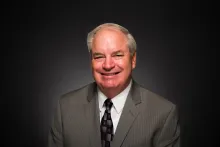
Robin Webber was born in Chicago, Illinois, in 1951, but has lived most of his life in California. He has been a part of the Church of God community since 1963. He attended Ambassador College in Pasadena from 1969-1973. He majored in theology and history.
Mr. Webber's interest remains in the study of history, socio-economics and literature. Over the years, he has offered his services to museums as a docent to share his enthusiasm and passions regarding these areas of expertise.
When time permits, he loves to go mountain biking on nearby ranch land and meet his wife as she hikes toward him.
