

Robin S Webber
This transcript was generated by AI and may contain errors. It is provided to assist those who may not be able to listen to the message.
I want to say thank you very much, gentlemen. Always a blessing if you have beautiful special music. Also, I want to mention thank you very much for all those that have lent a hand, both men and women, young and old, of setting up our facility. We're kind of in a temporary dwelling, as it were, right now. This is wonderful right here. If we didn't know what was over there, this would be wonderful. So, I appreciate everybody working behind the scenes, and our friends, the Seventh-Day Adventist community, are working real hard to get the sanctuary facility finished so that we can move back into it real soon.
I want to say thank you very much for those that have brought the flowers today. Very lovely, very beautiful. And I think I would be remiss, other than to mention that Mr. Oley Sajjak and Mr. David Delimator are up in our sister congregation today, up in Bakersfield, serving the brethren there. We could only do what we could do in our circuit, you know, with the men and the ladies that travel for speaking, and for giving special music, and it's a whole church effort, and I appreciate that.
And I know God looks down and He is smiling, and very pleased with the fruit of what is occurring here in the United Church of God Los Angeles. Every month we put out a monthly church bulletin, and I know that you read it religiously. Every word. I see some smiles. I don't know what those smiles are reflecting, but I'll just pretend that you are reading it religiously. But there is something that we put in that bulletin every month to hammer home the point.
I remember growing up in the Church of God community when I was young, and there were certain things that ministers would hammer home again and again and again and again, until it truly was a rhythm within my own young life. I'd like to draw your attention for a moment to a page that we have.
It's on the third page, and actually this appears every month, and it's called the United Church of God Los Angeles Mission Statement. And I'd like to read our congregation's mission statement for a moment. The United Church of God Los Angeles is a part of the spiritual body of Jesus Christ and is a congregation within the United Church of God, an international association. Then comes the key word for the mission statement. Together, we preach the gospel of Jesus Christ and the kingdom of God to all of the world.
And we are committed to creating and maintaining a positive, dynamic, and nurturing environment based on the Bible, the Word of God. This enables all members to learn and to grow in the grace and the knowledge of our Lord and Savior, Jesus Christ, laboring in love and unity to serve all. That is our mission statement. Beyond the words that are here, encapsulated on a page, I have a question for you this afternoon.
And it is simply this. How do we collectively and person by person develop this atmosphere that is spoken about here? Develop an atmosphere, commit it, and I do mean commit it, to creating and maintaining a positive and a dynamic and a nurturing environment based on the Bible and the Word of God. The message that I have this afternoon is for everybody in this room from the front row to the last, and for those that are old, and those that are older than old, and those that are our youngest members that are hearing this message today.
Because all of us have a role in this. Words are on this paper. Words are on this paper. But we've all heard the expression in our lifetime, talk is cheap. And we're not here just simply to talk the talk, but to walk the walk. My question this afternoon for you is, how do we practice what we preach? I'll share a thought here with you. I'm sure at one time or another, many of us have gone down to the main Mercantile Boulevard in our city, and we want to go to a shop.
And boy, are we thankful when we get to that shop, and maybe it's on a weekend, or maybe it's on a holiday, and we're perhaps wondering whether or not that shop is really open, whether it's in the morning or whether it's open at all. And then we get up to the shop, we park the car, and we look at the shop, and we see that wonderful four-letter word. Did you know that some four-letter words can be wonderful? And we see that wonderful four-letter word.
You didn't think Mr. Weber was going to... No, okay. Wonderful four-letter word, and that is open. Yes! It's open. And we walk in. Johnny and Janie, we can go in. There are sometimes other facilities, other Mercantile outlets, where we notice something else and another sign that's on there.
And that is lost our lease and or going out of business. Then you get the half price sales, etc., etc. People can be like that. People sometimes have name tags, proverbial name tags around their neck, and they wear them. You've seen it, and I've seen it. Not only people, but sometimes a collection of people called a congregation. And you can see a congregation where it says, open.
We're open for our Father's business. Come on in. And sometimes you can move into a congregation, and it's going out of business and or lost our lease. That's why I want to bring a message to each and every one of you today, because as your pastor, I want our congregations to be open for our Father's business and to be about it. And that when people come into the United Church of God Los Angeles, they know that we are open, that we are vibrant, that we have a dynamism, and not only a dynamism and a boldness, but a humility and a love to match that.
And that we want everybody to share what we have, whether we're senior citizens or do I dare say seasoned citizens, and or middle-aged or young adults with children, or our young adults, our singles, our teenagers. I want you to hear this message, because it's for each and every one of us, because each and every one of us is a link in this chain of dynamism that I'm speaking about. This afternoon I want to give you a message. I don't know how many points we're going to get to.
It depends upon the time and when I get done. So I'm not going to give you the number of points so that you don't remain disappointed. But I'm just going to start those points, and I'm going to give you, simply this is the name of my message, Keys of an Open Church that will unlock the dynamism and the activity that we're talking about. Keys of an Open Church. I'd like to just reflect for a moment on what the term open means.
You say, well, Mr. Weber, I think I've got that one. You know, what do you mean? I know what it means to open. It's the opposite of closed, but that's very good. Let's talk about some definitions for a moment. The key word in that title, Keys to an Open Church, is open. What does that mean? Open means simply this, to change from a shut or a closed position, to make open by clearing away obstacles.
To make accessible. To make, this is my favorite one, open means to make open.
To make or become functional. To reveal. Now, when you think about it, and I've tried to go slow with these definitions, this is everything that we're striving to do with our congregation, not because of us, but because of our father above.
And the head of the church, Jesus Christ, that we reflect the environment of the atmosphere that they would have in our assembly here. The first point that I want to give you of keys of an open church, the first one is simply this. The first key of where God is working and where you can understand the activity of God. Number one is a church that has open doors. A church that has open doors. Let's just put it this way. Yes, a church that has a welcome sign. A welcome sign. There have been times when we've traveled and we've gone long and far over the highways or the byways and maybe traveling to the feast. And then you finally come into a town and or you come and buy a restaurant or a hotel and it says, Welcome! Welcome! And that's what our congregation needs to be about. We have a church, if you look back for a moment, that door is open. And that's very important to understand. I never underestimate the power and the symbolism of an open door in our congregations. The public is always welcome. People are always welcome into the United Church of God, Los Angeles. That's very important. We are not a closed society. We do not reside in a cave. We are not somehow our eyes have become accustomed to the dark. And thus we're in a cave with some kind of esoteric or special Gnostic knowledge. That door always remains open. When I'm not here as your pastor, it remains open. We are to be a welcoming and an open church. The only things that I've ever seen that live in caves, that are apart from society, are bats and mushrooms. Bats live in caves. Mushrooms grow in caves. That's not the culture that we are about in the United Church of God, Los Angeles. Allow me to draw your attention to Matthew 5. Let's open up our Bibles. And you'll want to open up your Bibles, because then we can get to the second point, just to give you a little teaser. So you want to open up your Bible now.
In Matthew 5 to scripturally underline this point of how important it is to have a church that has a door that is open.
Matthew 5 and verse 14, right from the message in the Sermon on the Mount.
You are the light of the world.
And you have to understand what this meant two thousand years ago before Mr. Thomas Edison.
And what the world was like without light.
That when it was dark, it was dark. You didn't go over and flip on a light.
You didn't switch on the light to your front porch.
You didn't turn on your kitchen light. You didn't turn on your living light. There were no lights.
And therefore, we see you are the light of the world. We're that beam.
A city that is set on a hill cannot be hidden.
Nor do they light a lamp and put it under a basket, but on a lamp stand.
And it gives light to all those who are in the house.
Now notice verse 16. It says, "...let your light..." Jesus is speaking to His disciples.
"...then..." Followers, now, "...let your light so shine before men..." Not just simply before one another. Not just between those that we know in these aisles or in the fellowship hall. "...let your light so shine before men that they may see your good works..." And notice what it says, "...and glorify your Father in heaven." Join me in another verse, Matthew 11, of how important it is to always have an open door and a welcome sign to those that are on the outside and want to come in and see the wonderful things of God. Matthew 11 and verse 28.
Jesus speaking, it's in red ink.
"...come to me all you who labor and are heavy laden, and I will give you rest..." That's an assurity. "...and I will give you rest.
Take my yoke upon you and learn from me, for I am gentle and lowly in heart, and you will find rest for your souls.
For my yoke is easy and my burden is light." Services that we have the privilege of being able to attend every week, and that sometimes some young people growing up in the church, some of us that have been in the church for some time, we can forget what it's like to be able to come from that outside world, come through a door, and understand that we have discovered that great field of value, that jewel of pricelessness. I remember there was one lady out in Redlands one time, and you would know her, so I won't mention her name, but her two daughters do play the violin.
And I remember when she came, and I met her at the door, because you know me, I like to meet people at the door. I don't wait for somebody else to do it, but we will talk about that later on, too. And I met her at the door, and she just simply said this, I'm here. Have I found the Church of God?
I said, why don't you come in, and why don't you find out?
And that is happening every week, and every day, in every way around this world, where people are being beckoned by the call of the Father, and by the example of Jesus Christ, and sometimes good religious people that are out there, and yet they realize there's something missing. There's still more of a story that they need to understand about Jesus Christ and the Kingdom of God, and when we do give ourselves to Christ, and when we do desire to experience that Kingdom, that with grace and with our faith towards God comes Christian responsibilities that God wants us to observe and to do, and where they are right now, it's not happening. They're looking for that. They're looking for a church that reads the entire Bible and keeps the entire Bible as best as they can. Thus, dear friends, here in Los Angeles, the first and the most important thing is that the opening is always there for people to come in and to be a part of this spiritual oasis. Sometimes that's not easy. Not for them, but for us as church people, because sometimes even good church people can get... What do I dare say? I'm trying to look for a word. I'm thinking about this word for a moment. I've got the word. A little stuffy. I've raised it up a little bit here. Join me if you would in Luke 15 and verse 1. In Luke 15 and verse 1, and let's notice when Christ kind of said, The door is open, you all come, the welcome sign is out. And we notice that Jesus being such an incredible and such a dynamic and magnetic personality drew so many different people to Him. And in Luke 15 verse 1, then all the tax collectors and the sinners drew near to Him, to hear Him. All the people that were, well, shall we say, were not invited in normally, that were on the outside looking in. That were basically being given the leftovers of religious life. Then all the tax collectors and the sinners drew near to Him, to hear Him. And then notice verse 2, because this talks about the church people of that day. The church people of that day. And the Pharisees and the scribes, you know the ones that wrote down the Word of God, that should have known better than anybody else? They complained, saying, well, this man receives sinners. Can you believe this? This man, this rabbi, is receiving sinners. And he eats with them. Jesus being the Christ understood exactly what was in their hearts and minds. And thus, He begins one of the greatest three stories, trilogy, ever in the Bible. That ultimately leads to the story of the prodigal son. Brethren, we can never do that as our family. This is my family, hometown church. That's where I grew up. And this is where we've grown in the grace and the knowledge of our Lord and Savior. And always remember that as a congregation, so that we can fulfill this mission statement together, that it is not our job to choose God's family, but it's our job to accept the family that comes through that door. Got it? Point number two, keys to an open church. The second one is to have an open Bible. To have an open Bible. Reverence for God. And reverence for the men and the women that have sacrificed their lives on His behalf and for us. That you and I could even turn to the Scriptures today and be able to read them in our own language. John 6 and verse 68 to underline this point. John 6.
The gospel thereof. And verse 68. Let's notice what it says. Simon Peter speaking to Christ. But Simon Peter answered him, Lord, to whom shall we go? You have. You have the words of eternal life.
And that's why men down through the ages wrote these words out from the Old Testament and the New Testament. Whether it was a Jewish scribe, or whether it was a bearded Greek Orthodox monk high on a cliff, overlooking the Aegean or the Adriatic line by line, word by word, so that today we that are at the end of the age could be assured that by and large we have the word of God as it was spoken of old or new. And back then, oh by the way, young people, they didn't have word processors. They didn't have computers back then. They didn't have word processors. So if they made one error, if there was even a glitch or a blotch or the ketchup spilt while they were having lunch, that page was thrown out. If the page was torn, it was thrown out. If there was anything that was not humanly perfect for that page, it was thrown out and had to start all over again. But beyond those gentlemen, to recognize that there are not only people that sacrifice their life's devotion, but sacrifice their lives. To recognize incredible people like Wycliffe, the Lawlord, and or later on in the 1500s, a gentleman like Tyndale, who wanted so very much to have the ordinary person be able to speak in what is called the ordinary or vernacular tongue. For the Englishman to be able to speak in English, the Frenchman to be able to speak in française. For the German to be able to speak in Al-Aman. And to bring that Latin, to bring that Greek in. Because before then, the Bible was in Latin. Nobody spoke Latin except the nobility and except the the clergy of the Catholic Church. People were not allowed to read, because reading can be dangerous. You know, why? Because it opens your mind. That's why even in this country, years ago, in the time of slavery, slaves cannot read. They didn't want them educated. Can you imagine the 1400s, the 1500s, as the word of God, which had been in this encapsulized, dead language, was brought out into the language of the common person. As I believe it was Ruchliff who said, I want it so that the shepherd boy can sing the praises of God, and the weaver can be on the loom, considering the thoughts of God. Brethren, that is why, in respect to God, and in respect to the lives of these men who gave their lives, Tyndale was burnt and strangled at the stake, so that you and I could read the wonderful words of God, our known language. That is why, when we come to church, we bring our Bible. We bring our Bible, and when the Word of God is read, we open it up as a family, as a church. That is so very, very important. Let me share why. Come with me, if you would, to Nehemiah 8.
And let's pick up the thought in verse 5. And Ezra opened the book in the sight of all of the people, for he was standing above all of the people. And notice, when he opened it, that is the book, that is, the law of God. All the people stood up.
And Ezra blessed the Lord, the great God. And then all the people answered, Amen and Amen, while lifting up their hands. And they bowed their heads and worshiped the Lord with their faces to the ground. They actually fell down prostrate. Now, please understand, I'm not asking you to rise at this moment. I'm not asking you to lift your hands at this moment. It's not our culture. There's nothing wrong with it. It's just not our culture. And I'm not asking all of you to hit the deck like a marine, like you're on the beach, prostrate. But the example is there for us to not take the word of God for granted. And to show incredible respect that when Mr. Garnett or Mr. Fish and all the others that are before you, Mr. Helge, and they've studied and asked God to direct and guide them as they study the word of God, and they say, Brethren, will you please turn with us? Let's go to this verse. Let's go to Revelation. Let's go to John. Let's go to Nehemiah. Honor God. Have your Bible. Open your Bible. Don't be of this mindset. Oh, don't you realize? I've been in the church for 50 years.
Know it all. Been there, done that one. You even heard about Ezra in the book of Nehemiah before. You might have heard it. You need to act upon it. You need to develop in it. I'll tell you why. When I came into the Church of God community, I was 12 years of age. Yes, young people. I was a kid once. And I remember going to the Craftsman Union Hall in San Diego. And it's amazing what a 12-year-old mind and heart will pick up. And I remember going into that Union Hall, and so many things happened to that day. And I've shared them with you before, but one thing I do remember, I'd come out of a mainline, large, mainstream church before I came to the Church of God. And basically, the Bible was something that was in front of you that was always there, but you didn't really reach for. Because the sermons were so short, you didn't have time to get to it. It was over before you tried to even reach. But you didn't reach for it. But when I came, as I was walking up those steps, I said, Mom, all of these people are bringing their Bibles. I'm watching. Then we're sitting down, and they're opening chairs just like this. And everybody from the young to the old, they were opening up their Bible. They were opening it. This was incredible, in my mind. They were opening it. And not only that, but they had notebooks.
And beyond that, and this really got to me, they actually had red and yellow pencils, and they were marking their Bible. That is not something you did in the Lutheran Church back in 1963. I said, they're making a coloring book out of the Bible!
Now, am I saying that we have to do all of that? That's your choice. I'm saying it shows an attitude, and it shows the impression of those that come through the open door, and come into our fellowship, and to our midst, this living, dynamic environment that I'm trying to share and to talk about to allow us to rise even further that people notice. People take note, and they are encouraged. I always, when people call me, people that are prospective members, I'd like to attain your church in LA, San Diego, Bakersfield. I said, you may want to bring your Bible, because you'll notice our people bring their Bible, and we open it. It is our textbook. We open up the Bible constantly. Why? Because these are the words of life. I'm just encouraging you, as a brother in Christ, to show respect towards our God, and the respect of those that have given their life for us. People like us that gave their life, that you couldn't, I could even understand the wonderful things of God. It is just so important. And not to think, well, you know, I'm going to go to church today. I'm going to kind of go through my routine, and I know Mr. Garnett's going to get up, or I know Mr. Helge's going to get up, or I know this person's going to get up, and I'll kind of, I'm going to do my time.
You do your time in prison.
You grow, and you have an expectation, and you have this faith that when we've prayed about coming to church, and we've asked a blessing on that day, that there is an expectation that the ministry of God is there to inspire, to encourage, to convict in a compelling, and a wonderful, and hopefully in a humble, but in a bold manner, to allow you to become closer to your Maker. And the last thing that we ever want to do, and I'm speaking to our speakers in this room right now, don't ever say, well, we all know this Scripture. No! There is no familiar Scripture in the Scripture. Every word of God is a jewel. It is like a diamond with so many facets that needs to be explored, and needs to be plummeted again and again and again, as if we're looking at it for the very first time. Let's go to point number three. The third sign that I want to share with you is an open heart. An open heart. We can open our doors, our eyes, and our ears, but God desires to go deeper. God's spoken and read word in church is not just simply to be for so much information. God is not creating spiritual, biblical almanacs. You can get information in almanacs. Church is not about simply information. It is not just simply about inspiration. It is about you being transformed into the completeness of the life of Jesus Christ in you. That's what we're about. That means we need to prepare ourselves. Join me if you would in Ezra. We talked about Ezra and Nehemiah. Now we're going to go to the book of Ezra. Ezra. And join me if you would in Ezra 7.
And let's pick up the thought if we could together in verse 9. On the first day of the first month he began his journey from Babylon, and on the first day of the fifth month he came to Jerusalem according, notice, to the good hand of his God upon him. It's like he had a full breeze behind him. The 70 years captivity was over. God was true to his word, true to his prophecy, true to his promise, and they were coming home. Then notice verse 10. For Ezra had prepared his heart to seek the law of the Lord and to do it, and to teach statutes and ordinances in Israel. Being God's man, being God's woman, being a young Christian, a teen for Christ, does not just simply happen. It's something that we have to prepare ourselves for. We have to see the goal ahead and be ready, especially in that when we talk about keys to an open church, recognizing that you are the church. We don't go to church. We are the church. A church is not something that is made of brick and wood. It's made of flesh. It's made of blood. It's made of spirit. It's glued together by God's grace and His faith and our hope and our desire to serve Him.
We have to prepare ourselves. Join me if you would in Psalm 119, again, showing the kind of heart that God desires amongst His church family. In Psalm 119 and verse 1, Blessed are the undefiled in the way who walk in the law of the Lord. Blessed are those who keep His testimonies, who seek Him with their whole heart.
Now, the reason why I'm mentioning some of this, friends, is I realize that when we're talking about a church that is open and a church that is fulfilling what we're calling our mission statement of doing it together, is to recognize—and this is very much on my mind right now as we're going to the the meetings in Cincinnati— I feel more than ever that each and every one of us, as a man, as a woman, as a church member, as a young person in God's church, college or high school or even lower, every one of us are an advertisement for the kingdom of God and for the life of Jesus Christ. To recognize that people can be watching the Beyond Today program on television or reading a Good News magazine and or following our web page, but people want to know about people. Have you ever noticed that? People want to know about people. You are an extension of all of this because talk is cheap, and facts are on paper or on a web page. People need to come and experience people that have the Spirit of God in them and the love of God and the humility of God. So each and every one of us are a committee of one in this congregation to create this total environment that is Christ-like and that honors God. It's not just showing up in church. Get a star. I showed up. It's not about that. It's about worshiping honor and praising God to show them that we really understand it and to recognize that if Jesus Christ is the head of the church, then we are His arms to reach. We are His feet to do His walking, and we are His tongue to do His speaking and sharing with those that come through that open door. Point number four is what I'd like to bring to you next. Point number four. That is, it's not enough just simply to have an open heart. Then we have to be willing to apply God's Word. Open us to apply God's Word. Join me if you would in James, a book of wisdom. James 1 and verse 22.
In James 1 and verse 22, let's notice what it says here. But be doers of the Word, and not hearers only in deceiving yourself. For if anyone is a hearer of the Word and not a doer, he's like a man observing his natural face in a mirror. For he observes himself, goes away, and immediately forgets what kind of man he was. We're not just simply here to have the words, the eternal words of God bounce off of us, but we're to apply it. And sometimes it can seem very simplistic in the application. Allow me to share something with you. This morning, Mr. Bob Carlisle out in Redlands gave a message on prayer. Not formalized prayer, not structured prayer. We're on our knees in the morning or at night, but filling up the space during the day that when we have the time that we'll find the way, if it's really important to us to continually be communicating with God, reaching up to Him with our hearts and with our words and with our supplication, recognizing that we really need it in this darkened world. Very much like Nehemiah. If you've ever read the book of Nehemiah, there's nine different prayers that Nehemiah offers in the book of Nehemiah, where he's on his feet. It's like the very beginning of Nehemiah, where he's talking to the king of Persia, and the king of Persia asks him a question, and Nehemiah goes like this, and he's praying even while the king of the earth is speaking to him, because he knows he doesn't have it on his own. I encourage the congregation there, put that into practice immediately. You've heard it. Go out and do it. Go out and do it, starting now. Today, we've had a message by Dr. Hoover. Very interesting play on the words of the Bible, an encouragement that when Jesus Christ comes back, there are going to be clouds, and the beauty of clouds. But take it. Are you going to go out tonight? Simple. I don't know if knowing about clouds is a matter of salvation, but it was a point given to us to consider the one who brings salvation. Go out and look at a cloud. Go back to when you were young in the church, and the words that were spoken here were words of encouragement and instruction. And sometimes we can be in the way for so long, saying, oh, that's so... Oh, come on. You've got to be kidding. I'm going to have to go up and look at clouds now.
And now I'm amplifying it. Uh-oh. The pastor's amplifying it. Yes. Take a simple truth. You've been encouraged by a man of God today to look up. Sometimes he'll say, if he said that, I'm not going to look up at all, because of David Hoover.
No. Let's be old-fashioned again.
Let's move away from some of the cynicism.
Some of the attitudes that at times have come into the church that we've been there... We're so mature now. I remember what my parents had to use to bear up to. But this is a different year.
You know, we can be so grown up in our own eyes and our own hearts that we're missing what it is to be a child of God. And to take the simple to make it profound. I had the opportunity of blessing a baby this morning.
How'd he put a handle on this kid, you know?
But, oh, the eyes were wide and big for mama.
I think the church of God needs to get back to being, as Peter said in 1 Peter 2, childlike. Humble.
I know sometimes our members pray that we can have a humble ministry. And I have that same prayer about myself and my fellow servants. And I also pray, likewise, that we have a humble body of believers.
When humble is connected with humble, wow! God can take our humility and make it everything. He can take pride and do nothing. No matter the greatness of pride, He can't do anything with pride. But no matter the smallness of the humility that we give Him, He can take our humility and make it great. That's the welcome sign. That's what our people need to see when they come into the door. Let's go to point number five. Be open to change. Be open to change. We start up with an open door to open Bibles. We're down to open to change. Let's remember that God's Word goes deep. It goes real deep. In Hebrews 4 and verse 12, Hebrews 4 and verse 12, the author of Hebrews tells us that God is wanting to do open heart surgery on us. Not just taking a scalpel to the brain, to the gray matter, to the intellect, but He wants to get down to what makes us tick. What we're really like and why we do what we're doing. Not what we're doing, but why are we doing it? What is the motive? So often, dear friends, we mix up the motion with the motive. We get caught with the motion rather than why do we do what we're doing? Hebrews 4 and verse 12, for the Word of God is living and powerful and sharper than any two-edged sword, piercing even to the division of the soul and the spirit and of joints and marrow, and is a discerner of the thoughts and the intents of the heart. And there is no creature hidden from His sight, but all those things are naked. And open, open, there's that word, no longer closed but open to the eyes of Him, to whom we must give account.
Some of the things that I'm sharing this afternoon, dear friends, is not so that when I come or when Mr. Garnet comes up here, especially with Mr. Helgi, the old marine comes up here, it's not about what we're doing before man, but it's what we're doing before God. That when people come through that door, and I see that big hole in that wall, and I wish it was bigger, but when people come through that door, they come into a community of believers, they come into this faith community, and they see people excited about the wonderful things of God. They hear people in the aisles and in the kitchen, especially on the Sabbath day, talking about the Word of God, not talking about the Lakers. They're talking about the marvelous works of God through Jesus Christ, of a humble birth, of a life, of a death, of a resurrection, of an ascension. They're talking about the Second Coming. They're excited that in a world of darkness that the veil has been lifted from us, and they're excited about it. They're excited that in our understanding that there is no man between us and God the Father and Jesus Christ, there is only one mediator. There's only one advocate. We don't have Mr. Weber or Mr. Helge or Mr. Garnett. We don't have Mr. Kubik in that sense standing between us and God, that we as a people and as a family have direct access to God the Father, that you and I have that incredible privilege of in prayer stepping before that sovereign throne and sharing with the God of the universe anything that's on our mind in our heart. And even sometimes things that we don't understand, and we're in a we're in a huff and a puff, but we recognize that God is big enough and gracious enough and loving enough that He can take our huff and He can take our puff and He can take our doubt. And He can say, okay Mr. Job II, where were you when I started this? Where were you at the beginning? There are some things that you're not going to understand in this life.
There are some things that you're not going to understand other than to understand that I have always been. Thus allow me as God to be God. That's a really hard point for people to get to sometimes, especially sometimes in societies where for one reason or another we thought we had it all figured out. And then to recognize the older that you get as a person and or the more mature that you become as a congregation, you really do recognize, you really do come to recognize that there are some things you're just going to have to give to God. And let God be God. And let Him work it out instead of struggling. And allowing God to make us over into His image, rather than our vain efforts of trying to make Him over into our image and putting Him on our little dotted line. And making Him perform like a cosmic bellboy. I'll go to one more point.
Number six. Be open.
Number six. Be open to Christ living in us. We'll finish with this. Be open to Christ living in us.
This is so very, very important, brethren. And I'll spend a moment or two on it. I just wrote a letter to the church worldwide, Mr. Chairman. It goes to the ministry that you'll be seeing next week. And in that letter, I quoted an old German proverb, and I'd like to share it with you. And it simply goes like this. You might want to jot it down. It's pretty simple. The main thing is that the main thing always remains the main thing. Think you can remember that? The main thing is that the main thing always remains the main thing. Bottom line, brethren, is we no longer go to the temple as the covenant people of your. We read the book of Corinthians, and we understand that God is setting up shop inside of us. And thus, we are to reflect that Shekinah element in us, God in us. Emmanuel, God with us in us, and to live that reality. Paul never forgot of making the main thing the main thing always the main thing. Join me if you wouldn't. 1 Corinthians 1. 1 Corinthians 1. Pardon me. 17 will be here all night. 1 Corinthians 1. 1 Corinthians 1. Let's note.
The apostle Paul speaking, For Christ did not send me to baptize, but to preach the gospel, not with the wisdom of the words, lest the cross of Christ shall be made of no effect. For the message of the cross is foolishness to those who are perishing, but to us who are being saved it is the power of God. For it is written, I will destroy the wisdom of the wise and bring to nothing the understanding of the prudent.
Where is the wise? Where is the scribe? Where is the disbuter of this age?
Has not God made foolish the wisdom of this world? For since in the wisdom of God the world through wisdom did not know God, it pleased God through the foolishness of that message preached to save those who believe. For Jews request a sign and Greeks seek after wisdom, but now notice what Paul centered on. But we preach Christ crucified to the Jews a stumbling block and to the Greeks foolishness, but to those who are called from both Jews and Greeks. Christ, the power of God and the wisdom of God, because the foolishness of God is wiser than men, and the weakness of God is stronger than men. That is why our congregation, when you read that mission statement, says we preach the gospel of Jesus Christ and the kingdom of God.
There could be no kingdom of God for us. Save the Father sent His Son.
The good news that the Son of God died for us in ignominy, in humility, raised in glory, now at the right hand of God. And not only that, but living today inside of us. And when people come through that open door and they see us opening our Bibles, they see that the Bible is that oxygen. It is that fuel that allows the sustainment of the Christ living in us. Join me if you would in Galatians 2 and verse 20, and we will conclude. Galatians 2 and verse 20.
We come here, brethren, not simply to gain information. I remember growing up the ad for General Electric. Some of you are older than me in this room, so you will remember it. And it is simply this. Progress is our most important product.
And the progress that God is looking for in us from His sovereign throne above is that we move over and let God be God and allow His Son to live inside of us. As Paul since says here again in Galatians 2 and verse 20, I have been crucified with Christ and it is no longer I who live, but Christ lives in me and the life which I now live in the flesh. I live by faith in the Son of God who loved me and gave Himself for me. All of these points build upon one another, having an open door, opening our Bibles, having an open heart, being open to change, being open to applying that change and putting into practice in our life, and then looking down and allowing God to see that we truly do understand that you and I in 2013 do not only have the privilege of walking alongside Christ as did our spiritual forefathers, the disciples, but that, what a difference! Think about this as we conclude. The apostles of old before Pentecost, they had the privilege of walking alongside Christ. Got that one? Today, as disciples of Jesus Christ called to the Father, you and I have the privilege of having Christ walk in us. Take that home and apply it. Let's remember our mission statement. Let's make it more than words.
Let's put it into action. Look forward to seeing you after church.
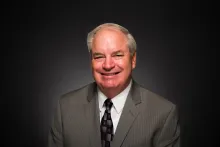
Robin Webber was born in Chicago, Illinois, in 1951, but has lived most of his life in California. He has been a part of the Church of God community since 1963. He attended Ambassador College in Pasadena from 1969-1973. He majored in theology and history.
Mr. Webber's interest remains in the study of history, socio-economics and literature. Over the years, he has offered his services to museums as a docent to share his enthusiasm and passions regarding these areas of expertise.
When time permits, he loves to go mountain biking on nearby ranch land and meet his wife as she hikes toward him.
