
Tim Pebworth
This transcript was generated by AI and may contain errors. It is provided to assist those who may not be able to listen to the message.
Well, thank you for the beautiful piece of special music. Such a treat. Beautiful voices, thank you. It's great to see everybody here. Three weeks is a little while to be gone.
It's good to be back. I was in France in Cote d'Ivoire, I just want to begin by thanking everybody for their prayers for us while we were gone. Those of you who had a chance to pray your prayers were answered, and I'll share some of those stories in this message.
This is going to be a little bit of a different message because I have some lessons that I want to bring out through some slides of the Leadership Conference and the camp. Just as a reminder, the United Church of God sponsored three volunteers through its Good Works program to travel to Cote d'Ivoire and give a week-long camp and then support translation for a Leadership Conference, the first Pan-West African Leadership Conference. I say Pan in the sense that it included both English speakers and French speakers, so that region is both of those languages. It's difficult to have a conference with both of them because you have to have simultaneous translation, which means you have to have simultaneous translation equipment and people to translate. If you're going to have a four-day conference, you need to have multiple people to do it. Through the generous support of a local congregation in the Midwest, Darius McNeely, who is one of our Beyond Today presenters, was flown to Abigail and along with the support from the Good Works program, again, thanks to all those who contribute to Good Works, we were able to do that.
Today, I'd like to share some photos that illustrate some principles pertaining to placing ourselves in God's hands, because that's what this was. This was really a trip of faith.
We've never really done anything like this before. And to put ourselves quite physically into a discomfort zone, and metaphorically, for all of us here, because we don't really have to go to a far-fung place to experience discomfort and to do things that we've never done, and to have some courage sometimes to be able to go where we've never gone before.
So the title of the message today is Lessons from Côte d'Ivoire. I'm going to spell that for you. Do I have that up there? Can you see that?
Yeah.
All right. So Lessons from Côte d'Ivoire. That's the official name of the country. Côte, which means coast, and d'Ivoire, which is ivory. So it used to be called Ivory Coast.
They officially changed their name to Côte d'Ivoire, I think about five years ago, to follow the French pronunciation.
So building on the last message that I gave here, where I talked about the greatest commandment, I'd like you to turn over to Isaiah 46. Isaiah 46. And we're going to look at the entire chapter of Isaiah 46, because there's some really interesting lessons for us, and it really does go right back to the message that I gave earlier, where Jesus talked about the greatest commandment. And he quoted Deuteronomy 6 and what that meant. So let's go over to Isaiah 46, starting in verse 8. He says, remember this, and depending on the translation you have, it either says, show yourselves men, or it says, take courage. So take courage in this. Remember this. Recall to your mind, O you transgressors. What is he going to say?
Remember the former things of old. Former things of old, meaning the prophecies, the commandments that were given through Moses, the stories of Joshua and the Judges, and King David, and how the nation was led by God and then fell into apostasy and was eventually taken into captivity. He says, for I am God, and there is no other. I am God, and there is none like me. And that really harkens back to that Deuteronomy 6 quotation, where he says, here, O Israel, the Lord your God alone, or here, O Israel, the Lord your God only.
There is only God. There is no other God besides God. He says, I am God, and there is no other.
I am God, and there is none like me. And now he's going to, Isaiah, under inspiration, is going to, again, quote God, giving an aspect of his power.
He says, verse 10, declaring the end from the beginning. And from ancient times, things that are not yet done. That is to say, he knows what his plan is. He, from the very beginning, as we've talked about before, the foundation of the world had a plan. And he knows what that plan is, and he's going to accomplish it. And it says, then, saying, My counsel shall stand. What I say will stand. What I say will happen will happen. And there is nothing that's going to stand between me and the accomplishment of that plan. And I will do all my pleasure.
So this is just building on the same instruction that God has given over and over again, that really there is no other God, no other force, no other influence in our lives that should be above that of God our Father and Jesus Christ our Lord. Nothing else should come before that. Now, in this context here, he's talking about this gentleman, not quite a gentleman, this individual named Cyrus II, or Cyrus the Great.
And this prophecy that Cyrus the Great would come and destroy the Babylonians. And the Babylonians were, at that time, the ones who were causing a great deal of difficulty for the nation or for God's people. And we see this context in verse 1. So let's go back to chapter 46 and verse 1. Let's get the context of what he's describing. He says, Bel bows down and Nebo stoops. Bel and Nebo were two of the great gods of the Babylonians.
Now, when he says they bow down and they stoop, what he means is that they are being brought low. They are being humbled. He says their idols were on the beasts and on the cattle. Your carriages were heavily loaded. So these gods, when they would move or they would go from place to place, they would have to carry these idols with them.
And they'd put them on carts and they would have cattle that would drive the carts. And what he says here is a burden to the weary beast. The burden to the weary beast. And what he's going to describe here is that they had basically done everything they could to put gold on these idols, to put silver, to give them weight and heft so that they would really have this sort of aura of magnificence. And they were, even despite that, they could not accomplish what they said they would accomplish. Verse 2, they stoop, they bow down together.
They could not deliver the burden but have themselves gone into captivity. And so what he's describing here is that these Babylonian gods themselves, just like the Babylonians, were going to be taken into captivity by the Persians, by Cyrus the Great. And their gods would not be able to deliver them. Their gods would be of no value. Their gods would have to be carried about on carts, just like the Babylonians themselves, as they would be taken around in captivity.
In contrast, verse 3, it says, Listen to me, and again, this should hearken back to Deuteronomy 6, Hear me, listen to me, O house of Jacob, and all the remnant of the house of Israel, who have been upheld by me from birth, who have been carried from the womb. And so Isaiah, under inspiration, is contrasting how God carries his people, in contrast to how men carry their gods. This is the difference, is that these idols had to be carried by men, whereas God himself is going to carry men.
He is going to take care of them. Verse 4, Even to your old age, I am he, and even to the gray hairs, I will carry you. I have made, and I will bear, and I will carry, and will deliver you. This is a manifestation of God's power in our lives, that no matter what stage of life we are, even when we are older, and we cannot do as much as we used to do, God is going to take care of us.
He's going to care for us, and his goals will be accomplished. Verse 5, To whom will you liken me? And make me equal, and compare me that we should be alike. Is there any one like me as God? They lavish gold out of the bag, and waste silver in the balance. They hire a goldsmith, and he makes it a god. Again, this is, they had to do these things to these idols to make them really magnificent. And yet, what did that accomplish? They prostrate themselves. Yes, they worship.
They bear it on the shoulder. They carry it, and set it in its place, and it stands for its place. It shall not move. Though one cries out to it, yet it cannot answer, nor save him out of his trouble. These idols that people look to, and that even the nation of Israel looked to, they were of no meaning and no power. They had no significance other than what people gave to them. But God would actually take care of them. And he's saying, You're going to contrast me. You're going to compare me to these works of hands. And now in verse 11, we've already read 8 through 10, describing himself, he says, calling a bird of prey. And the bird of prey is the reference to Cyrus, Cyrus the Great from the east, the man who executes my counsel from afar country. He's the man that is going to be used to execute God's judgment. Indeed, I have spoken it. I will also bring it to pass. I have purposed it. I also do it. Listen to me again, that same sort of hero Israel. Listen to me, stubbornhearted, who are far from righteous. Verse 13, I bring my righteousness near. It shall not be far off. My salvation shall not linger. And I will place salvation in Zion for Israel, my glory, for Israel, my glory. And so just as the ancient Israelites were subjected to great difficulties and became discouraged, so we too can be subject to great discouragement and great difficulties, whether our own personal health issues, health issues with our families, issues within our families. And yet God said he is not far away. He says, I will place my salvation in Zion for Israel, my glory. And we understand from the book of Acts and from the book of Galatians that we are God's people, that there is not a racial or ethnic component associated with being God's people at this time, that the promises through Isaac, the son of promise, makes it possible for all peoples to have access to God. And it isn't a matter of ethnicity or being part of, you know, having some Jewish heritage or Israelite heritage.
We all have access to that promise. And God's purpose will stand for his church. He knows what he's going to accomplish in our lives. And he has a purpose for each and every one of us.
And the question is, are we going to acknowledge it? Are we going to acknowledge that there is a purpose that each of us have that he wants to accomplish in our lives? We don't have to go to some far away place. I'm going to share some interesting photos here. But, you know, as I go through this discussion, I hope that you can think about some of your own places of discomfort, some of your own places where you're a little bit nervous to go, some of your own places where maybe you're doing a lot of work to prepare for something, to deliver something, and how you have to put yourself before God and ask for him to lead you. And this verse here I find just very encouraging. We found encouraging as we were in Ivory Coast going through this experience.
So let me share some pictures here. First of all, I want to just give a little context about where I was because when you say Cote d'Ivoire, first of all, it's even hard to pronounce.
And, you know, where is it? So Ivory Coast here, you can kind of see the map, you see the circle.
It's almost directly south of Europe. And in fact, I wanted to show this map because now I think you can appreciate the fact that there's huge immigration that's going on from sub-Saharan Africa up into Europe. So I'm going to use my little pointer here. So this area right here is the beginning of the Sahara, right about here. And the Sahara goes all the way up pretty much to the top.
And so you've got this migration that's going, and by the way, for the webcast, could we switch over to the PowerPoint slides if we haven't? Because we're going to be on the PowerPoint slides from this point so they can see that. I'm going to step out of the camera for a moment.
Where did he go? I'm over on the side. Okay, they're going to move the camera for us.
So you've got all this immigration that's going up through the Sahara, and there's all, they don't, you know, we use the term here, coyote, right? That's the person you pay to take you across the border. Well, they don't have, they have their own form of that. And basically, they go through these countries, Mali, Libya, Niger, Burkina Faso, all the way up here. And then they'll either, they'll either cross here into Italy, that's where most of them go across, or they'll cross into Spain. And I had the chance to be with the other half of Stephanie here. Her husband, Werner, was with us for these four weeks, and one of our, one of the lifeguards wanted to learn a ton of Spanish from Werner. And the pastor said, yeah, he wants to learn Spanish because he's looking, he's going to ship himself up to Spain. That's his, that's his goal. So we were like, oh, okay, that's what everybody thinks about. So next to Ivory Coast, you have some of the garden spots there. If you've, you know, Sierra Leone, if you've ever heard of the movie Blood Diamond, that's where that takes place. Liberia, also not kind of top on the hit parade. Guinea, that's where the last outbreak of Ebola was in 2014. Can't remember how many hundreds or a thousand people were killed there. So this is kind of a tough neighborhood to be in. And up until 2014, Cote d'Ivoire was considered one of the, in the top 25 most dangerous countries in the world. In fact, for about five years, we couldn't even visit our brethren there because it was just too dangerous to go. So that's a little bit about, you can see where Cote d'Ivoire is located. Within Cote d'Ivoire, we have two congregations, one in Abigail, which is the capital, you see down here, and then one up in Maun. And again, Maun is near the border with Guinea and Liberia. And in fact, right before this trip, we were contacted by a man in Monrovia. That's, how many people have been to Monrovia, California? You know what I'm talking about? Yeah, so Monrovia is the capital of Liberia, and he wanted to visit, and we were the closest there. And to get from Liberia to Abigail, you actually go through Mance. The main road actually goes through there. And so we have two congregations there which are listed, and the distance between those two congregations is about 300 and, did I say, 320 miles there? I think I said that. Yeah, about 320 miles. I think we're about 370 miles to LA from here, something like that. So that kind of gives you some perspective, except that it's a 12 to 16 hour drive to get there. So it takes a little bit longer because the roads aren't so great, as we'll see in a moment. So during, it's a difficult place to be, during camp, one of our campers had to be taken to the hospital for a flare-up of malaria.
Because the medication that he was taking, he had bought off the street. It wasn't a proper quality medication, and that's pretty common. And so we paid for him to go to the hospital. He spent basically about six hours in the hospital for three days in a row taking an intravenous medication that would address his malaria. And Werner felt really bad for this young man, and he said, I'm really sorry to hear that, you know, one of our campers has malaria. And I said, well, Werner, everybody here has malaria. And he said, what do you mean, everybody? I said, every single person in this camp, besides the four of us who are visiting, has malaria. It's just a matter of when it flares up. And if it flares up and you don't get medication, you can become very, very sick and you can die. And so everybody there, all of us as volunteers, were like, oh, I've got to take that more seriously. So this was, this is sort of, you know, the situation in the country.
There's a lot of corruption, a lot of issues. But nonetheless, his purpose stands. And so the, on our way over there, we went through Mali. And there aren't very many passenger aircraft that actually fly into Mavako, Mali. If you hear about Mali in the news, it's typically that American service member died, or a French service member died, or there was a village recently where there's basically Christian Islamic tensions. And just, I think it was about three months ago, an entire village was burned, over 100 people were killed. They burned men, women, children, even the animals. And it was, it was basically a revenge killing against the Christian community. So it's a dangerous place. So there's not a lot of flights that go into Mavako. So we were on the flight that stopped into Mavako, and everybody got off. And this is us. There were three of us left on the plane. So that's two of them. And then there was a guy back there. So we had a kind of a private jet for about an hour. It was great. They were coming by all the time. You want sandwiches, whatever you want. So kind of an unusual flight. And then you can see Werner Solozano there as we stepped into the country. And so we, before we left, we met every day of the week before.
We prayed every day. We talked about what we're going to need to do. And the night before, we prayed individually. We kind of went from one person to the next to the next to the next.
That God would protect us, keep us safe from injury, keep us safe from medical breakdowns, and all sorts of things that would happen. And we really felt that God answered our prayers. And, in fact, we started making a list of miracles as we went through. It was no lost luggage, no canceled flights, no injuries, no theft, no medical, mechanical breakdowns. And the kind of the list went on and on. In fact, we left for the airport. We got to the airport in Bordeaux and realized one of our members of our team didn't have that short segment to Paris. And so we ended up buying it on the fly. We managed to buy that ticket. They still had three left. And so they were able to go.
So let me kind of dive into things here when we arrived. So when we arrived, we went to church in La May. This is our church facility in La May. You'll see the sign there. United Church of God.
And I'm showing this because there are a few members here in the local congregation who have helped contribute towards this facility. We used to have a small hall there. Now we have both the hall, the church hall, and an apartment. And that's the apartment there. It's just about ready. So on future stays, I'll be able to stay there. We're going to put in bunk beds and a bed so we can get up to three or even four people in there. It will also have hot water, which is a real luxury. They asked why I wanted hot water in the kitchen. And I explained that that was hygienic.
And they said, okay, well, if you want to, but never heard of such a thing.
So they wanted hot water in the shower. They got that. But washing dishes, that was another matter.
So we actually have a hot, we have a very small hot water heater in there.
And then they also put the bamboo around there. All this bamboo around there, they'll put a little gate in front. And then this was church services there they had decorated and they hosted us for a special meal there in that location. So we had Sabbath services there on Sabbath. And then that evening, again, we got together and we prayed for God's guidance. I told them that the bus ride was going to be difficult the next day because the road between Abigail and Yamasukro, which is the capital, I'll show you this again, the road between Abigail and Yamasukro, here, this takes about two hours and this takes about 12 hours. And that's because there's a freeway between one of those and there's a dirt road and a pothole road between the other. And I said it's going to be a rough ride and it was. So in total, it took us 12 hours to get up here. We were stopped eight times.
That was also why you had delays. So we were stopped eight times by the military and police checkpoints where they get on the bus. On the way back, they actually required that the entire bus be searched. They took all of the bags down and eventually they had to pay a bribe to get them to stop. But on the way over, we didn't have to pay any bribes. The bus driver did have a tail light out and that cost him $20 in terms of a bribe, but we didn't have to pay that. That wasn't our issue.
So we prayed for guidance and we left the next morning and we're glad we did because the bus agency actually cheated us and they gave us an inferior bus. So this was our bus right there.
We were supposed to have a proper coach bus and this is kind of one of these buses that you see in movies. We were on it. So this was the inside of the bus and this was the road. And even though we were cheated basically out of our proper bus, we had exactly the number of seats we needed, which it would have been really difficult because we had 30 people. And if we had 25 seats, then that 12 hours drive time, 16 hour total to get there, it would have been harder than as it turned out. And so you see they load all of our equipment up on the top and that's really a pain when the police stop you and they have to take that all down and go through it all and then put it back up. So on the way up, the police did not require any of that, that we take that down. And you see the campers in here basically all scrunched in. We were all scrunched in there.
I managed to go my personal best. We went five and a half hours and we did not stop once for the bathroom or for in fact, in fact, that we went longer than the bus could go without gas.
And I couldn't believe I had 30, I had 30 young people. But again, I think there's expectations.
People have certain expectations and they're going to just sort of manage that. We stopped in Yom Sukro, the capital. And when we stopped, we didn't have, when we stopped, we, as it turned out, the place we were going to have for lunch did not have enough food for us. And so we started looking for a place to eat and we ended up finding a place. And in fact, it was so nice. It was air conditioned. Some of the best shawarma that I had, it was a Lebanese place. They even had gelato, which was quite a shock. And so we treated all the kids to ice cream, which they rarely have. So that was one of the miracles up on the way. So we managed to get to our camp and on arrival, we expected to be in basic accommodations where what you do is you have, we had 10 kids to a room and basically 10 beds. And then the kids would walk out to the back and there would be, there were two sinks and then a place where you could have put a bucket and you put water in a bucket. And then with that water in a bucket, you could go use the bathroom. You'd use the bathroom using the, you know, use the water to flush the toilet. Then you fill the bucket up again and then you go into another room, small room where you could take a shower. And that's what we thought we were going to do as well. That's what the campers did. But as it turned out, they said, hey, we've just renovated this entire building and, you know, we think you might like it. And we went down, we had hot water, we had our own private bathroom, and we had air conditioning. So it was very encouraging, especially after 16 hours on that bus and on the dirt road. So that was another miracle that occurred when we arrived. We started the camp and I want to say thanks to those who contributed.
We started the camp by giving out the supplies. We gave a toothbrush, a toothpaste to each of the campers, which is actually, believe it or not, quite a treat. You'll see that most people have missing teeth, even as teenagers or even in their 20s. We gave them a special pen, a notebook, and we also gave them t-shirts as we went along. So this is the view in front of the dining hall, and this is a view of where we stayed up here. This is our main building there, and then another one of the places. This is in front of the dining hall there. So this is staff orientation. One of the miracles that occurred is that we were given this small room that we were going to work in, non-air conditioned, and we said, could we have a little bit of a bigger room? They had a bigger facility there, and for a small price we negotiated, and we had a much bigger room, and we had air conditioning as we went through it. So this is staff orientation.
Jessica Hendrickson giving orientation to campers and staff, and this is Yvonne Mabou doing what we call Garde-le-Nour, keep straight to the north, which is sort of the rough approximation of compass check, if you remember compass check. It took all week to get that across because nobody really knows what a compass is, because nobody's really ever seen a compass before, and the concept of a compass isn't really part of what is in your vocabulary. So Werner downloaded a compass onto his phone. He managed to do that, and he was able to share that with the campers.
And then we began with showing we had computer classes and English classes. You'll see Suzanne Laverde teaching a class there, and Jessica teaching class. At this point, I want to turn over to Ephesians 2, verse 19. Ephesians 2, verse 19. Because as we were going through this experience and thinking about some of these things, I was quite amazed to think about just the diversity of what God's kingdom is going to be like, because we tend to look around at one another. And we live in a very diverse area here. I think this is a fairly diverse congregation with people from different parts of the world. We have Spanish speakers and French speakers and others here.
But Ephesians 2, verse 19, I think, is very relevant here. It says, Now therefore you are no longer strangers and foreigners, but fellow citizens with the saints and members of the household of God. So, you know, at this time what he's describing is that it used to be the view was that if you were part of the nation of Israel, then you were part of the household of God. But all peoples and all the people you see in these slides, these are all part of, all these people are part of God's family. And he says, Having been built on the foundation of the apostles and the prophets, Jesus Christ himself being the chief cornerstone, in whom the whole building being joined together grows into a holy temple in the Lord, in whom you also are being built together for a habitation of God and the Spirit.
And as I went through this experience and what I wanted to share here is, if you can just imagine being with these people in the place of safety, being with these people, serving alongside of them in God's kingdom. They study the Bible, they sing the same hymns, they have the same questions about love and romance and taking care of their parents and getting along with their families and trying to keep a job and what it means to be able to cope with health issues, all those same issues. And they are part of the spiritual body of Christ and yet it feels very far away in another language. But I hope that even if you can't go there, and I encourage you to have a chance to travel and participate on some of these trips if you can, but even if you can't go there, if you can just imagine serving alongside these people in God's kingdom, serving alongside your brothers and sisters in Ivory Coast. Let me go on to the next one here. This is a view of the campers walking from our center where we had camp to the sports complex and to the pool.
And you can see it's a little bit different than what we're used to if we were to walk out here.
We actually had very good weather. It was in the upper 70s, it was mostly overcast, we had a lot of rain at night, so the roads are not paved, it's very muddy. And to be able to assemble in Ivory Coast, you have to actually go to the police station and file a permit.
Because there were two civil wars in the last 17 years with thousands of people killed, they're very concerned about any sort of gathering at all because it might have some political overtones. So we registered with the police, we said what we were going to do, why we were there, and when we arrived, the police came. They checked us, they checked us against how many people you're going to have, where you're going to be, what you're going to do. And then for the next couple days, we learned they actually were spying on us. So they had plain closed policemen who came to the pool, they came to the sports complex, they came to where we eat, and they just wanted to make sure that we were doing what we were supposed to do. And they recommended that we hire two policemen to watch us to keep us safe while we were there because there were four of us who were not from the area. And so we had police escort for some time. And so when we were walking to the sports complex, I kind of wanted to lay low a little bit, but as it turned out, the campers were so excited about everything that was going on that they would start singing quite loudly, you know, church hymns, you know, all sorts of things. And so the entire neighborhood was basically watching us, laughing.
People would ask who we were, what we were doing there. So it was very hard to lay low.
We were quite a presence in the area, as you can see walking through there. This is Mr. Mabu and Werner Solozano, Stephanie's husband from Guatemala, who volunteered his time to be there.
So let's turn over to Joshua 1 verse 9. I want to kind of put that one out there.
Joshua 1 verse 9. This is the verse that came to mind as we were walking to these various places.
We did a lot of walking. Joshua 1 verse 9. Joshua 1 verse 9 says, Have I not commanded you, be strong and of good courage, and do not be afraid, nor be dismayed, for the Lord your God is with you wherever you go. So we definitely needed God's protection where we were going here, as we were told by the police. But wherever you might go, whether physically or metaphorically, God will be with you. Joshua 1 verse 9 was an encouraging scripture for me, and I hope you can take it with you. Where you go might be changing jobs. Where you go might be moving. Where you go might be having a difficult conversation, whatever it might be. Wherever you go is typically meaning going from a place of comfort to a place of discomfort, which is again one of the themes that I think came out of here. We would walk to the pool and to the sports center. One of the, we think, miraculous things that occurred is we were looking for a pool. We had found one that wasn't so great across town, and we were looking and looking. About two months before camp, we found this pool that was very close. When we began to teach classes there, we talked to the lifeguard.
He told us that two years before, a young boy had drowned in the pool. The owner had decided to close the pool. He was done. He drained it. He said, we're not going to have a pool here anymore.
Then three months ago, he said, you know what? I'm going to do this again. I'm going to open this pool and this time I'm going to have a lifeguard. I'm going to hire a lifeguard, and if I can find a lifeguard, I'm going to open this pool and I'm going to have this pool again. That was just about the time we were looking. We found that quite inspiring to think that God basically provided this nice pool for us. The lifeguard, even though he might end up being in Spain one day, the lifeguard was so helpful and friendly. He actually ended up helping us teach classes when we got done, and he wanted to know all about us and got our contact information and so forth.
So that was one of the encouraging things that occurred there. We did end up getting seven of our campers in a place where they were swimming. We had 22 campers, 15 staff, so it's 37 people or so. Of those 37 people, one could swim, and another one had been in the pool once.
So, you know, this was a first time. Just getting in a pool the first time was a huge thing. So if we got seven people swimming after three sessions who had really never swum before, we felt that was an accomplishment. We introduced speed away, by the way, and you see this? They're really intense there. Watch out! I played with them, and you know, and Werner was very good. He's very talented at this, but they are really intense. For arts and crafts, what we did was we had them make cards of encouragement. So if you turn over to 1 Thessalonians 5 verse 11, this was one of the themes that we thought about. 1 Thessalonians 5 verse 11.
And what we thought about was the fact that in Africa, a lot of times, they are the recipients of prayers. We pray that they're not exposed to Ebola, that malaria doesn't end up flaring up.
We pray that in Angola, that the government doesn't shut all the churches down. We have these various prayers. 1 Thessalonians 5 verse 11 says, therefore comfort each other and edify one another just as you also are doing. And so we pray for them. I hope we pray for each other. But what we said to them, we said, this is your chance to send a card of encouragement to someone else. And so we got the churches prayer list, and we gave them different, you know, we had them read it. We translated it for them, and we had them read about Mr. Porteous in New Zealand and about Angela Beam in the Midwest. We had them read about some of the challenges in the Philippines. And we said, we want you to pick someplace around the world, and we want you to write a card for some of these people, a card of encouragement. And then we'd like you to take the second card, and we'd like you to have that card for somebody locally, either in your community, in your church, in your family.
And so we brought the materials, and that's what they were doing there, making cards for people.
And there was also another interesting story, I think, that turned out there is that we typically have camp shirts, and it was like God just did not want us to have our camp shirts.
Everything went wrong. They literally arrived two days after I left from California. They were supposed to arrive a couple days before. They arrived two days after. The company was so apologetic. They said, we're going to pay to send them to France. So then they shipped them to France to follow me, and they literally arrived two hours after my plane left. So we have camp shirts for next year. Right? But interestingly enough, Werner Solozano from Guatemala had talked to his pastor, and his pastor said, you know what, we want to give of our camp shirts to the kids there that you're going to teach in Africa. And so he brought one camp shirt from Guatemala for every one of our campers. And so they wore, in Spanish, camp shirts.
And I thought that was really great in the sense that, you know, a lot of times we think about Guatemala as a poor country, right? We hear about Guatemala on the news and immigrants and so forth.
But here we have the Guatemalans helping those in Africa. We have Africans helping and sending cards to those people around the world. And I think sometimes we ourselves can feel like, you know, we're going through a trial, we're going through difficulties, and it may not occur to us that, you know, we can still write a card of encouragement to somebody, even if we're having some difficulties.
We can still take the time to call somebody. And when we do that, it kind of changes our perspective on things. And we sent pictures, Werner sent a picture of the camp shirts there back to some of his friends there in Guatemala. And so, you know, I think it's a lesson for us that is as difficult as our life might be, or at times that we go through, we should take a moment to write a few words of encouragement and follow the example here that's written in 1 Thessalonians 5 verse 11.
We did, of course, have archery there. I'll go back there. We got that set up and we introduced that. We hope to have a few more bows and arrows next time.
And then, yep, our dining hall and what we were going through. We had a pretty busy schedule where we got up at 6. We had calisthenics at 645. We had breakfast at 7. And we went all to about 930.
And so, most of us, we were pretty tired. What we found out was that the campers were so excited about what was going on. We had bought four basketballs, four soccer balls, four volleyballs, a couple frisbees, tug of war. And we gave it to the counselors to take care of. We had divided up the groups between. We had the older boys were the lions, the younger boys were the leopards, and the girls were the panthers. And we found out at the end of camp that they were getting up at 5 o'clock in the morning. And they were taking the basketballs and the soccer balls, and they were walking out over to the sports complex. And they were putting in about an hour and a half of games in before calisthenics. So we were quite surprised about how they were taking it.
We introduced awards. This is Mr. Mabu giving an award to Samuel Tokpa for his work in swimming.
And this is the staff lining up in front of the campers to basically for the awards. We had had the camper come up, receive their award, and then the camper would shake the hands of each of the staff members would shake the hands of the campers who received the awards. And because we had four countries represented here, every time there was an award, we would say what country, and then they would sing their national anthem. So we heard the I've now learned the Ivorian national anthem and the Togolese national anthem and the Beninwa national anthem and the Camaroonian national anthem in this process. All very different. I just wanted to show a picture of our three volunteers, Jessica Hendrickson, Werner Solozano, and Suzanne Lavety. And then this was at the very end of camp with their awards and what was going on. Just very briefly, just transition here. We also had a leadership conference. Mr. Darris McNeely came. This is a picture of Mr. McNeely at the airport in Mon. He said it kind of looks like something out of one of those movies where there's like rebels coming out of the bush. He's actually sitting at the restaurant. The restaurant is a shipping container and they cook inside that shipping container and that's just sitting right next to the terminal. So this was at the leadership conference. We had 29 leaders from six different countries there present and he went through three days of curriculum that he would follow out of Ambassador Bible College. We did simultaneous translation.
You'll see Suzanne and Jessica there in the back. Basically, the French speakers had AM-FM radios with earphones and we had pirate radio running for four days. We tried not to go over a normal station. Then we also had a team building event at the Abidjan Zoo. So we went off to the zoo and this is Aiken the the elephant. If you've ever had an elephant, been next to an elephant like that, they have a runny nose continuously. So it was quite an experience next to the elephant.
My shirt was just really soaked. And you know they have those tusks there. Do they let you do this in the US, by the way? I don't think they let you do that, right? I mean we were just like floating around the tusks and all that kind of stuff. Anyway, singing is very important.
So we had an evening of song where we all sang together. This is Pierre who is this guitar was purchased by him by a member in France. He composed a song just for the event. We learned it together.
We put up the English and the French here. We learned it together and then we all sang it together. We also had an evening out there. This was our group there at the Leadership Conference. So that's just a few brief slides. Let's turn over to Matthew 28 as we conclude.
Matthew 28. In verse 19 and 20, familiar verse for many, Matthew 28 verses 19 to 20 says, Go therefore and make disciples of all nations, baptizing them in the name of the Father and the Son and the Holy Spirit, teaching them to observe all things that I have commanded you, and lo, I am with you always to the end of the age. And this was, we very much had this feeling as we went through this entire experience. Part of this program involved taking French classes in Bordeaux for two weeks. And one of the young men that we met in our French class was from Latvia. I've never met anybody from Latvia before. And he was so interested in what we were doing that he wanted to talk to me as we got to the end of the week, and he told me he wanted to help next year. So I got his email. I told him what we were doing. I explained everything about it.
And he's like, yeah, I want to help next year. I said, well, tell me what you want to do, and so forth. And so we'll see. We'll see if this young man, his name is Oscar, will want to participate.
We had a woman who served us meals at the Hotel Dom de Re, and she was so fascinated by what we were doing that she wanted to learn more. And so we had about a two-hour conversation with her about the church. Many, many taxi cab drivers wanted to know more about us as they would listen to us and the taxis as we were driving. And I could go on with more and more stories. But we definitely set an example for the community there, and we'll see how God works with that. But you know, these people in Ivory Coast were called in 2004. They basically contacted us based on receiving some French literature, and they didn't know how to find us. They heard that we were in Togo, and so they gathered up all their money. They paid for two liters to travel from Abigene to Togo, which is about a 22-hour bus ride. They got to Togo, and there was nobody there, because it was the Feast of Tabernacles. So they asked all the neighbors, where are these people? And they said, well, they're off keeping this thing they do at this other city, which is about five hours away. So then they went another five hours, and they found us at the feast, and they say, we want to be part of us. And so that sort of kicked off this. We went to visit them, and eventually they became part of the United Church of God. And then they went into civil war, and then they were isolated for five years. And now we're back. So they've been through a lot of things, and yet this message goes out. So a little bit different kind of message today. I hope this is helpful. As you think about your own personal journeys of comfort and discomfort, as you think about miracles, as you think about how God is leading you, I hope that you can remember this message. God's purpose will stand. His counsel will stand. He will do His pleasure, and we are in His hands, and He will guide us, whether we're in Ivory Coast or whether we're in Oakland. It really doesn't matter where we go. God will be with us. Thank you.
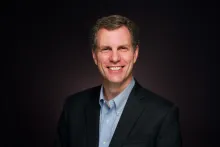
Tim Pebworth is the pastor of the Bordeaux and Narbonne France congregations, as well as Senior Pastor for congregations in Côte d'Ivoire, Togo and Benin. He is responsible for the media effort of the French-speaking work of the United Church of God around the world.
In addition, Tim serves as chairman of the Council of Elders.

