
Robin S Webber
This transcript was generated by AI and may contain errors. It is provided to assist those who may not be able to listen to the message.
Perhaps you've heard this portion of Scripture before. It will be very relevant to today's discussion. Humpty Dumpty sat on a wall. Humpty Dumpty had a great fall. All of the king's horses and all of the king's men couldn't put Humpty Dumpty back together again. That's what we're going to be talking about today. How do we put back things together that seem like they can never be put back together? All of us at one time or another have seen, and only the names change, and only the times change, Humpty Dumpty sat on a wall. And we've seen Humpty Dumpty, and we may be Humpty Dumpty, have a great fall.
And we get involved in the situation. And like all the king's horses and like all of the king's men, we try to put Humpty Dumpty back together again, but we come up short. This leads me to talk to you this afternoon about our approach in helping to put the Humpty Dumpty's of life back together again. Join me if you would, and let's turn to Holy Scripture, and this time it is holy. It is in Scripture. Join me if you would in Proverbs 25 and verse 11. For this is the opportunity, this is the challenge, and this is the charge to every covenant individual and everybody that reads the holy book.
In Proverbs 25 and verse 11, it says, A word fitly spoken is like apples of gold, in settings of silver, and like an earring of gold, and an ornament of fine gold, is a wise rebuker to an obedient ear. That is the verse that we will send her the rest of this message upon, because what we're talking about is an approach and a means and a way of taking the Humpty Dumpty episodes of life, and by God's grace, and by God's heart in us, and God's love in us, to patiently entreat others to come together again.
We find this manifest in one book of Scripture. It's the book of Philemon, and I would ask that you would turn over to it the book of Philemon. Philemon is one of the very few personal verses of the Bible, and this is very personal. It's written from Christian to Christian, when it seems like there was no way of putting this back together again. It's an incredible story, one of my favorite stories of the Bible, and frankly, one that I go back to again and again, because I still need to learn the lessons of Philemon, this epistle that is on one page.
This note from Christian to Christian that was probably just on one piece of papyrus that traveled from a Jew to a Greek regarding a slave. And that's what makes Philemon so fascinating and so incredible as an epistle to study, because it's just about three people. It's like a stage play. It makes it really simple. It's not a cast of thousands. There's a Jew. His name is Paul. There is a slave owner. His name is Philemon.
And there is a slave. His name is Onesimus. And nearly 2,000 years ago, everything was going all right until Humpty Dumpty sat on a wall. And Humpty Dumpty had a great fall. And it seemed like there was no way of putting this back together, especially seeing all of them were in the church. Paul, Philemon, Onesimus. But it just so happens that one was a master and the other was a slave. That's a whole other part of the story that we'll talk about a little bit later. So how do you get all of these people back together?
How do you bring it back together? You deal directly. A very important part of life that makes life challenging and easier at the same time is a very basic mathematical proposition. I'd like to share it with you. And if you will just abide by this, your life can change. Simply this. The shortest distance between two dots is a straight line. The shortest distance between two dots is a straight line. I don't have a pin up here, but you can do it there. If the sermon gets boring, you can start connecting your dots.
The shortest distance is two dots. Talking to the people that are involved. Talking with them, talking to them, rather than talking around them and talking to everybody else. Here we have the master stroke of God's Spirit working through the Apostle Paul, trying to bring the slave owner and the slave together in a situation that was fraught with incredible challenges. So let's get right into it. Let's talk about it. Let's understand and see how God's Spirit inspired Paul to fitly frame an argument, which was actually an entreatment for somebody to come along and do an incredible thing.
And all of us have that challenge in our life. We are going to be dealing with our mates. We're going to be dealing with our adult children. We're going to be dealing with people at work that may not even be people of faith, may not even be people of the book, but these laws work.
These laws work to fitly frame your words. So let's look at this jewel of the New Testament. Just going to read it together. It's going to be simple. We're going to draw some lessons out of it. Are you ready? Let's notice what it says here. Paul, a prisoner of Christ Jesus, and Timothy, our brother, to Philemon, our beloved friend and our fellow laborer, and to the beloved Ephiah and our kippos, our fellow soldier, and to the church that is in your house. Now, let's understand how Paul starts this letter.
Paul starts this letter by stating his name, and he says, I am a prisoner of Christ Jesus. The one thing that we always want to recognize about Paul is that he never said that he was a prisoner of Rome. He always spoke in the terms throughout the epistles that he writes that he was a prisoner of the Lord or a prisoner of Jesus Christ, both being the same.
He did not look at his life as being accidental. He looked at his life having a purpose and for a reason, that God was involved no matter what the situation was, that God was involved, and that he himself was God's servant. If you look at that word servant and go even deeper, when it's actually used in the New Testament, whenever you see the word servant or bondservant, it really comes from the Greek word doulos, which means slave.
We're going to be talking about that matter a little bit more as we're going along. And he says to Philemon, our beloved friend, he is speaking to fellow spiritual family members and to a Feia which most of the commentators think was Philemon's wife and to our campus who very well could have been Philemon's son. And he's a fellow soldier and to the church that is in your house. So we find here is Philemon.
It's strange in our world when you think of 21st century America and 21st century society that Paul is actually addressing this to a slave owner. But that was the world that was nearly 20 centuries ago. And he comments about what the man is doing correctly and what he is doing right.
And he's building bonds of affinity and brotherhood with Philemon. Then notice what he says, knowing that Humpty Dumpty had a great fall. Basically, let me fill you into the story of what we're dealing with here in the ancient Roman Empire. Onesimus is a runaway slave. He has run away from the slave owner. This is bad news, one way or the other here, especially for Onesimus. For a slave to run away, he better keep on running when he was in the Roman Empire.
To be caught, to be returned home. Most likely, he could be whipped. He could have an ear cut off. He could have a nose sliced. He could have a brand in his forehead with the letter F, which comes from the Latin fugitive. Remember how we were talking in the Bible chat about Rome and the brutality of Rome? And the way they kept the peace was to be brutal, to keep everybody in line. And at that time, the Roman Empire, which had probably about a quarter of a billion people, 250 million people, it's been estimated that 60 million of them were slaves.
So one out of four people in the Roman Empire were slaves. And we have a runaway slave. And by the way, the slave owner is in the church. And the slave, we're going to find out, is actually with Paul. So what do we do about this?
Where do we go? How do we bring the slave and the slave owner together and these three men all in the church, all on the same page? Notice then what Paul leads forth with in verse 3. Paul leads forth with the best gifts possible. He says, "'Grace to you, and peace from God our Father and our Lord Jesus Christ.'" These were the two great greetings of the Roman Empire. One was Greek, the other was Hebrew. The Greek community welcomed one another by saying grace. Grace to you. Meaning, be gifted. May you, in a sense, have in the Greek mind a charmed existence.
May there be blessings upon you. We get the word carous from that. Paris, charismatic gifts. May you be gifted. May you be blessed from above, as it were. And then Paul adds on to that peace. And again, the great hello and goodbye of the Hebrew language of Judaism. Shalom. Peace. Not the peace that is going to be conflict-free, but a peace knowing that as you are God's man and as you are God's woman, He will provide the means. Peace does not mean conflict-free.
It means that God will be with you and guide you and gift you, will not forsake you, and will be with you there to the end. So, He opens up with this grace to you and peace from God, and that you are always mentioned from our Father and the Lord Jesus Christ. This is important for us to comprehend. If you go through the different epistles of Paul and of Peter, you will always notice that they will always start out with grace and peace.
And they will conclude with grace and peace. And as a Christian, and I speak to myself, I can never move too far away from grace and peace. I want to have a chain and a ball on me. I got some news the other day. Suzy knows about it, too. It was something in our extended family. News that you would not necessarily want to hear about one of your loved ones. But when it was mentioned to me, and it was broached to me, I was calm. I was peaceful. I know that Suzy and I worship a good God. God knows that we love our family.
He has every means and every ability to be able to make things work out in His time and His way. And I was able to convey that to one of our daughters about a situation in their family. Grace and peace is something that we want to run towards and we want to embrace. We just want it to be saturating our life because we believe in God and we believe in Jesus Christ.
When we talk about God's grace, God's grace is not just simply that which is unmerited pardon for something we've done in the past. Grace moves beyond a past event. Grace is everything that God brings to us. It's everything that He brings into the game of the spiritual life. It is that grace that will establish us from the beginning to the end of our physical existence and that He'll be with us. And if we believe that, if we believe that, then there is that peace that passed with understanding that is better than the facts that are on the ground.
So this is how Paul opens up. Then he says, I thank my God, making mention of you always in my prayers. Hearing of your love and your faith, which you have towards the Lord Jesus Christ and towards all of the saints. So he's commenting on all of the wonderful qualities that Philemon has, that the sharing of your faith may become effective by the acknowledgement of every good thing which is in you, in Christ Jesus. Now, the terminology there, he's actually saying in the Greek, it's kononos pistos.
What does that mean? He's talking about that fellowship of the Spirit. He's talking about that communion of the brotherhood and the sisterhood in the church that is bound by the pistos, which is the faith in Jesus Christ, that God sent His Son to this earth for us.
And that if He did that, therefore then our life is in that, no matter what comes. So this is the whole background. And when he says, and for we have great joy and consolation, that means comfort in your love because the hearts of the saints have been refreshed by you, O brother. Just as much as we're refreshed when we come from La Mesa and El Cajon and Alpine and Chula Vista and Temecula and all parts in between, and we come to this house for the Sabbath, and we rest.
And we are refreshed with God's Word and God's Spirit in one another, restoring and bringing us up together. He says, and the brethren have been refreshed by you, brother. Now you say, okay, Weber, where is this going? Well, now we have... Have you ever talked to somebody and you know something's coming? You're waiting for the but? Am I the only one who's had that conversation with people? But it's positive. Now notice verse 8, Therefore, though I might be very bold in Christ to command you what is fitting, yet for love's sake, godly love's sake, rather, I appeal to you, being such a one as Paul the Agent, and now also, I also am the prisoner of Jesus Christ.
When you think about our relationships and how we deal with, at times, our spouses, or we deal with our adult children, we deal with our teenagers, we deal with people at work, we deal with one another in this church family. Where do you start your conversation in trying to connect the dots?
Do you put, therefore, in verse 1, without any bridge, without any intro, without any commonality of who and what you are with them? Philemon would not be in the Bible if it had started with, therefore. Can you imagine verse 1? Therefore, you will do this. That's not what a Christian does. Paul could have moved bodies back and forth. Christianity is not about moving bodies, and it's not about moving even minds.
It's about moving hearts. It's about people being transformed. It's not about necessarily telling people what to do, but encouraging them to look up and see what God the Father and Jesus Christ has done in each and every one of us. Therefore, though, I might be very bold in Christ. I am an apostle, and I could state this as a spiritual elder in the church. No, I'm doing this for love's sake. There are a lot of times we do things. I was thinking of the Bible chat today. I was thinking about the Bible chat about how we honor the King and how we please God. We can keep the Ten Commandments seemingly perfectly from the exterior, and we can just do things out of sheer desire.
But what is our motive? Is it just simply duty, or is it desire? Why do we do what we do underneath our skin? Is it just simply for ourselves, or is it to glorify God and to bless other people? That's what is so powerful in verse 9. Yet, for love's sake, always remember that love there is agape. This is not just brotherly. This is godly love. Being such as one as Paul the Agent, I'm older. I've been around. And so often, older people look at younger people and they say, you're just wasting life.
It's not always going to be there, and you're moving around in circles. Let's get those dots connected now and in the right way. And he says, I'm also a prisoner of Jesus Christ. I, myself, am bound. He's already mentioned that, that he's bound and changed. I also am bound. So he's creating this word picture that not only Onesimus the slave is a slave, but also he, this prisoner of the Lord, is also bound.
And he is a prisoner that he doesn't have, in a sense, the freedom of a free man, like Onesimus. Then, verse 10, I appeal to you. He's exhorting. Exhorting in the Greek means that you take a person from A. Are you with me, folks? You take a person from A to Z.
And over here in A, they're kind of buckling, but by the time he comes to Z, they think it's their own idea. You've explained your argument to where it becomes a part of them. And that's the appeal and that's the Greek background of exhortation that Paul is exhibiting here. I appeal to you for my son, Onesimus, whom I have begotten. I've given birth to him and my chains, who once was unprofitable to you, but now is profitable to you and to me also. Now, what's happening here, friends? Paul is putting some skin into the game. Now, while he is another man's slave, he is now saying, yes, but he's also my family member.
Onesimus itself in the Greek means, the word means, profitable. That's what Onesimus means. But he wasn't being profitable. Paul is punning off of this, as it were. Onesimus, that means profitable, had not been profitable because he had run away, and also we're going to find out that he had also taken something along the way. What made him run to Paul? Philemon was either, when you look at the commentaries, was either living in Colossae and or, Book of Colossians, and or in Laodicea, which were very close.
Why did Onesimus, the slave, seek out Paul? There's a whole story behind that. I'm not the fly on the wall. I'm not that old, kids. Okay? But it's the fly on the wall. But what drew this man, who had not been a Christian, to seek out Paul and Rome? Maybe there's a whole story that we could consider. Perhaps at one time or another Paul had come into the home of Philemon in Colossae or Laodicea, wherever he lived.
And again, remembering that slaves were only thought of being living tools. They were not thought of as being human beings. Often, you didn't look at them because they were a slave. Could this aged man, could this Christian, could this follower of Jesus Christ, showed love, concern, and sympathy to the slave? Did he look at the slave in the eye? Did he maybe share a piece of his food with the slave in the household while everybody gathered together and ignored the slave? There's some connection there that is not fully understood in the Scriptures. There was a bond, there was something that Onesimus saw in Paul.
And he sought him out. Paul in Dada was that Christian example of being a light in a very, very dark world. He came to Paul in prison.
Now notice what he says. Now he's profitable. This is my son that I gave birth to while I was in chains. I am sending him back. You therefore receive him that is my own heart. He's a part of me now. Whom I wish to keep with me that on your behalf he might minister to me in my chains for the Gospel.
He's very profitable, he's very useful. But without your consent, I don't want to do anything. That your good deed might not be by conviction, but rather that it's voluntary.
God gives us free will, God gives us free choice. God wants us to make the right choices, and not always the choices that are comfortable for the moment. For perhaps he departed for a while for this purpose, that you might receive him forever. No longer is a slave, but more than a slave, a beloved brother. Especially to me, but how much more to you, both in the flesh and in the Lord.
Now this is an amazing reading. And let me share you why. To a 21st century mind, this can seem almost incredible. Here's a man of God basically sending a slave back to a slave master in the Greco-Roman world. Why didn't Paul do something down then? Why didn't he plant the flag then? Why didn't he plant the flag then? Christianity was a new religion. Christianity itself was under attack. 60 million people in the Roman Empire were slaves.
But what Paul did, inch by inch, and need by need, and deed by deed, was not to transform the society as a whole around him at that time. What he basically was saying is that, yes, in a sense, Onesimus is going to remain a slave externally. He's going to remain a slave externally. But internally, he is your brother. Internally, he is your spiritual family member. Internally, you are to show him respect if you will take him back. You say, well, that's it? Let's understand something.
The burden was not only on Onesimus returning, recognizing the fate that he might undergo as a runaway fugitive slave, and be made an example of. But the example was also going to be upon Philemon.
Oh, you're a slave lover! Oh, that's how you do it!
Both men could have suffered incredible loss. What Paul was telling them to do was incredibly courageous. It took faith that it was going to be in Christ, as is mentioned, uploaded front in this book.
What Paul was asking them was nothing easy. There are some things right now that are in our own personal lives that are not easy. It does not seem like we can put Humpty Dumpty back together again, just like how are you going to put the slave owner and the slave back together in the same church?
And that might be going on in our life right now. Maybe we've been doing the verse one, therefore, and getting nowhere. Because we're not appealing. We're not fitting our words. And words are cheap if our motives are not correct. And we have to kind of rewind all the way down and say, What would Jesus Christ do? What was in His heart? What was His motives? Recognizing that, Thy will be done on earth as it is in heaven. Not my will, but Your will be done.
Onesimus' will might have been, I'm just happy like a bug in a rug in this prison with you, Paul. But that was not God's will. And Philemon, the slave owner, might have said, Enough already. Just let it be.
Humpty Dumpty was scattered all over the Roman Empire, from Colossae to Rome. And a Christian man of God made an entreatment to bring people back together. Notice what it says here. Perhaps he departed for this purpose. There may be something that's happening in our life right now that you say, Well, this is right up there with the slave owner-slave business. You say, How is this happening to me right now? Paul was referring to what he stated in Romans 8, 28. All things work together for the good. All things work together for the good for those that love and keep God's commandments.
Brethren, that is just so cardinal. That is so basic. You know what is very interesting? If I can make a comment? If I can make a comment about the book of Philemon? Maybe you've all studied the book of Philemon before. But simply this. Philemon is not about doctrine. It's not about doctrine. It's not about what you know. It's not about what you know. It's about who you know. And it's about what you do.
Have you ever noticed that with the book of Philemon? It's not what you know. It's not what's lodged in your gray matter. It's not about the Scripture, Rolodex that's here, but who you know and what you do. I remember many, many years ago, there was a gentleman in the Garden Grove congregation. His name is Aaron Dominguez. Fine young man, for those of you that might know Aaron out of Garden Grove. Any old Garden Grovers here? Susan Ossoff. You know the Dominguez clan. And Aaron, one time we were in a graduate men's club, and I'll always remember what he said. It meant something to me. It may not mean anything to you. But he said that, you know, when we meet Christ at the judgment, he's not going to ask you what you know. He's going to ask you, what did you do?
That defined it for me. He's not going to ask, what did you know? And you had it kind of like on a shelf, always meaning to do something. Always should have, could have, would have wanted to do something. But that you put your own skin in the game, in Christ, for the Father, to glorify them, to be a blessing to others. Let's continue the story. So he's no longer a slave. Oh yeah, he's a slave externally.
That's his outside, but now he is. Notice, above and above the other. And especially to me, but how much more do you, both in the flesh and in the Lord? Notice verse 17. If you then count me as a partner, receive him as you would receive me.
Again, a very basic principle out of Acts 10 and verse 34 that God is not a respecter of persons. We are to treat, please hear me, every human being and every individual with respect and with dignity. They are made in the image of God. That's it. That's enough. They are made in the image of God. And therefore we entreat them and treat them with respect and not with favoritism.
If you then count me as a partner, and at the very beginning of Philemon, Paul is speaking about this beautiful, wonderful relationship between him and Philemon and the house in his church and how it's encouraging him. But now notice, if he has wronged you or owes you anything, he says, put that on my account.
I'm willing to go out on the limb for this man. I'm going to put my own skin into this game. I'm going to sacrifice. If he doesn't have it, I will take his place. Now I, Paul, am writing with my own hand, and I'll repay. Not to mention, though, notice this. Words fit like gold. Notice this.
I'm writing with my own hand. I will repay. Not to mention to you that you owe me. You owe me. You owe me your own self beside. What's he talking about here, friends? He's taking it right back to saying, Philemon, remember before God sent me into your life, and I began giving you the gospel message that you are a slave to yourself, to society, to sin. You yourself were under a death penalty, and that good news came to you, and you were freed, and you were liberated from your past, and you could have a bright and sure future ahead of you. Okay, I'll pay up. You can see how masterful Philemon is as a book of Christian entreatment. Yes, brother, let me have joy from you and the Lord.
Refresh my heart and the Lord. Just as much as he said, you refresh the brethren in your house where the church meets in your house, but now refresh me. This is the second time that Paul has mentioned the word refresh.
Now, I'm talking to a lot of spiritual veterans here. Let's all look up here a second. I want to talk to you. Please. Have we not at all at one time or another just been refreshed by another person's actions when it was like they were going upstream? When you see conversion being manifested and people making the right decisions even as they're going upstream like a salmon. And you see where a person was over here. And now you see where they are or they come and tell you about a blessing or a growth opportunity that's happened in their life. Is that not refreshing? Is that not just like a wind that comes up on a hot day? Is that not just like a soaking of water on a hot day on your face? Is that not like a just a good cold drink of water? Water? And you're just refreshed. You say, it's still happening. God, it's still going on. People are taking you at your word. They are living their life in Christ. They are being a light in a very dark world. They get it. They got it. They're moving. They're honoring you. They're glorifying you. And they're being a blessing at the same time, even when it's so humanly very, very hard. Paul said, friend, give me that refreshment another time, please. Having confidence in your obedience says, I know I'm entreating you, but I know your obedience is already coming my way and to God's way. I write to you, knowing that you will do even more than I say. Even more than I say. Now, it's very interesting. Put your finger on verse 21. And let's go back up here again to verse 5. Hearing of your love and faith, which you have toward the Lord Jesus Christ, verse 5, and towards all the saints, that the sharing of your faith may become effective by the acknowledgment of every good thing which is in you. He's acknowledging everything that Philemon has done in the past correctly, but what Paul is requesting on behalf of God is that Philemon will now stretch beyond his comfortable zone. Now, the lesson in all this for us today on this apothesis, are you ready to stretch? Or are we just comfortable? Paul reminds us that God is always pleased with what we have done, but he's always going to move us toward that completion, which, as Paul says, is in Christ. When you look at the story of Job, Job was an incredible man. But the 42 chapters of Job is about God stretching an incredible man to understand that God alone is God. We've got to be prepared to stretch, and we've got to be prepared just as much as Paul wrote about God's peace as the entrance piece of this epistle to hold on to those as we move into Monday and Tuesday and Wednesday and Thursday of this week. Because life is what's happening that we haven't prepared for. But God has prepared us by giving us His grace and giving us His peace. Notice what it says here. Verse 22, Now, I smiled at this as reading this this morning. Some of you will remember President Ronald Reagan back in the 1980s. He had a very famous phrase that we would often use, especially with the Russians, which were then the Soviet Union. It was, trust, but verify. And so we have a little Reagan-esque comment here where he says, I know that you're going to go above and beyond, but just by the way, prepare room for me because I'm going to kind of come by and see how things are going. But not only that, Paul shows his incredible optimism that God has something yet in store in his life. He's a prisoner of the Lord in Rome, but he is looking forward to being released. That God still has a mission for him, that God still has a purpose for him, that for a moment he is in bonds, but that his life has been for a purpose and for a reason.
Verse 23, Epaphras, My fellow prisoner, again notice in Christ Jesus, Paul never says that he is a prisoner of Rome.
Let me ask you a question.
Who do we feel bound by? Do we feel bound by man? Or are we bound by God the Father and Jesus Christ, by their grace and by their peace, by their favor, and by their being with us, no matter what comes along in our life? To recognize that for a Christian, that there is another story that moves from beyond, Humpty Dumpty sat on a wall. Humpty Dumpty had a great fall. All of the king's horses and all of the king's men couldn't put Humpty Dumpty back together again. There was a fall 2,000 years ago. There was a crucifixion that we were talking about today on Golgotha. It seemed like there was nothing that was going to be put back together again by a perfect man that had lived a perfect life, that had a beautiful message about love, and a wonderful, incredible message about God coming down to this earth. And he was slaying. The worst thing that he ever did in his life was be perfect. Think that one through for a second. And he was rejected.
That is a very source of our belief that in what seems to be calamity comes resurrection. From that which is death comes rebirth. From that which is darkness comes light. And you find that just permeating this incredible epistle of the book of Philemon.
Apaphras, my fellow prisoner in Christ Jesus, greet you. And do Mark. And Aristarchus. Demas. Luke. My fellow laborers. Notice verse 25. Here again is the incredible bookend effect of the Epistles of Paul and Peter. The grace. That means the carousel. That means the giftedness, the blessings of our Lord Jesus Christ. Be with your spirit. And therefore, so be it. John 14. John 14.
Out of the Gospel of John.
Verse 27. Peace. I leave with you. My peace. I give to you. Not as the world gives. Not as the world gives do I give to you. Let not your heart be troubled. Neither. Let it be afraid.
That would be the message to Philemon when he had to make big decisions which were going to stretch him.
That was going to be the message to Onesimus when he was going to have to make big decisions that could have cost him his life. That was the decision of a peacemaker named Paul. And peace has got to be made. Peace has got to be made. And we've been called to be peacemakers. We've been called to use our hearts, our words, and our actions to glorify God and to be a blessing to our fellow man. Let's walk this week in the footsteps of Jesus Christ, Philemon, Onesimus, and be about our Father's business.
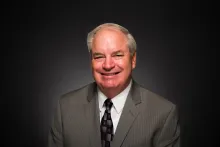
Robin Webber was born in Chicago, Illinois, in 1951, but has lived most of his life in California. He has been a part of the Church of God community since 1963. He attended Ambassador College in Pasadena from 1969-1973. He majored in theology and history.
Mr. Webber's interest remains in the study of history, socio-economics and literature. Over the years, he has offered his services to museums as a docent to share his enthusiasm and passions regarding these areas of expertise.
When time permits, he loves to go mountain biking on nearby ranch land and meet his wife as she hikes toward him.
