
Robin S Webber
Paul's one page epistle to a slave owner in regards to a runaway slave is a scriptural masterpiece (gem!) in regards as how to project and practice reconciliation underlined with loving wisdom framed with the bookends of grace and peace. Jesus' words state that we are to forgive as we have been forgiven. He clearly states that we are to be peacemakers not just "peace-wishers". How does this work in real time with real people with real challenges before a real God? Listen, read, learn!
This transcript was generated by AI and may contain errors. It is provided to assist those who may not be able to listen to the message.
Well, good afternoon, everybody, and I want to welcome you here, and also those that will be watching in the days, weeks, and months ahead that hopefully this message will be a blessing to everyone. I certainly appreciate the message that Mr. Sandy Beatty just gave us, and I want to build upon that, because he did speak about the Beatitudes. And I'd like to just share two Beatitudes that he did mention that will be part and parcel of the message that I'm going to share with you. And number one is where it says, Blessed are the peacemakers, for they shall see God.
And number two, blessed are you when men will persecute you, when men will revile up against you, and that there is a blessing that is included there. These are part and parcel of the message that I'm planning to share with you today. So, Sandy, thank you very much for that as we build upon that. Well, here we are a couple weeks after the Feast of Tabernacles. And we have all imbibed and participated in what is mentioned in Isaiah 2, verses 2-3, that we are to go up to the mountain of the Lord. That, number two, we are to learn His ways. And number three, that we are, here we go, we are to walk in His ways.
To walk in His ways. And so, we're going to be discussing that. And to what does that mean now that as we walk in His ways, as we come off the Feast of Tabernacles. And that's very important. Because it's one thing to know about His ways, but then it's another thing to walk in His ways. And we all have some work to do.
And we don't even know necessarily the work that is before us. But that's what I would like to share with you today. Because as we walk in His ways, what does that look like in real time for real people that are worshipping a real God? And that's why I want to present this message. About every ten years I dust off a message. I call it the jewel of the New Testament. Because I look at it, and when a decade has gone by, and you're that much older, you might look at it a different way than you did when you were younger.
And to understand the value of that. And so that's why today I would like to go over what I call the jewel of the New Testament. It's an epistle that is written by the Apostle Paul. When you think of all the different epistles of the Apostle Paul, there are many people that have many thoughts about different things that he says in different epistles. But when you come to the one that we are going to be discussing, there is a joint understanding of the majesty and the beauty of what is spoken about. It's very interesting that this epistle is the shortest that the Apostle Paul writes. In fact, it's one of the shortest books in the Bible.
In the New Testament, only 2 John and 3 John are shorter. But there is something special about this that I want to allow us to use as a GPS moving forward, so we will be ready for what comes our way that we don't expect is going to come our way. Because have you ever noticed that life is what's happening that you haven't planned for? And here we are as the people of God.
We've just gone through the millennial thoughts during the Feast of Tabernacles of the world that Jesus Christ is going to be creating, and we are going to have an opportunity, we are training for that opportunity, to assist Him. And when you think of the majesty of what is stated in the book of Isaiah, that the valleys are going to be lifted up, the mountains are going to be lowered. There's going to be a straight way into the wilderness, no longer crooked, no longer going around in circles. But all of that is going to take effort, and that's talking about us today.
We have ahead of us mountains that we're going to have to deal with, that are in front of us, to bring them down. We're going to have valleys, we're going to have desert spots, empty spots that we have to raise up. We are called to make a straight line of the sins for the kingdom of God, but what is it about human beings that sometimes we just go around in circles and circles, thinking we're making progress, when again, all we're doing is we are making circles.
And what I mentioned about, blessed are the peacemakers, for they shall be called the sons of God. Let's understand something. Let's just put it right out there for all of us to understand. Peace is not wishful thinking. Peace, real peace, is something that has to be created, has to be made, no matter what is coming your way. And so that's why we're going to take out this jewel of the New Testament.
Only one page. Look at this. This is my notes. All of this epistle fits on one page with a bunch of scribbling by me. Takes about four minutes to read. It's not like the book of Psalms. And yet there is so much in there for us to understand. Often think of Abraham Lincoln in writing the Gettysburg Address.
The man before him took two hours to speak. Abraham Lincoln got up and spoke for two minutes. And in those two minutes, he nailed it. He was over and done and out, and people wondered what had happened. And yet in that, there is a similarity between what is spoken of by Lincoln at Gettysburg and what we're going to cover today in the epistle of Philemon. Both discuss where the individual or the nation have been. Discusses now where they are and why they are where they are.
And number three, takes them into the future to a better hope and to a better future. In other words, the Gettysburg Address and the book of Philemon, you can dissect it. And past. Okay, there's the past, but now here's the present. What are you going to do? Are you going to fold or are you going to stand up for God's way of life?
And number three, then, what the future looks like. So we're going to get right into it. Let's go to Philemon. Not chapter one, Philemon one, because there's only 25 verses. I think we can fit that in before sunset. And here we go. Going to just read and I'm going to add up a little bit here for you. It says, Paul, a prisoner of Christ Jesus, and Timothy, our brother. To Philemon, our beloved friend and fellow laborer, to the beloved Ephiah, our kippus, our fellow soldier, and to the church in your house.
So there's a greeting. But before we get to the greeting, we've got to discuss what happened. Beyond the greeting, we have to discuss what happened. What happened is we have a slave that has run away. Now, what does that mean in that time, in the real time of the Roman Empire? In the Roman Empire, it's been estimated that 25% to 40% of the populace were slaves.
In Italy, it was probably up to 50%. Of course, this slave ran away from Colossae, which is an Asia minor. What did it mean to be a slave, and why did they have slaves back in the days of antiquity? The Romans patterning themselves after Greek thought, and looking at the Aristelian scale of life and nature, a slave was regarded as being an animated tool. You might want to jot that down. An animated tool. That means a tool that was alive. They were a hammer, a sickle, a screwdriver, a dishwasher, whatever you want to call it, on two legs. They were not inanimate, which means literally those tools that I just mentioned, without life. That's where society was. Many a person, not only sees or in others, would even in most households perhaps have up to two slaves. Sometimes you were actually born into slavery as well.
This is the story behind this sharing that I'm going to offer to you right now. And recognize that if a slave did run away, they could once caught, be crucified. They might also receive what we call a shiragma, or a mark, a branding on their head. Think of the mark of the beast. That's where that all comes from.
They could have a piece of amputation on their face. And when a slave ran away, remember, everybody kind of lived together back then. The cities were small. Everybody knew everybody's business. Like I always say, kind of think of that picture of New York about 1900, you know, on the Lower East Side, with all the wash across the streets, and Mrs. some Irish woman talking to some Jewish woman, talking to some Italian woman, talking to this, talking to that. And they all knew one another. Everybody had just come over and come through Ellis Island. Everybody knew everybody's business. So if something happened, everybody knew it. And once a slave was gone, everybody would knew it. I'm trying to give you the circumstances as we go into this story of why this foundation, this is brilliant, brilliant to understand this whole conclave and to recognize that. So I just want to give you the background as we now go forward. So what is happening? Keep us in tune with Philemon. This is like a stage play. Just three characters, three main characters. You might want to jot this down. There is the Jew, there is the Roman, and there is the slave. This is going to be very simple. The Jew, the Roman, and the slave. How do we bring them together? How do we create peace? What is Paul writing in this that all might come together in unity and oneness? After something has occurred that nobody had planned for, but now it's happened, where do we go? Now, as we go through this, dear friends and those that are listening, we're going to break this down concisely because words have meaning. Every word has meaning in this. And sometimes you just kind of roll through it rather than break it down. So we're going to deal with this. So here we go.
Again, a prisoner of Christ Jesus and to Timothy, our brother. Let's notice that we identify this as Paul. This is Paul. We're going to find out later on that he's written this with his own hand. It is that important that everybody knows back in Asia Minor that this is coming from him. And notice what he says, a prisoner of Jesus Christ. That's why we have to concentrate here for a moment and understand something. He never considered himself a prisoner of Rome. You will not find that in the epistles that I am a prisoner of Rome. He always talks about being a prisoner of the Lord. He is a prisoner of Jesus Christ. He was there for a purpose and for a reason. What you're beginning to understand, here's what I want to share with you. This is about relationships. The words that I'm going to share with you, they just don't happen. This is beautifully inscribed. It says, to Philemon, notice, our beloved friend and fellow laborer. Our beloved friend and our fellow laborer. He's beloved. There's a relationship. Notice, and Timothy, our brother. In other words, again, a father-son relationship. To Philemon, beloved friend and fellow laborer. Again, notice the tightness. Notice the rehearsal of what had drawn them together over the years for such a moment and such a letter as he was about to be received. And to the beloved, Athea, our kippus, our fellow soldier, and to the church in your house. Now, notice what is happening. And you think about this so often in our own scenarios in life, where we're dealing with our mates, dealing with our spouses, dealing with our adult children, dealing with employers, dealing with our neighbors. Sometimes we just go for it. And what you're noticing is that Paul has had a relationship with Philemon, and he's building upon that. He's saying, you know, you're not a bad guy, Philemon. Know you're a slave owner. Know you're a slave owner. But this is what you've done so far. And he's beginning to create soil and ground to allow something to grow for Philemon to be more than he is of and by himself. And to the church in your house, you know, hey, this could be like Philemon's house that we're in today. The church actually met in his house, and he's being given credit for that. So that's the opening greeting. And it's written by a man that is in prison. Paul is in prison. Prison is pretty simple. You are in a cell. You are by yourself. And you're looking through a different set of lenses. Are you with me? A different set of lenses when you're alone, when you recognize that your life might be at stake any day, depending upon the whim of the Roman judicial system.
You see things differently and you simplify it down. What is Paul conveying and will convey in this message? He's basically saying, I'm shackled. I'm in chains for the Lord Jesus Christ.
Don't put yourself in shackles. Listen to me. I have a message for you. And this is beautiful. I'm just sharing this. I mean, I do it perfectly today. But in looking at this again after 10 years, I find two things that are happening here. As he now begins to almost move into the approach. You look at the approach. There's one thing that is loud and clear. Notice verse 3. Grace to you and peace from God our Father and the Lord Jesus Christ. There's a couple of things I want to point out to you. Grace to you and peace from God our Father and Lord Jesus Christ. That is his greeting. That is his greeting. Now, I want to take you to the end of Philemon. Notice how he ends verse 25. The grace of our Lord Jesus Christ be with your spirit.
Bottom line, friends. In Philemon, it starts with the subject of grace.
And it ends on the subject of grace as a stepping stone of once we understand grace and what God has done for us, and what Jesus Christ has done for us, that is where the straight road through the wilderness of life begins for a Christian.
This is fantastic. This is just finally laid out. And what do I mean when we say grace? What is grace? Grace is God's interruption in our lives. It's his invitation to a more fuller life. It is his intervention from above, not of our own making. God called us. You don't join a church. A lot of people join a church. We actually sang that one of the songs that you brought up about God has chosen us. And to recognize that as a part of grace and to recognize of and by ourselves, we don't deserve it. We don't deserve it. Judgment is upon us. And when God's grace comes upon us and when we accept him as our Father, and we have Jesus Christ as the sacrifice, as the Lamb of God, we are forgiven. It's not something we can do of and by ourselves. There is no human merit. No human merit. All of us have fallen short of the glory of God. All of us have—think this through for a moment. Are you with me? Pauline Theology. All of us have been slaves. All of us have been slaves of this world. And by God's grace, his intervention, his touchdown in our hearts and our lives, we are freed from the prison of sin and the future and the judgment that we brought upon ourselves.
And we become liberated. And God accepts us and receives us as we've accepted Jesus Christ.
Therefore, we look at everybody that we come into contact with to recognize in humility, it's not about me. It's all about God and what he has ordained and chosen, and that I have accepted and I have surrendered to.
And because I have received this grace in my life, I also need to share that in type with those that I come into contact with, not putting myself up high, higher than I need to be. Notice also what it says, grace and peace.
Sounds like the echo of Philippians 4, verse 7, where it talks that God grants us a peace that surpasses understanding.
What's that mean in simple English? It means better than the facts that are on the ground for the moment. Better than the facts that are on the ground. And we're going to find the facts of this. We have a runaway slave who's crossed a couple of seas and is now in Rome. And we're not quite sure what Philemon's emotional state is right now about this, because he can't only just worry about a slave, but what are people going to be thinking about him? Now notice what he goes on to say, and this is just his opening. He says, I thank my God, making mention of you always in my prayers. This is Paul speaking. I thank my God. Folks, let's think about this for a moment. He is thanking God while he is in chains, while he is in a Roman cell, and why he now has a situation that he's being called to make peace as a peacemaker, to bring two individuals together, one that is runaway and one who owns the one that, as man looks at, owns the man that's runaway. How are we going to get them back together?
Here you have the GPS of GPSes of how to deal with conflict, how to bridge the gap between parties and as a Christian be a useful tool before God. I think mention of you in my prayers. Now notice hearing of your love and faith which you have toward the Lord Jesus and toward all of the saints. Let's break that down again. I thank my God. My God. This is personal. This is personal. Words have meaning. The relationship that Paul has with God, he is my God. You know, I might be over tripping on some of these small words, these adjectives, these pronouns. Dear brethren, and those that are listening, words have meaning. Our words, the use of them, the lack of the use of them, the over-accessiveness of using them, it has meaning. Adjudice have power. Small words have meaning. Pronouns have meaning. Caring of your love and faith which you have toward the Lord Jesus Christ, towards all of the saints. That the sharing of your faith, so he is saying, Philemon, I know where you're at and you are a man of faith, may become effective by the acknowledgment of every good thing which is in you, in Christ Jesus. Connecting, always connecting. You notice the Scriptures connect God the Father with Jesus Christ, and as much as possible, connect us with them. For we have great joy and consolation in your love, because notice the hearts of the saints have been refreshed by you, brother. Still the familial sense, a brother, a co-worker, a partner, moving together. Now, that's just the intro. That's what we call the warm-up. That's how maybe somebody will let you into the door of when you're confronting them with something that maybe they're not too happy about, or that you're moving them towards a new level of understanding and a new level of existence as a fellow Christian in this way of life. Now, we have the downbeat of, and you know what I always tell all of you and those that are listening, always look for certain words, but, if, and, so, now, and then you get the big downbeat of therefore.
In other words, having said all of this, fight, Amen, now, let's move forward. Therefore, though I might be ever bold in Christ to command you what is fitting, yet for love's sake, for love's sake, I rather appeal to you, being such a one as Paul the aged and also a prisoner of Jesus Christ.
What's this telling you and me just about our existence, in the words that Paul's using towards failing? God is not calling robots. He's not calling robots.
He's calling human beings, living beings, that make choices. God has always offered us free choice.
Paul could have gone double macho here, that's Hebrew for double macho, and said, I don't care if I'm in prison or not, my word is like this, you're going down, buddy, if you don't do what I say.
But he is appealing. He's beseeching.
Yet for love's sake, how often do when we get into an argument, when we have friction with another, is it for love's sake or self's sake? Is it for outflowing and outgoing concern away from self?
Or are we trying to create a bridge between two people before our God? I appeal to you, my son, I appeal to you for my son Onesimus, whom I have begotten while in my chains. This is very pictorial, very meaningful. Onesimus. The word Onesimus in the Greek literally means profitable.
It means profitable. Is he profitable, being run away?
Is he profitable? You're going to notice, let me finish this, I appeal to you. He's beseeching. He's actually saying, I appeal. I'm putting my heart outside of my chest and it's moving towards you over in Colossae. I appeal to you for my son. Now, there's another family member, not just a slave, but a son to the Apostle Paul, who he feels was birthed in a sense, or he was the midwife, if you want to put it that way, in the process of Onesimus becoming a child of God the Father, who I have begotten while in my chains, who once was unprofitable to you, but now is profitable to you and to me.
Let's think this through for a moment. Let's think this through for a moment. This slave had originated over in Colossae, which is in the middle of down below in southwest, what we call Turkey today. And this slave somehow beats a path over to Rome and meets Paul. I have a question for you. Maybe we don't know exactly. A thought.
Why did he make that journey?
Why did he make that journey all the way to this man named Paul? What was it about Paul? Had he been a slave in the household or in the villa? We're not sure what the magnitude of Philemon's holdings were. Was it something that maybe Paul actually looked at him when he spoke to him? Listen to him. If he spoke, listen to him. What was the magnet? What was the difference between Paul and the rest of the populace of Colossae that this man would risk his life and go across all of Greece and go over to Italy and be in Rome and now next to him? You never know. You never know.
No, you never know.
The vibes that we give off as people, as far as drawing people to a better way of life.
We can conjecture. I'm not sure, but it's always been something I've been stuck on. And recognizing are we ourselves, do we shed light in the darkness? Are we warm rather than ignoring people? Do people look at us as being stuck up? Do people think we don't have time for them? There was something that touched this slave, Onesimus, that turned him around. He goes to Rome, and in a sense, it's a little bit like the prodigal son, where it speaks about the prodigal son. And when he came to himself, when a man comes to himself. Some of us are still seeking and looking for that moment. When will we come to ourselves wishing for peace rather than remembering the beatitude?
Sandy? Blessed are the peacemakers. And when you're going to make peace, whether in a marriage, whether with your adult children, whether with your neighbors, whether with your boss, sometimes peace has got to be made in congregations, doesn't it? Or am I the last one that's noticed over the last 60 years? It doesn't just happen. You have to have courage. You need to be brave. You need to be thoughtful. You need to know about your approach. You see the approach that Paul lays out here. That he wants this to happen. And let's see what the rest of you see. Now notice this, but it now is profitable to you. Now notice what happens then. Verse 12. Verse 12. Because, as he says that this appealing is going on, now the big news. Verse 12. He's made the approach, the brotherhood within the family. Talks about an enysmus. Now notice this. Number 12. Verse 12. I am sending him back. You therefore receive him. That is my own heart. I have a chunk of him in my heart. We are no longer separated. We are what you're, Philemon, what you're going to find out, friends, stay with me. You're going to find out that this is the birthing of the new creation. A new creation is occurring. That's what happens when we are baptized. We are no longer to be the old man. We're no longer to be the old woman. God himself said in Isaiah, Behold, I make all things new. And that's what Paul is trying to get across to Philemon, whom I wish to keep with me. My desire be for him to keep with me, but that on your behalf he might minister to me in my chains for the gospel. In other words, you would partner with me and allow him to stay with me. Philemon, just send a note and I'll keep him here. He's of great value to me. But without your consent, I wanted to do nothing that your good deed might not only be by compulsion as it were, but voluntary. Voluntary. Not because you have to, but because you want to.
In the heart. And recognize again, you know, the story that we find in Matthew is that we are to forgive others. We are to forgive others. That we have been forgiven so we forgive. We have been forgiven. We have been forgiven. So therefore we forgive. You can't have half of that equation and be a Christian. I'll be that blunt. Are you with me? Waking you up? You cannot. That's a full equation. It's like one plus one equals two. You cannot have been restored to God the Father by repenting of your sins, unless repenting of your sins and having faith in Him. There are others around us. Guess what? We're not the only ones that have sinned. We will bump into people that are sinning now. And we ourselves will stumble along the way ourselves. Because we have been forgiven, we are to forgive. And the whole message here is, we have all been in slavery. And that's why the topic of grace comes up here. We were in the chains of self. And God the Father provided the key. And that was Jesus Christ. And to accept Him. And to become with Him. And to have a relationship. For perhaps He departed for a while, for this purpose, that you might receive Him forever. These words are golden. That for this momentary discomfort that everybody is going through, perhaps for a purpose, that you might receive Him forever. For this purpose. What is going to happen in our lives, in the days, in the weeks, in the months ahead that we have not planned for? That something comes along and you say, God, what in the world is going on?
I didn't sign up for this one. I never expected this to happen in, moi, my life.
For perhaps He departed for a while, for this purpose, that you might receive Him forever. No longer as a slave, but more than a slave, a beloved brother. Especially to me, but how much more to you? See the connection? Both in the flesh, which was before, but now in the spirit. We're having a graduation party.
Philemon's role is going to expand.
If you then count me as a partner, receive Him as you would me.
What is Paul sharing here with Philemon?
More than ever, over the last several years, I just always go back to the story of Esther.
Mordecai's words.
It seems like it's all going to fall on Esther, who's the queen of Persia, married to the big guy, the king.
And yet we know what's happening. There's a plan to genocide for all of the Jews from the west part of India all the way up to Thrace, which is northeast Greece. And it's all going to happen in one day, one time.
And Mordecai sends a message and simply says this, For such a time as now, for who knows if but for such a time as now, the kingdom has come.
And if not you, there will be another.
Remember something here. There was this door.
The outside world, there was a door into the garden spot of the king.
And to come through that door and be in the king's presence without an invitation was death.
No matter who it was, queen or common person. And Mordecai had the chutzpah to say, For such a time as now, who knows, but the kingdom has come. See, the kingdom had come at this moment. He was a subject of that kingdom.
And there was a door that would have scared everybody else out. He's the slave owner, and the slave owners always had to stay together because of their fear of the slaves when they were one quarter to 40% of the population.
And there had to be a control. And if you didn't do it, you were not with the free people.
You think of Spartacus, otherwise known as Kirk Douglas, back in 1961 or 1962. The great slave revolt. That was crushed.
Because once they do that, there's so many of them, we've got to keep them in fear. This is what was going to be weighing on Philemon to accept him back.
If you then count me as a partner, receive him as you would me.
Receive him as you would me.
Here is an apostle of Jesus Christ, the man that has spread the word through Asia Minor and to the Gentile world.
But if he has wronged you or owes anything, put that on my account. Put that on my account.
What we find is Paul is putting skin into the game.
He's not shy in putting himself forward.
And to be a marker, to be a down payment.
I, Paul, am writing with my own hand. I will repay, not to mention, excuse me, not to mention, that you owe me even your own self besides. I was the one that brought the message of Jesus Christ to you and opened your life and you accepted Christ and you were free of your sins. Knowing that a greater down payment had been made for you. You see the symmetry between Philemon, Paul, and Onesimus. We're all on the same plane.
Yes, brother, let me have joy from you and the Lord. Refresh my heart and the Lord. Refresh my heart.
Here's Paul in prison. He's over in Rome. Refresh my heart. Encourage me. What does encouragement mean? That means putting courage into someone. Encouragement. I know it's spelled E-N. I went to school. But just think of it as encouragement. We are placing encouragement into people as they put encouragement into us. We all need one another as brothers and sisters in Christ. Refresh my heart. The same kind of thought that at the end of Jesus' life when that last night he said, Father, Father, I know that these know that you have sent me.
I know that these know that I am Messiah. I know that these know that I am the answer. He mentions this three times at the end of John 17 as he is about to do something that is incredible, betrayed, run up to Mount Golgotha, crucified. He says, it's worth it. It's worth it. That's what Paul is saying here. It's worth it to me being in prison, being a prisoner of Jesus Christ. If this message is gotten out of grace and peace, peace does not necessarily come easy. It's not by our might. It's not by our power. It's not by our spirit. It's not by our intellect. It's by following the example of Jesus Christ.
And when you look at this manifesto of Christian diplomacy, of how to represent and have the backing of God the Father and Jesus Christ in your words, and the words that you use, and the attitude that you're using, I'll say something. Expect things to happen.
Having confidence in your obedience, I write to you, knowing that you will do even more than I say. Can I say something? You've got to smile. The Holy Spirit, through Paul, is just working this to the end. You're even going to do more than I say. It's building up expectations. Paul is the agent. Paul says, do something for an old man. Paul the agent. He's kind of, mmm, mmm, you know? And then he says, as my son and the Lord, and I have this son and the Lord, I now have two sons and Lord. I've got a mismith over here and I've got you. And I know you're going to do even more than I am asking you to do. But now notice, love this. But, you remember what I always say about little words in the Bible? But, meanwhile, also prepare a guest room for me, for I trust that through your prayers I shall be granted to you. By the way, expect me to come your way and see how things are going with you and your servant, your slave, Onesimus. Apaphras, my fellow prisoner in Christ Jesus, greets you.
There's always, you look in Paul's words, look at the pronouns, look at the adjectives. In the Bible, the Bible is not only a book about rules, it's about love, godly love, and relationships.
And notice the bridge that Paul is using to bring the body of Christ together over this issue.
And so do Mark and Aristarchus and Demus, Luke, my fellow laborers. The grace of our Lord Jesus Christ be with your spirit. Amen. As I said before at the beginning, notice bookends. Grace in the beginning, and peace, and at the end, grace. And for all of us to recognize that by the grace of God, as the expression goes, we would continue to be slaves in this system. That's why it's very important that when we look, join me if you would for a moment in Galatians 3, 26.
Galatians 3, verse 26.
For you are all sons of God through faith in Christ Jesus.
Huh. For as many of you as were baptized into Christ have put on Christ, there is neither Jew nor Greek. Sandy spoke to that in his first message. There is neither slave nor free. There is neither male nor female. For you are all one in Christ Jesus.
And if you are Christ, then you are Abraham's seed, and heirs together according to the promise.
How does that make us look at the world that we venture into every day?
And respect that God made everyone in his image and after his likeness?
And not scorn them, but to pray for them.
And we that are in the body of Christ, to be thoughtful and mindful of the words that are lodged in the motives of our heart, that what we speak, we speak with grace, recognizing the inclusion of God, recognizing the inclusion of Christ. And recognize that even when we are sharing this in our own mind or with others, peace does not come easily.
Remember that peace has got to be made. And we are to be a peacemaker. We are not to be on the bench.
There are no big superstars of peace other than Jesus Christ, so we all have to kind of get our sea legs together and learn how to do this. And that's why God gives us this. Let's conclude by turning over to Ephesians 2.
And picking up the thought if we could in verse 8. Remember the beginning of Philemon and the end of Philemon? For by grace you have been saved through faith, and that not of yourselves, it is the gift of God.
We have been liberated. We had no means of saving ourselves. We were all slaves to sin. We were all drowning people, even though we were still breathing oxygen upstairs.
A drowning person cannot save themselves. There always has to be somebody that comes from behind to raise them up out of that pool.
That's our experience. That's why we are here. That's why the doors are very... Can I just share something as we go out on this? Just be aware, there's a door in your future, and you're going to be on side of this door, and you're going to want to go back.
You're not going to want to deal with it. But that is the moment that we ask God to deal with it.
And to recognize that that door that is in front of us, that for such a time the kingdom has come, the kingdom of God, into our lives to make a difference. Except, instead of looking at what we consider a door in front of us, consider the door that is Jesus Christ. Jesus himself said, I am the door.
Whatever door that faces you to move you to the next level. I've been in this way of life for over 60 years.
And it says in 2 Peter 3 and verse 18, but grow in the grace and the knowledge of our Lord and Savior Jesus Christ.
Growth is not over at age 22. It's not over at age 42. It's not over at age 74. It's never over till it's over.
And think, well, I've learned everything. If you have that kind of attitude, just when you say that, you know something's going to happen.
God is going to propel us till we are in the full magnitude of the image of Jesus Christ, being a servant, and willing like Paul to put himself on a line for another individual because of the love of God.
God is doing a work in us. Therefore, when we learn and we examine the lessons of the book of Philemon, let's allow God to be about His business in us.
Let us be about our Father's business. For indeed, the human family, all of it, is a family that God is interested in.
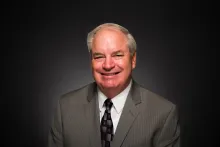
Robin Webber was born in Chicago, Illinois, in 1951, but has lived most of his life in California. He has been a part of the Church of God community since 1963. He attended Ambassador College in Pasadena from 1969-1973. He majored in theology and history.
Mr. Webber's interest remains in the study of history, socio-economics and literature. Over the years, he has offered his services to museums as a docent to share his enthusiasm and passions regarding these areas of expertise.
When time permits, he loves to go mountain biking on nearby ranch land and meet his wife as she hikes toward him.
