
Robin S Webber
This transcript was generated by AI and may contain errors. It is provided to assist those who may not be able to listen to the message.
Well, talking about stories, this afternoon I'd like to begin with one that all of us have lived through over the last couple of weeks. It's not going to dominate the message, but it inspired the message.
And that is simply that Elizabeth Windsor, Queen of the United Kingdom and the head of state of many a country, leader of the Commonwealth of Nations, died two weeks ago. And the world was glued for days and days, and events and events, and how many memorial services we went through, through all the ancient buildings of Scotland and Wales and England. And the whole world took note. Elizabeth Windsor was one of the most famous people, one of the most famous faces, studied over the last 70 years.
And her face and her legacy is to one degree or another. Some of us have followed more closely, perhaps than others. But it's almost like she's always been, at least for we that are at our age. She came to the throne when Susan and I were one year of age. And of course, she's gone through, as we've all heard the stories, now how many prime ministers. She started with Winston Churchill, which took her to another century back.
And of course, all the US presidents that have come and gone. And yet, this steady face, this steady heart, continued for over 70 years. The point is simply this. It seemed as if she had always been. Always been! At least for people our age. And we're in the early, early part of our eighth decade. It's like she'd always been. She'd always been there. And it would always be. Just as much as 150 years ago, it was always said that the sun never set on the British Empire. But it did set, didn't it? At least the Empire. And the sun, for the moment, has set on Elizabeth Windsor. It was, to all of us, to one degree or another, whether we recognized or not, that it was an interruption in our life.
And that's going to be a key word if you want to jot that down and stay with me. We're going to be bringing up that word again and again during this message. It was a reality check, just to really be able to think about it and accept that. The Queen was a marvelous example. And even as I say that, human? Absolutely. Personal challenges?
You know it, I know it, and the entire world knows the challenges that faced Elizabeth Windsor. If she didn't have her own personal challenges, of course, it became personal when she dealt with a generational family, with all that they brought to the table. And to recognize, lest we be too hard on the Windsor's, is to recognize that every family has its dose of human nature and its outcomes, even in the Bible. When you think about it, you think of the family of Eli, you think of the family and the children of Samuel. And of course, then there's all of David's brood that, half the time, were trying to kill him and attack their own father.
Interesting. Families are always rich and a little bit interesting. And, do I dare say, like our own personal families here in the 21st century. But what a meaningful legacy to consider. To think about it for a moment, since the time she was a child, and her father was the Duke, and then later the King of England, her life was always being watched by people around the world. For seven decades, everywhere she went, there was a photograph, or later on, there were cameras on her.
My question to you simply says, how would you like that to be your story? Now, if you don't think you would, by the end of this message, you're going to recognize that people are watching and that people are viewing, both in heaven and on earth, as to the story that you are creating. In saying this and sharing more, the intent of this message again, and I want to make it perfectly clear, is to recognize that we're not here to idolize or necessarily immortalize Elizabeth Windsor.
For like us, she was made of dust, dust thou art, and dust thou shalt be, and she is now deceased and waiting for the future. When you think of that verse that comes out of the Old Testament, dust thou art and dust thou shalt be, it's very interesting that it is the great equalizer within the human community. Whether you wear a crown or you don't have a dollar in your pocket, death does come to each and every one of us.
The thing that spoke to me during this message, and there were so many, is simply this. It was not only about the Queen, but then what comes after the Queen? Have you recognized how quiet it has been? Not a lot of news coming from London over the last couple of days. This is what came to me. And again, during the interviews over the last couple of weeks, much was spoken about Prince Charles, now King Charles III.
The aspect that he had for 70 years and a little bit more of life with his mother. Since being an adult, he had been tutored and mentored, trained and observed by this wise monarch for nearly 50 years. Under his mother, as he would say, his mamma's guidance. Questions came up, what might be the future of the United Kingdom? Or what might be the future of the Commonwealth under this new King Charles III? Will he avoid mistakes? Will he stay involved with some of the interests? Looking at them? Some? Depending upon what side of the spectrum you are. Maybe controversial? Maybe not? But would he be that vocal advocate that he was before, simply as the Prince of Wales?
Interesting. Another question came up, will he grow in office? And can he rise to the stature of his mother and be a unifying symbolic force for the United Kingdom and for the Commonwealth of Nations? This last thought is about transitions. And it is what interrupted, actually with everything that happened, it's what interrupted my own life and my own heart the most over the last couple of weeks. To personally consider matters of humanly, historically, prophetically, and spiritually, a lot to take in that I as a Christian might be able to learn and to develop in my life and perhaps share with you this afternoon.
Because they were basically asking, what is the kingdom going to be like now that Elizabeth is away? But what we speak about, even in our hymn service today, is that we speak of a coming kingdom in its fullness, which by God's grace, every day, we're invited daily. We are mentored and molded to make a difference, to keep the continuity that Jesus Christ himself brought as he introduced and inaugurated the kingdom of God in his personage on this earth 2,000 years ago.
And to recognize why, what's going on? Because we're being molded to be spiritual stewards under Christ, who is the King of Kings. We've been dealing a lot with royalty, majesty, sovereign, all those names that we've heard over the last couple of weeks. Jesus Christ, as we're going to come to find in Scripture, is Lord of Lords.
He is King of Kings, and his name is above all names. And something else, which is really fascinating, which keeps you glued in, it's going to include you and your part in it. So today's message is entitled, Long Live the King. The title of today's message is Long Live the King. Its intent is to guide us towards living before God and others, not as human royalty, but as first and foremost disciples of Jesus Christ.
Students, learners, apprentices, so that we might become proper and effective spiritual stewards starting now, starting today, starting during this message, as you drink this in, as you did with Mr. Butler, starting with after services, starting as we go through the Feast of Trumpets, go through the Day of Atonement, as we go through the Feast of Tabernacles, which is, after all, a laboratory of the Kingdom.
You not only get lectures, but you have a laboratory, in the sense that you're surrounded by people. And just as Jim was bringing out a lot of that in his message. So, why do I say this? The great interruption, which in part, the Feast of Trumpets informs us.
That is a big interruption in human history. Join me, if you would, in Daniel 2.44. And the importance, dear brethren, listening in, and those that will listen in the future, and those of us that are here, why is it important to understand that the Feast of Trumpets, in part, portrays a great interruption? An interruption that ultimately we're going to also be a part of it. So, join me, if you would, in Daniel 2.44. In Daniel 2.44. And we're going to break right into this thought.
It's the story of the dream of Nebuchadnezzar. But Daniel 2.44. This is fascinating. Notice what it says. And in the days of these kings, the royalty, these beast systems that would come up from Babylon to Persia, to Macedonia, ultimately to Rome, and even with Rome with its revivals down through the centuries since Christ. And in the days of these kings, the God of heaven will set up a kingdom, notice now, which shall never be destroyed.
That basically breaks the cycle of human history. Most kingdoms, other than Rome, go about 200 years from birth to demise. But notice what it says. There shall never be destroyed. And the kingdom, now this is the important part. Are you with me? And the kingdom shall not be left to other people. It shall break in pieces and consume all of these kingdoms, and it shall stand forever. And as much as you saw that the stone was cut out of the mountain without hands, and that it broke in pieces, the iron, the bronze, the clay, the silver, the gold, the great God has made note into the king, what will come to pass after this?
The dream is certain. And its interpretation is sure. That stone can be synonymous for the stone which was disallowed, that is spoken about in Psalms and later in Peter, I believe. And of course, that is speaking of none other than Jesus to Christ, that God the Father is going to send to this earth and interrupt human history once and for all.
Not a domino effect of, you know, Rome, excuse me, from, go back even further, from Assyria to Babylon to Persia, to the Macedonians, to the Romans, to the Byzantines, to the Arabs, and he can keep on going on to our day. Not a no more. That's what you and I are here today learning as disciples and as apprentices, because as we read the scripture, we're going to find out that we're going to be a part of the solution with Jesus Christ. Yes, today we have been called now to be disciples, these spiritual apprentices, but ultimately we're also elected by God's grace to be a kingdom of rulers and priests.
And God unfolds that plan. Join me if you would just real quickly. We're going to kind of do a thread through the Bible, Exodus 19. And Exodus 19, and picking up the thought in verse 6. And this is on the shady side of Sinai, with the Ten Commandments are about to be given. And notice what it says. Verse 6, Exodus 19, 6, And you shall be to me a kingdom.
That means a realm. Notice of what? Of priests and a holy nation. These are the words which you shall speak to the children of Israel. So it was always God's intention from the beginning, as you see this thread being sewn through the fabric of scripture, that those that were covenant people, whether in the Old Testament or the New Testament, under the Old Covenant or the New Covenant, God had big plans for them. Not because of who they were, but because of who He was, and He was going to actually use people that would submit themselves to Him.
He took them up and began to mold them into a nation, mold them into a people. And we find the same over in Revelation 5 and verse 10. Let's just flip over there a second, just to make sure. We're kind of looking at a book in effect in the Bible of this commonality about being a kingdom of priests. Revelation 5, which is a song that's being sung up there. In Revelation 5, where it says, "...you are worthy to take the scroll, to open its seals, for you were slain and have redeemed us, brought us back to God by your blood, out of every tribe and tongue and people and nations, and knowest, and has made us kings and priests to our God.
And we shall..." Notice what it says about those that take up Jesus' invitation to follow Me. The fathers plead to become like that image of His Son, and ultimately by their grace to be resurrected and be a part of this reign. Always remember, never use it singularly. It's always under Jesus Christ. It is because of God the Father. It is because of Christ, not because of our own goodness or our own works. But that's what the promise is. Always make sure, some of you that are speakers here listening to me, always make sure.
We always connect it. It's not about us. It's about what God is doing. And God is going to give us an incredible opportunity to serve Him and serve others during the millennium and beyond. But always make that connection. So very, very important. In Luke 19.17, join me there for a moment. Luke 19.17. And the Gospel thereof. The third Gospel. Luke 19.17.
And this is breaking kind of in the middle of the parable of the pounds, but just a thought here to share with us all. Speaking about what Jesus is speaking about as you partake and develop fruit and increase it with what I've given you, there's going to be a reward. And He said to them, it said, well done, good servant, because you were faithful in a very little.
You will have authority, notice, over 10 cities, whether it's 10 cities or it's a typology in this parable. But it says that we're going to be responsible under Christ for the population that is going to be there in the future. That means why it is so important that we partake of the training that Jim was bringing out in his message. The Bible trains us as to how God thinks and how He moves and what His purposes are.
Now, with all of that exciting news, there's something else we need to watch out because you know the disciples are listening to this. But where are they going off? Join me if you would in Mark 10. In Mark 10, notice what it says. Mark 10 verse 40. Mark 10 verse 35. Then James and John, Zebedee's boys, the sons of Zebedee came to Him saying, We want you to do for us whatever we ask. Have you ever had somebody do that and say, that's the front load, right? Yeah, sure. I think I just fell off the turnip truck the other day.
And Christ said, okay, let's listen to this out. And He said to them, what do you want Me to do for you? They said to Him, grant us that we may sit one on your right hand and the other on your left in your glory. Well, the right hand is always the prestigious part. And then you have over here, you have the left hand.
And in your glory, in other words, just give us the chief seats. Very humble people, as you can tell. And but Jesus said to them, you do not know what you ask. Are you able to drink that I drink and be baptized with baptism that I am baptized with? They said to them, we are able. Mm-hmm, sure. So Jesus said to them, you will indeed drink the cup that I drink.
And with the baptism I am baptized with, you will be baptized. Little did they know what that meant. But to sit on my right hand and on my left is not mine to give. But it is for those whom it is prepared. And when they heard it, they began to be greatly displeased with James and John. As they say up in Minnesota, those of Scandinavian ancestry, Abacha, you know, they were displeased, probably wanted to do something to them in an unconverted moment. And it says, but Jesus called to themself and said to them, you know, that those who are considered rulers over the Gentiles lorded over them.
And they're great ones exercise authority over them. Yet it shall not be so among you, but whoever desires to be come great among you shall be your servant. Hmm. And whoever of you desires to be first going to wind up being the slave of all. Now, verse 45, for even the Son of Man did not come to be served, but to serve and give his life a ransom for many. How often did you hear over the last two weeks about Queen Elizabeth and what was so often spoken about her?
I'm just going to bring her up again. Being a monarch and reigning, not ruling and under a constitutional monarchy of reigning, her job was to serve. And she served in that sense until the day before she died. If you know the story, it's amazing.
We are here to serve. My question then for the remainder of this message, then, is how do we learn to serve God and man in his way and not our ways? Because what Jesus just mentioned, we all have some Gentiles in us. That means we all have human nature in us, and it's natural for us to treat people humanly. But remember what I said, what we're training for, the world that Jesus Christ is going to usher in after that great interruption by his army from heaven, is that this world is not going to be left to humans, to rule, to reign, to boss, to take advantage. It's going to be a whole different way of being. So how do we learn to serve God and man in his way and not ours? Charles, like I said before, mentioned so often to his mama. So what might we learn from Elizabeth's life in correlations with our mentoring by God in a world, remember, that is not going to be left to humans? Let's begin the mentoring, then, that comes from above and not merely from the throne of St. James in England. I'm going to go through these rather quickly, just for sake of time. Number one, going to be three points. Are you with me? Can we hang in? Ready to go? Number one, and this can begin to affect you right now in your life, affect you during the festivals, affect you as we go into this laboratory of the kingdom of God called the Feast of Tabernacles for seven days plus one. Number one, plug into the source of the new life. Plug into the source of the new life.
It's the kingdom of God manual. It's the kingdom of God manually saved. I haven't read that in the library recently. What's that? It's the Bible. It's the Word of God that Jim just brought out. Try me if you could in Proverbs 9. In Proverbs 9 and picking up the thought in verse 10.
Where do we start? You know, if you walk in halfway through the movie, you don't know what happened in the beginning. The beginning tells you, leads you to everything else that's going. So we've got to go right at the beginning of this new educational system. Proverbs 9 and verse 10. The fear and or the respect and or the reverence of the eternal is the beginning of wisdom and the knowledge of the Holy One in understanding. There's knowledge. And if you read slowly, like Jim was talking about, and you pray to God to help you with the scriptures and with your heart, there's going to become understanding. For by me, your days will be multiplied and years of life will be added to you.
You know, so often, until I read this recently, I'd say, for by it says, for by me, your days will be multiplied. So we say, oh, we get to live as long as Queen Victoria or like Queen Elizabeth did or, you know, on and on and on. Then you surprise everybody. You die because you just were kind of like always there. No, I think this is talking about more. Stay with me a second, please. I think this is talking about every day that we have our our days, our life, our existence in this temporary existence, what we experience in life and how we can serve God in life and how we can serve others.
I'm not just talking about coffee. I'm talking about giving ourselves. I'm talking about sharing life. I'm talking about a meeting of hearts. I'm talking about lifting somebody up out of the pit of despair that they're in. To think about this, our our every day of our life can become fuller. It can be multiplied. Challenge God that way. Starting now, as we move towards the Feast of Tabernacles, that this might be the best feast yet.
Why is that so important? Because as Christians, we need to be cautious that we do not just become wise in our own eyes. Join me if you would in Deuteronomy 17, talking about kingdoms and realms and kings and all that kind of stuff. This was God-looking had recognizing that Israel was not going to just settle for Him being their king. They wanted to be like the Smiths, the Jones, and all the Azites, the Itites, the Azites, the Zuzuites, and all those Canaanites. They wanted to have a king like everybody else.
So He said, when you have a king, and please understand, the guy is going to have wives, he's going to have horses, he's going to have to build stables. Guess what? Your taxes are going to go up even when they say they're going down. So this is all going to happen to you. So what does that king need to do?
Verse 18, Also, the king shall be for him when he sits on the throne of his kingdom, that he shall write for himself a copy of this law in a book, from the one before the priest, the Levites. Oh my, this sounds like micromanaging. Look, he's a copy it for himself, a very special one. Verse 19, And it shall be with him, and he shall read it all the days of his life, that he may learn to fear the Lord his God, and be careful to observe all the words of the law and the statutes, that his heart may not be lifted.
Have you ever met anybody like that? That gets a position, that gets authority, that his heart might not be lifted up above his brethren, and that he may not turn aside from the commandment to the right hand or to the left, and that he may prolong his day in the kingdom, and he and his children in the midst of Israel. Dear brethren, here in United Church God, San Diego, and those listening, this is the training. We are receiving it right now. Are you with me? We are being mentored as a kingdom of priests in the making, that is going to come as sure as what has been experienced the last couple of weeks that we've seen happen in the United Kingdom.
Boy, there's a lot to unpack here in this mentoring. This is a jewel. This should have spotlights on it. A lot of unpacking. I'm going to go rather quickly. Now, I want to share something with you. I'm going to send out all my notes to you. There's only three pages. I know you were worried that there were going to be five or six, but to recognize that I'm going to send this out to you. I'm just going to kind of hit the highlights. Let's unpack it. Let's break it down. Jim, let's read it slow. We'll break it down. Number one, they had to make a personal copy.
They had to make a personal copy. Why did they have to make a personal copy? Because God didn't just want them to read it off of somebody's tablet. He wanted them to own it. To own it and not merely borrow it. Our Father wants us to own the Scriptures, to literally become a part of us. I remember as a young lad, and you know, Suzy and I came into this way of life about the same time. We should have met at 11, but it took a little bit longer.
We took the Ambassador Bible College Correspondence Course, all 58 lessons. We did take all 58 lessons and go to school at the same time. I remember what it said. The instructions came out from box 111 Pasadena. The instructions came, you will write out all of the verses that are here. That's what we did. We wrote out all the verses. Being the carnal kid that I was at the time, even though I knew one day I had to settle down, I would say, okay, how many verses are they asking for here?
Oh, man, there are 15 verses I have to write out. Then you won't believe that's what I would do. I would count how many lines in each verse to get my fortitude up, get my steam up before I started writing. You know what? I still have that in my library at home. You know how you ladies probably write more letters than we have over life. You know how you start up here writing? By the end, you're at the bottom of the page, your arm needs to be anointed. You're just so weak from doing it.
But, wow, it sank into me like a beautiful seed. Even when we had the challenges in the 90s, I had already learned that in my home. In my home, God was speaking to me as a young lad through the Scriptures. This is the power of making the Bible personal, going slow, even maybe writing out Scriptures, if that's it. Number two, He had to keep it at all times with Him. He had to keep it with Him. Remember Carl Maldon's old ad with American Express? Don't leave home without it. Why? Because in John 6, 63, Jesus says, my words are life.
My words are life. Sometimes we have these first alerts for people that are older, and they have these first alerts around their neck. Well, He needed to carry it with them because it was a continual first alert to realize that God loves them, the Savior loves them. He's been born, called out of where He was for being a new creation or she being a new creation, and this would keep Him on the path. Number three, He had to read it every day. Read it every day.
Just as much as God gave ancient Israel in the wilderness, as in life wilderness sometimes, they had to go out every day to pick it up. Every day. He didn't give them a refrigerator up front and say, go to the fridge on Sunday and Monday and get everything. No. He was trying to cut off their wavelength from Egypt, disconnect them from the Nile, and that their dependence would be on Him, the good God. The God that had delivered and liberated them from Egypt. Just as much as He has liberated us from this Egypt, this Babylon of today, that we need to read it every day.
Just as Jim said, man shall not live by bread alone, but by every word of God. Jesus' model prayer. Have you ever thought about that? Give us our daily bread. Is He talking about Cheerios? Is He talking about a roasted chicken? Or chicken in every pot, like a Herbert Hoover, long ago and far away? Or is He talking about something beyond physical sustenance? Give us our daily bread. Give us what we need to be spiritually nurtured. Give us our daily bread, because we can't do it alone.
When you see all of that, you begin to understand the power of what is being mentioned here as far as being mentored towards the future. No. 4. They had to observe it. They had to obey it. They couldn't look to the left. They couldn't look to the right. You might want to jot down Deuteronomy 12 in verse 32. Whatsoever thing I have commanded you to do, do it.
Don't add to it. Don't diminish from it. Interesting. Loving God is not just about rules for rules sake. It's about relationships and how to have them with our Maker and with those that are made in His image. Those are our fellow human beings. It is to obey it, not just to hear it. I hope all of us were motivated by what Jim gave us today to drink into the Bible. This is building upon that. When you think of the Shema in Deuteronomy 6, hear, O Israel.
To hear was to obey. That's why they called it the Shema. To hear is to obey. Otherwise, you're just a tourist. God has not called us to be a tourist to the Scriptures, but to be a stakeholder by God's grace. Number five, why did you have to do that? He might learn to revere God. Just be in awe of God. The more you read, the more you learn. It's like you go out at night sometimes and it's dark, but the more you look, the more you watch.
Lights begin to come into your eyes. You can see more like you look into the Milky Way. The more you look up there, the more stars you see. 1 Corinthians 2 and verse 9 says, I have not seen, neither has ear heard.
But each and every one of you, you're here today because God has opened up your eyes. He has opened up your ears. So drink in of this mentoring. What I am talking about, brethren, is what is going to help us, to help others, not only in the wonderful world tomorrow, but today. Maybe even this afternoon in somebody's life. Number six, it would grant perspective. It would grant perspective to the king to recognize that he would come and he would go. It wouldn't be about him. It would be he would have his own ups, he would have his own downs, but there would be a spiritual balance. And he would learn to, as it says, in words from out of the wilderness, to love your neighbor as yourself. When we start with this mentoring program of preparing to be a kingdom of priests, as we do, our proclaiming it by word and by deed, by actually doing it, by being motivated by what Jim told us this afternoon and how I'm building upon that. It is only then that we can say, long live the king. Long live the king in you and in me. Point number two, wrap your heart in humility. Wrap your heart in humility.
I love putting it that way. I love phraseology. Wrap your heart in humility. Why do I say that? We tend to settle on our laurels, still worshiping that four-letter God. You know which one that is? Not Baal, self. We still worship the God of self. God, thank you, just like the Pharisee. Oh, Lord, thank you so very, very much that I am not like him over there. He thought he had it all made. Or it's like the person. Have you ever heard of the person? I thank God every day for the humility that he has given me. I think we have a problem there. Don't play that prayer, okay? Because more is going to be coming. James 4 in verse 6. Join me if you would please for just a second. James 4. James 4.
In James 4 and verse 6, it says, speaking of God, he gives more grace. Therefore, he says, God resists the proud. He goes like this. This is the PowerPoint. You want to look up here? Hands up. He resists the proud. Nada. No, no, no, no, no. Can't work with the proud heart. Can't work with pride. He resists the proud, but gives favor, gives grace to the humble. Therefore, submit to God. Resist the devil, and he will flee from you. God cannot use pride no matter how big, but he can use humility no matter how small. He can take a seat of humility and work with that. He can take a pound of pride and, as we say, it ain't going to happen. Not here, not now. Until there's a transformation of the heart. Interesting.
Philippians 2.1.
Philippians 2, verse 1. How's his work?
Notice what it says here. And it's very important.
And again, what we're going to be dealing with is human relationships, and then we're going to note the model, and then we're going to note the solution. Three things. We're going to spot human relationships on the spiritual plane. We're going to note the model and look at the solution.
Therefore, if there is any consolation in Christ, any comfort of love, any fellowship, that's a special word of the Spirit, any affliction or mercy, fulfill my joy by being like-minded, having the same love, being of one accord, one mind, letting nothing be done through selfish ambition or conceit. Notice that here's the PowerPoint. You want to look up here? But in lowliness, lowliness of mind.
Interesting. Let each esteem other better than himself. Let each of you look out not only for his own interest, but also for the interest of others.
And let this mind be in you, which was also in Christ Jesus, who, being in the form of God, did not consider it robbery to be equal with God, but made himself of no reputation, taking the form of a slave and coming in the likeness of men.
Divesting himself of his glory and coming to this earth, he that created the universe in that sense to be bound within the fabric of an infant, and being found in appearance as a man, he humbled himself and became obedient to the point of death, even to the death of the cross. Humility 101, from on high, put front and center in front of all of us. What happens when we strive to be a servant, strive to have an outflowing, outgoing concern, rather than the adulation coming towards us, and our power pillar going up and up? Notice what God does here. Therefore, God also has highly exalted himself and given him the name which is above every name.
Above Cyrus, above Nebuchadnezzar, above Charlemagne, above Julius Caesar, above Genghis Khan, above any President of the United States, any ruler of England, whether they be a bad king or a good king, whether they be a bad queen or a good queen. His name is above all names. That's who you and I are going to get to be stewards as a kingdom of priests and teach people about him, not only by word, but by the example that they see in us. That at the name every knee should bow of those in heaven and on earth and those under the earth, and that every tongue should confess that Jesus Christ is Lord to the glory of the Father.
The model is Jesus Christ. The manor is humility. The manor is being in connection with the Word of God, with the Spirit of God, with the fellowship of the Spirit that begins with our union with God the Father and Jesus Christ by the Holy Spirit in us. That can only make chapter 2, 1 through 4 possible. It doesn't come alone. Now, here's the thing. Remember, the kingdom that is coming that we're all looking forward to. Seek ye first the kingdom. Can't wait to get there. But remember, it's not going to be left to humans and or human ways.
So, we have to drink into this word because God Himself says in Isaiah 55, 7 through 8, He says, My ways are not your ways and My thoughts are not your thoughts. So, we've got to be minnered. Do you remember how important mentoring is? One part of mentoring, I remember years ago, Herbert Armstrong in Pasadena, must have been around 1980-81 when he came back from Arizona. He moved into what was called the three mandates. They're as good today as they were in yesteryear, 30 or 40 years ago. He said to the church, basically where his mind was in those last five or six years, he was not trying to do this or do that or all different things that may be done the years before.
But he settled on three things. Let me share them with you. Number one, first mandate was this. Want to jot it down? Come out of the world because that world is going bye-bye. Jesus is going to interrupt human history once and forever. Come out of the world. Battle on Revelation 18 verse 4. Number two, he said, simplify your life. After all, in 2 Corinthians 11 and 3, it says there is a simplicity which is in Christ. Simplify, simplify, simplify.
Number three, you can only do number three, which we're talking about today. Only if you, number one, come out of the world and then number two, simplify your life. Learn to become a teacher now. Learn to become a teacher now. Not simply by what you know, but by what you exhibit, like we just read here in Ephesians.
Interesting. As we do that, things are going to happen. It's only when we stop and step back and empty ourselves that we can fill. And it's only when we approach God humbly that we can proclaim not by word, but by deed, God save the King. Point number three. I'll try to go real quickly here. Personally, and I love this, I was going through this this morning. I got excited about writing it down.
I think it's where, personally, I hope to be. I think it's where God wants all of us to be. This is going to be a short point. Number three. Personally, bring life to others. Personally, bring life to others. Be a life-bringer. These are words of life. God is a life-bringer. He created life. And He wants us to be an extension as we're in training, preparing to share God's way of life with people that never have heard of Jesus Christ. Never heard of Him, know of Him, or have bad connotations about Him because they met a Christian that didn't act very Christian.
Be a personal bringer of life to others that they might live. That they might live. That's going to be so very, very important. Luke 4, 16. Luke 4, 16. The Gospel thereof. The other day, the other week, everybody was glued to the television. What is Charles going to say in his inaugural speech as a king? Mama. Mama. That's how the British Royalty called their parents. It's fine. I kind of like just saying that. Mama.
My mama was just a mom. Probably yours was, too. But what is Charles going to say now that he's no longer got his mother's skirt to hang onto? What's he going to be like? What's he going to share? Where is he going to take the realm? Where is he going to take the Commonwealth? Or is he going to kind of go philosophical like he did in his years as Prince of the Whales when he was a younger man? I think, by and large, I listened to it. I was fairly impressed. Let's see what he does after that. But here's what I want to share with you. This is Jesus' inaugural speech. He inaugurated the Kingdom of God on the Jordan. When he said, the Kingdom of God is near. And it is always near wherever Jesus Christ is because he is the personification of the Kingdom. But now here's his inaugural speech in his hometown synagogue. This is the beginning. This is his message. And it says, when he was handed the book in verse 17 of the prophet Isaiah, and when he had opened the book, he found the place where it was written, the Spirit of the Lord is upon me. He didn't... It was in first person that was authoritative. The Spirit of the Lord, the one that Isaiah spoke of, is upon me. Because he has anointed me to preach the gospel, the good news, to the poor. Not to those that already think that they're good. Not to those that are already wrapped up in their wealthy mansions at the top of Jerusalem. Not those that go back and forth and have a house on the beach over in Jaffa, but to the poor. Not just poor financially, but poor emotionally, poor physically, poor spiritually. Cut off from God since Eden. I've come to preach to those people, and he has sent me to the brokenhearted to proclaim liberty to the captives, recovery of sight to the blind, and to set at liberty, cut the chains of those who are oppressed, and to proclaim the acceptable year of the Lord. Jesus of Nazareth is Jubilee, personified. This is the Jubilee. This is where, again, the world is... The valleys are raised up, the mountains are lowered. This is talking about humanity. This is not talking about the Sierra Nevada. This is imagery saying that as God comes, and Israel practices the Jubilee towards a future event that we're going to be talking about on the Day of Atonement, we're going to be talking about during the Peace of Tabernacles, and ultimately just boom, boom, boom on the eighth day. That means boom, boom, boom. That's a wonderful day. And to recognize, he's saying, I've come to bring life. I've come to bring life.
Are you ready to bring life to your fellow person? That's why you were called. That's why you were submerged in the water and brought up in the newness of a resurrection. That by God's grace, by the model of Jesus Christ, and by their spirit inside of you, you would be a life ringer. Not a dead ringer, but a life ringer. That you would bring not just simply healing to the land like the Jubilee, but healing to hearts that are broken. Today, we have the most connected world in history through technology, but most disconnected based upon values and based upon real, interactional relationships between human beings. Even as we've been connected, we are more isolated as a people. Are you ready to be a part of that story?
Starting today, to be a life ringer, to be a healer, to be a balm on two feet, walking towards somebody that has not had life shared with them, or they've not been able to share their life. As Jim was talking about listening, that's why God gave us two ears and only one mouth. It kind of gives you a little thought of what we should be using the most. But you know and I know where we go. Listening is not easy. It's a God skill. It takes practice. It takes requirement. But it means that you have to surrender yourself and recognize that you're not here. The bottom line of everything that we share out of the Scripture, and I'm almost done here, unless you're worried, is simply this. At baptism, we begin to become a new man. We begin to become a new woman. We become a new creation. We become a new community of people called the Body of Christ. And we are in the making. We're in the minting right now. As much as Charles was groomed and trained and ready to one day ascend that throne, that's exactly what you and I are doing. We are being groomed to be this kingdom of teachers. How important is that going to be if you're a life-bringer now? Join me if you would in Zechariah 8 verse 3. Just two more short verses. I think this is going to come true. Zechariah 8. I'm going to find it here.
Zechariah 8. 23. This is talking about the future. In that day. Whenever it says, in that day, in the verse up above, that means not today, but in the future. Notice what it says. Thus says the Lord of hosts in those days ten men from every language. So that's actually more than ten men. Ten men of every language of the nations. That means actually the Gentiles, as it would have been thought then. Shall grasp the sleeve of a Jewish man, saying, Let us go with you. For we have heard that God is with you. We can sense that you're a life-bringer. We can sense that you have read the book, read the story that God breathed for us to read all these thousands of years. That you are there modeling the one that we've heard about in Jerusalem. And we have not yet had an opportunity to go up to the mountain of the Lord. So we're grabbing the hold of you. Now!
We want what you have. We want what God has given you.
That's exciting. That's something to live for. So what do we do as we proclaim long live the King?
You can hear what he's doing. You can know what he's doing. But will you be a part of it? In Isaiah 6 and verse 8 it says simply this, Whom then shall we send before us? And it says then, and I heard a voice saying, Here am I. Sin me. And with that thought, that's my thought. That's my heart. That's my desire. And I hope that we can do that in a course as we move through an exodus through this wilderness that is around us in 2022. As we march through that sure kingdom of God, and as we do, to be able to proclaim not only by word, but by deed and from our heart, long live the King.
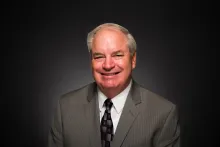
Robin Webber was born in Chicago, Illinois, in 1951, but has lived most of his life in California. He has been a part of the Church of God community since 1963. He attended Ambassador College in Pasadena from 1969-1973. He majored in theology and history.
Mr. Webber's interest remains in the study of history, socio-economics and literature. Over the years, he has offered his services to museums as a docent to share his enthusiasm and passions regarding these areas of expertise.
When time permits, he loves to go mountain biking on nearby ranch land and meet his wife as she hikes toward him.
