
Robin S Webber
This transcript was generated by AI and may contain errors. It is provided to assist those who may not be able to listen to the message.
Well, a pleasant good afternoon to each and every one of you, and I want to welcome those that are joining us live today on the streaming service, as well as those that will be hearing this message down the line. I am looking forward to sharing these thoughts with you this afternoon, and as I mentioned to the audience here before I came on stage, that we're going to do a lot of unpacking this afternoon. That you can tuck into the pocket of your heart and take home with you, and be able to use it in the moments, the days, the months, perhaps even the years to come, that we might truly glorify God, and to become holy as He is holy. I'd like to begin by just simply throwing out a couple of words, same words, I'm just going to say it two or three times. Decisions, decisions, decisions. Preparing for decisions, making decisions, and living with the decisions that we make is ultimately the cutting edge of life. It's what shapes us. It's what molds us. Whether it be at times a bad decision, a mid-decision, or a good decision. Our ability to make wise choices versus bad choices is ultimately what does define and shape us. Think about that in a metaphorical sense. Every day we have a decision as to, in a metaphorical way, whether to cross a bridge, to burn that bridge, or to be patient in looking and landing and finding and crossing another location. But that takes patience as well to be able to do so. So we have a lot of bridges in our life to consider.
Sometimes, in decision-making, we realize that some of us need to learn to say no quicker. Some of us need to learn to say yes more frequently with the decisions that are facing us every day.
Conversely, some of us have to say no all of the time and never give yes a chance because we're stuck, perhaps, in our past and thus cannot step into the future.
Now, talking about decisions, just on the humorous side, I realize right now I've been up here for about two minutes, and all of you are making a decision as to whether or not you're going to engage in this message that I'm going to give you.
So that's a decision that's going to be for you. You're making the decision to either invest or divest or detach because you might think, decisions, this may be boring.
And so we're making a decision. Allowed me to share a thought from a gentleman named Leroy Brownlow. Leroy Brownlow wrote one of my favorite devotionals. It's called Today is Mine. I've quoted from it many a time over the years.
And this is his entry in March 4th. He says this, and please hear clearly, Life is a journey of decisions, and the persons who can't make them have a hard trip ahead.
All along the pathway of life are stalled persons stuck between yes and no.
Yes, not making a decision in itself is a decision. Our mind is always catapulting out in front of us the decisions that are mulling down here in our heart and in our mind.
So the title of my message is simply this today. Making Wise Choices Towards Holiness.
Being decisive in this regard, based upon the living Word of God, is ultimately the needful atmosphere to not only know about God.
A lot of people walking around today know who God is. They might even know about God.
We may even have people that are in our church family right here or listening today that can say they know God. But there's a difference between knowing about God and becoming like God and accepting that invitation to become holy as He is holy.
Making Wise Choices in the midst of challenges allows that new man, that new woman, that new community of saints that gives them an opportunity to grow in grace and knowledge and to become holy as God is holy.
So just to know God is not enough. And that can be just a decision you make on your own.
I'll just know God, but I'll not become like Him. I won't accept His invitation.
It's one thing we don't want to say, and that is, know to God and to recognize the precious gift that He's given.
So let's go into the message itself, now.
Allow me to put a guiding principle right out there to provide a spiritual and a moral compass by which children of our Heavenly Father and disciples of Jesus Christ need to walk the walk in the footsteps of holiness. Hear me through again. I'm going to give you a guiding principle.
And this guiding principle is to help us walk the walk, not just any walk.
When you go to the New Testament, it continually talks, especially in Paul's words, about the walk.
We walked this way, but now God has called us to walk this way.
So what is that walk all about? What is the spiritual and moral compass? Allow me just to say it this way.
Firstfruits of God's spiritual creation put first things first.
Allow me to give you the abbreviated form. Firstfruits, firstfruits, put first things first.
Now, you say, well, that sounds good, and that's why I'm here today. But, you know, when we leave this room, life is crowded, isn't it? Things are just coming at us in every, every direction, in every angle.
And all of the communication that comes our way today is something that our parents, our grandparents, our great-grandparents could not even imagine that fog our mind.
I know after COVID, people talked about getting brain fog. Some of us actually had brain fog before COVID, but now we have an excuse. But that, you know, brain fog. And there is so much that is coming at us today that our great-grandparents back at the turn of the last century or before, they didn't have to deal with, didn't have all that, that mind clutter. And we have to understand, then, to put first things first. When we don't consider what to do first, we waste ourselves on issues that are not important.
That, frankly, are not worth—hear me, please—are not worth of God's loving intervention in our lives, and thus not worthy of our own personal devotion to go down those rabbit holes or to go down those squirrel holes that just take up all of our energy. Without using this vital compass of putting first things first as first fruits, we continue to make room for that which is simply urgent, that comes up on our screen all at once, just like that alert that I was talking about on my cell phone. We go for that which is urgent rather than what is vital when it comes to the realm and the dimension of the eternity that God is calling us into. The result, then, is that we have time.
When we do that, when we put the vital up there front, then the result is we will be doing what God wants us to do. That's why God gives a very powerful warning if you'll join me, please, in Proverbs. Join me, if you would, in our first Scripture of the Day in the book of Proverbs. And actually, I'll tell you what, I'm just going to let you listen to it unless you want to follow in your translation, because I'm going to be reading from the New International Version, which I think gives it a little bit more oomph.
It says this in Proverbs 4, 18-27, the NIV, The path of the righteous is like the first gleam of dawn, shining ever brighter till the full light of day. But the way of the wicked is like deep darkness. They do not know what makes them stumble. Have we ever stumbled on our choices? We're just kind of operating in the dark without the light of God's living Word, the light of Jesus' example, the light of the Holy Spirit that dwells inside of us.
They don't know what makes them stumble. But we've been given that awareness through the Word, through the Christ, through His example, and through the prompting of the Holy Spirit that says, This is the way. Walk you in it. My son, pay attention to what I say. Listen closely to my words. Do not let them out of your sight and notice and keep them. Lock them away. Keep them in your heart. For they are life to them that find them and health to a man's whole body.
Above all else, again, continuing in the verse, above all else, guard your heart, for it is the wellspring of life. Put away perversity from your mouth. Keep corrupt talk from your lips. Let your eyes look straight forward. Don't get distracted with bad choices.
Fix your eyes, gaze directly before you. Make level paths for your feet and take only ways that are firm. That's what I hope to supply to each and every one of us by the end of this message. Do not swerve to the right or the left and keep your foot from evil. Notice the emphasis is on the heart. The heart is where the life resides, where your motivation is determined, as to whether or not you will render yourself to God in His ways or simply stay on your own path.
We've been called to govern that heart so that we build on that which is worthy of our life's devotions. Each and every one of us only have so much time on this earth to live spiritually within this kingdom of dust from which we come.
That people put such import on that it's going to pass away. And thus we have only so much time if by, it says, the given lot is three score and ten. But if by reason of heart, four score. So we only have so much life as temporary to live up to something that is worthy of God's investment.
God's investment in us. And we only have so much time to have that spirit inside of us, to utilize it, to show Him glory, to show Him our love, that we really get it. Now, humbly, that can be scary when it comes to choices. Join me if you would in Jeremiah 10.23. And let's lay down a marker of where we start and recognizing why we need God's intervention and His help in the matter of choices. In Jeremiah 10, and picking up the thought if we could in verse 23, it simply says this, O Lord, I know that the way of man is not in himself.
It is not in man who walks to direct his own steps. It's talking about us, apart from God's intervention in our lives. There's a way which seems right unto a man. But what does the Scripture say? But it leads to death. How many choices have we made sometimes in our life that we just think are spot on? Boom-o! Going for the gold. And it crumbles. Interesting. But not to become distraught because we recognize that we worship a sovereign God, not only a sovereign God, a loving God, but an intervening God.
And He tells us through Isaiah 30, verse 21, this is the way. If we are listening, if we're leaning forward, if we're wanting to hear God's word, the one who is all-loving, all-wise, all-powerful, all-present, and has an investment in you and me to be a child of His, He says this is the way walk you in it. Now, let's talk about choices a little bit that others have made. It's always more fun to talk about others' bad choices than ours. Confession is good for the...no, just teasing. Okay.
But we're going to go through some stories that are there for our admonition to understand what's happening. What is it in our choices where sometimes we feel the squeeze, the squeeze of human nature, to make a choice that only comes back on us and not a good result?
Let's understand some of the things that you and I are going to face maybe right after church and or tonight as you go home, perhaps with a mate, perhaps with a child, perhaps with a co-worker, perhaps with a neighbor. Perhaps as we're in a crowd. It may not be tonight. It may be Tuesday. It may be Friday, but it is going to come. Please understand. I'm going to be a little prophet up here. All of this is going to come upon us one way or the other. Okay, so get ready.
Number one, living in the moment for the moment. Living in the moment for the moment. There's a classic case of this where the urgent crowded out the essential. Join me if you would, and let's turn to Genesis 25 in Genesis 25. In picking up the thought in verse 27, this is the famous story. And stories are important. That's why God gives us stories in the Bible to understand, to kind of take along with us, especially as we make the choices that lie before us, because these folks have already made their choice.
But notice this is the famous story of Jacob and Esau in Genesis 25 and in verse 27. It says, so the boys, Jacob and Esau, grew up, and Esau was a skillful hunter, a man of the field. Jacob was a mild man, dwelling in tents, and Isaac loved Esau because he ate his game. But, Rebecca loved Jacob. Now, Jacob cooked a stew, and Esau came in from the field, and he was wary.
Perhaps it, perhaps. I wasn't there, not to fly on the wall. But he might have been out there for some days, and he came back, and he was famished, and he was wary. And Esau said to Jacob, please feed me with the same red stew, for I am wary. And therefore, his name was called Edom. But Jacob said, sell me your birthright as of this day. Sell me your birthright as of this day.
And Esau said, look, I'm about to die, so what is this birthright to me? And then Jacob said, swear to me as of this day. So he swore to him, and sold his birthright to Jacob. See, he was the oldest son. That is in which the birthright was invested. And Jacob gave Esau bread and stew of lentils, and then he ate and drank and arose and went his way. And thus, Esau despised his birthright. What did we learn from this, dear friends?
This is a classic case. Again, going back to his second, this is making wrong choices when we live in the moment only for the moment. What is the story here? We learned this. This is a classic case of short-term satisfaction versus long-range life-altering circumstances. Short-term satisfaction. And what's fascinating and humanly realistic is that at first, when we only live in the moment, and we have immediate satisfaction, that can be intensely satisfying. That can be even powerful. We can even now feel in control again of our lives. But what have we lost in the midst of that choice?
Because ultimately, the future catches up. Before we judge Esau too harshly, let's ask ourselves, what have we been willing to trade recently? So I'm speaking to each and every one of us personally. What have we been willing to trade on recently as those granted the birthright of being a first fruit of the new creation? To be called out of this world now, and yet to reach back in because of the choices that we make?
In other words, what trading have we been doing in our lives? These are trade-offs. Here's our trading. Jacob was willing to trade and parcel out his food, but he had to have something in return. And that was the birthright. That was, in a sense, the family name. There's an incredible onus throughout Scripture on the firstborn. And I'm a secondborn, so don't worry. I'm not going there, okay? But what I'm saying is simply this, that there's a tremendous onus for a purpose that leads down to this day. That Jesus was the firstborn of the first fruits, and we are the first fruits.
There is a wonderful grace-filled opportunity in the future for being a first fruit. And yet, what are we doing down here, trading that off or trading that around? And it can seem very justifiable.
It can seem very, very needful at the moment. Do we find a question I have with maybe what your choices are before you right now? Do we, in that sense, do we find ourselves willing to negotiate anything based upon how we feel in the moment? Versus not only what we know, but who we know when we're talking about heaven above.
Does family, our bodies, our integrity get mixed up in the dealmaking? By simply living in the moment. But I've got some good news. God has now called us to sit on a log with Esau, withering in despair. Let's go to point number two. Another scenario that makes bad choices is being impatient. Being impatient. Join me if you would in 1 Samuel.
In 1 Samuel. And we pick up the story, if we could, in chapter 13. This is the story of Saul. Saul was asked to do something specifically. In 1 Samuel 13. And picking up the thought, if we could, in verse 5. Then the Philistines gathered together to fight with Israel, 30,000 chariots and 6,000 horsemen. And people as the sand, which is on the seashore and multitude, and they came up and encamped in mishmash to the east of Beth-Avon. And when the men of Israel saw that they were in danger for the people, were distressed, then the people hid in caves, in thickets, in rocks, in holes, and in pits.
And some of the Hebrews crossed over the Jordan to the land of Gad and Gilead. And as far as for Saul, he was still in Gilgal, and all the people followed him trembling. Then he waited seven days according to the time set by Samuel.
But Samuel did not come to Gilgal, and the people were scattered from him. If you'll keep your hand in the Bible there, just go to chapter 10, in verse 8. Just insert here. Words from Samuel, chapter 10, verse 8. Speaking to Saul, you shall go down before me to Gilgal. And surely I will come down to you to offer burnt offerings and make sacrifices of peace. Offerings! Seven days you shall wait until I come to you, and show what you should do. Got that? Specific instruction from the man of God. Now, let's go back to chapter 13, verse 9. So Saul said, bring a burnt offering, and peace offering is here to me. And he offered the burnt offering. Now it happened, as soon as he had finished presenting the burnt offering, that Samuel came. And Saul went to meet him, that he might greet him. Hello! And Samuel said, what have you done? Saul said, well, when I saw that the people were scattered from me, and that you did not come within the day's appointment, and that the Philistines gathered together at Micmash, then I said, the Philistines will now come down on me at Gilgal. And I have not made supplication to the Lord, and therefore I felt compelled and offered a burnt offering. I'm sure we've all been there before. I'm sure at times and choices that we've made, we've given what we think is a pretty good excuse for what we did. Right? Am I the only one? You're all looking at me funny. You're still looking at me funny. Okay. Anyway. And Samuel said to Saul, you have done foolishly. You have not kept the commandment of the Lord your God, which he commanded you. For now the Lord would have established your kingdom over Israel forever. Out of that one decision, out of that one choice comes this, because he was not patient and did not wait on the Lord. Sometimes you can wait on an individual, but it's also waiting on the Lord. But now your kingdom shall not continue. The Lord has sought out for himself a man after his own heart. And the Lord has commanded him to be commander over his people, because you have not kept what the Lord commanded you. Saul was impatient. He thought that time was running out, didn't abide by God's timing, and therefore concluded he could go on simply with ritual. Rather than the substance of faithful obedience. Bottom line when it comes to the choices that we're going to make in our life, henceforth, to wait on the Lord means to wait on the Lord. Don't get ahead of God in the instructions of his word or the prompting of God's Holy Spirit that has come to us. When faced with a difficult decision, don't allow impatience to drive you to disobey God. When you do know what God wants, follow his plans regardless of the consequences. Regardless if you do not have the answer in your hand immediately, follow his instructions. Let's go to another one that we might be faced with this week. What seemingly seems inconvenient. You know, all of us to one degree or another, some of us are master planners, some of us are masters at not planning, but we all kind of have a list that we operate on. And then something comes up that, what? I had this well-planned out life. I had this well-planned out summer. I had this well-planned out experience for the Feast of Tabernacles. Ruth 4, join me if you would there for a moment. Have you ever think that God might interrupt your well-thought out plans? In the story of Ruth, which we find here at the beginning of the Old Testament, in Ruth, join me if you would, and let's pick it up in Ruth 4.
In Ruth, Chapter 4, this is the story towards the end of the story of Ruth. Boaz is getting to know Ruth. He has a certain, do I dare say, camaraderie. He is willing to marry her. Ruth is a widow. Ruth is a wonderful woman.
Boaz is a righteous man. But there's something in between him and Ruth. And we'll pick up that story. Now, it says here, Now Boaz, verse 1, went up to the gate and sat down there, and behold the close relative of whom Boaz had spoken came by. So Boaz said, Come aside, friend, sit down here. So he came aside and sat down. Little did this man know what was about to happen. It's explained a little bit in Ruth 3. The laws of old, if there was a widow, that the next kinsman would marry that woman. It was a part of the socio-economic societal fabric to take care of the widow and perhaps her children. And so it went to the nearest kinsman. As much as Boaz wanted to marry Ruth, there was Mr. In-Between.
And we don't know what his name is, because it's never mentioned, only Boaz. So here's Boaz to the gate. Always watch out when somebody says, Come aside, let's have a seat for a moment. You might know that something's going to come up. And he took ten men of the elders of the city, witnesses, and said, Sit down here. So they came down. Then he said to the close relative, Naomi, who has come from the country of Moab, sold the piece of land which belonged to our brother, Limelik. And I thought to inform you, saying, Buy it back in the presence of the inhabitants of the elders of my people. If you will redeem it, talking to this kinsman, redeem it. But if you will not redeem it, then tell me that I may know, for there is no one but you to redeem it. And I am next after you. And he said, here's the kin. Sounds good to me. Land grab. Inheritance. Break open the will. I'll take it. Then, Boas said, on the day that you buy the field from the hand of Naomi, you must also buy it from Ruth, the Moabiteus, the wife of the dead, to perpetuate the name of the dead through his inheritance. And the close relative, of whose name we will never know, said, I cannot redeem it for myself, lest I ruin my own inheritance. You redeem my right of redemption for yourself, for I cannot redeem it. It was inconvenient for him. Now, this was the custom in former times in Israel concerning redeeming and exchanging to confirm anything. One man took off his sandal and gave it to the other, and that was the confirmation in Israel. Therefore, the close relative said to Boas, buy it for yourself. And so he took off his sandal. And Boas said to the elders and all the people, you are witnesses today, that I have bought all that Alimelex and all that was Chilions and Melons from the hand of Naomi. Moreover, Ruth, the Moabiteus, the widow of Melon, I have acquired as my wife to perpetuate the name of the dead. This is an interesting story. Let's talk about it for just a second.
We're faced with these challenges every day. Continually, interruptions that come up. Matters, even big matters of life that we didn't expect were going to be upon us this day or this week or maybe this month. And like Naomi's kinsmen, we are oftentimes drawn towards making the easy choice rather than the right one. Have you and I ever just made simply easy choices rather than the right one?
Hmm, interesting. Yet, more than not, the right choice was painfully clear. But he or him or the other relative, because we don't know his name, went easy and bailed out. But, humbly for the moment, when we do make those right choices, it may be painful. It may be inconvenient, but never mistake that for not being right. Boaz not only did what was right, he also did it the right way. He went by the word of the people, by the word of the book. Of course, he could not foresee, think about this, having made a right choice, he could not foresee where this was going to go. For when he came together with Ruth, his wife, they would have Obed. Obed would have Jesse.
Jesse would have who? David. David's line would bring forth who? The Savior. And because of that choice, it's breathtaking, isn't it? And we know his name, because he made the right choice, even though, if it was the difficult thing, Boaz probably being an elderly man, the difficult thing.
And yet he lived up to the law that was set before him.
We never will know the name of the other person, but we know Boaz.
The other guy was just an extra in this play. God has called each and every one of us to be a star for him. In the play, the drama, the story of life that comes to each and every one of us. Let me just use one other one. I have about three others I'll send out the notes, but we'll just dabble in one more, okay? How about this? Another thing comes up to all the time. Thinking that the grass is greener on the other side. Thinking that the grass is greener on the other side. We have that classic example, and I'm just going to allude to it, Genesis 13, 5-13. Genesis 5, I'll be sending out my notes. And the grass looks greener on the other side. Remember the story of the servants of Abraham and the servants of Lot were looking over the river valley of Jordan. And they got into kind of a squabble. And Abraham, kind of being the people pleaser, remember he wanted to give his wife away, he was kind of a people pleaser. But now he said, I'll tell you what, let Lot's people have that. And Lot went there. And his people wanted that greener pasture. It always is going to look greener on the other side at times when it comes to making the right choice. And having that spiritual and moral compass set for eternity rather than the moment. To recognize that what would happen here, that prosperity that was there, we desire sometimes. Because it looks like gold. It can both entice us and enslave us if our designs are not in line with God's directive. And even if we are not strong enough to resist the pulls, such a move, our families may not be able to do so. Lot, righteous Lot, that's what the New Testament says. He calls him righteous Lot. Lot might have been able to handle living in that valley plain and being by Sodom and Gomorrah. But his family, when you read about it, they were not at all.
By that one decision, that choice, and choices have consequences. By that one choice, think about it for a moment. What happened and what befell him. Lot would be kidnapped. He would ultimately lose his wife by her choice of looking back.
He had children, and he had children by his children. That's a whole other story. But those children actually become the enemies and adversaries of Israel. Moab, the Moabites were Hebrews. You always hear about the mean, bad, pagan Moabites. They were Hebrews. They were out of the line of Abram. They were from Lot's daughters. Interesting.
Sometimes life is like a mirage, and you want to reach for it, and it's not there. The grass will always look greener on the other side.
In our choices, let's understand something. Not everything that glitters is gold. Not everything that glitters is gold. If you don't understand that, I want to invite you sometime to sit down in Genesis 3 and 4 with Adam and Eve.
Because they thought they had the golden fruit in front of them. They took a bite of it. Out of that one choice, they and all of us since that time have been under the curse. Now, let's move off of this. I'll send you some more material here, but let's get to the really good stuff. Okay, here we go. Now, when we look at this, we've talked about some sweet-squeezed plays of human nature.
Let's focus on the sure ways of making right choices in our lives. And this will go rather rapidly. Number one, by maintaining an eternal perspective day by day and moment by moment. If you set your watch simply day by day, we're going to be making some bad choices. I'm just going to warn you. Just going to be right at you, okay? We want to be prepared to make choices moment by moment. Moment by moment. Because we, in this kingdom of dust that we're a part of, we only have the moment. We don't know about this evening. We don't know about tomorrow. But God has asked us now to give every moment, every thought, every motive over into His realm for His blessing and for His guidance. Matthew 6 and verse 33. This is the great eternal principle. Join me if you would in Matthew 6, 33.
In Matthew 6, 33, it simply says this.
But seek first the kingdom of God and His righteousness, and all these things shall be added to you. Therefore, don't worry about tomorrow. For tomorrow, we'll worry about its own things. Sufficient for the day, sufficient for the moment, is its own trouble.
Bad choices can cause trouble.
Now when you look at Matthew 6, 33, and I've been looking at it for about 60 years since I came into this way of life, it says, seek ye first the kingdom of God.
Then notice part two, and His righteousness.
It's not just seeking the kingdom of God. It's not just a destination.
It's a way of traveling in His righteousness, becoming holy by our choices as He is holy. And we learned that through the righteousness of the example that He set before us, as how Jesus made His choices.
Jesus made choices sometimes to move forward to cross a bridge into a lot of people. And other times He made choices to leave the masses and go into the wilderness.
He made choices sometimes to talk to people, and He made choices sometimes not to talk to people.
He made choices, and all of these things shall be added to you.
When you have that scope and that compass of seeking God's kingdom first, green pastures will ultimately come in God's time and with God's blessing and by His grace.
The green pastures will come in a time in the future when there will be no curse.
But so often people will just think, and all of these things shall be added to you.
That's kind of the juicy part. We want all those things added to us, added to us, added to us.
Notice that. Seek ye first.
Remember what I said before, and I quite sincere it in my repetition, because repetition is the best form of emphasis.
First fruits put first things first.
Seek ye first the kingdom of God that has been wide open to us by a gracious Father, ahead of much of humanity, and it's not about us, it's about Him.
It's incredible. It's incredible.
Number two. Talk to God about the decisions that face you.
Talk to God about the decisions that face you.
It takes tremendous strength to bend our knees, to bow our heads, to explore our hearts, and invite Him into those hearts with us, and to open our ears with God as our guide.
But it is the key to successful choices.
He alone can help us determine the right choices.
Jesus, in the opening of His ministry, prayed fervently about the disciples that He was going to choose.
This was going to be the foundation of the interruption of God's kingdom to this earth, and the spread of the good news that Messiah had come, that God's answer for humanity had now been manifest.
In the Holy Land, Jesus prayed. He needed direction.
What happens when we pray? Whether you pray for a minute, or whether you pray about an hour in the choice that you're going to be making, there are three things that happen. Just three.
And you can build upon this and think about it. Number one, it will clarify, number one, any problem, any problem you are facing, number two, it will clarify God's great love and His power for you.
It's going to just open up those curtains to recognize that we read to know that we are not alone.
And number three, it will clarify the job that you have to do. It will clarify.
I'm so excited about giving you just these three points. It's just like cutting up the apple pie, three parts.
If we could just do that and go home right now, sermon open up, just a few more minutes.
Number one, heartfelt prayer can clarify, number one, any problem, not just somebody else's problem, not a problem that you haven't figured out yet, but going to God in His time and in His way will clarify the issue that is before you and then help you with the choices that you need to make. Number two, it will clarify God's great love and power for you, that you're not alone in the choices that you're making as much as David made that choice to go down into the valley of Elath, to deface the giant, and to make the choice to pick up five stones. And He said, I'm going to give the battle to the Lord. It wasn't about David. It's not about us.
It's about glorifying God. And then number three, clarifying the job that you have to do.
It will open up thoughts that we don't even have. You know, there's a big choice that Joseph had to make.
Not that Joseph was in Egypt, but Mary's betrothed. The Gospel says that Joseph was a good man.
God knew what He was doing when He not only called Mary, but the man that she was going to marry that was going to be the stepfather that was going to be raising Jesus.
And Joseph thought he had only two choices. Now, by the law, he could have stoned had Mary stoned for what seemingly might have been fornication.
And now having a child, and or being a good man. A really good guy. He could have just put her away. Just go away, son. Put her away.
Then Gabriel comes along because Joseph is a righteous man. He's in touch with God. He gives Joseph an answer and a choice that Anne thought about. He said, Marrier!
Just Marrier!
Wow! Have you ever been stuck between yin and yang? And you're going back and forth like a yo-yo?
If you open up yourself to God, he's going to open up a panorama of a choice that humanly you have not thought of.
As they say in Hebrew, is that not cool? Is that not neat? Is not what we ought to be doing as the people of God?
Number three. Right choices come from asking the right questions. Right choices come from asking the right questions. All of us make hundreds of decisions every day.
Most decisions are not a matter of right or wrong, like what to eat or to wear, but some decisions carry more weight.
The greatest challenge we face today with everything coming at us with the technology, with the smartphones that make us dumber, is simply being able to focus and be still and know that I am God.
And also to recognize that change around us is constant. Stephen Covey in his book, Seven Principles of Highly Effective People, says this.
People can't live with change if there's not a changeless core inside of them. The key to the ability to change is a changeless sense of who you are, what you are, what you are about, and what you value.
Can I read that again?
Listen. The key to the ability to change in a changeless sense is this of who you are, what you are, what you are about, and what you value.
What we should value as the children of the Father and as disciples of Jesus Christ is that at our baptism, we gave ourselves away, that we went under the water, we had that figurative death, we rose from the water, and a type of resurrection, to a new, precious, wonderful life. We said we were going to die, that Christ was going to live in us, and we were going to live before the Father.
And we were going to become kingdoms of His, we were going to become citizens of His kingdom now, and wherever He told us to go, that is what we were going to do, that it was not going to be about us, it was going to be about Him, and that He would follow, we would follow Him wherever He led.
Because we love God, and we want to live abundantly, spiritually, and not hurt others, what questions do we ask then to make those kind of right choices?
And I'm about to conclude. Number one, does this action, this choice that I'm going to make, maybe a choice between Susan and me at home, on something that we're going through, happily, sometimes maybe not so happily, but the choices we make, does this action help my personal witness that Jesus Christ lives in me and loves me, and that in turn I make this decision because I love Him, and it is my motivating desire for others to know the true way to happiness.
Starting with Susan and I working off one another as a married couple, starting with myself as a pastor and as your fellow Christian on this sojourn, as to how we interact, what we share with one another, the examples that you set for me and that I, perchance, God willing, set for you.
Number two, there's only one other, is what I plan against a specific commandment in Scripture and would thus cause me to sin.
What does God's written word say? Not only what I choose to do, but what I choose not to do.
In Jeremiah 48 verse 10, you can just jot that down, it says, and cursed is He that draws the sword deceitfully.
Hmm. And cursed is He that does not draw His sword at all.
Which is the definition of the sin of commission, of what you did wrong, and the sin of omission, which means you didn't even get into the game of life.
You held back when God told us the answer, gave you the answer to the choice that you needed to make, just as Boaz made, that the other guy didn't make. Whose name will never know?
I would like my name to be known to God, wouldn't you? Don't you want your name to be known and held and embraced by God?
Number three. Ultimately, all the previous questions leads to this one. Does it allow me, Robin Weber, Susan Weber, Victor Howe, Colleen, Paul, April, Marianne, Bob, and all the rest of you? Does it allow us to glorify God?
You see, ultimately, as Christians, it's not about you, it's not about me, but what God is doing in us and through you.
But you've got to allow it. You've got to allow it.
As we move away from this meeting today, let's just remember the carpenter's rule. It's a good one, because, after all, the Lord of our life, our boss, the head of the kingdom under the Father, was a carpenter. Who can tell me what the old carpenter's rule is?
Skip.
Measure twice, cut once.
That's right. To measure twice, cut once. Very good, Skip, thank you. To measure twice, cut once. You know, that's what we need to do.
I'm going to finish up with a story.
Our choices need to be measured. God gives us the instruction how to get through the knots of life and the tangles of life.
And it says that His Spirit and His Word, His Word is like a sword that cuts through everything.
There's a story, and I'll just end up with this story of the knot of Gordium. How many of you know about the story of the knot of Gordium? Alexander the Great. Gordium was a city in Asia Minor, which is now Turkey, actually Central Turkey, and Alexander the Great was passing through.
And there was a large knot that was in the middle of the city, in the square, in the middle of the square, and it was held probably by a couple of pillars or maybe some wagons versus this large slot knot. It's just really big. It looked like a giant beehive, but it was a cord. It wasn't wax.
And it was said that the person that was able to cut through that would become the conqueror of Asia.
You see where this is going? And, you know, different generals, different kings, different lords would come, and you know what? They'd get out their little minds. You know, you ever done that? I mean, I've had a lot of knots in my shoes. Confession's good for the soul.
You know, I get out a pen or a pencil. I'm trying to untie this knot. It's the untieable knot.
And so I'll get down there, and I'll try to get this knot, you know, because I've gone like this, and I can't open it.
So that's what people were doing. They're going...they're fiddling around the edges. They're fiddling around the edges.
Alexander came up to the knot, arrived in town. That knot. Sized up the situation, looked at it.
Went like this. Sword, please. Not scalpel. Sword, please.
One action.
Interesting. The rest of history. His empire spread from Macedonia to the banks of the rivers of India.
That's how we need to be with the sword of God's Spirit.
That'll save us a lot of time if we just obey God's Word.
Save a lot of time. Save a lot of energy, because God's Word goes right to the core, and He'll tell us what to do.
Measure twice. Cut once.
God's given us a tape measure. He's given us the written Word. He's given us the example of the living Word, Jesus Christ.
And He's given us the full measure of His Spirit.
Let's be about our Father's business with the choices that lie before us.
And let us, let us, let me, let you, let all of us be holy as God is holy.
By the choices that you and I make before Him.
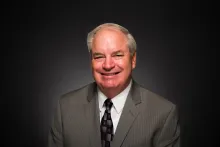
Robin Webber was born in Chicago, Illinois, in 1951, but has lived most of his life in California. He has been a part of the Church of God community since 1963. He attended Ambassador College in Pasadena from 1969-1973. He majored in theology and history.
Mr. Webber's interest remains in the study of history, socio-economics and literature. Over the years, he has offered his services to museums as a docent to share his enthusiasm and passions regarding these areas of expertise.
When time permits, he loves to go mountain biking on nearby ranch land and meet his wife as she hikes toward him.
