
Don Ward
This transcript was generated by AI and may contain errors. It is provided to assist those who may not be able to listen to the message.
The works and fruit of the Holy Spirit. One of the greatest, perhaps the greatest event in the history of humankind occurred on the day of Pentecost 31 A.D. On that day of Pentecost, 1990 years ago, the Holy Nation of God, the Israel of God, began. God's holy temple, the tabernacle of David, began to be raised up. God began to dwell in man through his Spirit. Let's note now what the Holy Spirit is. If you would turn to John 4 and verse 23. It has taken a long time to emphasize over and over, because even in some of our literature through the years, we would define the Holy Spirit, say, the Holy Spirit is the power of God.
Well, the Holy Spirit is the essence of God. The Holy Spirit is what God is. And through God's Spirit, he does works of power. God sends forth his Spirit, and the Spirit moves. We heard it in the sermon at yesterday. When the Spirit moves on the face of the waters, through his Spirit, things were created and prepared for man and the earth. In John 4 and verse 23, But the hour comes, and now is, as Jesus Christ has come on the scene, when the true worshippers shall worship the Father in spirit and in truth, for the Father seeks such to worship him, God is Spirit.
God is Spirit. That is his essence. You are flesh. God is Spirit. God is Spirit, and those who worship him must worship him in spirit and in truth. You notice in John 15 and verse 26 that the Father is the source of the Holy Spirit, but the Holy Spirit is shed on us through Jesus Christ. John 15 verse 26, But when the Comforter is come, whom I will send unto you from the Father, even the Spirit of truth, which proceeds from the Father, it shall testify of me.
Now the Comforter is defined, if you look back a page or so in John 14.26, John 14.26 says, But the Comforter, which is the Holy Spirit, the Peracletos, the Peracletos, the one alongside the Comforter, whom the Father will send in my name, he shall teach you all things and bring all things to your remembrance whatsoever I have said of you. So the Holy Spirit, the essence of God, proceeding from God, and Christ plays a role in us receiving the Holy Spirit.
We want to go now to Acts 2 and verse 29. Acts 2, 29, part of Peter's inspired sermon on the day of Pentecost when the Holy Spirit was sent to humankind to dwell in humankind, not just among them. In Acts 2 and verse 29, Men, brethren, let us speak freely unto you of the patriarch David, that he is both dead and buried, and his sepulchre is with us. And to this day, therefore, being a prophet and knowing that God has sworn with the oath to him that of the fruit of his loins, according to the flesh, he would raise up Christ to sit on his throne.
If you look at the genealogy of Christ, it comes through Pharise, one of Jacob's sons, and that genealogy is given in both Matthew 1 and Luke chapter 3. He, seeing this before, spoke of the resurrection of Christ, that his life essence, soul, nayfesh, in this case, sukei, Greek, was not left in Hades in the grave, neither did his flesh see corruption. This Jesus is God, raised up whereof, your all-witnesses. Therefore, being the right hand of God, exalted, and having received of the Father the promise of the Holy Spirit, he has shed forth this which you now see and hear. So the Father, the source of the Holy Spirit, plays a role in shedding forth on us.
On this day, the great mystery of God began. On this day, that is the day of Pentecost, the great mystery of God began. What is that great mystery of God? That is how a man, human beings, male or female, can become God upon resurrection from the dead. Upon the resurrection from the dead, the mystery of God will be finished. Look at Revelation 10 and verse 7. Revelation 10 and verse 7. We see clearly where it says, when the seventh angel begins to sound.
Maybe I should read it. In Revelation 10 and verse 7, But in the days of the seventh angel, when he shall begin to sound, the resurrection takes place when the seventh angel begins to sound. It does not take place on the day of Pentecost. Some say, well, Pentecost is the first fruit, so it is. It's when the first fruits began to be called out.
But the Bible is very clear that the resurrection takes place when the seventh trump begins to sound. And at the last trump, the resurrection takes place when the seventh angel begins to sound, the mystery of God should be finished as he has declared to his servants the prophets. What is that great mystery? That how a human being can receive the earnest of the Spirit, and then upon resurrection be changed into a glorious radiant spirit being.
You look there at chapter 11 and verse 15 to further show what I'm saying about at the last trump, or the seventh angel. The seventh angel sounded. This is Revelation 11.15, the seventh angel sounded. There were great voices in heaven saying, The kingdom of this world become the kingdom of his Christ, and he shall reign forever and ever. Of course, we could turn to other scriptures. 1 Corinthians 15, verse Thessalonians 4 to show that at the last trump.
So on this day, 31 A.D., God began to fulfill many of the prophecies of the prophets. He began calling out a people for his namesake. This day is what the Bible is all about. God is bringing sons and daughters to glory, and he's calling out a people for his namesake to be in his family, to be in his kingdom. God began calling out the first fruits on this day.
So let's look at Acts 2, Acts 2 and verse 38. At the conclusion of Peter's sermon, they said, Men and brethren, what shall we do? And Peter gave this response as to what they should do. But we want the next verse after that as well. Here's a short summary of the conversion process. Not every aspect, of course, is included. When they said in verse 37, men and brethren, what shall we do? Peter said unto them, Repent. So receiving the Holy Spirit is dependent, dependent upon repenting.
And be baptized, every one of you, in the name of Jesus Christ, for their mission of sins. And you shall receive the gift of the Holy Spirit. It is a gift, but it is conditional. You cannot receive the Holy Spirit and be unrepentant. For the promise is unto you and to your children and to all that are afar off. This all that are far off, who is that? That is the Gentiles. I remember years ago in a council meeting, we came to this verse and we're discussing it. I said, the far off means the Gentiles. Oh, no, that means the people over here, somewhere else.
I said, no, that's the Gentiles. And as we shall see in just a minute, we'll turn to Ephesians 2 to see that. Those that are far off, those who were strangers from the commonwealth of Israel, as Paul talks about in Romans 9, those that are far off, even as many as the Lord, our God shall call. So God began calling out the first fruits on the day of Pentecost, 31 A.D.
Now, if you look at what God wanted to do historically with humankind, God historically wanted to dwell with humankind. And He placed, He created humankind to become members of His very family. He placed them in a beautiful garden. He instructed them. He planted the tree of life in the midst of the garden, also the tree of the knowledge of good and evil.
And you know the story, how that Adam and Eve rejected the offer to partake of the tree of life and decided to partake of the tree of the knowledge of good and evil and were cast out of the garden. The tree of life, of course, representing the Holy Spirit, so they were cut off from the Holy Spirit. And one of the reasons God delivered Israel from Egyptian captivity and servitude was so that they could build Him a dwelling place.
And I remember that God on this day began to dwell in man, not just with man, not just in a building. So we look at Exodus 15 in verse 2.
Well, we'll start in Exodus 15.1. In Exodus 14, what has happened there is that Israel was backed up against the Red Sea and the mountains of Pharaoh's army pursuing from the rear, and they're crying out to God, Oh, what can we do? Moses, you brought us out here to die. And God opened up the Red Sea and they passed through. And after they passed through the Red Sea, and the waters closed back on the host of Pharaoh and drowned, symbolic of Satan the Devil and the demons.
Look at this, Exodus 15 verse 1. What did they do? Then saying, Moses and the children of Israel, this song unto the Lord, and spoke, saying, I will sing unto the Lord, for he a triumph gloriously the horse and the rider hath he thrown into the sea. The Lord is my strength, and song he has become my salvation. He is my God. And I will do what?
Prepare him a habitation, a dwelling place. I will prepare him a dwelling place, my Father's God, and I will exalt him. God made it known clear from the creation of humankind that he wanted to dwell with him and not be cast aside. Israel was to be a model nation, a kingdom of kings and priests, with a commission to bring all nations into relationship with God. They came to Mount Sinai, if you'll turn forward to verse 19 and verse 1.
They came to Mount Sinai in the third month, and according to Jewish tradition and secular history, that Israel came to Mount Sinai and received the law on the day of Pentecost. So in Exodus 19, verse 1, in the third month, Pentecost falls in the third month, when the children in Israel were gone forth out of the land of Egypt, the same day came they unto the wilderness of Sinai. Verse 5, Now therefore, if you will obey my voice, indeed keep my covenant, then you shall be a peculiar treasurer unto me above all people on the face of the earth. And you shall be unto me a kingdom of priests and a holy nation.
These are the words which you shall speak in the children of Israel. And so God had called them out to be a model nation. After receiving the Ten Commandments, the Statues, and Judgments, in Exodus 20, 21, 22, 23, we turn now to Exodus 24, this few pages forward, Exodus 24, and verse 6, they entered into the terms of the Old Covenant, what was really someplace called a marriage covenant, where they entered into this relationship with God, and they said that everything that God has said we will do.
Exodus 24 and verse 6, what are we talking about? God historically wanted to dwell with humankind. After they crossed the Red Sea, they said we will build him a habitation. God gave him, then, the law, the Statues, the Judgments. It formed the basis, the Constitution, for the formation and structure of the nation. Exodus 24 and verse 6, Moses took half of the blood and put it in basins, and half of the blood he sprinkled on the altar. He took the book of the Covenant, read it in the audience of the people, and they said all that the Lord said will we do and be obedient. And so they entered into the Covenant, and Moses took the blood, sprinkled it on the people, and said, Behold, the blood of the Covenant, which the Eternal made with you concerning all these words.
Now remember what it said in Exodus 15.2, we will build him a habitation, a dwelling place, a sanctuary. Now we go to Exodus 25. Once again, we're talking about God has desired to dwell with humankind from time immemorial from the Garden of Eden all the way through to the present time. Exodus 25 verse 8. Exodus 25 verse 8.
And let them make me a sanctuary. So they took up an offering in the first seven verses there. They had more than they really needed. Let them make me a sanctuary that I may dwell among them. According to all that I show you after the pattern of the tabernacle and the pattern of all the instruments thereof, so shall you make it. So it's to be made after the heavenly pattern. And that's what they did. And much of the book of Exodus is taken up with the instructions on how to build the tabernacle, God's dwelling place, His sanctuary. Now we go to Exodus 40, and it took them a year to build the tabernacle, God's sanctuary, God's dwelling place.
So we look at Exodus 40 in verse 17, and we'll see the time frame. And it came to pass in the first month in the second year, on the first day of the month, beginning of the sacred calendar, that the tabernacle was raised up. In verse 33, And he raised up Moses, the court roundabout, the tabernacle of the altar set up the hanging of the court gate, so Moses finished the work.
Then a cloud covered the tent of the congregation, and the glory of the eternal filled the tabernacle. See, God dwelt in what the Israelites called the Shekana, or Shekinah, glory, on the mercy seat above the Ark of the Covenant. The Ark of the Covenant, remember, contained the Ten Commandments, Aaron's rod that budded, and a pot of manna. And God dwelt above the Ark of the Covenant on the mercy seat, on top of those commandments. And so the glory of God filled the tabernacle, verse 35, and Moses was not able to enter into the tent of the congregation because a cloud above the abode thereon, and the glory of the Lord, God's presence, filled the tabernacle.
And so that presence of God, the angel of God's presence, led them into the Promised Land, if you remember the sermon that I gave on that. However, the Law Covenant made nothing perfect. Even though God was dwelling with them in the tabernacle, He was not dwelling in them. So now we go to Hebrews, chapter 7. Remember Hebrews compares and contrast elements of the Old Covenant with the elements of the New Covenant. And we have this summary profound statement in Hebrews 7, verse 9. And as I may say so, Levi also who received tithes paid tithes in Abraham, for he was yet in the loins of his father when Melchizedek met him.
If therefore perfection were by the Levitical priesthood, for under it the people received the law, which further need was there that another priest should rise after the order of Melchizedek and not be called after the order of Aaron. So the law made nothing perfect. It is through the priesthood of Melchizedek that we could be made perfect. The law made nothing perfect. Now, we look at Hebrews 10, verse 1. Hebrews 10.1, For the law, having a shadow of good things to come, and not the very image of the things, can never, with those sacrifices which they offered year by year continually, make the comers there unto perfect.
The law could not do that. The law, with the sacrifices, the oblations, the washings, kept them ceremonially clean in that they could go into God's presence and offer that, but it was a schoolmaster to bring them to Christ. Notice verse 2 in Hebrews 10.2, For then would they have not ceased to be offered, because that the worshippers once purged should have to have no more conscience of sin.
But in these sacrifices there is a remembrance, again, made of sins every year. Of course, God wants us to forget our sins. It says in Psalm 104 that He has removed our sins as far as the east is from the west, and God remembers our sins no more. But we drag them up, and we constantly pull them out and go over them, which God does not want us to do. He has called us to liberty, to walk in the perfect law of liberty. And if you have repented, that's what you can do.
Verse 4, For it is not possible that the blood of bulls and of goats should take away sins. Wherefore, when He comes into the world, He said, Sacrifice and offering you would not but a body you have prepared Me. That body is the body of Jesus Christ, the holy begotten Son of God, who qualified to become the sin offering for the whole world. And burn offers and sacrifices for sin you have no pleasure.
Then, lo, I said, I come in the volume of this book, as it is written of Me, to do your will, O God. And what was the will was to die for the sins of the world. So even though God in spirit was dwelling above the ark of the covenant, which contained the Ten Commandments, the law was not being written on their inward parts.
The writings of the law in our inward parts requires our active participation, and it requires the Holy Spirit to be with us to write those laws on our inward parts. Now we go back to Hebrews 8 and verse 1. We see this very clearly. Hebrews 8 and verse 1. I want to say what I just said again. You see, even though God was dwelling above the ark of the covenant on the mercy seat, and in the ark of the covenant were the Ten Commandments, yet there was not such a heart in them.
The Commandments were not being written on their inward parts. They had to have their sins taken away through repentance, exercising faith in the sacrifice of Christ. Now we get somewhat of a summary here in Hebrews 8 verse 1. Now the things which we have spoken, this is the sum. A summary. We have a high priest also that is set on the right hand of the throne of the majesty in the heavens, a minister of the sanctuary.
Remember building the physical sanctuary, the tabernacle, God's presence dwelling among them, but not in them. A minister of the sanctuary of the true tabernacle, which the Lord pitched and not man. See, this tabernacle is not made by hands. It is a spiritual tabernacle. It is a spiritual organism. It is composed of begotten sons and daughters.
For every high priest is ordained to offer gifts and sacrifices, whereof it is of necessity that this man have somewhat also to offer. For if he were on the earth, he should not be a priest, seeing that there are priests that offer gifts according to the law, who serve unto the example and shadow of heavenly things, as Moses was admonished of God when he was about to make the tabernacle. It was made after the pattern of the heavenly, but it was made by hands.
For see, says he, that you make all things according to the pattern, which you show to you in the mount. But now hath he obtained a more excellent ministry, by how much more he is the mediator of a better covenant, which was established. Now this word established means bounded upon, bounded upon better promises.
It is actually the literal translation of this word, nomotheto, is furnished with the law, which was furnished with law upon better promises. This is a key verse back when this discussion was taking place in the early 90s with regard to whether or not the law of God was done away with. I pointed out what this really means.
Look it out, this word established, nomotheto. No mo is the Greek word for law, furnished with law with better promises. Yes, the spiritual law of God continues. This Holy Spirit makes it possible for God not only to dwell among us, but to dwell in us, and it requires our active participation. Man shall not live by bread alone, but by every word that proceeds out of the mouth of God.
Matthew 4, 4. John 6, 6-3, the words that I speak, their spirit, their life. Psalm 119 verses 97 through 105, your lost my meditation day and night, the light into my feet, the lamp into my path. We go on and on with the active participation. The Spirit of God can purge the conscience, and the Spirit of God purging the conscience is something, of course, the law cannot do. So we pick it up again in Hebrews 9 and verse 8. The Holy Spirit thus signifying that the way into the holiest of all was not made manifest while as the first tabernacle was yet standing.
So that tabernacle made my hands disappear. As we have seen, the law made nothing perfect. The blood of bulls and goats could never cleanse one in the ultimate sense and purge the conscience. Verse 9, Which is a figure for the time then present in which were offered both gifts and sacrifices that could not make him that did the service perfect as pertaining to the conscience.
The word conscience, sonnibisis, sonnibisis, means the knowing within, which stood only in meats and drinks and different washings, carnal ordinances imposed on them until the time of reformation. But Christ become a high priest of good things to come by a greater and more perfect tabernacle not made with hands. That is to say, not of this building, neither by the blood of bulls and goats.
Now verse 14, How much more shall the blood of Christ, who through the eternal Spirit offered himself without spot to God, purge your conscience from dead works to serve the living God? This purging means to cleanse, it's kathar, not just a covering, but to actually cleanse a person. God removes and sends as far as the east is from the west. For this cause he is the mediator of the new covenant, that by means of death for the redemption, the buying back of the transgressions of under the first covenant, they which are called might receive the promise of eternal inheritance.
So Christ paved the way and has become the first fruit. He was the one who paid the price for us. He was the wave sheaf that was waved before the Father, who was accepted of the Father on our behalf. And through him, Jew and Gentile can be joined together.
Remember, on the day of Pentecost, two loaves were waved. We want to turn to Ephesians 2 now. We mentioned this earlier. I received, which I received from time to time, this fellow who does a lot of Bible study and sends it to me. And a lot of people talk about the two loaves being the saints of the Old Testament and the saints of the New Testament.
I submit to you that the two loaves, Jew and Gentile, join together, forming one loaf. And here it is from Scripture. Ephesians 2, verse 12. That at the time you were without Christ, speaking to Gentiles, being aliens from the Commonwealth of Israel, in other words, you were far off, as we read from Acts 2.39. Strangers from the covenants and promise having no hope and without God in the world. But now in Christ Jesus, you who sometimes were far off, see what I'm talking about? From Acts 2.39. For now in Christ Jesus, you who sometimes were far off might be made nigh out by the blood of Christ.
For he is our peace, who has made both one, has broken down the middle wall of partition between us. Having abolished in his flesh the inventory, even the law of commandments, contained an ordinance, for to make himself of twain one new man, so making peace. Now we could turn to Galatians chapter 3, where it says, there's neither bond or free, there's neither male or female, there's neither Jew or Gentile, I think it says barbarian, but you're all made one in Christ.
If you be in Christ, then you're Abraham's seed, to make in himself of twain one new man, so making peace, and that he might reconcile both unto God and one body by the stake, having slain the enmity thereby, came and preached peace to you which were afar off, and to them which were nigh the Jews, and to them were committed the oracles of God, they had that advantage.
For through him we both have access by one Spirit unto the Father. Now therefore you are no more strangers, foreigners, but fellow citizens with the saints, and of the household of God. You're not afar off. You've been called into God's marvelous light. You've been called to be firstfruits, whether you be Jew or Gentile.
And as long as we are in the flesh, we are leavened. Of course, we are to become de-leavened. But as long as we're in the flesh, there is a potential for sin, and are built upon the foundation of the apostles and the prophets, Jesus Christ himself being the chief cornerstone, in whom all the building, fitly framed together, grows into a holy temple in the Lord, in whom you are built together for a habitation, a dwelling place of God, through the Spirit.
So Moses is going to build a habitation with God, which he did, made by hands. But now here is this habitation. You are the temple of the living God. The Father would not recognize human beings as his children and grant them forgiveness of sins until full reconciliation had been accomplished, and Jesus accomplished that. He was the wave-sheaf who was waved before the Father. He was accepted by the Father. He died once for the sins of all. And as we have noted, this is made very clear in the book of Hebrews. Moses was a faithful servant, but Christ as a son was more, of course, fulfilled the spiritual side of things, not just the physical.
If you look at Hebrews 3, what I've just said is made much clearer here from the Scripture. Moses was faithful in fulfilling his being the mediator of the Old Covenant, but we have a mediator now of the New Covenant, which far surpasses that of the Old Covenant. In Hebrews 3, and we begin in verse 4, We are that habitation now if we hold fast the confidence and the rejoicing of the hope firm unto the end. So we are now the temple of God. The Holy Spirit, at times, is personified in Christ. Now, you need to let that soak for just a moment.
At times, the Holy Spirit is personified in Christ. It could be personified in God the Father as well, but more often the Holy Spirit is personified in Christ. It says clearly in Ephesians 4 that there is one Spirit. The same essence that is in God is in Christ is in us. There is one Spirit. In 1 Corinthians 12 verse 13 it says, By one Spirit are we all baptized into one body. So God has made it possible through Christ that we be that one body.
And we are the temple of God. And we are commanded to worship God in spirit and in truth. So let's notice how the Apostle Paul explains this Christ in us, the hope of glory. We want to go now to Colossians chapter 1 verse 16. Remember I said that this great mystery of Christ in you, the hope of glories, it says here in Colossians in just a moment, that that great mystery is completed when the seventh angel begins to sound. But God began calling out the first fruits on the day of Pentecost, 31 A.D. In Colossians chapter 1, we begin in verse 19.
For it pleased the Father that in him that is in Christ should all fullness dwell. And having made peace through the blood of the cross by him to reconcile all things unto himself, by him I say whether they be things in earth or things in heaven, and you that you were sometimes alienated and enemies in your mind, like we read about from Ephesians, the Gentiles, in your mind by wicked works.
Yet now hath he reconciled in the body of his flesh through death to present you holy, unbelievable, un-reprovable in his sight. If you continue in the faith grounded and settled, and be not moved away from the hope of the gospel, which you have heard, which we have preached to every creature which is under heaven, whereof I, Paul, am made a minister, who now rejoicing in my sufferings for you, and fill up that which is behind of the afflictions of Christ in my flesh for the body's sake, which is the church.
Wherefore I am made a minister according to dispensation, the administration of God, which is given to me for you to fulfill the word of God, even the mystery which has been hid from the generations, but now is made manifest to his saints, to whom God would make known, that is, the riches of his glory, of the mystery among you, Gentiles, which is Christ in you, the hope of glory. So the dwelling place, Christ in you, the hope of glory.
So the Holy Spirit enables us to worship God in spirit and in truth. And of course, as we said, to receive the Holy Spirit, you have to repent before you can receive the gift of the Holy Spirit. Now we want to go to 1 John 3, 19 to get a little bit of additional insight to this worshiping God in spirit and in truth. In spirit and in truth. In 1 John chapter 3, we're getting a little more insight into worshiping God in spirit and in truth. 1 John 3 and verse 19.
And hereby we know that we are of the truth and shall assure our hearts before him, for if our heart condemns us, God is greater than our heart and knows all things. So if there are any pings of guilt and any things within you welling up, it says, I ought to do this, I ought to do that. You know you need to do something. Beloved, if our heart condemn us not, then we have confidence toward God. And whatever we ask, we receive of him because we keep the commandments and do those things which are pleasing in his sight. And this is his commandment that we should believe on the name of his son Jesus Christ and love one another as he gave commandment.
So to worship God in spirit and in truth, obviously, you have to have the spirit of God. And as we have said, the same spirit that is in God as in Christ as in you. Now look at Matthew 23 and verse 37. We get here in Matthew 23 and verse 27 really a summary of what it means to worship God in spirit and in truth. Now all the things that we've said going before with regard to repentance and faith and doing the things, the commandments, you have to keep all of that into consideration. But here is somewhat of a summary of what is necessary to worship God in spirit and in truth.
In Matthew 23, I think I said 23, in Matthew 22 and verse 37, verse 36 says, This is the first and great commandment. And the second is like unto it, you shall love your neighbor as yourself. On these two commandments, hang all the law and the prophets, the whole ball of wax. See, if you're doing all of this, loving God with all your heart, mind, and soul, loving your neighbor as yourself, then you are in summary worshiping God in spirit and in truth. The Holy Spirit is the enabler. Now we talk about some of the specific works of the Holy Spirit. The Holy Spirit allows you to know the things of God. The Holy Spirit and the Word of God are the convicting agents when you hear the Word of God preached. It is the Spirit of God and the Word of God that convicts you. Look at 1 Corinthians 2, verse 9 with regard to the Holy Spirit being the convicting agent.
And it works in concert with how shall they hear unless you have a preacher and faith comes by hearing and hearing by the Word of God. In 1 Corinthians 2, verse 9.
What are we saying? We're saying the works of the Holy Spirit. The Holy Spirit and the Word of God are the convicting agents. So we're talking about now the works of the Holy Spirit. But as it is written, I have not seen nor heard, neither have entered into the heart of man the things which God has prepared for them that love Him. And sometimes I think it's good just to sit back, reflect, meditate on what it would be like to be a spirit being in the kingdom of God. Just think, be there with God the Father, with Jesus Christ, with all the saints, with everyone that's gone before, and what would that be like? We're told here that it exceeds anything you can possibly imagine. Verse 10.
You know, all this intellectual hogwash that you hear about and this skepticism with regard to the existence of God. See, when all is said and done, you have only two choices. You either believe the revealed Word of God, or you believe what man says. I choose to believe the revealed Word of God. If I'm limited to just what I think or somebody else thinks, woe is me, and woe is you, and woe is everybody. For what man knows the things of man, say the Spirit of man which is in him, even so the things of God knows no man but the Spirit of God. So the Spirit of God is an enabler. It allows you to understand the spiritual things of God. Look back at John 16, verse 7. Now what did I say? I said the Holy Spirit and the Word of God are the convicting agents. See, in our sermons, we have to preach the Word of God.
Preach the Word of God, be instant, end-season, out-of-season, rebuke, exhort, reprove with all long-suffering and doctrine. We're not here just to give sermons that could appear in Guidepost magazine.
We're to preach the Word of God. This is what God says, and we are to receive it as the Word of God. In John 16, verse 7. Nevertheless, I tell you the truth. It is expedient for you that I go away if I go not away the comforter, which we read earlier, John 14.26, the Holy Spirit. If I go not away, the Holy Spirit will not come unto you, but if I go away, I will send it unto you. And when it is come, it will reprove, and that word reprove is elyncho in the Greek, and it means to convict. To lay a weight on the mind, I need to do something with this. The Word of it will convict you of sin, and of righteousness, and of judgment.
So the Holy Spirit, working in concert with the Word of God. And we go now quickly to Romans 10, verse 14. This ties in with the Offertory with regard to the Great Commission of God raising up the church to take the gospel message to the world.
Romans 10, 14 addresses that head-on.
And how shall they preach, except he be sent?
How beautiful are the feet of them that preach the gospel of peace and bring glad tidings of good things. But they have not all obeyed the gospel, for Isaiah said, Lord, who has believed our report. So then faith comes by hearing, and hearing by the Word of God. You want to increase your faith? Read the Word of God. Meditate, study the Word of God. For God to write, what did we say earlier? For God to write his law on your inward parts. It requires your active participation, even though the Holy Spirit has been sent. It does not do that below the level of consciousness. You have to be involved in it. And the principle purpose of the Holy Spirit, of course, is to give you life. Remember, we said earlier that at times the Holy Spirit is personified by the Son. He who hath the Son has life, and he who hath not the Son hath not life. The Holy Spirit gives us a new mind, a spiritual mind that we already talked about, a new knowing within. The Holy Spirit can create an entirely new conscience. We become a new creation.
We want to read that verse, 2 Corinthians chapter 5 and verse 17. 2 Corinthians chapter 5 and verse 17. See, this new creation, this new mind, is not the old mind made over. The old mind is always going to be there and war against the new mind. But, just as baptism pictures death of the old man and being raised to the newness of life, this new mind is to rule over the flesh, and we are a new creation in Christ Jesus. 2 Corinthians 2, 17, Therefore if any man be in Christ, he is a new creation. All things are passed away. Behold, all things are now new. Look now forward in Ephesians chapter 4 and verse 20. Ephesians 4 and verse 20. In Ephesians 4 and verse 20, But you have not so learned Christ, if so be that you have heard him and have been taught by him, as the truth is in Jesus, that you put off concerning the former conduct, the old man, which is corrupt according to the deceitful lust. You put it off, it's still there, but you have to rule over it. And be renewed in the spirit of your mind, and that you put on the new man, which after God is created in righteousness and true holiness. It has God's active presence within it. The Holy Spirit imparts gifts. And I know that for a lot of people, you talk about spiritual gifts. Let's look at that for just a moment. In Matthew 25 and verse 15, Matthew 25 and verse 15, it's very interesting what it says here.
Matthew 25, I think I said 15. Matthew 25 verse 15.
In Matthew 25 and verse 15, And under one he gave talents to another two and to another one. To every man, listen to this, according to his several ability, and straightway took his journey. Now, spiritual gifts, to a large degree, are given according to the several ability. We are all created equal in the sense of having the same opportunity to be in the kingdom of God. But we are not all created equal with regard to the various gifts that God has given us. The Bible makes it very clear with regard to gifts given to each man according to his several ability. Now we go to 1 Corinthians 12, where spiritual gifts are discussed in more detail in 1 Corinthians 12. And one of the things that I have, going back years here, I've tried to encourage people that have gifts to use them, to use their talents, to use their gifts, lest it be taken away.
To use your talents, to use your gift as an act of love, to build up, to edify, to comfort the body of Christ.
In 1 Corinthians 12 and verse 7, But the manifestation of the Spirit is given to every man to profit everybody.
To one it is given by the Spirit the word of wisdom, to another the word of knowledge, by the same Spirit to another faith, the same Spirit to another the gifts of healing, by the same Spirit to another the working of miracles, to another prophecy, to another discerning of spirits, to another other kinds of tongues, to another interpretation of tongues. You see, there are these different gifts. Some have more than one. But they are imparted to us through the Holy Spirit. And we are to use these gifts, if you look at 1 Corinthians 14, we're in 12 now, if you look at 1 Corinthians 12, 14 and verse 3, 1 Corinthians 14 verse 3 gives you the purpose of spiritual gifts. But he that prophesies speaks unto men to edification, exhortation, and comfort. See, whatever gift you have, it is to edify, to build up, to exhort, and to comfort the body of Christ, to profit everybody. And remember in the parable in Matthew 25, to that one, it was only given one gift, he went and buried it. And then when the Master came and asked him to give an account, even that was taken away from him. And he was a candidate for the Lake of Fire. So what does it mean to glorify God in your spirit? God expects us to use the Holy Spirit to glorify him. Look at 2 Corinthians 3 and verse 16. 2 Corinthians 3 and verse 16. Do we glorify God? So what does it mean to glorify God? It means to reveal or manifest God's power, that is, his spirit within you. In 2 Corinthians 3 and verse 16.
Nevertheless, when it shall turn to the Lord, the veil shall be taken away. Now the Spirit is that spirit, and where the Spirit of the Lord is, there is liberty. But we all, with open face, beholding as in a glass of glory of the Lord, are changed into the same image from glory to glory, even by the Spirit of the Lord. It is worded somewhat awkwardly, but what it means is that we are to reflect the glory of God in the way that we live our lives. See, we can bear the fruits of godliness through God's spirit and power. We cannot produce true spiritual love, true spiritual joy, true peace on our own, but through the unseen power of God, we can produce fruit or substance that is of the Spirit.
You can keep the Sabbath, you can tithe, you can fast, you can give your goods to the poor, you can starve yourself to death, and your body can be burned, give it to be burned, and still be void of God's spirit. We look now at 1 Corinthians 13. 1 Corinthians 13, and we may have that in the sermon this afternoon. Not this afternoon, but some other time.
In 1 Corinthians 13, Though I speak with the tongues of men and of angels, have not love, agape, I am become a sounding brass or a tinkling cymbal. And though I have the gift of prophecy, understand all mysteries and all the knowledge, and all knowledge, and though I have all faith that I could remove mountains and have not charity, I am nothing. In other words, if I am not becoming as God is, because God is love, and though I bestow all my goods to feed the poor, and though I give my body to be burned, and I am not becoming as God is, that is, having charity, it profits me nothing. So you can do all the things that are listed here and more, and still be void of God's Spirit. If you're not becoming as God is. If you're not doing what you're doing because of God in you, it is in vain. There are a lot of people doing a lot of great works. A lot of people from the LGBTQ community, they do a lot of, quote, good works.
But is it of God? I doubt it.
And we know what the parable of the Ten Virgins admonishes us, warns us, to have our lamps filled with oil. So, brother, we need to be hungering and thirsting for righteousness, renewing the inward man daily, praying, studying, meditating, obeying, calling upon God, or your works will be burned up.
All of us need to examine ourselves in light of the Word of God. Are you? Am I? Hungering and thirsting after righteousness, praying, studying, obeying, fasting, meditating, seeking God with our whole heart. If we aren't, our works are just that—our works. Are you fearful, anxious, or apathetic? Have vague feelings that something is not quite right. Are you warm and different? Could it be that you are quenching the Spirit? You are hiding your light under a bushel. You are not letting your light shine. Remember the scripture in 1 Thessalonians 5.19, one of the shortest scriptures in the Bible, one of the most important, which says, Quench not the Spirit.
God deeply desires for us to bear the fruits of His Spirit. The first three—love, joy, and peace—these things should well up from inside of us, like the bubbling water from a living spring. And then the other six are more toward God and neighbor, long suffering and everything that goes with it. See, all of these things, everything we've talked about here in the spiritual sense today, can be yours and much more if we understand, if we are filled with the indwelling presence of God's Spirit.
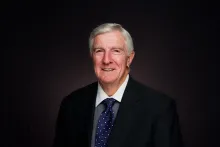
Before his retirement in 2021, Dr. Donald Ward pastored churches in Texas and Louisiana, and taught at Ambassador Bible College in Cincinnati, Ohio. He has also served as chairman of the Council of Elders of the United Church of God. He holds a BS degree; a BA in theology; a MS degree; a doctor’s degree in education from East Texas State University; and has completed 18 hours of graduate theology from SMU.
