
Robin S Webber
This transcript was generated by AI and may contain errors. It is provided to assist those who may not be able to listen to the message.
I want to welcome all of you today here that are in this congregation, as well as those that are online. Welcome, welcome. And to those that may be hearing this message, as well as the very fine message that preceded me in weeks, days, and sometimes I find years to come. Somebody will take an old sermon and plug it in, and I might be able to hear from them. I want to start with a question, and maybe it's one that we've all had at one time or another on our faith journey as we move towards the kingdom of God. And that is simply times, kind of having a conversation like Job. Father above, what are you doing? Why have I gotten to where I'm at and I don't have the answers myself? And I feel like this is a tremendous squeeze play on my life, and you're expecting me to, nonetheless, deliver. Good question. All of us have probably been there at one time or another, and that may be where one of us are today, whether we're here, whether you're listening on the streaming device, or whether you're going to hear this message in the future. It's kind of like they talk about today. I know Bob was talking about common parlance and language of today, but you know, some of the younger generation has this. Are you messing with me? God, are you messing with me? You're poking me. You're kind of poking me too much. Lay off here a little bit. Give me a break.
Well, yeah, I've got to share something with you. God, by his election with us, has chosen at times to mess with you and me. It might seem like a mess down here below, but God himself knows where he's going. Okay? He knows where he's going. You have given him the privilege to mess with you because you're his servant. You're a disciple of Jesus Christ. You are the child of the Father. But his messing is not towards destruction. It's towards construction in the kingdom life. It is in the ability to ultimately be able to, as Jesus said, I am the way. I am the truth. I am the life. And so that the poking in at our heart or circumstances that come up that we say, well, hello? Is there anybody else up there? You're changing course here, and I wasn't quite ready to get in there with you. Well, that's what we're going to be talking about today. So I invite you into this conversation that we're going to have because you're not the first one that God has ever poked at. And then you say, well, what am I going to do now that he's asked me to do this? We could go back to the example of Abraham back in the book of Genesis. In Genesis 22, I'm not going to turn there, but I think most of us are acquainted, even if we're new to the Scriptures and new to the Word, understanding that Abraham was asked of God to sacrifice the Son of promise and to go up into the hills of Moriah, most likely Mount Moriah in Jerusalem, but that's most likely, and that he was going to sacrifice his son. And you and I, if we'd been by him, we would have probably said, say what? Hello? Sarah and I waited for this?
How is this going to work out if I sacrifice him? Up to that point, still is today, basically, except for one. One's dead, always dead until, mmm, so what's he doing? What are you doing, God? But nonetheless, a brahm, along with Isaac, the son of promise, began to transcend that mount, and Isaac said, hello, where's the sacrifice? And you want to write this down right now, because this can, this little phrase can change your life. And what did Abraham, the father of the faithful, say? He said, God will provide. Later on, he would name that famous mount, the mount of God will provide. It was never far from his thoughts, and there had been a miracle that had been wrought there. God asked him to do what he could only do as a human being, as challenging as that was. Just imagine we that have children, and yet he went forth and trode up that mount in faith, doing what he could do, and then recognize leaving it to God with what only God could do. But those episodes of God poking at somebody's heart and moving into their life didn't stop there. Later on, four or five hundred years later, we know the story of Israel. The Exodus story, which is our story today, because the Exodus story is just an expansive story that moves from the book of Exodus all the way till the book of Revelation in one great sense. As we follow that second Moses, that greater Moses, who is Jesus, Jesus Christ, Bob, Jesus Christ. And so we know that what happened was, okay, Israel is going along with the program. Okay, we're going to leave here. We're going to do it. We're going to go across the desert. And then what happens? They're up against the Red Sea, right? The Red Sea. Moses, you know, being human.
What are you doing? And what is God doing? Egypt looks a whole lot better right now, especially when the whole army is just over the hill. And what did God do with Moses? He said, Moses, tell the people to be still.
Tell the people to be still. This day, you shall see my salvation for you. So he told him one thing, right? He said, be still. They got still. Then he told them, through Moses, now get the people moving. Time, as they're backed up, they're backed up, you know, and, you know, as they're backed up against the Red Sea, they're just looking at the troops coming down over the hills with the chariots. Get the people moving. See, what God does is he enters into relationship with us. And this is a big point if you want to jot this down. This is going to be kind of a teaching episode today. We're going to go kind of teacher today. Jot this down. God gives us teaching moments that never stop. God gives us teaching moments, teaching moments, that will never stop until we hear the sound of the trumpet. He did it with Abraham. He did it with the Lord. He did it with the trumpet. He did it with Abraham. He did it with Moses. He did it with the children of Israel. Another big story I want to share out of this is simply this. If you want to plant this on your notes and plant this, most importantly, and embed it in your heart, is God will always ask us to do what we can do as His children. Jesus will also ask us to do what we can do as His disciples. And then God will do what only God can do. Are you with me? Can we proceed with this then? I hope I'm drawing your interest because this is going to affect each and every one of us.
What are we talking about? God allows these intersections of faith, of humility, of learning, of experience, and acceptance all along the life of covenant people down through the ages to groom our own personal discipleship. And just when you think you've arrived, God puts the touch on us again. He says, well, God, I'm just getting tired of being touched. But we're not being touched by an angel like the old sign. We're being touched by God. He's interrupting our lives. He says, I'm going to bring you to a deeper understanding of our relationship and a growing relationship so that you'll understand what we're doing. Based on this, then, is again to recognize that mountaintop experiences with Abraham, Red Sea experiences with Moses are going to continue the rest of our life, not because God is against us, but because God loves us. And so I'm going to share something really exciting to you. I've spoken on this over the years. I've written columns on this before, long ago and far away. But I gave this a couple of weeks ago in Redlands, and even in my study, it was life-changing in my study. You know, I just don't put down words. I'm talking to myself and needing this for myself, and I'm looking so forward to giving this to you. Because we're going to just talk about one miracle today, one miracle. And it's the only miracle in the teachings about Jesus in Matthew, Mark, Luke, and John. The only miracle that he performs that is mentioned in all four gospels. What does that tell you? And what does that tell me? This must be important. This must have left a lasting impact on those that were present that day, and those that were near or heard from it, those that were present that day, to make a change in their lives. It's profound. It's impactful. It's memorable. And it's meant to be for us today. Here's the title of my message. If you want to put title, this is it. The miracle that keeps on giving. The miracle that keeps on giving. If only we will recognize in our own lives that we need this miracle. We need to be wowed. If I can use that phrase, wowed about God.
His impact needs to be upon us.
I'm going to talk today about the story, one that you know, about one that we're going to expand upon. That is incredible. It's the story of the feeding of the 5,000. How many of you ever heard of the story? How many have ever read about the feeding of the... It's always good to know your audience. Okay, we've all read it. We got it. Weber, can you give us something about setting a date in the future and how all this is going to happen? The nay... We'll leave that one to God today. We're going to be talking about today.
Because all we are is we are living today, yes, leaning towards tomorrow, but what God wants us to receive today. I'm going to be going through the four Gospels. Now, I want to give a warning about all of this. I'm not going to be turning to every scripture in all of this at this point. You can get a Harmony of the Gospels, or we would be here till five o'clock tonight, just in this sermon. So, how many of you want me just to share the story or do you want me to turn to all the scriptures?
I know your humanity. I'm just going to give you the paraphrase of what's going on here, and that's well and what's good. Let's go back to Matthew, Mark, Luke, and John, and I'm going to paraphrase. I may turn to different scriptures out of that, or I'll at least allude to it.
But what is going on here? You and I are all very familiar with the story where Jesus was up on the hill and fed the five thousand with the bread and the fish. But what happens is, we need to get the context of what is happening here. Are you with me? We're set to go. We're going to kind of do a travelogue here, and we're going to kind of move across the Sea of Galilee.
Actually, we're going to start up on the northwest side of Galilee, around Capernaum. And Jesus had been teaching the masses there. He was doing signs and many wonders and healings and casting out demons, and there was a crowd. But not only just simply being the Son of God, but the Son of Man, he could wear out. And all of us, have you ever noticed sometimes, time out? I need a time out.
I need some down time. I need to re-energize myself. I need to go back to the source, and in his sense, was God the Father. He needed long time. At that same moment, as he's contemplating that, two big things come his way in the scriptures and setting this up.
Number one, the disciples come back. No, I'm going to go the other one first. He, with all of this that he is doing with the multitude there, and the northwest side, around Capernaum, he gets news. In one sense, it's news that he knew would have to come one way or the other, because of the purposes of God and the mission ahead. It's the news about John the Baptist. His cousin, his cousin has been beheaded, martyred for the cause.
Sure, he might have known that it was coming, but nonetheless, we always have to remember with Yeshua, Jesus, that he's not only the Son of God, but he was also the Son of Man. He's in the flesh. He's got emotions. This is real to him. He might have to one degree or another, like all cousins do, be together, growing up, perhaps going to synagogue, perhaps going to Jerusalem, whatever.
And it must have hit him, humanly, even though he knew this was going to have to happen, for the one that had prepared the way had done his job, and now the rest was going to be left up to Jesus. But it must have really punched him, as it were. So he's going down. That's part of the story. He needs solitude. Now, the other part of the story is the disciples have just come back at the same time.
So one thing you want to understand and why we need to read beyond a chapter or a verse is to get the context. At the same time, the disciples, who were sent out on a missionary trip, they were all sent out by Jesus. He told them how to go out. He gave them A, B, and C, and then he gave them a great commission to give them a great commission. A great commission to preach the gospel, to heal, to cast out demons.
We're on board. Is there any place, anything else that we need to do? So they come back and they give a report of where they have been and what they're doing.
We have cast out demons. We have healed the sick. We have preached the gospel. Maybe we can retire now as disciples. So all of this is going on in the background. So with all that in the background, one thing that we need to understand, are you ready for me? There's going to be another teaching moment. You can cast out demons. You can heal the sick. You can preach the gospel, but God wants to go deeper with them through Jesus Christ. So they get on a boat by Capernaum Way, and they're going to go across the Sea of Galilee to the northeast coast, basically what's called the Decapolis. There's a Greek word for Bob, meaning the 10 cities. It's Hellenistic, and he's going to go over on that. It's still a part of Judea at that time, but it's Hellenistic in origin because of some of the recent history. So they're going to go from point A to point B. Now, point A to point B on a boat would be about four miles, just four miles to get from point A to point B. But it must have been very, very rough seas because they didn't get there as quick as the crowd did. Because here's the crowd. They're seeing demons cast out. They're seeing healings. They're seeing many signs and wonders. Jesus, by His teachings, got their curiosity all up and running. And all of a sudden, they see this is kind of humorous when you think about it. They all of a sudden, the boat's gone. The boat's gone. He's left. And this whole movement, thousands of people, it'd be fun to have a drone. Watch out. Thousands of people are moving across the north shore of the Galilee. They're trying to figure out where He's going to land. And so they're moving. Now, on land, it would be nine miles from point A to point B to get over to the Decapolis. But there must have been something held up. Okay, so far so good. Something held up because they got there before Jesus did on the boat. Now, Jesus is moving that way and He thinks, okay, I can breathe. And guess what He sees? He's there. And hello! Guess what? There's thousands of people waiting for Him.
Now, there's two things that are probably going on here. Jesus being both the Son of God and the Son of Man. Probably there was, first of all, there must have been a great sigh.
Okay, I know none of you have ever done that before you meet people. Some of you might have social anxiety disorder. You go, oh, people! Just as He came out of people. But here's what I want to share with you. His sigh went to a smile. His sigh went to a smile. And as He looked at that audience, He recognized something very important. It's brought out in Mark 6, verse 34. As Jesus came ashore, He saw the large crowd, and He had compassion on them because they were like sheep without a shepherd, so He taught them many things. In each of the Gospels, in Matthew it says He had compassion on them. Matthew 14, 14. In Mark 6, which I just read in verse 34, it says again that He had compassion on them because they look scattered. They look lost. And He had the heart of a shepherd, the heart of God. In Luke's account, in Luke 9, it says that He welcomed them. He welcomed them. What do we learn from this? First teaching moment that I like to share with you as we go through the story is simply this. To Jesus Christ, people were never a nuisance. Be it one, or be it many. They were never a nuisance, and we're going to find that again as we go through this story.
I have a question. You don't have to raise your hand on this. I'm not a father-confessor.
Have one and or many in your life been a nuisance? That doesn't mean there aren't challenges with people. That's not my comment. We're not playing Pollyanna here. Are you with me? And can we talk? But we gain a general impression of Jesus' approach to us. In fact, when you take it to the utter conclusion, death was not a nuisance. Death on our behalf was not a nuisance for Jesus Christ. Something to think about. Now, what is going on, and why are all the crowds happening? What's with this flow of crowds? 5000. Now, Judea, actually the Galilee, what we call the Galilee in Judea, was actually one of the most populated areas. We always think of it being hill country, but there were hundreds of small villages and towns there, so he had to find a quiet spot because there was a lot of activity in that area. But why was Jesus going to perform this miracle? Now, you find in the story that this was the Passover in John's account, that the Passover was nigh. It was upon us. And so you had the great pilgrimage movements going towards Jerusalem from the north country. We also know it was during this frame because it says it was green. And so we recognize that at this moment, Jesus was going to do something at that time for maximum effect. He was going to do a miracle, the miracle that keeps on giving, because he knew that the flow of information would be there and that what people saw they would also take with them as they went back into the different parts of the diaspora. Here's the second teaching moment I want to share with you out of this story. God and Jesus Christ never waste a miracle. He never waste a miracle. Number three, God and Christ. And we'll just talk about Jesus at this point. He not only created time, he is the master of timing. He knows exactly what he is doing, when he is doing it, with who he is doing it. And we can add Robin Weber and Susan Weber and Laura and Kim and Pat. We'll throw in John there in the back row. He knows what he's doing. He knows what he's doing. So what happens here? He goes on preaching and talking during that time. He spends the time. He goes up the hill. It says then he went up the hill. Now, there's a point I want to share with you. I want to jot this down. What we need to recognize is that there is a first Moses and there's a second Moses in type. Moses was the first Moses, the one in Exodus. But he said that there would be one come like and unto me. Deuteronomy says that. Jesus is that second Moses, that greater Moses. And we're going to see analogies as we go along with this that are going to be important. It says here in Matthew 14, when evening arrived, do you think my sermons are long? When evening had arrived. Later in Mark it says when it was already late. It says in Luke, now the day began to draw to a close. Oh, sun's going down. But he had the crowd so enraptured that they stayed with him. And so the disciples came back and they said, you know, this is kind of an isolated place and it's getting late. You need to send the crowd away. Each of the accounts, Matthew, Mark, and Luke says you need to send the crowds away.
But then Jesus comes back. Here we go. Jesus comes back and says, he replied, they don't need to go. It says you give them something to eat. Now this is fascinating. This begins the relationship that God will only do what God can do or Christ will do what only he can do. But here's one thing I want to share with you as disciples, like these disciples. Disciples are not just the people that are in the gospel. We are disciples. We are in need to be in learning mode, even when it's going to take time to get it. He said you get them something to eat.
God will always involve us in a relationship towards reaching out and sharing the gospel with other people. And what happened then is that so that was a teaching moment. He gave them an opportunity to solve. Number one, he gave them an opportunity to solve the issue. They were to later on, you might want to jot this down. We'll come back to you again. Later, he would ask them to distribute the bread.
Number three, later on he would ask them to collect the bread. This is a part of the miracle. Kind of a hands-on miracle. You who doubt it, that I could feed this flock. By the way, there's more than can even be eaten by 5,000 people. You go out with your 12 baskets and you pick it up. You can see Peter going, okay, I think I've got this lesson. So there's so much that is happening in here, but the story proceeds here that the one thing that we want to remember if we can pattern ourselves after the heavenly rabbi, Jesus, is simply this is to recognize that we might say that using the pattern of the Old Testament, New Testament, the disciples looked upon this as being impossible. Why would you ask us to enter into this situation and try to feed them? Look at the numbers. Look at the size. We're not going to be able to go there. Who does that remind you of? What story in the scripture does that remind you of?
For sake of time. Remember when Israel was to enter the Promised Land? What did they say when the scouts went into the land and they came back?
There'll be giants. There are giants out there. Have you read that story yet? I'm just curious with this crowd. It's still there, right? Okay. We need to know that. We need to understand that because you and I, as we live life every day, we say there are giants in the land.
And when we say that they are giants, then we take on the grasshopper role. Here's one teaching moment out of this story. Jesus never looked at the numbers, and he never looked the size of the crowd. He looked at the purpose that his father had given him as we look at the purpose that Jesus has given us as the Lord of our life and the head of the body to recognize that we've got somebody greater than any crowd, bigger than any number. We are praying, and we are leaning on the one that is outside of numbers, outside of time and space, the Lord of the universe. So what happens here in all of this, then we find what goes on here a little bit later as we go along. Jesus says, he talks to Philip, one of his disciples. He says, Philip, can you help me here? I know you're from around here, so you probably know where the supermarket is so that we can help these people. Philip was probably from that area because Philip is a Greek name. Just think of Philip II of Macedon. So that he says, Philip, and you know, basically Philip comes back and says, Lord, rabbi? He would have called him rabbi at that point, being in that culture and community, says, listen, there's nothing around here that's going to be able to handle this crowd. And even if we were able to handle it, it'd be like a half year's wages to do so. This just isn't going to happen. Kind of like we'll stay on the side of the Red Sea. We can't make any movement.
As this is occurring, Jesus notices one of his disciples moving away. I've got to share something with you. There's now three smiles. There's going to be three smiles in this story. The one was he turned his side to a smile when he landed. Here's another smile. He notices Andrew going into the crowd. He knows Andrew. He loves Andrew. He loves all of us, but he loves Andrew because he knows Andrew is about his father's business. Andrew is, we don't know a lot about Andrew. There's not a lot about Andrew in the scriptures, but Andrew was the one that could connect people with Jesus. He just had a natural ability to do that. Did you know that Andrew was the one that connected Peter with Jesus on the Sea of Galilee? Andrew had kind of been at a saying, and so he brought Peter, his brother. He connected this great apostle, Peter, that would become this apostle. He was the one. He was the connection.
In John 12, it talks about there were probably most likely, it says Greeks, but I would suggest it was probably Hellenistic Jews that had questions. And Andrew took this crowd, this grouping of Hellenistic Jews, and guess what? He planted them right in front of Jesus. Here's the thing I want to share with you. Very interesting. I often say the shortest distance between two dots is a straight line. Andrew was a man of God that made connections, and he knew that the answers were in Christ himself. He wasn't going to substitute for that. So he connected Peter to Christ. He connected the Greeks to Christ. Now, guess what? So he knows, Jesus knows what he's doing. He's going to go find somebody, and then he finds this lad, this lad, and he brings them. You can just see, make way, make way. And here's Andrew, and maybe he's holding the boy's hand because the boy has something else in the other hand, which you all know about. And he says, here, and he plops, if I can use a jargon, the kid, right in front of Jesus. But even with all the good points of Andrew, he says, once he sees the loaves and the bread, he says, I don't think so.
So what does Jesus do?
Jesus is going to take that little and make it much.
The little boy comes forward and here's the great lesson. The little boy comes forward and he gives his little. And God takes that little that that boy gave, and Jesus makes it much that his father might be glorified. It says that Jesus was at the top of the hill in a sense, a typology of Moses and Jesus in that time, as he says, he prayed over this, the, these sardines and barley bread because it was in the spring season and barley comes before the other wheat barley was kind of the course ground, kind of the common food.
He takes that which is common and Jesus up on the hill and as a Jew and as a rabbi, and in that culture, he would have raised his hands. He's up on the hill. Nothing's ever missed on Jesus so that everybody can see him. And like Moses says, ancient Israel would look up the hill and see Moses between them and God. Now they see that second Moses. They see this rabbi, this teacher, this miracle worker, and he raises his hands and he looks up to the heavens. A Jew would always raise his hands when praying, just like Daniel in Babylon. And he says, oh Lord God, Jehovah, our God, King of the universe, who brings forth bread from the earth.
That's a visual we'll want to see one day. That's exciting, isn't it? And then what does he do? Then he tells the disciples, now you, oh you of little faith. That's not okay. But anyway, that he says, now, get it organized. You distribute it. And then the crowd eats it. And then he says, okay, boys, I don't know how to say that in either Greek or Hebrew. He says, boys, now go collect it. And they take out 12 baskets.
Can you imagine that? You know, you got maybe it's a long wicker basket. Okay, here's more. And I didn't think there's going to be, oh, here's more. Here's more, you know, oh my, he was right. I was wrong again. Forgive me, Lord, for doubting. This is such a rich story that is about our lives, brethren, because we worship a God that we put our own personal limitations on. The same God that made time, the same God that allowed a Brahm, Abraham, and found that sacrifice, not his son, but somebody else. But Abraham was cooperative or Moses at the sea. And they were backed up. Here's 5,000 people. You know, it's interesting with crowds. They can be for you one minute and they can be against you the other. Have you noticed? And this is what he does. Now, there's another part of this story.
Very important. I'm going to ask you to turn to John 6-6.
In John 6-6, this is kind of in the story, because he asked Philip what to do, what can be done to get bread in the local area. Now, Jesus said this to test him, speaking of Philip, for he knew what he was going to do. For he knew what he was going to do. See, we're limited to time and space. We are limited in our own human psyche. Jesus already knew what he was going to do, but he wanted to set the stage for the disciples to come to greater faith, greater understanding, greater commitment that even when you do not see the answers ahead of us, ahead of you, ahead of me, that God is not locked into today. He's not locked into the moment. Jesus Christ the same yesterday, today, and forever. And he's moving ahead and asking and welcomes us to go along and understand because we'll say, oh, he knew what he was going to do. So that means he knew that he was going to feed the 5,000. No, there's more to the story. That's why I have to keep on going here in a moment. I'm going to share a thought here with you. Some vital lessons now as we begin to wrap this up. What are some of the powerful lessons that we learned from this?
The boy came forward, and we do not know his name. Sometimes we know people that really stepped out, that's well and good. And sometimes we'll never know the names of people that follow this little boy's example. But you know what? God knows. And when this little boy came to him, jot this down again. For such is the kingdom of God. He didn't say, who's the kid? Don't you realize I'm speaking to 5,000 people right now? We've got big problems. He didn't say, not that any of you have ever said this before. Hey, kid, go find your mother. Again, a very powerful lesson that nobody is ever a nuisance to the Christ. He welcomes all. The boy came forward, and he made available the little that he had. Again, barley was inferior to the wheat for making bread. But it was a staple diet amongst the poor. The youngster was willing and trusting to hand over all he had, no matter how meager, no matter how little, to Jesus Christ for his purpose at hand. A purpose that was not only going to be at hand on that day, but we're going to find out even a magnified purpose. Beyond that, what do we learn, and how do we embed the story in what Jesus laid out before us in John 14.6? I am declaring who he is the way. This is how we're going to travel. I am the truth, and I am the life.
Again, I'm going to repeat this at nauseam, but I want you to get the point, and I want to get stuck in my heart. Christ always involves his disciples and others in his work. That's called relationship. That's called discipleship, and we want to be like the master. In ancient times, a disciple to a rabbi always wanted not only to know what the rabbi had to teach, he wanted to be like the rabbi. So that's why he involved him in his work. You know, it's like the old saying, you know, I see and I forget, I hear and I remember, but I do, I see and I forget, I hear and I, no, I see and I, I wasn't going to pull this up, I see and I forget, kind of I hear, but I do and I understand, hands-on, not just lecture, but laboratory.
Why does he ask us to do something? Not only what the boy, not only what Andrew did, not only what the boy did, not only what the others did, it is simply for this reason. Today, as his disciples, just as the disciples went out to feed the flock, to collect the leftover bread, to organize the feeding, etc., etc., is to recognize as his disciples, as Jesus used them, he uses us today. Here's what I'd like to share with you, is simply this. We are given as the body of Christ. Remember the body of Christ? And Paul mentions, is it in Corinthians? We've all been there before. How does this work? We are his heart below. I want to share this with you. If you, if, if you will just incorporate, or maybe listen to this message later, just this part, your life will change. You'll be an Andrew. I need to be, even as a pastor, I can grow in being, and maybe most importantly, because I'm a pastor, I can grow in being more like an Andrew. We are given a task. We are his heart below. We are his feet to do his traveling. We are his arms to reach out to others that most people might think are a nuisance. We are his feet to do the walking up and down the hill as he asks us to. We are his tongue to edify. We are his instrument to bring people to fuller knowledge of Jesus Christ and his Father. We, like him, are to give honor and glory to God the Father and put ourselves out of the equation. Did you notice that when Jesus, if he offered that prayer, which Jews still give to this day, where they recognize God, our God, the King of the universe, even in that stage as the Son of Man who could do miracles, he humbled himself. He knew, he knew, we're not going to pray again. My hands are over. Just excited about talking about this. He knew where the strength of purpose and energy came from. He later, another verse, he said, I can do nothing right, but what? My Father bids me.
One of the greatest lessons that we can learn today in the body of Christ is not try to figure out things that are quiet in the Bible or have all of God's plan laid out before us. And we have it on a tape measure going into the future. I leave that to God. He gives us much to consider. One day, we will be able to comprehend when we're there. The greatest thing that we can learn today in the body of Christ is to have the humility of Christ. Get ourselves out of the equation. Get ourselves out of the equation. And when we do that, you say, yeah, but I like talking about myself.
Talk more about God. Talk more about Jesus Christ and give them glory. And I'll tell you what, you will come to embrace the rhythm and the heartbeat and the cadence of I am the way I am the truth and I am the life.
Another thought I'd like to share with you. How often do you and I stand unmovable along the highway of life that we all journey down? Because we don't think God can use me. You can do that right now. Just don't. Oh, that hurt me. Me. Because I'm me. You know how it goes. I'm too dumb. I'm too small. I'm too old. I'm too new to this way of life. We need new people to come in that are young in this way of life to energize us, to recognize that God is still at work calling people. We need them. They need our maturity and how we've walked down the way of life. We bring it together. See Andrew, who's disciple, had the little boy little boy come. They were together. We all need one another. We're too heavy. We're too poor. We're too tired. Or it's too much. Or it's too little. And you could all the whatever else. We just excuse our way to be bystanders along the road to the kingdom rather than being involved. Now, you may never be up on a stage like me in that sense. And you know, that's nothing to me. You know, God can use donkeys to speak through. So I'm in a great audience up here, right? When you think of Balaam. But you have a gift. You have a little and whatever your little is, God can magnify that little and make it great to his glory and change people's lives and change your life along the way. This little boy is God's poster child. Remind us that age and size and gender or substance are never out of bounds when it comes to serving God. Now, why is this important? And we're about to conclude here.
In this story that covers three days, we're on the northwest side of the Galilee on day one. Jesus needs a break, but we know now the rest of the story. Day two.
There's the crowd. His sigh goes to a smile. He knows he's been given a responsibility. He is the shepherd of Israel. We normally stop with the story, even though we know the rest of the story, we don't always connect it. This little boy had given Jesus some bread, and he fed the crowd, but that's where we leave it. But Jesus said, remember when it said in John 6, and he knew what he was going to do? That's when you're supposed to not help me. He said he knew what he's going to do. Yes, he did. But it was not only on that day, but get this. You'd have to smile with this. Remember how all the crowd went nine miles over this way? Then they recognized that the boat was no longer there, and guess what? They're going back and forth, kind of like a flock of swallows. Have you ever seen swallows? And there's thousands of them. So they're all moving back. They're going to find him. He lands, and there is the crowd. And it is in that crowd, and you can read the story in John 6. It is in that crowd where he says, of old, Moses gave you what? Bread from heaven. Gave you bread from heaven.
But what the Father gives me, I am the bread of life. I am the bread of life, and he who eats of me will never go hungry.
Wow, that's powerful, isn't it? What's powerful is how he saw all of this coming, and saw beyond the moment.
He had wanted to be alone, and there would be a time that he would be alone. He would be alone on a cross, alone on a tree, alone on a stake, alone on a star, whatever you want to call it. And he would be alone, as he humbled himself again to quantify, to show the quality of what God has given you and me to partake of, as we partake of the one who is the bread of life.
The crowd after they had that food, he skedaddled out of there. You know why? Because they wanted to take him. They wanted to make him a king. Remember, you're up in the Galilee. That was a pretty—Bob, you know about the Galileans. They're a pretty rough crowd. They're kind of like the hill people, and they wanted to take him as Messiah. They wanted the action then, but he knew again, being the master of timing, that timing was not then. There was more to do and more to prepare, and he had to make this last. That's why so often in the Gospels, you see, he was here, then he takes off. He's there, then he takes off. He comes at the end towards Jerusalem. He's in Bethany, which is in the shadow of Jerusalem on the other side of Mount of Olives, but he's in Bethany. He's not in Jerusalem. He's ultimately waiting for that time of Passover. The same one that does this is the same one that looks down upon we that are in time and space, and he enters our lives. He enters our lives. He is the master of timing. He's never going to ask us to do something that he cannot supply the help and the energy for. In the book of Psalms, it says, Show me your ways, O Lord. We have that song. That'd be nice to end with, but it might be too late to do that. Show me your way, O Lord. It says, Teach thou me, thy paths.
Would you think about that this week, incorporating this sermon? Don't allow this moment to go. Don't allow I put in my time, and I'm going to go my way, without understanding how God intimately wants you to be involved in the solution, and not just a bystander. That's why I'll call this the miracle that keeps on giving. It wasn't just on a hill in the Decapolis. It was on another hill the next day, the miracle that keeps on giving, as He took that which was ordinary from a young man, Barley, and said extraordinarily, I am the bread of life. And that it comes down to us now today, that He says, you know what you signed up for? I'm going to tell you to do some things. I'm going to ask you to be like me, and I know it's going to be difficult. I just want you to put your foot out, one foot after another. Whatever any of you are going through right now, put your foot out. Give your walk to God. You say, but I don't know if I can do this. He'll give you a push by the Spirit. He'll give you the strength by the Spirit. He'll give you the vision by His Spirit dwelling in us, that it's all going to be worth the while, that your little, my little, might grow large. To His glory. Look forward to seeing you in the message chat.
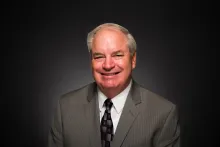
Robin Webber was born in Chicago, Illinois, in 1951, but has lived most of his life in California. He has been a part of the Church of God community since 1963. He attended Ambassador College in Pasadena from 1969-1973. He majored in theology and history.
Mr. Webber's interest remains in the study of history, socio-economics and literature. Over the years, he has offered his services to museums as a docent to share his enthusiasm and passions regarding these areas of expertise.
When time permits, he loves to go mountain biking on nearby ranch land and meet his wife as she hikes toward him.

