
Robin S Webber
This transcript was generated by AI and may contain errors. It is provided to assist those who may not be able to listen to the message.
At times when people are whacked in the head, we go over to them and we inquire, are you okay? Are you okay? And we put up the finger here and we go back and forth just to see if their eyes are focusing. Because when we get that whack in the head, we can start to begin to be seeing double. But that doesn't really happen when somebody slips or falls. It's also happened down through human history, especially people that have looked at the Scriptures and come up with conclusions. And people down through the ages can do the very same when they are confronted with Scripture. And what happens is they can see two different worlds rather than the integrative, cohesive whole. That is, the one creation, that God created, that God desires, and is going to ultimately bring to completion.
So today, what I'd like to do with us as a congregation is to bring ourselves into focus, not with human perceptions, but what the Scripture clearly declares with how God views things. So often, we want to make God over into our image, which means to anthropomorphize, which means to take God and make Him over into our image, rather than we becoming in the image of God and having His eyes and having His viewpoint on things. And we're going to look at what He desires for the entirety of His creation and, personally, what He desires for us. I want to just kind of share with you, to kind of keep you on board where this is going, is that we're going to be doing some, what we call, some macro thought, and we're going to do some micro thought. This is not only going to simply be about the universe, it's not only going to be about big, big, big things, but, you know, we always think of that human transmitter in us. What's in it for me? W-I-I-F-M. So we're going to bring it down local. We're going to bring it down to our hearts by the end of this message. People at times perceive God as a first cause. They perceive Him as a loving deity. They might even perceive Him as a benign, absentee landlord, kind of uncle, Mr. God. And miss, or do I dare say, perhaps even reject the sovereignty of God and His interventionism in human affairs, in human history, in civilizations, and yes, His ongoing intervention in you and me today. And one that is ultimately that interventionism is going to bring everything in creation beyond maybe sometimes what we normally think about, all into one. And so we're going to talk about that. Today's message is simply entitled this. Let me put it right out there for you. One ultimate creation. One ultimate creation. That's the first half. What we're really going to get down to today, and we're going to do some biblical geometry here. We're going to be drawing and circling and this and that. The second title would simply be this, How Heaven Touches Earth. How Heaven Touches Earth. And my goal through Scripture is to show you that in God's viewpoint and God's creation, we have two elements that are one, that humanity tends to either ignore and or to separate. And its goal is to help us avoid blurred vision, to be able to see and to be able to understand what God is doing through his creation so that we can avoid that blurred vision. What he's doing with humanity at large, his desire and why he sent his son and what his son stands for. And then what it means to us personally. And this message is designed, we're going to go over a couple scriptures for a moment, is designed to show you the personal intimacy and the personal relationship that God desires for each and every one of us that are made in his image, both in Heaven and on Earth. And I think what we're going to find, especially as we're coming up to the Fall festivals, we're going to, are you with me? We're going to connect some dots. And we're going to see not only Heaven and Earth, but we're also going to see that GPS of the festivals.
From the first festival to the Inn Festival to the first festival of the New Testament Passover to the eighth day of how Heaven and Earth come together. Now that's the goal. We're going to see if we get there in the next few minutes. And it's going to bring to light some scriptures. Allow me just to anchor us, as we always do in the Church of God in the Bible. Join me if you would in Psalm 8 and verse 4.
We're just going to have a reading so you know where we're going in chapter 8 of the book of Psalms. The psalmist tells us this. Psalm 8 and verse 4. What is man that you are mindful of? Why are we here? Why God? And why us?
And the Son of man that you visit him. So we are, this afternoon, going to embark on understanding why God is mindful of we, this creation that is made of dust. Another verse that I'd like to point you to is in Psalms 139. This is a familiar scripture. But I hope that this message is going to make it even clearer as to the intimacy that God has with you and me. Psalm 139. In picking up the thought, just a verse in verse 7. In Psalm 139, verse 7. Notice what it says. Where can I go from your spirit? Where can I go from your spirit? God, it seems like you're everywhere.
Or where can I flee from your presence? If I ascend into heaven, you're there. If I make my bed into grave, behold, you are there.
God is everywhere. But he's also all love. He's all wisdom. He's all power. He's our heavenly Father.
And the one thing that I want to share with you is, here we are. We're on the Sabbath day, aren't we? We think of the Sabbath day as a day of when God elected and created the Sabbath. And he rested. It says he rested on the Sabbath. He blessed the Sabbath. He hallowed the Sabbath. And we know that Jesus is the Lord of the Sabbath, Mark 2, 27 through 28. Therein.
But what we've got to recognize is that God is still creating. God did not...he didn't become a couch potato on the Sabbath, did he? He didn't need to physically rest. He's spiritual. He neither slumbers. He doesn't sleep. He is all in all. He stopped that part of the creation which is physical. But that spiritual creation, that spiritual work, continues.
A work that yet moves into the future as we're going to see how heaven touches earth. We say, okay. But we're also going to find out how heaven touches us through Jesus Christ through all of this as we go along. So let's begin to connect the dots. We're going to first of all go back into history a little bit. Talk a little bit about history. What I'm going to share with you today is how the early church and the covenant people of God, whether in ancient Israel and or the spiritual Israel of God in the first century, it's how they grasped the reality of heaven and earth and how it came together.
I'm going to take my board here for a second. Here's your first doodle if you want to use a quarter of your front page. Too often, humanity kind of looks at it like this. Here's heaven and here's earth. So far, so good. That's your first doodle if you want to do it. How many pastors allow you to doodle in church? Go ahead. You can doodle. But that's not how the early church understood it.
Too often, sometimes, students of the Bible do not understand the tension. Tension. This taught wire of understanding that moves between different elements. Whether it's like the Sabbath, we can look at the Sabbath as conjugating it like a verb. Past, present, and future. What God has done, what God is doing, the people of God today observing the Sabbath, and what He's yet going to do in the future.
There's a tension, a taught wire, that runs all the way through it. And that's the same with the understanding of heaven and earth as we're going to be bringing it together. This tends to be the model that much of Christianity looks at. Well, we're down here on earth and then there's a heaven up there. We're going to bring it all together here in a few minutes. That's not how the early church understood it. They lived in the existence of an expanding creation, of an ongoing wholeness.
And they, in their moment, were on the leaning edge of God's sowing the totality of His creation together, both in heaven and in earth, as He always planned, and as He viewed it. Not as mankind views it, but as God viewed it. So what we're trying to do is we're trying to get some lenses on as we're going into the feast days here.
Let's talk about that for a moment. Let's just go through a quick couple of scriptures. Show me if you would in the book of Acts, in the book of Acts 1. Chapter book, Acts 1. And this is the disciples on the Mount of Olives. And let's just get an understanding here in Acts 1 and verse 11. As the disciples saw Jesus now ascending, that is, after His death and after His resurrection.
Let's remember there's always that very important element of ascension that He might be exalted. We notice in verse 11 the angels now speaking to the disciples, because, you know, they're like this. This is the PowerPoint. You don't want to miss this, okay? What's happening? He's going up. Notice what it says. Who said to the men of Galilee, Why do you stand gazing up into heaven? This same Jesus who was taken up from you into heaven will so come in like manner as you saw Him go in, what?
Into heaven. You begin to see the word I want to use as the conjunction and the togetherness of what the angels are declaring to the disciples of heaven and earth coming together. In other words, what? There's an old song out of the sixties. I will not break into song. What goes up must come down for you that are baby boomers. You will remember that and or you listen to your parents' music when you were growing up.
That's what happened. Join me now in Zechariah 14, a messianic prophecy in Zechariah 14. In Zechariah 14 in verse 4, we notice this what it says here. When He does go up, He is going to come back down. The Scriptures tell us exactly where He's coming down. This is not fuzzy math or this is not misplaced geography.
And in that day His feet will stand on the Mount of Olives, which faces Jerusalem on the east. So the declaration of the angel echoes what the messianic prophecy was back in Zechariah. As He went up into heaven, He is not going to stay up there. He is coming back down. There is a tension. There is a togetherness of that which we, in our double vision as human beings, because we see as humans, of two elements that seem to be separated with God.
With God, they are all in all and they are together. Now join me if you wouldn't, Daniel 2, verse 34. We're just laying a little scriptural path here in Daniel 2. Let's pick up the thought in verse 34.
This is Daniel interpreting the dream of an epiconeser. And we notice in verse 34, you watched, speaking of an epiconeser being you, you watched a stone was cut out without hands, which struck the image on its feet of iron and clay, and broke them in pieces. And then the iron and the clay and the bronze and silver and the gold were crushed together and became like chaff from the summer.
Dropping down a little bit further, and the stone that struck the image became a great mount and filled the whole earth. Now that stone came from heaven and struck this mountain or mountains that were down below. So we see this connection between heaven and earth. And when you look at the word mountain, some of you may just begin to open up the word and begin to understand what we might call biblical talk.
Mountain stands for a kingdom. But this stone, which comes down, this one that is made without hands, which means spiritual in nature, which would mean heaven, comes down and strikes these physical kingdoms. What does this mean? Well, then we pick up the thought over in verse 44. And in the days of these kings, the God of heaven will set up a kingdom which shall never be destroyed, and the kingdom shall not be left to other people, and it shall break in pieces and consume all of these kingdoms, and it shall stand forever.
And inasmuch as you saw that the stone was cut out of the mountain without hands, and that it broke in pieces, the iron, the bronze, the clay, the silver, and the gold, the great God is made known to the king. What will come to pass after this? This dream is certain, and its interpretation is sure. Almost sounds like out of the Ten Commandments. Remember, Hugh Brenner? Let it be written. Let it be done.
There is an assurity in this. And what we recognize is that the God of heaven, and maybe some of you remember this when we were first becoming acquainted with the word three years ago, thirty years ago, fifty years ago, because in our mind we thought that heaven was separate from the earth. You kind of spend some time down here, and then quote-unquote, you go to heaven. But that's not the biblical viewpoint. And that's not what we're going to be understanding at the Feast of Trumpets and or at the Feast of Tabernacles or the Eighth Day.
That we see a realm of creation, two elements, yes, but they are conjoined. When you look at the word kingdom, I have a question for all of you because I'm looking out here, probably have about, looks like I'm an old insurance inspector. Hmm. I'll just say, I'll write it off to a hundred. There's more than that today here, I believe, about a hundred. So we have probably about three thousand years of kingdom experience here studying the kingdom.
Right? So we're going to give you the test. What are the four elements of any kingdom? What are the elements of a kingdom? You can just raise your hand and I'll call on you. Number one, John. Pardon? Territory. Territory, okay. Yes, Jerry? A king. Can you imagine a king without a territory? Okay. A king, a territory, Paul? Subjects. Subjects, okay. So what is the connection that keeps that kingdom rolling in order? Yes. Law. Law, okay. So we have a king, we have a territory, we have subjects, and we have law.
This is real stuff. This is not a theory. What God is declaring here is it's real stuff. Heaven, in that sense, to use that as a phrase, is coming to earth. And a kingdom is going to be set up. And what's amazing, it's not going to be a kingdom that is...
The great declaration here, it is a kingdom that will no longer be a kingdom left to man. When you understand the rollout of empire, when you think of the Babylonian Chaldeans, when you think of the Persians, when you think of the Greco- Macedonians, and you think of the Romans, you always think of, you know, like dominoes.
They keep on bumping in on one another. You ever done that with dominoes? Did you ever do that as a kid? Set up the dominoes? And you kind of watched them click on... Am I the only... Oh, okay. You do. Okay. So, they're clicking. God is saying, through Daniel, King, you are going to have to come to understand there's going to come a time when human beings are no longer going to rule over this earth.
There is not going to be this succession of kingdoms. It's over. Heaven is coming to earth. In other words, here's what I want you to share... What I want to share with you, dear friends, is simply this. It's doodle. The weight of evidence in the Scripture is simply this. Here's our new paradigm. Heaven... It's interesting that the book of Matthew is the only one of the Gospels that says, the kingdom of Heaven.
It's okay. The kingdom of Heaven, the kingdom of God... It's synonymous. And then you want to do this. This is where we want to be. We want to be in the touch zone to recognize, where can I remove myself from your presence? And you can't, because God created the heavens and the earth, as we're going to come to find out. That was the understanding of the early church. The early church, as they gathered in home churches, or wherever they gathered, they would have gone to Isaiah 2, verse 2.
I'll leave you with there a second. Isaiah 2, verse 2. And this will be read at the Feast of Tabernacles. Now, it shall come to pass in the latter days. The latter days are not today, because those are the latter days. Okay? The latter days are the mountain, that is, the kingdom and or the realm, might say the presence of the Lord's house, shall be established on the top of the mountains. God's kingdom is going to be above all kingdoms, because they are no longer going to be left a man.
And shall be exalted above the hills, and all the nations shall flow to it. This was the understanding of the people of God in the first century AD. They did not separate the earth from heaven. They looked upon it ultimately as congealing and becoming one. Now, let's transition. I'll take a deep breath. We're going to transition for a moment. We're going to go into... So, what happened? Where did that initial understanding... For Jesus, it says, Jesus came unto his own. John 1, verse 10.
Jesus came unto his own, and with your own you talk as your own would understand. So, we have to understand what they would understand and how Jesus would communicate with them. But something happened, and let's talk about that for a moment. But since the fourth or the sixth century AD, much of what we might term as classical Christianity has lost the biblical bearings of the kingdom of God returning to this earth.
What am I saying here? There began to be a separation of the creation. Earth over here. Over in this ring is earth. Over in this ring, way over here, is heaven. No, that's not the biblical way of looking at things. What happened to bring this about? The early church looked forward. They had an immediacy. As I think all the people of God down through the... They had an immediacy. They looked upon themselves as the leaning edge of this great cause that had started back in Egypt, brought into a promised land, and that we look forward to that promised land yet to be.
So, God's people, whether Israel of old or spiritual Israel today, have always been on the leaning edge of expectation. In our day and in our time, thy kingdom come. And that's how the early church was, especially in the first century, because the angel said, as you've seen him go, so he shall come. Well, how would you have taken that? If you're being talked to, you would have thought that you'd seen it in your lifetime. So, what happened here? Let's talk about history.
By the fifth century AD, Rome was on the way out. And what was happening is that there was a gentleman over in North Africa from the city of Hippo. He was the bishop of Hippo. You would know him as—history knows him as Saint Augustine. We'll just call him Augustine of Hippo. And he wrote several very remarkable books that most history students will read. You will read—or literature—you'll read Confessions, which is interesting. And—or you will read—here's what you might want to jot down—the city of God.
Very important in this discussion, the city of God. And what he saw as imperial Rome of the Caesars was going down, that a new Rome and a new civilization with the bishop of Rome, with, quote-unquote, the Church, the alma mater, the great mother, the mother of us all, was on the rise, and so that as paganism was going down, that the new kingdom, the successor of Peter, was now in place. Heaven had touched down. Now, you can believe that or not.
I don't. But that was the scope. Now, beyond that, then, what happened was we began to move into the Dark Ages. The Dark Ages were very, very dark. There were little elements of light here and there, like in Ireland, etc. But that—the Dark Ages were dark. The maximum lifespan, average lifespan, was probably maybe 35 or 40.
You were an old man, and you looked old by 40. You had all the barbarian hordes coming out of Asia and from the North, etc., etc. And what people wanted to do—think this through—there was—let's call it this—there was escapism. Anything to get out of this world, let's leave this world behind. Let's leave this world behind. And the escape was where, then, too? Heaven. We'll leave the earth here. We're going to heaven. So there are very real causes that created this double vision between heaven and earth. But you might want to put this phrase down. There was escapism versus the clear biblical narrative of reclamation. God is going to restore this earth under Jesus Christ.
And heaven is going to touch earth again, and it is going to be conjoined again. The Scriptures themselves give promises that create a different picture. Perhaps the best one that I can show you, the way that Jesus taught us in prayer, would you join me in Matthew 6 and verse 9? Let's begin to build a case for how heaven touches earth, then, from the Bible, Matthew 6 and verse 9. First Gospel thereof, of which, again, is interesting. It is Matthew of the writers that calls it the kingdom of heaven. That's okay. You can say that. People aren't going to blink. That's biblical. The kingdom of heaven is synonymous with the kingdom of God because they are one to God.
They come two to other people. Let's notice what it says here in Matthew 6 and verse 9. Now, Matthew 6 and verse 9. Let me see if I got it right here. Oh, yeah. Here's what I want. Matthew 6 and verse 9. This is Jesus. As the disciples asked him, how do you pray? What is going to be your viewpoint?
What is going to be your focus? Are you going to be whacked in the head? Are you going to be misled by what others say God thinks? Or are we going to follow the example of Jesus? In this manner, therefore, our Father in heaven, hallowed be your name. Your kingdom come, your will be done, on earth as it is in heaven. God's desire, dear brethren, and especially this is going to be magnified and amplified, this understanding during these upcoming festivals, this is how we look at it.
Heaven and earth conjoined, meeting here, meeting here, through Scripture, through places of worship, through Messiah, and through what God the Father is doing through Jesus Christ in us today, which we'll get to at the very end. Why did he say this, and what was the context? I think we have to start by going back to the book of Genesis. Let's go to Genesis a second. As we look in the beginning, just read the Bible.
And little words are important. In the beginning, God created heaven. Is that what it says? It says, God created heaven and earth. They're all one to him. God does not suffer from double vision. This is his creation, and two elements that are conjoined but were torn asunder by people that had double vision.
In the beginning, God created the heavens and the earth. What I'm about to state, please hear me, the book of Genesis 1 was not written to be a scientific manual. I know sometimes whole books have been written about it. The book of Genesis, I believe, was not written as a scientific manual. The book of Genesis...let's always understand that faith and reason should come together. Science and faith should come together, so please understand that.
But let's understand why portions of the Scriptures are written. Genesis, as was written by Moses, and Moses was gifted in the wisdom of the Egyptians, which was part of it was religious writing, that then was utilized for him to help write God's ways and to recognize that here were a people that were not a people, a people that were given a commandment. The commandment was what? That you will remember the God that brought you out of Egypt, out of the house of bondage. Who was that God? Because there were lots of gods in Egypt.
And so what we see in Genesis is a God that is above, quote-unquote, all gods. This is not just the deliverer God. This is the God of creation. Not only the God that made the Nile, but made the heavens and the earth. And of course, the Egyptians also worshipped the heavens. So this is an exaltation and pushing God up so high that before Egypt was, which was already old, in the beginning God. And notice then how it begins. Then God says, The earth was without form and void, and darkness was on the face of the deep.
And the Spirit of God was hovering over the face of the waters. Then God said, Let there be light, and there was light. And God saw the light that it was good and divided the light from the darkness. But the light and the darkness were in one day. They were not on two different days. There is contrast. There are two elements. But you will find as you go down through the book of Genesis, there's always that and conjunction. God looks at heaven and earth as being all His. It is only man that separates it. It's only man that in our lives we tend to compartmentalize where we make room for God.
Or we compartmentalize in the creation where we make room for God. And you will see that as you go down. Verse 9, the seas and the dry land. Verse 5, you'll see the greater and the lesser lights. What is very interesting is in verse 27. Let's go to verse 27. So God created man in His own image. And in the image of God He created him male and female.
And He created them and then God blessed them. And God said to them, Be fruitful and multiply. Fill the earth, etc. And what we recognize is that we recognize these contrasts. We recognize these two different elements. But in God's mind they come together. And so this is how the early church would have understand it. Two, like male and female, two, yet they become one. Just as like in the rest of creation, light and dark, two, but they become one.
Just as these elements here of heaven and earth, two, but there's a touch period that is in the Bible that we're going to continue to expand upon. Join me if you would in Psalm 134 and verse 3. Psalm 134 and verse 3. Notice where at the very end, it's only three verses, The Lord who made heaven and earth bless you from Zion.
What I'm trying to just continue to roll in your mind and maybe with over-emphasis. But that's all right. Repetition is the best form of emphasis. Heaven and earth, heaven and earth. We as human beings can just simply get stuck on earth. God is the creator of heaven and earth and rules all and loves all and is bringing all for a very specific purpose.
Revelation 21. We see heaven and earth at the very beginning. Now we visit the Garden of Eden, revisit it in chapter 21 of Revelation. Now I saw notice a new heaven and a new earth for the first heaven. And the first earth had passed away and also there was no more sea. But you see the combination of heaven and earth and one creation under one God and under one Christ. And also there were no more buffers.
There was no more gulfs. There were no more seas. And then I saw John saw the holy city, New Jerusalem, coming down of heaven from God prepared as a bride. And I heard a loud voice from heaven saying, Behold, the dwelling of God is with men and he will dwell with them. And they shall be his people and God himself will be with them and be their God. Tabernacle, Succoth, dwelling, Skenu, Greek for dwelling. That what started in Genesis 1 with heaven and earth together and with a God that wanted to walk in the garden with Adam and Eve and have a relationship and love them and be with them, hang with them.
How's that for a 21st century turn? Those that were made in his image as children. That what we portray as we come to these festivals that are coming up is Eden revisited. A spiritual Eden, especially when you go into Revelation 22. And God is going to be their God and we're going to be his people. And you're going to be there. We're going to be a part of this as heaven touches earth. Now let's go back a step.
Want to doodle? There's your chance. We're going to put a letter here in the middle. Let me see if you can guess what it is. You can't read my writing. That's a J. Heaven touches earth. What do you think the J stands for? Pardon? A little bit louder? Jerusalem. Thank you. Let's talk about that for a moment. In the biblical sense, the Israelites and the Jews always looked, in that sense, that Jerusalem is where heaven touched earth.
Let's talk about that for a moment. I'm just going to kind of paraphrase this for all of you. Let's just think about this for a moment. The history of the Bible is, in a sense, a lot about the history of Jerusalem. It is in that setting at the time of Abram that, after the battle of the four kings, that Abram brings forth a tithe. To Melchizedek, zedek means righteousness or the righteous king. Who was this king of where? It's a city in Oregon. Salem. Thank you. Okay. And he brings this. And out of faith and out of honoring, he gives it to, I believe, what many of us believe, is a theophany of the Word on earth.
Later, Jesus Christ, when the Word became incarnate. And he honors this prince of Salem. He honors this king of Salem, this king of righteousness, this city of peace out of faith. The faithful man, the father of the faithful, honors God in the environs of Jerusalem today. Later on, that same man of faith is tested. And that son that he so cherished, along with his wife Sarah, now a young gentleman, a young man, he's asked to sacrifice that son of promise. And so they go forth, following their God.
And it says that they go into the mountains of Moriah. I have a question for you. Where are the mountains of Moriah? Help me? Jerusalem. So here we find Jerusalem, where heaven touches earth and can receive what heaven is sending down to us. Faith responsiveness, surrender of even what we don't understand, but we do it again in faith. And then, later on, 700 years later, we have King David. And King David now wants to unite the covenant people of God that have been separated through civil war between the family of Saul and the family of David.
And so he chooses this Jebusite town up on a hill, and he's going to bring the people of God, the covenant people that have separated, and he's going to bring them together. And he's going to make this town that should not have been a town. It was not by a harbor, it was not by a gulf, it was not on a river.
There were no great mineral riches, but this town comes together to do what? To unify, to create unity amongst the people of God. Later on, his son Solomon, his son Solomon, because David was a bloody man, he had the plans for the temple, but Solomon builds the temple, right? And what happens on that day of which the temple is consecrated? Help me, you're the students. What happens with the temple? Anybody? Something very, very special. Filled with the Spirit of God. Absolutely. Join me if you would for a second.
Let's go to 2 Chronicles 7. Please note this. 2 Chronicles 7, and let's pick up the thought if we could in verses 1.
When Solomon had finished praying, fire came down from heaven and consumed the burnt offering and the sacrifices, and the glory of the Lord filled the temple. And the priests could not enter the house of the Lord because the glory of the Lord had filled the Lord's house.
In extra-biblical talk, we call it the Shekinah, God's presence, the cloud, the glory of the Lord coming upon that. That that holy of holies that was in the temple, and before that the tabernacle and Shiloh, that in that holy of holies, which was a squared element, which meant holiness, that we had the Ark of the Covenant. And on the Ark of the Covenant was the mercy seat, that therefore, figuratively then, as that Shekinah element came down that cloud, that God's presence was touching earth. God had come amongst his people on that mercy seat, which is very interesting when you think about where God wants to be associated with his people.
It is where heaven touched earth, and it is where God ultimately... You know, when Israel, after the exile, came back and it says, and they mourned, and they said, and then the prophet comes back, behold the day of small things. The real mourning was this. The mourning was not even the size of the structure. It was that the presence of God was not noted in it as it was before.
For Solomon's Temple, they got the whole spiritual fireworks with the Shekinah presence coming down. You don't find that in the post-exile. They longed for that presence just as much as you and I do, and that's why we're here today in Sabbath services. So let's take a look at this. So we recognize then that Jerusalem... But now I want to share something. I'm going to do two quick transitional thoughts here. Go to John 2, verse 19. In John 2, 19. We'll see how this works. In John 2, verse 19. I think of scripture that we're all familiar with, but maybe you've never seen it this way. John 2, verse 19.
The Jews were, do I dare say, biting on Christ. Verse 18, so the Jews answered and said to them, What signs do you show to us since you do these things? Let's notice verse 19. Jesus answered and said to them, Destroy this temple, and in three days I will raise it up. Now we may be familiar with the scripture. We realize what he said, and he realized because God sees things before they happen, and he was God in the flesh, he probably recognized that in several years this was going to be a setup for his trial, that the Jews would bring him before the Romans, and said, This man is creating problems. And even amongst other Jews said, This is the same man that said, I'm going to destroy the temple. That's how you would take it if you didn't go deeper, right? The temple was still being built. The temple had started under Herod the Great. The temple was never actually fully completed, even when it was destroyed in 69 or 70 AD, just like some of those ancient European cathedrals. It was always a work in motion.
But he said, You destroy this temple. You know, OK, now you're talking about motherhood and apple pie in the American way. You're going to touch the temple. But he wasn't talking about that temple. He was talking about himself. So we recognize then, stay with me, please. We're going to erase this if you want to doodle with me. Actually, we could have kept that. I'm going to put this in here. We're now talking... I'll just put J.C. I don't mean to be disrespectful, but just for sign. Now we're talking about Jesus Christ. We're talking about Messiah.
Genesis 1 talks about heaven and earth. We later on see in the example of a Brahmin Abraham, how Jerusalem became the center of where heaven touches earth. Now we're squeezing in. OK, we've got one more little element. Are you with me?
This is where heaven meets earth. This is... You might want to jot this word down on your doodle. This is Emmanuel. God, spiritual, uncreated, is now incarnate, fleshly. He's on earth, and the presence of God is in him.
Heaven touching earth. The same one that taught us to pray. Your will be done in heaven, as on earth, as in heaven. The same one that said, Father, on that temptation of the garden, he said, Not my will, but your will be done. Why do we love Jesus? Why do we follow his example?
Why is he the model? He is the ultimate preacher, teacher. He's God in the flesh. He practiced what he preached. It's easy to say when things are going well. Well, your will be done on earth, as it is in heaven. Until it falls on us, in that moment of decision, in that moment of faith, in the moment of faithfulness, in the moment of surrender, in the moment of being united with heaven as an earthly person, and allowing the presence of God to be stronger and greater than our human foibles, our human weakness, our human fears.
And thus we see that. Now, let's take it a step further. We're almost done. Join me in 2 Corinthians 13, verse 5.
Examine yourselves as to whether you are in the faith.
What is the faith? What was the apostles' doctrine?
Sometimes we can come up with a litmus test. But what the apostles were teaching is that this Jesus of Nazareth, was Messiah, that God had performed his promises, that he had come, that he had lived, that he died, that he was resurrected. But that's not enough. If you leave that part of the ministry of the heavenly Christ and incarnate on earth, and you leave it just at the resurrection, we've got a problem. Because then he was ascended, and he is exalted at the right hand of God.
He who was the focal point, God's gift to us, of where heaven touches earth through this one perfect being.
But then we notice what it says here.
Test yourselves, and do you not know then that Jesus Christ is in you unless you indeed are disqualified?
Here's the point I want to share with you. All of you today that have accepted Jesus Christ as your personal Savior, and have repented of your sins, and have received the gift of the Holy Spirit, in that sense, that's your kind of presence, the essence of God that is in us and dwells in our hearts, Get ready. You are in part where heaven touches earth.
Just as much as Jesus in his three and a half year ministry, going through the Galilee, going through Samaria, and going down to Judah, think of this for a moment. He was the walking, talking temple of God on two legs.
Think of that for a moment. He was the walking, talking temple of God on two legs. He was portable. He was on the move. And he was in touch with his father.
Now, if that same individual, and the essence of God's Spirit, and the essence of his Son's Spirit is in us, then what does that make us? We then become, are you with me? The portable, walking, talking, living flesh and blood with the Spirit of God, portable temple in the 21st century.
In a sense, you and I, and again, all analogies do break down. Please understand, I'm not equating us at the level or the role of Christ.
Uncreated. But to recognize that we model that, that's why we're going to the book of Philippians to learn how to be that temple.
To be that temple, to have that mind, to have that heart. And to recognize, this is a gift, this is incredible understanding.
To recognize that God is not way, way off, but the way God views things. That's why the psalmist says, where can I go from your presence? What is man that you are mindful of him?
It is only man that tends to divide heaven and earth. Sometimes it's only man that divides God the Father from Jesus Christ.
Rather than recognizing that they're in harmony, that they're really on the same playing field. They've got the same plan, they've got the same heart, they've got the same purpose.
Let us, let us, plural, make man in our image and in our likeness.
They're in this together just as much as when God has invested in us, this awesome gift, that we in a sense are that conjunction, that bridge of God's grace in us, that incredible gift of being forerunners and pioneers of what God wants to do with all of humanity. It is so exciting.
I hope you're going to understand that we're going to be able to hear all about this for the next several months, to see it all come together. Then we come to the eighth day. Wow, wow, wow. That's Hebrew for wow, wow, wow.
And if we can't get excited about that, we're in the wrong calling, brethren. But we have a responsibility. Let's conclude with this.
I don't know why I brought these notes up here.
But let's conclude with this. I'm going to take you to one scripture. Let's go to Ephesians 1 verse 10. Ephesians 1 and verse 10. Let me take you up to verse 9.
Having made known to us the mystery of His will, according to His good pleasure, when we are called to the Father and given the gift of His Son, it gives God such great pleasure.
I always remember that line out of Chariots of Fire, the runner, the Scotsman. Lidle, Liddle. Say it, honey. Liddle. Eric Liddle. If you saw Chariots of Fire. And he put in all of this effort. I remember how he ran like a crazy Scotsman. I'm part Scottish, so I can say this. Those arms would be flailing. He was talking to his fiancé at the time. And she said, come on, Eric. Don't do this. It's just too much. Good man-woman talk. And he looked at his fiancé and said, no, no, no, you don't understand.
He says, I run to feel his pleasure. I run to feel his pleasure. We live to feel God's pleasure because of that investment that in, not because we're not just like Jerusalem. We're nothing. We're the weak of the world. We are. We're the ones that were not chosen, but we are the ones that are elected.
We are the ones that are beloved, not because of us, but because of him. It is the Exodus story that continues. God chose a bunch of slaves, and he gave them a deliverer, and he offered them a promised land. Jerusalem, that should not have been an anything town, became the capital of the covenant people of God, not because of what it was, but because of God's presence and direction.
You and I are here today, brethren, not by accident. You are brave, courageous, and you've made a statement. But so does God here. Notice what it says in verse 10. The disciples of the times, who gathered together in one all things in Christ, both which are in heaven and which are on earth in him. Conclusion In him, Christ was the missing link, not some bone that they dug up in mud over in Africa.
He was needed. He was sacrificed willingly, came from heaven to earth, and is that door, is the solution, is the ultimate one that through God's grace and our Father, when you think about it, when he says, This is my Son, in whom I am well pleased. How proud he is of that one that he has spent eternity with, that divorced himself, of all that which is in heaven, and came down and dwelt amongst us as a man, that heaven and earth might be one and come together.
And that God might be touched by man, and that man might be touched by God through Jesus Christ.
All glory, all praise, and all honor to God the Father and Jesus Christ. Let us walk into our Mondays and Tuesdays and Wednesdays and Thursdays to recognize the investment, to recognize the two elements of the creation world that God has invested in each and every one of us as a gift. Let us go in faith, let us go in surrender, let us go in confidence, let us go in unity, and as in the temple of old, and in that temple that said that I am the temple, know that God is looking down and saying, when you do so, this is my child, in whom I am well pleased.
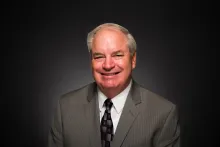
Robin Webber was born in Chicago, Illinois, in 1951, but has lived most of his life in California. He has been a part of the Church of God community since 1963. He attended Ambassador College in Pasadena from 1969-1973. He majored in theology and history.
Mr. Webber's interest remains in the study of history, socio-economics and literature. Over the years, he has offered his services to museums as a docent to share his enthusiasm and passions regarding these areas of expertise.
When time permits, he loves to go mountain biking on nearby ranch land and meet his wife as she hikes toward him.
