
Our Love for God Is Demonstrated by Our Repentance Toward Him
Given on
Given in
Downloads
Downloads
To download a file, right-click (or long press) a link above and choose Save As.
Many proclaim great love for God the Father. But is their love backed by "fruits of repentance?" Is yours?
Transcript
This transcript was generated by AI and may contain errors. It is provided to assist those who may not be able to listen to the message.
Brethren, from the time Adam and Eve were expelled from the Garden of Eden, until today, mankind has longed for a utopian type of existence. Because Adam and Eve made a choice to disobey God, because they made the choice to go Satan's direction, because they made the choice to hide themselves from God, mankind has been under a tremendous curse. And all one needs to do is read a newspaper, look at a news magazine, watch or listen to the news on the radio or TV, to realize that this whole world is under a tremendous curse. But that's not what God wanted. That's not what God wants. God has always wanted bountiful blessings for mankind. In the past, God did place Adam and Eve in a utopian environment. In the future, we've got God's kingdom that will be ushered into the Second Coming of Jesus Christ. This will be a true utopian environment, one that meets God's righteous standards of the way we should be living. I'd like to begin the sermon today by turning over to Jeremiah 29. If you can go there with me, please. Jeremiah 29.
Notice what God says here, to mankind, actually. Jeremiah 29. For I know the thoughts that I think toward you, says the Lord, thoughts of peace and not of evil, to give you a future and a hope. Then you will call upon me and go and pray to me, and I will listen to you. And you will seek me and find me when you search for me with your heart. Brethren, there's a very special set of scriptures there. It's a very positive set of scriptures. But notice that last phrase in verse 13. When you search for me with all your heart. I'd like you to turn now to John 10. Because there's another section here that these two, I believe, link together. John 10.
John 10. The thief, referring to Satan, does not come except to steal and to kill and to destroy. I have come that they may have life, and they may have it more abundantly. How do these two sections of scripture link up? Jeremiah 29, verses 11-13, and John 10. Well, in Jeremiah, we're told to search for God with all our heart. And if we do that, it says in John 10. Other things, we'll get into that as the sermon progresses. If we do that as a portion of the program, then we will have life abundantly. Life abundantly. Right, many prophecies in the Bible paint a very beautiful and inspiring picture of the world to come. A world that will replace the deeply troubled world we live in today. But who's going to be a part of that world? Who's going to be a part of the kingdom of God? Will you be? Will I be? How do you and I prepare to enter this kingdom? What will it take on our part for us to be a part of the coming kingdom of God? Now, I know that there are things that only God can do. Only God can call a person. It is by God's tremendous grace that our sins are forgiven. But there's also a part that we have to play. This kingdom is reserved for those who love God and God's way of life. The question I want to ask today, among others, is how much do you and I really love God's way of life? You know, brethren, none of us in this room—not you, not me—none of us in this room get a free pass on today's message. Because all of us, whether we be a person coming here for the very first time today, or somebody who's been coming to church for decades, all of us have to have a tremendous one-on-one relationship with God our Father and Jesus Christ our Elder Brother. No one gets a free pass on any of that. So today, for those of you who like to take notes, you want to put down the theme statement. For those we heard in the sermonette about Spokesman's Club, Fellows and Spokesman's Club, if you want my SBS, here it comes. Our love for God is demonstrated by our repentance toward Him. Our love for God is demonstrated by our repentance toward Him. That's the theme of today's sermon. I'd like you to turn over to Acts, Chapter 20. This is where the sermon got its beginnings. Acts, Chapter 20. We can start in verse 16.
Acts, Chapter 20, and verse 16. For Paul had decided to sail past Ephesus so he would not have to spend time in Asia, for he was hurrying to be at Jerusalem, if possible, on the day of Pentecost. On the day of Pentecost. Now, this is years, many years, after Acts, Chapter 2. It may well be 30 years after Acts, Chapter 2. And the Apostle Paul here is wanting to keep one of God's holy days in Jerusalem.
Verse 17, from Miletus, he sent to Ephesus and called for the elders of the church. So a very special group. Normally, he would have gone to them, but his time was limited, and he asked for them to come to him this time. And when they had come to him, he said to them, you know from the first day that I came to Asia, what manner I always lived among you, serving the Lord with all humility.
Harken back to our sermonette today. Humility is one of the cardinal, it's one of the foundational building blocks of Christianity. As was pointed out correctly today, if we don't have humility, we're not going to build much.
Serving the Lord with humility, with many tears and trials, which happened to me by the plotting of the Jews. How I kept nothing back that was helpful, but proclaimed it to you and taught you publicly and from house to house. Testifying to the Jews and also to the Greeks, repentance toward God and faith toward our Lord Jesus Christ.
Why is repentance toward God, and why is faith toward our Lord Jesus Christ? Repentance is toward God because, as sinners, we break the law of God. And we need to stop doing that. We need to go another direction. We need repent of breaking God's laws. So repentance is toward God, and faith is toward our Lord and Savior Jesus Christ, who died for us, who shed his blood for us. And we've got to have faith in that sacrifice. Now we drop down to verse 38. Let's read verse 37. Then they all wept bitterly and fell on Paul's neck. This is all the ministers that were assembled there.
They all wept bitterly and fell on Paul's neck and kissed him, sorrowing most of all for the words which he spoke, that they would see his face no more. And they accompanied him to the ship. Paul realized his days were numbered. He realized that he can't go back to visit all the cities. He formed churches and established churches, and the brethren he knew and saw come into the faith. He realized that he and they realized that they were not going to see him again. And so when Paul talks about the message that he's giving to them and for them to carry forth that message, it's very important.
This is not a time for him just to talk about the message that he's giving to them. It's not a time for him just to talk blibly. It's not a time for him just to talk off the top of his head. He says in verse 21, testifying to the Jews and also to the Greeks, repentance toward God.
Repentance toward God. Brethren, if we are going to be in God's kingdom, you and I have to be people of repentance. It's not just something for us to go through prior to baptism. It is a way of life for each and every and as each and every one of us goes through our life and we overcome various obstacles, we need to ask ourselves if we're holding back, if we're not really trying some areas.
Sometimes I think people kind of put certain things aside and say, that's just the way I am. I'm just that way. Well, are we saying by that that we don't want to repent in that area and we're going to not really love God in that area because that's just the way I am. If we truly love God, we will make a tremendous effort in every area of our lives to repent. Matthew 24. Matthew 24. Why give this message today? Because this message is always needed, brethren. It's needed for, like I said, somebody who might be here for their very first time.
It's needed for those of us who've been around as veterans. This is never an old message. This is always a message that is new. It's always a message that's vibrant. Matthew 24 verse 21. For then there will be great tribulation, such as not been seen since the beginning of the world until this time, known or ever shall be. And unless those days were shortened, no flesh would be saved. But for the elect's sake, those days will be shortened.
So a question we need to ask ourselves, brethren, is how are we preparing ourselves, not only ourselves, how are we preparing our families? Your family? How am I preparing my family for what is coming in the future? Now, on a positive basis, let's take a look at Revelation chapter 21. Revelation 21, by this point, the plan of God is largely fulfilled. We've gone through the Second Coming. We've gone through the Millennium. We've gone through the Great White Throne Judgment period.
The plan of God has mostly come to an end. We're almost at the end of the book. And notice something very powerful here, something very beautiful here. Revelation chapter 21, verse 1, And I saw a new heaven and a new earth, for the first heaven and the first earth had passed away, and there was no more sea. The night John saw the holy city, the new Jerusalem, coming down out of heaven from God, prepared as a bride adorned for her husband. And I heard a loud voice from heaven, saying, Behold, the tabernacle of God is with men, and he will dwell with them, and they shall be his people, and God himself will be with them, and be their God.
What a day for rejoicing to appreciate this fact that there's coming this day when God will no longer be off someplace. He will be among us, because we will be, as we heard in the public appearance campaign, we are the children of God. We're God's kids. We're going to be spirit.
We're going to be able to interact with him as spirit. Verse 4, And God will wipe away every tear from their eyes. There shall be no more death. No more death. You know, for somebody like myself or the other elders here in the room or perhaps some of you don't have to be an elder to perform a funeral. But when I think of all the various people whose casket I stood next to or perhaps doing a memorial service, and for all the eyes in the audience I've seen where people were crying, and especially in the situations where people didn't have any hope, they thought their loved one is gone forever.
How good will this be when there will be no more death? There's going to be no more sorrow, nor crying. There should be no more pain for the former things have passed away. People in the world use the euphemism about somebody dying.
So will he pass away? Well, there's coming a time, brethren, when death itself will pass away. But notice here in Revelation 21, verse 8, Revelation 21, verse 8, But the cowardly, the unbelieving, the abominable, murderers, sexually immoral, sorcerers, idolaters, and all liars shall have their part in a lake which burns with fire and brimstone, which is the second death. So there are those individuals who will not be in God's kingdom, individuals who have refused to repent. And, of course, those will be individuals to whom God has opened up their hearts and minds to His truth. We don't want to be in that number.
We want to be in another number. And God Himself laments that this is going to be the case for some of His creation. Let's go to Ezekiel chapter 18.
Ezekiel chapter 18, starting here in verse 30. Ezekiel 18, verse 30, Therefore I will judge you, O house of Israel, every one according to his ways. Again, what is my way? What is your way? Are they God's ways? Says the Lord God, Repent and turn from all your transgressions so that iniquity will not be your ruin. Brethren, I don't know you very well at all. I'm a brand new pastor. I've been in an area just a little, I think, a month and a day. Very, very new here in the area. But I do know about you as a congregation. I know that your hearts and minds, you want to be in God's kingdom. You want to obey God. You do love God. And I would say to all of us, myself included as now a part of the Chicago congregation, let's make it a point where we don't let anything stand on our way. Let's be aggressive in our turning to God in every aspect of our lives. Let's not allow ourselves to say in any aspect of our life, well, you know, that's kind of an untouchable area. That's who I am. No. No, we want to be as Jesus Christ is. We want to be as God is. We don't want to be as we are. We want to repent so we will not be in ruin. Verse 31, cast away from you all the transgressions which you have committed. Give for yourselves a new heart and a new spirit. Most of you in this room have been baptized. Most of you in this room, I would think, have been baptized. You've gotten God's Holy Spirit, a tremendously powerful spirit that gives you all sorts of new understanding, strength to be able to do what God asks us to do. God gives us that helper that goes alongside with us to do these things. For why should you die, O house of Israel? Notice what God says, verse 32. For I have no pleasure in the death of one who dies, says the Lord God. Therefore, turn and live. Turn and live.
Go back a few chapters to Ezekiel 14. Over the years that I've been in the ministry, and it's been 37 years, I think sometimes people feel that they've got a strength because of their family. And sometimes that is the case. But again, all of us have to have a one-on-one relationship with our Father God. It's great that Grandma or Grandpa or Mom and Dad or brothers and sisters or whoever is in the church. That's great. It's a wonderful thing. We rejoice at that. But we can never allow ourselves to think because they are in the church. Somehow I'm going to get into the kingdom of God on their coattails. Doesn't work that way. Ezekiel 14, verse 13. Son of man, when a land sins against me by persistent unfaithfulness, I will stretch out my hand against it. I will cut off its supply of bread and send famine on it, get off man and beast from it. Even if these three men, Noah, Daniel, and Job were in it, they would deliver only themselves by their righteousness, says the Lord God. And of course, Jesus Christ was sinless. He's in a very special category, God in the flesh. But apart from Jesus Christ, these three men, Noah, Daniel, and Job, were considered the three most righteous men who ever lived. And yet, as we're going to see several times in this section of Scripture, not Mrs. Noah, not Mrs. Daniel, not Mrs. Job, not their kids, not their grandkids, only those three men, because of the way they lived their lives, because they are people who believed in repentance, they're going to be in God's kingdom. Verse 15. If I cause wild beasts to pass through the land and they empty it and make it desolate, then no one may pass through because of the beast. Even though these three men were in it, as I live, says the Lord God, they would deliver neither sons nor daughters, only they would deliver only they would be delivered, and the land would be desolate. Or if I bring a sword on the land and say, sword, go through the land, and I cut off man and beast from it, even though these three men were in it, as I live, says the Lord God, they would deliver neither sons nor daughters, but only themselves would be delivered. Verse 20. Even though Noah, Daniel, and Job were in it, as I live, says the Lord God, they would deliver neither sons nor daughters, they would deliver only themselves by their righteousness. Now, the phrase their righteousness would need to be explained more fully. We'll do that at some other time. Before I launch into a number of steps, you know, when we begin to describe what repentance is. You know, my theme is, our love for God is demonstrated by our repentance toward Him. What exactly is repentance? Let's take a look at the comment that Jesus Christ Himself made over here in Luke chapter 6. Luke chapter 6.
Luke chapter 6 and in verse 46.
My Bible all read lettering. Luke 6 46. But why do you call me Lord, Lord, and do not the things which I say? Why do you call me Lord, Lord, and do not the things which I say? Yes, there are things that need to be done. As we heard at the public appearance campaign last Sunday, a lot of folks in the world believe that, don't have to do anything. Just believe in your heart. And Jesus Christ said, we've got to do something. And over and over again in the Gospels, we see that something has to be done. Yes, we are saved by the tremendous grace of God the Father and Jesus Christ. Yes, we don't work out. We don't pull ourselves up by our own bootstraps. But there are things for us to be doing. So let's take a look at some of the basics here. Let's turn to 1 Corinthians 15.
A little bit of an overview. 1 Corinthians 15 verse 50.
1 Corinthians 15 verse 50. Now this I say, brethren, the flesh and blood cannot inherit the kingdom of God, nor does corruption inherit incorruption. The old I tell you a mystery. We shall not all sleep, but we shall all be changed in a moment in a twinkling of an eye at the last trumpet. For the trumpet will sound and the dead will be raised incorruptible, and we shall be changed. For this corruptible must put on incorruption, and this mortal must put on immortality. So what we're looking at right here, brethren, a tremendous amount of information packed into these few verses. What we're looking at here is there needs to be a transformation, a transformation of who and what we are. Right now we're physical. We can't enter God's kingdom as physical beings. We need to enter His kingdom as spirit beings. And so there must be a transformation. And that transformation process begins with this whole idea, with the subject of repentance.
So where do we begin when we're talking about this subject? One area I like to start. You know, people come to you and they say, and they ask for a hope that's within you. This is an easy one to remember. Mark chapter 1.
Mark chapter 1, these two verses I'm going to read to you, are just packed with information. And so many times when I'm visiting somebody or somebody gives me a phone call, they're new to the faith, they want to know what we stand for. I will turn in my Bible to this section of Scripture. Mark chapter 1, verse 14. I'm going to read a couple of verses and go back and talk about them. Verse 14, now after John was put in prison, Jesus came to Galilee preaching the gospel of the kingdom of God and saying, the time is fulfilled, the kingdom of God is at hand, repent, and believe in the gospel.
Let's break it down a little bit. Verse 14, we get a time frame here. When John, who's John? John the Baptist. When John the Baptist was put in prison, so we get a bit of a time frame there, who? Jesus. Where? Came to Galilee. What did he preach? He preached the gospel of the kingdom of God. It wasn't a personal gospel as so many today want to preach. It was a gospel about a kingdom. It was a gospel about a government. The gospel of the kingdom of God. And notice part of what he was saying here, verse 15, the time is fulfilled, the kingdom of God is at hand, do nothing, come as you are. No. Repent. Repent. Change. Repent and believe in or have faith in the gospel. No, again, those are a lot of different subjects here in these two verses, a lot of different sermons in these two verses. We're kind of giving an overview here right now. But we need, Christ says, if we're going to be in the kingdom of God, we need to repent and believe, repent and have faith. Matthew 3 is an interesting section of Scripture. Let's turn there. Matthew 3, we'll start in verse 1.
Matthew 3, verse 1.
We're going to notice a commonality here in preaching, Matthew 3, verse 1. In those days, John the Baptist came preaching in the wilderness of Judea and saying, Repent for what? Repent for the kingdom of heaven is at hand.
Same gospel. The one who came before Jesus Christ, Jesus Christ, both were talking about repenting and believing in the kingdom of God, the kingdom of heaven. We drop down to verse 5. Then all Judea, Jerusalem and Judea, and all the region around Jordan went out to meet him, went out to him, and were baptized by him into Jordan, confessing their sins. But when he saw many of the Pharisees and Sadducees coming to his baptism, he said to them, Brute of vipers. Brute of vipers. Who warned you to flee from the wrath to come? So notice there's something dealing here, repentance and fleeing for the wrath to come. Therefore, bear fruits worthy of repentance. There's fruit to be born, something that can be understood and looked at and viewed, comprehended. Therefore, bear fruits worthy of repentance. And do not think to say to yourselves, We have Abraham as our father. We read about that earlier, didn't we? Do not think to say to yourselves, We have Abraham as our father. For I say to you that God is able to raise up children to Abraham from these stones. And even now the acts as laid to the root of the trees. Therefore, every tree which does not bear good fruit, every tree which does not repent, every tree that does not change, every tree that says to itself, Well, you know, that's just the way I am. Every tree which does not bear good fruit is cut down and thrown into the fire. Brethren, I've got to ask myself, because again, nobody gets a free pass on this subject. I've got to ask myself, am I demonstrating my love for God by the way I live my life, by the way I aggressively seek out sin in my life and repent and change? Where's the evidence in my life? I would ask myself. I would ask you to ask yourself. To use a computer analogy, are you and I ready to spiritually, emotionally, and mentally reboot? Computers have been very much on my mind since I've moved here.
I live at, Mary and I live in an extended-state America, and our address is 2701, Technology Lane. I took that technology drive, and one of the biggest thorns in my flesh in the month I've been here has not been you. You've been a wonderful group. But the biggest thorn in my flesh has been my email. And so now, to get things out to you on a timely basis, I'm rooting it through my wife's email. But Jim Gillespie, I don't know where Jim is. Jim is going to come over and save the day tomorrow. Now, one of you wrote me and said, don't sweat the little things, and I appreciate that. In one sense, it is a little thing. But I also like to communicate. I like to reach out and touch you. I like to do a lot of email work sending things out to you, prayer requests, Bible studies, what have you. So it's something I'm concerned about. But, you know, in computer technology here, are we willing to reboot the entire operating system, you and I?
Reboot the entire package that will change every aspect of how we live our lives. So how do you and I begin? Again, we gave a little bit of an overview. We are told in the scriptures to examine ourselves. I'm not going to turn there to 2 Corinthians 13.5 to see whether we be in the faith. We're told in Jeremiah that our heart is deceitful above all things, and desperately wicked. Does that change once we're baptized? Once we're baptized and receive God's Holy Spirit, we no longer have a heart that is deceitful above all things. Do we no longer have carnality in us?
We do have carnality. You and I know we've got carnality. You and I battle that every day. So let's take a look at some points I've written here for you. For me, keys about repentance. Number one, and I'm sure you could probably come up with other keys, no sermon, brethren. No any one sermon goes entirely through any subject. I think we can all appreciate that. Number one, to repent means to change. To repent means to change. I'm asking myself, and I hope you join me by you asking yourselves, do we love God enough to change? People talk, I love God. I just love Jesus Christ. But do we love God enough to change? Again, you think about where you are in your life, and I think about where I am in my life. I mean for this to be introspective. Acts 3, verse 19.
Repent, therefore, and be converted, that your sins may be blotted out, so that times of refreshing may come from the presence of the Lord. Repent and be converted. To repent here in the Greek means to change one's mind, to change the way we think, to not allow ourselves to go back to the way we used to think. You know, in the New Testament there's a lot of discussion about the cross of Christ. Why is that discussion there? If you were to ask somebody who walked the streets, when Jesus Christ walked the streets as a flesh and blood human being, or Paul, or Peter, and you said, what does the cross symbolize to you?
They would say it symbolizes an instrument of death. And when the scriptures tell us we must take up our cross daily, that means it doesn't mean that well you know I've got glasses or I'm I've got I'm deaf on my left ear or anything like that. When it talks about taking up our cross daily, it's talking about the things that we need to crucify in our life, the things we've got to kill off in our life, the negative things, the things that are not of God.
Those things have to go. Those things have to go. The mindset that allows those things to stay, that's got to go. We need to change the way we think. And again, all of us are in that boat. Nobody gets a free pass here. It says we are to be converted. The Greek here means to turn, to change direction, to change our path like the ship would change its course.
And just like a ship changing its course, that takes time. And brethren, you and I all we all know change is not easy. Change is many times not quick. But what does God look for as you and I are changing?
He looks to our heart. He looks to our attitude. He looks at the fact that, you know, they're actually in the trenches in that part of their life that's been a stumbling block to them and they're working on it. Now you may need to, or I may need to work on it the rest of our lives. But God wants to see the fact that we are working on it. That is encouraging to God. That's what He wants to see, that we are not just putting it off to the side, saying that's who we are, but we are working on it.
So point number one, to repent means to change. And again, I have asked the question, do all of us love God enough to change? Let's drill down a little further. Point number two, repentance means to change who we are, not just what we've done. There's something wrong with us. That was brought out in our campaign, wasn't it? I forget now whether it was Mr.
Myers or Mr. Petty. I think it was Mr. Myers talking about how there's something wrong with us. We're flawed. Could have been both of the men. Something wrong with us. Romans chapter 8 and verse 7. Because the carnal mind is hatred, it's enmity against God. For it is not subject to the law of God, nor indeed can be. Human nature hates God. The carnal mind hates God. It's opposed to God. It rejects God. So repentance is not only a matter of turning from what we have done, but it's also a matter of turning from what we are.
That goes to the fabric of our lives, your life and my life. And we need God's help. We can't do this on our own. We need God's mercy. We need God's grace. We'll talk about that as other sermons come and go. It's a lifelong process. So point number two, repentance being repenting of who we are. And again, I asked the question of all of us, myself included, do we love God enough to admit this, to not deny what we are, but to admit what we are and change? I don't know you well enough, but I know in the former pastorate in Ann Arbor and Detroit, people, especially the younger generation of people, would come and want to talk and be very open.
And I've always appreciated their openness about where they were and where the people of their generations in the 20s and 30s were in terms of their shortcomings in life. And they said, Mr.
Del Santo, you just don't know what it's like for those of us in our age where we grew up with the internet and all that's on there and the various problems that come out and the flow out of the internet and what the way they affect us. And I appreciate their honesty and their wanting to change what they have become as a result of the internet. Point number three. Repentance is not just remorse or sorrow. Repentance is not just remorse or sorrow. It's not just feelings.
It must go beyond just feeling.
Over the years, I've talked to a number of people who had tremendous emotion about their need to change. And that's a wonderful thing. I'm not saying it isn't. But if that's all it is, then it doesn't go far enough. We need more than just emotion. We don't want to be like Mr. Spock, emotionless. But on the other hand, brethren, we don't want to be just so full of emotion that our mind is not a part of the process. Second Corinthians chapter seven. Second Corinthians chapter seven. I'm going to start a little earlier than the moment my notes have, so those who are transcribing can know that. Chapter seven, verse eight. For even if I made you sorry with my letter, Paul, in writing to the church in Corinth, wrote some of the most scathing correction in all of his letters. For even if I made you sorry with my letter, I don't regret it. It had to be done. Though I did regret it, so I wish I didn't have to do that, but you know, I've got to do it. For I perceive that the same epistle made you sorry, though only for a while. There's a danger there. Now I rejoice, not that you were made sorry, but that your sorrow led to repentance. So there's a proper type of sorrow. For you were made sorry in a godly manner that you might suffer loss from us and nothing. For godly sorrow produces repentance, leading to salvation. Not to be regretted, but the sorrow of the world produces death. And you know, brethren, as a minister who has had to rejoice in counseling many people over the years for baptism, one of the things that falls into the province of the elder who's counseling somebody for baptism is helping the person to see what kind of sorrow do they have. Is it a sorrow of the world that's like a fool's gold? Or is it real, deep, genuine sorrow for breaking God's law, for not living the way God wants us to live, and in fact we come short of His glory?
We want the real deal. We want the real gold. And where do we find it? We find it in verse 11. Now, again, that's a sermon all to itself, but let's at least look at it for a moment. For observe this very thing you sorrowed in a godly manner. And then it's going to give seven different fruits. Seven different fruits. And brethren, those are whether you are one day in a church and you're brand new, or whether you've been a veteran of decades in a church. These are things we always need to ask ourselves. I don't care how much of a veteran we are. We always have to go back to the basics. Now, one of the things I enjoy in life, I'm not particularly good at it, but I enjoy golf. On a good day, I'm a bogey player. On a bad day, my score resembles the temperatures in the tropics. But I realize this summer I was going to be so busy, no golf, I left my clubs back in storage. They're back in Michigan. But one of the things that you see if you watch any golf on TV, when you watch these professionals who get paid this outrageous amount of money for walking around on a green lawn, hitting a little white ball, getting into a little cup four and a quarter inches in diameter, they still have to, every time they set up, position their feet just so, grab the club just so, think about what they're going to do, have a swing that's just so. It's all basics. I don't care how much of a pro. I don't care if you're Tiger Woods. I don't care who you are, but you've got to have the basics down. Same thing is true for us spiritually. Here are the basics. Number one, what diligence it produced in you. Are you still a diligent Christian? During the days of Unleavened Bread, are we diligent in cleaning our homes? What clearing of yourselves? Clearing our names, you know, making sure that before God and man, we are, we confess before God, we apologize to those people we've hurt. What indignation, a hatred of sin. What fear, fear of God. Do we still, do we have the proper fear of God? What vehement desire, a great longing, longing for the kingdom, longing to be like God the Father. Reading the Scriptures. Again, one of the commentators, one of our presenters on Sunday was talking about learning to be like Jesus Christ, reading Matthew, Mark, Luke, and John. You know, a vehement desire to be like Jesus Christ. And then you back that up with the next fruit here. It says, what zeal. We don't want to stop with just having the desire. We want to follow through with action. In my New Kings, James says, what vindication. I think the authorized of the King James says, what revenge. I think revenge is a better word. Revenge is a better word because revenge means you get back at somebody. In this case, we're turning our back on it being. We're turning our back on Satan. So again, repentance is not just remorse or sorrow. It's the proper kind of sorrow. And again, we've got to ask ourselves whether we're willing to do that or not. Number four. Number four. repentance involves becoming a new creation in Christ.
repentance involves becoming a new creation in Christ. Do you and I love God enough to allow God to completely make us over, spiritually speaking, to realize what we think is up is not up. We think is down is not down. God has got to show us the right way. Second Corinthians chapter five.
Second Corinthians chapter five and verse 17.
Second Corinthians 5, 17. Therefore, if anyone is in Christ, he is a new creation. All things have passed away, behold, all things have become new. When we're baptized, and it's such a beautiful ceremony, when we're baptized, we go into a watery grave. We're not sprinkled. We believe in complete immersion. We go into a watery grave. The old man dies there in that water. We emerge from that water, a new being. Do you remember your baptism? I remember mine, November the 15th, 1972. And there are a number of you out here have been baptized longer than me. A good number of you. But I remember it was Dave Albert who baptized me over in a pool in Ambassador Hall in Pasadena, California. He had just come from teaching some classes. He had his hip waiters on. He got into the pool. I got into the pool. Of course, I had shorts and a t-shirt on. And he started saying, oh no. I thought, come on, Mr. Albert. Surely, after all, I've gone through six different weekends fasting. The last weekend, 72 hours worth of fasting. Certainly, we're in the water here. You are now going to baptize me. He looked around and said, I can't believe this. And I'm thinking to myself, I can't believe either. What's going on here? But he had a hole in his hip waiters. You know, his nice new suit. I don't know if it's new or not, but his suit was now nice and soaking wet. So, but anyhow, he dunked me, put me under that water. And do you remember what the minister said to you? Congratulations, all of your sins have been forgiven you. All of your sins have been forgiven you. And after that ceremony, immediately following is the laying out of hands, where the minister asks that you receive God's Holy Spirit and that God write your name in the Lamb's Book of Life. And those of you who have been baptized, your name is in that book. You are a new creation. You're in the process of being newly created in Christ. So let's make sure each and every one of us aggressively accepts that challenge. Number five, number five, and lastly, repentance involves unconditional surrender to God. Unconditional surrender to God. Sometime in the future, I'll be giving a sermon. And part of that sermon, I'll read to you, and it's not very long, the exact surrender terms that were talked about on the Missouri by the Japanese delegation and General Douglas MacArthur, who all was there, the various nations that were present, and what was said. I've got that written down. It's a deeply meaningful thing, especially when if you view that from a Christian perspective, about unconditional surrender. Luke 14. Just have a few more scriptures, and then we'll be concluding. Luke 14.
Luke 14, verse 26.
If anyone comes to me and does not hate his father and mother and wife and children and brothers and sisters, yes, in his own life also, he cannot be my disciple.
My Bible all read lettering there. And of course, you appreciate and understand the fact that Christ is saying that God has to be number one. Jesus Christ has to be number one. We can't allow anything else to be positioned as number one in our life. We must unconditionally surrender to God.
Verse 33, Luke 14. So likewise, whoever of you who does not forsake all that he has cannot be my disciple. All that you have, forsaking all of your human nature, forsaking all of your faults, all of my faults, all of my human nature. Again, brethren, we're in this boat together. We're in this boat together. Luke chapter 18. There's so many other scriptures. You're probably thinking of other scriptures I can be using at this point. So many scriptures are going to be read here. Luke chapter 18 verse 18. Now, a certain ruler asked him, saying, Good Teacher, what shall I do to inherit eternal life? He said nothing! You don't have to do anything. Is that what Christ said? So Jesus said to him, Why do you call me good? No one is good but one that is God. You know the commandments, so there is something for us to do. Do not commit adultery, do not murder, do not steal, do not bear false witness, honor your father and your mother. So he begins to quote the commandments, dealing with loving our fellow man. And he said, All these I have kept from my youth. And so when Jesus heard these things, he said to him, You still lack one thing. Sell all that you have and distribute to the poor, and you will have treasure in heaven and come and follow me. But when he heard this, he became very sorrowful, for he was very rich. You see, in that second section there, when Christ told him to sell all that he had, that was his God. That deals with the commandments, those first four commandments of loving God and having no other God before the true God. He had other gods before the true God. And Christ said, Sell all those things and come and worship and follow me.
Brethren, will you and I continue to take the challenge? Last Sunday, we heard a very powerful presentation by all three of our Beyond Today presenters.
The presentation, I think, was very successful. A number of the comments from those people who attended felt it was successful and helpful to them. And Darris McNeely set the table by talking about the troubles in the world. Steve Meyer came next. Each man spoke for about 25 minutes. Steve Meyers came next and talked about how there is good news. God does have a plan. Every one of us can be a part of that plan. We can be in the kingdom of God as his sons, as his children in the kingdom of God. And then when he was done, Gary Petty said, all those things are true, but what are we going to do about it? What are we going to do about it?
The Chicago Church is known for its love, its fellowship, a very studious, very bright, biblically speaking and otherwise, group of people. I am honored to be your pastor, but you know, brethren, all of us, again, we're in that same boat. We can't just pat ourselves on the back. We have to ask ourselves, am I aggressively going to seek God every day of my life? Do I love God enough to do that? And I'd be the first person to tell you that's not always been true for me. Too many times my human nature has gotten the best of me. I relate to the Apostle Paul when he said those things I want to do, not doing them, things I don't want to do. Yep, there they are. I've seen that too many times in myself. I've seen it in other people. And I don't like it in myself, and you can decide for yourself how much you like it in you. Brethren, let's take up the challenge. Let's take up the repentance challenge. As I said today, and I'll continue to say as I'm your pastor, we are all in this boat together. We're brothers and sisters. And so finally, brethren, my final point to you is what I started off with. Our love for God is demonstrated by our repentance toward Him.
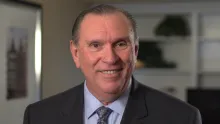
Randy D’Alessandro served as pastor for the United Church of God congregations in Chicago, Illinois, and Beloit, Wisconsin, from 2016-2021. Randy previously served in Raleigh, North Carolina (1984-1989); Cookeville, Tennessee (1989-1993); Parkersburg, West Virginia (1993-1997); Ann Arbor and Detroit, Michigan (1997-2016).
Randy first heard of the church when he was 15 years old and wanted to attend services immediately but was not allowed to by his parents. He quit the high school football and basketball teams in order to properly keep the Sabbath. From the time that Randy first learned of the Holy Days, he kept them at home until he was accepted to Ambassador College in Pasadena, California in 1970.
Randy and his wife, Mary, graduated from Ambassador College with BA degrees in Theology. Randy was ordained an elder in September 1979.
playlist
Related Sermons
