

Steve Shafer
This transcript was generated by AI and may contain errors. It is provided to assist those who may not be able to listen to the message.
Well, thank you very much, Kaylea. Oops.
And Courtney, that was beautiful. Really, really wonderful. Especially people who do that acapella like that. Very, very beautiful voices. Thank you so much. And also to Amanda and Heidi and Jessica as well for your special meeting. That was just a lot of musical talent here. And it's really great to be able to have that supplement service for special music. It always adds a great deal.
Today I'm going to continue the series I've been doing on the Passover.
Well, of course, when I first part one, I talked about how the Passover was sacrificing this period. It's called Between the Two Evenings. And from the Church's perspective, we've had for many, many years, that was between sunset and darkness as a show at the beginning of the 14th. And then in part two, I covered the events on that particular Passover day. From that particular perspective, how they would have all unfolded with that perspective. And which, as I showed, seems to be the only perspective where all the clear scriptures tend to really fit in. But I do want to reiterate that I'm simply attempting to explain, substantiate the longstanding Church position that goes all the way back to probably when Ambassador College was founded back in 1947. And then trying to substantiate that by scriptures that are clear. Because there are other scriptures that are coming that are not real clear. I don't think it's the best look at the clear scriptures first and try to get the picture from that. And then maybe take the unclear pictures and see how they might fit into that. Because there are aspects, and I said that are confusing, and there are some scriptures regarding the Passover that are not real clear. And they could be debated either way. And it will be debated either way right up until Christ returns. But I'm going to cover a lot of history today, but there's one aspect I'll get to towards the end of the sermon that I find very, very inspiring and very encouraging. That what God looks at, God looks beyond the little details of whether we got this exactly right or that exactly right. I think probably when we get to God's kingdom, we're all going to find out there's some detail or some little thing that we thought was the way it was, and we'll find out maybe that's not the way it was. But it seems that God really looks beyond that and He looks to our hearts. And most of what our heart and our attitude is. That's more important than getting every detail exactly right and understanding everything perfectly right from that perspective. We'll see that very clearly towards the end of the sermon by some of the history of Judah when we get to that. Today in Part 3, I want to address just basically one question, because if it didn't fold the way I gave in the first two sermons, if the Passover lambs were originally sacrificed at the very beginning of the 14th and the death angel passed over on the 14th, and they stayed in their homes and then traveled to Ramses during the daytime portion and left the following night, then you have to address one particular question and see how can you get this to fit in with that particular scenario. And that is how then did Jews come to observe a temple sacrifice? Because we know for sure, but by the time of Christ, the Jews were sacrificing their Passover lambs at the temple on the afternoon of the 14th. That is the fact. So how would that have come about, being what we've already covered so far? So today I'm going to cover that, and my title is, How Did the Jews Come to Observe a Temple Passover?
We'll look at the history in the Bible to see when that was first observed. We have a clear indication when it was first observed, and we'll look at the circumstances surrounding that as to why that might have come about that way. So how did the Jews come to observe a temple Passover or the Passover Part 3? I'm going to just review a little history we're all familiar with. The first 40 years, that is, after Israel was let out of Egypt on that Passover day and during those days of unleavened bed, and they crossed the Red Sea and so on, and they were led to Mount Sinai, where they met with God and received the Ten Commandments.
In God called Moses up there at the top of Mount Sinai, where he met with God, to receive the two tablets of the Ten Commandments, stone tablets. And when he came back, he found they had already gone into idolatry, and he smashed them and added gold through it all again, and they go up there again, and it passed for 40 days and 40 nights again, and we see them again. But when Moses was up there, God gave him detailed instructions for building a tabernacle. And you can read that in Exodus 25 and 26. He also gave him detailed instructions for the altar, the priests, the priest garments, I should say, and so on. The interesting thing is, the tabernacle in the wilderness, after that was constructed, of course, they went to the land of Canaan, they sent the spies in. As we know, there's ten of the spies came back with the bad reports. They said, no, we can't go in there. The land's two walls, and the tabernacle's habits are too strong, and they're giants, etc., etc. And only Caleb and Joshua came back with a positive report. And because they would not believe God, they did not have faith God, did not believe that God could carry out his promise, they ended up having to wander around in the wilderness for 40 years. So they ended up building that tabernacle, then, while they were in the wilderness. And it was completed just two weeks prior to Israel's second Passover, which should have been in the land of Canaan, that should have been Israel's land, but instead it was in the wilderness of Sinai, the wilderness. Let's turn to Exodus 40, to begin with. Exodus 40, verse 17, just to tell us what has happened. Exodus 40, verse 17 says, It came to pass in the first month of the second year, after Israel had been let out of Egypt, so this is just one year later, and it's the first month, and just prior to that, it would have been the second Passover. It came to pass in the first month, the second year, on the first day of that month, that the tabernacle was raised up. Finally, they had it completed, and they raised the tabernacle up, and they also completed the altar, verse 29. He put the altar of burnt offering before the door of the tabernacle, the tent of meeting, and offered on it burnt offerings, grain offerings, and the Lord had commanded Moses. So this was all completed just prior to Israel's second Passover.
What did I say? It was completed in the wilderness, because it didn't get into the Promised Land because they didn't believe God. It should have been an 11-day journey from Mount Sinai to the land of Canaan, to the Promised Land, as Deuteronomy 1, verse 2 tells us. Instead, it was a 40-year agony of trials and tests, because, you know, if I had wanted the wilderness for 40 years, until everyone over the age of 20 had died, other than Caleb and Joshua. Now, the Book of Numbers, which was originally titled, in the wilderness, original Hebrew title, picks up the story at the time of the tabernacle was completed.
Let's go to Numbers, chapter 7, verse 1. This picks up the story at the time the tabernacle was completed. We just read out there on the first day of the first month and the second year. Numbers 7, verse 1, It came to pass when Moses had finished setting up the tabernacle, again, we just read that was on the first day of the first month and the second year, that he anointed it and consecrated it in all his furnishings, and the altar and all its utensils, so he anointed and consecrated them.
Now, the point to keep in mind is this. This is now still two weeks before the second Passover. In the tabernacle was completed, the altar burnt off, it was completed, they've been consecrated. It did go out then at that time, and this has been an excellent time to do it. They've gone then clearly at that time, changed the instructions for the Passover. From having a domestic Passover in their homes, meaning done by the head of the family, or the neighbor's house, together and so on, like it was the year prior to that, did he change it from that to then having a temple Passover sacrifice, or not a temple, but a tabernacle Passover sacrifice.
What's really what it says in Numbers 9? Numbers 9, verse 1, The Lord spoke to Moses in the wilderness of Sinai in the first month of the second year, that they'd come out of the line of Egypt, said, Let the children of Israel keep the Passover, it says, at his appointed time. You can be argued at what that appointed time was.
Again, like I said, our position's always been as if that was the beginning of the 14th. You can be argued as the other way. But it says, let them keep it at his appointed time. On the 14th, they had this month, and then it says, again, it specifies the same time that does in Exodus 12, verse 6, in the cover of the first sermon, at twilight, which is that human phrase that means literally between the two evenings. You should keep it at his appointed time according to all its rites and ceremonies.
And then, verse 4, Moses told the children of Israel that you keep the Passover, and they kept the Passover on the 14th, they had the first month, at twilight. And they kept it between the two evenings. In the world is the Sinai, according to all that the Lord had commanded Moses. So the children of Israel did. So, the point being that God did not hear, instituted, doesn't appear in any way, he instituted tabernacle, Passover, sacrifice. They kept it the same way they did originally, same way. Nothing was changed. And, you know, from our perspective, the Church's perspective, it was still sacrificed there between the two evenings, which, you know, Vayans' Expository, Dictionary of Biblical Words, and as I covered last time, it appears to be the time between sunset and total darkness rather than the afternoon.
Once the tabernacle was in place, God gave Moses instructions for all kinds of tabernacle sacrifices. There were daily, morning and evening sacrifice. There was weekly Sabbath sacrifice. There were sacrifice on the new moons, on the holy days, special sacrifices during the Feast of Unleavened Bread and during the Feast of Tabernacles, etc.
And that's pretty much outlined and recorded in Numbers, Chapter 28 and 29. I won't go through there. But it's interesting what it says in Numbers 28-16. It's the only verse in that section that talks about the Passover, and it doesn't talk about any changes as far as the Passover goes. It just mentions the Passover. It doesn't give any particular sacrifice or different sacrifices other than the Lamb and the Gold that was initially done.
It doesn't mention that. It doesn't mention any sacrifice in regards to the Passover, which indicates that nothing changed in regards to the Passover. They still sacrificed the same sacrifices that they did, that they were instructed to do the year previous to that. So nothing had changed. Now, the interesting thing is the Passover isn't really mentioned again until 40 years later, which is in the Book of Deuteronomy. Deuteronomy was written just a year before they went into the Promised Land, right at the end of Moses' life.
And so this is 40 years later now. You have the Book of Deuteronomy. And you don't see the Passover actually mentioned again until the Book of Deuteronomy, 40 years later. Now, that does not necessarily mean that Israel wasn't observing the Passover during those 40 years. It's just nothing recorded about it. The fact that it's not recorded doesn't mean they weren't observing it. I imagine they were. Well, let's take a look at... I'm not going to go through Deuteronomy 16. I am fully aware of the problems of Deuteronomy 16.
It's a very difficult section of scripture to explain and to fit into what we've covered so far. And I think to really try to do that and understand that, you have to have a lot of history first, which I'm trying to lay some groundwork with. Let's turn to Deuteronomy 16, the first two verses. Because this would have been 40 years later, just before the end of the Promised Land. And I'm not going to go through all this, but I said there's a lot of things in here that are difficult to explain.
Deuteronomy 16, verses 1 and 2. Observe the month of Aedid and keep the Passover to the Lord your God. For in the month of Aedid the Lord your God brought you out of Egypt by night. Okay, that's pretty clear. Nothing controversial there. But then verse 2. Therefore you shall sacrifice the Passover to the Lord your God from the... This is from the flock and the herd in the place where the Lord God chooses to put His name.
So now, wait a minute. That should send up some question marks in our minds anyway. As we already know, the Passover sacrifice, regardless of when it was done, when it was done at the beginning or the 14th or the afternoon, the Passover sacrifice, it's very clearly designated, it had to be a young lamb or a goat. It was not over in a year of old. There's nothing that's ever said it could come from the herd.
It could not be a bovine creature, such as an ox or a cattle. So there's something missing here. There's something different here. Obviously, there's misinformation that you have to get to understand what does that mean? Why did Moses write it that way? Why did he say it from the herd? It also says in the place where the Lord chooses to place His name. Does that then mean that God is now instituted in a tabernacle Passover sacrifice, in place of a domestic Passover sacrifice? So obviously, those are very good questions, and they're legitimate questions, which would take some time to explain. I'm not going to go into it now.
I may come back to it later, but I want to lay some history first, because until you lay some history, you would have a really difficult time trying to explain that or fit it into what we've always believed. So I'll leave that for now. However, I will say that there is a couple of probable explanations. Now, the next mention of Passover is in Joshua 5, as I am the Promised Lamb. And you read that, and you probably read that. It doesn't seem controversial to you. I'm not going to turn there and read it, but it's the next place the Passover is mentioned. But there's been a lot of debate over Joshua 5. I'm more aware of the debate on both sides.
You can explain that to substantiate the early Passover, or you can read that to substantiate an late afternoon Passover. You can read it either way, and you can get in there and debate it from now until Christ returns, and you're not going to ever be able to convince the other side that you're right and they're wrong. We've got to which side you take.
So, again, as I say, I want to constipate on scriptures that are clear, not on those that are not real clear. So I want to move forward then to this particular question. When were Passover lambs first sacrificed at the temple? And who commanded that? God or king of Judah? And why were they commanded to have them at the temple? Because we'll come to a point in history where it's definitely that they were all told they were to come and sacrifice at the temple.
And we finally understand the background. So why did that take place? Why was that commanded? To give you a little bit of history just real quickly, we all know King Solomon. And of course, Solomon was granted a wish, and he said, when he became king, and he said, wow, look at these great people. How can I... I know how to govern such a great people as this, the people of God.
So he asked God for wisdom. That's what you can give me a wish. He wished for wisdom. He said he didn't wish for long life or riches. He asked for wisdom. So God normally gave him wisdom, but he gave him other things as well.
But Solomon, in the fourth year of his reign, in 480 years after God led Israel out of Egypt, he decided he wanted to build... he was going to fulfill the dream of his father. David had his mind to build a temple for God. Instead, this happened to his tabernacle or tent. And God didn't grant David that wish, but he gave it to his son, Solomon.
And so Solomon, in the fourth year of his reign, began to build the temple, the house of the Eternals. It says in 1 Kings 6, verse 1. And after its completion, Solomon dedicated that temple to God. He held a piece of dedication for seven days, followed by the observance of the piece of tabernacle for seven days. That's recorded in 2 Corinthians, chapter 7, verses 8 and 9. But then something happened after that. Now, Solomon started out great.
His heart was right. He loved God. God even met with him twice, as we'll read. On two occasions, face to face. But then something happened. Let's go to 1 Kings, chapter 10.
1 Kings, chapter 10. Let's begin in verse 23. So King Solomon surpassed all the kings of the earth in riches and wisdom. God was blessing Israel, and he blessed King Solomon greatly. And all the earth sought the presence of Solomon to hear of his wisdom, which God had given him, which God had put in his heart. Each man bought his presence articles of silver, gold, garments, armor, spices, horses, mules, at a set rate, year by year. And then this goes on in verse 27, says, As a king made silver, because of that, the king made silver, as common in Jerusalem as stones, and he made cedar trees, as abundant as the sycamores, which are in the low land. So Israel, under King Solomon, became extremely prosperous and great nation. Quite one of the most prosperous, one that was wealthy, and one of the greatest nations on the face of the earth at that time, all because of blessings that God was pouring out on Solomon and on Israel at that time. But then something happened that forever changed the course of history, for Israel and for the world, as far as that goes. First Kings, Chapter 11, Verse 1. But, oh, I wish that wasn't in there, but it is. But King Solomon loved many foreign men, as well as the daughter Pharaoh, women of the Moabites, the Ammonites, Edomites, Sidonians, and Hittites. From the nations of whom the Lord had said to the children of Israel, you shall not intermarry with them, nor are they with you, because surely they will turn away your hearts after their gods. Which is exactly what happened to Solomon, because Solomon clung to these in luck, and they turned away his heart.
Verse 5. For Solomon then went after Astorath, the goddess of the Sidonians, after Milchim, the abomination of the Ammonites. Verse 7, he built high places for Timosh, the abomination of Moab on the hill that is east of Jerusalem. So right there in Jerusalem, around the temple, he just built this fantastic temple and dedicated it to God with thousands of sacrifices. And his heart was right. Now, here it's just a few years later, and he's building an altar on a high place up there to sacrifice to a foreign god for Moloch, the abomination of the people of Ammon. And he did likewise for all his foreign wives, who burned incense, and they sacrificed to their gods. So the Lord became angry with Solomon, because his heart had turned from the Lord God of Israel, but it appeared to him twice.
See, one thing is clear here. We can all make mistakes, and we all do make mistakes at times, but we don't ever want our heart to turn from God. That's why our repentant and humble attitude is so important, no matter what mistakes we might make. Because what happened to Solomon, his heart turned from God.
So God took away Solomon's kingdom. He gave it to his servant Jeroboam, saving only Judah, Benjamin, and half the tribe of Levi for his son Reavon, the right poet.
It was the line of David. Thus the northern nation of Israel became divided into the northern ten tribes in the southern kingdom of Judah. And the northern ten tribes of Israel, they continued following after Jeroboam and after everything that all these foreign gods and worshipping that Solomon had done in the latter part of his reign. They continued all the way down through their history. I don't think there's a record of any king of Israel, of the northern ten tribes, who actually tried to turn the northern ten tribes back to God in the true worship of God.
So they just continued that way until finally God allowed them to go into captivity by Assyria around 721 B.C., which then ended the kingdom of Israel, the northern ten tribes. Now, the history of the southern kingdom of Judah had a couple of bright spots. We're going to look at two of them today. It's going to become very important in this situation of looking to when they start sacrificing lambs at the temple. Because occasionally the king of Judah would attempt to turn the kingdom of Judah back to God.
But then the next king would usually come along and turn them back to Baal worship again, take them right back to where they just come out of. One of the worst kings of Judah. It's very interesting because this king of Judah was reigning right at the time. He was reigning in Judah. At the very time, the northern ten tribes were being attacked by Assyria, about to be conquered by Assyria. That was taking place up north as this particular individual became king of Judah. And he became one of the very worst kings of Judah. It was King Ahaz who reigned over Judah in the year just prior to the fall of Israel. What was recorded of Ahaz in 2 Chronicles 28. Turn to 2 Chronicles 28. Begin in verse 1. 2 Chronicles 28 verse 1, Ahaz was twenty years old when he became king, fairly young man. In the reign of sixteen years in Jerusalem over the southern house of Judah.
He did not do what was right in the sight of the Lord, as his father David had done generations before. For he walked in the ways of the kings of Israel, all of whom worshipped and followed foreign gods. And he made molded images for the bales. He burned incense in the valley of the son of Hinnom. And he burned his children in the fire. He had children that he actually sacrificed and offered to the gods from the foreign gods. Can you imagine that?
According to the abominations of the nations, the Lord had to cast out before the children of Israel. And he sacrificed and burned incense on the high places, on the hills and under every green tree. So what he did, he took the southern nation of Judah, or the kingdom of Judah, into full-fledged bale worship, which would be foreign gods, and sacrificing it to foreign gods. Now, the thing that's interesting here, and there's two ways you can look at this, and either one might be correct, but did the peace of God then become transformed into the feast for bale? Or did Judah just adopt peace of bale for their feast? That could be either way. I want to read a quote that's interesting here from a book entitled, Religions of the Ancient Near East, page 33. So, sacrificial is talking about looking Babylon. Sacrificial meals were regularly sent out for the deities every day, but there were several days which required extra sacrifices and special ceremonies. These were some of the way they worship their foreign gods, and some of these nations surrounded in Israel that Israel adopted. And then, on the special list, mark lucky and dangerous days. And you get several of them here, but two of them stand out that are very interesting. They consider the fourteenth day, and the twenty-first day of the month, is especially dangerous and unlucky. Why would the fourteenth and twenty-first days of the month be evil and dangerous to foreign nations and to foreign gods? Well, I can think of a reason. Because on the night of the fourteenth, the death angel passed over and killed all the first born Egyptians. That would make for any foreign god, that would make that day a very unlucky and dangerous day. And the twenty-first was the day when God laid Israel through the Red Sea, and he brought the Red Sea down and destroyed all the hopes of the Egyptians and the Pharaoh. That would make that day very, very dangerous and very unlucky to foreign gods. So that's two reasons I can think of. When did the worshippers of Baal celebrate some of their feasts? Again, I want to go from the same source, from the legends of the ancient Near East. Special feast days in each month were for, in essence, the day of the New Moon. Of course, these real self-rein the New Moon, didn't they? The New Moon began each month on the Hebrew calendar for Israel. Special feast in each month were for the instance of the day of the New Moon and the day of the Full Moon. Of course, the Feast of Tabernacles and the first day of on the Red Cross Full Moon. And finally, we have the two main festivals. We'll talk about Babylonian festivals. One in Nisan, the other in Tishri. Now, that's interesting. They had two main festivals, one in Nisan and one in... Because the two... those many festivals are in Nisan and Tishri. On Leavened Bread and the Feast of Tabernacles. I want to quote now from a reconstructed sacred Canaanite Phoenician of Babylonian Calum of their lunar and solar festivals.
Nisan, or Nisan New Babylonian, late March, early April, was the beginning of spring. New Moon Festival. The New Year, of course, the first month of the... New Moon of the first month was the beginning of the year of the Hebrew calendar, two weeks before Passover. New Moon, New Year Festival, two-week-long festival. The actual beginning of the year on the New Moon and the magic of the Feast of Shoshartu worked with one of their foreign gods.
The rain stopped, separated the first two weeks of the month from New Moon to Full Moon in Babylon. The fishes of the temples bring all the deity sculptures into one room, present religious dramas about their deities, and then parade the statutes, either carried on litters or on carts, along their sacred routes. Full Moon. Full Moon, they combined a nomadic pastoralist animal sacrifice, that would be right around the time of Passover, and they had an agricultural harvest festival, a week-long festival with food restrictions.
First, they killed a lamb or a kid, or the goats. This very ancient sacrificial holiday is predicted by the head of a family standing on the sacred Guma, or the high place, facing west. A sacred, limping, morning dance is performed around the sacrificial animal. The sacrifice takes place at dusk, when it is done, all present kiss each other. The meal takes place late that night. The beginning of the Barley Harvest Festival of Unleavened Bread. Before the festival, the people clean the home of all leavening, which foods are prohibited for seven days to prevent cursing the harvest. Then the first barley sheep of Ulmer is offered to the temple and the gods. A joyful procession dressed in white bears the Ulmer to the Bhuma, to the sacred high place. Because it is the full moon, they sing holy songs and dance sacred dances. I found that quite amazing. So this is what this indicates to me. In the case of Judah, when we see what happened, the king has. In the case of Judah, the king has, another subsequent king of Judah, especially, other than the two good which we're going to look at. It seems like they amalgamated the Feast of God into Feast of Baal. And thus they've begun...it looks to me like they took the Feast of God and they just used those because the influence of all their former wives to be worshipping Baal and foreign gods. They're using those feasts to worship foreign gods. That's what it appears. Including the sacrificial lamb and a feast of almond bread in the spring and they fall and they all They're using all the Feast of Tabernacles. And this Feast of Baal that he came out, very immortal feast, which is why Judah was led into all forms of urban morality and idolatry. Which, we understand that. We'll be back on it just...I don't know what we can of all. It's not real clear, but the pieces together give me a pretty clear picture of what was happening. We put that together with Scripture. But it helps you understand what's recorded in Isaiah. Especially note, during whose reigns this is. Look at Isaiah 1. Isaiah 1. And we'll begin in verse 1. But notice particularly whose...there are two things I want you to take note of here. There's one that took place here. We're going to read it in Isaiah 1. Isaiah 1, verse 1 says, The vision of Isaiah, the son of Amos, which he saw concerning Judah and Jerusalem. What was taking place in and around Judah and Jerusalem, where the temple was? In the days of Uzziah and Jotham. And then it says, And Ahaz and Hezekiah, kings of Judah. It takes special notice of the place during the times of Ahaz and Hezekiah.
Now, we've already seen what Ahaz did. He led Judah into full-fledged battle worship, didn't he? Now, Liberalus says in verse 10, if I say it one, Here is where the war do you rulers of Sodom give ear to the law of our God, you people of Gomorrah.
To what purpose is a multitude of your sacrifices to me? So Judah was sacrificing, and they were using, I think, it appears that they were using God's Feast in Holy Days, in which they were doing those sacrifices. But what was happening? To what purpose is a multitude of your sacrifices, says the Lord? Thank you. It says, I have had enough of burnt offering of rams and the fat of fed cattle. I do not delight in the by the bulls, or of lambs and goats, which were used for passover sacrifices and the lamb or a goat that was used for the passover. Verse 12, when you come to appear before me, God says to Judah, at the time of Ahaz, Who has required this from your hand? To trample my courts, to trample my temple. That's the indication, the courts of the temple were being trampled. They were using that temple, but they were using it to sacrifice and to worship foreign gods, and to sacrifice to Baal and other foreign gods. Bring no more futile sacrifices, or as my margin says, worthless sacrifices. Incense is an abomination to me. The new moons, the Sabbath, and the calling of assemblies, I cannot endure iniquity and the sacred meeting.
Why were their sacrifices futile? Why were they worthless?
Your new moons and yours point of feasts, my soul hates your trouble to me, and we are bearing them. And so on. Verse 14.
See, what new moons, what Sabbaths, and appointed feasts is God referring to them. Why does God hate them?
Well, it appears He's referring to the new moons and the Sabbaths and appointed feasts to Judah.
But they had transformed those feasts and those new moons and those holy days. Instead of their worshipping God as God commanded and the way God commanded, they were now worshipping foreign gods. That's what it appears.
They were worshipping Baal and other foreign gods, and they're using God's feasts to do that. That's what history seems to substantiate in what appears to have happened here.
It appears it's a Passover and the Feast of the Epinephrine and the Feast of Weeks and the Feast of Tabernacles had all become and been transformed into feasts that were used to worship Baal and other foreign gods.
And you can see why God would hate that and why He wouldn't accept those sacrifices or the incense. They'd be an abomination to God.
It appears they'd all become totally corrupted, as God's feasts had been totally corrupted under the reign of King Agnes.
In fact, it got so bad that God even said, this is recorded in Jeremiah 3.11.
I'm going to jot it down. I'm not going to turn there.
Remember, when this is taking place, when Ahaz reigned, Syria was attacking the northern ten tribes, and some of them were being taken into captivity during the last part of Ahaz's reign.
Because right after Ahaz died within two or three years, that's when Israel went into captivity, to Assyria.
But here what God said is recorded in Jeremiah 3.11. He said, Backsliding Israel has shown herself more righteous than treacherous Judah.
Now, you look at the history of Israel. They never had a king who tried to turn them back to God.
They went into idolatry and false worship from the very start, right after Jeroboam, Solomon's servant became king.
And they followed in the ways of Solomon, the latter part of his reign.
So why then did God consider Israel more righteous than Judah?
Well, the reason it comes to my mind is because at least Israel did not make any pretense of worshiping God, but Judah did.
Judah, it appears, they were making a pretense of worshiping God.
They were keeping God's peace in holy days and so on, and Sabbaths and new moons, but they were sacrificing to Baal and to foreign gods.
And there's no greater treachery against God than doing that. That is treacherous against God.
They turned the peace of God into the peace of Baal, which was extremely treacherous act against God.
Now, what is all that? You get all that history, you try to piece it together, what does all that have to do with a temple Passover sacrifice?
Well, my opinion has everything to do with it.
The reason a temple Passover sacrifice was initiated when we first read of it was clearly where it occurred, because it was instituted for the very first time of this very period of Judah's history, during the reign of King Hezekiah, who became the king after Ahaz died.
And again, Isaiah 1.1 says, During the reigns of these kings, including Ahaz and Hezekiah, kings of Judah.
So now let's read for ourselves what happened during the reign of King Hezekiah, who became king upon the death of his father, King Ahaz.
It's amazing King Ahaz took them into such idolatry and idol worship, worshiping before him gods and his son Hezekiah was just the opposite, but there's a reason why he was different than his father, even though he was 25 years old and became king.
Let's turn to 2 Chronicles 28.
2 Chronicles 28.27 So he has rested with his fathers, and he buried him in the city of Jerusalem, but did not bring him to the tombs of the kings of Israel.
Then Hezekiah, his son, reigned in his place.
Now what did Hezekiah set out to do when he became king?
Chapter 29, verse 1.
Hezekiah became king when he was 25 years old.
He's 25 years old, and he would have been really influenced by his father to go in the same direction as his father.
But he wasn't. Why wasn't he?
Well, I think it gives us a clue here.
He was 25 years old, but he began to reign. He reigned 29 years in Jerusalem.
And his mother's name was Abidjah, the daughter of Zechariah.
He had a righteous mother who feared God and influenced her son to follow the ways of God instead of the ways of his father.
She was a very strong woman.
She was a powerful woman, a woman of valor, if you will, as we covered last week.
So he dead dead, verse 2. So he dead dead, verse 2. It was right in the eyes of the Eternal, according to all that his father David had done.
And in the first year of his reign, the first month, he opened the doors of the house of the temple and repaired them. He brought in the priests and the Levites. He gathered them in the E-square.
He said to them, Hear me, Levites. Now sanctify yourselves and sanctify the house of God, of your fathers.
Carry all this rubbish from the holy place.
For our fathers have trespassed and done evil in the eyes of the Lord our God. And they have forsaken him, and have turned their faces away from the dwelling place of the Eternal, and turned their backs on him. They have also shut out the doors of the vestibule, put out the lamps, and have not burned incense, or offered burned offerings in the holy place to the God of Israel.
They were doing it, but not to the God of Israel. They were doing it to foreign gods.
And so, as a Christ set out to change all that, he set out to restore the temple, to restore the Levitical priesthood, and to restore the true worship of God.
And he also set out, which ties into the Passover, he set out to make a special covenant with God.
Chapter 29, 2 Chronicles, verse 10.
It was in my heart. Here's Hezekiah's heart. And again, remember, God looks to our heart, not to how perfect we understand things, necessarily.
We should try to understand things as best we can, and follow, but he looks to our heart. And I'm thankful for that, because I know there are some things that I probably don't understand correctly.
Now, it was in my heart, he said, to make a covenant with the Lord God of Israel, that His first wrath may turn away from us.
My sons do not mean to be negligent now, he tells them. For the Lord has chosen you to stand before Him, to serve Him, and that you should measure to Him and burn incense to God. Burn is to the true God of Israel.
It's not to pale, as they had been doing under Aaz.
Verse 15. And they gathered their brethren, they sanctified themselves, and they went according to the commandment of the king. This is by the commandment of the king.
But He's doing this to turn them back to God.
At the word of the Lord, trying to get them to turn back to God, knowing that that was the right thing to do, and to cleanse the house of the Lord.
Then the priests went into the inner part of the house of the Lord, into the temple, and to cleanse it. They brought out all the debris they found in the temple, and of the court, and the house of God.
And the Levites took it out and carried it to the book of Peter, and they got rid of it.
And they began to sanctify, on the first day of the first month, and remember this is the first day of the first month, they began to sanctify the temple and they cleaned it, and they were going to rededicate to God.
And on the eighth day of the month, so we're getting closer now to the Passover, we're only about a week away from Passover now, on the eighth day of Barack the First month, they came to the death to build up the Lord, they sanctified the house of the Lord in eight days, and on the sixteenth day of the first month, so this is now into the second day of 11 bread, on the sixteenth day of the first month, they finished.
So it's now the second day of 11 bread, the Passover, they've missed the Passover, but they finally get this thing sanctified, the temple cleaned up where they can now, you know, maybe have a Passover.
And because it was at King's heart to renew a covenant with God, and the most important feast day for making a covenant with God is the Passover, the Passover's sacrifice.
And that's what His God was seeking to do, to make a covenant with God, for behalf of the whole house of Judah, and to get them back to God.
So during the remainder of the feast of 11 bread, they gave burnt offerings, peace offerings, and drink offerings, and you can read that in the Bible. In the Feast of Unleavened Bread, they gave burnt offerings, peace offerings, and drink offerings, and you can read that inorescence verses.
Let's go to 2 Chronicles 29, verse 35.
Burn offerings were in abundance with a fad of peace offerings and with the drink offerings for every burnt offering.
So the surface of the house of the Lord was set in order.
Then Hezekiah and all the people rejoiced that God had prepared the people, since events took place so suddenly.
But they had missed the Passover.
They missed the Passover's sacrifice, and the Passover offering the most important sacrifice of all when it comes to making a covenant, renewing a covenant with God and renewing our relationship with God.
So what did King Hezekiah do next?
Chapter 30, verse 1.
And Hezekiah then sent to all Israel and Judah.
Remember, Israel was in the process of being overthrown by Assyria at this very time.
He became king.
When Hezekiah became king, I think they fell about a year or two after he became king.
Israel was being overthrown by Assyria.
They were about to go into captivity.
He saw what was happening. So He sent to all Israel and Judah, and also a letter to Eve from Manasseh, that you come to the house of Lord of Jerusalem, because you come to the temple of Jerusalem to keep the Passover to the Lord God of Israel. He said, Boy, if you don't repent and renew your relationship with God and make a covenant with God, He said, Boy, you're just going to be a girl of bad trouble. You're going to go home to captivity. He saw what was happening.
You need to come to the temple of Jerusalem to keep the Passover to the Lord God of Israel.
So Hezekiah, in his heart, wanted to restore the true worship of God to all those in Judah, and even invited Israel and Eve from Manasseh for the northern ten tribes, because He realized the importance of restoring the Passover to the servants they had just missed.
They all needed to renew and make a covenant with God.
But He also here remembered God's provision for observing the Passover in the second month for those who miss observing it in the first month, as given in Numbers 9, verses 10 and 11.
So notice what happened next, verse 2, 2 Chronicles 30.
For the king and his leaders and all the assembly and Jerusalem had agreed to keep the Passover then in the second month.
But they could not keep it in the regular time in the first month, because a sufficient number of priests had not consecrated themselves, nor had the people gathered together at Jerusalem.
Why did they all need to gather at Jerusalem? At the temple, to eat this Passover, which was directed by King Hezekiah.
Well, remember the situation in Judah at this time.
Under Hezekiah's, the previous king, the entire nation of Judah had gone into idolatry and into the worship of Baal.
And to accommodate that worship of Baal, the feasts of God had been transformed, basically, again, to feasts that they were using to worship Baal instead.
So the entire nation of Judah had been totally corrupted spiritually.
And the rightful deliverance of the Passover and the rest of God's feasts had been totally corrupted as well.
So to restore the true worship of God, Hezekiah had to bring everyone to Jerusalem.
They could not be trusted on their own, not to do anything right.
Verse 4, And the matter pleased the king and all the assembly, So they resolved to make a proclamation throughout all Israel from their sheep of the dam, That they should come to keep the Passover, the Lord God of Israel, and Jerusalem at the temple.
It says He has not done it for a long time, and then for a prescribed manner.
They didn't get the Passover in a prescribed manner for many, many years, it says.
So He wanted to get them all coming. He couldn't be trusted to do it on their own.
They wanted to bring them all to Jerusalem.
Verse 7, And do not be like your fathers and your brethren, Who trespass against the Lord God of your fathers, So that He gave you up to desolation.
Do not be stiff-necked, as your fathers were, But yield yourselves to the eternal, enter a sanctuary, Which He has sanctified forever, and through the Lord your God, That the curses of His wrath may turn away from you.
For if you return to the eternal, Your brethren and your children will be treated with compassion By those who live in captive, That they may come back to this land, For the Lord your God is gracious and merciful.
He looks at the heart, and He is gracious and merciful.
And He will not turn His face from you if you return to Him, If you renew your covenant with God, And you repent, and your heart is right.
So the runners passed from city to city Throughout the country of Ephraim and Manasseh, As far as Evebulun, what happened?
They said, But they laughed at them and mocked them.
Nevertheless, verse 11, Some of Asher and Manasseh and Evebulun, Humbled themselves, and they came to Jerusalem, And they were invited.
And also the hand of God was on Judah, To give them singleness of heart, To obey the command of the king and the leaders, That they would have got.
Because God realized, while Hezekiah's heart was right, He wanted to restore the true worship of God.
Going down to verse 13, Now many people, a very great assembly, Gathered Jerusalem to keep the feast of unleavened bread, In the second month.
And they arose and took away the altars that were in Jerusalem, And they took away all the incense altars, And cast them in the brook-hedron, And they passed over lambs on the fourteenth day of the second month.
The priests and the Levites were ashamed and sanctified themselves, And brought the burnt offerings to the house of the Lord as well.
They stood in their place, according to their custom, According to the law of Moses, the man of God.
And the priests then sprinkled the blood, And received from the hand of the Levites.
Verse 17, For there were many in the assembly who had not sanctified themselves, They were not spiritually clean before God.
And if you weren't spiritually clean, you should not take the Passover.
There were many in the assembly who had not sanctified themselves. Therefore the Levites had charge of the slaughter.
The people weren't clean. They hadn't sanctified themselves yet.
They'd been too steep to bail worship.
So they put the Levites, they'd leave up the Levites first, Sanctify themselves so that they could dev off of the Passover sacrifices.
Therefore the Levites had the charge of the slaughter of the Passover lambs for everyone who was not clean.
And so on.
Now several... and then it says in verse 18, going on, For them all to do the people, many from Etrim and Asa, and Istikar and Evebuhlut, And not cleanse themselves, Yet they ate the Passover, it says, contrary to what was written.
The sinner has done all the details, but I can think of several things that could be contrary to what was written in Exodus 12.
Exodus 12 was obvious.
It's obvious that each household or the neighbor's household together, They would sacrifice the lamb for their household.
It was more of a household or domestic Passover service.
Where here the Levites had charge of the slaughter of the Passover lambs, that's different.
That wasn't the way it was originally done.
In Exodus 12, the Passover lambs were slaughtered between the two evenings.
At the beginning of the 14th is the way we've always looked at it anyway as a church.
Here, apparently, they were probably slaughtered during the daylight time of the 14th.
It doesn't specify the time here, but logically that would have been the time during daylight hours of the 14th, And this would have taken place when they would all come together.
In Exodus 12, they ate the Passover as instructed.
Here it says they ate the Passover contrary to what was written.
So whatever it was here, there were things that were happening here that were not directly the way God had commanded them originally. Going on in verse 18, But Hezekiah prayed for them, saying, May the Lord God provide atonement for you.
May He cover your mistakes and your faults.
May the Lord provide atonement for everyone who prepares his heart to seek God, but everyone whose heart is right, let their mistakes be covered and set aside.
Whose heart is right to seek God, the Lord God is Father, He is not cleansed according to the purification of the sanctuary, and though everything is not done exactly the way it should have been. And the Lord listened to Hezekiah, Hezekiah's prayer, the Lord listened to Hezekiah and healed the people.
So here's the thing that's really encouraging to me, is that God accepted them even though their Passover observers, and some aspects of it at least, were contrary to what was written. Because first and foremost, God looks at our heart.
See, if our heart is right before God, regardless of what side of the Passover issue we're on, if our heart is right, you know, God is going to judge us according to our heart. Not according to maybe how perfect or imperfect we might understand something, or carry something out. If we're doing the best of our ability before we can understand, and our heart is right, God will accept that. And that's what this shows here. And I find that very encouraging.
And that's why we should not judge one another. Because God judges our heart, and only God really knows our heart.
And Hezekiah was seeking to renew our historic covenant relationship with God, because it was in his heart to make a covenant to the Lord God of Israel, as we read in 2 Chronicles 29, verse 10.
That made observing the Passover vitally important to the entire nation of Israel, who needed to renew their covenant relationship with God at this time, because that really is what the Passover is all about. A covenant relationship with God, and renewing that relationship every year.
But by whose command was this temple Passover sacrifice instituted? It was done by the command of the King, 2 Chronicles, chapter 30, verse 6.
So the first temple Passover sacrifice, that we see clearly historically revealed in the Bible, was done by the command of King Hezekiah.
And although everything wasn't done exactly in this prescribed manner, God, because of His great love and mercy, applied the spirit of the law, and in other ways, maybe they weren't doing it perfectly right.
But by the letter of the law, because He looked at Hezekiah's heart, He looked to the heart of the people who were coming there to renew the relationship with God, and trying to worship God in the right manner.
Now why did this guy have everyone come to the temple? Well, because they needed to get them all there together. They couldn't be trusted out on their own. There was too much wrong influence. The whole nation of Judah had been corrupted.
In fact, in 2 Chronicles 28, verse 19, I'll go back to just a couple chapters here to show how bad it was. Verse 19 says, For the Lord brought Judah low because of a, asking of Israel, for He had encouraged his moral decline in Judah because of what he was doing. There was a great moral decline taking place, and he had been continually unfaithful to the Lord. And then notice verse 25, In every single city of Judah, He has made high places to bring incense to other gods, and provoked the anger of the eternal God of his fathers. So, the entire nation of Israel, every city, had been corrupted from the true worship of God.
So the people couldn't be trusted. You had to bring them all to the temple to try to restore the true worship of God, and we'd get them to rededicate their lives to God, and we knew a covenant relationship with God. But it was a hard time because a lot of them didn't accept Him as we read there in 2 Chronicles 30, verse 10.
Now, when was the next temple Passover sacrifice after this one? Who became king of Judah after Hezekiah died?
2 Chronicles 32, verse 33, My God, it's not time to cover it here yet. A lot of things are covering it. Go fast. 2 Chronicles 32, verse 33, it does it. He after Hezekiah died, Manasseh became king.
And you can read about Manasseh in 2 Chronicles 33, verses 1 to 4, 9 to 10. Basically, he reigned for 55 years. He took Judah right back to where they'd been under Ahaz.
In fact, he was worse than any of his sacrifices. His sons, he set up pipe laces and altars and molded images of God, and he just again brought Judah back into full-fledged Baal worship.
Now, the end of his life he did repent, but his son, after him, who only reigned for 2 years, did the same thing his father Manasseh had done. And so, basically, for 57 years after Hezekiah died, Judah was taken right back to what Hezekiah just bought them out of, and went right back to where it was worse than it was under Ahaz.
Then, Josiah became the king of Judah at a very early age, after his father had only reigned for 2 years. So I'll speak it up in chapter 34, 2 Chronicles, verse 1.
Josiah was 8 years old when he became king, and he reigned for 31 years. He did what was right in the sight of the Lord. He walked in the place of his father David. He didn't turn his sight to the right or the left. In the eighth of his reign, when he only had been about 16 years old, I was talking about a young man dedicated to God.
Here he is, 16 years old, when he was still young. He began to see God in his father day. And the twelfth year of his reign, when he was probably, what, about 20 years old, he began to burst Judah and drew some of the high places, and the wooden images, and the carved images, and the molded images. He broke down the altars of the bales in his presence, and the incense altars, which were above them he cut down, and the wooden images, and the carved images, and the molded images.
He broke in pieces. He made dust out of them and scattered them on the graves of those who were sacrificed to them. Verse 31 and 32. Then the king stood in his place and made a covenant before the Lord God to follow God, just like Hezekiah had done. He made a covenant with God. He wanted to restore a covenant relationship with God. To keep his commandments and his testimonies and statutes with all his heart, follow his soul, and turn his heart to God. To perform the words of the covenant that were written in the book.
And he and all who are present in Jerusalem and in Benjamin to take a stand, to make a stand for God, to worship God, to renew their covenant relationship with God. So it happens that Jerusalem did according to the covenant of God, the God of their fathers. So Josiah did what Hezekiah did before him. He again instituted them and kept something else that would happen to them. Let's go on here.
I'm going to get ahead of myself. Let's go to chapter 35, verse 1, to see what he did to renew that covenant relationship with God. And we'll see he did exactly what Hezekiah had done before him. Chapter 35, verse 1, Josiah kept a Passover to the Lord in Jerusalem, and he slaughtered the Passover lambs on the 14th day of the first month.
And he set the priests and their duties and encouraged them for the service of the house of the Lord. So Josiah did what Hezekiah had done before him. He again re-instituted and kept a temple Passover sacrifice. And he sanctified the Levites and so on. He brought Passover lambs. They had the Levites do it, because they've been sanctified and cleansed. Very much similar to what Hezekiah did. And it was done by the command of King Josiah in the sense of 35, verse 10.
The sacrifice was prepared and the priests stood in their places in the Levites and the divisions according to King Josiah's command. And he did this for the same reason that Hezekiah did, to attempt to restore the true worship of God and to get Judah to again renew a covenant relationship with God. So he had them all come to Jerusalem to the temple, because the worship of God had again been totally corrupted throughout the cities of Judah.
Now after Josiah died, Judah again reverted right back to Baal worship again, just as he did after Hezekiah died. And it got so bad that finally, because that led to the fall of Judah. And when Judah fell, the temple was then also, and they were also told by the Babylonians, the temple was also totally destroyed. Then under Cyrus, the Jews were allowed to return to Jerusalem and they were allowed to rebuild their temple.
Let's pick it up in chapter 6 of Ezra. Ezra chapter 6, verse 3. In the first year of King Cyrus, King Cyrus issued a decree constraining the house of God at Jerusalem. Let the house be rebuilt. Let them rebuild the temple. The place where they offered sacrifices and let the foundations of it be firmly laid. And so on. Verse 15. Now the temple was finished on the third day of the month of Adar, which was in the sixth year of the reign of King Darius, who was of course a Persian king. He was the king of the Medes of Persians who conquered Babylon, who were now ruling over Judah.
Then to renew their common relationship with God and to rededicate their lives to God after leading desolation for 70 years of the temple had been destroyed before they rebuilt the temple again. What did they do? What does their happen to do? Chapter 6, verse 19. And the descendants of the captivity kept the passover on the 14th day of the first month. For the priests, the Levites had purified themselves, and all of them were ritually clean, and they slaughtered the passover lands for all the descendants of the captivity, for the brethren of the priests, and for themselves, for the...so on.
Dropping down to verse continuing. And then the children of Israel, verse 21, who had returned from the captivity, ate together with all who had separated themselves from the filth of all nations of the land in order to seek the Lord God of Israel. And they kept the peace of 11 bread seven days with joy. For the Lord made them joyful and turned the heart of the king of Assyria toward them to strengthen their hands in the work of the house of God and the house of the God of Israel. So again, there was a special temple passover sacrifice initiated by Ezra and the leaders of the Jews at that time, following the presence that had been sent, set by Hezekiah before him, before them, and also by Josiah.
To get all the Jews who had returned to Jerusalem to renew their covenant with God and to reach out and get their lives to God. What they could not be told they tried to do on their own, they were scared they'd get to, they'd been influenced by the Babylonians and so on. And now they're under the Persians. So it needed to be done collectively under more centralized leadership, if you will, because the whole people had to be brought together to get them to understand the purpose of it, the need for it.
So thus it was done at the temple in Jerusalem. Now later, Israel, or not Israel, but excuse me, Ezra, Ezra issued a new passover law, actually, which proclaimed that all Jews had to come to the city of Jerusalem to observe the passover. And the reason for that is hinted at in the book of Nehemiah. So let's turn next, briefly we're getting down towards the conclusion here, let's turn to Nehemiah chapter 13. Nehemiah 13 verse 23. In those days, I also saw Jews who had married women of Ashtod, Ammon, and Moab.
So you have the same thing that happened under Solomon. Some of them, as they come back there, they rebuilt the temple now, they've re-naked their lives to God. What was happening? Some were taking foreign lives. And Nehemiah is going to ride back the way they did after Solomon. And they're going to be worshipping the foreign gods because they're influenced by their wives.
And half of their children spoke the language of Ashtod. They could not even speak the language of Judah, but spoke according to the language of one or the other people. So Nehemiah says, I contended with them and I cursed them and struck some of them and pulled out their evil. Nehemiah is really upset. He says, man, this is all going to be undone.
We just built this temple. God allowed us to come back here and rebuild the temple. And we had a passover and we dedicated our lives to God. And now you're going to go right back the way it's been throughout our history and take them right back into the worship of foreign gods. So he was really upset. He made them swear by God, saying, you shall not give your daughters as wives to their sons, nor take their daughters for your sons or for yourselves.
Did not Solomon the king of Israel sinned by these? Look what happened to Solomon. Look at how great it started out. Look what happened because he married and was influenced by foreign wives. Yet among many nations there was no king like him who was beloved by God, and he made him king over all Israel.
Nevertheless, pagan women caused him to sin. Should we then hear of your doing all this great evil, transgressing against our God by marrying foreign women? Do you need some by them to worship their gods? Verse 28 says, And one of the sons of Joiadah, the son of Elijah, the high priest, with the sudden law of Sanballat, the horned night, therefore I drove him from me. Remember them, verse 29, oh my God, because they have defiled the priesthood and the covenant of the priesthood, and they have defiled the Levites. Now, Deimai doesn't give a name of this son of the high priest, who defiled the priesthood and the covenant of the priesthood, but Josephus, at the tip of the Jews, does.
His name was Manasseh. And Sanballat was the governor of Samaria, and Manasseh had married Sanballat's daughter, and he refused to dissolve his marriage and his decree of Nehemiah. When Nehemiah then drove him away, Sanballat made Manasseh an offer he couldn't refuse. He built him a temple of Mount Gerizim in Samaria, like the temple in Jerusalem. He then set him up as a high priest of a competing Jewish religion in Samaria, with his own priests and so on.
They became Samaritan Jews. And that is why the Jerusalem Jews and the Pharisees hated this Samaritan, because he set up a competing Jewish religion, but it was under influence of foreign gods and foreign influence.
And so now, with this happening, under the time of Ezra and Nehemiah, right now, I'm going to turn to the close of the Old Testament. The truth of the Old Testament Scriptures is now in grave danger of being corrupted, because we have a competing Jewish religion set up in Samaria. You've got a lot of confusion that Satan has caused here. So Ezra then formed what became known as the Great Assembly, and they immediately set out to canonize the authentic Old Testament scrolls or books, because at the time this took place, there was no officially recognized canon of Old Testament scrolls or books.
So this right here is what led to the canonization of the Old Testament that we have today.
Also, because of the confusion, now having two temples and having two priests' hoods, one centered in Samaria and the other in Jerusalem, Ezra then felt obligated to issue another Passover law, that from that time forward all the way down to the time of Christ, that all Passover sacrifices must be offered in and around the city of Jerusalem, or they could be monitored, so you make sure that people aren't going to be influenced by the worship, using those times to worship Baal or worship foreign gods.
And there is evidence, which I'm going to bring in the next sermon, but there is evidence that both Passovers were taking place from that time, from the time of Israel, and you might write down the time of Christ. When I say both Passover, I mean that during that time there was a domestic Passover sacrifice at the beginning of the 14th, and there was a temple sacrifice on the afternoon of the 14th, but both those were taking place during that time between the Old and New Testaments. And we'll see some evidence of that in the next sermon.
That is how the Jews came to observe a temple Passover, and how they became a tradition right on down to the time of Christ, at least that's the evidence that we can find from Scripture that supports that, indicates that, but there is much more to the story. So next time then I'm going to look at the time from Ezra, from this time here right down to the time of Christ, for the time periods between the Old and New Testaments, and how both Passovers were being observed during that time, both at the beginning of the 14th and on the afternoon of the 14th at the temple, and how some Jews began to eat their Passover on the 9th and the 15th, and how the days on them read, then became known to be called Passover. We'll see all that in the next sermon, which I'll give in two weeks.
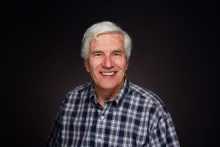
Steve Shafer was born and raised in Seattle. He graduated from Queen Anne High School in 1959 and later graduated from Ambassador College, Big Sandy, Texas in 1967, receiving a degree in Theology. He has been an ordained Elder of the Church of God for 34 years and has pastored congregations in Michigan and Washington State. He and his wife Evelyn have been married for over 48 years and have three children and ten grandchildren.
