
Steve Shafer
This transcript was generated by AI and may contain errors. It is provided to assist those who may not be able to listen to the message.
Well, thank you, Desiree. That was a very beautiful song. Thank you very much for the special music. Today I want to continue my series on the Passover, as I mentioned. Last time we saw the King Ezechiah of Judah. At the very time, the northern Ted tribes of Israel were actually being attacked by Syria, and were going into captivity, that King Ezechiah called all of Judah to Jerusalem to renew their covenant relationship with God, and to renew their dedication to God, because they'd gotten strayed. The kings prior to Ezechiah strayed far away, and they set up idols to Baal all over all cities of Judah. He helped them to renew that covenant relationship that they were to have with God by instituting a temple Passover service, undoubtedly on the afternoon of the 14th, though this exact time is not given. Later, King Josiah did the same. He tried to bring Judah back into the true worship of God by re-instituting a temple Passover service at Jerusalem, and bringing them all to Jerusalem for that purpose. But of course, after Josiah died, Judah went into full Baal worship again, and not long after that, Judah went into captivity, to Babylon, and the temple was destroyed.
Did anyone want to pick up a story from there, or actually from a little over 100 years before the fall of Judah? Then we'll look at the time between Cyrus, actually. Cyrus plays a very important part of this whole story regarding the Passover. We're going to see two major, rather mysterious parts of this puzzle come together today and find out they both are extremely important parts of the overall picture. But today we'll look at the time between the Old and New Testaments, beginning with God naming Cyrus over 100 years before he was born.
And we'll begin to see why a temple Passover was important on the afternoon of the 14th, how it plays an extremely important role. We'll also look at how some of the Jews probably came to eat the Passover on the 9th and the 15th, how that might have come about, and how the Passover became incorporated into the days of Unleavened Bread. But most importantly, we'll look at some historical sources and records, which indicate that both Passovers were being observed at the time, leading up to the time of Christ and during the time of Christ, both the domestic Passover at the beginning of the 14th and the temple, of course, Passover sacrifices, which were on the afternoon of the 14th. Both of those Passovers were being observed at the time of Christ. And they're both very, very important, they're both extremely important, and I believe God was behind both of them, actually. We'll see that today, because they both have distinct and separate meanings, which tie into our covenant relationship with God, and they're extremely important to understand, as we'll come to see. So my title for my sermon here this afternoon is, The Passover from Cyrus to the Time of Christ. The Passover from Cyrus to the Time of Christ, or the Passover, Part 4. I want to begin by looking at the prophecy concerning Cyrus, a remarkable prophecy.
A little background. Cyrus was born around 600 B.C. Around 550 B.C., when he was about 50 years old, he became the king of the Median Empire. And he soon incorporated that into the Persian Empire as well, so he became the king of the Medo-Persian Empire shortly after that. But over 100 years before he was born, God calls him by name, and prophesied what he would accomplish, what God would accomplish through Cyrus. Amazing story, amazing prophecy. Let's begin there by going to Isaiah 45.
Isaiah 45. We begin in verse 1. This is an amazing prophecy which came to pass just exactly as it's prophesied here.
This is the Lord who is anointed to Cyrus. And again, remember this is taking place. You go to Isaiah 1, verse 1. It tells what kings of Judah, when this prophecy was taking place. The last king that was reigning during the time this prophecy took place is Hezekiah. So this one has to be taking place sometimes in the very late 700 B.C., maybe around 710 or so, just to make a guess, during the reign of Hezekiah. This is the Lord who is anointed to Cyrus, whose right hand I have hailed, or I have strengthened and sustained, as my margin says.
To Cyrus, whose right hand I have hailed, to subdued nations before him, to loose the armor of kings. And one king's armor was loosened.
To open before him the double doors, so that the gates will not be shut. I will go before you and make the crooked places straight. I will break in pieces the gates of bronze and cut the bars of iron. I will give you the treasures of darkness and the hidden riches of secret places, that you may know that I, the Eternal, who call you by your name, am the God of Israel.
Again, I said this prophecy took place during the reign of Hezekiah at the very latest, Isaiah 1, verse 1, probably around 710 BC or somewhere thereabouts.
So this prophecy is over 100 years before Cyrus was born. He was born about 600 BC. This took place in the late 700s BC. Over 100 years before he was born, this prophecy was written. Long before Judah was conquered by Babylon, and long before the temple was destroyed in 570 BC. And this is a prophecy of how Cyrus, in a single night, would conquer the city of Babylon and the Babylonian Empire. In October of 539 BC, it happened exactly as prophesied here, well over 100 years ahead of time. It happened exactly like this, till over 100 years later, in October of 539 BC. In fact, it's quite a bit longer than that, it's when it fell. And it happened in a single night, beginning with the hand running on the walls, described in Daniel chapter 5. In fact, it's very interesting, I'm going to go back and read Daniel 5, but that's very interesting to read. Where King Vashal is there, it says in Daniel 5-6, when he saw that hand running on the wall, it says, The king's consonants changed, and his thoughts troubled him, so that the joints of his hips were loosened, and his knees began knocking against each other. So you might say, if he had his armor on, his armor was loosed, when he saw that hand running on the wall.
And it all happened a single night, Babylon fell. As it says in Daniel 5, verses 30 and 31, That very night Vashazzar, king of the Chaldeans, was slain, and Darius the Mede received the kingdom. He received the kingdom from Cyrus.
Now, this is a very interesting prophecy. It's interesting to see how this was fulfilled, but did God do this just so he could prove that he's God? And he could put things in advance and have them fulfilled exactly as he predicted they were going to happen. See, why did God predict this, and why did God carry this out? What was the purpose of this? What did God have in mind?
For what people was this prophecy for? Let's read on, verse 4. God says, I'm doing this for Jacob, my servant's sake, and for Israel, my elect. He's doing this for his people, for Israel and for Jacob, the sons of Jacob. I have even called you by your name. He's speaking of Cyrus. I have named you, though you have not known me. He named him way before he was even born or conceived. I am the eternal. There is no other. There is no God besides me. I will gird you, though you have not known me.
So he did this for Jacob's descendants, which included the house of Judah. The wonder of Hezekiah were renewing their covenant relationship with God at the very time this was prophesied.
And to begin renewing that covenant relationship with God was a temple, Passover, sacrifice, and service.
Now, what was the underlying purpose of this prophecy? It's extremely important to understand. What did God have in mind? What's the history behind this? What did God have in mind behind this prophecy? Did it have anything to do with the Passover? Let's go back to chapter 44 of Isaiah and pick it up in verse 24. Isaiah 44 verse 24, thus says, Eternal, your Redeemer, who is going to redeem Israel, and who has redeemed all of us through the sacrifice of Jesus Christ. This is the Lord your Redeemer, and he who formed you from the womb. I am the Eternal, who makes all things, who stretches out the heavens, all alone, all by myself, who spreads abroad the earth by myself, who frustrates the signs of the babblers and drives the vinners mad, who turns wise men backward and makes their knowledge foolishness. Who confirms the word of his servant, and performs the consul of his messengers. Who says to Jerusalem, now think about this, think about when this was prophesied, late 700 BC, who says to Jerusalem, you shall be inhabited, and who says to the cities of Judah, you shall be built, and now raise up her waste places. Now let's wait a minute, let's stop right here for a second. At the time this was being prophesied around 710 BC, the cities of Judah were inhabited. Jerusalem was inhabited. Hezekiah, at the very time this prophecy was made, was ruling from Jerusalem at this very time. And he was desperately seeking to turn Judah back to God. Who says to Jerusalem, you shall be inhabited, to the cities of Judah you shall be built, and now raise up her waste places. Who says to the deep, be dry, and now will dry up your rivers. Now it's amazing, that's precisely how the city of Babylon was breached by the armies of Cyrus. They actually diverted or dried up the Euphrates River, which went right through the city of Babylon. And they diverted that river so they could dry it up, in essence, because that river went into the city, and now the city there were iron gates that came down. And you couldn't get through those gates because you had to go onto the river to do it. But once the river was diverted, they were able to breach those gates and break those gates to get through and sneak into the city. Unbeknownst to the king of Babylon who was there. This is all being done by the hand of God. But again, what is the main underlying purpose for all of this is prophesied here. Let's go to verse 28. Who says of Cyrus, He is my shepherd. He shall perform all my pleasure, saying to Jerusalem, You shall be built, and to the temple your foundation shall be laid. Now, remember the time this prophecy was given, Jusma not yet been destroyed. Nor had the temple been destroyed.
That wasn't going to happen for another 120 years yet.
So this is not only a prophecy that they would be rebuilt, it's also in essence a prophecy that they would be destroyed, because they had to be destroyed before they could be rebuilt.
Now, once Cyrus conquered Babylon, what was one of the first things he did? Let's go to Ezra. Ezra chapter 1.
Ezra chapter 1 verse 1. Now, in the first year of Cyrus, the king of Persia, that the word of the Lord by the mouth of Jeremiah might be fulfilled. And that's actually going back to what Jeremiah wrote in the letter that he addressed to King Nebuchadnezzar. It's recorded in Jeremiah 29 verse 10, where he said in this letter, He said in this letter, After 70 years I have completed a Babylon, I will visit you and perform my good word toward you, toward the Jews who would be carried away captive after the fall of Judah, and I will perform my good word toward you and cause you to return to this place, return to Jerusalem. Again, that's Jeremiah 29. So that was what's referring to here in verse 1 of Ezra. The word of the Lord by the mouth of Jeremiah might be fulfilled. The Lord stirred up the spirit of Cyrus, king of Persia. So he made a proclamation throughout all his kingdom, and he also put it in writing, saying, verse 2, Thus says Cyrus, king of Persia, All the kingdom of the earth, the Lord God of heaven, has given me. And he has commanded me, he has commanded me, he said, to build him a house or temple at Jerusalem, which is in Judah. Now God called Cyrus specifically to build, to rebuild the temple that was destroyed by Babylon, by Babylonians. Did we build the temple and the city of Jerusalem? As prophesied of Cyrus before he was born, as recorded in Isaiah 44-28, which we just read.
Now, I want you to stop for a minute and think. Put on some spiritual sinking caps here.
Do you think that Satan was maybe working behind the scenes? And all this doesn't mention Satan here, but I'm sure Satan was working behind the scenes. That Satan didn't want Jerusalem to be rebuilt. Satan would not have wanted the temple to be rebuilt? Because we're going to see some things here that are going to happen, and we can see Satan's probably the power behind the scenes trying to influence these men to make sure that that temple does not get rebuilt. And that Jerusalem does not get rebuilt.
Satan didn't want that. Now you stop and think about that. That applies to us today, doesn't it? Satan doesn't want God's spiritual temple rebuilt either. He wants it to be in a form of destruction.
So there's a lot of spiritual lessons here, too. Spiritual duality, if you will, for this whole story. Let's go to Israel chapter 4.
We'll see there was a lot of resistance to rebuilding the temple in the city of Jerusalem. Israel 4 verse 1, Now when the adversaries of Judah and Benjamin heard that the descendants of the captivity were rebuilding the temple of God and Israel. They're going to rebuild the temple. When they heard that, they came to Zrebebel and heads of the father's houses and said to them, Remember, these are adversaries, but they're trying to make themselves out as being for them, but they're not really. They're against. And they said, Let us build with you, for we seek your God as you do.
And we have sacrificed him since the days of Eshar-Hatton, king of Assyria, who brought us here.
No, not really. They sacrificed to the gods of Assyrians and the gods of Babylonians, which Zrebebel and Joshua clearly understood and knew. This is why they responded as they did here in verse 3. But Zrebebel and Joshua and the rest of the heads of the father's houses of Israel said to them, You may do nothing with us to build the house of our God.
But we alone will build to the Lord God of Israel. As King Cyrus, the king of Persia, has commanded us.
Then the people of the land tried to discourage the people of Judah, and they troubled them in the building and hired consulars against them to frustrate their purpose. All the days of Cyrus, king of Persia, even until the reign of Darius, the king of Persia. Thus they were delayed in carrying out God's purpose of rebuilding the temple. It was delayed. Verse 6, in the reign of Ahasuerus, in the beginning of his reign, they wrote an accusation against the heavens of Judah and Jerusalem. What was their accusation? Verse 11.
This is a copy of the letter they sent to him. To King Artaxerxes, not Ahasuerus, it was Ahasuerus up there above. To King Artaxerxes, from your servants, the men of the region beyond the river, beyond the river Euphrates, and so forth. Let it be known to the king that Jews who come up from you have come to us at Jerusalem, and they're rebuilding this rebellious and evil city. They're trying to rebuild this evil city, Jerusalem.
And they're trying to refinish its walls. They're trying to repair the foundations. Let it be known to the king that if this city is built, and if its walls are completed, they're not going to pay you any taxes, or tribute, or custom, and the king's treasury is going to be diminished. Now, because we received support from the palace, it was not proper for us to seek the king's dishonor.
Therefore, we have sent and formed the king of this matter. A search be made in the books of the records of your fathers. Search out your records, and you'll find out that the records will show that this city is a rebellious city, harmful to kings and provinces, and that they have incited sedition within this city in former times, for which cause this city was destroyed. So we inform the king that if this city is rebuilt, if its walls are completed, the result will be that you will have no dominion beyond the Rev. Euphrates. How did our deserters respond to that? Verse 19. He gave the command, and a search was made, was found that this city, in former times, has revolted against kings.
A rebellion and sedition have been fostered in it. They have also been mighty kings over Jerusalem, who have ruled over all the region beyond the river, and tax, tribute and custom was paid to them. So then he says, now give the command to these men that they cease rebuilding this city and rebuilding the temple. Give the command that these men cease that this city may not be built until the command is given by me. He says, take heed now that you do not fail to do this.
Why should damage increase to the herd of the kings? Looks like everything was going to come to a support halt. What's going to happen now? This is the amazing thing, to see how God can work behind the scenes to turn things around when it looks like all is lost. Chapter 5, Bezra, verse 1. Then the prophet Hagia and Zechariah, the son of Edo, they prophesied to the Jews who were in Judah and Jerusalem in the name of God of Israel, who was over them.
God was over them, not this king. So the Rovabel, the so on, and Joshua, they rose up, verse 2, and they began to build the house of God. They began to build the temple anyway, which is in Jerusalem. And the prophets of God were with them, helping them. At the same time, the governor of the region and so on, their companions came to them and spoke thus to them, Who has commanded you to build this temple and finish it? I thought the king said you had to stop.
Who commanded you to build this temple? And the letter was sent to dry us the king. Verse 17, Now therefore it seems good to the king, let a search be made in the king's treasure house, which is there in Babylon, whether it is so that decree was issued by the king Cyrus, because, hey, Cyrus gave us a decree to be built this. That's what we're building. And we have a decree from a former king, Cyrus.
And they said, well, let's search the records and find out if that's true or not. So decree was issued by the king Cyrus. They said, to build the house of God in Jerusalem and let the king send us his pleasure concerning this matter. Verse 17. Chapter 6. Oh, chapter 6, verse 1, continuing in verse 1. Then King Darius issued a decree, and a search was made in the archives where the treasures were stored in Babylon, to find out if that was true. What did they find? Well, they found the decree of Cyrus that he'd written before he died.
They said, you know, that God had commanded him to build a temple and to rebuild Jerusalem, and they found that decree in their archives. So then Darius issued another decree. Ezra 6, verse 7. This is amazing. Listen to these verses, verse 7 through 12. He said, let the work of this house of God alone.
In other words, let them build it. Don't stop them. Let the governor of the Jews and the elders of the Jews build this house of God on its site. Moreover, he said, I issue a decree as to what you should do for the elders of these Jews, for the building of this house or this temple of God. Let the cost be made at the king's expense. Not only let them build it, but we're going to pay for it for them. You talk about a reversal. And it goes further than that. Let the cost be paid at the king's expense from taxes on the region beyond the river.
This is to be given immediately to these men so they are not hindered. And whatever they need, if they need young bulls or rams or lambs for burnt offerings to the God of heaven, or if they need wheat, salt, wine and oil according to the request of the priests or in Jerusalem, let it be given to them day by day without fail. I'm going to even give them the animals they need and all they need for their sacrifices, the king says. This is a foreign king. This is the king of Persia. That they may offer sacrifices to the sweet of Rome and to the God of heaven and pray for the life of the king and his sons at the same time, because we've tried to hinder this.
And then he said, verse 11, Also, I issue decree that whoever alters this edict, let a timber be pulled from his house, and erected, and let him be hanged on it, and let his house be made a refuge heap because of this.
And may the God who causes his name to dwell there destroy any king or people who put their hand to alter it, or destroy this house of God which is in Jerusalem. Darius issues a decree. Let it be done diligently. Wow! What a total and sudden reversal of fortunes. Only it wasn't fortunes that was the hand of God behind all this.
Amazing story. It looked like it wasn't going to be rebuilt. Now he issued a decree. He's going to pay for it for them. Give them everything they need. Verse 14. So the elders of the Jews built and prospered throughout the prophecy of Hagia and the prophet Zechariah. And they built and finished it, the temple of God, according to the commandment of the God of Israel, and according to the command of Cyrus and Darius and Artaxerxes, kings of Persia.
And the temple was finished on the third day of the month and month of Adar, which is in the sixth year of the reign of King Darius. The temple was rebuilt and finished about 515 B.C. It was then dedicated to God, as it tells us here in verse 16. And then to renew their covenant with God at this time, and to rededicate their lives to God, what did they do next? Ezra 6, verse 19. And the descendants of the captivity kept the Passover on the fourteenth day of the first month, for the priests and the Levites had purified themselves.
All of them were richly clean, and they slaughtered the Passover lambs, for all the descendants of the captivity, and for their brethren the priests, and for themselves. As was in the case of King Hezekiah and Josiah, this was undoubtedly a temple Passover sacrifice, and it didn't give the time, it was undoubtedly on the afternoon of the fourteenth. Now in the years following that, they rebuilt the walls and they rebuilt the city of Jerusalem. And even though foreign powers controlled Jerusalem from that time forward, religious jurisdiction was given to the Jews who lived there and who worshipped the God of Israel there.
They were given religious jurisdiction to operate the temple and to sacrifice and so on. And this all took place during the time of Ezra and Nehemiah. Now, let's stop and think of something spiritually for a moment here. There were those who Satan was trying to influence to stop all of this, but God reversed it in a mighty way. Satan lost the battle, didn't he? He wasn't able to stop them from rebuilding the temple or rebuilding Jerusalem. He lost the battle. But Satan never gives up. It says he couldn't prevent the temple of God from being rebuilt. Think of this and think of it spiritually today.
Since Satan couldn't prevent the temple of God from being rebuilt, he did the next best thing. What might that be? If you can't destroy something, what can you do? He brought about confusion. If you can't destroy, confuse. The more confusion, the better. How did he bring confusion? Well, as we saw last time, he influenced Sam Ballat, the governor of Samaria, to build a competing temple at Mount Gerizim. And he then made a litical priest by the name of Manasseh, the high priest of that competing temple. Because Manasseh was married to Sam Ballat's daughter. So now there were two temples.
How many temples have God had there today? Back then, time hasn't been by, there were now two temples, two high priests, two litical priesthoods, two competing Jewish religions, and two sects of Jews, Samaritan Jews and Jerusalem Jews. Satan couldn't destroy the temple, so he brought about confusion. So the question then became, this is a question they faced at the time of Ezra and Yemiah.
Where did God place his name? Where is God's name? Is God's name on the temple in Jerusalem? Or is God's name on the temple of Mount Gerizim, as those Jews were claiming? See, if Satan can't destroy, he'll do the next best thing. He'll bring about as much confusion as possible. Again, which is precisely what Satan has done today. Since he couldn't totally destroy the church in 1995, he did the next best thing. He brought about confusion, and there's a lot of confusion today.
Where has God placed his name? So back at the time of Ezra and Yemiah, the question then became, where has God placed his name? I want to just touch on something here, which is just briefly, which is why one of two things occurred in relation to Deuteronomy 16, which I just touched on last time. Deuteronomy 16 is a very interesting chapter. See, God, knowing the future, and he knew the future, he called Cyrus before he was even born and told him what he was going to accomplish to Cyrus, how he was going to rebuild Jerusalem in the temple, and they hadn't even been destroyed yet.
So God can see into the future what's going to happen. So God, knowing the future, either inspired most to say what he did, as recorded in Deuteronomy 16, and maybe even that because of the fact there was going to be a tabernacle and so on in a temple. Or another possibility that scholars look at is the possibility that Ezra, because of what happened in Samaria, edited Deuteronomy 16 before they've canonized the Old Testament at that time, because it was canonized by Ezra and Nehemiah in the Great Assembly at the time of Ezra and Nehemiah.
And I'm referring specifically to Deuteronomy 16, verses 5 and 6, where it says, You may not sacrifice the Passover with any of your gates, which the Lord your God gives you. You can't just sacrifice wherever you happen to be living. But at the place where the Lord your God chooses to make his name abide, or in the place where the Lord chooses to put his name. Deuteronomy 16, verse 2. See, because by the time of Ezra and Nehemiah, Satan confused where God had placed his name.
That's why many think that at that time, Ezra may have edited Deuteronomy 16, but it could be that's what Moses wrote, because God knew what was going to happen in the future. And there's going to be a time where the worship of God was going to have to be centralized for the reasons I gave last time. It was confusing at the time of Ezra and Nehemiah. Where had God placed his name?
Was it the Temple of Mount Gerizim or the Temple in Jerusalem? And because of this confusion and competing Jewish religions, Ezra knew God's word could also become corrupted. It was a possibility of that, because it hadn't been canonized yet. Thus they formed the Great Assembly, it's called the Great Assembly, Jewish leaders, and priests and so on, Levites. And then that Great Assembly canonized the authorized scrolls or books, which would make up the inspired word of God, or what we now call the Old Testament.
And final editing of those books was also then done at that time by Ezra and Nehemiah and this Great Assembly.
Then Ezra issued a decree. As I covered last time, Ezra then issued a decree that the Passover must be observed only in and around Jerusalem. Because of so much confusion, so much competing things going on, there were still idols set up in other places and cities of Judah, that to get people back to the true worship of God, that they had to centralize things in and around Jerusalem.
So he basically issued a decree that God only placed his name on Jerusalem and on the temple in Jerusalem. That's basically what the decree said. From that time forward, the Jews were allowed religious jurisdiction over Jerusalem and over the temple at Jerusalem. Now why was that absolutely essential? Well, it was absolutely essential for two reasons. The first reason is given by the interpreter's Bible, which volume 5, page 868 says this. It says, They had to have that. It was absolutely essential for that. And I covered that a little bit last. That's why Hezekiah centralized the Passover service, as did Josiah.
It was also then, at that time, the time of Israel and Nehemiah, at that time it also assured against any possible corruption from the Samaritan Jews and their competing temple and competing priesthood, etc. So that was one reason why it was absolutely essential to have centralized worship. The second reason, and you won't read this in books, this is my reason from the Bible, because it was essential that the Passover would still be observed, that it was still being observed at the time of Christ, since Christ was to become the Passover Lamb. If Satan had been successful and not making sure the temple in the city of Jerusalem was never rebuilt, there would not have been any Passover sacrifices probably taking place at the time Christ came. That was absolutely essential that the Passover had to be observed at the time Christ came, because He was going to become that Passover Lamb. It would also then be absolutely necessary that the Jews would maintain jurisdiction over Jerusalem at that time, right down to the time of Christ, which that assured them of that as well. And the Jews maintained jurisdiction over Jerusalem until 168 B.C. 168 B.C. Satan made his final attempt to destroy everything. We all know what that was.
The Jews maintained jurisdiction over Jerusalem until 168 B.C. until the time of Antiochus Epiphanes, or Antiochus IV, who was the king of Syria.
In 168 B.C. he overthrew Jerusalem, he desecrated the temple, stopped all the sacrifices, and set up the abomination of desolation. It was Satan's last ditch effort to thwart God's purpose. And that led, of course, to the role of the Maccabees. As recorded in 1 and 2 Maccabees in the Apocrypha, you have a Bible that happens to have the Apocrypha. Those two books are extremely interesting to read. 1 and 2 Maccabees are historical books. They're historically accurate. But when Satan got in there and he, through Antiochus Epiphanes, desecrated the temple in the city of Jerusalem, and so on, instead of the abomination of desolation, he didn't count on one thing. He didn't foresee the courage, the faith, the conviction, the resolve, and the determination of some of God's people.
Because this all led to the revolt of the Maccabees. And in three years, Jerusalem, the temple, was once again under the religious jurisdiction of the Jews. Amazingly, God was behind them in their efforts. Because that temple was extremely important. That temple was going to be intact, rebuilt, and restored before Christ came.
Now, before Judas Maccabeus died in battle, he and his brothers made a very important alliance with the upcoming power of Rome. This is extremely interesting history.
Wow, is that time already? I'll go a bit over time. I'll speed it up. I won't read all this, but read 1st back of B.Z. About 165 B.C. they made an alliance with Rome. They could see that Rome was an upcoming power, that they were conquering, that they'd probably someday be under their jurisdiction. So they made an alliance with them. Judas sent some of his emissaries to Rome to make a treaty and friendship with the alliance with the Romans. They made a copy that they brought back with them, which said, This good fortune, the Roman said, which they made with the Jews, Good fortune attend the Romans and the Jewish nation by sea and land forever. May sword or enemy be far from them, the Roman said, of the Jews. If war comes to the Jewish nation, the Romans are to support them energetically, as occasion may offer. This is the Roman decision, and they will honor these obligations unreservedly.
So around 155 B.C., the religious church of the Jews over Jerusalem and Judea secured an alliance with Rome and back into Rome. After Jesus Maccabees died in battle, his brother Jonathan became the high priest, and he made a new charter with the king of Syria, with the Greeks.
King Demetrius to Jonathan and to the Jewish nation, The nation of the Jews are our friends and fulfill their obligations to us, In a view of their good will towards us, we have decided to show them our bounty. We confirm them in their possession of the territory of Judea and their districts of Samaria, with all their dependencies, in favor of all who offer sacrifices in Jerusalem. So now the Jews are guaranteed jurisdiction over Jerusalem by both the Romans and the Greeks up until the time of Christ, by these alliances they made.
They could also then make sure that God's name would be placed on Jerusalem and on the Temple of Jerusalem, up to and including the time of Christ. See, God was setting things in order for the fullness of the time to come for God to send forth His Son. Galatians 4, verse 4. Thus it is now assured that the Jews and around Jerusalem will still be observing the Passover at and during the time of Christ. Now, when did the Feast of Unleavened Bread come to be called Passover? When did the Passover and the Feast of Unleavened Bread become amalgamated into one overall festival, instead of being two separate and distinct festivals? See, by the time of Christ, the Feast of Unleavened Bread was called Passover, just real quickly. Luke 22, verse 1. I'll just turn there real quick and read it. Luke 22, verse 1. So now the Feast of Unleavened Bread drew near, which is called Passover.
Even today, many religious Jews refer to the seven days of Unleavened Bread as Passover.
I brought a book with me. This is a wonderful book, by the way. I use it all the time. I've used a lot in sermons. It's called The Tapestry of Jewish Time, A Spiritual Guide to Holidays and Life Cycle Events, by Rabbi Ina Beth Cardam, written by a rabbi.
Again, it's a very, very, very wonderful book.
But in listening to Jewish festivals, the days of Unleavened Bread are listed as Passover. I could show it to you if you want to come and see it. It's designated as the Festival of Freedom, in reference to Israel being freed from Egypt and from Egyptian bondage. So they look at Passover as being the commemoration of Israel's deliverance out of Egypt, which took place, we know, beginning on the first night of Unleavened Bread.
So they have Passover's commemorating Israel's deliverance out of Egypt. And this book, this is very interesting, because in this book where they said Passover, they give the observers of Passover as being from Nisan 15 through Nisan 21. So they're referring to the entire feast of Unleavened Bread as Passover in this book.
Even as the Jews were doing, back at the time of Christ, it was confirmed by Luke 22, verse 1. Also, in this particular book, it's interesting that the omission is made of Nisan 14.
The actual day, the Bible calls the Passover is not mentioned or emphasized. Instead, the Feast of Unleavened Bread is called Passover. I'm not sure if all Jews do that today, but that's what it is in this book.
Now, I can understand that transition taking place after 70 AD, after the Temple was destroyed. Because after the Temple was destroyed, there were no more Passover sacrifices at the Temple.
Also, from John's Gospel, it was clear that prior to the destruction of the Temple, with the Passover land being sacrificed on the afternoon of the 14th, the Passover meal by some Jews at that time was being eaten on the 15th instead of on the 14th.
It was eaten on the evening of the first day of Unleavened Bread, even as Jews eat their center meal today. We can read that in John 18, verse 28. I'll just turn there real quick. John 18, 28. Then they led Jesus from Cappas to the Praetorium. It was early morning, early morning of the Passover day. But they themselves did not go into the Praetorium, unless they should be defiled, but that they might eat the Passover, which they ate that evening, beginning the first day of Unleavened Bread.
Now, we can readily see how that could come about, since the typical Passover lambs were slain on the afternoon of the 14th, around 3 o'clock in the afternoon, when the Passover lambs were slain at the temple.
However, the Passover lambs were originally slain domestically at the beginning of the 14th, and then eaten at that same time on the fat evening of the 14th. How did this change take place to whether to begin eating the Passover center meal on the 15th?
Well, the days of Unleavened Bread and Dobbly became associated with the Passover after Hezekiah instituted a temple Passover sacrifice, which again was re-instituted by Josiah and mandated by Ezra and Nehemiah on the Great Assembly at the close of the Old Testament. And as we saw, that was done to show where God placed His name, and to ensure that the Passover was still being observed at the time of Christ. But when the Jews began eating their Passover on the 9th and the 15th, and to be honest, there's no record. We don't know. Some might say they've always been doing that. I would concur otherwise, but there's no clear record of when that would have took place, when that started. My opinion would have been sometime between the Old and New Testaments, because of the tremendous amount of confusion between time Judah went into captivity to Babylon in the time of Christ. Great deal of confusion. First, the Jews were scattered in Babylon for 70 years. Then, after the decree of Cyrus, about 50,000 Jews returned to Jerusalem. That's recorded in Ezra 2, verses 64 and 65, it gives a number. But think about it. There were several million Jews at that time. So it means far more Jews did not return to Jerusalem than did.
At least several million did not return. They stayed scattered in Babylon with no real leadership to look to. Then the Jews were under the political and cultural jurisdiction of the Medo-Persian Empire for nearly 200 years, with a competing temple and a competing priesthood in Samaria. Then they came under the political and cultural jurisdiction of the Greco-Macedonian Empire, when Alexander the Great conquered for almost 300 years. They were under their jurisdiction. And Jews throughout Palestine, throughout the Greco-Macedonian Empire, were highly influenced during that time by Hellenism. By Greek culture, by Greek philosophy, even by Greek religion, for example. They were the souls who adopted that, and by all the ways of the Greeks. Then just prior to the time of Christ, they came under Roman influence.
So by the time of Christ, the Jews were greatly divided into many sects. There were many different sects of Jews. There were the scribes and Pharisees. There were the Sadducees, who were mostly priests. There were Essenes, the Essenes, the Herodians, the Zealots, the Qumran, who wrote the Dead Sea Scrolls, were all kinds of sects of Jews. And those groups had divisions within their own groups. There were many sects of Pharisees who continually debated amongst each other, contended with each other.
There were as many different sects of Jews as there are sects of Protestants today. Just about. So the time between the Old and New Testaments was a time of great confusion. Satan was bringing about pots of confusion, even as he'd done today. It was also a time when many oral traditions were added to the law of Moses. Another man-made traditions were added, such as Sabbath regulations and washing of pots and pans and hands, etc. Well, it was easy for me to see where some of the religious Jews could have at some point begun eating the Passover on the 9th of the 15th, because there was a lot of confusion going on. And all that, then, could have become a tradition of the Jews.
I want to read something here that takes a little extra time, but it's a book review by Mario Siegle that came out in the latest Ministel newsletter and journal. Even though, and you talked about this book, Quarter Decimals in the Festivals and Sacred Days of Yahweh by R. Clover, even though Clover and his group, this is Mario Siegle, are Messianic Jews, they show that not all of them follow the traditional, fair-sake reckoning of keeping the Passover on the 15th of the first month. This is Mario Siegle now. The date for the keeping of the Passover has been debated through the ages. During Christ's Day, there were numerous religious calendars among the different Jewish groups, adjacencies, Pharisees, Essenes, etc. R. Clover, in his book, The Festivals and Sacred Days of Yahweh, asserts that during the first four centuries AD, early Christians observed the Passover at the beginning of the 14th. He writes, it may also come as a surprise to learn that this view was, in fact, the original practice of all Orthodox Christians to keep the Passover at the beginning of the 14th.
The Sadducees held to the aristocratic view that the Lamb was to be sacrificed at twilight, just after sunset and before dark on the 14th, and then eaten on that same night on the 14th. This system was used by Jesus, the Messiah and His disciples, and continued for many years among the early Christian assemblies, pages 173 and 174. And he says, Jesus and His disciples originally, before Christ's day in the New Testament Passover service, He observed the Old Testament Passover service at the beginning of the 14th.
That evening, that's what he's saying. The early Christians rejected the oral laws ascribed to the Pharisees and rabbis, but celebrated the observance of the seven days of Unleavened Bread and their Passover in Pentecost on the same days as the conservative Sadducees. That's what he shows in his book. The Christian writer Ephraim of the Syrian, mid-4th century AD, reports about the Lamb of Passover, noting that on the 14th day, they slaughtered and aided, page 279. Over adds, the apostles observed Passover from the beginning of the 14th, which is required if one is to eat Passover at that same night of the 14th.
So, just one final thing here before we close. At the time of Christ, both Passovers were being observed.
At the time leading up to and including the time of Christ, both the Temple Passover on the afternoon of the 14th, which is extremely important, and the Domestic Passover at the beginning of the 14th, which is also extremely important, were both being observed in and around Jerusalem at the time of Christ. And two historical sources outside of the Bible confirm that.
One was by a Jew by the name of Philo. Philo was born about, well, he was born a few years before Christ, and he died about 60 AD, so he lived all throughout and during the time of Christ, and afterwards.
And during the time of Christ, he lived during the time of Christ, and would have kept the Passover with his disciples.
Now, he left behind a great number of writings, Philo did, pertaining to that period of time, living during that very time of Christ, or century AD. And he commented in one of those writings about the Jews keeping the Passover in and around Jerusalem. He did this by observation. Here's what he wrote. Here's what Philo wrote on page 159 of his book entitled, The Decalogue, D-E, and then D-E-C-A-L-O-U-G-E. He says, The day called by the Hebrews, in their own tongue, the Posh, or Passover, on which the whole people sacrifice every member of them without waiting for the priests to do their sacrifice on the afternoon of the fourteenth, without waiting for the priests, because the law has granted to the whole nation, for one special day, in every year, the right of the priesthood, and in performing the sacrifice themselves, so they could perform that one sacrifice themselves, so people could, domestically. He's talking about the Passover sacrifice. So, Philo, in essence, is telling us here that on the Passover, which would have been on the evening of the Passover, the whole people would sacrifice their Passover lamb on their own without waiting for the priests to sacrifice the Passover lamb on the following afternoon. Now, in second source is Flavius Josephus, also a contemporary with Christ, wrote this in Antique's of the Jews, Book 2, Chapter 14, Section 6.
When the fourteenth day was come, they offered the sacrifice and purified their houses with the blood, using bunches of hyssop for that purpose. And when they had sucked, they burnt the remainder of the flesh, as just ready to depart. Then he says, And whence it is that we do still offer this sacrifice in like manner to this day, and call this festival Pasha, which signifies the Feast of the Passover, because on that day God passed over us and sent the plague upon the Egyptians, for the structure of the firstborn came upon the Egyptians on that night, on the night of the Passover, on the night of the fourteenth. That's what Josephus writes. He said, We still do offer this sacrifice in like manner today. So both Philo and Josephus confirmed that both a domestic and a temple Passover sacrifice were taking place at the time of Christ. And all this is God's doing. They're both extremely important. They're both important parts of the whole puzzle, because God was preparing for the fullness of the time to come for God to send forth His Son, Galatians 4.4. And both Passovers would directly tie in to relate to the supreme sacrifice that Christ would make in becoming the Lamb slain from the foundation of the world.
One Passover would continue, one would end, and one had to come before the other. Both play an extremely important role in the covenant relationship we have with God through Christ's sacrifice and through the Passover. So I'll conclude there for now. Next time we'll look at the two Passovers of the New Testament and which Passover Christ sanctioned to continue, and which one would come to an end.
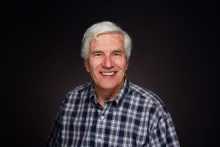
Steve Shafer was born and raised in Seattle. He graduated from Queen Anne High School in 1959 and later graduated from Ambassador College, Big Sandy, Texas in 1967, receiving a degree in Theology. He has been an ordained Elder of the Church of God for 34 years and has pastored congregations in Michigan and Washington State. He and his wife Evelyn have been married for over 48 years and have three children and ten grandchildren.
