
Steve Shafer
This transcript was generated by AI and may contain errors. It is provided to assist those who may not be able to listen to the message.
Well, today I'll continue the series I've been giving on the Passover. Again, last time we saw how King Hezekiah during his reign, at the time he was the king of Judah, and he was reigning right about the time the northern ten tribes of Israel being invaded by Assyria right about the time they're about to fall. And I think he started reign just before they fell down in Judah. And now Hezekiah, because the previous king had taken Judah into total Baal worship, how he then called for a temple Passover sacrifice and got them to become Jerusalem for that in order to rededicate their lives to God and to re-institute the true worship of God in Judah.
And then, of course, the next king Manasseh and his son took him right back into total Baal worship. So then when Josiah came on, about 60 years later, a little less than that, then Josiah did the same. He had to bring everybody down, Jerusalem and instituted a temple Passover sacrifice service. Probably doesn't give it time, but probably took place on the afternoon of the 14th, rather than on the previous evening, since it was for the whole nation. And they were doing it there at Semble at the Temple in Jerusalem. And he had to do that again to try to centralize things so that they would all get the whole nation back on track, spiritually speaking. Today I want to pick up... Then we got into Daz, Rani and Mai just briefly last time. But today I want to pick up the story just about the time of Esri, Nehemiah, the close of the Old Testament. But actually, I'm going to go back and start about 100 years before that. I'm going to start with the calling of Cyrus, actually, before he was born, because that ties in as well. So we're going to look at the time between the Old and New Testaments today, beginning with God miraculously naming Cyrus 100 years before Cyrus was born. Amazing prophecy. And we'll then begin to see why actually, why a temple Passover sacrifice does play an important role and why it was very important in what led up down to the time of Christ and when that was really essential in some ways. And then we'll try to take a look at how some of the Jews began to maybe eat the Passover on the night, the 15th, and how the Passover came to be incorporated into the days of Unleavened Bread at some point in there between the Old and New Testaments. But most importantly, I will look at and give you evidence that shows that at the time leading up to the time of Christ and at the time of Christ, actually both Passovers were being observed in Judah. There was a domestic Passover that was being observed on the evening of the 14th and there was a temple Passover. Sacrifice was occurring on the afternoon of the 14th. Both of those Passovers, there is historical evidence showing that both of those were taking place at the time of Christ.
And actually we'll see that both Passovers do have important meaning. They have important and distinct meanings that tie into Christ's sacrifice as well. So they both play a role, as we'll see. Not so much today, but in the last term I'll give next week, or maybe the next one next time. So the title of my sermon here this afternoon is the Passover from Cyrus to the time of Christ. From Cyrus to the time of Christ, which is part four. It's very interesting to go back and look at the prophecy concerning Cyrus. Now Cyrus was born around 600 BC and around 550 BC when he was approximately 50 years old he became the king of the Median Empire and then he soon incorporated that into the Persian Empire. He got them on board with him, the leaders of the Persian Empire, and he thus became the king of the Medo-Persian Empire. And over 100 years before he was born, God called him by name and prophesied what he would accomplish. And it's extremely interesting to see what God was going to accomplish through Cyrus. So let's go back. I'm going to go back and kind of in between where Mr. Cortiz was in his sermon. Now let's go to Isaiah 45. Halfway between a couple of scriptures that Mr. Cortiz used, but Isaiah 45, and let's begin in verse 1 of Isaiah 45, because here's a prophecy concerning Cyrus. Now the thing that's important to realize here, we saw last time you go to Isaiah 1.1, it says the prophecy here's Isaiah and it gives the names of the kings that were reigning. There were four different kings there and it was during the time that those kings had reigned subsequently during those years that this prophecy was made and the the latest king that was given there was Hezekiah. The other kings were earlier kings. So Hezekiah, so this had to be written at least during the time of Hezekiah or before. Well, Hezekiah reigned in the late 700s BC. So this prophecy probably took place here, Cyrus here, as we'll see, probably was around 710-715 BC, something like that, but it says, to thus says the Lord who is anointed to Cyrus, whose right hand I have hailed or I have strengthened or sustained, as my margin says, and why was He calling Cyrus by name? He says to subdue nations before him, to loose the armor of kings, to open before him the double doors, so that the gates will not be shut. We'll see a little bit later what that means in a moment. I will go before you and make the crooked places straight. I will break in pieces the gates of bronze, cut the bars of iron, and I will give you the treasures of darkness and hidden bitches of secret places, that you may know that I, the Eternal, who call you by your name, that I am the God of Israel. Now, as I said, this prophecy took place during the reign of Hezekiah at the very latest, Isaiah 1.1, probably as I sit around 710, 715 B.C., somewhere in that vicinity.
And I said, Cyrus was born around 600, so this is over a hundred years before Cyrus was born. God has called him by name.
And it was long before Judah was completely conquered by Babylon. They weren't conquered by Babylon until about 587, 586, 587 B.C. So this prophecy is made long before Babylon conquered Judah, and long before the temple and the city of Jerusalem destroyed, because they were destroyed until Babylon conquered Judah around 586, 587 B.C. So this is over a hundred years prior to that, when this prophecy was given. And this is a prophecy of how Cyrus, in a single night, would conquer the city of Babylon in the Babylonian Empire.
In October of 539 B.C., it happened exactly as prophesied here in Isaiah 45, well over a hundred years. I've been prophesied well over a hundred years before it actually happened. It happened in a single night, beginning with the handwriting on the wall in King Belshazzar's palace, as described in Daniel 5. And you're all familiar with that?
I won't go back and read that. He said, your kingdom is numbered, and so on. You've been found wanting, and so on. And then it says in Daniel 5 verses 30 and 31, said, that very night Belshazzar, king of the Chaldeans, was slain, and Darius the Mede received the kingdom. He received the kingdom from Cyrus. Now, why did God predict this here in Isaiah 45, way in advance, even calling Cyrus by name before he was born? Why did God predict this, and why did God carry this out? Let's keep reading verse 4 of Isaiah 45. He said, I'm doing this for Jacob, my servant's sake. It's all being done for the sake of Jacob's descendants, sake of God's people, Israel and Judah.
For Jacob, my servant's sake, and for Israel, my elect. I have been called you by your name. Again, like we say, it was over a hundred years before he was born. And I have named you, though you have not known me. He didn't know anything yet. I am the Lord. There is no other. There is no God beside me. I will gird you, though you have not known me. So he did it for the sake of Jacob's descendants, which included the house of Judah, who under Hezekiah were renewing their covenant relationship with God at this very time this prophecy is made.
And they began renewing that covenant relationship with God with a temple Passover sacrifice, as we covered last time, instituted by Hezekiah. What was the underlying purpose for this prophecy? Why is it so important? It becomes of extreme importance in God's plan and purpose. So of the utmost importance, what is the underlying importance of this prophecy and what did God have in mind?
And did what God have in mind have to do with Passover? Let's go back just one chapter. Go back to Isaiah 44, and we'll pick it up in verse 24. Isaiah 44 verse 24. Thus says, Eternal, your Redeemer, he who formed you from the womb, I am the Eternal, who makes all things, who stretches out the heavens all alone, who spreads abroad the earth by myself, who frustrates the signs of the babblers and drives the defenders mad, who turns wise men backward and makes their knowledge foolishness.
God is still doing that today. Verse 26, who confirms the word of his servant and performs the cost of his messengers, who says to Jerusalem, well think about this. This is early 700s or late 700s, which you're only going to do about 710, 715 BC, who says to Jerusalem, You shall be inhabited. To the cities of Judah, you shall be built, and I will raise up her waste places. Let's just pause there for a minute and think about when this was given. At the time this was prophesied, maybe around 710 BC, the cities of Judah were inhabited, and Jerusalem was inhabited.
Hisakai was ruling from Jerusalem at this very time, and he was desperately seeking to turn the nation of Judah back to God and renew their relationship with God, their covenant relationship with God. Again, verse 26, who says to Jerusalem, You shall be inhabited. To the cities of Judah, you shall be built, and I will raise up her waste places. Verse 27, who says to the deep, Be dry. I will dry up your rivers. Amazing!
That's precisely how the city of Babylon was breached by the armies of Cyrus.
You see, the Euphrates River ran through the city of Babylon, and where it came in and where it went they had gates right there, down into the river. And you couldn't get to those gates because they were down underneath the river. So the only way you could get to those gates is to try to sneak into the city of Babylon. You had to dry up the river, which is what Cyrus did. They diverted the Euphrates River so it became dry, so they could get in there on that night described in Daniel 5, and they could break those iron gates and sneak in.
But again, what is the main underlying purpose for all of this? Verse 28, who says to Cyrus, He is my shepherd, He shall perform all my pleasure, saying to Jerusalem, You shall be built, and to the temple, Your foundation shall be laid. Again, at the time this prophecy was given, Jerusalem had not yet been destroyed, nor had the temple been destroyed.
That wouldn't happen for 120 years or more after this was stated.
So when you look at that, think about that, this 10 prophecies not only stating that Jerusalem, the temple will be rebuilt, it's also prophesied that they're going to be destroyed, because they'd have to be destroyed before they could be rebuilt.
Now, what's the purpose for all this? This is all about.
Is God just playing games and just trying to show off His power here or something?
Now, once Cyrus conquered Babylon, what was one of the first things he proclaimed? Let's now turn to the book of Ezra.
Now we'll get down to Cyrus. He becomes the king of the Medo-Persian Empire, and he conquers Babylon, 539 BC or thereabouts, in a single night. Once he conquers Babylon in the Babylonian Empire, and now Judea is under the political ramifications of now the Medo-Persian Empire under their jurisdiction. And what's one of the first things that Cyrus proclaims? Ezra chapter 1 verse 1. In the first year of Cyrus, king of Persia, that the word of the Lord came to the first year of Cyrus. By the mouth of Jeremiah, might be fulfilled.
And he's referring to a letter that Jeremiah wrote to Nebuchadnezzar, the king of Babylon, in which he said, For thus says the Lord, after seventy years are completed of Babylon, I will visit you, and perform my good word toward you, toward the Jews, who would be carried away captive after the fall of Judah, and I will perform my good word toward you, and cause you to return to this place. To Jerusalem. That's in Jeremiah 29 verse 10. That's the good words we refer to here in Ezra 1.1.
That the word by the mouth of Jeremiah might be fulfilled. The Lord stirred up the spirit of Cyrus, king of Persia. So he made a proclamation throughout all his kingdom, and he put it in writing, saying, verse 2, Thus says Cyrus, king of Persia, All the kingdoms of the earth, the Lord God of heaven, has given me. And he has commanded me to build him a house or a temple at Jerusalem, which is in Judah.
Cyrus says God has commanded me to rebuild the temple, which by this time had been destroyed. It was in ruins. It was just a pile of rubble. It was destroyed by the Babylonian invasion of 586, 587 B.C. And the city of Jerusalem was destroyed. The walls were destroyed. The whole city, it was all destroyed. It was all gone. It had all been raised to the ground.
But here, Cyrus says, God has claimed to me that that temple is to be rebuilt.
But think of this. Let's make some parallels here, because we're not over the spiritual temple of God. So I think there's some duality here that we can apply to ourselves today. Realize that Satan didn't want that. He didn't want the temple and Jerusalem to be rebuilt. He was really happy. He went all... City of Jerusalem, the temple, it's all destroyed. Wow, he's just clapping his hands here. Rubbing his hands together. That's it. It's all done. I've wiped out the temple. I've wiped out Jerusalem.
Satan thinks he's won a victory.
See, Satan didn't want the temple to be rebuilt. He didn't want the city of Jerusalem to be rebuilt. And you can just see here, when you get into the Book of Ezra, you can see that Satan is working behind the scenes, unknown, to mount opposition to this. He doesn't want this to happen. He doesn't want this decree of Cyrus to be carried out.
Satan didn't want the temple to be rebuilt.
And he doesn't want God's spiritual temple today to be rebuilt either.
So, just keep that in mind. It's interesting. Parallels are things to think about.
Let's go to Ezra chapter 4. We pick up the story there.
The entire Book of Ezra is very, very revealing in this regard. Let's go chapter 4, verse 1.
Because Cyrus had made this decree to rebuild the temple, but all of a sudden, you see mounting opposition. And you see, sure, that Satan is the one that's turning up this opposition behind the scenes, even though he's not mentioned here. And when the adversaries of Judah and Benjamin heard the descendants of the captivity were going to rebuild the temple of God of Israel, they came to Zerubbabel and the heads of the father's house and said to them, Let us build with you. For we seek your God as you do.
And we have sacrificed to him since the days of Eshar-Haddon, the king of Assyria, who brought us here. Well, not really. They sacrificed to the gods of the Assyrians, to the gods of the Babylonians. That's a true God. And Zerubbabel and Joshua, who were the leaders at that time, they clearly realized that. If we read on here, verse 3. But Zerubbabel and Joshua and the rest of the heads of the father's houses of Israel said to them, You may do nothing with us to build the house of our God. But we alone will build to the Lord God of Israel, as King Cyrus, the king of Persia, has commanded us.
Then the people of the land tried to discourage the people of Judah, and they troubled them in building. They tried and wanted to stop it.
And they hired consulates against them to frustrate their purpose all the days of Cyrus, the king of Persia, even till the reign of Darius.
So they were delayed then in carrying out God's purpose of having the temple rebuilt.
Verse 6. In the reign of Ahasuerus, in the beginning of his reign, they wrote an accusation against in the heavens of Judah and Jerusalem. What was their accusation? Verse 8. Ream the commander of Shemshad, the scribe, wrote a letter against Jerusalem to King Artaxerxes in this fashion. We'll pick it up in verse 11. Here's a copy of the letter that they sent him to Artaxerxes. To King Artaxerxes from your servants, the men of the region beyond the river, the River Euphrates, and so forth. Let it be known to the king that the Jews who came up from you have come to us at Jerusalem, and they're rebuilding this rebellious and evil city.
Don't let them rebuild it. They're referring to Jerusalem.
And they're finishing its walls, and they're replacing its foundations. And let it be known to the king, if this city is built and the walls completed, they will not pay tax, tribute, or custom, and the king's treasure will be diminished. They want to rebuild Jerusalem. Now, because we received support from the palace, it was not proper for us to see the king's dishonor. Therefore, we have sent him and informed the king that search be made in the book of the records of your fathers. And you will find in the book the records and known that this city is a rebellious city, harmful to kings and provinces. They've inclined sedition within the city in former times, for which cause this city was destroyed. And we inform the king that this city is rebuilt, so all are completed. The result will be to you that you will have no dominion beyond the River Euphrates. How did our convictions respond? Verse 19, And I gave the command, and a search was made, and the sousphon of the city was, in time, had revolted against kings, and so on. They've also been mighty kings over Jerusalem, who have ruled over all the region beyond the river, and so on, paid tax, and tribute, and custom. So now give the command to make these men cease, that this city may not be built until the command is given by me. And take heed now that you do both. If you fail to do this, why should... No, take heed now that you should do both... Oh, I'm going to read this. Oh, that you do not fail to do this. Why should damage increase to the hurt of the kings? So everything came to a halt as far as rebuilding the city of Jerusalem. What happened then? Ezra 5, verse 1. Then the prophet Haggai and Zechariah, the son of Edo the prophets, prophesied to the Jews who were in Judah and Jerusalem the name of God, Jerubahvel, the son of Shetiel, and so on. They rose up and began to build the house of God, which is in Jerusalem. And the prophets of the God were with them and helping them.
So here they are, they're going to start to rebuild the temple and the city. At the same time, the governor of the region beyond the river and their companions came to them and spoke to them, who's commanded you to build this temple and finish the walls and rebuild the city of Jerusalem and rebuild the temple? Who's commanded you to do that? This letter was then sent to Darius the king, verse 17 of Ezra 5.
Now therefore seems good to the king, let search be made in the king's treasure house, which is there in Babylon, whether this is so that a decree was issued by King Cyrus to build this house. Let's find out, is that really true? Did Cyrus command that this house be the temple we rebuilt? Can Jerusalem be rebuilt? Let the king send his pleasure concerning this matter.
What did they find? Chapter 6, verse 1, then King Darius issued a decree that a search be made in the archives to find out if this is true. Cyrus had actually made any kind of a letter like this, declaring that it should be rebuilt. The temple and the city should be rebuilt. What did they find? Well, they found the decree Cyrus had written before he died. Then, Darius issued another decree. Now, this is absolutely amazing. You think everything's going the wrong way? You think everything's lost and Satan's won the victory? God can turn things around quickly. Ezra 6, verse 7, let the work of this house of God alone, he said, when he went there and he found the decree of Cyrus, he said, let the work of this house of God alone, let the governor of the Jews and the elders of the Jews build this house of God on its side. Moreover, he said, I issued decree as to what you shall do for the elders of these Jews for the building of this house of God. Let the cost be paid the king's expenses. Wow! Not only will you build it, we'll pay for it for you. From the money from the Persian Empire, and from taxes on the region beyond the river. This is to be given immediately to these men, so they are not hindered in building the temple and rebuilding the house of God in the city of Jerusalem. Give them whatever they need. Verse 9, bulls, rams, lambs, burn offerings, whatever, so they can offer sacrifice to their God. We saw wine, all according to the request of the priests who are in Jerusalem. Let it be given to them without fail, that they may offer sacrifice in the sweet aroma to the God of heaven, and pray for the life of the king and his sons.
This is the king of Persia, issuing this decree on behalf of the Jews, and he doesn't really know God. And then verse 11, also I issue a decree that whoever alters this edict, let a timber be pulled from his house and erected, and let him be hanged on it.
And let his house be made a refuge seat because of this. And may the God who causes his name to dwell there destroy any king or people who put their hand to alter this decree, or to destroy this house of God, they're going to be rebuilt, which is in Jerusalem. I, Darius, issued this decree and let it be done diligently. Wow! What a total and sudden reversal. You'd say, some might say a reversal of fortunes, but it wasn't a force, it was a hand of God doing this.
Satan thought he had a victory. God reversed it, big time.
So, going on in Ezra 6, verse 14.
So the elders of the Jews built and prospered through the prospering of Hagia and the prophet Zechariah, and they built and finished it according to the commandment of the God of Israel, and according to the command of Cyrus and Darius and Artaxerxes, the kings of Persia. So the temple was finished, verse 15, on the third day of the month, which is the sixth year of the reign of King Darius.
A temple was rebuilt and finished around 515 BC, and then it was after that, during the time of Ezra and Nehemiah, they started rebuilding the walls of the city of Jerusalem and rebuilding the city of Jerusalem. But after the temple was built, it was dedicated to God. It says in verse 16, then, to renew their covenant with God and to dedicate their lives to God, what did they do? 1 Ezra 6, verse 19. The descendants of the captivity kept the passover on the 14th day of the first month. For the priests and the Levites had purified themselves, and all of them were richly clean, and they slaughtered the passover lambs for all the descendants of the captivity, and for their brethren the priests, and for themselves. As was in the case of King Hezekiah and King Josiah, this temple passover sacrifice to rededicate their lives to God, to renew their covenant relationship with God, probably and undoubtedly took place on the afternoon of the 14th. It wouldn't have been time for all this between the two evenings, as we've covered before.
And of course, in the years following this, the next number of years, going all the way down into the mid-400s BC, they rebuilt the city of Jerusalem and the walls of the city of Jerusalem. And even though foreign powers controlled Jerusalem from this time forward, religious jurisdiction, amazingly, was granted to the Jews over this area of Jerusalem and Judea. They were given religious jurisdiction even though foreign powers controlled it. And then, politically, they were under foreign powers, but the Jews were given religious jurisdiction. This all took place during the time of Ezra and Nehemiah.
Now, Satan lost that battle. We can just think about Satan working behind the scenes to thwart all of this. Satan lost that battle, but as we know, Satan never gives up.
He never quits. He never throws his message. God wins. He never does that. He never gives up. Maybe that's the lesson for us. Maybe we should never give up.
Now, since he couldn't prevent the temple of God from being rebuilt—this is the thing that I find very, very interesting—since he couldn't prevent the temple of God and the city of Jerusalem from being rebuilt, he did the next best thing. What would that be? Any idea? He brought about confusion.
How did he do that? How did he bring about confusion?
Well, as we saw last time, he influenced Sam Ballot, the governor of Samaria, to build a competing temple of Mount Gerizim in Samaria. And then he appointed Manasseh to be the high priest of this competing temple.
He then made a vidical priest by the name of Mass—like I said, the high priest of that competing temple—because Manasseh was married to Sam Ballot's daughter. So now, there's two temples and two types of Jews. There's Samaritan Jews and Jerusalem Jews, two vidical priesthoods, two competing Jewish religions, two sects of Jews, if you will, Samaritan Jews and Jerusalem Jews.
So now, there became a major question that had to be addressed. It's the same thing today. It's no different.
Satan tried to destroy the church in 1995, didn't he? Couldn't quite do it. He came close, but not quite. So what did he do? He brought about confusion.
Got all kinds of churches of God everywhere. So the question then becomes, where has God placed His name? Good question. Same thing back then. They'd have to say, okay, now where has God—because Manasseh up there says God's placed His name here at this temple of Mount Gerizim. You say, no, He hasn't. He's placed His name on Mount Zion in Jerusalem. So the question became, where has God placed His name on Mount Gerizim in Samaria or Mount Zion in Jerusalem? See, if Satan can't destroy, he'd do the next best thing. He'll bring about confusion. He'll try to confuse people so they don't know which way's up.
That's what Satan's done today, hasn't he?
Back at the time of Ezra and Nehemiah, the question became then, where has God placed His name?
Which is why—and I'm just going to just mess this aside. I'm not going to go through Deuteronomy 16. I brought it up in one of the previous sermons. I just want to bring this aside because that's a confusing section of Scripture. One of two things I think happened with regards to Deuteronomy 16. It could be either way. God, knowing the future, either inspired Moses to say what he did there and record what he did in Deuteronomy 16, or Ezra, because of what happened in Samaria, edited Deuteronomy 16 at the time the Old Testament scrolls were canonized because they did do some final editing as they were canonized. And I explained last time why they were canonized at that time. They had to preserve what they considered to be the inspired scrolls of the Old Testament because now there's a competing religion in Samaria and they weren't sure that that would be safe. That actually was brought about, the canonization of the Old Testament, to a large degree. But I'm referring specifically to Deuteronomy 16 verses 5 and 6, and I won't turn there, where it says, you may not sacrifice a Passover within your gates, which the Lord your God gives you. No, but you can't just sacrifice this wherever you want to in your homes, as they did originally.
But then it says, but at the place where the Lord your God chooses to make his name abide.
Or in Deuteronomy 16, too, where it says, in the place where the Lord chooses to put his name. See, that became a question during Ezra and Nehemiah. Where has God placed his name? At the temple in Jerusalem or the temple of Mount Gerizim?
Then it came a big question.
Because the time of Ezra and Nehemiah, Satan confused where God placed his name.
Which temple was it? And because of that confusion, because of that competing Jewish religion, Ezra knew God's word could potentially become corrupted.
Thus, as I said, they formed the Great Assembly, which then canonized the authorized scrolls or books of the Old Testament, which you now have as the Old Testament, and as the inspired word of God. And final editing of those books was also then done at that time by Ezra and Nehemiah and by the Great Assembly. Now, we'll look at Ezra's decree.
As I covered last time, Ezra then issued a decree that the Passover must be observed only in and around Jerusalem.
He basically issued a decree that God only placed his name on Jerusalem and on the temple in Jerusalem, especially what he was doing. And from that time forward, the Jews were allowed religious jurisdiction over Jerusalem and over the temple at Jerusalem. But whatever power happened to be there. Now, why was that so absolutely essential? I mean, it's just amazing how all this history plays out and how you can see God's doing this behind the scenes. But why was that so absolutely essential? Well, for two reasons, basically.
And I want to quote from one reason is given here by a quote from the interpreter's Bible, page A68, which says this, through the centralization of worship in the temple at Jerusalem, the corruptions which entered into the religious practice who compromised with Canaanite cults of Baal could be brought under control and purified. Again, as I've covered last time, why has the Chai and Josiah had a centralized Passover service at the temple?
And also then, at the time of resident EMI, assured against any possible corruption from the Samaritan Jews in their competing temple and priesthood and so on.
But there's a second spiritual reason which is far more important.
Because it was essential. You just think about this. It was absolutely essential that the Passover was still going to be observed in and around Jerusalem at the time of Christ, since Christ was become that Passover lamb.
I mean, God had to assure that by the time Christ came, there was going to be a Passover sacrifice in Jerusalem at that time. What Satan wanted to destroy all that. He wanted to get it all wiped out, so it wouldn't ever happen. It would never take place. God assured that it wouldn't.
And the Jews maintained jurisdiction over Jerusalem until 168 BC, basically, until the time of Antiochus Epiphanes, who was on Antiochus IV. He was the king of Syria, king of the north. In 158 BC, he desecrated the temple, stopped all the sacrifices, and set up the abomination desolation, as we know. That was Satan's last-ditch effort to thwart God's purpose.
It didn't work. It led to the revolt of the Maccabees, as recorded in 1 and 2 Maccabees in the Apocrypha.
See, Satan didn't foresee one thing.
He didn't foresee the courage, the faith, the conviction, the resolve, and the determination of some of God's people at that time. Are they ready to willing to lay down their lives to get that temple back and to restore it, and to restore the worship of God, and to get control of Jerusalem back? And in three years, Jerusalem in the temple was once again under the religious jurisdiction of the Jews. Amazing! Because how could a few bunch of renegade Jews wipe out the whole army of Antiochus Epiphanes? But they did. That's a long story. But I've covered that a little bit in some of his previous sermons. But before Judas Maccabees died in battle, he and his brothers made a very important alliance with the upcoming power of Rome. They could see Rome was an upcoming power. As I can record in 1 Maccabees, I won't read it because I'm way over time anyway, but they made it allegiance with Rome. And Rome actually then, in this allegiance, recorded in 1 Maccabees chapter 8. So if you've got 1 Maccabees, you can go back there in chapter 8 and read it. And if you've got a copy of that, you've got a book that has that. But it's amazing. But they made a treaty and a friendship with Jews. Rome did. So if Rome ever got a jurisdiction, they guaranteed the Jews would have religious control of the temple and of Jerusalem.
They actually made a decree with them. It's recorded in 1 Maccabees 8. Then around 160 BC, the religious church of the Jews, over Jerusalem and Judea secured them with the backing of Rome. It's secured.
After Judas Maccabees died, his brother Jonathan became the high priest. He made a new charter with the king of Syria, who at that time still had control. And that's recorded in 1 Maccabees chapter 11. A new charter, favoring the Jews is real short, so I'll read it. King Demetrius to Jonathan and to the Jewish nation. The nation of the Jews are our friends and fulfill their obligations to us. And in view of their good will towards us, we have decided to show them our bounty. We confirmed them in their possession of their territory of Judea and the district of now Samaritan territory as well, with all their dependencies in favor of all their sacrifice. They want to make it Jerusalem. We're going to make sure that the temple is secured and the sacrificial system is secured for the Jews. So now the Jews are guaranteed jurisdiction over Jerusalem and the temple and all Judea, including Samaria, by both Rome and the Selah-Yukat empire.
Now the Jews will be guaranteed religious jurisdiction over Jerusalem and the temple by both the Greeks and by the Romans when they finally came over and took control of it. Amazing.
Because, I mean, Satan would have done everything he could to stop it.
All this is working out by the hand of God.
This was to make sure that God's name would be placed on Jerusalem and on the temple in Jerusalem up unto and including the time of Christ. Again, God was working behind the scenes setting all this up for the time of Galatians 4.4. So when the fullness of the time had come, God could send forth his Son. But everything had to be in place and God was doing that. He would bring that about to amazing things that took place between the time of the Old and New Testaments.
So this now assured that the Jews in and around Jerusalem would still be observing the Passover addend during the time of Christ was absolutely essential for God's plan and purpose of Christ to be fulfilled. Let me ask this question quickly. When did the Feast of Unleavened Bread come to be called Passover? When did the Passover and the Feast of Unleavened Bread become amalgamated into one overall festival? Instead of being two separate and distinct festivals. By the time of Christ, we know that the Feast of Unleavened Bread was called Passover. I'll just read one scripture real quickly. That's in Luke 22 verse 1. Luke 22 verse 1, it says, Now the Feast of Unleavened Bread drew near, which is called Passover. The Feast of Unleavened Bread was called Passover.
Even today, many religious Jews refer to the seven days of Unleavened Bread as Passover. You know, I have a wonderful book at home. I've used this a lot. It's really a wonderful book written by a Jewish rabbi. It's called The Tapestry of Jewish Time, A Spiritual Guide to Holidays and Life Cycle Events by Rabbi Nina Beth Cardan. C-A-R-D-I-N.
And listening to the Jewish festivals, they list all of them, even some of the ones that are not holy day festivals, everything that Jews observe. And it gives tremendous insight into spiritual lessons and meaning. But in listing all the Jewish festivals, the days of Unleavened Bread are listed as Passover, which is designated as being the festival of freedom in reference to Israel being freed from Egypt and Egyptian bondage. So they tied into Israel being delivered out of Egypt, which took place beginning on the first day of Unleavened Bread. But they call the days of Unleavened Bread Passover. So they have Passovers commemorating Israel's deliverance out of Egypt. And in this book, they give the observance of Passover as being from Nissan 15 through Nissan 21. They call that the observance of Passover. So they refer to the seven days of Unleavened Bread as Passover, even as some Jews were doing back at the time of Christ as confirmed by Luke 22 verse 1.
Also, it's interesting, in this book, no particular mission is made of Nissan 14.
They don't have that listed. They start Passover on Nissan 15. The actual day of the Bible calls Passover is actually not mentioned or emphasized.
Instead, the seven days of Unleavened Bread are called Passover. Now, I can understand that transition taking place after 70 AD after the temple was destroyed. And if there were no more Passover sacrifices, I could see where that could take place. Also, it's clear from John's Gospel that prior to the destruction of the temple, and the Passover lands, it means sacrifice. I mean, it's obvious that prior to the destruction of the temple, Passover lands were sacrificed on the afternoon of the 14th, and the Passover meal was being eaten by some Jews on the evening of the 15th instead of the 14th. That's clear by what it says in John 18.
It was on the evening of the first day of Unleavened Bread. Even as Jews eat their setter meal today, John 18 verse 28.
Then they let Jesus from Caiaphas to the Praetorium, and it was early morning, early morning of the Passover day. But they themselves did not go into the Praetorium, unless they should be defiled that they might eat the Passover, because they were going to eat the Passover on that night, which had been the beginning of the 15th, the first night of Unleavened Bread.
So we can really see how they could come...
So the Passover lands were killed on the afternoon of the 15th, after... I mean, on the afternoon of the 14th, after three o'clock, how they could then come to begin to eat the Passover that night of the 15th. However, the Passover lands were originally slain on the night of the 14th, just after sunset, and then eaten on that same night. How did this change take place with... you know, this whole thing changed take place.
I mean, the days of Unleavened Bread are down became associated with the Passover, after Hezekiah instituted a temple Passover, sacrificed Josiah, Ezra, Nehemiah, etc. And that was done so that they would know where God had placed His name, and to ensure that the Passovers were still going to be observed at the time of Christ.
So when did the Jews then begin eating their Passover, said, or meal on the night of the 15th?
Well, there's no clear record. We don't know.
But it had to been some time between the periods of the Old and New Testament. Now, here's the thing I do want to emphasize, though. There was a great deal of confusion during that time, between Judah going to captivity to Babylon in the time of Christ, between the time of the fall of Judah and the time of Christ, during that five, six hundred year period, there's a tremendous amount of confusion. First, the Jews were scattered in Babylon for 70 years. Then, after the decree of Cyrus, about 50,000 Jews returned to Jerusalem. That's given in Ezra 2 versus 64 and 65. About 50,000 returned when Cyrus said they could return to rebuild the temple. About 50,000 returned, but there were millions of Jews, so the vast majority of Jews never did return. They stayed scattered in Babylon with no leadership.
Then the Jews run the political and cultural jurisdiction of the Medo-Persian Empire for nearly 200 years, with a competing temple and a competing priesthood in Samaria. Then they came under the political and cultural jurisdiction of the Greco-Macedonian Empire for about the next, from the time of Alexander, great, on down from nearly the next 300 years. And Jews throughout Palestine and throughout the Greco-Macedonian Empire were highly influenced by Hellenism. They're highly influenced by Greek culture, by Greek history, and by the Greek culture, by Greek philosophy, by Greek religion. For example, some adopted the Greek philosophy of the immortality of the soul. They were influenced by all the ways of the Greeks. They were greatly influenced by Hellenism. Then, just part of the time of Christ, of course, they came under Roman influence. And by the time of Christ, the Jews were greatly divided into many sects.
There are many sects of Jews. There were the scribes and the Pharisees. There were the Sadducees.
Most of the Sadducees were priests. The Pharisees were priests and some lay members, but they both had corruption in their systems. There were the Essenes or Essenes. There were the Herodians, the zealots. And then now we know there was also a sect called the Qumran, who wrote the Dead Sea Scrolls. And even those groups had divisions within their own groups. The Pharisees debated and they fought among themselves all the time.
There were many sects of Pharisees who clearly debated among themselves.
So there are many, many different sects of Jews. There are probably as many different sects of Jews. At the time of crisis, there are different sects of Protestants today.
So it's very confusing. The time between the Old New Testament is a very confusing time.
It's also a time when many oral traditions were added to the law of Moses, and when other man-made traditions were added. And that's a huge story in itself. That took place. Such as Sabbath regulations, and Washington pots and pans and hands, etc. Some of which were brought out by Christ in the New Testament. But it's easy for me to see where some of the religious Jews could have at some point begun eating the Passover on the night of the 15th. Although there's no clear record when they did that. And how that could then become a tradition of the Jews. I want to quote from other things which I just found interesting. I'm going to go a little bit over time here today. But I just got this. This came in yesterday. We got a administrative newsletter and journal by email yesterday. And I just want to read a portion of this. There was a book review in there written by Mario Seagly. Court of Decimals in the Festivals and Sacred Days of Yahweh by R. Clover, C-L-O-V-E-R. It's a book review. Even though Clover and his group of scholars are messianic Jews, they show that not all of them follow the traditional Pharisaic reckoning of keeping the Passover on the 15th of the first month. The date for keeping the Passover has been debated through the ages. During Christ's Day, there were numerous religious calendars among the different Jewish groups, the Agencies, Pharisees, Essenes, etc. R. Clover in his book, The Festivals and Sacred Days of Yahweh, asserts that during the first four centuries AD, early Christians observed the Passover at the beginning of the 14th. It may also come as a surprise, he said, to learn that this view was, in fact, the original practice of all Orthodox Christians to observe the Passover at the beginning of the 14th. The Sadducees held to the aristocratic view that the Lamb was to be sacrificed at twilight just after sunset but before dark at the beginning of the 14th, and then eaten on that same night on the 14th.
This system was used by Jesus the Messiah and his disciples and continued for many years among the early Christians assembly. The early Christians rejected the oral laws ascribed to by the Pharisees and rabbis, but celebrated the observance of the seven days of unleavened bread and their Passover and Pentecost on the same days as the conservative Sadducees, he says.
The Christian writer Ephraim the Syrian, mid-4th century AD, reports about the Lamb of Passover noting that on the 14th day they slaughtered and ate it on that same day. He adds, Clover adds, the apostles observed Passover from the beginning of the 14th, which is required if one is to eat the Passover during that same night of the 14th.
So he's saying that he found in records that it all took place the way described next as 12, that I explained before. I want to show something here. At the time of Christ, I want to show some evidence that at the time of Christ, both Passovers were being observed. That is, at the time leading up to the time of Christ, there's evidence that there were Jews keeping a domestic Passover in and around Jerusalem on the night of the 14th. At the same time, there's also the temple Passover sacrifice on the afternoon of the 14th. There's two sources to confirm that. One is the Jew by the name of Philo, P-H-I-L-O. He was born just a few years before Christ. So these are contemporaries of Christ. They're reporting what they knew and saw at the time they lived.
Philo was born just a few years before Christ. He died in the 60s A.D. So he lived throughout the time of Christ. During that time, Christ would have kept the Passover with his disciples. Now, Philo left behind a great deal of writings pertaining to that period of time. And he commented in one of those writings about the Jews keeping the Passover in and around Jerusalem. Here's what he said in his book called De Decalogue. It's called De Decalogue.
Page 159. He says, They called by the Hebrews in their own tongue the pash, or Passover, on which the whole people sacrifice every member of them without waiting for the priests the next afternoon, because the law has granted to the whole nation for one special day at one special time in every year the right of the priesthood. The whole nation is, for that period of time, they're granted the right of priesthood to sacrifice at their individual homes to pass over sacrifice. That's what he's saying. And they're performing the sacrifice themselves. He said this was taking place at the time of Christ. He records this. The Jews were sacrificing domestically Passover lambs at the beginning of the 14th.
By then waiting for the priests to do it the next afternoon.
So, Philonestics is telling us here that on the Passover, which would have been on the evening of the Passover, the whole people would sacrifice their Passover lambs on their own without waiting for the priests to sacrifice the lambs on the afternoon of the 14th at the temple. Now, another record is Flavius Josephus, who's a contemporary of Christ. He wrote this in Antiguies of the Jews, Book 2, Chapter 14, Section 6. Of course, he lived at that time as well, the time of Christ. When the 14th day was come, and it came, of course, at sunset, when the 14th day was come, they offered the sacrifice and purified their houses with the blood, using bunches of hyssop for that purpose. And when they had sucked, they burnt the remainder of the flesh as just ready to depart. When it is that we do still offer this sacrifice in like manner to this day and call this festival Passover, which signifies the Feast of the Passover, because on that day God passed over us and sent the plague upon the Egyptians for the destruction of the firstborn that came upon Egypt that night.
So note, Josephus says there, Josephus wrote, we do still offer this sacrifice in like manner today, at this very time at the time of Christ. So both Josephus and Philo confirmed that both a domestic and temple Passover sacrifices were taking place at the time of Christ. So in conclusion, then, this is all God's doing. God was preparing for the fullness of time to come to send forth His Son, Galatians 4.4. And both Passovers, I mean, I see tremendous importance for both of them. I think it was God's doing that they had both of them. There was a purpose in both of them. Both Passovers would directly tie into and relate to the supreme sacrifice that Jesus Christ would make and becoming the Lamb slain from the foundation of the world. One of those sacrifices would continue and one would end. And one had to come before the other.
I'll conclude there for now, before I run out of breath. Next time, we'll take a look at the two Passovers that took place during the time of Christ in the New Testament. And which Passover of Christ was sanctuished to continue and which would come to an end.
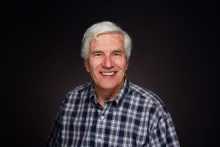
Steve Shafer was born and raised in Seattle. He graduated from Queen Anne High School in 1959 and later graduated from Ambassador College, Big Sandy, Texas in 1967, receiving a degree in Theology. He has been an ordained Elder of the Church of God for 34 years and has pastored congregations in Michigan and Washington State. He and his wife Evelyn have been married for over 48 years and have three children and ten grandchildren.
