

Greg Thomas
This transcript was generated by AI and may contain errors. It is provided to assist those who may not be able to listen to the message.
Well, thank you again, Mr. Rebar. Again, happy Sabbath, brethren, to all of you on this beautiful Sabbath day, somewhere above the clouds the sun is shining.
Well, last week we together celebrated the Feast of Pentecost, and naturally on that high day we discussed the meaning of the day as originally outlined in the Old Covenant. We expanded the New Covenant meaning of the day in the beautiful events that happened in 31 A.D. as the Church was birthed by the gift of the Holy Spirit.
What I'd like to do today is take this a step further and discuss a little bit more practical application of God's Holy Spirit.
I'd like to do it in a way that takes just a few verses that Paul wrote to the young evangelist named Timothy.
If we look at Paul's comments to Timothy, as we will in the second book of Timothy, we're going to better understand how God's Spirit works and how we can draw upon it more effectively.
So again, the comments that we're going to look at, and now go to other Scriptures.
So if you'll turn with me now to 2 Timothy 1, and if you have a little ribbon or something you could put in there to go back to 2 Timothy 1.
I encourage you to do that because we'll be bouncing around a little bit.
And as we go there, allow me to give you a little bit of background.
Paul wrote this letter from a prison cell.
He was in Rome during his second imprisonment, and he was awaiting a trial for his faith, and he had lots of time on his hands.
If you spend time in jail, you have lots of time to get some extra prayer in. You have lots of time to write letters.
And this is obviously what Paul is doing here. The letter is dated between 66 and 68 AD.
A younger minister, who was about 40 years old at this time, named Timothy, whom Paul had known since he was a child, was the recipient of Paul's letter.
He had been Paul's representative in the city of Ephesus for some time, so he probably could rightly be called the pastor of the Ephesus congregation.
We could say that about Timothy.
The purpose of the letter is Paul wanted to encourage him. Timothy is going through some personal struggles that we'll touch upon in a few minutes.
He wants to give him some instruction. He wants to give him some encouragement.
Paul had become a father figure to Timothy, and the indications are that Timothy was introverted, and he had a very timid personality.
When he faced persecution, he didn't deal with persecution or criticism well.
These are some of the things that Paul is going to be discussing.
Paul missed Timothy greatly, and he told him that he longed to see him.
That's in verse 4. We'll get to that in just a few minutes.
He asked him, he said, come to Rome and visit me.
Paul was always amazed when he was imprisoned how his Christian friends seemed to vanish.
They became ashamed of him a little bit because he was a jailbird, and because they were afraid of being seen with Paul.
The Roman authorities may say, what was this? One of these believers, like Paul is?
He was always amazed how he was kind of abandoned when he was in prison, and he encouraged Timothy to come and visit him.
He asked him to come before wintertime, and he says, while you're coming, speaking of wintertime, he says, I want you to bring the winter coat that I left in Troas, because I need that.
At the end of the letter here, he also asks Timothy to bring him the scrolls and parchments so he could continue to read and study.
Those scrolls and parchments could be part of the Old Testament that he took with them.
He may have been penning some additional letters and epistles and kept them in what is now known as part of the New Testament. We don't know for sure what those parchments were.
So with this background, let's go ahead and look a little more closely at some verses today than perhaps we normally do.
2 Timothy chapter 1 and verse 1 will begin here.
Paul, an apostle of Jesus Christ by the will of God according to the promise of life, which was in Christ Jesus, to Timothy, a beloved son.
So again, Timothy was about 40 years old when Paul wrote this to him.
Paul's traditional salutation here, grace, mercy, and peace from God the Father and Jesus Christ our Lord.
I thank God whom I serve with a pure conscience as my forefathers did.
As without ceasing, I remember you in my prayers night and day.
So Paul has lots of time to pray on his hands. That happens again when you're in jail.
He's praying night, he's praying day, and he's praying for a number of things.
One of those things that he's praying about is obviously the young Timothy and how Timothy's doing.
The fact that he writes this letter says that Timothy was on his mind.
Whatever Timothy was struggling with, whatever Paul was concerned with, is on his mind.
That's why he makes the effort to write this epistle.
Verse 4, greatly desiring to see you being mindful of your tears. So he says, I long to see you, I really miss you, and I remember the last time when I departed from you that you literally cried as I had to leave, Paul says.
That's what he means, you're mindful of your tears.
That I may be filled with joy. Paul says, when I see you again, I'm just going to be filled with joy to see someone whom I love.
Verse 5, when I called a remembrance, the genuine faith that is in you, which dwelt first in your grandmother Lois and your mother Eunice, I am also persuaded is in you also.
So he's recalling the fact that he knew Timothy's grandmother, and he knew Timothy's mother. He knew Timothy when he was a lot younger, and they were in the faith.
Have you ever heard of the American dream, the phrase, the American dream?
It's the desire that our children and grandchildren will have a better life than we have with greater abundance and live a life of greater opportunities and perhaps more comfort.
And that's called the American dream. Each generation hopes that the next generation, their children, their grandchildren will live a little bit better, will have a more productive, more fulfilling life than they had. And the American dream for most of us is something that's a reality. Let me put it this way. I want you to think of your grandparents. I would say virtually all of us in this room, no matter what our backgrounds are or where we come from, virtually all of us in this room live far more comfortably with greater material blessings than our grandparents did.
Right? Due to improvements in health and programs that are available for us and opportunities and technology and all the things that have been brought into the 21st century, virtually all of us are part of that American dream. I want us to think about that. Our grandparents sacrificed so that we could benefit from their sacrifice.
Aside from the American dream, there's a parallel hope that we in the Church of God should have. And this is what Paul is discussing here when he's mentioning Timothy's grandmother and his mother. Not only do we hope that our young people, those who stay with the faith, prosper materially, but we should desire and pray that they prosper spiritually.
Spiritually because they have the blessings of growing up in the faith from small children and sticking with it. Because some don't stick with it. Unfortunately, some come to a certain age and they decide to leave the faith. But those who stay with the faith have a lot of advantages. Because from being very small children, they were taught God's way of life.
That's a benefit and an advantage that most of us don't have. I was 17 when I came into the Church and I didn't have the benefit of being brought up into God's way of life. It's our hope that they are spared some of the mistakes that we made before we came into the Church. And we should pray for those who in the Church are younger, who are staying with the faith.
And we shouldn't take anything for granted. Sometimes we see young ones here and maybe they get a little noisy. Maybe they're not as behaved as we hope that they would be. But they could be the very future of the Church. Grandparents, if you're bringing your grandchildren to the Church, you're giving them the same kind of opportunity that Timothy had.
Because he was brought to the Church as a small child. Now, we're all free moral agents and they'll all eventually get to the point where they make their own minds up. Whether they want to stay with God's way of life or go out into the world like the prodigal son did. But the point that I want to emphasize is that our goal is to give them that opportunity. So they don't have to make the kinds of mistakes that we made. We have some individuals in the Church in this congregation who are third and fourth generation of believers. And we should celebrate their accomplishments.
Celebrate the fact that they stayed with the faith. Celebrate the fact that they get good education. Celebrate the fact that they are spiritually prospering because of God's way of life. As God promised in Deuteronomy 7 and verse 9, He said, Therefore know that the Lord is your God, He is God.
He is the faithful God who keeps covenant and mercy for a thousand generations with those who love Him and keep His commandments. So we have individuals here who are blessed because they have remained faithful for three to four generations of God's way of life. And we should be thankful for them and pray that they prosper spiritually.
All right, let's pick it up now back here in verse 6 again. Therefore, I remind you to stir up the gift of God, which is in you, through the laying on of my hands. Paul ordained Timothy, but in our cases, when we were baptized, we had the laying out of hands. And that's when we received God's Holy Spirit. Verse 7, For God has not given us the spirit of fear, but of power and love and of a sound mind.
Therefore, do not be ashamed of the testimony of our Lord, nor me, His prisoner, but share with me in the sufferings for the gospel according to the power of God. So Paul is beginning to teach and instruct young Timothy about some of these things, and we'll dig more deeply into verse 7 in a minute or so. But what he's saying here is, please don't be ashamed of me, Timothy. Don't be ashamed of the fact that I'm a jailbird. Don't avoid me. Don't be ashamed of the testimony of the Lord. When you face a problem, when you face a difficulty, boldly say, I'm sorry, I can't do that because that's against my values.
That's against my faith in God. That's against my Christian beliefs. And I'm not going to cut corners, and I'm not going to do something that I don't think is right. So he's encouraging him not to be ashamed of the testimony of our Lord. Verse 9, who has saved us and called us with a holy calling, not according to our works, but according to his own purpose.
And what is the purpose that we were created? I'm going to put it in a nutshell. We, that is humanity, were created to give God pleasure. Period. We really weren't created to meet our own desires. We really weren't created to reach our own level of personal fulfillment, even though we find that important. And that's a good thing to strive for. We were created before the foundation of the world to give God pleasure.
We give him joy. He's doing something great here. He's doing something great in our lives. He is building a family. So continuing here, but according to his own purpose and grace, which was given to us in Christ Jesus before time began. So there you go. We were designed to give God pleasure as his children, even before time began.
Verse 10, but it has now been revealed by the appearing of our Savior, Jesus Christ, who has abolished death and brought life and immortality to light through the gospel. That gospel message is the fact that Jesus Christ is a king, and he's coming back to be king of kings and lord of lords in establishing a kingdom on this earth. And all of his saints and his disciples will share in that opportunity to build that kingdom. And he is not only a king, he's also a savior who shed his blood and died so that he could be the Lamb of God, the ultimate Passover, and make it possible for everyone to be reconciled to God. That, in a nutshell, is the gospel that Paul is talking about here. Verse 11, to which I was appointed a preacher, an apostle, and a teacher of the Gentiles. For this reason, I also suffer these things, nevertheless I am not ashamed. For I know whom I have believed and am persuaded that he is able to keep what I have committed to him until that day. Till the day that Jesus Christ returns. He says, I'm not going to be ashamed of being in prison. I'm not going to be ashamed of my testimony of Jesus Christ. I'm not going to be ashamed of the things that I needed to do because I know my Redeemer lives. And I am committed to him until the very day is his return. Verse 13, hold fast the pattern of sound words, which you have heard from me in faith and in love, which are in Christ Jesus. That good thing which was committed to you, keep by the Holy Spirit who dwells in us. That's interesting, this word committed that you'll find in the New King James Version is actually a poor translation. It's a Greek word that it means a deposit given. And that's totally missed if you use the word committed. I'm going to read to you from the New International Version. Most translations translate this verse almost identical to the way the NIV does. Guard the good deposit that was entrusted to you. Guard it with the help of the Holy Spirit who lives in us. See, that's totally missed in the New King James translation when they just used the English word committed. God has given us the deposit of His Holy Spirit, and when we were baptized, had hands placed on our heads, our lives had the tremendous potential and opportunity to change in great and in dramatic ways. So having read that group of Scriptures, now let's dig deeply into just a few of them and draw out a deeper understanding of the power of the Holy Spirit in our lives. Maybe make some of these statements a little more practical for us. Alright, verse 6 said, Therefore I remind you to stir up the gift of God which is in you. I'm going to read this also from the NIV. It says, For this reason I remind you to fan into flame the gift of God which is in you through the laying on of my hands. And the Greek word here means literally taking a small ember and fanning a flame, something that's burning into something that's larger and brighter. Paul states here that it's Timothy who has the ability to stir up or rekindle the flame of the Holy Spirit. He says, Timothy, you have this in your capacity to do this. To make a fire last during the night, I'd like to tell you what I used to do when we owned our first home right here in Eaton Township. The first home that my lovely wife and I ever owned was on Cooley Road. It was in this very township and it had a coal-burning furnace. It also had an oil furnace, but the people who owned it before us put in a coal-burning furnace and it was tied into all the ductwork.
So when you got it working, it provided heat for the entire home and the oil furnace didn't even need to kick on. We kind of used it as a backup source. But I learned very quickly since it was in the garage that during eight hours of the night, if you didn't bank up that coal that the next morning it would have totally burnt out.
And then you're tiptoeing through a 20-degree garage, spending 15-20 minutes trying to start the furnace over again from nothing. So I learned how to take those coals that were scattered near the end of the day and push them all together, compress them, and put ash all around them and put a little dome of ash on it that's called banking it. And that if I did that when I woke up the next morning, I could push a little bit of that ash away and those still had some coals that were glowing. And then all I needed to do was add a little more fire to rekindle the flames and put on more coal.
And this is really a good analogy because, brethren, we too control how much of God's Spirit is able to work within our lives. Paul is saying that this gift of God is regarded as a fire. That's the metaphor that he uses, capable of dying out through neglect.
We certainly don't want that to happen. In 1 Samuel 16, verse 14, it says regarding Saul, But the Spirit of the Lord departed from Saul and was replaced by a distressing Spirit from the Lord troubled him. So there was a void there. God's Holy Spirit departed from Saul because he was disobedient. And there was a void in his life, in his mind, in his thoughts. And, unfortunately, another Spirit came in and replaced that void. We don't want to risk the Spirit of God departing from us. Or, as I like to say, because I don't believe I've seen that many people that literally had the Spirit of God depart from them, but what often happens is the Spirit of God in our lives, if it's neglected, can go into deep remission.
And we don't want that to happen. Paul clearly understands that we have the capability to either energize and to rekindle the Spirit within us, or, through neglect, allow it to go dormant, allow it to go into a form of remission. He says in 1 Thessalonians 5 and verse 19, There again, implying that we have a role to play, that we have influence on how much of God's Spirit is able to work in our lives. He said in Ephesians chapter 4 and verse 30, So what's Paul saying?
He's saying how much we are willing to use the power of God and yield to its power will determine the level of influence it can have in our lives. If and when we stir it up and we use it, we will listen to it with our conscience. And it will tell us, it will remind us when we're getting off track and we're not doing things well. And if we're listening to the Spirit, we'll make adjustments. And if we don't care, we'll just fluff off those thoughts. We'll just discard those thoughts out of our mind. You know, you really should be getting some prayer and, ah-ha-ha, you really should be breaking open your Bible between Saturdays, ah-ha-ha.
So we can either push those thoughts out or we can humbly yield to what our conscience is telling us about the things that we should be doing. We stir it up when we use it. We listen to our conscience. We yield to its correction and its coaching. We allow its fruit to produce godly change in our lives. Remember that fruit? Love, joy, peace, long-suffering, kindness, goodness, faithfulness, gentleness, self-control, all those things listed in Galatians, chapter 5.
So we have that ability to say, I'm going to use this tremendous tool, this power that God has given me to create dramatic and incredible change in my life. That's a choice. Or we can say, no, I'm really not interested.
I don't want to grow anymore. I don't want to change anymore. I'm just satisfied at the level that I am now and I'm going to discard the coaching. I'm going to discard the conscience reminding me that, yes, I should have sent a card out to so-and-so. And, yes, I should have spoken to so-and-so. And I should have done this. And maybe I shouldn't have said that. And we can either be attuned to those things and respond in the appropriate way through the power of God's Holy Spirit.
Or, again, we can just slough it off. And we don't want to do that. So it's in our hands how much we stir up the gift of God which is in us. It's in our hands whether we allow it to go into deep remission in our lives. All right, another statement he made in verse 6. He not only said, therefore I remind you to stir up the gift of God which is in you. He said, for God has not given us the spirit of fear. Let's go to Psalm 27 and verse 1. If you'll turn there with me. It is natural to be fearful. It is human to be fearful.
Most of us were brought up in environments in which we were taught through fear. Right? If we didn't do something right or correct, we would either be yelled at. Some of us received physical spankings when we were children. Am I even allowed to use that word anymore? Or will the police come in and pull me off the lectern? I don't know. But some of us received spankings when we were a child and in school we usually were motivated by fear of one type or another. For some of you that went to Catholic school, some of the things that happened are notorious stories. I see people nodding their heads back there, having their hands hit with rulers and all kinds of interesting forms of punishment.
So it is natural to be fearful. And what God wants us to do is grow away from fear into the point where we have complete confidence and trust in God's promises. And that fear no longer is a motivator. That we don't need fear. That we don't live a life of fear.
Let's see what David was inspired to write here in Psalm 27, verse 1. He says, The Lord is my light and my salvation. Whom shall I fear? The Lord is the strength of my life. Of whom shall I be afraid? You see, he came to the point where we understood, let's see, if God is my strength, if God is my light, if he is my revelation, if he is my salvation, he is my eternal life, he is my everything, then what can human beings do to me?
Then what is there really to be fearful of? Verse 2. When the wicked came against me to eat up my flesh, my enemies and foes, they stumbled and fell. He says, Though an army may encamp against me, my heart shall not fear. The war should rise against me.
In this I will be confident. One thing I have desired of the Lord that I will seek, that I may dwell in the house of the Lord all the days of my life, to behold the beauty of the Lord and to inquire in his temple.
For in the time of trouble he shall hide me in his pavilion. In the secret place of his tabernacle he shall hide me. He shall set me high upon a rock, and now my head shall be lifted up above my enemies around me. Therefore I will offer sacrifices of joy in his tabernacle. I will sing yes, I will sing praises to the Lord. The latter part of these verses are rather millennial. And you know what happens when we grow old and we eventually die? God hides us in his pavilion. That's called the earth. That's a true place of safety. There's nothing to fear anymore. There are no worries or concerns. No one can do anything to make you afraid. There's no reason to be fearful. You are reserved and preserved by God, awaiting a resurrection. And as we grow in the faith, God gives us courage and resolution to meet the difficulties and the dangers in this life. And I know that's hard, and sometimes we still have a tendency to be fearful. As Paul was inspired to write in Romans 8, verse 31, What then shall we say of these things? If God is for us, who can be against us? That's really the bottom line. What can they do? Kill you? Well, you have eternal life. You have the promise of a resurrection as a spiritual being. So if that's the worst they can do is kill you, what is there really to be fearful of? The Holy Spirit is not the author of a timid or cowardly disposition. We have those fears. Sometimes we are fearful. We're afraid. But that doesn't come from God's Holy Spirit. The Holy Spirit is not the author of being a slave to our fears, having some phobias about certain things. That's not from the Holy Spirit. That's usually something that we acquired as we grew up and developed our value system. Unfortunately, I'm ashamed to say that some churches are guilty of trying to motivate people primarily through fear and control. And that's not a healthy thing. It's not good for the people who are subjected to that. And it's not helpful for those organizations. But that's what some choose to do. Genesis 15 and verse 1. Can you turn there with me? Genesis 15 and verse 1.
Abram knew, because God had promised him that he was going to be doing a lot of traveling, that he's going to be meeting a lot of new people, and experiencing some incredible adventures in life. So God wanted to prepare him for all the experiences and the adventures that God had planned for Abram. So he told him this in chapter 15 and verse 1. He says, After these things, the word of the Lord came to Abram in a vision, saying, He tells Abram, Maybe you can't see me, but I'm right by your side. I am your shield. I'm the one who's going to reward you, so no matter what you experience in this physical life, it really doesn't matter. What matters is, at the end of the day, you will be in my family, eternal, immortal. And no one will be able to make you afraid.
As human beings, again, it's natural for us to be fearful. But over time, God wants us to learn to put our complete trust and faith in His divine providence in our lives. And when we get to that point, it literally changes how we think. Romans chapter 8 and verse 15. If you'll turn there with me. Romans chapter 8 and verse 15. It is not God's intention to bring us out of all the fears and phobias of this world and then give us His Holy Spirit only to make us in bondage to new fears and phobias. Again, unfortunately, that's what some church organizations do.
And if you are ever in a church organization that does that to you, I suggest you put your left foot in front of your right foot and walk out of it as soon as you can. Here's what he says in Romans chapter 8 and verse 15.
God did not give you His Spirit to now make you fearful for the rest of your life to think that you can be motivated by fear. As I've explained in the past, fear is the least effective form of motivation there is. And that's been studied and proven over and over again. Let me ask you this question. How well did it work with ancient Israel?
They went into slavery, didn't they? So did fear work?
No, fear is the weakest form of motivation because someone has to be on the outside creating constant fear within you to motivate you. And because it's external, you never grow and change. All you do is conform. You don't personally grow and change your attitude. You just respond to the emotion of someone applying externally fear in your life. For you did not receive the Spirit of bondage again to fear, but you received the Spirit of adoption by whom we cry out, Abba Father, you received a relationship in which you can go to God and say, Daddy, that's the intimate term, Abba Father, Papa, Dad, I need your help. I need your presence in my life. I need you to help me with these things. Verse 16, the Spirit Himself bears witness with our spirit that we are the children of God. And if children then heirs, heirs of God, and joint heirs with Christ. What's Christ going to inherit? Everything.
So if we're joint heirs with Christ, what does that mean? That means we inherit what Jesus Christ inherits. If indeed we suffer with Him, that we may also be glorified together. So we have a responsibility. And that responsibility is in this physical life to go through the sufferings, whatever they are. And for all of us, it's something different to go through those sufferings, endure those sufferings with the right kind of attitude like Jesus Christ had. We all individually have our own cross to bear. Your cross may be different than my cross. It may be different than the person sitting next to you. But you have a cross to bear, and we all have to bear our own cross. But what if we are still fearful at times? Well, that's going to happen until we grow to the point that we can let go and say, Hey, you know what? God is my strength. He's my rock. I believe in His promises. I have faith in His way of life, in His presence in my life. I'm just going to refuse to be fearful or to live afraid. We can grow in the grace and the knowledge of our Lord. And that includes courage rather than being fearful. We're going to see later that when Paul arrived at Corinth, we're going to quote a scripture of his from the book of Corinthians. He had a terrible experience in Athens. And when he comes to Corinth, he tells them very bluntly that when I came to see you, I was in fear. Now, this was written 10 years later that we're reading here in 2 Timothy. So he learned something over those 10 years. He dealt with some issues that he had, just like you and I over a period of time. We need to deal with our own issues and our own challenges and grow in the grace and the knowledge of the Lord just like Paul did. And when we get to that in just a few minutes, I will point that out. So now let's go back to 2 Timothy, chapter 1. He continued here in verse 6. He says, But of power. So that's another phrase that he had. God has given us power. Acts chapter 1, verse 6, if you'll turn there with me. Acts chapter 1 and verse 6.
We read this on the day of Pentecost. It's a very beautiful, very powerful scripture. Sometimes we read these scriptures so often over so many years that they kind of lose their impact on us. We don't want that to happen. Therefore, when they had come together, they asked him, saying, Lord, will you at this time restore the kingdom of Israel? And he said to them, It is not you to know the times or seasons which the Father has put in his own authority. He's saying, don't worry about times and days and chronologies. I'm giving you a job. You've got something to do. You leave that up to God. You do your job, and God will do his job. That's what Jesus is saying to them. But you shall receive power when the Holy Spirit has come upon you, and you shall be witnesses to me in Jerusalem and in all Judea and then in Samaria. And then once you've got that licked, try the end of the earth. Try everywhere. Now, they're going to need power to do this because right now this is a small group of people who have a limited number of languages that they all speak who were there on that original day of Pentecost. There's a few of them, just a few thousand, right? And they have limited languages, limited financial resources, and the earth is pretty big. So indeed, when it says, you shall receive power when the Holy Spirit has come upon you, they're certainly going to need that power. The Greek word for power here is dunamis, in which we get in English the word dynamite. And it means an inherent ability, a capacity, ability to perform anything. Do we really believe that? Do we believe that? With the power of God, that we can virtually do anything. This is the same word used in Scriptures to describe miracles and supernatural occurrences. I'll give you an example of what I think is a miracle, and that is when God opened your mind to His way of life. That was a miracle. We're going through life and we're just totally carnal, and we have one goal and one purpose in life, and that is to please me. And it's all about me, and it's all about I. And then somehow God gets our attention through literature or an event in our life or something, and we say, hey, wait a minute! There might be more to this existence than me being the center of the universe. Maybe I should start responding to this literature or discussion or something and find out more about God. And our minds began to change. And suddenly we began to have an interest in spiritual things, biblical topics, and things regarding God and His way of life and His law and righteousness and forgiveness of sin. And we started having that interest. And for all of us, it may have been in different ways and happened in a different way. And eventually we got to the point where we said, I need to repent of my sins and transgressions. I need to put my hand to the plow, as Jesus said, and I need to go forward. Not look back like Lot's wife, the very first dear look. Not look backward, but put my hand to the plow and look forward. And from this point on, the rest of my life, not look back and regret, shoulda, coulda, woulda, but to look purely forward and pave a new path for my life. And we call that conversion. We were baptized. We received the gift of God's Holy Spirit. You know what? That was a miracle. When that happened in your life, that was absolutely, positively a miracle. When God gave you His Spirit essence that He and Jesus Christ shared together and gave that to you as a gift, that was a miracle. And that's just a foretaste of the things that God has planned for you and has planned for your life.
So there's no need for us at all to feel fear or be discouraged because of challenges or the problems that we face. God's Spirit can change things. You have a strained relationship with your spouse. God can help that. That can be rebuilt. You have sinful habits that need to be overcome. With God's Spirit, you can overcome those habits. I've seen people overcome drug addictions, alcohol addiction, decades of alcohol addiction, some very serious problems and addictions. I've had the privilege and pleasure of seeing people overcome them. We can have confidence in God's power, and that confidence can replace our human fears and our human limitations. Ephesians 3 and verse 14. Paul writing to the congregation at Ephesus, For this reason I bow my knees to the Father of our Lord Jesus Christ, from whom the whole family in heaven and earth is named. See, ultimately, everything belongs to God. Everything in the universe is owned by God, and it is His goal to have us as part of His family, to have His share, His family name. I want you to notice, remember, we're talking about Paul's comment where he said the Holy Spirit comes from power. He's saying here to the brethren at Ephesus that he wanted them to be strengthened with might through His Spirit to the core of our being, to the inner man, the very core of who and what we are. Verse 17, that Christ may dwell in your hearts through faith, that you, being rooted and grounded in love, because that's where it all starts, without love nothing good happens. Remember the first of the fruit of the Spirit? The first one in Galatians is love. And he says being rooted and grounded in love, because that's where it all starts, may be able to comprehend with all the saints what is the width and the length and the depth and the height. In other words, he said, I want you to understand that God wants us to comprehend Him totally, completely, His fullness.
To know the love of Christ, which passes knowledge, passes all human understanding and knowledge, that you may be filled with the fullness of God. Not just a little bit of an understanding of God, but His prayer, His desire was that they would be filled with the fullness of God.
Now to Him who is able to do exceedingly, abundantly, above all that we ask or think, according to the power that works in us. That power, of course, is God's Spirit. To Him be glory in the Church, by Christ Jesus, to all generations, forever and ever. Amen.
So what Paul is saying here is God's Holy Spirit, given to us as a gift at our baptism, makes all things possible, including that very first miracle that may have happened in your life. And that is, we started out as greedy, selfish, carnal, thinking the center of the universe was us. And in time, we are converted and we are transformed. And our attitudes, because that's where it all begins, nothing happens unless we begin to change our attitudes. And then once we begin to change our attitudes, that grows into changing ultimately our thinking, and that changes our behavior. And that's that transformation that takes place. In Mark 10, verse 27, Jesus reminded His disciples, He said, With men it is impossible, but not with God. For with God, all things are possible. How are all things possible? Through the power of the Holy Spirit. That same Spirit going all the way back to Genesis 1, that was just hovering above the waters. And when God said, Do this, do that, on a particular day, this is going to be done. It's that powerful Spirit that started out just hovering upon the waters that did those things, because it's the literal power of God. That same power resides in you. It resides in me. If it was powerful enough to do those kinds of changes in fashion, a world that was in chaos, and make it something beautiful and organized, think what the power of God's Spirit can do in our lives, if we're stirring it up, if we're using it to the fullest potential. Another phrase going back, of course, to 2 Timothy chapter 1, Paul said another quality of the Spirit. He said, And of love. And of love was another phrase that he used there in verse 6 of 2 Timothy 1.
Many people think of love as an emotion or feeling, but according to Scriptures, that's an incomplete definition. In the Word of God, love is an action word. It's not just an emotion. It's not just how we feel about something. It's an action word, and it's intimately connected with the Holy Spirit. Again, I said this before. I'll say it again. There's a reason when you go to Galatians 5 and you look at the fruit of the Spirit. The very first one listed is love, because without that, nothing good happens. We totally stall out. The Holy Spirit makes it possible to love others in a profound way more deeply than we are naturally capable of. Let's go to 1 John, chapter 5 and verse 1. John has been called the Apostle of Love. This was written when he was a very old man, so he saw a thing or two in life. He was able to focus on what he saw was really important in our walk in God's way of life. This is 1 John, chapter 5, and I'll begin here in verse 1. We're on the topic of Paul saying that we were given the Spirit of love.
He says, whoever believes that Jesus is the Christ, is born of God, and everyone who loves Him, who begot, also loves Him, who is begotten of Him. For this we know that we love the children of God when we love God and His commandments. So when we begin to understand and love God, and again that's an action, that's not some sentimental feeling. That's an action. When we begin to love God and we obey His commands, His instructions, that leads us to understand that we should also love those others who were created by God. Our brothers and sisters in the faith. Verse 3.
Now this word burden some is from the Greek word baros, and it means that God's commandments are not grievous. They're not heavy. They're not a difficult weight to bear. I'll tell you what a difficult weight to bear is. Lying to someone and being caught in a bold-faced lie. Now that's a burden.
Stealing from someone and having the police knock on your door. Now you know what? That's a burden. Committing adultery and your wife saying to you, well how come when the phone keeps ringing and when I pick it up this person hangs up all the time? Now that's a burden. So there are a lot of things that are burdens. The results of sin is a burden. The results of breaking God's law is a burden.
But God's laws are not, His commandments are not burden-some. I'm going to read these verses from the New International Version beginning in verse 1. Everyone who believes that Jesus is the Christ, is born of God, and everyone who loves the Father loves His child as well. This is how we know that we love the children of God by loving God and carrying out His commands.
Notice carrying out not some warm sentimental feelings, but doing something about it. Carrying out His commands. This is the love for God to obey His commands, and His commands are not burden-some. Again, I want you to notice that love is active. It does. It shows. It's demonstrated by our actions. In Scripture, there is no such thing as, I love you from afar. That is a carnal human concept. The thought that, I love you from afar, is a distorted concept of love. It is a genuine love. I have another phrase for someone who says that they love you from afar. That's called being negligent.
That's not true love. Love is being there. Love is active. Love is doing something. That's what love is. 1 John 3 and verse 14. We're in the same book. Go back a couple of chapters. 1 John 3 and verse 14.
John writes here, we know that we have passed from death to life. That is eternal life.
We've passed from being carnal and a condemnation of death, which all human beings, until they accept Jesus Christ as their Savior, are condemned.
But we've passed from death to life, to eternal life, because we've accepted our Savior and His shed blood.
Because we love the brethren, he who does not love his brother abides in death. Whoever hates his brother is a murderer.
And you know that no murderer has eternal life abiding in him. For this we know love, because he laid down his life for us.
And we also ought to lay down our lives for the brethren.
But whoever has this world's goods and sees his brother in need and shuts up his heart from him, how does the love of God abide in him?
And that's one reason why, when we have community needs, when we see that the elderly are in need, when someone in the church or in our community is struggling or going through a particular problem or difficulty, either with food or shelter or something that's important in their life, that we do what we can to help them out.
That is our calling. That is what we are supposed to do.
He says in verse 18, My little children, let us not love in word or in tongue, let's not just love someone from afar, but in deed and in truth.
Again, love is not simply an emotion or simply a feeling. It's an action that's demonstrated by what we do and how we serve others.
Alright, the last phrase in 2 Timothy, chapter 1, that we're going to look at today, is, and of a sound mind.
And of a sound mind. Now, Paul does not mean our physical fleshly human minds. When he says of a sound mind. Physically speaking, none of us are in a sound mind.
I mean, God's people, as we get old, we struggle with dementias. Most people that I know of in the church have some obsessive, compulsive behaviors.
So Paul is not in context talking about, and of a sound mind, meaning our physical brains.
The human mind, without God's Holy Spirit, is unhealthy. It's unsound.
When you take the human mind and you combine it with his Spirit, then you have a sound mind. Then you understand what life is all about.
Romans, chapter 8 and verse 6.
For to be carnally minded is death, but to be spiritually minded is life and peace. So we need that Spirit.
Because the carnal mind is enmity against God, he's saying the carnal mind is unsound, it's unbalanced, it looks at God and his laws and who and what God is in an unbalanced way.
It looks as God as if he's some type of enemy trying to battle us.
For it is not subject to the law of God, nor indeed can be.
So then, those who are in the flesh cannot please God.
But you are not in the flesh, but in the Spirit, if indeed the Spirit of God dwells in you.
You see, that's what gives us a sound mind. It gives us the balance.
We see our existence not from merely a physical perspective, but we see it long-term.
We see it also with a spiritual and eternal perspective. It changes our purpose.
It changes why we do the things that we do.
Continuing here, if indeed the Spirit of God dwells in you.
Now, if anyone does not have the Spirit of Christ, he is not his.
That's what separates us and makes us his church.
It's not organizational names. The church are not buildings that we meet in.
The church is composed of each and every individual whom God has given his Holy Spirit to.
He knows his flock. He knows who they are.
It's not my job to judge who they are or to decide who is his child and who isn't.
My job is to do my job and not to judge everyone else.
But you have to have the Spirit of God in you, or you are not his.
You don't belong to Jesus Christ. Verse 10, if Christ is in you, the body is dead because of sin.
But the Spirit is life because of righteousness.
So if Christ dwells in us, yes, here's the bad news, we're still going to grow old and die.
We're going to be dead because of sin.
We're physical. We're going to age. And eventually we're going to expire.
He says, but the good news is, because the Spirit is life, there's a resurrection that will occur in our lives.
And that is because of righteousness. By the way, that's his righteousness dwelling in us, not our own self-righteousness.
Verse 11, but if the Spirit of him who raised Jesus from the dead dwells in you, he who raised Christ from the dead will also give life to your mortal bodies through his Spirit who dwells in you.
So again, Paul is stating here that when the human mind does not have the Spirit of God, it is deficient.
It's not spiritually healthy. It is unsound because it's selfish, because it lacks a deep sense of purpose and spirituality.
Without the Spirit, the human mind, again, is unsound.
So now let's go to 1 Corinthians, chapter 2, beginning in verse 1. As I mentioned here, Paul wrote this about 10 years before he wrote the phrase that God has not given us the Spirit of fear.
Let's see what he experienced earlier. When he arrived at Corinth, he had previously been at Athens. He had had a very difficult, terrifying experience there. And here's what he's recalling to the Corinthians when he showed up. 1 Corinthians 2, beginning in verse 1.
And maybe this will encourage those of us who are still struggling with some fears to realize that we can change and grow, just like the Apostle Paul did. And I, brethren, when I came to you, did not come with excellence of speech or of wisdom declaring the testimony of God, for I determined not to know anything among you except Jesus Christ and him crucified.
That's his way of saying, I came to preach the gospel to you, and that includes the fact that we now have a Savior and a King.
Verse 3, I was with you in weakness, in fear, and in much trembling.
So you see, ten years earlier, Paul hasn't grown to the point yet when he can say that God has not given us the spirit of fear. He's still human. He's still struggling. As he comes here, this Greek word is phobos, from which we get the word phobia in English today. He said, I came to you trembling.
I came to you pretty beaten down and pretty afraid because of the things that I experienced.
So he openly admits that he was fearful. Again, this was written a decade before he wrote 2 Timothy. He learned something over the years because God has called us to be part of a growth process, to become more spiritually mature as time goes on.
He learned something over the years, Paul did. He had greater faith when he told Timothy later on, for God has not given us the spirit of fear. But at this point, he was human. He was carnal. But he grew. He changed. He used God's spirit and the fruit of that spirit to make his life more productive, more godly, to make his life better.
And we can too. He says here that he didn't arrive with slick speech. He didn't put on his used car salesman technique to Corinth when he showed up. He didn't have charisma. He says, I didn't give you human philosophy. I didn't come with excellence of speech. I didn't come with wisdom. I didn't dazzle you with some latest human Greek philosophy that I learned.
He said, and I didn't go into the tangents of what Christianity is all about. He says, I focused on one thing, Jesus Christ and him crucified. So that's really important for us to understand because that's what a sound mind is. One in which our mind has the blessing of being connected to a spiritual essence.
And that's what gives us a concept of three dimensions in our existence. Not just the physical and all the white noise and the junk going on here, but realize that there's something far more important going on in our existence and in our destiny.
And that's the reward that Jesus Christ is bringing with him when he comes back to this earth.
So Paul wanted to give them the pure gospel. Verse 4, our final few scriptures in our sermon today. And my speech and my preaching were not with persuasive words of human wisdom, but in the demonstration of the Spirit and of power.
That your faith should not be in the wisdom of men, but in the power of God. You see, the good news, that gospel message of the fact that we have a Savior and we have a King is powerful. It results in changed lives due to God's Spirit working with us. Verse 7, however, we speak wisdom among those who are mature, he means spiritually. Yet not the wisdom of this age, not any human-type wisdom, not the wisdom of this age, nor of the rulers of this age who are coming to nothing. So next time you read in the news that some latest human perversion is now an essential human right, and they're going to pass some laws, this government's going to subsidize so we get more of it in our culture. Don't be discouraged, because realize that this political environment that we live in, this culture that we live in, the rulers of this age are all coming to nothing.
So don't allow yourself to be disturbed when the perversion of the week becomes a constitutional right, and we somehow have to begin financing it and encouraging it in our culture.
Verse 7, but we speak the wisdom of God in a mystery, the hidden wisdom which God ordained before the ages for our glory, which none of the rulers of this age knew, for had they had known they would not have crucified the Lord of glory.
But as it is written, eye has not seen nor ear heard, nor have entered into the heart of man the things which God has prepared for those who love Him.
But God has revealed them to us through His Spirit, for the Spirit searches all things, yea, the deep things of God. You may recall in a very evening when Jesus Christ spoke to His disciples before He was arrested, He said, that Helper will bring things to your remembrance. In other words, God's Spirit will give us deeper understanding of the things that Jesus taught and what God wants us to know.
So in conclusion of the sermon today, I want to give you in a nutshell what this hidden wisdom is that Paul's talking about, and it's spiritually discerned.
What is it that's so mysterious to the world that they don't get? Here it is. Humankind was created to bring pleasure to God. He created everything around us as a classroom to prepare us to become His eternal family and His spiritual children. That's why we're here. That's why humanity even exists. God wants to share everything that He has with you. Everything. The universe. That's the mystery.
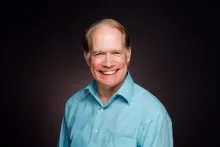
Greg Thomas is the former Pastor of the Cleveland, Ohio congregation. He retired as pastor in January 2025 and still attends there. Ordained in 1981, he has served in the ministry for 44-years. As a certified leadership consultant, Greg is the founder and president of weLEAD, Inc. Chartered in 2001, weLEAD is a 501(3)(c) non-profit organization and a major respected resource for free leadership development information reaching a worldwide audience. Greg also founded Leadership Excellence, Ltd in 2009 offering leadership training and coaching. He has an undergraduate degree from Ambassador College, and a master’s degree in leadership from Bellevue University. Greg has served on various Boards during his career. He is the author of two leadership development books, and is a certified life coach, and business coach.
Greg and his wife, B.J., live in Litchfield, Ohio. They first met in church as teenagers and were married in 1974. They enjoy spending time with family— especially their eight grandchildren.
