

Robin S Webber
This transcript was generated by AI and may contain errors. It is provided to assist those who may not be able to listen to the message.
Well, let's move right into the message if we could, and I'd like to invite you to come with me, and let's open up the Scriptures of God, because that is why we're here. That's what makes us the people of God. Is that in that sense we open up Scripture? Join me, if you would, at John 14. In John 14, I would like to anchor us in this message into Scripture, and then be able to expand and explain it to us, and how it is real and vital and vibrant to you and I on this day. And this is given on the last night of Jesus' earthly life, and we find it here in John 14 and verse 16. Jesus at this point saying, and I will pray the Father, and He will give you another helper, that He may abide with you. Notice, forever, the Spirit of truth, whom the world cannot receive, because it neither sees Him nor knows Him, but you know Him, for He dwells with you, and it will be in you. Now notice verse 18. I will not leave you orphans. And then notice what it says here. I will come to you.
The great promise, I will come to you. But let's ask ourselves a question for a moment. Is this merely reserved for a few days after He died and was resurrected and visited the disciples later in Jerusalem or later in Galilee? When it says, I will come to you, is this merely an expression or a prophetic statement that He will return to this earth? Yes, absolutely, but more. But not only in the past, and not only reserved for the future, but in your life and in my life as the first fruits of God. This time between the New Testament Passover and Pentecost, otherwise in the Old Testament known as the Feast of First Fruits, is a time of journey. It's a time of pilgrimage. It's a time of reflection of how God guides and watches over His covenant people, whether Israel of old or whether the Israel of God today. How does God lead us, guide us, move us forward? Because after all, everything that we sense and understand in the Scripture really does proceed from the Exodus story.
God is in the process of taking a people that were not a people. And in that process, when we go to the Old Testament, we think of Him taking a nation of slaves and saying, You will be my people and I will be your God. And I'm going to move you through a gulf. And I'm going to give you and bring you into a promised land of milk and honey. And you will be my people and I will be your God. And I will be in the midst of you and I will provide for you and I will care for you. And I will go out for you. And as Mr. Jostik brought out, I will champion for you. I will be your shield. I will be your buckler. That's what God promised. And so thus what we look at, dear friends here in Los Angeles today and those that may listen in the future, we recognize this story of drawing out. That's exactly what Exodus means. It's the ongoing story, not only for the children of Israel, but for all of humanity. A drawing out of this system. A drawing out from away from Satan. A drawing towards a greater promise. A drawing through a greater gulf. Not just water, but from death to life. And ultimately the kingdom of God. And in all of this, let's ask ourselves, as we've just come away from the New Testament Passover, and we move towards Pentecost, we move towards that feast of firstfruits, to fully understand what God is doing with you and me. Can we talk? And that means to understand that God is in the design and in the creation of making a new man, of making a new woman, of making a new kind of human being. No longer just with the brain, no longer just with the mind, but now brought together by the gift and by the grace of God's Holy Spirit that enters into our life with a destination. But as we keep our eyes and our heart on the destination, we've also got to recognize that the kingdom of God is not just simply a destination in the future, it's a way of traveling day by day. And that is where, that is where the great promise comes, where Jesus on that night of night said, I will come to you. Allow me to invite you in a little bit more here for a moment. Let's think of during this time between in the Old Testament, what is called the Passover and the feast of firstfruits, and that original time back there in the 15th century BC, to recognize that it was a time of movement. It was a time of pilgrimage, and that's what God calls us to. Not just those people with the funny buckles and the muskets and the gray and white and black clothing that like to step on rocks when they came over to this country, and we call them pilgrims. Pilgrim, to be a pilgrim, to be on a journey, not yet reached, not yet had, is the essence of what the Christian walk is all about. Because once you put your roots down, once you put your feet down, once you stop, you're no longer a pilgrim. So what you and I have been called to is not just simply an event, it's an existence for all of our life. And this time of movement between the Passover of old and the Pentecost, you may want to jot these down as I go along. Just think of movement, movement, movement, motion. We have Israel going from Egypt to Sinai. It is during this time that the book of Ruth is read in the synagogue, and often we will preach on it in our own services. A time of movement from the world that was to a new world that opens up to her, to be a new woman, a new creation, and be in a new community in Bethlehem.
It's a time of movement when we think that Israel, the army thereof, was moving around Jericho during this time and were going through the Red Sea during this time and or later on as it crossed over into the Promised Land to where it moved on dry shore and dry land over the river. As the high priest took in the Ark of the Covenant, the waters were set abey, and Israel walked into that which God had promised them. It's a time of movement. It's a time of not standing still, but also recognizing that God is in the details and in that process. In all of that, though, we recognize, if we talk about this time, we think of ancient Israel, not to be too hard on them, but their stories are with us that the journey that was set before them was supposed to have taken a month.
Basically, even with two and a half million people, you probably could have gotten up there in a month from point A to point B, but we recognize that it took 40 years. Instead of the shortest distance being between two dots, straight line, they lived in existence of circles. Circles, always going back. Circles going around and around and around and around and around and around, rather than that straight line towards the land of promise. But, not to be too hard on ancient Israel, but let me just bring you into this message.
What about your life? Even since the New Testament Passover this year, where you rededicate your life and once again, recover an intent with God that He would guide you, and that Jesus Christ would be your Lord and your Savior and rule your heart, and that you would follow His lead wherever He took you.
How are we doing over these last three or four weeks? I'd like to share a story with you to bring us then to moving into the message. It's a story, but I think it has a point. It's said that there's a certain guide that lived in the deserts of Arabia, and he never lost his way.
He carried with him a homing pigeon with a very fine cord attached to one of its legs. When in doubt in which path to take, you take the low road and I'll take the... When in doubt as to which path to take, he threw the bird into the air, remembering that it had that cord on its leg. The pigeon quickly strained at the cord to flying the direction of home, and thus led the guide accurately to his goal every time.
Because of this unique practice, this man in Arabia was called the Dove Man. Not the Dove Bar. Those are good, too. But he was called the Dove Man. Now think about that for a moment. Biblically in Scripture, when you think of the concept of Dove, we know that when all of the world had been destroyed underneath the waves of what we call the Noatian Flood, just a term, we recognize that Noah kept on sending out the birds.
And finally started sending out the Dove, and the Dove would come back, the Dove would come back. But finally then, the Dove came back with a twig. He sent out the Dove another seven days later. Interesting seven. The Dove never returned. The Dove was signifying that, in a sense, God was true to His promise. We also recognize, if you'll stay with me a second, let's move to the New Testament, that when Jesus was baptized, as it says in a couple of accounts, at least minimally in Matthew and in Mark and perhaps in Luke, it says that as He was baptized, that in that sense, the Spirit came down in the form of a dove. Just reading the Scriptures.
And the voice was heard, This is my Son, in whom I am well pleased. God had fulfilled His promises, both in the Old Testament, by making sure that the family of Noah would regenerate, would land, and society would start again through Him. And God kept His promise that He would send Messiah, not only a godly man, but God in the flesh, that could become your Savior and my Savior and your High Priest and my High Priest. So we look at all this.
Now, why am I bringing this message to you? I want to share a story with you, and why I think it's so important. I think it's something that, as a body of people, that we have grown in over the years, and I think as individuals that we have. Because with such a great promise and such a great gift as the Holy Spirit, number one, we have to know what it is, and we have to know from whence it derives. And then three, we need to know how to utilize it.
Are you with me? So you kind of know where we're going. And to recognize that the one that we want to look at for a moment, we don't want to miss. I have a question for you. I'm going to stretch my knee for a moment, which needs some stretching, so I'll just come over here a second.
You know I've had knee surgery. And to recognize a couple of things. And you just put yourself into this. Have you ever lost your keys? And you didn't know where you put them? Susan has seen me lose my keys and calm, patient, unflappable, robin. Goes to pieces! Where are my keys? We've got to go right now.
We're going into Los Angeles today through five freeways. Got to go, go, go, where are those keys? Have you ever reached for something and it's not there? Because you're reaching in all the wrong places. We could all say, as you get older, what did I do with my glasses? This may be more important than keys. What did I do with my glasses? For men, it can be their wallet. Where's my wallet? Now you know your wallet. Susan always tells me, because she is so wise, she always says, no, it doesn't have legs.
That really doesn't help when you don't have your wallet in your pocket. Doesn't have legs. I hate that! Anyway, you didn't hear that. Manfred edited that. Anyway, I hate that. She uses it on the keys, she uses it on the wallet. You ladies probably do the same thing. But of course, what happens when the ladies lose their purse, of which all of their life's goods are in, I don't know how they find it down there, but the purse is all important.
And ladies, your purse does not have legs either. So we look at this. But with the Holy Spirit, we've got to make sure with the Holy Spirit, the great promise that I will come to you. That when we need it, because God knows that we need it, He wanted to give it to us. That's one of the reasons why Jesus Christ came to this earth. We need to know exactly where it is and where to reach.
I'd like to anchor you with another verse before we go any further. Let's go to 1 Corinthians 10. We talked about Israel being led through the sea. I want to share a thought with you here. We're going to springboard a little bit quicker than after this. 1 Corinthians 10, 1 through 4. Notice what it says here. Moreover, brethren, I do not want you to be unaware that all of our fathers were under the cloud, and they all passed through the sea, and all were baptized into Moses. Notice now, in the cloud and in the sea.
And they ate the same spiritual food, and all drank the same spiritual drink. For they drank of that spiritual rock that followed them, and that rock was Jesus Christ. The one that we know as the Word, the one that we phrase in the Old Testament as Jehovah, the one that interacted with Israel, that they were baptized, and they followed that rock, and that rock was Jesus Christ. Now, I want to share a thought with you.
Out of all of this, think of the rock, think of Christ. But now, notice the word cloud. You might want to jot that down. Cloud. Because we're going to deal with that for a moment. The cloud is extremely significant when it comes to how the covenant people of old were led. And as it extends to our time, the Israel of God, Galatians 6, 16, as to how we are led today. Join me if we go to Exodus 13, 21.
In Exodus, we're going to do a real quick scriptural jump through Scripture here. Let's go to Exodus 13, 21. This is Israel coming out of Egypt, and let's notice what it says. Exodus 13, 21. And the Lord went before them by day, in a pillar of cloud, to lead the way. It wasn't just a cloud. It says, the Lord. The Lord went before them by day in a pillar of cloud, to lead the way.
And by night in a pillar of fire, to give them light, so as to go day by day and night. And he did not take away the pillar of cloud by day, or the pillar of fire by night, from before the people. Now let's notice something here. We're going to kind of craft a few words. We notice that there is a cloud by day, a pillar of fire by night. And the key word that I'd like to share with you, if you're with me still, is simply this.
He went before them. Consider that for me. Now let's go to Exodus 14, 19. And notice what it says. And again, and the angel and or the messenger of God, who went before the camp of Israel, which has already been identified, moved and went notice behind them. And the pillar of the cloud went from before them and stood behind them. Interesting. God not only guides us and leads us before us, but is a rear guard.
Want to put it this way? We're surrounded by the guidance and by the protection of God. Exodus 16, verse 10, we're building a story here. Now it came to pass as Aaron spoke to the whole congregation of the children of Israel, that they looked toward the wilderness and behold the glory of the Lord appeared notice in the cloud. And the Lord spoke to Moses, saying, I have heard the complaints of the children of Israel speak to them, saying, at twilight you shall eat meat, and in the morning you shall be filled with bread, and you shall know that I am the Lord your God.
So it was that the quells came up at evening and covered the camp, and in the morning noticed the dew lay all around the camp. And when the layer of dew lifted here, there, and on the surface of the wilderness was a small round substance as fine as frost on the ground. And so when the children of Israel saw it, they said to it, well, what is that? And for those of you that know a little bit about the Bible, that's exactly what manna means.
What's that? If you didn't know that, that's what it means. It just means, what is that? So we recognize through these set of scriptures that God not only goes before us, He not only watches us from the rear, but He provides our daily sustenance just as the manna was given day by day for the children of Israel to pick up. Thus the principle is that God is before us, God is our nadir guard, He protects us, and also He provides, are you with me?
Our daily bread. Now this is all about the cloud to this point. Now join me, if you would, in Exodus, Leviticus 16.
Leviticus 16, and let's pick up the thought in verse 2.
David Toman, Book of Exodus, in the wilderness.
And the Lord said to Moses, Tell Aaron your brother not to come just to any place, into the holy place inside the veil, before the mercy seat which is on the ark lest ye die. For notice, I will appear in the cloud above the mercy seat. This is what we call Shekinah, or Shekinah, presence. The cloud representing God, representing Yahweh, Jehovah, the one that was the Word, the one that later, from Bethlehem, became Jesus, of Nazareth later, and Jesus to Christ, your Lord and Savior.
So we look at this. He says, and I will appear in the cloud above the mercy seat. That mercy seat, that seat of judgment. So the cloud not only is before us, the cloud is not only in our rear guard protecting us, it not only gives us our daily sustenance, but it is also that which implies mercy. Join me now if you would in Exodus 40 verse 33. We're skipping pretty quickly, but I want to build to a point. Exodus 40 verse 33. Exodus 40 verse 33. Speaking of the tabernacle.
And He raised up the court all around the tabernacle and the altar and hung up the screen of the court gate. So Moses finished the work. Then notice, then the cloud covered the tabernacle of meeting, and the glory of the Lord filled the tabernacle. That cloud, that glory, the cloud filled the tabernacle, and Moses was not able to enter the tabernacle of meeting because the cloud rested above it, and the glory of the Lord filled the tabernacle.
Wherever the cloud was taken up from above the tabernacle, the children of Israel would go onward in all their journeys. But if the cloud was not taken up, then they did not journey till the day that it was taken up. For the cloud of the Lord was above the tabernacle by day, and fire was over it by night. Can you imagine being there? This is real! This happened. And fire was over it by night, and in the sight of all the house of Israel, throughout all of their journeys, what God would start, He would finish.
The big lesson in all of this, when in doubt, keep your eye on the tabernacle, keep your eye on the cloud by day and the pillar at night. When it stays, you stay. When it moves, you move. That same cloud, that same significance of the glory of God, the one that led Israel through the wilderness, the one that, as Paul says, was that rock, and that rock was Jesus Christ.
Consider now is the Israel of God, Galatians 6, 16. What did Jesus say? The first thing that He says to His disciples then, and to you and me today, simply, that's the first thing. He always requests of a disciple. He gives that invitation, follow Me. Follow Me. And the last thing, especially with Peter, that is recorded. One of the first of the disciples is, follow Me. And what I want to share with you now is simply this, in this wilderness of this world, and moving towards that sure kingdom of God, to recognize then that while ancient Israel kept an eye on the cloud over the tabernacle, we need to recognize the personification now of that cloud, and to recognize what the tabernacle and what the temple of God is today as we move from the New Testament Passover to the days of Pentecost.
Join me if you would in Psalms 139. Psalms 139. In Psalms 139, and Mr. Garnet gave this message recently, about two or three months ago, as I remember, on Psalm 139, O LORD, verse 1, You have searched me and known me, You know my sitting down and my rising up, Your understanding my thought afar off, You comprehend my path and my lying down, And are acquainted with all of my ways, For there is not a word on my tongue, But behold, O LORD, You know it altogether.
You have hedged me behind and before... Oh, sounds like the cloud, doesn't it? You have hedged me behind and before, And laid your hand upon me, And such knowledge is too wonderful for me, It is high, and I cannot attain it. Speaking about the presence of God. The psalmist is basically saying, As much as I would like, wherever I might go. I may even want to get lost. I might even want to take a vacation from you, God, But wherever I am, you are. You are present. You are before me, you are behind me, you are above me.
You are. Thus then what ought I to be. Let's refocus on a moment on John 14, 18 now, With these thoughts in mind about the presence of God. John 14, we're going to go back a second, Then we're going to springboard. John 14, verse 18, notice what it says here. I will not leave you orphans, I will come to you. And it says, A little while longer in the world will not see me anymore, But you will see me because I live, you will live also.
At that day, notice, you will know that I am in... Stay with me now. This is the important part. I am in my father, and you in me, and I in you. What's that all about? Well, thanks for asking the question. That's the rest of the sermon, and what does that mean? Let's understand this. One thing, one of the great overarching themes of the Scripture is this. From the book of Genesis, when you think of the garden, To when you think of Israel on the move in that pilgrimage from Egypt to...
The Promised Land, that when camp was set up, the tabernacle was what? The tabernacle was always in the midst of the camp. The first thing that went up was the tabernacle. That was the hub. And then if you've ever seen some of those Bible maps, All the different spots were all the different children of Israel.
The tribes were all like spokes going out from the wheel, from the hub. God was in the midst of his people. God wanted to be in the midst of Adam and Eve.
God wanted to be in the midst of his people. Jesus, even upon his resurrection, wanted to be in the midst of his disciples. Nothing would stop him. He came into that upper room. The one that is called the gate, the one that is called the door, He went through the wall. And whenever he came, he said, My peace I bring to you.
That's one of the messages, and one of the reasons I'm giving this message, is so that we can have a peace to recognize that we may lose our keys, we may lose our wallet, we may lose our purse, we may even lose our mind. Just joking. But we need to know... Don't take me seriously. Okay? Just joking. But the one thing that we need to know where to reach for is where to reach for the Spirit of God. I think historically, sometimes, we have looked at the Spirit of God as being the Holy Spirit.
When I was growing up in another church, when I was young, we called it the Holy Ghost. When I came into this way of life, I came out and found out that it's called the Holy Spirit. But at times, I sensed that even the covenant people of God look at the Holy Spirit as being like a spiritual screwdriver, or a spiritual hammer.
It's a power tool, because after all, the Holy Spirit is power. It is this, it is that. No, those are attributes. Attributes and gifts that stem from the Holy Spirit. But we need to understand where to reach for it. And the theme of this, I want to share with you, if you don't write anything else down, it's simply this. God does not work from the outside in.
The Holy Spirit works from the inside out. So if we're reaching for here, or we're waiting for the sun to rise, or the sun to set, or the sun to stand still, like Joshua's day, we're reaching for a wonderful thing in all the wrong places.
And to recognize exactly what the Holy Spirit is. Join me, if you would, in Revelation 1. We notice, again, how much God has always wanted to be in the midst of His people. In fact, it is prophesied to give us encouragement. When we go to Revelation 1.13, we notice this, speaking of the risen Christ, the Lamb of God, where it says in verse 12, "...then I turned to see the voice that spoke to me, and having turned, I saw seven golden lampstands," which in that sense represents the body of Christ down through the ages.
"...and in the midst of the seven lampstands, one," capital O, "...like the Son of Man, clothed with a garment down to the feet, and girded about the chest with a golden band." This apocalyptic message is given. It's a message of hope to a people that are dispossessed, that are being persecuted, that no matter what occurs in the future, to recognize that God will be true to His promise.
Are you with me? I'm talking to you, too. All of us. Not only in the future, but now, whatever comes our way, that God is true to His promises, to you and to me. He loves us.
He wants our best to become complete in Christ, that we might rule and reign and be with Him and the Father forever in eternity. So He wants to know that whatever we're going through, that He's deep in the midst of it. But is it only as a body? Or is the Holy Spirit? Is Jesus Christ? Is God the Father? Literally.
Living inside of us. This is the great question. And it relates to the great promise that we just talked about. The Father in me, me in you, can almost get mixed up. Who's on first base? But the faith of a Christian is that literally the Spirit of God, the Spirit of the Father, and the Spirit of Jesus Christ is living, living, existing, the essence of God, literally in us. That when He says that I am the light, that the furnace is on in here. You know how you have the light on a furnace? It's in here. We are to be the light of the world, and that light that is in us is then therefore to fuel everything that you and I do. Join me if you would in John 20. John 20. And Canuk, could you hand me up your watch so I don't go too long? I don't want to stress everybody's conversion today, especially with a potluck coming up. John 21.
John 20. Pardon me. This is John 20. Thank you. Thank you very much. Yeah, thank you. In John 20 and verse 21, So Jesus said to them again, Peace to you, as the Father has sent me, I also send to you. And when he had said this, he breathed on them, and said to them, Receive the Holy Spirit. So we look at this about receiving the Holy Spirit and what it is. I'd like to just take a few seconds with you. Some of you may be hearing this for the very first time, and I welcome that. For you that are guests, for those of you that are listening on the web link and will in the future, that we as a body of believers believe that the living Lamb of God, along with the Spirit of His Father, literally reside in us, by Spirit, by essence. That's what then allows us, stay with me, how then otherwise could we call God our Father? How could we otherwise call Jesus the firstborn of many brethren, or in our colloquialism, our elder brother? Join me if you would in Romans 8. In Romans 8.
And in Romans 8 and in verse 6, For to be carnally minded is death, but to be spiritually minded is life and peace, because the carnal mind is enmity against God, for it is not subject to the law of God, nor indeed can be. So then those that who are in the flesh can't please God, but you are not in the flesh, but in the Spirit. Well, what does that mean? I'm in the Spirit. What does that mean? If indeed the Spirit of God dwells in you.
I have a question. This is not hard. You will not flunk this. All of you are going home tonight either in a mobile home, an apartment, a condo, or a house. You're going in the door, and what are you going to do? You are going to dwell in what I've just mentioned. You're not going to dwell on the outside, especially tonight, because it may rain. You're going to dwell on the inside. God works from the inside out, not the outside in. Therefore, we've got to recognize that when we are reaching, not for our keys, for our purse, or for a missing wallet, and when we really need God, we need to make sure that we are tapping into the essence of God, the power of God, the love of God, and the inside of us, because it's a gift. Absolutely. Do you remember what I said that in 1 Corinthians 10, when it says, and they went through the sea and the cloud, they were baptized in the cloud, and Moses was there? You and I were baptized in a sense, staying with a sense.
You and I were baptized into that same cloud, that when we said that we were going to repent, and then we were going to receive Jesus Christ as our Lord and Savior and as our Passover, and that we were going to turn our keys over to Him, that same cloud that figuratively ancient Israel was baptized under and through in the sea is the same one that we have given along with His Father our allegiance to.
And then the Spirit is imparted to us to guide us, to lead us, to encourage us, and to use the attributes of that Spirit of power and of love, of wisdom, and of a sound mind. Let's go a little bit further here. But you are not in the flesh, but in the Spirit, verse 9, if indeed the Spirit of God dwells in you, that would be God the Father.
Now if anyone does not have the Spirit of Christ, He is not His. And if Christ is in you, the body is dead because of sin. But the Spirit is life because of righteousness. But if the Spirit of Him who raised Jesus from the dead dwells in you, dwells in you.
Notice what it says, then.
If the Spirit dwells in you, then it goes on further. Dwell, dwell, dwell.
Brethren, I think sometimes there's been a thought that somehow we package our spiritual life, and the Holy Spirit is up here—stay with me, this is the PowerPoint— is that the Holy Spirit is up here and we put it up here. And then when we need it, we pray for it, we take it off the shelf, and we give it some vigor to grow and to multiply because we really need it at that time. No, the Holy Spirit is the indwelling of God Almighty and His Son in us. You say, well, how can you say that, Mr. Weber? Good question. Join me over to 1 Corinthians 3. 1 Corinthians 3.
Notice what it says here. 1 Corinthians 3.16 Do you not know?
Do you not know? Where am I? 1 Corinthians 3.16. Here we go. Do you not know that you are the temple of God and that the Spirit of God dwells in you?
If anyone defiles the temple of God, God will destroy him. For the temple of God is holy. Looich knows which temple you are. It's very interesting that the phraseology there, the word temple, translated comes from the word naos, N-A-O-S. You might want to jot that down, four-letter word, N-A-O-S, which in Scripture refers to the holy place and or the holy of holies. What God is saying here is that, remember when Jesus said that, in the future, my people will not worship on that mountain or this mountain, but will worship in what? In spirit and in truth. That Paul is through the auspices of God's Spirit through him telling us that God is now residing in us.
We are that temple. We are that tabernacle. We are holy to God. And just as much as that cloud would come in days of yore and would come not only above the tabernacle, but would permeate the holy of holies. This is what is in the mind of Paul when he says, you are the temple of the Holy Spirit. I find that interesting. This same Jesus then, this one that was Yahweh, this one that was Jehovah, this one that was in the cloud, this one that was the angel of the Lord, this one that went before ancient Israel, behind ancient Israel, supplied ancient Israel its daily bread, from this point forward says, follow me.
Follow me and my Spirit will be in you. Remember what Jesus said in Matthew 2820 at the end? 2820, wonderful verse. Lo, I shall be with you always, even to the end of the age. I think that went through a second. Yeah, you can't... The only way that we can lose the ability to have the light of Christ in us is not to understand it.
Wouldn't it be a horrible thing that if you had electricity in your house and you never knew where the switch was, or where the light bulb was, you'd be in the dark? You'd be a little bit like ancient Israel going around in circles, rather than that straight line to the promises of God. I want you to think about this for a moment. Maybe you can... I'm going to finish up here in about five minutes, because I know we have choir practice. Somebody has already threatened to walk out if I don't quit at four o'clock because of the choir.
You should be relying more on that Spirit in you, that He will give you the words. He always said He will give you the words and the tone, Mr. Garnett. The words and the tone... it will come to you. That's the promise of the Spirit. We're friends. Jesus said in John 14 and verse 6, are you with me? I am the way. I am the truth. I am the life. The Holy Spirit of God Almighty and His Son, the Christ, dwell richly in us.
We are blessed with all spiritual riches, as it says in Ephesians 1 and verse 3. Therefore, we utilize that Spirit that is within us to understand what is the way. The Bible is replete with phrases that said, especially from Paul, I was on this road, I was in this way, but then you called me and now I'm in this way.
What is that way? That's where the Holy Spirit leads us into what is the way to life. Narrow! Narrow is the way to life. And I would suggest that all of us as people at times, we hearken to what it says in John 3.16, it says, we know that God so loved the world that He gave His only begotten Son, that whosoever believeth in Him should not perish, but that likewise shall be saved. And you and I believe in that. I think if I showed a show of hands, everybody's hands would go up.
We're all veterans of that one. But my question is simply this, and I can only ask the question and all you can do is supply the answer, and I'm here to provoke that answer in you. Do you, as a Christian, fully believe and understand that God the Father and Jesus Christ literally dwell in you by spiritual essence? They exist for you to tap on, so that you might never go dry, so that when circumstances come up on Monday or Tuesday or Wednesday, they will direct the way that you ought to go, the way.
You can break this down like a pie. Cut it three ways. You say, how do I use God's Holy Spirit? Number one, to stay in the way. Just as much as ancient Israel had to stay in the way from the Nile to the Jordan. Number two, that God will provide with you what is the truth. That that Holy Spirit is designed to keep you in the truth. And what is the greatest truth of all?
The greatest truth is God is love. That we are redeemed by that love, the personification of that love, which is the life, the death, and the resurrection, and the ascension of He who was love and brings us peace in Jesus Christ. In other words, just like that little bracelet or that little bumper sticker, what would Jesus do? And I don't want to equate everything down to a bumper sticker, but it's a pretty good GPS life. Because after all, the one who was the cloud, the one who came to this earth, God in the flesh, also the Son of Man said, I've got something I want to tell you. What's that? It's an invitation. What's that? Follow me.
So the only way that we know that the Spirit can act upon, then, is to know how Jesus lived. How do we know how Jesus lived? By reading the Gospels. And then using that as our GPS, using that as our guide to, as much as the Spirit said, This is my Son, in whom I am well pleased, that God in 2019 can look down on we that are here in the Los Angeles congregation and say, this is my daughter, this is my Son, in whom I am well pleased. They get it. They understand it. They know it. They have the faith. Because after all, it says, what's it say about faith? It's not by what you see, but by what you know. Those that walk by the Spirit. See, the disciples for many years, three and a half years, according to the Scripture, they walked with Christ. Side by side. They laughed. They cried. They journeyed. But we now, the disciples in this day and age, have been called to something much more glorious at this point, as they were, ultimately. There is an incredible difference between walking with Christ and allowing Christ to walk in us. I want you to think about that. Tuck that away as we go into Pentecost. There is a tremendous difference. If we do not allow Christ to literally be walking inside of us and following that lead, we're going to be like rookies on a dance floor. We're going to step on Him, and we're going to step over all the rest that are in the body of Christ.
The way, the truth, and the life. God's Holy Spirit will always point to life. Not only what's good for us, but I'll say it in my own stead. What is good for Susie? What is good for our daughters? What is good for our grandchildren? What is good for the congregations that are under my God's mercy, my tutelage? That's what good for me as Robin. What's good, not good for me as a pastor, but what's good for you? What is life for United Church God of Los Angeles? What is life for Bakersfield? What is life for my neighbor next door? What can I do for them? How can I serve them? Life! Lachaim! To life! Very Jewish, very Hebrew, very spiritual. As we walk from one festival, and sometimes the Passover and the Days of Unleavened Bread are pulled together, aren't they, as in the Gospels? And as we move towards the Feast of First Fruits, what does it mean to be a first fruit? Well, we know who the first of the first fruits is. That's the one that was the cloud, the one that was in the cloud, the one that became ultimately Jesus Christ. He's the first of the first fruits. And you and I have been called to be a first fruit. And what makes that difference is we are down through the ages, those that have responded to the call that God has called. We are the first to be in this incredible laboratory of life, to be a new kind of man, to be a new kind of woman, to be that new kind of creation, and in that, not only individually, but as a community, to be a new kind of community, to the glory of God. The best news that I can give you, as I conclude, is simply this. Jesus gave us a great promise, wonderful tidings. He said, I will come to you. We don't have to worry about that. When he makes a promise, he'll do it. We just have to know where he put his Spirit. Abide in it. Embrace it. Allow that to be our GPS. Don't look up. Don't look around. Recognize. Draw upon it. Draw upon it. Because I tell you, when you draw upon it, I can tell you one thing. God the Father and Jesus Christ just look at one another. You know what they say? They get it. They got it. They understand that for every cloud there is a rainbow. And in that rainbow there is faithfulness. We will be faithful to them in covenant. And let's keep on keeping them on the way to the incredible kingdom of God. May God bless you. May God keep you. We're going to look forward to seeing you at the potluck. And you will always remain in our prayers as we commit you, as well as all of our people in Southern California and Nevada, into the hands of God. See you afterwards.
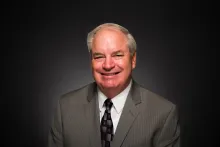
Robin Webber was born in Chicago, Illinois, in 1951, but has lived most of his life in California. He has been a part of the Church of God community since 1963. He attended Ambassador College in Pasadena from 1969-1973. He majored in theology and history.
Mr. Webber's interest remains in the study of history, socio-economics and literature. Over the years, he has offered his services to museums as a docent to share his enthusiasm and passions regarding these areas of expertise.
When time permits, he loves to go mountain biking on nearby ranch land and meet his wife as she hikes toward him.
